
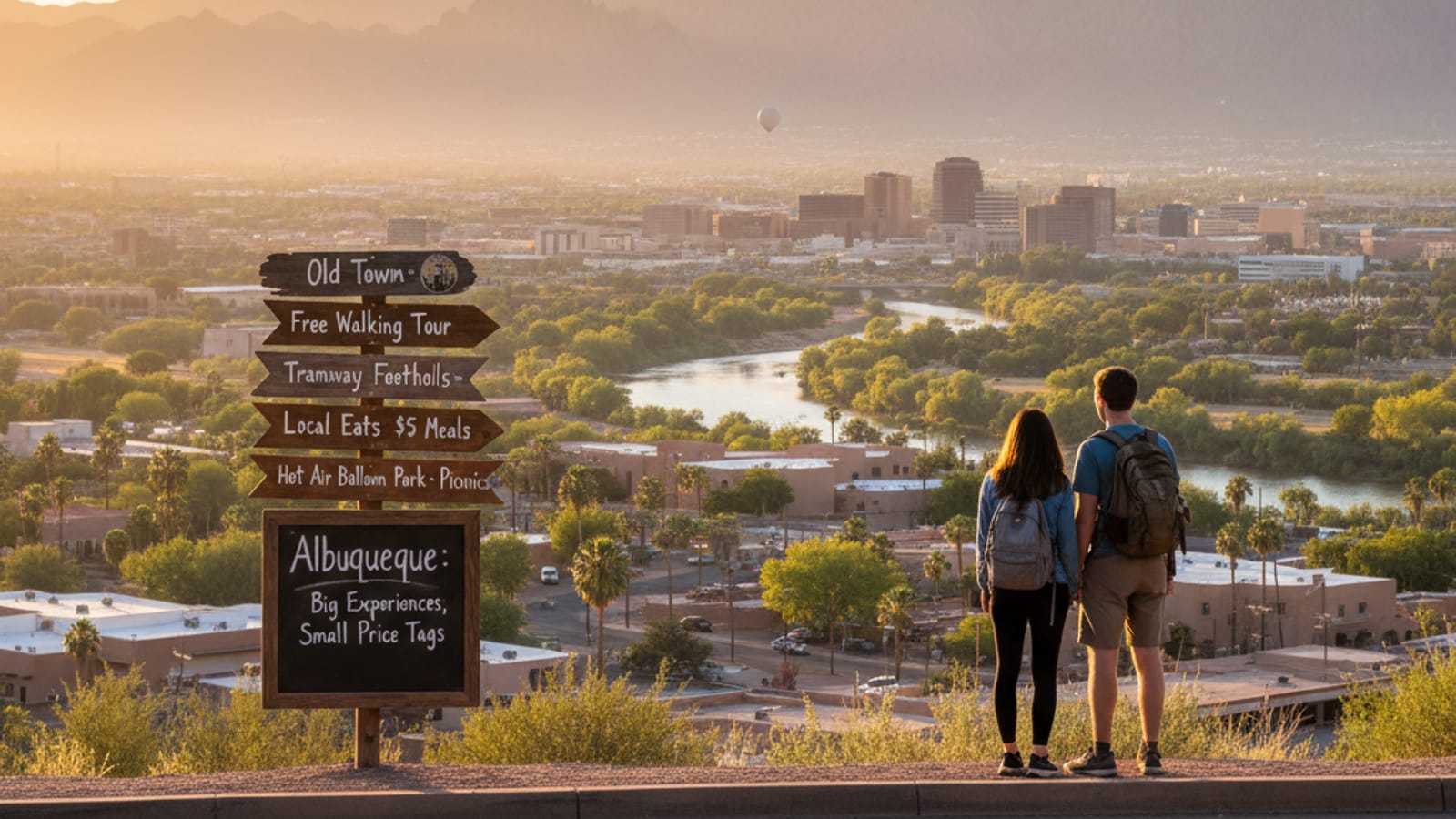
Last updated March 16, 2026 by the Recommended.app research team.
Free Hikes and Parks: The Desert Is Your Playground
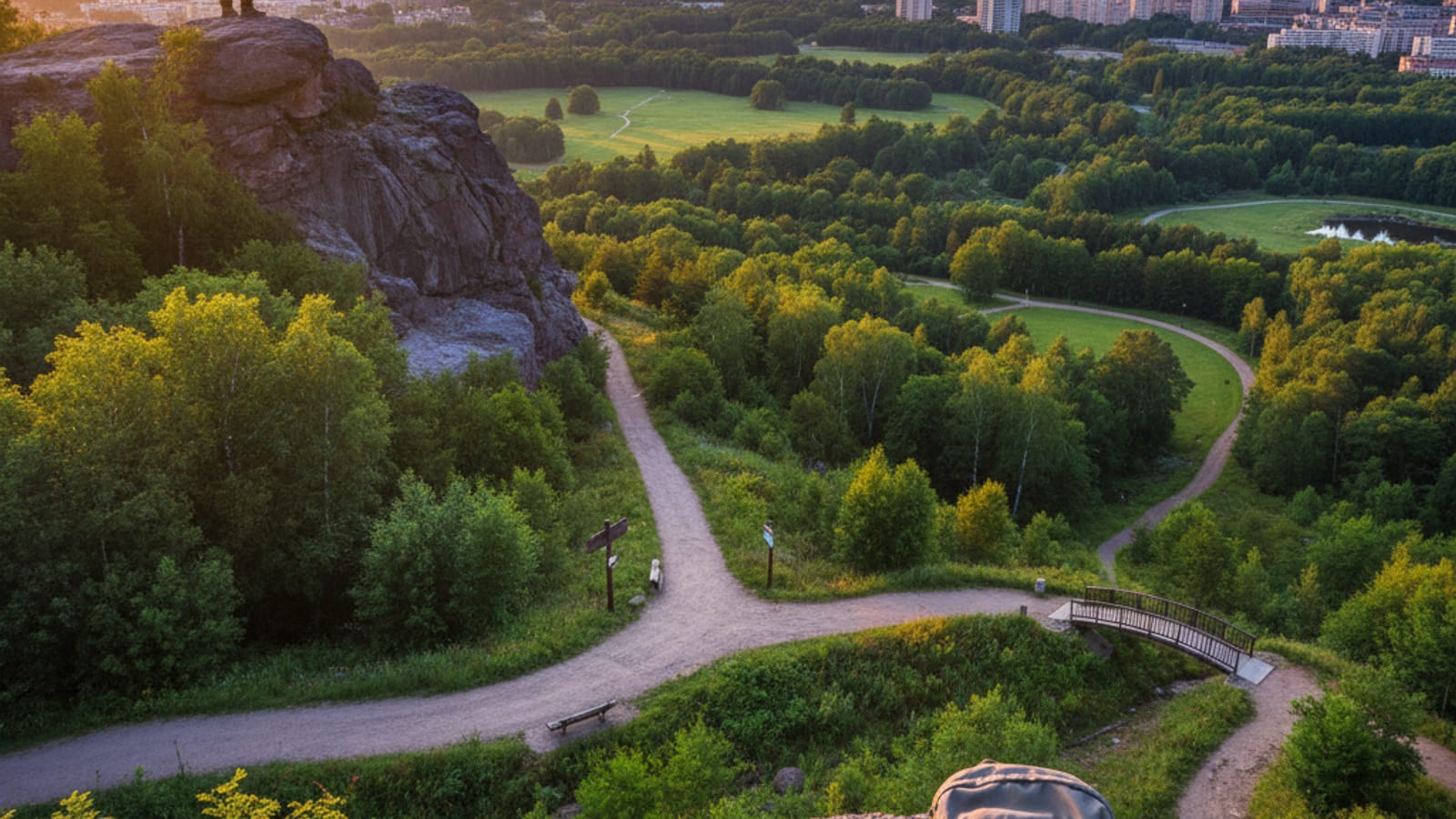
Albuquerque sits at the intersection of desert, mountain, and river ecosystems, and the best way to experience all three is on foot — for free. The city has more accessible public land within its borders than almost any other metro area in the Southwest, and the hiking ranges from flat riverside strolls to serious mountain ascents.
The Elena Gallegos Open Space is the crown jewel of the city's free hiking. Located at the base of the Sandia Mountains on the northeast edge of town, it has multiple trails that wind through piñon-juniper woodland with panoramic views of the Rio Grande valley. The Pino Trail is a moderate 4-mile out-and-back that climbs into the foothills, offering increasingly dramatic views as you gain elevation. The trailhead has a $2 parking fee on weekdays and $3 on weekends, but the trails themselves are free and well-maintained.
The Paseo del Bosque Trail along the Rio Grande is 16 miles of flat, paved trail through the cottonwood forest. It's the city's main recreational corridor — popular with cyclists, runners, and walkers — and it's completely free. The trail connects multiple parks and open spaces along the river, and you can access it from dozens of points. In fall, when the cottonwoods turn gold and the light filters through the canopy, it's one of the most beautiful urban trails in the country.
Petroglyph National Monument on the city's west side protects over 24,000 ancient rock carvings along a 17-mile volcanic escarpment. Admission is free (parking at Boca Negra Canyon is $2-3), and the trails are easy to moderate. You'll walk among volcanic boulders covered in images carved by ancestral Pueblo people centuries ago. It's a world-class archaeological site that costs nothing to visit.
The Sandia Foothills network of trails on the east side of the city offers dozens of miles of free hiking at various difficulty levels. The Embudito Trail, Embudo Trail, and Three Gun Spring Trail all start from neighborhoods and climb into the Cibola National Forest. These are real mountain hikes — steep, rocky, and exposed in places — but the views from the higher elevations are extraordinary.
Tingley Beach, south of Old Town near the BioPark, is a series of small ponds stocked with trout and catfish. Fishing requires a New Mexico license, but walking the paths around the ponds and watching the ducks and herons is free and pleasant. On weekend mornings, local families picnic here and kids fish from the banks. It's a simple, quiet scene that captures everyday Albuquerque first-timer life.
For a more structured outdoor experience, the Open Space Visitor Center on Coors Boulevard has free exhibits on the Bosque ecosystem and access to trails along the river. Rangers lead free guided walks on weekends — check the schedule at cabq.gov/openspace.
Pro tip: Bring more water than you think you need. Albuquerque is at 5,000 feet elevation and the air is extremely dry. You'll dehydrate faster than you expect, especially on exposed trails. A liter per hour of hiking is a good rule of thumb in summer.
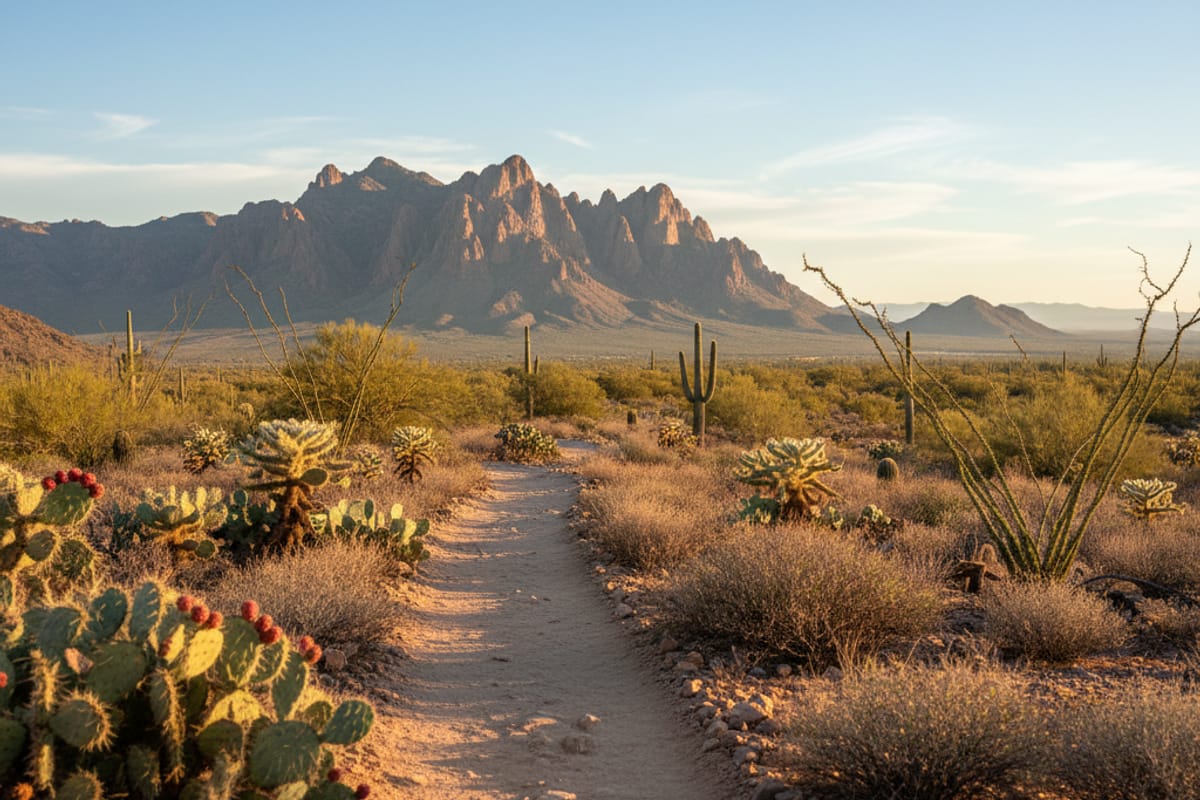 Free hiking with million-dollar views — see our weekend itinerary in Albuquerque for how to plan a Sandia Foothills morning.
Cheap New Mexican Food: Eat Like a Local for Under $10
New Mexican food is the single best budget eating experience in the American West. (For a full breakdown of standout spots, see our guide to where to eat in Albuquerque.) The cuisine is built on humble, affordable ingredients — corn, beans, chile, cheese, tortillas — elevated by centuries of culinary tradition. A full, satisfying, genuinely excellent meal in Albuquerque regularly costs under $10, and that's not at fast food chains. That's at real restaurants serving real food.
The breakfast burrito is the budget traveler's best friend. At Blake's Lotaburger (a beloved New Mexico chain with locations across the city), a breakfast burrito with eggs, hash browns, green chile, and cheese costs about $5-6. It's enormous, it's delicious, and it will carry you through a full morning of sightseeing without needing a snack. Golden Pride BBQ Chicken does equally good breakfast burritos for similar prices. These aren't compromise meals — these are some of the best food in the city, period.
Frontier Restaurant across from UNM is the gold standard for cheap, satisfying food. A plate of huevos rancheros with beans is under $8. The legendary sweet roll is $3.50. Green chile stew with a fresh tortilla is under $7. You can eat an outstanding meal at Frontier for $8-10, and you'll be sitting elbow to elbow with professors, construction workers, and students who've been eating here for decades. Frontier is open early and closes late, making it a budget traveler's anchor restaurant.
Barelas Coffee House on 4th Street serves some of the best red chile in the city at prices that haven't caught up with the restaurant's reputation. A full plate of enchiladas with rice and beans is $10-12. Cash only, and the portions are massive. The line out the door on weekends is a testament to the value.
For lunch, any of the dozens of taco trucks scattered around the city serve tacos for $2-3 each. Three tacos and a drink for $8 is a full meal. The trucks near UNM and along Central Avenue are particularly good. Taco Sal near Nob Hill is a perennial favorite.
Sopaipillas — those puffy fried bread pillows served with honey — come free with most sit-down New Mexican meals. They're essentially New Mexico's complimentary bread basket, and they're wonderful. Use them to mop up leftover chile on your plate.
Even at mid-range restaurants, Albuquerque is cheap compared to other cities. A full dinner for two at a solid sit-down restaurant — enchiladas, a beer, maybe a sopaipilla dessert — rarely exceeds $35-40 total. Try doing that in Denver or Phoenix.
Pro tip: Many New Mexican restaurants offer a "combination plate" that includes an enchilada, a tamale, rice, beans, and a sopaipilla. This is almost always the best value on the menu — it gives you a sampler of the kitchen's best work for $10-14.
Affordable Hotels: Where to Sleep Without Overpaying
Albuquerque's hotel market is one of the most affordable in the West, and the competition keeps prices reasonable even during busy periods (except Balloon Fiesta in October, when everything triples). A perfectly comfortable hotel room in a good location costs $70-120 per night — prices that would get you a highway motel in most coastal cities.
The best value zone for tourists is along Central Avenue (Route 66) near Old Town and Nob Hill. Hotel Albuquerque in Old Town is a full-service hotel with a pool, restaurant, and excellent location within walking distance of the museums and plaza. Rates typically run $100-140 per night, and the rooms are recently renovated. The Hotel Andaluz downtown, a 1939 building restored in boutique style, often has weeknight rates under $120 and is one of the most beautiful hotel buildings in the city.
For true budget travelers, the El Vado Motel on Central Avenue is a restored 1937 Route 66 motor court that's been converted into a boutique motel. Rooms are small but stylish, with original architectural details preserved. Rates start around $90 per night, and the courtyard has food vendors, a taproom, and regular community events. Staying on the original Route 66 in a building from its heyday is a travel experience you can't replicate at a chain hotel.
Motel chains along I-40 and I-25 (La Quinta, Comfort Inn, Hampton Inn) regularly offer rooms for $60-90 per night. They're not exciting, but they're clean, reliable, and well-located for drivers. The stretch of I-40 near the airport and Big I interchange puts you 10-15 minutes from everything.
Airbnb and vacation rental options in Albuquerque are plentiful and affordable. Entire apartments in Nob Hill or the North Valley run $50-80 per night, and casitas (small guesthouses) in residential neighborhoods go for $40-70. The advantage of a rental is access to a kitchen — and with green chile, tortillas, and eggs from the grocery store, you can make outstanding meals at home for almost nothing.
Hostels are limited in Albuquerque compared to larger cities, but the Route 66 Hostel on Central Avenue near downtown offers dorm beds for $25-35 per night and private rooms for $60-80. It's basic but clean, social, and well-located on the bus line.
One insider tip: the Sandia Resort & Casino and Isleta Resort & Casino, both operated by local Pueblo tribes, occasionally offer deeply discounted room rates to fill midweek availability. These are genuinely nice resorts with pools, spas, and restaurants, and midweek rates can dip to $80-100 per night — well below what you'd expect for the quality. Check their websites directly for the best deals; third-party booking sites don't always get the tribal resort promotions.
Pro tip: Avoid booking during Balloon Fiesta (first two weeks of October) unless that's specifically why you're visiting. Hotel rates triple, availability disappears months in advance, and the rest of the city's attractions are just as good any other time of year. The weeks immediately before and after Balloon Fiesta offer the same perfect weather at normal prices.
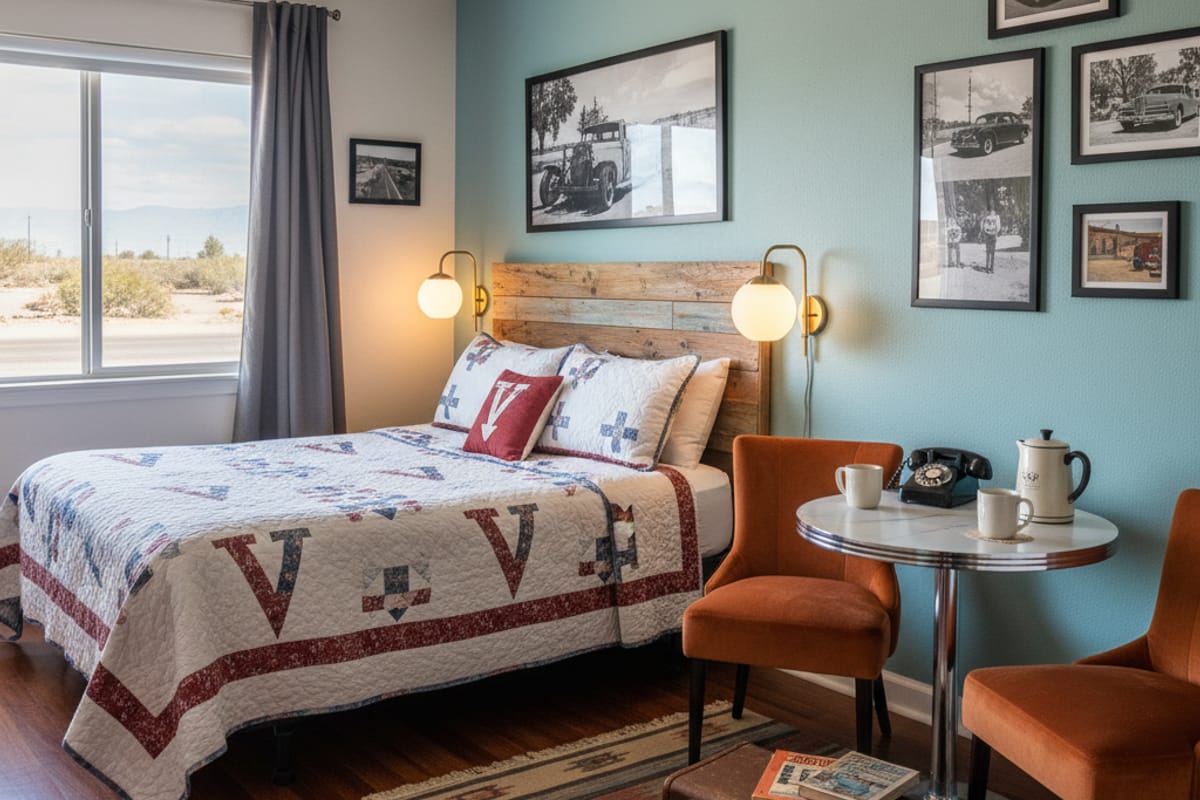 Affordable doesn't mean boring — Albuquerque's hotels offer character and value.
ABQ Ride: Getting Around on Public Transit
Albuquerque isn't known as a transit city, and honestly, a car makes things easier. But if you're on a budget and don't want to rent one, the ABQ Ride bus system can get you to most major attractions for very little money.
The ART (Albuquerque Rapid Transit) line runs along Central Avenue — Route 66 — from the west side through Old Town, downtown, the university area, and Nob Hill. This single route connects most of the neighborhoods a tourist would want to visit, and it runs frequently (every 7-10 minutes during peak hours, every 15-20 minutes otherwise). The ART buses are modern, clean, and have dedicated lanes for much of the route, making them faster than driving in traffic during rush hour.
A single ride on any ABQ Ride bus is $1.00. A day pass is $2.00. A three-day pass is $6.00. These are some of the lowest transit fares in the country, and for a budget traveler staying along Central Avenue, the bus system is genuinely practical.
The Rail Runner Express commuter train connects Albuquerque to Santa Fe for $11 one way (or $5 with a multi-ride pass). The ride takes about 90 minutes and drops you at the Santa Fe Depot, a short walk from the plaza. This is one of the best budget day trips in the Southwest — Santa Fe is a world-class arts and food destination, and doing it as a day trip by train saves you the cost of a Santa Fe hotel room (which is significantly more expensive than Albuquerque). The train runs several times daily on weekdays and has limited weekend service, so check the schedule at riometro.org.
Uber and Lyft both operate in Albuquerque, and rides are cheap compared to larger cities. A trip from Old Town to Nob Hill runs about $8-12. Airport to downtown is $10-15. For trips that the bus doesn't cover conveniently — like the Sandia Peak Tramway or the Petroglyph National Monument — rideshare is the budget-friendly alternative to renting a car.
Bike rental is another affordable option. The Paseo del Bosque Trail and the relatively flat city grid make Albuquerque more bikeable than most Southwestern cities. Several shops near the Bosque trail rent bikes for $30-40 per day, and the BioPark area has a bike-share station. Nob Hill and the university district are also very bikeable, with bike lanes on many streets.
If you do rent a car, rates in Albuquerque are typically $35-50 per day — cheaper than most peer cities. Gas is affordable (New Mexico prices tend to run below the national average), and parking is free or cheap almost everywhere. There are no toll roads. The one time you'll wish you had a car is for the Sandia Peak Tramway and the Petroglyph National Monument, both of which are on the edges of the city and poorly served by transit.
Pro tip: Download the ABQ Ride app to track real-time bus arrivals. The ART line along Central is reliable, but other routes can be less frequent. Plan your transit trips using Google Maps or the ABQ Ride trip planner at cabq.gov/transit.
Free Attractions: Culture That Doesn't Cost a Dime
Albuquerque has an unusually high number of free or nearly free cultural attractions, and a motivated budget traveler could fill several days without paying more than parking fees.
The Indian Pueblo Cultural Center is one of the most important cultural institutions in the Southwest, and while the museum charges $8.40 admission, the outdoor spaces, murals, gift shop, and weekend dance performances are free to experience. The center is owned and operated by the 19 Pueblo tribes of New Mexico, and it's the best place to learn about Pueblo culture, art, and history directly from the communities themselves. Weekend feast day dances (check the calendar) are especially powerful and free to watch.
The KiMo Theatre downtown is a 1927 Pueblo Deco architectural masterpiece that offers free self-guided tours during business hours. The interior — painted ceiling beams, Navajo-inspired murals, longhorn skull light fixtures — is one of the most beautiful theater interiors in the American West. If a show is playing during your visit, tickets are often $10-20 for performances that would cost five times that in a larger city.
The Albuquerque Museum sculpture garden is free and open during museum hours. The sculptures are displayed against the backdrop of Old Town's adobe architecture, and it's a pleasant space to wander. On the first Wednesday of every month, the entire museum is free.
The University of New Mexico campus is a free open-air museum of Pueblo Revival architecture. The Maxwell Museum of Anthropology on campus has excellent collections focused on Southwestern cultures and is free to visit. The Tamarind Institute, also on campus, is one of the world's most important lithography workshops and offers free tours.
The Rio Grande Nature Center State Park charges only $3 per vehicle and offers nature trails, bird-watching, and ranger-led walks along the river. The viewing room in the visitor center — with large windows overlooking a pond frequented by herons, ducks, and cranes — is one of the most peaceful spots in the city.
Sunday mornings at the Rail Yards Market (May through November) are free to attend. The market features local farmers, food vendors, and artisans in the historic rail yards in Barelas. You'll spend money on food and produce (the tamales alone are worth the trip), but browsing the market and enjoying the live music costs nothing.
The Turquoise Museum in Old Town ($8 admission) is quirky and fascinating — it traces the history, geology, and cultural significance of turquoise, which is central to Southwestern art and commerce. The guided tour includes a simulated mine and a lesson on how to spot fake turquoise, which will save you from overpaying at souvenir shops.
Free gallery walks happen on various schedules in different neighborhoods. The Downtown Artwalk and the Nob Hill gallery nights are the most established, and they're excellent ways to experience Albuquerque's art scene without spending money. Check local event listings for dates.
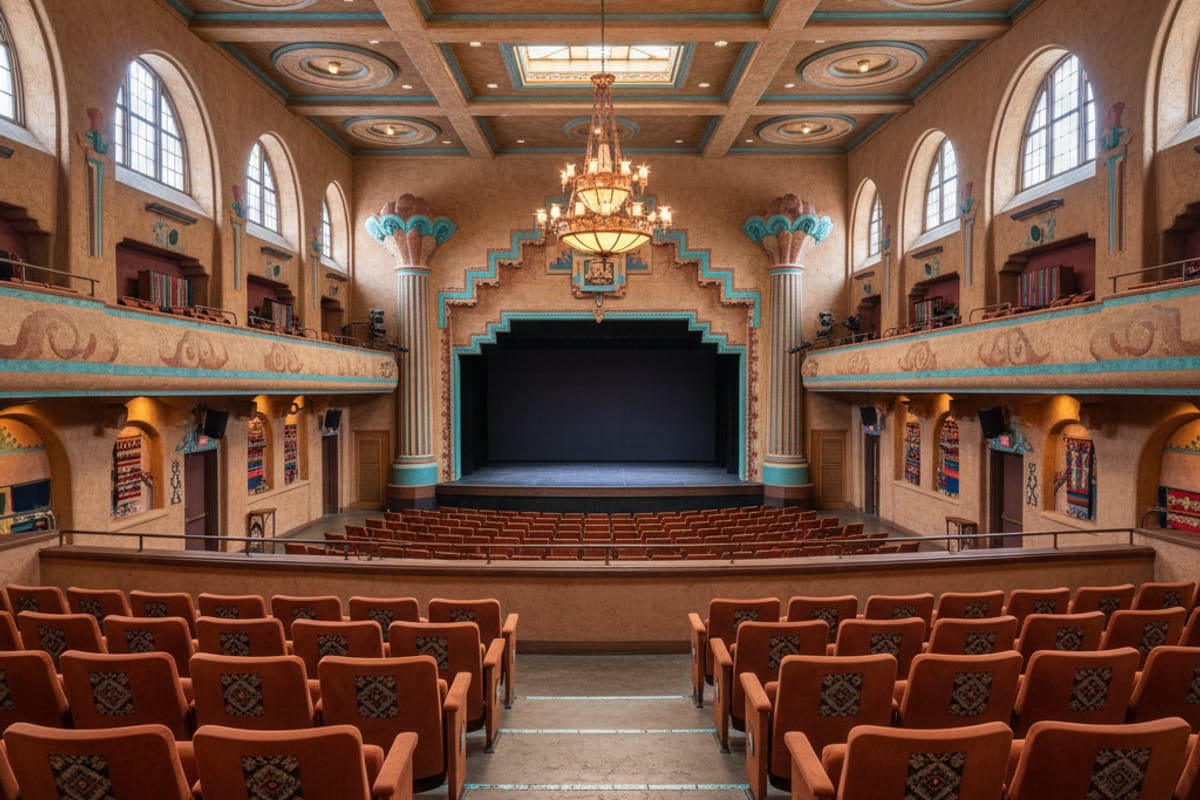 The KiMo Theatre — free to tour and one of the most beautiful buildings in the Southwest.
Full Budget Breakdown: What a Cheap Trip to Albuquerque Actually Costs
Let's get specific. Here's what a three-night budget trip to Albuquerque costs for a solo traveler who wants to experience the city fully without wasting money.
Flights: Albuquerque Sunport (ABQ) receives direct flights from most major cities. Southwest, United, and American all serve ABQ, and fares are often $150-300 round trip from cities like Denver, Dallas, Phoenix, Los Angeles, and Chicago. The airport is 10 minutes from downtown, and an Uber to your hotel costs $8-12. No need for a rental car if you stay along Central Avenue.
Accommodation (3 nights): Budget option — Route 66 Hostel dorm bed at $30/night = $90 total. Mid-range — Airbnb or motel along Central at $60-80/night = $180-240 total. Comfortable — Hotel Albuquerque or Hotel Andaluz at $100-130/night = $300-390 total.
Food (3 days): This is where Albuquerque shines. Breakfast burritos at $5-7 each morning. Lunch at Frontier, a taco truck, or a casual New Mexican restaurant at $8-12. Dinner at a sit-down restaurant at $12-20 (or $30-45 for one nicer meal). Total food budget for 3 days: $75-120 for a solo traveler eating well at every meal. That's not ramen-and-granola budgeting — that's real, excellent food.
Activities: Sandia Peak Tramway ($29), Petroglyph National Monument (free, $3 parking), Albuquerque Museum ($6, or free on first Wednesday), Rio Grande Nature Center ($3), walking Old Town (free), hiking the Bosque (free), Nob Hill exploration (free). Total activities: $40-50.
Transportation: ABQ Ride 3-day pass ($6), plus 2-3 Uber rides for destinations not on the bus line ($25-40). Total: $30-45. Or rent a car for 3 days at $35-50/day = $105-150 plus gas.
Drinks and nightlife: A craft beer at Dialogue Brewing is $6-8. A cocktail at Apothecary Lounge is $12-15. A night out in Nob Hill with 3-4 drinks and a cover charge runs $30-50. Budget $50-100 for the trip.
Total budget trip (3 nights, solo): $385-555 using hostels/Airbnb, transit, and eating at local spots. Total comfortable trip: $600-900 with a mid-range hotel, a rental car, and one splurge dinner. Total for two people sharing a room: $700-1,200 depending on comfort level.
For comparison, the same trip to Santa Fe would cost $900-1,500 solo, and in a city like San Diego or Portland you'd be looking at $1,200-2,000. Albuquerque delivers a genuinely rich travel experience at prices that make other cities look absurd.
The bottom line: Albuquerque is one of the best-value city trips in America. The culture is deep, the food is extraordinary, the landscape is stunning, and the prices haven't been inflated by overtourism. It's one of the few remaining American cities where a budget traveler can have a premium experience — not because they're cutting corners, but because the city itself is affordable. That won't last forever as more people discover what's here, so go now.
Pro tip: The absolute cheapest time to visit is January through March (excluding Balloon Fiesta season in October, which is the most expensive). Winter in Albuquerque is mild — daytime temps in the 40s-50s, clear skies, and almost no tourists. Hotel rates bottom out, restaurants are easy to get into, and the Sandia Mountains often have snow on the peaks while the city below is dry and pleasant.
Why Trust This Guide
Recommendations from locals across 240+ US cities via Recommended.app community data.
Explore More
This guide is part of our Albuquerque collection. Explore more guides for Albuquerque →
Albuquerque has 157 verified businesses on Recommended.app across 65 categories.
Hidden Gems Weekly
3 hidden gems, 2 local quotes, 1 home hack — every Monday. Free forever.
Unsubscribe anytime. No spam.
More from Travel Guides
 Travel Guide
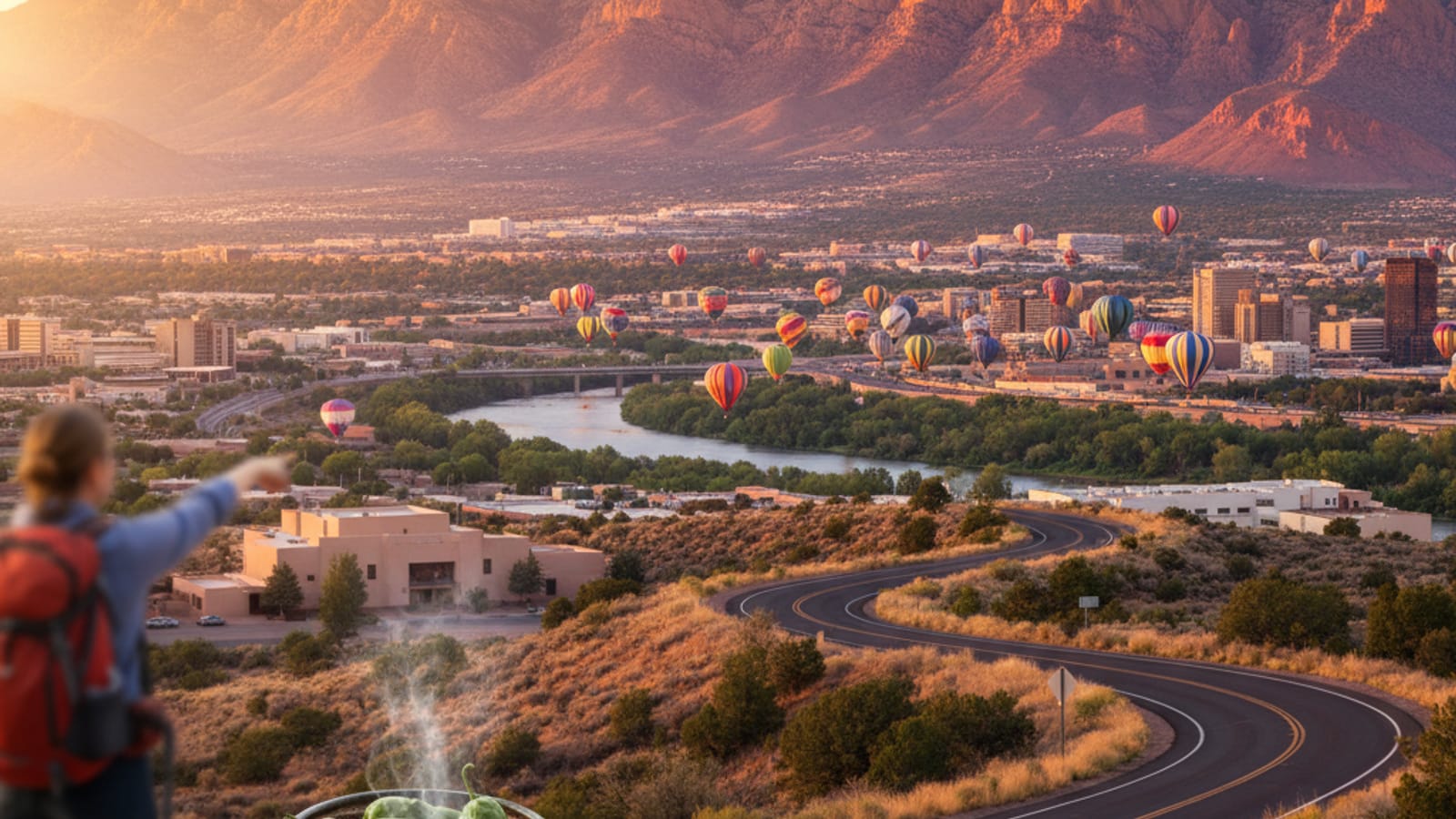
A Weekend in Albuquerque: Mountains, Museums & the Best Green Chile in America
 Travel Tips
Expedia vs Hotels.com 2026: Which Actually Saves You More Money?
 Travel Guide
Best Hotels in Miami 2026: South Beach to Wynwood (With Real Price Ranges)
 Travel Guide
Best Hotels in Nashville 2026: From Budget East Nashville to Downtown Luxury
 Travel Guide
Best Hotels in Las Vegas 2026: From Budget to High Rollers (With Real Price Data)
 Outdoor & Nature