
Last updated March 16, 2026 by the Recommended.app research team.
Sandia Peak Tramway: The Best Introduction to the City
If you do one thing in Albuquerque, ride the Sandia Peak Tramway. It's the longest aerial tramway in the Americas — 2.7 miles of cable stretching from the northeast edge of the city to the 10,378-foot crest of the Sandia Mountains. The ride takes about 15 minutes each way, and the views are genuinely staggering. On a clear day you can see roughly 11,000 square miles of New Mexico landscape — the Rio Grande valley below, distant mesas to the west, and the Jemez Mountains on the horizon.
The tram costs $29 for adults round trip, and it's worth every penny. Go in the late afternoon if you can — the sunset from the top paints the Sandia Mountains in watermelon pink (that's actually what "sandia" means in Spanish, and it's how the mountains got their name). There's a restaurant at the top called Ten 3, which serves decent food with absolutely insane views. Reservations are recommended, especially on weekends.
Bring a jacket no matter what time of year you visit. The temperature at the top is typically 20-30 degrees cooler than the city below. In summer that's a welcome relief. In winter it means you're standing in snow while the city is dry and mild at 5,000 feet. The temperature difference alone makes the ride feel like traveling to another climate zone in 15 minutes.
For hikers, the La Luz Trail runs from the base of the mountains to the crest — 7.5 miles one way with 3,800 feet of elevation gain. It's one of the best hikes in New Mexico but it's no casual stroll. The smart move is to hike up and take the tram down (or vice versa). You can buy a one-way tram ticket for $15.
Pro tip: The tram gets crowded on weekends, especially in fall. Buy tickets online in advance to skip the line. The last tram up is at 8 PM in summer, 6 PM in winter — check the schedule before you go.
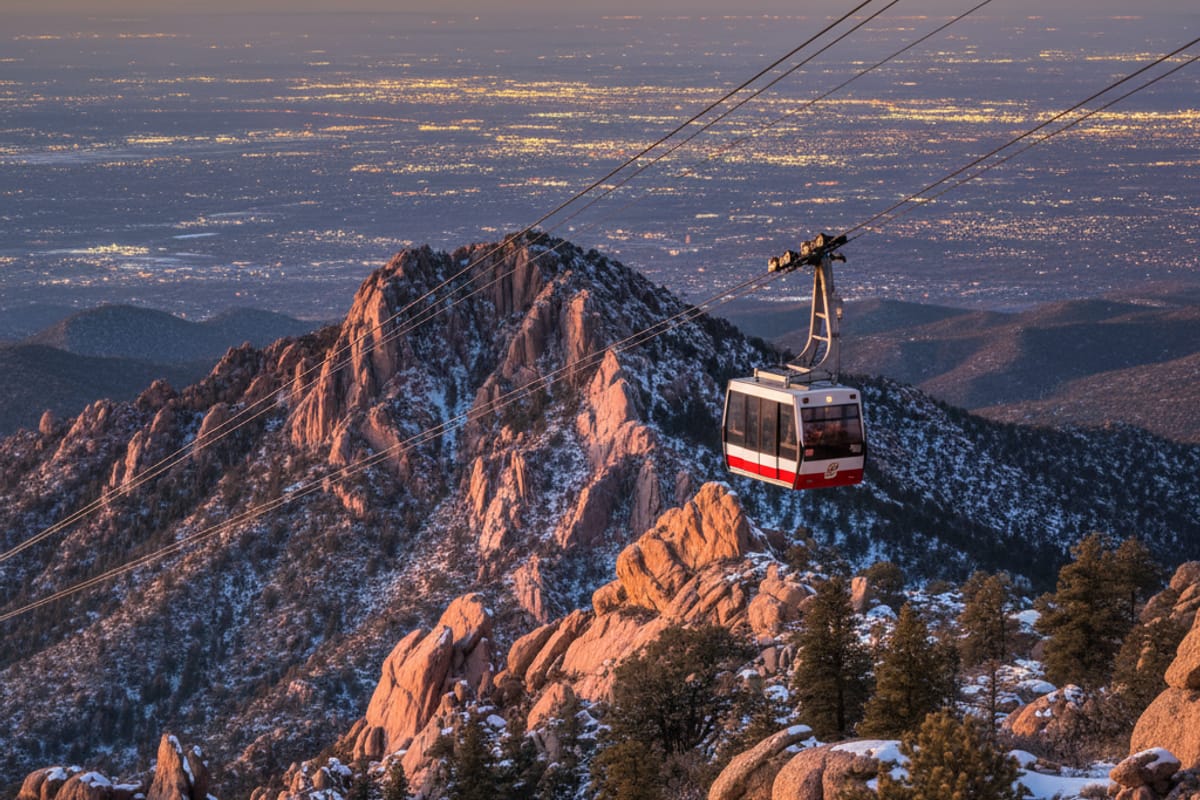 The Sandia Peak Tramway — 2.7 miles of jaw-dropping views.
Old Town Albuquerque: 300 Years of History in Ten Blocks
Old Town is where Albuquerque began in 1706, and it still feels like the heart of the city. The central plaza is anchored by the San Felipe de Neri Church, which has held continuous services since 1793 — making it one of the oldest churches in the United States. The adobe architecture is beautiful and authentic, not a theme park recreation.
The shops around the plaza are a mix of genuine and touristy. Skip the mass-produced turquoise jewelry shops and look for the Native American artists selling under the portal of the nearby museum — these are real artisans from local pueblos selling handmade work at fair prices. You'll find stunning silver and turquoise jewelry, pottery from Acoma and Santo Domingo pueblos, and Navajo textiles that are legitimate art pieces.
The Albuquerque Museum on the edge of Old Town is genuinely excellent — the permanent collection traces 400 years of New Mexico history and the sculpture garden is free to walk through anytime. Right next door, the New Mexico Museum of Natural History and Science has a great planetarium and a surprisingly thorough exhibit on New Mexico's geological history, from ancient seas to volcanic eruptions.
Don't rush through Old Town. Grab lunch at Church Street Cafe, housed in one of the oldest residences in the city — the building dates to the early 1700s. Their green chile stew is a masterclass in New Mexican comfort food. If you're there in the evening, the Albuquerque BioPark, which includes the zoo, aquarium, and botanic garden, is a short walk south along the Rio Grande.
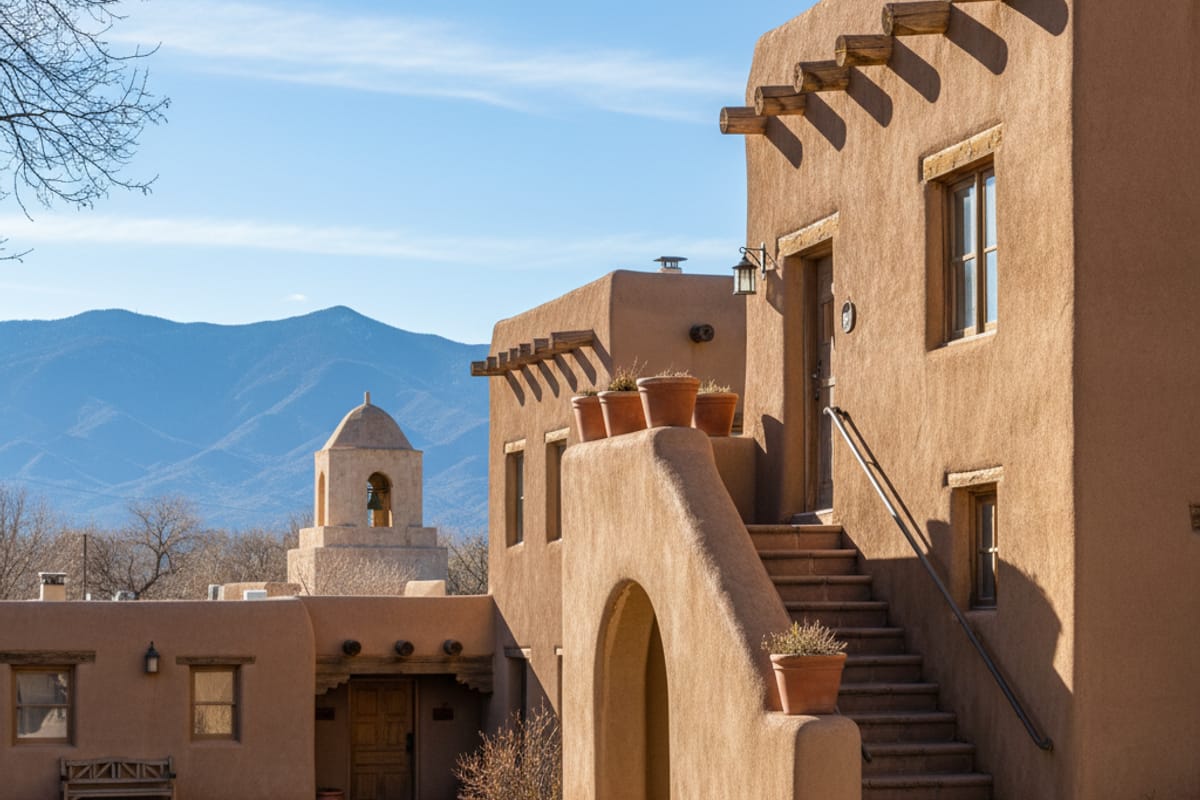 Old Town — where 300 years of history meets living culture.
The Great Chile Debate: Red, Green, or Christmas
You cannot visit Albuquerque without confronting the most important culinary question in New Mexico: red or green? Every restaurant will ask you this when you order, and your answer matters. This isn't a garnish or a side — chile is the foundation of New Mexican cuisine, and the choice between red and green defines your meal.
Green chile is made from roasted Hatch green chiles (or similar New Mexico varieties). It's bright, slightly grassy, and ranges from mild to face-meltingly hot depending on the batch. The heat can vary from pod to pod on the same plant, so even experienced locals occasionally get surprised. Green chile is typically chunkier and has a fresher, more herbaceous flavor.
Red chile is made from dried red chiles ground into a sauce. It's earthier, deeper, and slightly sweeter than green. Good red chile has a complex flavor — smoky, fruity, with a slow-building warmth. Bad red chile tastes like dirt. The quality difference between restaurants is enormous.
If you genuinely can't decide, say "Christmas" — that gets you both red and green on your plate. This is the correct answer for first-timers because it lets you taste both and figure out your preference. Most locals have strong opinions, and they'll happily tell you which one is better (they're wrong, of course — the other one is better).
The chile roasting season runs from late August through October, and during that time the entire city smells incredible. Roadside roasters set up in parking lots all over town, tumbling bushels of green chiles in large rotating drums over open flames. The smell of roasting green chile is basically the official scent of New Mexico. If you visit during roasting season, buy a bag of freshly roasted chiles — many shops will ship them frozen to your home.
One more thing: it's "chile" in New Mexico, not "chili." The extra "i" is for the Texas stuff with beans. New Mexicans are particular about this, and they're right to be.
Pro tip: At most restaurants, you can ask for a taste of each chile before committing. Don't be embarrassed — servers expect it, especially from visitors. And don't trust the menu's heat ratings. 'Mild' green chile in New Mexico is often hotter than 'hot' salsa elsewhere in the country.
Balloon Fiesta: The Most Photogenic Event in America
The Albuquerque International Balloon Fiesta happens every October (usually the first two weeks), and it's one of those events that genuinely lives up to the hype. Over 500 hot air balloons launch from Balloon Fiesta Park, and the sight of them filling the sky against the Sandia Mountains is unlike anything else in the world.
The key event is the Mass Ascension, which happens on weekend mornings. Starting at dawn, waves of balloons inflate and launch in sequence — first the "dawn patrol" of a few balloons that go up in the dark to test wind conditions, then hundreds of balloons rising together as the sun comes up. The entire field becomes a forest of inflating fabric and roaring burners, and then suddenly they're all airborne and the sky is polka-dotted with color.
What makes the Balloon Fiesta special is how accessible it is. Unlike most large events, you can walk right up to the balloons as they inflate and launch. Pilots and crews are friendly, happy to answer questions, and you can stand close enough to feel the heat from the burners. The Special Shapes Rodeo — featuring balloons shaped like Darth Vader's helmet, a cow, a stagecoach, and dozens of other ridiculous designs — is especially popular with kids and photographers.
General admission is about $15 per person, and parking is included. Get there before sunrise — the gates open around 4:30 AM, and the launch sequence starts at 7:00 AM. The early morning light combined with the balloons creates some of the best photography opportunities you'll ever have, even with just a phone camera.
If you can't visit during Balloon Fiesta, the Anderson-Abruzzo International Balloon Museum near the park is open year-round. It traces the history of ballooning from the Montgolfier brothers to modern long-distance records, and it's far more interesting than you'd expect.
The Balloon Fiesta books hotels fast — sometimes a year in advance. If you're planning an October visit, book accommodations early or consider staying in Santa Fe (an hour north) and driving down for the morning launches.
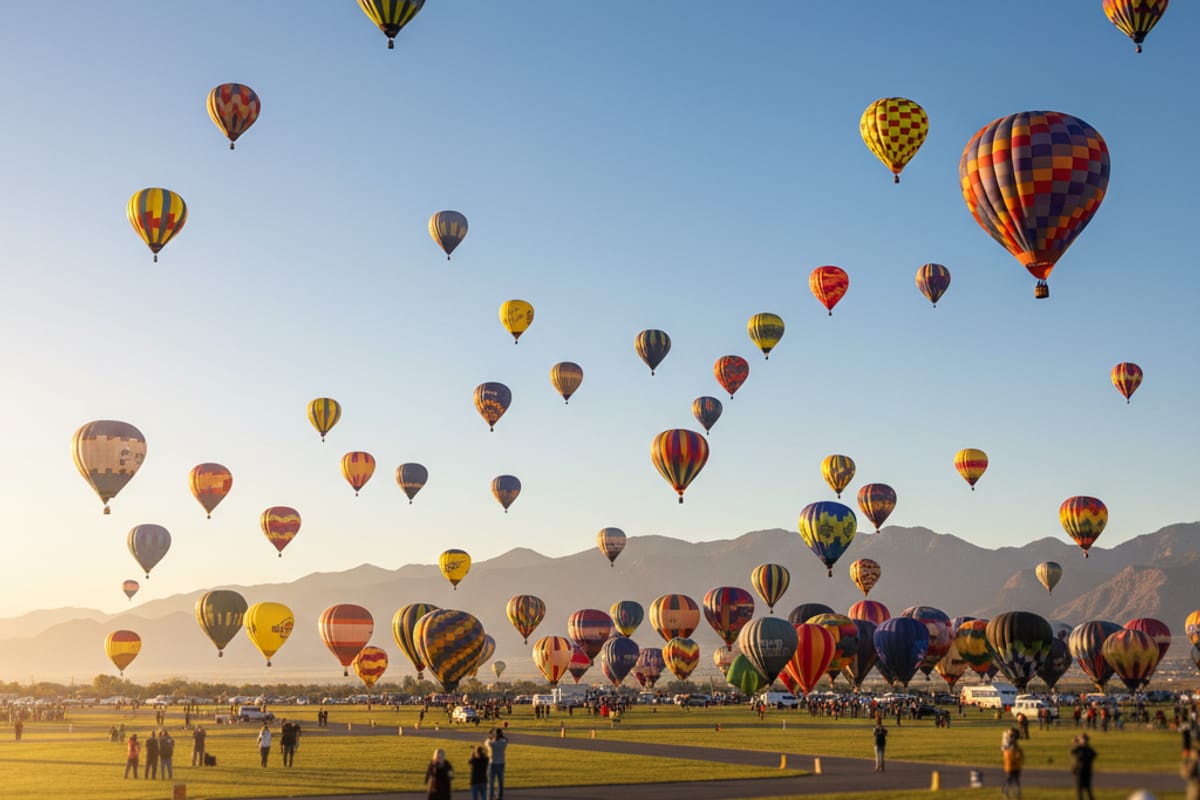 Mass Ascension at Balloon Fiesta — over 500 balloons filling the sky.
Nob Hill: Where Locals Actually Hang Out
If Old Town is Albuquerque's history, Nob Hill is its personality. This walkable neighborhood along Central Avenue (historic Route 66) between Girard and Washington is where you'll find the city's best independent shops, restaurants, bars, and people-watching. It's artsy without trying too hard, diverse without being gentrified into blandness, and genuinely fun on a Friday night.
Start at the iconic Nob Hill neon sign (you'll see it — it's huge) and walk east along Central. You'll pass vintage clothing stores, independent bookshops, record stores, and more restaurants per block than anywhere else in the city. The architecture is a mix of Route 66-era commercial buildings and Spanish Pueblo Revival style, much of it dating to the 1940s and 50s.
For food in Nob Hill, the options are outstanding. Zinc Wine Bar & Bistro is a neighborhood institution — upscale but not pretentious, with a seasonal menu that takes New Mexican ingredients seriously. The Taco Sal food truck on the corner of Central and Carlisle has some of the best street tacos in town. Flying Star Cafe is the local chain that every Albuquerquean loves — great coffee, reliable food, and a comfortable atmosphere for working or people-watching.
Nob Hill comes alive on weekend evenings. The bars here aren't clubs — they're neighborhood spots where you'll end up talking to strangers. Dialogue Brewing has excellent local beers. Gecko's Bar & Tapas does creative small plates. And if you want a truly local experience, catch a show at the Launchpad or Sister Bar — two small music venues that book everything from punk to cumbia to experimental noise.
The UNM campus is just north of Nob Hill, and the university's Maxwell Museum of Anthropology and the Tamarind Institute (a lithography workshop that's been operating since 1960) are both free and worth visiting. The campus itself has beautiful Pueblo Revival architecture and some of the best public art in the city.
Pro tip: Central Avenue through Nob Hill is part of historic Route 66. If you're driving, the stretch from Old Town through downtown and into Nob Hill follows the original route and passes through several distinct neighborhoods. It's one of the best urban drives in the Southwest.
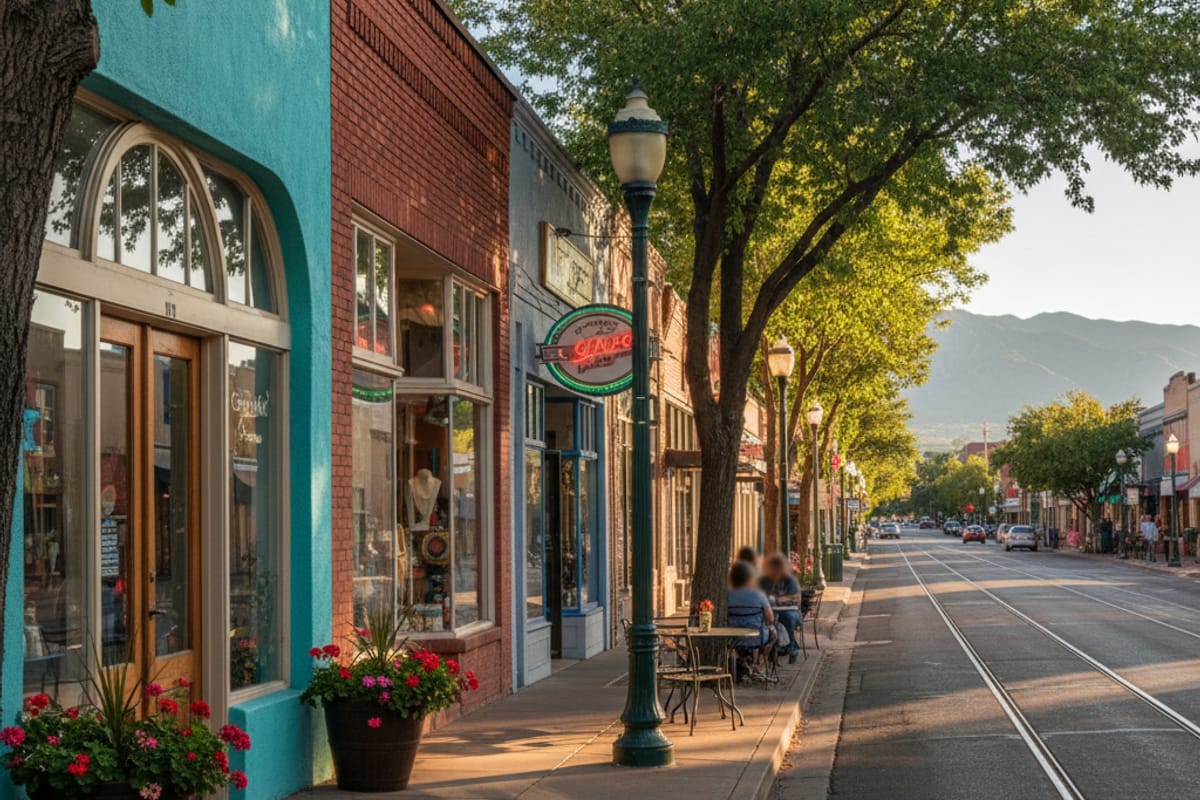 Nob Hill — Route 66 charm meets modern Albuquerque culture.
Budget Breakdown: What Albuquerque Actually Costs
Here's the thing about Albuquerque that almost nobody talks about: it's remarkably affordable. This is a real city with genuine culture, incredible food, and stunning natural beauty, and it costs a fraction of what you'd spend in Denver, Phoenix, or Austin.
Hotels run $70-120 per night for a solid mid-range option — think Embassy Suites or Hotel Albuquerque in Old Town. Boutique hotels like Los Poblanos Historic Inn (a working lavender farm on the north side of town) go for $200-300 and are worth the splurge for a special trip. Airbnb options in Nob Hill or the North Valley run $60-100 per night.
Food is where Albuquerque really shines on value. A full New Mexican meal — enchiladas, rice, beans, sopaipillas — rarely costs more than $12-15 at a traditional restaurant. Breakfast burritos (the city's unofficial currency) run $5-8 and are large enough to share. Even the upscale restaurants in town top out at $35-50 for an entree, which would cost $60-80 in a coastal city.
Activities are similarly reasonable. The Sandia Peak Tramway is $29, the Balloon Museum is $5, the Albuquerque Museum is $6, and the BioPark (zoo, aquarium, and botanic garden combined) is $14.50 for adults. Hiking is free. The Petroglyph National Monument is free. Walking Old Town is free. You can fill entire days without spending a dime.
Realistic budget for a long weekend (3 nights): $600-900 per person including hotel, food, the tramway, museum visits, and a nice dinner out. That's for a comfortable trip, not a bare-bones backpacker experience. Albuquerque might be the best-value city trip in the American West, and it's not even close.
Getting there: The Albuquerque International Sunport (ABQ) is a small, easy airport with direct flights from most major cities. It's 10 minutes from downtown with no traffic. Uber and Lyft both operate here, and rides to most hotels run $8-15. If you want to explore beyond the city — and you should, because Santa Fe is an hour north and Taos is two hours — rent a car. Rates are typically $35-50 per day.
Why Trust This Guide
Recommendations from locals across 240+ US cities via Recommended.app community data.
Explore More
Related guides:
This guide is part of our Albuquerque collection. Explore more guides for Albuquerque →
Albuquerque has 157 verified businesses on Recommended.app across 65 categories.
Hidden Gems Weekly
3 hidden gems, 2 local quotes, 1 home hack — every Monday. Free forever.
Unsubscribe anytime. No spam.
More from City Guides
 City Guide
Albuquerque Hidden Gems Even Locals Forget Are There
 City Guide
We Asked Albuquerque Locals Where They Actually Eat — Here's What They Said
 Home Services
Water Damage Restoration Near Me: What to Do in the First 24 Hours (2026 Guide)
 Food & Dining
Best Buffet in Las Vegas 2026: What's Still Worth It After the Great Buffet Collapse
 Food & Dining
Best Coffee Shops in Chicago 2026: 20 Cafes Worth Leaving Your Apartment For
 Food & Dining