
Last updated March 16, 2026 by the Recommended.app research team.
Breaking Bad Filming Locations: Albuquerque's Unlikely Claim to Fame
Albuquerque owes a strange cultural debt to a TV show about a chemistry teacher turned meth cook. Breaking Bad and its prequel Better Call Saul were filmed almost entirely in and around the city, and the filming locations have become a genuine tourism industry. Love it or roll your eyes at it, the show put Albuquerque on the map for an entire generation of travelers.
The most famous location is Walter White's house at 3828 Piermont Drive in the Alvarado Gardens neighborhood. It's a real private residence — please be respectful if you visit. The owners have dealt with years of pizza-throwing fans (seriously, people reenact the pizza-on-the-roof scene), so they've put up a fence and a sign. Drive by, take a photo from the street, and move on.
The Dog House Drive In on Central Avenue, where Jesse Pinkman ate in the show, is a real restaurant that's been serving hot dogs since 1939. It's cheap, it's good, and it's exactly as gritty as it looks on screen. Twisters on Isleta Boulevard doubled as Los Pollos Hermanos — the chicken is decent, the Heisenberg selfie opportunity is unavoidable. The Octopus Car Wash on Menaul Boulevard was the basis for Walter's A1A Car Wash.
For a more organized experience, the ABQ Trolley Co. runs a Breaking Bad RV Tour that hits all the major filming locations in about two hours. The guides are genuine fans who know production details that even hardcore viewers miss. It's $75 per person, which is steep, but the tour is well-produced and covers locations you'd never find on your own — including spots from Better Call Saul that are equally interesting.
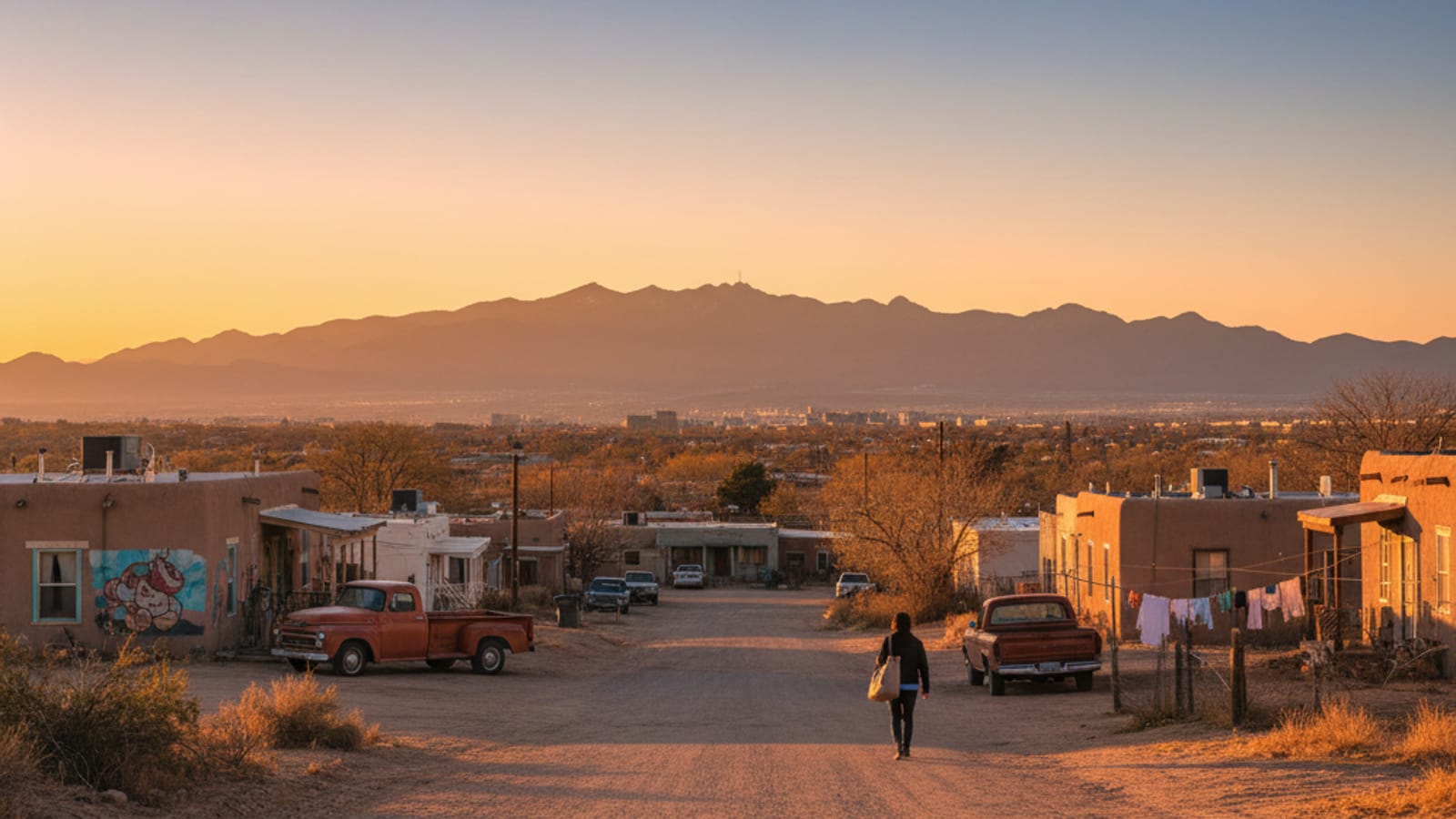
Beyond the locations themselves, what's interesting is how the show captured something real about Albuquerque's landscape. The muted desert palette, the endless sky, the way the light falls on the Sandias at sunset — the show's cinematography turned the city itself into a character. Walking around filming locations, you realize the visual poetry wasn't special effects. That's just what Albuquerque looks like.
Pro tip: The Breaking Bad RV Tour books up fast on weekends. Reserve online at least a few days ahead. If you prefer a self-guided tour, download the ABQ Film Trail app — it maps over 50 filming locations from multiple TV shows and movies shot in Albuquerque.
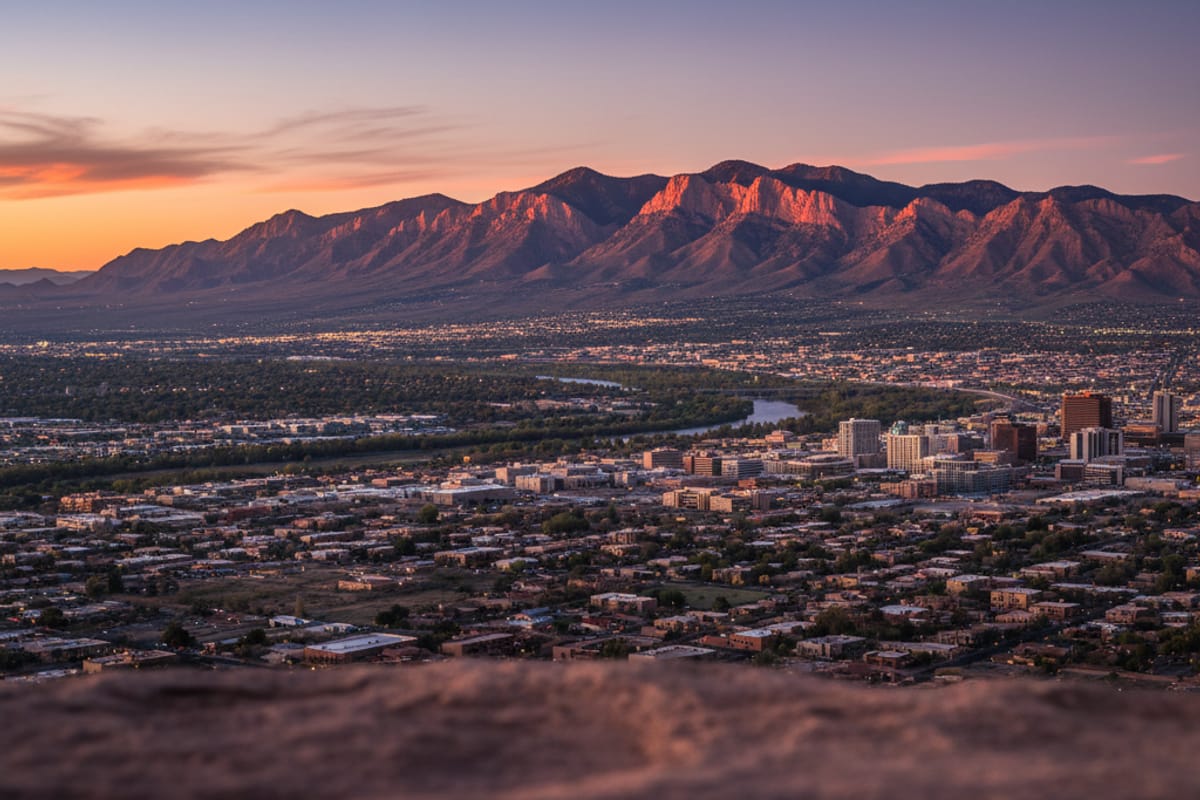 Albuquerque's landscape was as much a character in Breaking Bad as any actor.
Petroglyph National Monument: 24,000 Images Carved in Volcanic Rock
On the western edge of Albuquerque, a 17-mile volcanic escarpment contains one of the largest collections of petroglyphs in North America. Over 24,000 images are carved into the dark basalt rocks — some by ancestral Pueblo people dating back 400 to 700 years, some by Spanish settlers in the 1600s, and some whose origins are uncertain and possibly much older.
The monument is managed by the National Park Service and has three main petroglyph viewing areas, each with its own trailhead. Boca Negra Canyon is the most accessible — three short trails (the longest is about half a mile) wind through the rocks, and you'll spot dozens of petroglyphs along the way. Macaw, spirals, human figures, animals, and geometric designs are carved into the basalt's dark "desert varnish" surface, revealing the lighter rock beneath.
Rinconada Canyon is less visited and more rewarding. The 2.2-mile round-trip trail follows the base of the escarpment through a quieter section of the monument. You'll need to look carefully — the petroglyphs aren't always obvious until you learn to spot them. Once your eye adjusts, they appear everywhere, and you realize you're walking through an ancient gallery that people have been creating and visiting for centuries.
Piedras Marcadas Canyon has the highest concentration of petroglyphs — over 5,000 images — but the trail is longer (about 2 miles round trip) and less shaded. Bring water, wear sun protection, and go early in the morning when the light is best for seeing the carvings.
Admission to the monument is free, though Boca Negra Canyon charges a $2 parking fee on weekdays and $3 on weekends. The visitor center on Western Trail has exhibits on the cultural significance of the petroglyphs and the volcanic geology that created the escarpment. Rangers are incredibly knowledgeable and can help you identify specific images and their likely meanings.
A note on etiquette: never touch the petroglyphs. The oils from human skin accelerate weathering of the rock surface. Don't climb on the boulders, don't take rubbings, and don't add your own marks. These are sacred cultural artifacts for multiple Pueblo communities, not casual graffiti.
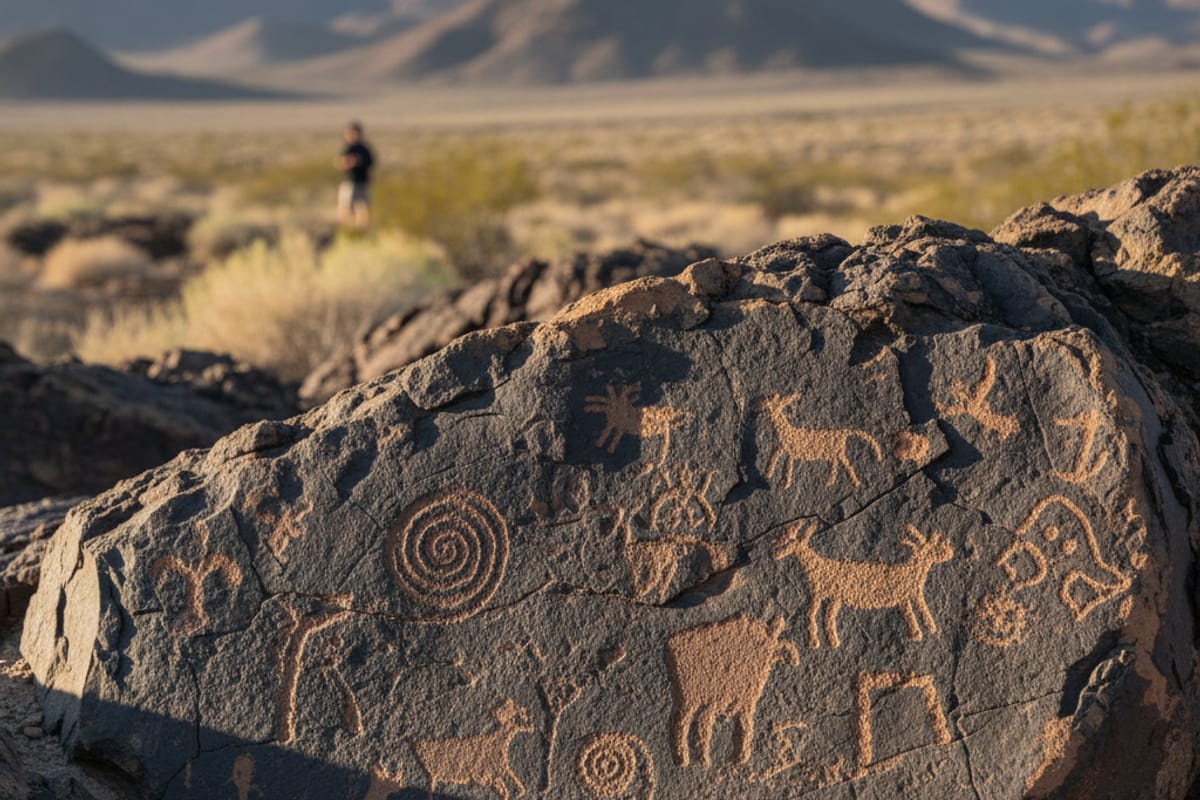 Petroglyphs dating back centuries — carved into volcanic basalt on the city's western edge.
Route 66 Through Albuquerque: America's Main Street Lives Here
Central Avenue through Albuquerque is one of the longest remaining stretches of original Route 66 still in use. The road runs roughly 18 miles through the city, from the western mesa through Old Town, downtown, the university district, Nob Hill, and out past the fairgrounds to the eastern foothills. Unlike most Route 66 stretches that are abandoned or bypassed, this one is very much alive — it's the main artery of the city.
The Route 66 experience in Albuquerque isn't a museum piece. It's a living road with real businesses, real neighborhoods, and real history layered on top of each other. The neon signs are the most visible legacy — the KiMo Theatre downtown (a 1927 Pueblo Deco masterpiece), the Nob Hill neon sign, the El Vado Motel (now a hip boutique motel), and the De Anza Motor Lodge all glow with vintage neon that's been carefully preserved or restored.
The KiMo Theatre deserves special mention. Built in 1927 by Oreste Bachechi, it's one of the finest examples of Pueblo Deco architecture in existence — a style that fuses Art Deco with Southwestern Native American design elements. The interior features painted ceiling beams, Navajo-inspired murals, and longhorn skull light fixtures. The KiMo hosts performances and films regularly, and free self-guided tours are available during business hours. It's one of the most beautiful theaters in the American West, and almost nobody outside New Mexico knows it exists.
The El Vado Motel at Central and Rio Grande is a great example of adaptive reuse. This classic 1937 motor court was nearly demolished in 2005 but was saved by preservationists and reopened as a boutique motel and marketplace. The rooms are updated but retain the original architecture, and the courtyard hosts food vendors, a taproom, and community events. Staying here puts you on the original Route 66 with the Bosque trail and Old Town within walking distance.
Driving the full length of Central Avenue takes about 40 minutes without stops. With stops — and you'll want to stop — plan for half a day. The stretch from downtown through Nob Hill is the most rewarding, with the densest concentration of historic buildings, restaurants, and shops.
Pro tip: The KiMo Theatre offers free tours Monday through Saturday. Check their website for showtimes — catching a live performance in this building is an experience that rivals any theater in the country. The acoustics are surprisingly good for a venue built in 1927.
Gruet Winery: World-Class Sparkling Wine from the New Mexico Desert
Here's something almost nobody expects: New Mexico produces excellent wine, and the best sparkling wine in the state comes from a family with roots in Champagne, France. Gruet Winery was founded in 1984 by the Gruet family, who had been making Champagne in Bethon, France, for generations. They recognized that the high altitude, dry climate, and temperature swings of New Mexico were ideal for growing Chardonnay and Pinot Noir — the classic Champagne grapes.
The Gruet tasting room is located on Gruet Drive in southeast Albuquerque (off Pan American Freeway), and it's one of the best wine experiences in the Southwest. The sparkling wines are made using the méthode champenoise — the same traditional method used in Champagne — and they regularly compete with bottles costing three to four times as much. The Blanc de Noirs is consistently outstanding, and the Demi-Sec is one of the best dessert sparklers in America.
Tastings run about $15-20 for a flight of five or six wines, and the staff is knowledgeable without being pretentious. The tasting room has a comfortable lounge feel, and you can often buy bottles at prices well below what you'd pay at a wine shop elsewhere — most bottles range from $15-25, which is absurdly good for the quality.
Beyond Gruet, New Mexico has a growing wine scene worth exploring. Casa Rondeña Winery in the North Valley has a beautiful hacienda-style tasting room and produces solid still wines. DH Lescombes Winery & Bistro has locations in Old Town and Nob Hill with food pairings. The New Mexico Wine Trail extends statewide, with clusters of wineries around Truth or Consequences, Las Cruces, and the Mimbres Valley.
New Mexico is actually the oldest wine-producing region in the United States — Spanish missionaries planted vineyards along the Rio Grande in the early 1600s, more than a century before California's first vines. The industry nearly died during Prohibition and took decades to recover, but it's now producing wines that are turning heads nationally. The high desert altitude (most vineyards are above 4,000 feet) creates intense sun exposure during the day and cool nights, which gives the grapes bright acidity and concentrated flavors.
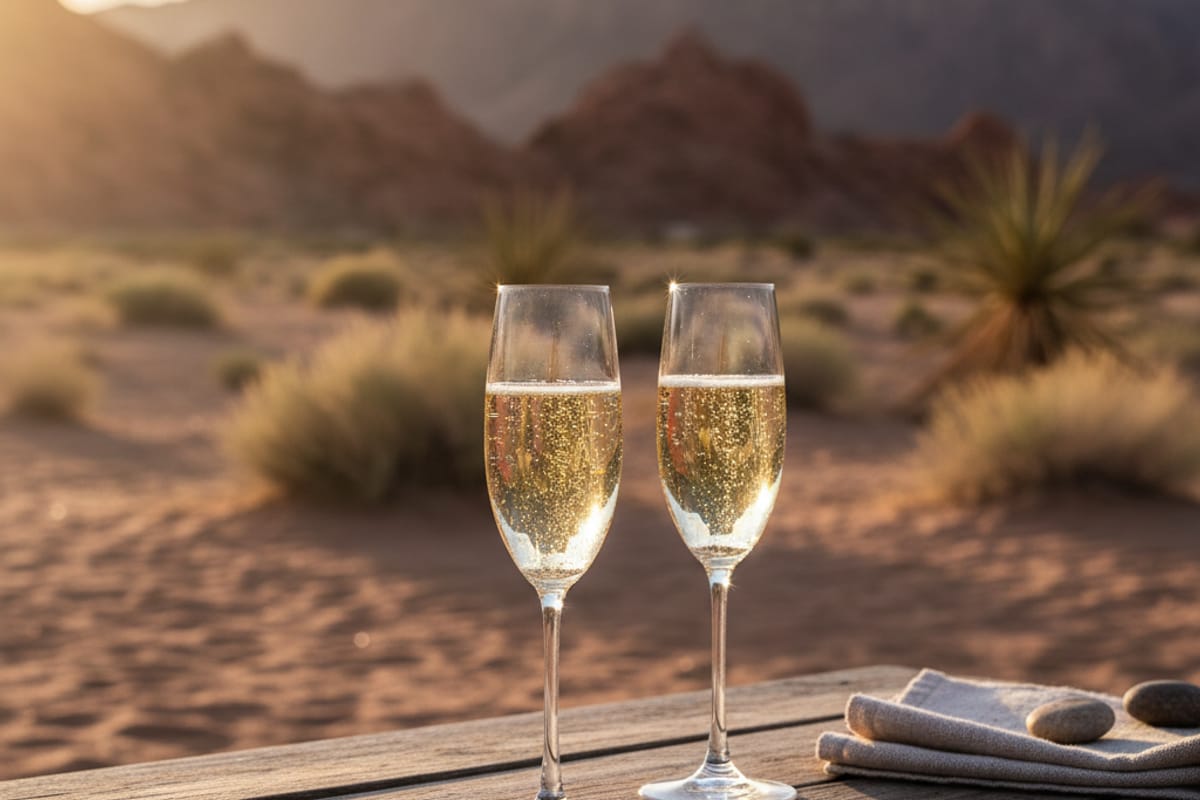 Gruet's sparkling wines rival bottles from Champagne at a fraction of the price.
Rio Grande Nature: Bosque Trail and the River That Built the City
The Rio Grande runs through the heart of Albuquerque, and the cottonwood forest along its banks — called the Bosque — is one of the largest urban forests in the country. The Paseo del Bosque Trail runs 16 miles along the river from north to south, and it's one of the best urban nature experiences in the American West. Paved and flat, it's popular with cyclists, runners, and walkers, but it's long enough that you can always find a quiet stretch.
The Bosque is a genuine riparian ecosystem — cottonwood trees that turn brilliant gold in October, willows, saltgrass, and habitat for roadrunners (yes, they're real, and yes, they run), great blue herons, sandhill cranes, red-tailed hawks, and the occasional coyote. The Rio Grande Nature Center State Park, located on Candelaria Road, has a visitor center with large viewing windows overlooking a pond where you can watch birds without disturbing them. Rangers lead nature walks on weekends that are informative and free with the $3 vehicle entry fee.
In late October and November, the Bosque becomes a staging ground for one of the great wildlife spectacles in North America. Thousands of sandhill cranes migrate through the Rio Grande valley, and many stop in the Albuquerque area before continuing south to the Bosque del Apache National Wildlife Refuge (about 90 minutes south of the city). The cranes arrive at dawn and dusk, filling the sky with their distinctive prehistoric-sounding calls. It's one of those experiences that makes you realize how wild this landscape still is, even in the middle of a city.
For a more adventurous river experience, Rio Grande Paddleboard and Kayak offers rentals for floating the river through the city. The current is gentle through most of the Albuquerque stretch, and the perspective of the city from the water — cottonwoods overhead, the Sandias in the distance — is completely different from anything you'd see from the road. Half-day rentals run $40-60 depending on the craft.
The Open Space Visitor Center on Coors Boulevard has exhibits on the Bosque ecosystem and access to trails that connect to the river. It's free, well-maintained, and a good starting point if you want to explore the Bosque without committing to the full 16-mile trail.
Pro tip: The Bosque is most beautiful in late October when the cottonwoods turn gold. Combine a morning Bosque bike ride with an afternoon at Balloon Fiesta for the ultimate October Albuquerque experience. Bike rentals are available at several shops near the trail for about $30-40 per day.
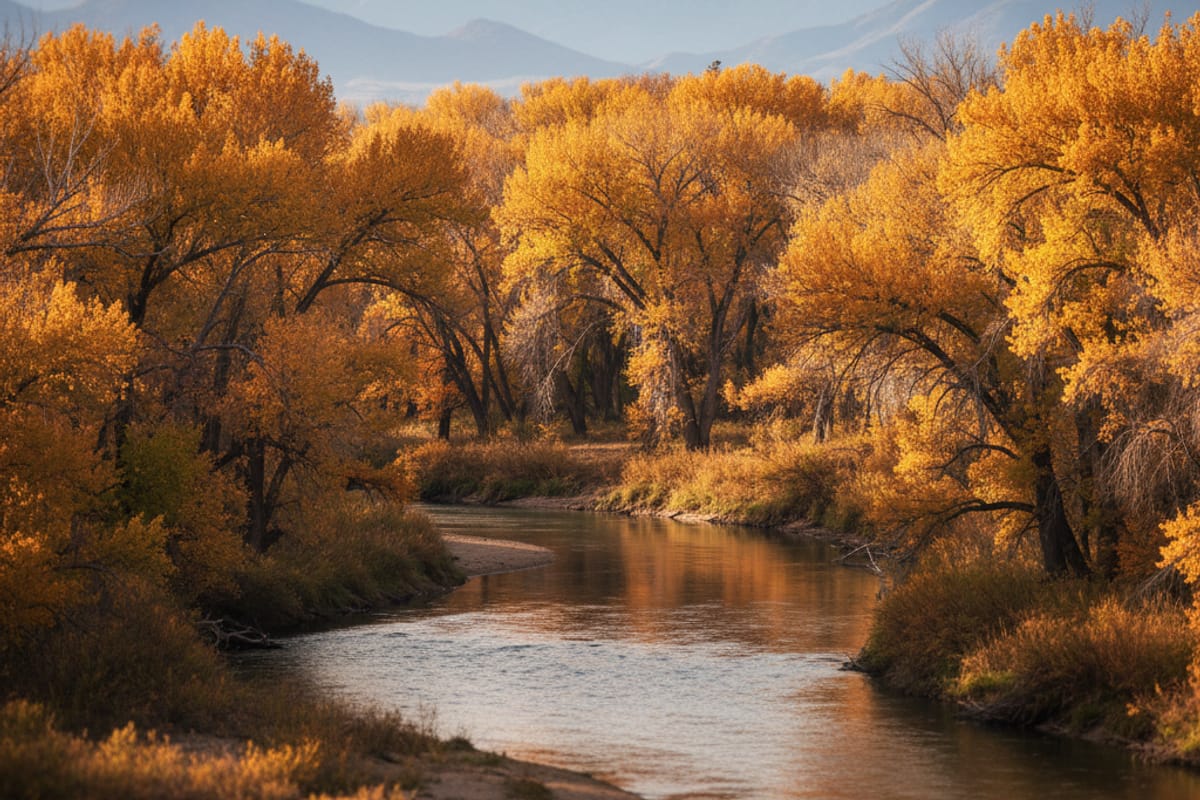 The Bosque along the Rio Grande — a cottonwood forest in the heart of the city.
Barelas: Albuquerque's Most Authentic Neighborhood
South of downtown, the Barelas neighborhood is one of the oldest continuously inhabited areas in Albuquerque — and one of the least visited by tourists. This is a working-class, predominantly Hispanic neighborhood that feels nothing like Old Town's curated charm, and that's exactly why it's worth visiting. Barelas is where Albuquerque lives its everyday life.
The anchor of Barelas is the National Hispanic Cultural Center, a stunning complex that includes an art museum, performing arts spaces, a genealogy center, and the Torreon — a massive cylindrical building whose interior is covered with a 4,000-square-foot fresco by Frederico Vigil depicting the entire arc of Hispanic civilization in the Western Hemisphere. The fresco took Vigil over a decade to complete and is one of the largest in North America. It's genuinely breathtaking, and the center itself is one of the most important cultural institutions in the Southwest.
Admission to the art museum is $6. The Torreon fresco is free to view, though the center occasionally closes it for events. The performing arts programming includes flamenco, Latin jazz, theater, and film festivals that draw audiences from across the region. Check the calendar before you visit — catching a show here is a memorable experience.
For food, Barelas Coffee House on 4th Street has been serving New Mexican food since 1978, and it's consistently rated as having some of the best red chile in the city. The portions are enormous, the prices are tiny, and the atmosphere is pure Albuquerque — families, construction workers, politicians, and artists all eating together at Formica tables. Cash only, and there's usually a line out the door on weekend mornings. It's worth the wait.
The South Broadway neighborhood adjacent to Barelas has seen an influx of craft businesses in recent years — microbreweries, coffee roasters, and artists' studios occupying former warehouses. Bow & Arrow Brewing is an Indigenous woman-owned craft brewery producing excellent beer in a converted warehouse space. Their Pliny's River Pale Ale and the seasonal brews are outstanding, and the taproom has a laid-back, community-oriented vibe.
Barelas is also where you'll find the Rail Yards Market, which operates on Sundays from May through November in the historic AT&SF Rail Yards. The market features local farmers, food vendors, artists, and live music. It's not a tourist attraction — it's a community gathering spot that happens to be open to everyone. The produce here is exceptional, especially the Hatch green chile and the locally grown squash and melons that appear in late summer.
Walking through Barelas, you'll notice the murals. The neighborhood has become an open-air gallery of street art that tells the story of the community — images of local heroes, cultural symbols, historical scenes, and abstract designs painted on the sides of businesses and homes. It's not curated or sponsored — it grew organically from the neighborhood's identity, and it's more meaningful than most gallery shows.
Why Trust This Guide
Recommendations from locals across 240+ US cities via Recommended.app community data.
Explore More
Related guides:
This guide is part of our Albuquerque collection. Explore more guides for Albuquerque →
Albuquerque has 157 verified businesses on Recommended.app across 65 categories.
Hidden Gems Weekly
3 hidden gems, 2 local quotes, 1 home hack — every Monday. Free forever.
Unsubscribe anytime. No spam.
More from City Guides
 City Guide
We Asked Albuquerque Locals Where They Actually Eat — Here's What They Said
 City Guide
First Time in Albuquerque? Locals Wish You Knew These 12 Things
 Home Services
Water Damage Restoration Near Me: What to Do in the First 24 Hours (2026 Guide)
 Food & Dining
Best Buffet in Las Vegas 2026: What's Still Worth It After the Great Buffet Collapse
 Food & Dining
Best Coffee Shops in Chicago 2026: 20 Cafes Worth Leaving Your Apartment For
 Food & Dining