
Last updated March 16, 2026 by the Recommended.app research team.
Saturday Morning: Old Town and the Heart of the City
Start your Saturday with breakfast at Barelas Coffee House on 4th Street. (New here? Skim our first-timer's guide to Albuquerque on the way over for orientation.) Get there by 8 AM — there's usually a line by 9, and the wait is worth it but your morning is better spent elsewhere than in a queue. Order the huevos rancheros with red chile or a breakfast burrito smothered in green. Either way, you'll understand within five minutes why New Mexicans are obsessive about their chile. Cash only, so hit an ATM first.
From Barelas, drive or take a short Uber ride to Old Town, about 10 minutes north. Old Town is Albuquerque's historic center, founded in 1706, and the central plaza is anchored by the San Felipe de Neri Church — one of the oldest churches in the United States, with continuous services since 1793. Walk the plaza and browse the shops, but be selective. The mass-produced souvenir shops aren't worth your time. Instead, look for the Native American artisans selling under the portal near the Albuquerque Museum — these are real craftspeople from nearby pueblos selling handmade silver jewelry, pottery, and textiles.
The Albuquerque Museum itself is excellent and only $6. The permanent collection traces 400 years of New Mexico history, from the Spanish colonial era through the Manhattan Project and into the modern art scene. The sculpture garden is free to walk through anytime. Budget about 90 minutes here — the exhibits are well-curated and move quickly.
If you have kids or just enjoy natural history, the New Mexico Museum of Natural History and Science is across the street. The planetarium show is worth the extra $5, and the "Startup" exhibit on New Mexico's contributions to computer science (this is where Microsoft was founded, after all) is surprisingly engaging.
By late morning, walk south from Old Town to the Rio Grande and the Bosque — the cottonwood forest along the riverbank. The Paseo del Bosque Trail is flat, paved, and beautiful. A 30-minute walk along the river gives you a sense of the landscape that defined this city for centuries. In fall, the cottonwoods turn brilliant gold. In spring, the river runs high and the birds are everywhere. Any season, it's a welcome stretch of nature in the middle of the city.
Grab lunch at Church Street Cafe in Old Town — housed in one of the oldest buildings in the city. The green chile stew is the move here, served with warm tortillas and a sopaipilla with honey for dessert. Budget about $12-15 per person.
Pro tip: The Albuquerque Museum offers free admission on the first Wednesday of every month and on Sundays for New Mexico residents — see our Albuquerque budget travel guide for more first-Wednesday and free-day hacks across the city.
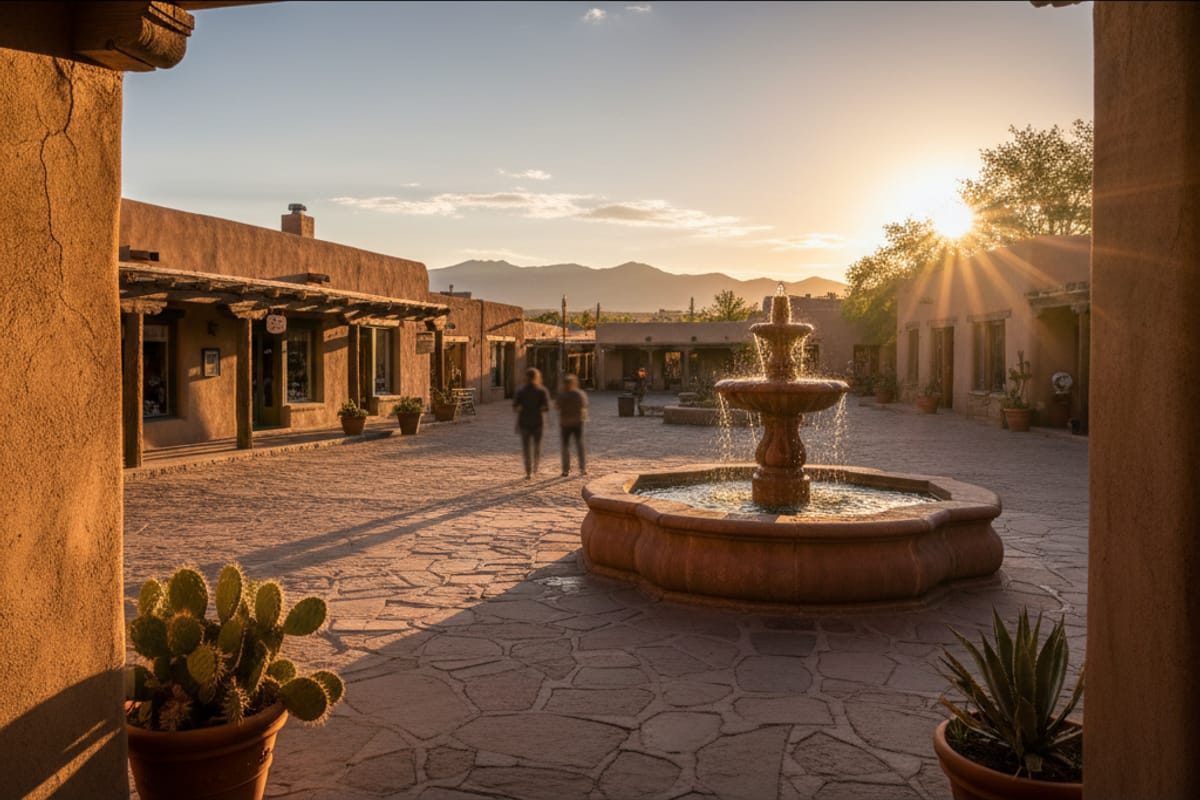 Old Town — where Albuquerque began over 300 years ago.
Saturday Afternoon: Sandia Peak Tramway
After lunch, drive to the Sandia Peak Tramway base station on the northeast edge of the city — about 20 minutes from Old Town. The tramway is the longest aerial tram in the Americas, stretching 2.7 miles from the desert floor to the 10,378-foot crest of the Sandia Mountains. The ride takes 15 minutes each way, and the views are among the best in the Southwest.
Buy your tickets online in advance ($29 round trip for adults) to skip the ticket window line. The tram cars hold about 50 people, so even on busy days the wait is usually manageable. Try to time your ride for mid-to-late afternoon — the light on the mountains improves as the day goes on, and if you time it right, you can be at the top for sunset.
At the summit, the observation deck offers a 360-degree panorama that encompasses roughly 11,000 square miles. To the west, the entire Rio Grande valley stretches out below, with the Jemez Mountains on the far horizon. To the east, the Great Plains begin their long roll toward Texas and beyond. On clear days, the visibility is staggering — you're looking at landscape that extends into multiple states.
If you want to extend the summit experience, Ten 3 restaurant at the top serves dinner with views that justify the above-average prices. The menu is modern American — steaks, seafood, seasonal dishes — and the cocktails are solid. Reservations are strongly recommended, especially if you want a window seat at sunset. Even if you don't eat here, the bar area is open to tram riders and the drinks are reasonably priced.
For the more adventurous, several hiking trails radiate from the summit. The Crest Trail runs along the ridgeline and offers views on both sides of the mountain. Even a 20-minute out-and-back walk gives you a taste of the high-altitude forest — Engelmann spruce, subalpine fir, and aspens that turn gold in September and October.
Bring a jacket. The temperature at the summit is typically 20-30 degrees cooler than the city below. In summer, that's a pleasant escape from the heat. In winter, you'll be walking in snow. Either way, the temperature change is dramatic and the tram ride through the different climate zones — desert scrub to piñon-juniper woodland to coniferous forest — is a geology and ecology lesson compressed into 15 minutes.
Pro tip: The last tram down is at 9 PM in summer and 8 PM in winter. Don't miss it — there's no other way down besides hiking in the dark, which is dangerous. Check the schedule at sandiapeak.com before you go.
Saturday Evening: Nob Hill After Dark
Come back down the mountain and head to Nob Hill for dinner and the best nightlife in the city. Nob Hill runs along Central Avenue (historic Route 66) between Girard and Washington, and on a Saturday night it's the liveliest part of Albuquerque.
For dinner, you have excellent options at every price point — and we cover a wider list in our roundup of where to eat in Albuquerque. Zinc Wine Bar & Bistro is the neighborhood's anchor restaurant — upscale bistro food, a great wine list, and a lively bar scene. The duck confit and the burger are both outstanding. If you want something more casual, Farina Pizzeria does wood-fired Neapolitan pizza that rivals anything in a larger city. A pizza and a glass of Italian red at Farina is one of the best $25 meals in Albuquerque.
For something uniquely New Mexican at a fine-dining level, make a reservation at Farm & Table in the North Valley (about 15 minutes from Nob Hill). Their patio at sunset, with views of the Sandias and food sourced from their own small farm, is one of the most memorable dining experiences in the Southwest. Entrees run $25-40, and the cocktails using local herbs are exceptional.
After dinner, Nob Hill's bar scene is walkable and varied. Dialogue Brewing has an excellent rotating tap list of local beers. Gecko's Bar & Tapas does creative small plates and cocktails in a cozy space. If you want live music, check the schedule at the Launchpad or Sister Bar — two small venues that book everything from punk to cumbia to jazz. Cover charges are usually $5-15, and the caliber of performers is often surprisingly high.
For a nightcap, Apothecary Lounge at Hotel Parq Central (a few blocks south of Central) is a rooftop bar with panoramic city views. It's the kind of place where you nurse a well-made cocktail and watch the lights of the city spread out below the mountains. It closes at midnight, which is early by big-city standards but perfectly timed for a nightcap before calling it a night.
If you're staying near Nob Hill, walk. The neighborhood is safe and pleasant to wander on foot at night, and you'll appreciate the neon signs — the iconic Nob Hill sign, the vintage motel signs along Central — that glow against the dark sky. Route 66 after dark is beautiful in Albuquerque.
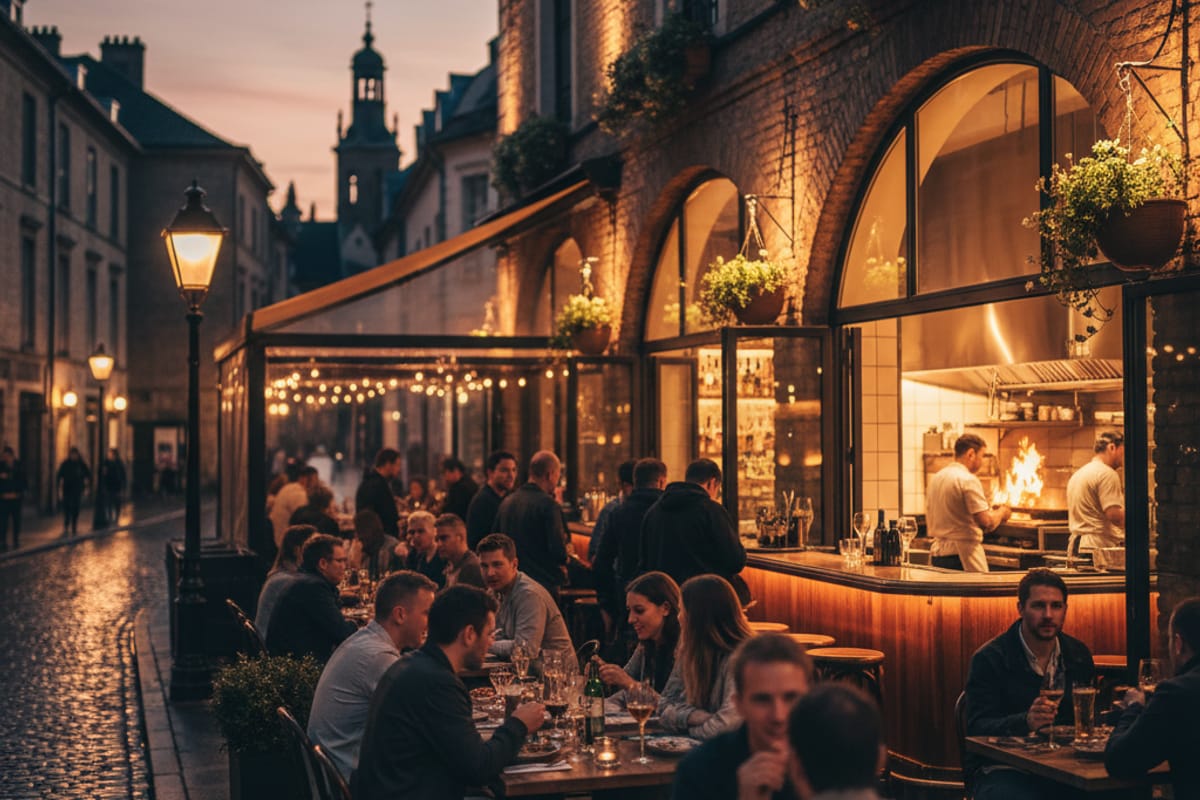 Nob Hill on a Saturday night — the best dining and nightlife stroll in the city.
Sunday Morning: Petroglyph National Monument
Start Sunday with a breakfast burrito from Blake's Lotaburger (any location — they're consistently good across the city) or Golden Pride BBQ Chicken, which sounds odd for breakfast but makes an excellent green chile burrito. Eat it in the car on the way to Petroglyph National Monument on the western edge of the city.
The monument protects over 24,000 petroglyphs carved into volcanic basalt along a 17-mile escarpment. These images — macaws, spirals, human figures, animals, geometric designs — were created by ancestral Pueblo people between 400 and 700 years ago, with some potentially much older. It's one of the largest petroglyph sites in North America, and it's a 15-minute drive from downtown Albuquerque.
Head to Boca Negra Canyon first — it's the most accessible area, with three short trails (none longer than half a mile) that wind through the dark basalt boulders. The petroglyphs are carved through the dark "desert varnish" on the rock surface, revealing lighter rock beneath. Once your eye adjusts, you'll start seeing them everywhere. Macaws, snakes, handprints, ceremonial figures, and abstract spirals cover the rocks, a gallery created over centuries by people who lived in this landscape long before Europeans arrived.
If you have time and energy, Rinconada Canyon is a 2.2-mile round-trip trail that's less visited and more immersive. The petroglyphs here require more searching — they're not always obvious — but the experience of discovering them yourself, scattered across a quiet desert canyon, is more rewarding than the guided path at Boca Negra.
The monument is free to enter, though Boca Negra charges a small parking fee ($2 weekdays, $3 weekends). The visitor center on Western Trail has excellent exhibits on the cultural significance of the petroglyphs and the volcanic geology that created the escarpment. Rangers lead interpretive walks on weekends and are genuinely knowledgeable about the archaeology and cultural context.
Important etiquette: never touch the petroglyphs. Oils from human skin damage the rock surface. Don't climb on the boulders, don't attempt rubbings, and absolutely don't add your own marks. These are sacred cultural sites for multiple Pueblo communities that are still active today. Treat the monument with the same respect you'd give any other sacred space.
Bring water, sunscreen, and a hat. The west side of Albuquerque is exposed desert with little shade, and even in spring and fall the sun is intense at 5,000 feet of elevation.
Pro tip: Go to the Petroglyph National Monument early in the morning when the light is low and angled — the petroglyphs are much easier to see and photograph when shadows define the carved lines. By midday, the flat overhead light washes them out.
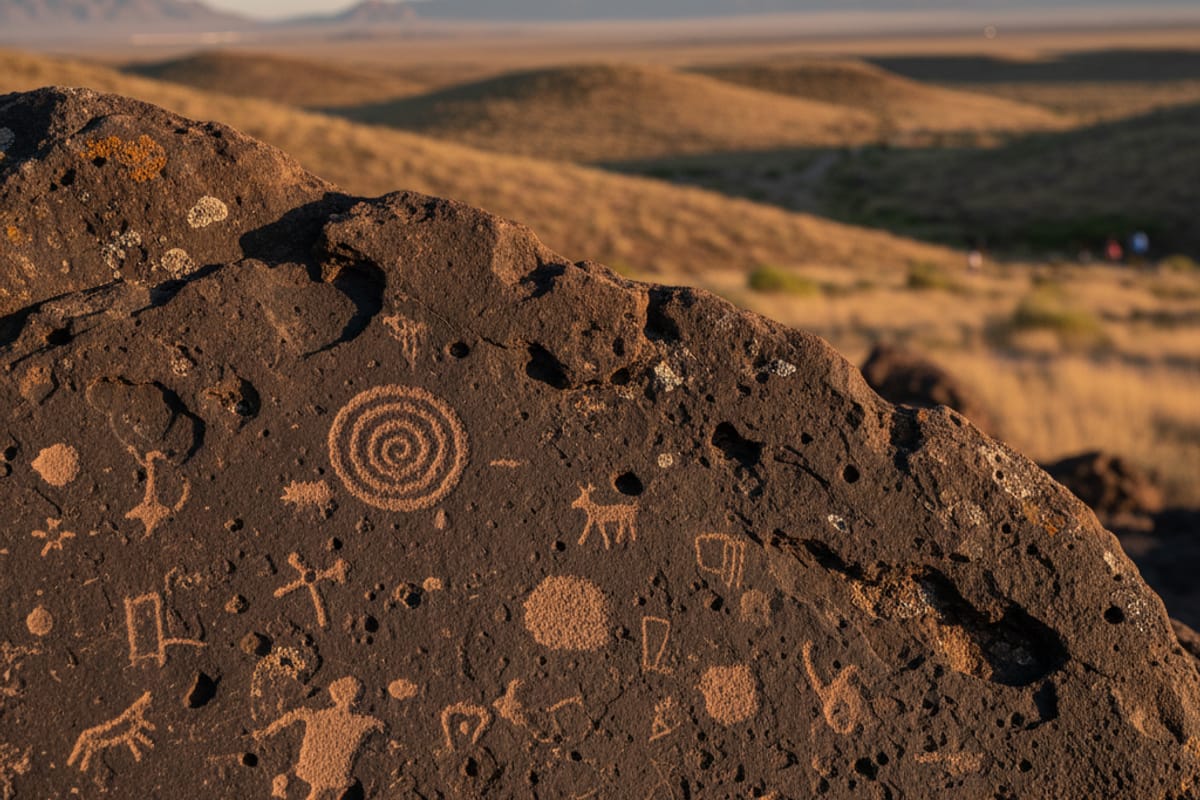 Petroglyphs at Boca Negra Canyon — some carved over 700 years ago.
Sunday Afternoon: The Rio Grande and the Bosque
After the petroglyphs, cross back through the city to the Rio Grande for a different kind of natural experience. The Bosque — the cottonwood forest along the river — is one of the largest urban forests in the country, and it's the ecological heart of Albuquerque.
Stop at the Rio Grande Nature Center State Park on Candelaria Road. The visitor center has large viewing windows overlooking a pond where you can watch birds without disturbing them — great blue herons, sandhill cranes (in fall and winter), various ducks, and the occasional roadrunner. The center has exhibits on the Bosque ecosystem and the Rio Grande's role in shaping the landscape of the Southwest. Entry is $3 per vehicle.
From the nature center, walk or bike the Paseo del Bosque Trail along the river. The trail is flat, paved, and shaded by enormous cottonwood trees. In October and November, the cottonwoods turn brilliant gold, and the trail becomes one of the most beautiful urban walks in America. In spring, the river runs higher and the birdsong is constant. Any time of year, it's a peaceful counterpoint to the city.
If you'd rather be on the water, Rio Grande Paddleboard and Kayak rents boards and kayaks for floating the river through the city. The current is gentle through the Albuquerque stretch, and the perspective from the water — looking up at cottonwood canopy with the Sandias in the distance — is completely different from anything you'd see from the bank. Half-day rentals are $40-60.
For a late lunch before heading to the airport or hitting the road, stop at Frontier Restaurant on Central Avenue near UNM. It's been an Albuquerque institution since 1971, it's open late, and the breakfast burritos and sweet rolls are the perfect closing meal for a weekend in the Duke City. A full meal here costs under $10, and eating at Frontier feels like a ritual — the John Wayne paintings on the walls, the communal energy, the green chile that ties everything together.
Alternatively, if you want to end on a more elevated note, Los Poblanos Farm Shop in the North Valley sells lavender products, local foods, and gift items from one of the most beautiful properties in the city. Even if you don't buy anything, walking the grounds of this historic lavender farm — cottonwood-shaded paths, gardens, and the gorgeous Rio Grande architecture — is a lovely way to close out your weekend.
The Albuquerque Sunport (airport) is 10 minutes from downtown with no traffic. Unlike most airports, it's small, efficient, and rarely stressful. The terminal features local art and a surprisingly good selection of New Mexican food — if you didn't get your fill of green chile over the weekend, the airport is your last chance before you're back in a city that doesn't understand what chile is supposed to taste like.
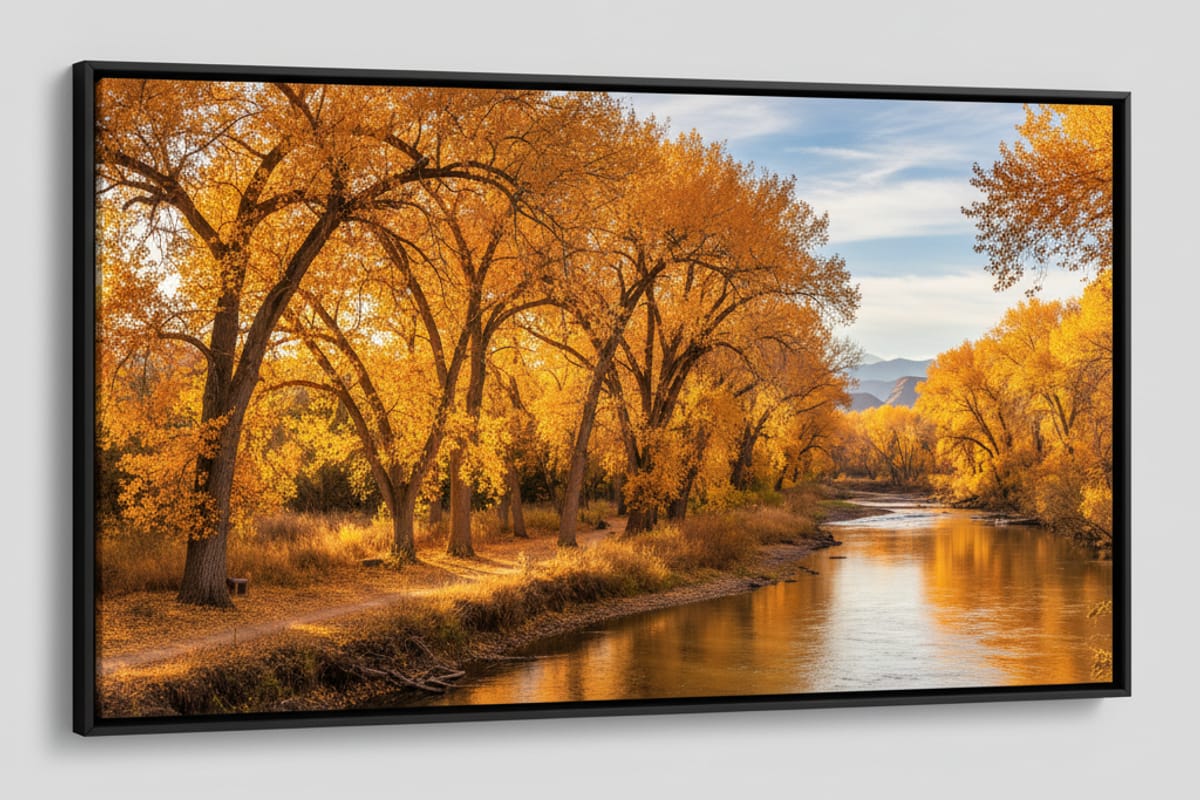 The Bosque along the Rio Grande — golden cottonwoods in the heart of the city.
Weekend Budget Breakdown
One of the best things about a weekend in Albuquerque is that it's genuinely affordable without feeling like you're cutting corners. This isn't a budget destination because it's lacking — it's affordable because the cost of living in New Mexico is reasonable and the tourism infrastructure hasn't been inflated by decades of overcrowding.
Here's what a comfortable weekend for two actually costs:
Hotel (2 nights): $140-240 total at a solid mid-range hotel like Hotel Albuquerque in Old Town or Nativo Lodge on the north side. Boutique options like El Vado Motel (a restored Route 66 motor court) run $180-280 per night. Los Poblanos Historic Inn is the splurge at $250-350 per night, and it's worth it if your budget allows.
Food (all meals for 2 days): $80-140 for two people eating well. Breakfast burritos run $5-8 each. Lunch at a classic New Mexican spot is $12-18 per person with a drink. A nice dinner at Zinc or Farina is $60-90 for two with wine. A splurge dinner at Campo or Farm & Table is $120-180 for two.
Activities: Sandia Peak Tramway ($29 per person), Albuquerque Museum ($6 per person), Petroglyph National Monument (free, $3 parking), Rio Grande Nature Center ($3 per vehicle), BioPark ($14.50 per person if you go). Total for two: roughly $100-120.
Transportation: Uber/Lyft rides within the city run $8-15 each. If you rent a car, expect $35-50 per day plus gas. The city is spread out enough that a car is helpful, especially for the tramway and petroglyphs.
Total weekend for two: $500-800 for a comfortable, well-fed, activity-filled trip. That same weekend in Santa Fe would cost $800-1,400, and in a coastal city you'd be looking at $1,200-2,000. Albuquerque delivers 90% of the experience at 50% of the price, and the 10% you're missing is mostly pretension.
One more thing: the Albuquerque International Sunport (ABQ) is one of the easiest airports in America. Small, well-designed, and 10 minutes from downtown. Direct flights from most major cities, and airfare is often cheaper than flying to Denver or Phoenix. Southwest, United, and American all have good route networks from ABQ. Check fares early — Albuquerque is starting to get more attention as a destination, and the best deals go fast during Balloon Fiesta season (October).
Pro tip: If you're visiting between late September and mid-October, check whether your dates overlap with Balloon Fiesta. If they do, book hotels immediately — rates double and availability disappears months in advance. If your dates are flexible, the weeks just before or just after Balloon Fiesta offer perfect weather, fall colors, and normal prices.
Why Trust This Guide
Recommendations from locals across 240+ US cities via Recommended.app community data.
Explore More
This guide is part of our Albuquerque collection. Explore more guides for Albuquerque →
Albuquerque has 157 verified businesses on Recommended.app across 65 categories.
Hidden Gems Weekly
3 hidden gems, 2 local quotes, 1 home hack — every Monday. Free forever.
Unsubscribe anytime. No spam.
More from Travel Guides
 Travel Tips
Albuquerque on a Budget: One of America
 Travel Tips
Expedia vs Hotels.com 2026: Which Actually Saves You More Money?
 Travel Guide
Best Hotels in Miami 2026: South Beach to Wynwood (With Real Price Ranges)
 Travel Guide
Best Hotels in Nashville 2026: From Budget East Nashville to Downtown Luxury
 Travel Guide
Best Hotels in Las Vegas 2026: From Budget to High Rollers (With Real Price Data)
 Outdoor & Nature