
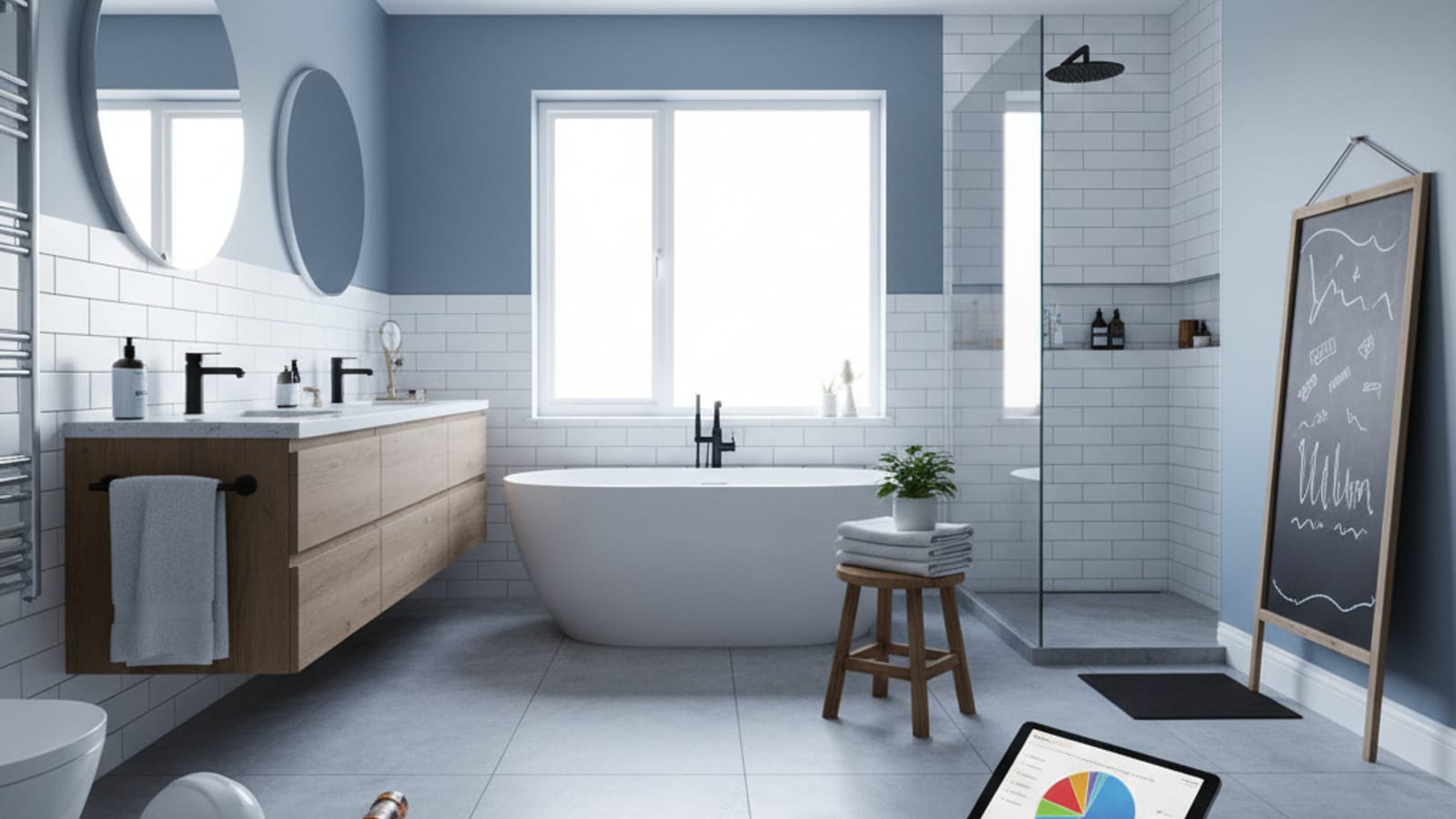
Last updated March 15, 2026 by the Recommended.app research team.
The Real Cost of a Bathroom Remodel in 2026
A bathroom remodel is one of the most popular home improvement projects in America — and one of the most expensive if you're not careful. The average cost ranges from $6,600 for a basic refresh to $28,000+ for a full gut renovation, with luxury remodels in major cities pushing past $50,000.
Here's the breakdown by project scope:
Basic refresh (cosmetic updates): $2,500–$6,500. This includes new paint, updated fixtures, a new vanity, mirror, and lighting. You keep the existing layout, plumbing, and tile. This is the best ROI option if you're selling within 2 years.
Mid-range remodel: $10,000–$22,000. New tile (floor and shower), new vanity and countertop, updated plumbing fixtures, new toilet, fresh lighting, and possibly a new tub or shower insert. This is the sweet spot for most homeowners.
High-end gut renovation: $25,000–$50,000+. Everything is stripped to the studs. New plumbing, new electrical, custom tile work, heated floors, frameless glass shower, double vanity, and premium fixtures. This is the "dream bathroom" tier.
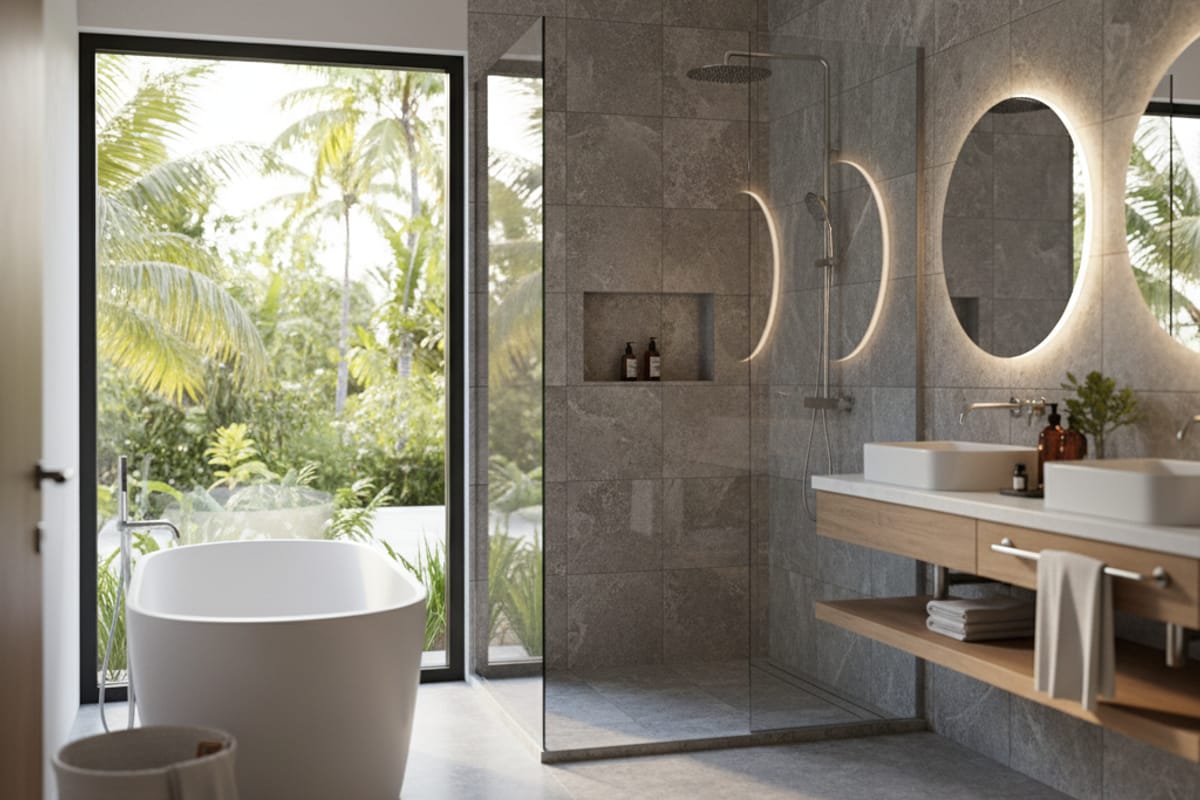 A mid-range bathroom remodel typically runs $10,000–$22,000.
Where the Money Actually Goes
Labor is the single biggest expense — typically 40–60% of the total budget. Here's a typical cost breakdown for a $15,000 mid-range remodel:
Labor (plumber, electrician, tile installer, general contractor): $6,000–$9,000. Tile and flooring materials: $1,500–$3,000. Vanity and countertop: $800–$2,500. Plumbing fixtures (faucet, showerhead, toilet): $500–$1,500. Lighting and electrical: $300–$800. Paint and finishing: $200–$500. Permits and inspection: $200–$500.
The materials you choose make a massive difference. Basic ceramic tile runs $1–$3/sq ft while natural stone is $10–$30/sq ft. A builder-grade vanity is $300 while a custom double vanity is $2,000+. Choose wisely based on how long you plan to stay in the home.
Pro tip: The biggest budget killer is changing the plumbing layout. Moving a toilet, sink, or shower to a different wall can add $2,000–$5,000 in plumbing and structural work alone. Keep the existing layout whenever possible.
What to DIY vs. What to Hire Out
Some bathroom work is absolutely DIY-friendly. Other work will cost you more to fix if you do it wrong than it would have cost to hire a pro in the first place.
Safe to DIY: Painting walls and ceiling. Replacing a toilet (it's just two bolts and a wax ring). Swapping a faucet. Installing a new mirror and lighting fixtures on existing wiring. Replacing cabinet hardware. Installing a towel bar or toilet paper holder.
Hire a licensed pro: Any plumbing that involves moving pipes or connecting to the main line. All electrical work beyond swapping a light fixture. Tile work (especially shower waterproofing — the #1 cause of expensive bathroom damage). Installing a new bathtub or shower pan. Any work that requires a building permit.
Pro tip: Shower waterproofing is the most critical step in any bathroom remodel. A failed waterproof membrane leads to mold, rot, and structural damage that costs $5,000–$15,000 to fix. This is never a DIY job unless you're a licensed contractor.
How to Hire the Right Contractor
A good contractor will make or break your remodel. Here's what to look for:
Get at least 3 detailed written estimates. Not ballpark numbers — itemized estimates that break down labor, materials, and timeline. If a contractor won't give you a written estimate, walk away.
Verify their license and insurance. Every state has a contractor licensing database. Check it. Ask for proof of liability insurance and workers' compensation. If they're not insured and someone gets hurt on your property, you're liable.
Check references and recent work. Ask for 3 references from the last 6 months and actually call them. Ask to see photos of completed bathrooms. Look at their Google and Yelp reviews — but also look for patterns in negative reviews, not just the star rating.
Questions to ask every contractor: How many bathroom remodels have you done this year? Who will be on-site daily? What's your payment schedule? What happens if we go over budget? Do you handle permits? What's your warranty on labor?
Common Scams and Red Flags
The home improvement industry has more than its share of bad actors. Watch for these red flags:
Demanding full payment upfront. Standard payment schedules are 10–30% deposit, progress payments at milestones, and final payment on completion. Anyone demanding 50%+ upfront is a red flag.
No written contract. Every detail should be in writing — scope of work, materials, timeline, payment schedule, warranty, and what happens if there are change orders. Verbal agreements are worthless when things go wrong.
Pressure to decide immediately. "This price is only good today" is a classic high-pressure tactic. Good contractors have enough work that they don't need to pressure you.
No license or insurance. This is non-negotiable. An unlicensed contractor who causes damage to your home isn't covered by your homeowner's insurance. You'll pay for the fix out of pocket.
Door-to-door solicitation. Legitimate contractors don't go door-to-door looking for work. This is almost always a scam or a sign of desperation.
Get Free Quotes from Top-Rated Pros
Ready to start your bathroom remodel? We've partnered with Angi to help you find licensed, insured, and reviewed contractors in your area. Get free quotes from multiple pros, compare prices and reviews, and hire with confidence.
The best time to schedule a bathroom remodel is late fall through early spring — contractors are less busy, and you may get better pricing. Avoid scheduling during the summer rush when demand is highest and wait times are longest.
Tools You'll Need
Whether you're doing prep work or small fixes yourself, these tools are worth having. A good tape measure ($10-15) is the foundation of any remodel — you'll use it constantly for measuring vanity space, tile layouts, and fixture placement. Check it out on Amazon (https://www.amazon.com/s?k=tape+measure+25+ft&tag=recommendedapp-20). A laser level ($25-40) takes the guesswork out of hanging mirrors, tile alignment, and making sure your vanity is perfectly straight (https://www.amazon.com/s?k=laser+level+tool&tag=recommendedapp-20). And a quality silicone caulk gun ($10-15) is essential for sealing around tubs, showers, and sinks — bad caulk jobs are the #1 cause of water damage in bathrooms (https://www.amazon.com/s?k=silicone+caulk+gun&tag=recommendedapp-20).
Why Trust This Guide
Recommendations from locals across 240+ US cities via Recommended.app community data.
Explore More
Hidden Gems Weekly
3 hidden gems, 2 local quotes, 1 home hack — every Monday. Free forever.
Unsubscribe anytime. No spam.
More from City Guides
 Home Services
Water Damage Restoration Near Me: What to Do in the First 24 Hours (2026 Guide)
 Food & Dining
Best Buffet in Las Vegas 2026: What's Still Worth It After the Great Buffet Collapse
 Food & Dining
Best Coffee Shops in Chicago 2026: 20 Cafes Worth Leaving Your Apartment For
 Food & Dining
Best Restaurants in Hilton Head 2026: 18 Spots Worth Every Dollar
 Food & Dining
Best Restaurants in Charlotte 2026: 20 Spots That Define the Queen City's Food Scene
 Food & Dining