
Last updated March 17, 2026 by the Recommended.app research team.
Pololu Valley Lookout & Trail: Nature/Hiking in North Kohala
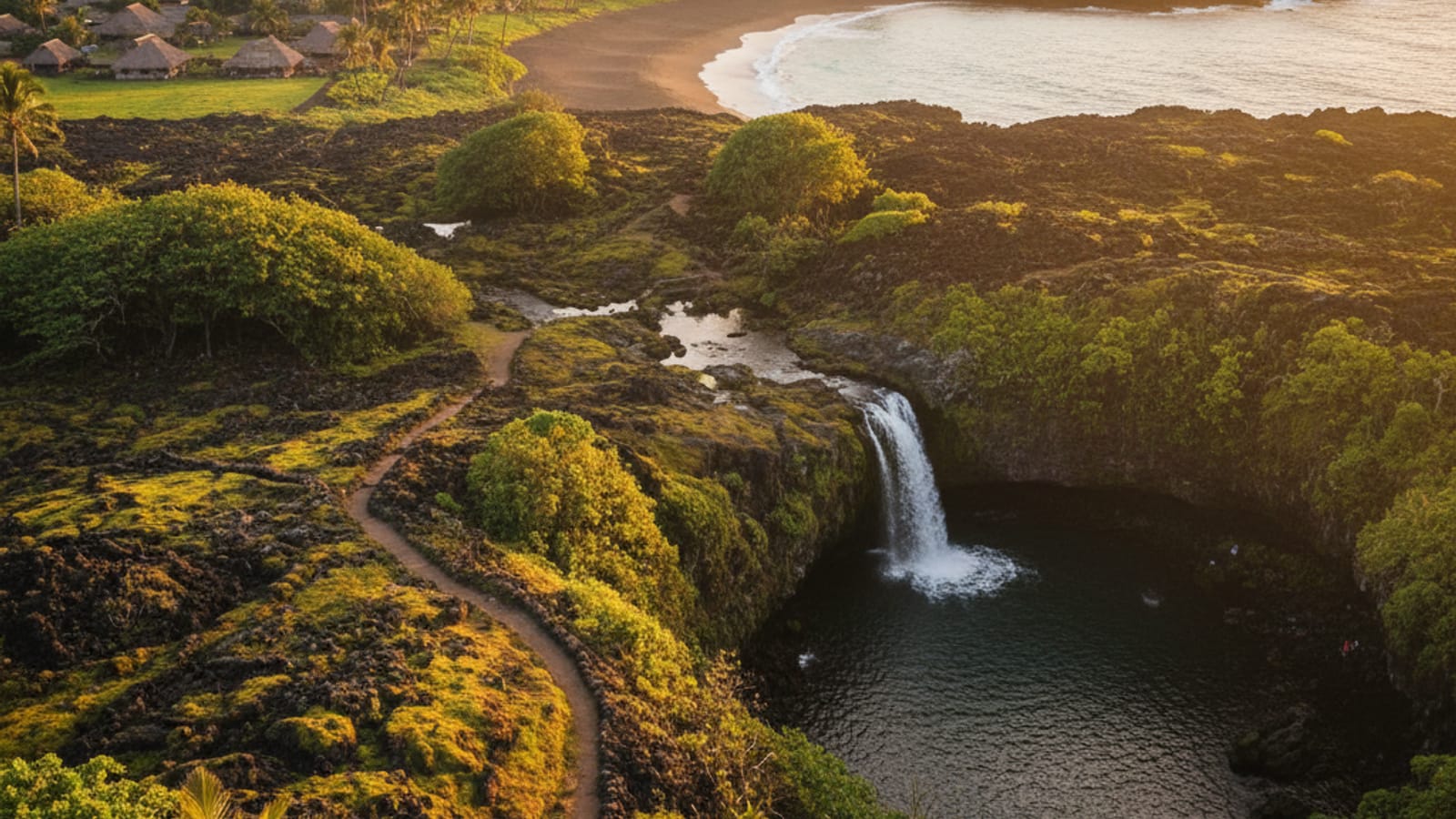
At the very northern tip of the Big Island, Highway 270 dead-ends at the Pololu Valley Lookout, where you're greeted with a jaw-dropping view of the rugged Kohala coast — a series of steep, verdant valleys cut into sea cliffs stretching into the distance. A steep but short trail descends to a dramatic black sand beach framed by ironwood trees and pounded by surf. Pololu gets a fraction of the visitors that the more famous Waipio Valley sees, and on a weekday morning you might have the beach entirely to yourself.
Pro tip: The hike down takes about 15 minutes, the climb back up about 30. The trail is steep and can be muddy — wear proper shoes. Don't swim — the currents are dangerous.
Puuhonua o Honaunau (Place of Refuge): Historic/Cultural in South Kona
This National Historical Park preserves a sacred Hawaiian site where those who broke kapu (sacred law) could flee for absolution. The royal grounds feature restored temples, carved wooden ki'i (deity images), and a massive stone wall built without mortar that has stood for centuries. The site sits on a beautiful stretch of coast, and the cultural significance and spiritual atmosphere make it far more than a typical historic monument. Snorkeling in the adjacent Two Step area is some of the best on the island.
Pro tip: Visit in the early morning when the grounds are quiet and the spiritual energy of the place is most palpable. The snorkeling at Two Step (just north of the park) has crystal-clear water and abundant sea turtles.
Akaka Falls State Park: Nature in Hamakua Coast
A short, easy loop trail through dense tropical rainforest leads to views of two spectacular waterfalls — Kahuna Falls and the star attraction, Akaka Falls, which plunges 442 feet into a gorge surrounded by lush vegetation. The trail passes through groves of bamboo, wild orchids, and towering banyan trees, creating a primordial atmosphere that feels like stepping back in time. The entire walk takes about 30 minutes and is accessible to visitors of all abilities.
Pro tip: Go early morning for the best light on the falls. The trail can be slippery after rain — which is frequent on this side of the island — so wear proper shoes.
Mauna Kea Summit: Nature/Astronomy in Central Big Island
At 13,796 feet, Mauna Kea is the tallest mountain in Hawaii and one of the best stargazing locations on Earth. The summit sits above 40% of Earth's atmosphere, and the cluster of international observatories testifies to the exceptional viewing conditions. The drive to the summit passes through distinct climate zones — from tropical to alpine desert — and the sunset from the top, watched from above the clouds, is otherworldly. The Visitor Information Station at 9,200 feet offers free nightly stargazing programs with telescopes.
Pro tip: The free stargazing program at the Visitor Information Station runs nightly and is world-class. Summit access requires 4WD. Acclimate at the visitor station before ascending.
Waipio Valley: Nature/Cultural in Hamakua Coast
The Valley of the Kings, Waipio is the largest and most sacred valley on the Big Island — a mile-wide amphitheater valley with 2,000-foot cliffs, a black sand beach, waterfalls, and taro fields that have been cultivated for over a thousand years. The lookout at the top provides one of the most spectacular views in all of Hawaii. Access to the valley floor is via an incredibly steep road (4WD required) or guided tours, and the valley remains home to a small community of Hawaiian families who maintain the traditional taro-farming way of life.
Pro tip: The lookout is free and accessible by any vehicle. To descend, book a guided tour — the road is dangerously steep and unauthorized vehicles risk fines.
Finding Your Own Hidden Gems in Big Island
The hidden gems listed above are starting points, but the real secret to discovering Big Island is to develop the traveler's instinct for places that feel real. When a neighborhood has more locals than tourists, when a park bench faces a view that nobody seems to photograph, when a small museum charges $5 and has no line — those are the signals. Big Island rewards the curious traveler who wanders without a rigid itinerary, who asks baristas and bartenders where they spend their days off, who takes the local bus instead of the tourist shuttle. The best hidden gems aren't hidden because they're obscure — they're hidden because they can't be captured in an Instagram post or a TripAdvisor rating. They're experiences that unfold slowly and reveal themselves to people who show up with time, curiosity, and a willingness to get a little lost. That's when Big Island shows you its real face, and it's always more interesting than the postcard version.
Why Trust This Guide
Recommendations from locals across 240+ US cities via Recommended.app community data.
Explore More
Related guides:
This guide is part of our Big Island collection. Explore more guides for Big Island →
Big Island has 147 verified businesses on Recommended.app across 61 categories.
Hidden Gems Weekly
3 hidden gems, 2 local quotes, 1 home hack — every Monday. Free forever.
Unsubscribe anytime. No spam.
More from City Guides
 City Guide
Big Island on a Budget: Free and Cheap Things to Do
 City Guide
We Asked Big Island Locals Where They Actually Eat — Here's What They Said
 City Guide
The Perfect Weekend in Big Island: A 2-Day Itinerary
 City Guide
First Time in Big Island? Locals Wish You Knew These 12 Things
 Home Services
Water Damage Restoration Near Me: What to Do in the First 24 Hours (2026 Guide)
 Food & Dining