
Last updated March 16, 2026 by the Recommended.app research team.
Rainbow Row & The Battery: Where Charleston Begins
If you only have one hour in Charleston, spend it walking from Rainbow Row to the Battery. Rainbow Row is a stretch of thirteen pastel-colored Georgian row houses on East Bay Street, and it is the single most photographed spot in the city for good reason. These homes date back to the 1740s and were originally built as merchant shops with residences above. The colors — coral, butter yellow, robin's egg blue, mint green — were supposedly chosen to help sailors identify their homes from the harbor, though historians debate whether that's fact or folklore. Either way, they are stunning, especially in morning light when the sun hits them directly and the crowds haven't arrived yet.
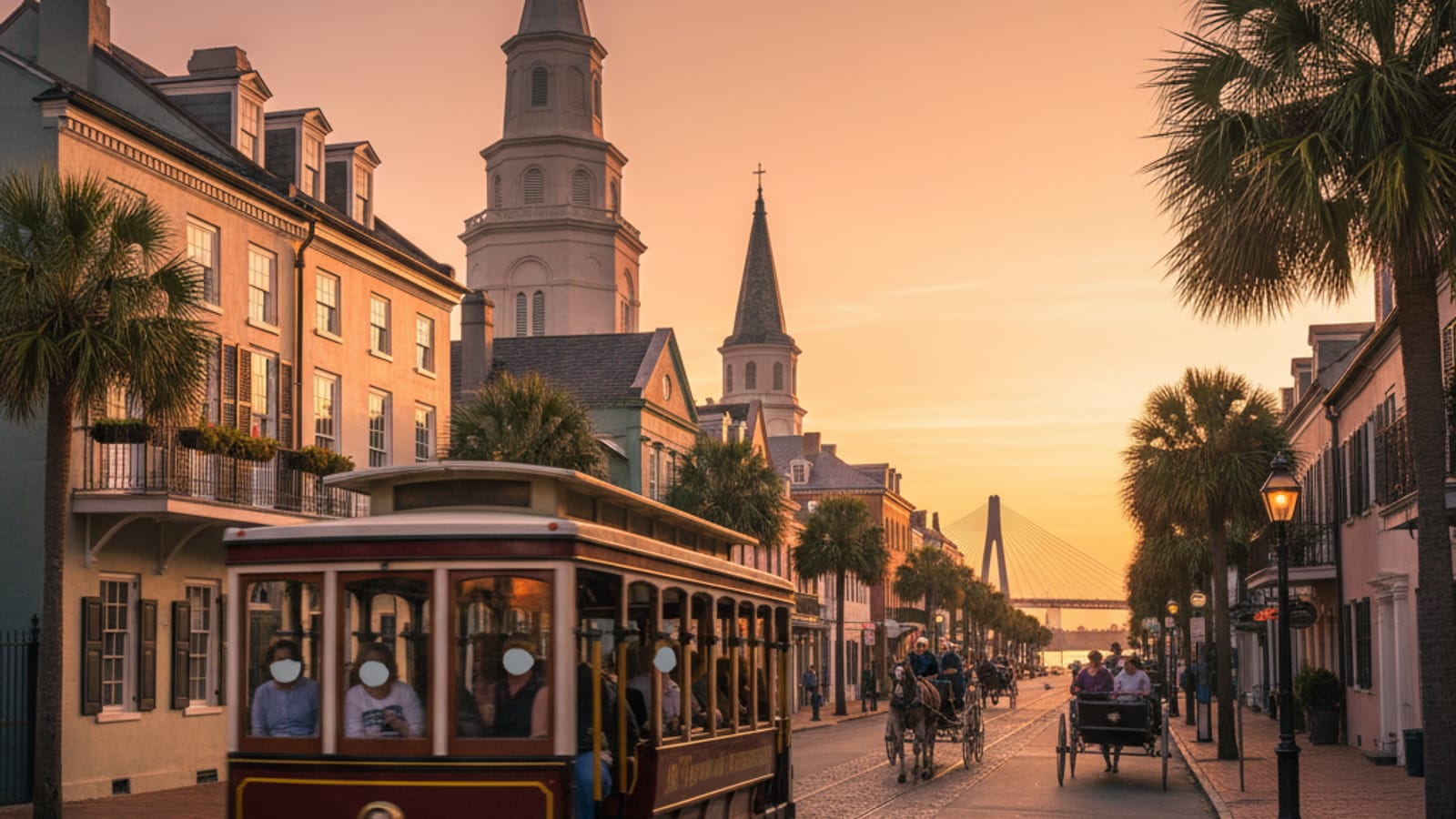
From Rainbow Row, walk south along the seawall to White Point Garden and the Battery. This is where the Ashley and Cooper Rivers meet to form the Charleston Harbor, and the views are spectacular. The promenade is lined with antebellum mansions, live oaks draped in Spanish moss, and Civil War-era cannons. You will see horse-drawn carriages clip-clopping past, couples taking engagement photos, and locals walking their dogs. It feels like stepping into another century, which is exactly the point.
The Battery itself is a defensive seawall and promenade that has protected Charleston since the Civil War. Stand at the tip and look out toward Fort Sumter — you can see the island fort where the first shots of the Civil War were fired in April 1861. The combination of history, architecture, and waterfront beauty makes this the finest free attraction in Charleston, and arguably one of the best in any American city. Plan to spend at least an hour here, more if you're a photographer or history buff.
Pro tip: Visit Rainbow Row before 9 AM or after 5 PM to avoid tour groups. The morning light is best for photos of the facades, while the evening golden hour makes the colors glow. Weekday mornings are the quietest.
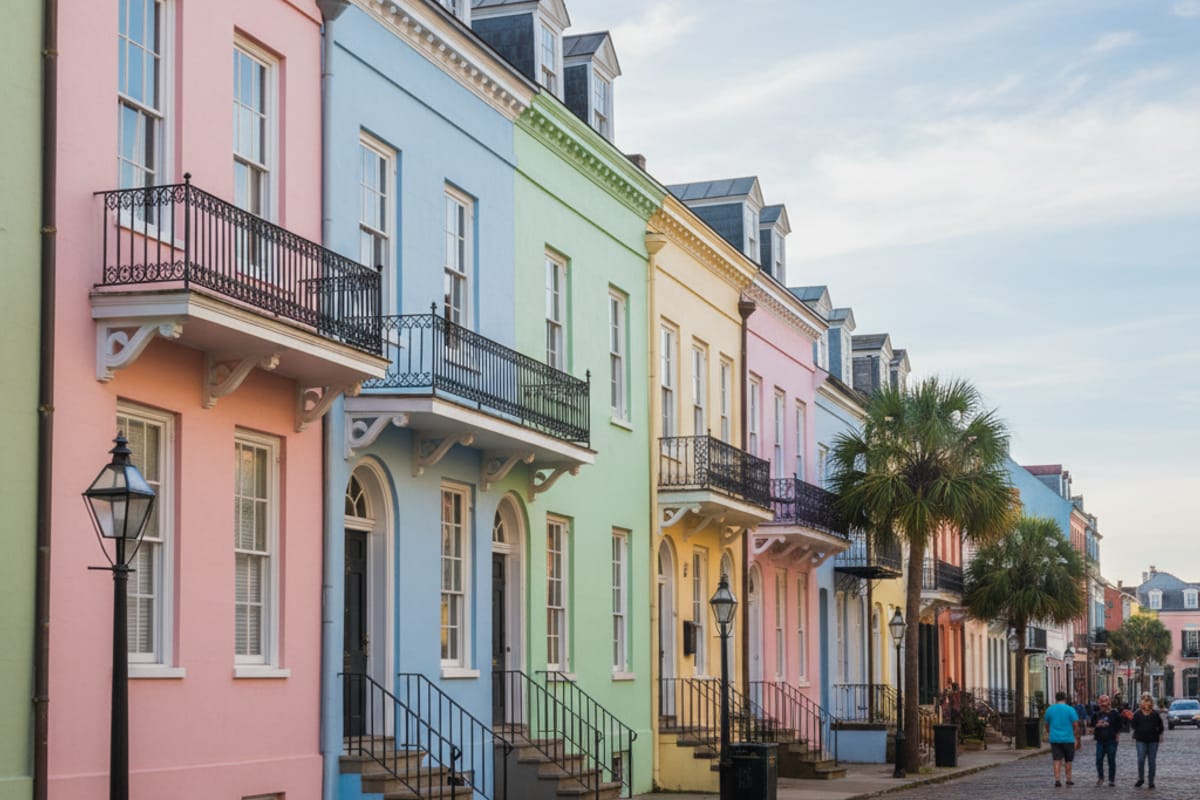 Rainbow Row — thirteen pastel houses that define Charleston's charm.
King Street: Shopping, Dining & Charleston's Main Artery
King Street is the spine of Charleston. It runs the entire length of the peninsula and is divided into three distinct sections, each with its own personality. Lower King (south of Broad Street) is antiques and galleries — high-end, old-money Charleston at its most refined. Middle King (Broad to Calhoun) is where the action is — national retailers mixed with local boutiques, restaurants, bars, and the best people-watching in the city. Upper King (north of Calhoun) is the food and nightlife district, with craft cocktail bars, rooftop lounges, and some of Charleston's most celebrated restaurants.
Start your King Street walk at the intersection with Broad Street, known locally as the Four Corners of Law because it features buildings representing federal, state, city, and religious authority (the post office, county courthouse, city hall, and St. Michael's Church). Walk north and you'll pass Berlins, a fantastic local clothing boutique, Croghan's Jewel Box, which has been selling jewelry since 1919, and Buxton Books, the kind of independent bookstore that makes you want to cancel your afternoon plans and just read.
Middle King is also where you'll find the Charleston City Market, a four-block open-air market that has operated continuously since 1804. Skip the mass-produced souvenirs near the front and walk to the back, where Gullah artisans weave sweetgrass baskets using techniques passed down through generations from West Africa. These baskets are the real deal — living art that connects Charleston to its complicated history. Expect to pay $50-200 for a genuine sweetgrass basket, and know that you're supporting a tradition that UNESCO has recognized as culturally significant.
For dinner on King Street, the options range from casual to refined. Leon's Oyster Shop serves fried chicken and oysters in a converted auto body shop. The Darling Oyster Bar has one of the best raw bars in the Southeast. And if you want the full Charleston fine-dining experience, walk one block off King to McCrady's Tavern, where the tasting menu will change how you think about Southern food.
Pro tip: King Street closes to vehicle traffic on the second Sunday of every month for a pedestrian-only street festival with live music, food vendors, and local artisans. If your trip overlaps with Second Sunday on King, don't miss it.
Husk & the Lowcountry Food Revolution
You cannot talk about Charleston without talking about Husk. Chef Sean Brock opened Husk in 2010 and it fundamentally changed American dining. The concept was radical at the time — every single ingredient on the menu had to come from the South. No olive oil from Italy, no butter from Vermont, no chocolate from Belgium. Everything sourced from Southern farms, Southern waters, Southern soil. The result was food that tasted like a place, not just a restaurant.
Husk's menu changes daily based on what's available, but the cornbread cooked in cast iron with heritage grain and the cheeseburger at lunch (widely considered one of the best burgers in America) are constants. The restaurant is housed in a gorgeous 1893 Queen Anne-style mansion on Queen Street, and eating there feels like dining in someone's impossibly beautiful home. Reservations are essential — book at least two weeks in advance, more for weekend dinners.
But Husk is just the beginning of Charleston's food story. The city has more James Beard Award-winning chefs per capita than almost anywhere in America. FIG (Food Is Good) on Meeting Street serves market-driven Lowcountry cuisine in a space that feels like a neighborhood bistro — their grilled fish and seasonal vegetables are extraordinary. The Ordinary, housed in a former bank building, serves some of the finest seafood on the East Coast — the lobster roll and the raw bar plateau are worth the trip alone. And Rodney Scott's BBQ, which won the James Beard Award for Best Chef Southeast, serves whole-hog barbecue that will ruin all other barbecue for you forever.
Lowcountry cuisine itself is a revelation if you've never experienced it. It draws from West African, French, Caribbean, and English cooking traditions, shaped by the unique ingredients of the coastal South — shrimp, crab, oysters, rice, okra, and field peas. She-crab soup is the signature dish — a creamy, sherry-laced bisque made with crab roe that you'll find on menus across the city. Shrimp and grits, once a humble fisherman's breakfast, has become Charleston's most famous dish, and every restaurant has its own version. Try the version at Hominy Grill (stone-ground grits with sauteed shrimp, mushrooms, and gravy) before it inevitably closes — places this good and this affordable in Charleston's historic district are becoming rare.
Pro tip: If you can't get a reservation at Husk for dinner, try lunch — it's walk-in only, the famous cheeseburger is on the menu, and the wait is usually under 30 minutes on weekdays.
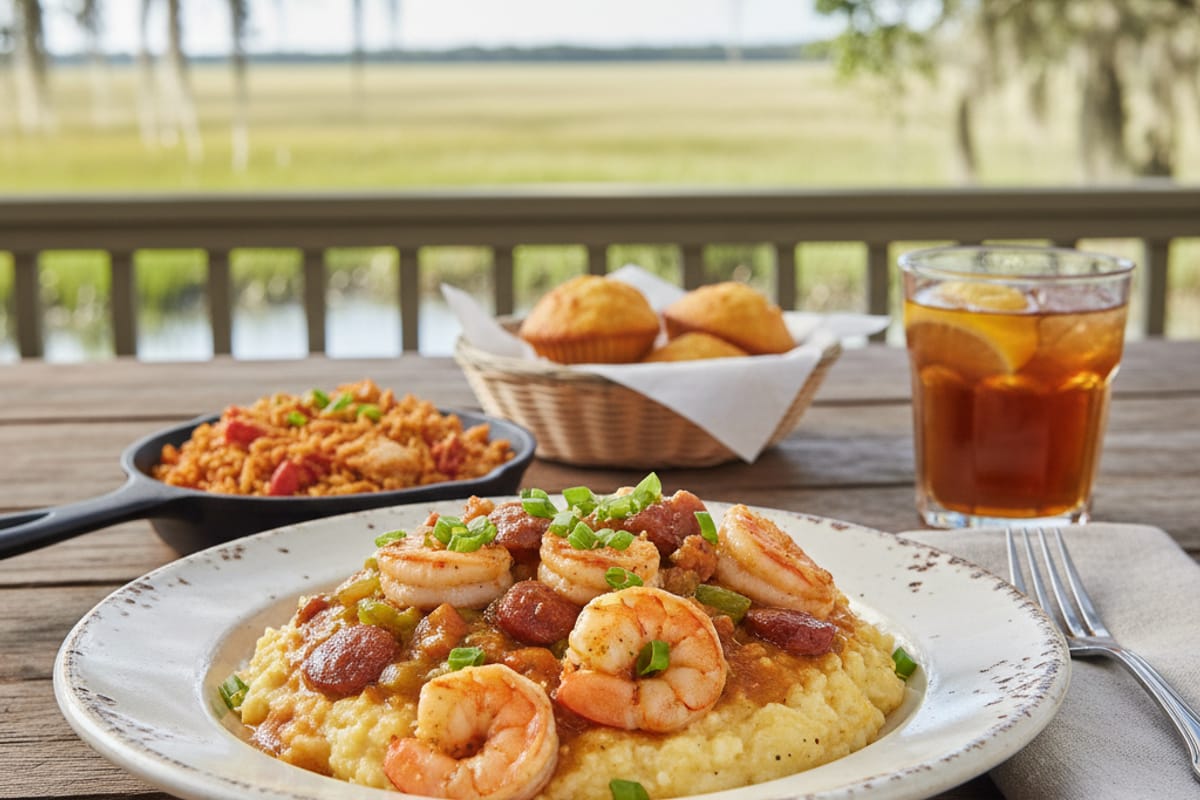 Lowcountry cuisine — where West African, French, and Caribbean traditions meet the coastal South.
Fort Sumter: Where the Civil War Began
Fort Sumter is a place every American should visit at least once. On April 12, 1861, Confederate batteries opened fire on this small island fort in Charleston Harbor, beginning the bloodiest war in American history. Today it's a National Monument managed by the National Park Service, and the only way to get there is by ferry from Liberty Square in downtown Charleston or from Patriots Point in Mount Pleasant.
The ferry ride itself is worth the trip — 30 minutes across the harbor with views of the Charleston skyline, the Ravenel Bridge, Castle Pinckney, and the harbor islands. On-board rangers provide narration about the harbor's military history, from the Revolutionary War through World War II. Once on the island, you'll walk through the remains of the fort, see the original gun emplacements, and visit a small but excellent museum with artifacts from the bombardment and the subsequent four-year siege.
What strikes most visitors is how small Fort Sumter actually is. This tiny man-made island, barely three acres, was the flashpoint for a war that killed 620,000 Americans. Standing in the ruins and looking back at Charleston — the church steeples, the pastel houses, the harbor — gives you a perspective on American history that no textbook can provide. The rangers are knowledgeable and passionate, and their talks add layers of context that make the experience genuinely moving.
Tickets are $24 for adults and include the ferry and fort admission. Buy them in advance at nps.gov — ferries run three to four times per day depending on the season, and they sell out regularly, especially during spring and fall. The entire excursion takes about two and a half hours. Bring sunscreen and water — there is very little shade on the island.
While you're in the harbor area, Patriots Point Naval and Maritime Museum in Mount Pleasant is worth a stop. You can tour the USS Yorktown aircraft carrier, a destroyer, and a submarine. It's a full half-day experience and excellent for families.
Pro tip: Book the first ferry of the day (usually 9:30 AM). The morning light is best for photos, the fort is less crowded, and you'll be back downtown by noon for lunch. The afternoon ferries in summer can be brutally hot.
Sullivan's Island: Charleston's Beach Escape
Sullivan's Island is not your typical beach town, and that's exactly why locals love it. There are no high-rise hotels, no boardwalks, no souvenir shops, no miniature golf courses. There are just beautiful, wide beaches, historic fortifications, a handful of excellent restaurants, and a quiet residential community that feels a million miles from the tourist bustle of downtown Charleston — even though it's only twenty minutes away by car.
The beach itself is gorgeous — wide, clean, and rarely crowded compared to Folly Beach or Isle of Palms. The sand is firm enough to walk or jog on, and the water is warm enough for swimming from May through October. There's no admission fee and street parking is free, which makes it one of the most affordable beach experiences on the East Coast. Bring your own chairs and umbrellas — there are no rental operations on the beach.
Beyond the beach, Sullivan's Island has real history. Fort Moultrie, located on the island, saw action in the Revolutionary War, the Civil War, and both World Wars. The fort complex traces the entire arc of American coastal defense from 1776 to 1947, and the National Park Service has done an excellent job preserving and interpreting each era. Edgar Allan Poe was stationed here as a soldier in 1827, and the island inspired his story "The Gold-Bug." A small library named after Poe and a gold bug sculpture on the island pay tribute to the connection.
For food on Sullivan's Island, Poe's Tavern serves outstanding burgers named after Poe's works — the Tell-Tale Heart with bacon and blue cheese is a local legend. The Obstinate Daughter offers upscale Italian-Lowcountry fusion with a rooftop bar overlooking the island. And Home Team BBQ, just across the bridge on the way back to Charleston, is where locals go for ribs, pulled pork, and frozen cocktails on the patio.
If you're choosing between Sullivan's Island and Folly Beach (Charleston's other popular beach), Sullivan's is quieter, cleaner, and more historic. Folly Beach has more of a surfer-town vibe with bars and shops along the main strip. Both are worth visiting if you have time, but if you only have one beach day, Sullivan's Island is the local recommendation.
Pro tip: Sullivan's Island parking fills up by 10 AM on summer weekends. Arrive early or come after 3 PM when families start leaving. The evening light on the beach is beautiful and the temperature drops to something manageable.
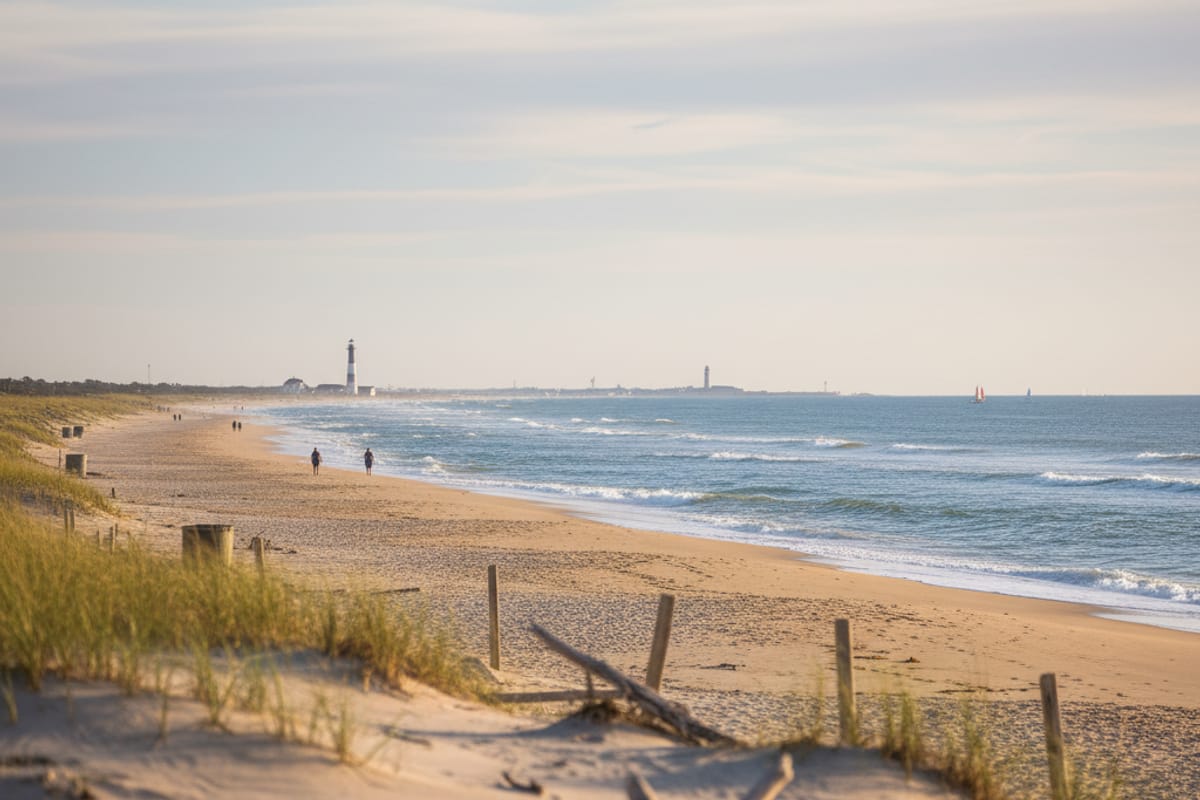 Sullivan's Island — no high-rises, no boardwalks, just a perfect Charleston beach.
Budget Breakdown: What Charleston Actually Costs
Charleston has a reputation for being expensive, and parts of it are — a dinner for two at Husk or FIG will run $150-200 with drinks. But the city is more affordable than most visitors expect if you know where to look and when to go.
Hotels: Downtown boutique hotels range from $200-400 per night in peak season (March-May and September-November). Budget travelers should look at hotels in West Ashley or Mount Pleasant, where rates drop to $120-180 per night and you're still only 10-15 minutes from the historic district. Vacation rentals in the Upper Peninsula neighborhood offer full apartments for $100-150 per night. Avoid the week of Spoleto Festival (late May to early June) when rates spike across the city.
Food: You can eat incredibly well for $30-50 per day. Callie's Hot Little Biscuit serves buttery, flaky biscuits for $3-5 each — get the pimento cheese biscuit and a coffee for under $8. Rodney Scott's BBQ offers pulled pork plates with two sides for about $14. Lewis Barbecue has brisket by the pound that rivals anything in Texas. For sit-down meals, lunch is almost always cheaper than dinner — Husk's lunch menu is half the price of dinner, and the food is just as good.
Activities: Walking the historic district is free. The Battery is free. White Point Garden is free. The City Market is free to browse. Fort Sumter ferry and admission is $24. Carriage tours run $30-40 per person. Plantation tours (Middleton Place, Boone Hall, Magnolia Plantation) range from $25-35. Most churches, including the stunning St. Philip's and the Circular Congregational Church, are free to visit.
Getting around: Charleston's historic district is extremely walkable — most attractions are within a one-mile radius. The free DASH trolley runs loops through downtown. Uber and Lyft are widely available and most rides within the peninsula are under $10. Parking downtown is $15-25 per day in garages; street metered parking is $2 per hour with a two-hour limit.
Realistic budget for a long weekend (3 nights): $800-1,200 per person including hotel, food, Fort Sumter, one carriage tour, and a nice dinner. That drops to $500-700 if you stay outside downtown and eat at casual spots. Charleston rewards the visitor who slows down and walks — the best things in this city are the architecture, the history, and the atmosphere, and those don't cost a thing.
Why Trust This Guide
Recommendations from locals across 240+ US cities via Recommended.app community data.
Explore More
Related guides:
This guide is part of our Charleston collection. Explore more guides for Charleston →
Charleston has 172 verified businesses on Recommended.app across 73 categories, with an average rating of 4.7 out of 5.
Hidden Gems Weekly
3 hidden gems, 2 local quotes, 1 home hack — every Monday. Free forever.
Unsubscribe anytime. No spam.
More from City Guides
 Food & Dining
Charleston: Historic Charm and Southern Food
 City Guide
Charleston Hidden Gems Tourists Walk Right Past
 City Guide
We Asked Charleston Locals Where They Actually Eat — Here's What They Said
 Home Services
Water Damage Restoration Near Me: What to Do in the First 24 Hours (2026 Guide)
 Food & Dining
Best Buffet in Las Vegas 2026: What's Still Worth It After the Great Buffet Collapse
 Food & Dining