
Last updated March 16, 2026 by the Recommended.app research team.
Angel Oak Tree: A Living Monument 400 Years in the Making
Twenty minutes southwest of downtown Charleston on Johns Island stands something that stops every visitor in their tracks — the Angel Oak Tree. This Southern live oak is estimated to be between 400 and 500 years old, making it one of the oldest living things east of the Mississippi River. Its trunk is nearly 28 feet in circumference, it stands 65 feet tall, and its longest branch extends 187 feet from the trunk. The canopy provides 17,200 square feet of shade. These numbers are impressive on paper, but they don't prepare you for the experience of standing beneath it.
The Angel Oak doesn't grow up so much as it grows out. Its massive limbs reach horizontally, dipping down to touch the ground before curving back upward, creating what looks like a natural cathedral. Some branches are so heavy and so long that they rest on the earth and then rise again, creating organic archways you can walk through. Spanish moss hangs from every surface, filtering the sunlight into something that feels almost sacred. Photographers spend hours here, and you'll understand why within seconds of arriving.
The tree is on city-owned property and admission is completely free. There's a small gift shop and parking lot, and the walk from the lot to the tree is about two minutes. The park is open daily from 9 AM to 5 PM. Visit on a weekday morning if possible — weekend afternoons draw significant crowds, and the experience is dramatically better when you have the space to yourself. The light is also best in the morning, when it filters through the canopy at low angles and creates dramatic shadows across the root system.
The Angel Oak has survived hurricanes, floods, earthquakes, and human encroachment for centuries. There was a significant battle a few years ago over a proposed housing development on adjacent land that would have threatened the tree's root system. Locals won that fight, and the surrounding property was purchased for conservation. It's a reminder that Charleston's relationship with its history is not passive — people here fight for it.
If you're driving to Angel Oak, continue south on Bohicket Road to Kiawah Island for one of the most beautiful drives in the Lowcountry — tunnels of live oaks, marshland views, and very few other cars. You don't need a gate pass to drive the public roads, and the scenery alone is worth the detour.
Pro tip: Bring a wide-angle lens or use your phone's wide mode — the tree is so massive that you cannot capture it in a standard frame from close range. The best full-tree shots are from the fence line on the approach path.
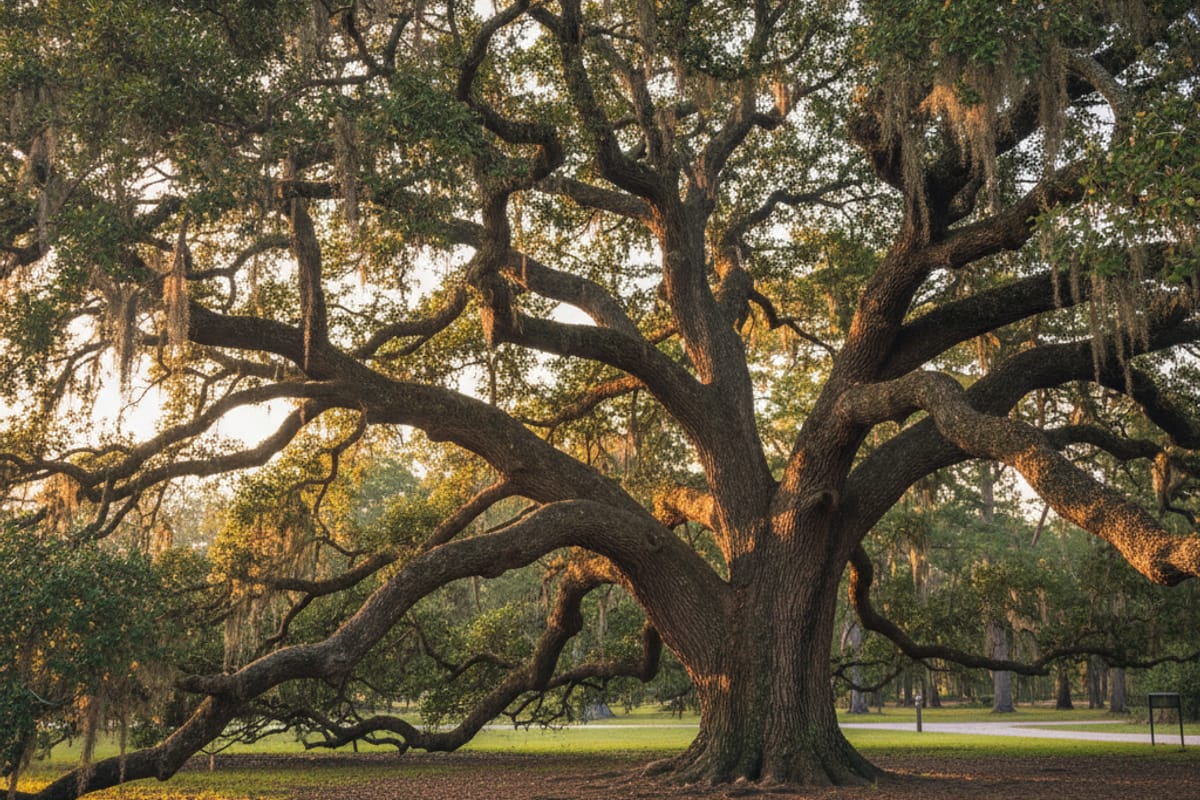 The Angel Oak — 400 years old and still growing outward, not upward.
The Darling Oyster Bar: Where Locals Actually Go for Seafood
Every food guide mentions Husk and FIG, and they should — they're exceptional restaurants. But if you ask a Charleston local where they go on a Tuesday night when they want great seafood without the fanfare, many of them will say The Darling Oyster Bar on Upper King Street. It's not hidden, exactly — it gets plenty of press — but it flies under the radar of most first-time visitors who are focused on the big-name reservation restaurants.
The Darling occupies a beautiful blue-tiled space that feels like a European brasserie crossed with a coastal fish house. The raw bar is the centerpiece, and they typically have six to eight oyster varieties on any given night, sourced from both coasts but with an emphasis on regional varieties from the Carolina coast and the Gulf. The oyster selection changes constantly, and the bartenders know the flavor profile of every variety — briny, sweet, creamy, mineral — and will guide you to something you love.
Beyond the raw bar, the menu is smart and unfussy. The fried oyster sliders are legendary — plump Lowcountry oysters in a crispy cornmeal coating on tiny brioche buns with pickled vegetables and a remoulade that has actual flavor. The lobster roll is New England-style (cold, with mayo) but made with a warm, buttered split-top bun that bridges the North-South divide beautifully. And the fish and chips, made with whatever's fresh that day, are better than they have any right to be at a place this stylish.
The cocktail program is excellent, with a focus on classic coastal drinks done precisely — a proper gin and tonic with the right ratio, a Dark and Stormy that actually uses real ginger beer, a Paloma that doesn't taste like it came from a mix. The wine list leans toward crisp whites and light reds that pair well with seafood, and the markup is reasonable by Charleston standards.
Dinner reservations are smart but not always necessary — the bar is first-come, first-served, and sitting at the bar is arguably the best seat in the house. You'll watch the raw bar team shuck at speed, chat with the bartenders, and feel like you've found the Charleston that exists between the tourist highlights and the locals-only dives.
Pro tip: Happy hour at The Darling runs Tuesday through Friday from 4-6 PM with $1 oysters and discounted drinks. Get there at 3:45 to grab a bar seat — by 4:15 it's standing room only.
North Morrison & Cannonborough-Elliotborough: Charleston's Coolest Neighborhoods
Most visitors to Charleston never venture north of Calhoun Street, and they're missing some of the most interesting parts of the city. The neighborhoods of North Morrison, Cannonborough, and Elliotborough — collectively referred to as the Upper Peninsula — have undergone a transformation over the past decade from overlooked residential areas to Charleston's most dynamic neighborhood for food, drink, and culture.
The Upper Peninsula is where Charleston's creative class lives and works. You'll find working artists' studios, independent design shops, natural wine bars, and restaurants that take more risks than the established spots on Lower King Street. The architecture is different too — instead of grand antebellum mansions, you'll see rows of Charleston single houses (narrow buildings oriented sideways to the street to catch the harbor breeze) and shotgun-style cottages in various states of beautiful decay and careful restoration.
Spring Street is the main artery of the neighborhood's food scene. Butcher and Bee serves some of the most creative brunch in Charleston — their hummus plate with seasonal vegetables and fresh pita is a must, and the shakshuka on weekends draws a crowd. Malagon, a Spanish-influenced small plates restaurant, offers an experience that feels more Barcelona than Lowcountry, with excellent sherry and patatas bravas. And Workshop, a craft cocktail bar and restaurant, is the kind of place where the bartender asks what flavors you like and then makes something off-menu that's better than anything on it.
The neighborhood also has some of Charleston's best coffee shops. Second State Coffee on upper King Street roasts their own beans and has a back patio that feels like a secret garden. Mercantile and Mash, a few blocks away, combines a coffee bar with a curated home goods shop in a beautifully renovated warehouse.
What makes the Upper Peninsula special is that it feels like a real neighborhood, not a tourism product. People live here, walk their dogs here, argue about parking here. The restaurants are full of locals, the prices are lower than on Lower King, and the vibe is relaxed in a way that the historic district can't quite match during peak season. It's Charleston's future, built on top of Charleston's past, and it's worth the ten-minute walk north from the market.
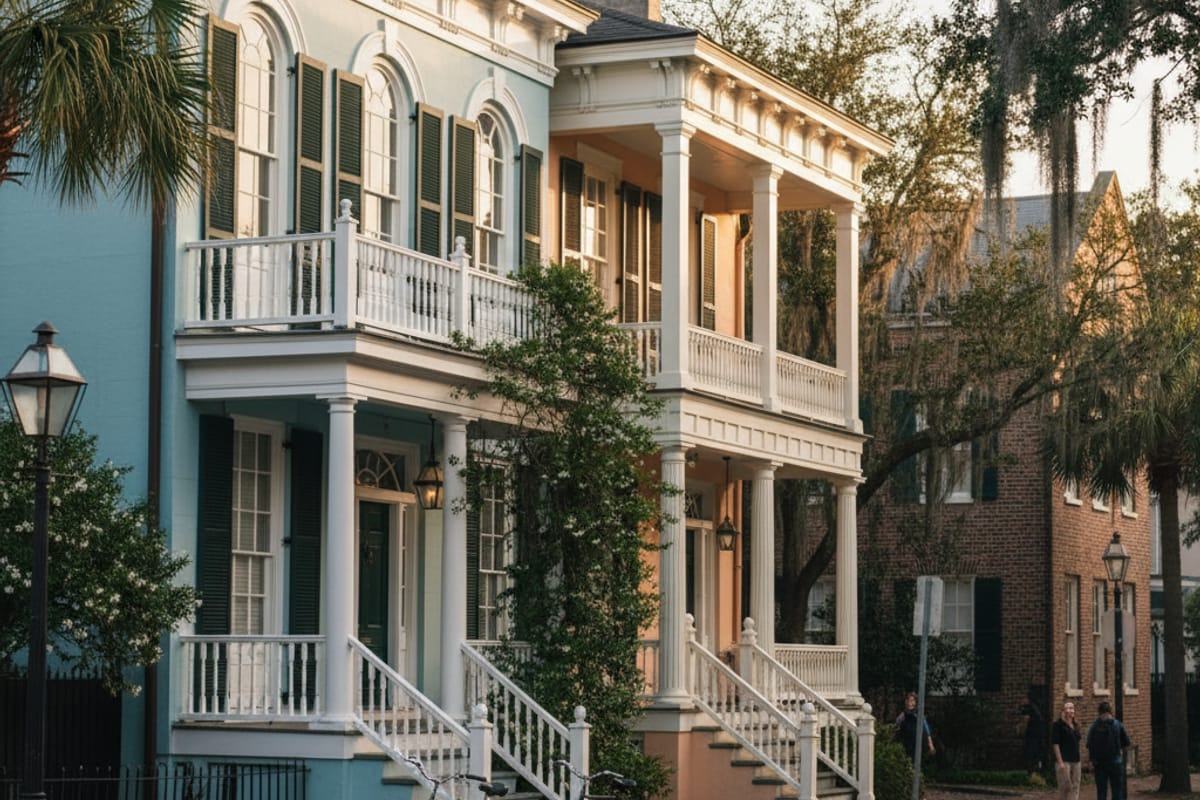 The Upper Peninsula — where Charleston's creative class meets its historic architecture.
Rooftop Bars: Where Charleston Meets the Sky
Charleston's rooftop bar scene has exploded in recent years, and for good reason — when your city has church steeples, harbor views, and sunsets that look like watercolor paintings, you want to be above it all. The best rooftop bars offer more than just views — they offer a perspective on Charleston that you simply cannot get at street level.
The Rooftop at the Vendue is the gold standard. Located atop the Vendue hotel on Vendue Range, it offers panoramic views of the harbor, Fort Sumter, and the Ravenel Bridge. The cocktails are well-crafted, the small plates are better than hotel-bar food has any right to be, and on a clear evening the sunset over the harbor is genuinely spectacular. It gets crowded on weekends — arrive by 5 PM to claim a spot along the railing. The hotel also has a serious art collection throughout its public spaces, so wander through the lobby and hallways on your way up.
Stars Restaurant and Rooftop Bar on Upper King Street is the locals' rooftop. Less polished than the Vendue, more fun. The views look west over the city's rooftop landscape toward the Ashley River, and the sunset light on the historic steeple skyline is extraordinary. The drink menu is straightforward — frozen cocktails, draft beer, solid mixed drinks — and the atmosphere is young and energetic without being chaotic. Live music on weekend evenings adds to the vibe without overpowering conversation.
Eleve on Meeting Street is the newest addition and arguably the most beautiful. Located atop the Grand Bohemian Hotel, it features an infinity pool (hotel guests only), a full cocktail bar with craft drinks, and views that sweep from the harbor to the historic district. The design is modern and elegant, a contrast to the historic buildings below, and the effect is striking. Cocktails are on the expensive side ($16-20) but the quality and the setting justify the price.
For a less obvious option, the rooftop at the Spectator Hotel on Chatham Street is small, intimate, and rarely crowded. It doesn't have the sweeping views of the Vendue, but it has a gentleman's-club atmosphere with leather furniture, an excellent bourbon selection, and a sense of quiet exclusivity that feels like old Charleston money. No reservations, no cover — just walk up and hope for a seat.
One local tip that most guides miss: the top floor of the parking garage at 90 Hasell Street offers some of the best views in Charleston for free. It's not a bar, there are no cocktails, but if you bring a bottle of wine and two cups and sit on the wall at sunset, you'll see the entire harbor, the bridge, and the steeple skyline lit up in gold. Locals have been doing this for years.
Pro tip: Charleston's best sunsets happen in late September and October, when the angle of light creates dramatic colors over the harbor. The humidity drops, the light goes golden, and the rooftop bars are at their absolute best.
Shem Creek: Dolphins, Shrimp Boats & the Real Lowcountry
Shem Creek in Mount Pleasant, just across the Ravenel Bridge from downtown Charleston, is one of the most authentically Lowcountry places you'll find anywhere. This tidal creek was the center of Charleston's commercial shrimping industry for decades, and while development has brought restaurants and a boardwalk, the working shrimp boats are still there, bobbing at their docks with their outrigger nets spread like wings.
The Shem Creek Boardwalk is a half-mile elevated walkway that runs along the creek from Coleman Boulevard to the harbor. It's free, it's accessible, and it provides front-row seats to one of the best wildlife shows in the Southeast. Bottlenose dolphins swim up Shem Creek daily, chasing mullet and shrimp in the shallow water, and seeing them from the boardwalk — sometimes just fifteen feet away — is a genuine thrill. Great blue herons, egrets, pelicans, and ospreys are everywhere, especially at low tide when the mudflats are exposed and the birds are feeding.
The restaurants along Shem Creek range from casual to upscale, and the best ones have waterfront decks where you can eat while watching the dolphin parade. The Wreck of the Richard and Charlene is a locals-only institution — no sign on the building, cash only, and some of the freshest fried shrimp you'll ever eat. The name comes from a shrimp boat that was damaged in Hurricane Hugo and eventually became the restaurant's namesake. The atmosphere is no-frills — paper plates, plastic cups, picnic tables — and the food is exceptional because it comes off the boats docked next door.
Red's Ice House is the quintessential Shem Creek experience — a dockside bar and grill built on a floating dock, with frozen drinks, live music on weekends, and a vibe that captures the relaxed, sun-soaked spirit of the Lowcountry. It gets rowdy on summer weekends, but on a Wednesday afternoon it's one of the most pleasant places in greater Charleston to have a cold beer and watch the boats come in.
For a more upscale experience, Tavern and Table offers elevated Lowcountry cuisine with the same waterfront views — their rooftop bar is excellent and less crowded than the downtown options. And Old Village Post House in the adjacent Old Village neighborhood of Mount Pleasant serves refined Southern food in a building that's been operating as a tavern since 1890.
Kayaking on Shem Creek is the best way to experience it if you're even slightly adventurous. Several outfitters rent kayaks and paddleboards by the hour ($25-40), and paddling among the shrimp boats and dolphins in the early morning or late afternoon is something you'll remember long after you've forgotten which restaurant had the best she-crab soup.
Pro tip: The best dolphin sighting times are during incoming tides, when fish are pushed into the creek. Check a local tide chart and visit during the two hours before high tide for the best chances. Early morning and late afternoon are also prime times.
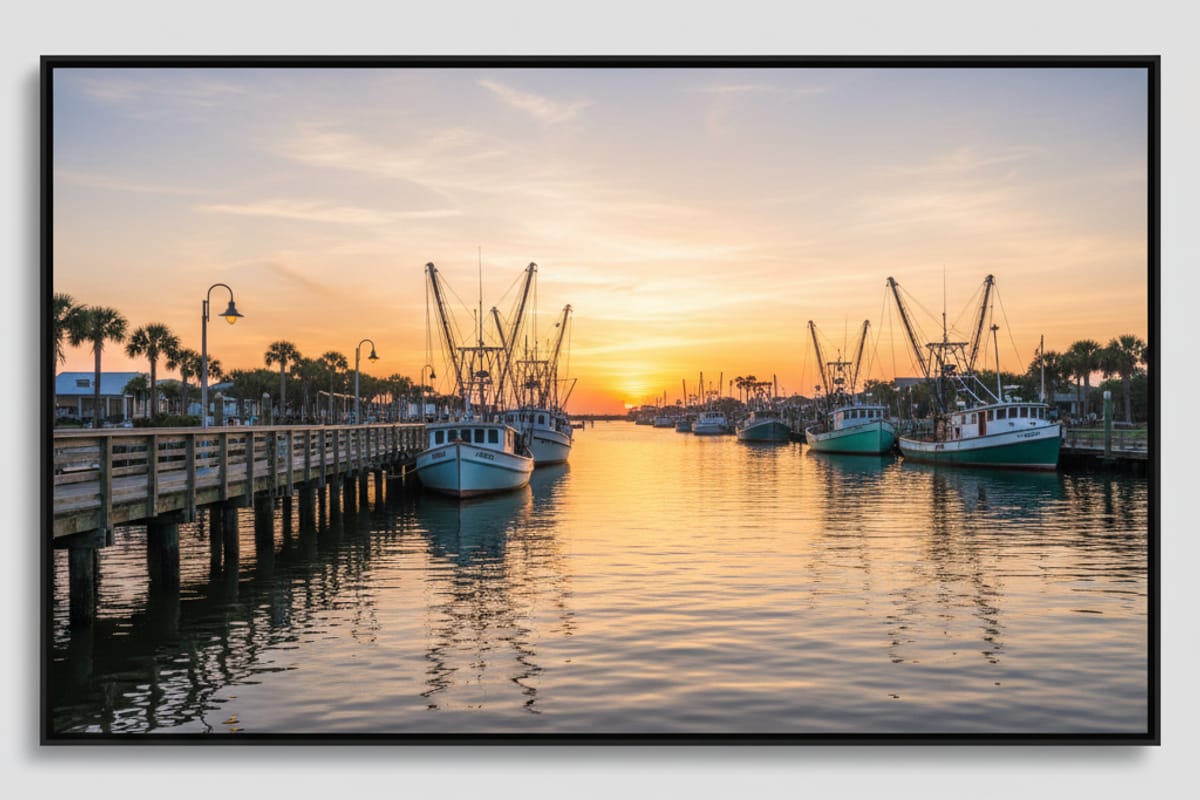 Shem Creek — where working shrimp boats and dolphins share the water.
Sweetgrass Baskets: Charleston's Living Art Form
Of all the hidden gems in Charleston, sweetgrass baskets may be the most culturally significant. These coiled baskets are made by Gullah Geechee artisans using techniques that trace directly back to West Africa — specifically to the rice-growing regions of Sierra Leone, Senegal, and other coastal nations. Enslaved Africans brought this basketmaking tradition to the Lowcountry in the 17th century, originally crafting work baskets (called fanner baskets) used in the production of rice on the plantations. Over centuries, the tradition evolved from functional agricultural tools into fine art, with increasingly intricate designs and decorative purposes.
Today, sweetgrass baskets are made by sewing together bundles of sweetgrass, pine needles, bulrush, and palmetto leaves using a bone or metal tool. The process is entirely done by hand, and a single basket can take weeks or even months to complete depending on its size and complexity. The coiling technique creates beautiful spiral patterns, and accomplished weavers incorporate different materials to create contrasting colors and textures. No two baskets are exactly alike.
You'll find sweetgrass basket weavers in several locations around Charleston. The most visible are in the rear section of the Charleston City Market, where Gullah artisans have been selling baskets for generations. Watching them work — the speed of their hands, the precision of the coils, the seemingly effortless symmetry — is mesmerizing. Don't be shy about asking questions; most weavers are happy to explain their techniques and the history behind them.
For a deeper experience, drive north on Highway 17 toward Mount Pleasant and you'll pass roadside basket stands along the highway. These stands, often just wooden tables shaded by umbrellas, have been family operations for decades. The baskets here tend to be less expensive than in the City Market, and you're more likely to have a real conversation with the weaver about their family's tradition. Some stands are run by third and fourth-generation basketmakers who learned from grandmothers who learned from great-grandmothers.
Prices for genuine sweetgrass baskets range from $40 for small, simple designs to $2,000 or more for large, complex show pieces. This is not overpriced — it reflects the extraordinary labor, skill, and cultural heritage embedded in every basket. Be wary of mass-produced imitations sold by non-Gullah vendors, particularly near the cruise terminal. A genuine sweetgrass basket will smell faintly sweet (that's the grass), will be slightly flexible, and the weaver will be able to tell you about their family's basketmaking history.
The sweetgrass basket tradition is under threat. The sweetgrass plant itself is becoming harder to find as development encroaches on the wild areas where it grows. Some weavers now travel hours to harvest enough grass for their work. Supporting this art by purchasing a basket isn't just buying a souvenir — it's helping sustain one of the most important African American art traditions in the country. The Avery Research Center at the College of Charleston has excellent exhibits on Gullah Geechee culture and the history of sweetgrass baskets if you want to learn more before you buy.
Pro tip: If you're serious about purchasing a sweetgrass basket, visit the stands on Highway 17 north of Mount Pleasant on a weekday. The prices are better, the selection is broader, and the weavers have more time to talk. Ask to see baskets in different stages of completion — understanding the process makes the finished product even more meaningful.
Why Trust This Guide
Recommendations from locals across 240+ US cities via Recommended.app community data.
Explore More
Related guides:
This guide is part of our Charleston collection. Explore more guides for Charleston →
Charleston has 172 verified businesses on Recommended.app across 73 categories, with an average rating of 4.7 out of 5.
Hidden Gems Weekly
3 hidden gems, 2 local quotes, 1 home hack — every Monday. Free forever.
Unsubscribe anytime. No spam.
More from City Guides
 Food & Dining
Charleston: Historic Charm and Southern Food
 City Guide
First Time in Charleston? Locals Wish You Knew These 12 Things
 City Guide
We Asked Charleston Locals Where They Actually Eat — Here's What They Said
 Home Services
Water Damage Restoration Near Me: What to Do in the First 24 Hours (2026 Guide)
 Food & Dining
Best Buffet in Las Vegas 2026: What's Still Worth It After the Great Buffet Collapse
 Food & Dining