
Last updated March 16, 2026 by the Recommended.app research team.
Saturday Morning: The Historic District on Foot
Start your Saturday at 8 AM with biscuits from Callie's Hot Little Biscuit on Upper King Street. Get a pimento cheese biscuit and a plain buttermilk, grab a coffee from the shop next door, and start walking south on King Street toward the Battery. The morning light in Charleston is extraordinary — it hits the pastel buildings at low angles and turns the whole city into a watercolor painting. The streets are quiet before 9 AM, the tour groups haven't formed yet, and you'll hear church bells and birdsong instead of carriage horse hooves.
Walk down King Street to Broad Street, then turn east toward the waterfront. This stretch of Broad Street is called the Four Corners of Law — the intersection features buildings representing federal, state, city, and church authority. St. Michael's Episcopal Church on the corner is the oldest church building in Charleston, dating to 1761, and its white steeple is the most iconic element of the city's skyline. The church is open for free visits most mornings, and the interior is worth seeing — simple, elegant, and largely unchanged for over 250 years.
From Broad Street, walk south on Church Street through the heart of the residential historic district. This is the Charleston that no itinerary can fully prepare you for — block after block of perfectly preserved 18th and 19th-century homes, each with its own personality. You'll see Charleston single houses (narrow homes turned sideways to the street with long side porches called piazzas), elaborate ironwork gates, secret gardens visible through wrought-iron fences, and centuries-old live oaks shading the sidewalks. The scale is intimate and human — no skyscrapers, no wide boulevards, just narrow streets and beautiful buildings that were built to last.
Continue south to Rainbow Row on East Bay Street. These thirteen pastel-colored Georgian row houses are the most photographed spot in Charleston, and they deserve every photo. The colors were restored in the 1930s and 1940s based on historical research, and they range from coral pink to butter yellow to mint green. Walk slowly, take your photos, and then continue south to White Point Garden and the Battery promenade. This is where the Ashley and Cooper Rivers meet to form Charleston Harbor, and the views — Fort Sumter in the distance, sailboats on the water, dolphins breaking the surface — are spectacular.
The entire walk from Callie's to the Battery is about two miles and should take 90 minutes to two hours at a comfortable pace with stops for photos. You'll cover the greatest hits of Charleston's architecture and history without paying a dime in admission fees. This is the foundation of your Charleston experience, and everything else builds on it.
If you want a deeper historical perspective, consider a guided walking tour. Bulldog Tours offers excellent two-hour historical walking tours that depart from the Powder Magazine at 10 AM. The guides are knowledgeable and passionate, and they tell the full story of Charleston — not just the beautiful mansions, but the enslaved people who built them, the disasters that nearly destroyed the city, and the complicated relationship between preservation and progress that defines Charleston today. Tours cost about $25-30 per person and are worth it.
Pro tip: Wear comfortable walking shoes with good support. Charleston's sidewalks are beautiful but uneven — they're made of original brick and stone in many places, and heels or thin-soled shoes will be uncomfortable by noon.
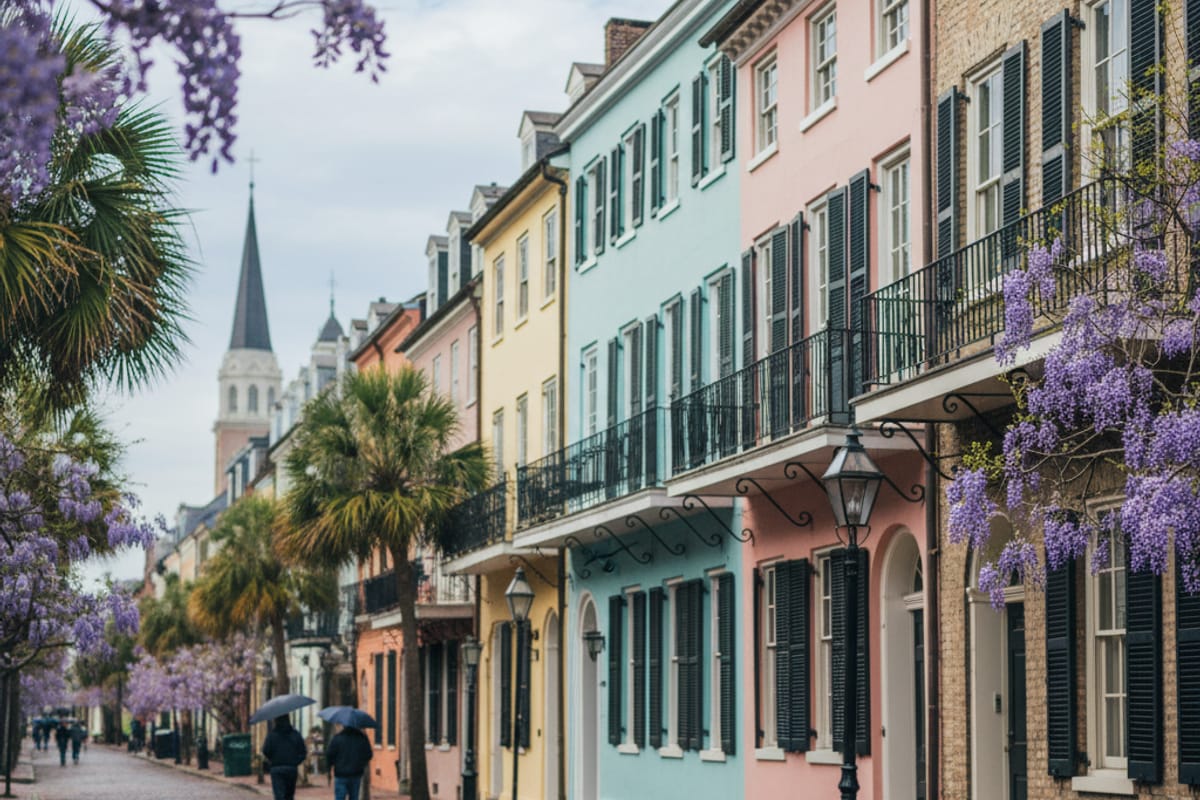 Rainbow Row at morning — thirteen houses, thirteen colors, one unforgettable block.
Saturday Afternoon: King Street & the City Market
After your morning walk through the historic district, head back to King Street for lunch and an afternoon of exploring. For lunch, you have two excellent options depending on your mood. If you want the iconic Charleston experience, go to Husk for their walk-in lunch service and order the famous cheeseburger — arrive by 11:30 AM to minimize the wait. If you want something more casual, Rodney Scott's BBQ on upper King Street serves some of the best whole-hog barbecue in America with pulled pork plates for about $14.
After lunch, walk King Street from north to south. Start in the Upper King district where the food and nightlife scene is concentrated and work your way down through the shopping district. Middle King, between Calhoun and Broad, is the main shopping stretch. Mix of national brands and local gems — stop at Croghan's Jewel Box for Charleston-made jewelry, Buxton Books for an independent bookstore experience, and Blue Bicycle Books on upper King for used and rare books in a beautifully cluttered space that feels like a treasure hunt.
The Charleston City Market is a four-block open-air market that has operated since 1804. It runs from Meeting Street to East Bay and is filled with vendors selling everything from local artwork to hot sauce to jewelry. Skip the mass-produced souvenirs near the front entrance and head to the back, where Gullah artisans weave sweetgrass baskets using techniques passed down from West Africa. These baskets are genuine cultural artifacts, not tourist trinkets, and watching the weavers work is one of the most memorable experiences in Charleston. Prices range from $40 for small baskets to several hundred for large, intricate pieces.
If you're interested in history beyond the pretty houses, consider visiting the Old Slave Mart Museum on Chalmers Street. This unassuming building was the last known slave auction gallery in South Carolina, operating until 1863. The museum inside is small but powerful, documenting the domestic slave trade that was central to Charleston's economy and the experiences of the enslaved people who were sold there. It's a sobering counterpoint to the beautiful architecture of the historic district, and it provides essential context for understanding Charleston's full history. Admission is $8.
Another afternoon option is a carriage tour through the historic district. Several companies offer 45-minute to one-hour tours in horse-drawn carriages that cover different routes through the residential neighborhoods. Old South Carriage Company and Palmetto Carriage Works are both well-reviewed. Tours cost $30-40 per person and depart from locations near the City Market. The guides are entertaining and knowledgeable, and the slow pace of the carriage gives you a different perspective on the architecture than walking does. Tours run throughout the afternoon, but the 3 PM or 4 PM departures are ideal — the light is softer and the temperatures are more comfortable.
Pro tip: The City Market's Night Market runs on Friday and Saturday evenings from March through December, with different vendors than the daytime market and a more festive atmosphere. It's worth a walk-through after dinner.
Saturday Evening: Dinner & Charleston After Dark
Saturday evening in Charleston is when the city shifts from charming to magical. The gas lamps on the streets flicker on, the restaurant patios fill up, and the warm air carries the smell of jasmine and cooking food through the narrow streets. This is the evening to splurge on a great dinner.
For a reservation dinner, FIG on Meeting Street is the choice. Chef Mike Lata's market-driven Lowcountry cuisine is consistently among the best food in the South — the seared fish, the ricotta gnocchi, and the seasonal vegetable preparations are extraordinary. Reserve at least a week in advance for a Saturday night. The wine list is superb, and the staff will guide you through it with genuine enthusiasm rather than pretension. Budget $55-80 per person for dinner with wine.
If FIG is booked, The Ordinary on King Street is an equally excellent option. The raw bar plateau — a tiered tower of oysters, clams, shrimp, and lobster — is the centerpiece, and the hot seafood dishes are just as impressive. The space, a former bank with soaring ceilings and marble floors, is one of the most beautiful restaurant interiors in America. Budget $60-100 per person.
For something more casual but equally memorable, try Leon's Oyster Shop on upper King Street. It occupies a converted auto body shop and serves fried chicken, oysters, and soft-serve ice cream in a lively atmosphere that captures Charleston's less formal side. No reservations — just put your name in and grab a drink from the bar while you wait. The fried chicken is outstanding and the house-made soft-serve is the perfect ending.
After dinner, Charleston's bar scene is concentrated on upper King Street and in the neighborhoods just off it. The Gin Joint on East Bay Street is the city's best cocktail bar — they specialize in classic cocktails made with precision and unusual ingredients, and the bartenders are friendly and approachable. Tell them what spirits you like and let them build something custom — it'll be better than anything on the menu. For a rooftop experience, head to the Vendue Rooftop Bar for harbor views and well-crafted drinks. The sunset will be over by the time you get there after dinner, but the nighttime views of the harbor and the Ravenel Bridge are gorgeous.
For live music, the Charleston Pour House in James Island hosts national touring acts and excellent local bands in an intimate venue. Check their calendar in advance. On King Street itself, several bars have live music on weekends — the Commodore is a prohibition-style bar with DJs and a dance floor that gets busy after 11 PM. The atmosphere is upscale without being exclusive, and the cocktails are strong.
Charleston is not a late-night city by New York or Chicago standards. Most bars close at 2 AM, and the vibe starts winding down around midnight outside of upper King Street. This is a city that gets up early and goes to bed at a reasonable hour, and your body will thank you tomorrow when you need to be at the Fort Sumter ferry by 9 AM.
Pro tip: Make your Saturday dinner reservation before you book your hotel. The best restaurants in Charleston fill up weeks in advance for Saturday nights, and your trip will be significantly better with a confirmed reservation at FIG, The Ordinary, or Husk. (Doing this trip cheap? Our Charleston budget travel guide covers the same neighborhoods at a third of the cost.)
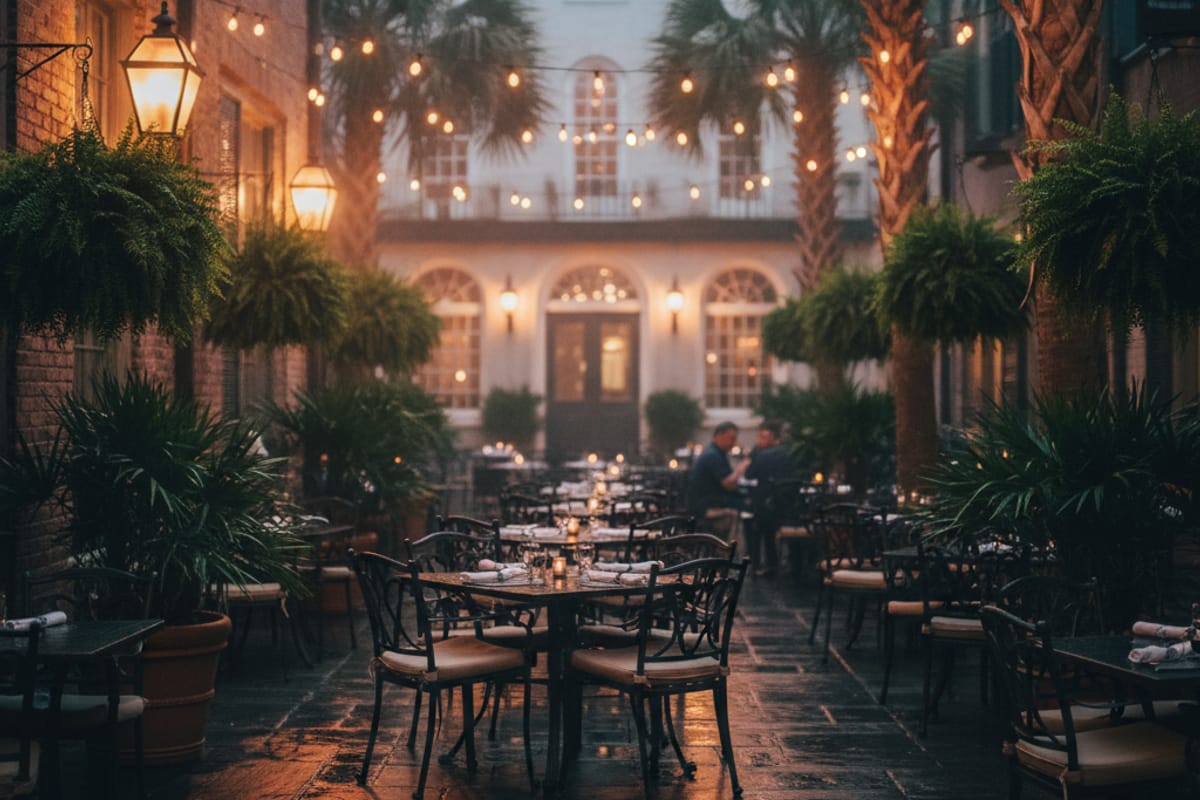 Saturday evening on King Street — gas lamps, good food, and the smell of jasmine.
Sunday Morning: Fort Sumter & the Harbor
Sunday morning, take the first ferry to Fort Sumter. The boat departs from Liberty Square at the Fort Sumter Visitor Education Center on Concord Street, usually at 9:30 AM (check the schedule, as it varies seasonally). Buy your tickets in advance at nps.gov — the first ferry sells out on weekends, especially in spring and fall. Tickets are $24 for adults and include the ferry ride and fort admission.
The ferry ride across Charleston Harbor takes about 30 minutes and is an experience in itself. On-board National Park Service rangers provide narration about the harbor's military history, from the Revolutionary War through World War II. You'll pass Castle Pinckney, Patriots Point (home to the USS Yorktown aircraft carrier), and the massive Ravenel Bridge. The views back at the Charleston skyline — the church steeples, the pastel buildings, the waterfront parks — are stunning and provide a perspective on the city you can't get from land.
Fort Sumter itself is a small man-made island, barely three acres, where the first shots of the Civil War were fired on April 12, 1861. Walking through the ruins of the fort is a sobering and moving experience. The original gun emplacements, the damaged walls, and the small museum with artifacts from the bombardment bring the history to life in a way that reading about it never can. The rangers on the island give excellent talks about the fort's history and the events that led to the war.
What strikes most visitors is the intimacy of the site. This isn't a vast battlefield — it's a tiny island where a small group of Union soldiers held out against an overwhelming bombardment, and where the course of American history changed in the space of 34 hours. Standing in the ruins and looking back at Charleston gives you a feeling for the scale of what happened here that no textbook can convey.
The round trip takes about two and a half hours, including an hour on the island. You'll be back downtown by noon, which gives you time for a quick lunch before heading to Sullivan's Island. For lunch near the ferry terminal, try Fleet Landing on the waterfront — it's a converted Navy building with harbor views and solid seafood. The fried shrimp basket and a local beer on the patio is a perfectly satisfying midday meal.
Alternatively, walk a few blocks to Hominy Grill for the Sunday brunch (they serve until 2:30 PM on Sundays). The shrimp and grits here is legendary, and the Big Nasty — a fried chicken breast on a biscuit with sausage gravy — is the kind of Southern breakfast that makes you want to take a nap immediately afterward. Which is fine, because you've already accomplished the most historically significant activity of the trip.
Pro tip: Bring sunscreen, a hat, and water to Fort Sumter — there is almost no shade on the island. The morning ferry is cooler and less crowded than the afternoon options. Binoculars are helpful for spotting dolphins in the harbor during the crossing.
Sunday Afternoon: Sullivan's Island & Beach Time
After lunch, drive across the Ravenel Bridge to Sullivan's Island. The drive takes about 20 minutes from downtown Charleston, and crossing the Ravenel Bridge — one of the longest cable-stayed bridges in the Western Hemisphere — is scenic in itself, with views of the harbor, the marshlands, and the barrier islands stretching into the distance.
Sullivan's Island is the anti-Myrtle Beach. There are no high-rise hotels, no boardwalks, no souvenir shops, no chain restaurants. The island is almost entirely residential, with wide beaches, historic military fortifications, and a few excellent restaurants and bars. The beach itself is gorgeous — wide, clean, and rarely crowded compared to Folly Beach or Isle of Palms. Parking is free on the street, and there's no admission fee. Bring your own chairs, towels, and umbrellas.
The water is warm enough for swimming from late April through October, and the waves are gentle enough for kids while still providing enough surf for boogie boarding. The sand is firm and wide at low tide, perfect for walking or jogging. If you're a reader, Sullivan's Island beach with a book and a cooler is one of the most pleasant ways to spend a Sunday afternoon on the East Coast.
Before or after the beach, visit Fort Moultrie, located on the island. This National Park Service site tells the story of American coastal defense from 1776 to 1947. The original fort, built of palmetto logs, famously repelled a British naval attack during the Revolutionary War — the spongy palmetto wood absorbed cannonballs instead of shattering, which is how the palmetto tree ended up on the South Carolina flag. The fort saw action again during the Civil War and was expanded during both World Wars. The ranger-led tours are excellent, and admission is included in your Fort Sumter ticket.
For food on Sullivan's Island, Poe's Tavern is the essential stop. Named after Edgar Allan Poe, who was stationed at Fort Moultrie as a young soldier in 1827, it serves outstanding burgers named after Poe's works. The Tell-Tale Heart (bacon, blue cheese, mushrooms) and the Gold Bug (guacamole, pepper jack, salsa) are local favorites. The atmosphere is casual and lively, with outdoor seating and a solid beer selection. Expect a wait on weekend afternoons — put your name in and walk to the beach until your table is ready.
The Obstinate Daughter, also on Sullivan's Island, offers a more upscale option with Italian-Lowcountry fusion cuisine and a rooftop bar with ocean views. The pizzas are excellent, the pasta is house-made, and the rooftop cocktails at sunset are a fitting end to a Charleston weekend.
As you drive back to Charleston across the Ravenel Bridge at sunset, with the city skyline glowing in the evening light and the harbor stretching out below you, you'll understand why people fall in love with this place. Charleston has a way of getting under your skin — it's beautiful and complicated and deeply human, and a weekend is just barely enough to scratch the surface.
Pro tip: Sullivan's Island parking fills up by mid-morning on summer weekends. Since you're arriving after lunch, park on the side streets near Fort Moultrie — there's usually more availability on the west end of the island.
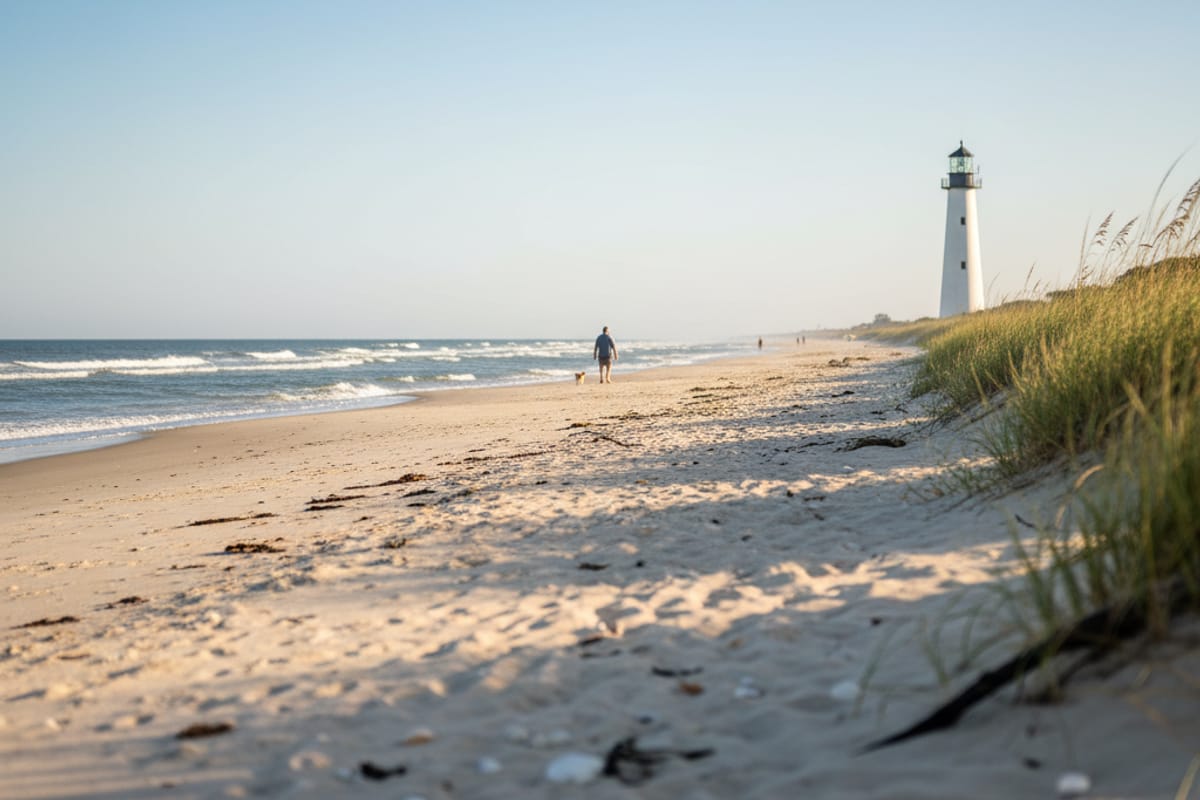 Sullivan's Island — no boardwalks, no high-rises, just a perfect beach.
Budget Breakdown: What This Weekend Costs
A Charleston weekend can be done at many price points. Here's what to expect at each level, based on the itinerary above.
Budget Weekend ($500-700 per person, based on two sharing a room): Hotel: $120-150/night at a hotel in West Ashley or Mount Pleasant (10-15 minutes from downtown). Three nights: $360-450 for the room, or $180-225 per person. Food: Callie's biscuits for breakfast ($8), Rodney Scott's BBQ for lunch ($14), Leon's Oyster Shop or casual dinner ($25-35). Daily food budget: $50-60. Activities: Walking the historic district (free), Fort Sumter ferry ($24), Sullivan's Island beach (free). One carriage tour ($35). Total activities: $60. Total per person: roughly $550.
Mid-Range Weekend ($800-1,200 per person): Hotel: $200-300/night at a boutique hotel downtown (The Vendue, The Spectator, Andrew Pinckney Inn). Three nights: $600-900 for the room, or $300-450 per person. Food: Callie's for breakfast ($8), Husk lunch burger ($25), one nice dinner at FIG or The Ordinary ($70-90 with wine), one casual dinner ($30-40). Daily food budget: $70-90. Activities: Fort Sumter ($24), carriage tour ($35), Old Slave Mart Museum ($8), rooftop bar drinks ($30). Total activities: $100. Total per person: roughly $900.
Splurge Weekend ($1,500-2,000 per person): Hotel: $350-500/night at a luxury property (Belmond Charleston Place, The Spectator, Wentworth Mansion). Fine dining both nights — Husk tasting menu and The Ordinary raw bar plateau. Private walking tour, kayaking at Shem Creek, shopping on King Street. Total per person: $1,500-2,000.
The sweet spot for most visitors is the mid-range budget. You'll stay downtown (which eliminates parking hassles and Uber costs), eat at least one truly exceptional meal, and experience the best of Charleston's history and culture without financial stress. The city is remarkably good at delivering value at every price point — the free activities (walking the historic district, the Battery, Sullivan's Island beach) are genuinely some of the best things to do, and the casual food options (Callie's, Rodney Scott's, Leon's) are as memorable as the fine-dining restaurants.
One cost-saving tip that applies across all budgets: visit in January, February, or early March. Hotel rates drop 30-50 percent, restaurant reservations are easy to get, and the weather, while cool, is perfectly pleasant for walking — daytime temperatures in the 50s and 60s. The crowds thin out dramatically, and the city feels more intimate and authentic. Spring (March-May) and fall (September-November) are peak season with the best weather but the highest prices and biggest crowds.
Why Trust This Guide
Recommendations from locals across 240+ US cities via Recommended.app community data.
Explore More
This guide is part of our Charleston collection. Explore more guides for Charleston →
Charleston has 172 verified businesses on Recommended.app across 73 categories, with an average rating of 4.7 out of 5.
Hidden Gems Weekly
3 hidden gems, 2 local quotes, 1 home hack — every Monday. Free forever.
Unsubscribe anytime. No spam.
More from Travel Guides
 Travel Tips
Charleston on a Budget: How to Enjoy the Holy City Without the Holy Price Tag
 Travel Tips
Expedia vs Hotels.com 2026: Which Actually Saves You More Money?
 Travel Guide
Best Hotels in Miami 2026: South Beach to Wynwood (With Real Price Ranges)
 Travel Guide
Best Hotels in Nashville 2026: From Budget East Nashville to Downtown Luxury
 Travel Guide
Best Hotels in Las Vegas 2026: From Budget to High Rollers (With Real Price Data)
 Outdoor & Nature