
Last updated March 16, 2026 by the Recommended.app research team.
Casino Hotel Deals: How to Sleep Cheap in Reno
Reno's casino hotels are the foundation of any budget trip, and the deals available here are genuinely remarkable compared to other Western cities. The casino business model works in your favor — hotels price rooms low to get you onto the gaming floor, which means you can sleep in a perfectly decent room for the cost of a hostel bed in San Francisco.
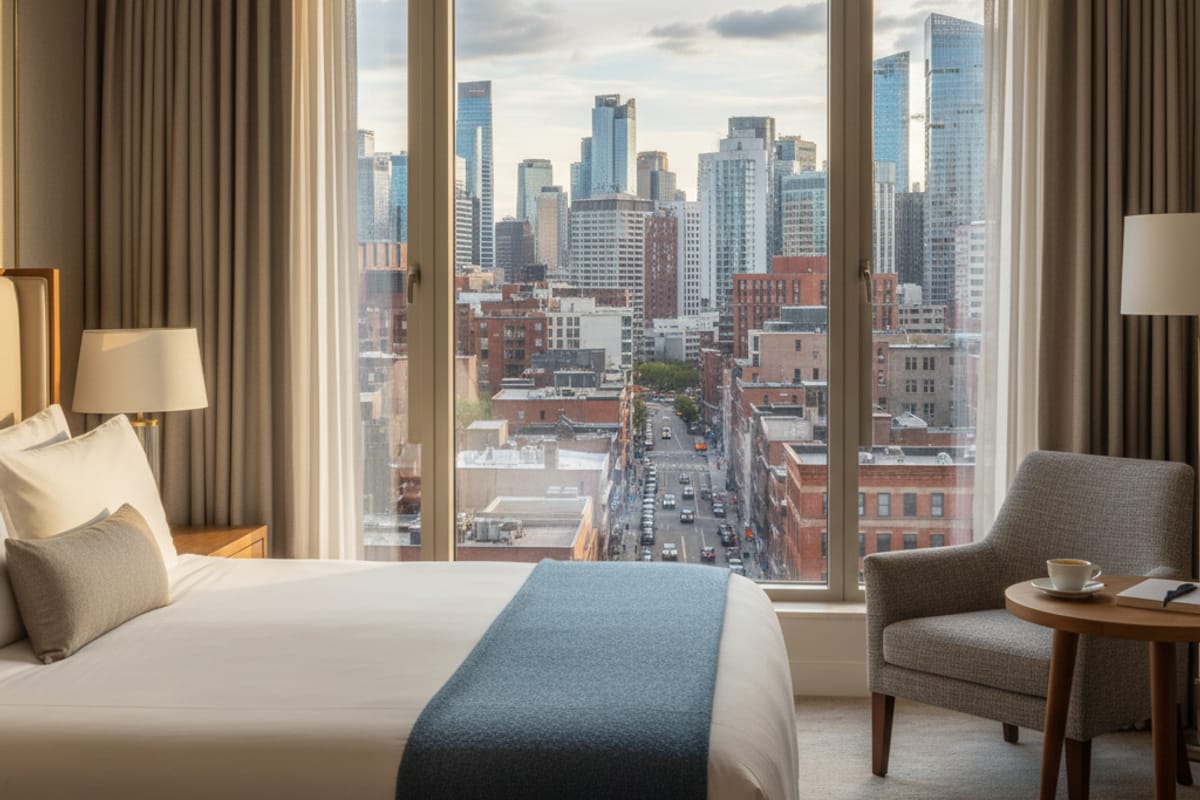
Midweek rates at the major downtown casinos (Eldorado, Silver Legacy, Circus Circus) regularly drop to $35-60 per night. These aren't luxury suites, but they're clean, comfortable rooms with all the basics — queen or king bed, bathroom, Wi-Fi, and access to the casino amenities including pools and fitness centers. Weekend rates bump up to $70-130, which is still excellent value for a downtown hotel in a city with this much to do.
The player's club hack is the single best budget strategy for casino hotels. Sign up for the loyalty card at whichever casino you're staying at (it's free and takes two minutes at the player's club desk). Even if you don't gamble at all, having the card sometimes unlocks room discounts, and the casinos will start sending you promotional offers for future visits — including deeply discounted or free room nights — within weeks of your first stay.
If you do gamble, run all your play through the card. Even modest gambling ($50-100 over a weekend) can generate enough points for a free meal or drink. Some players report getting comped room offers for future visits after a single weekend of moderate play. The system is designed to build loyalty, and budget travelers can work it to their advantage.
Beyond the casinos, Reno has solid budget accommodation options. The Wildflower Village in Midtown is a motel that's been updated with modern touches — clean rooms, decent beds, walkable to everything in Midtown — for $60-90 per night. Airbnb and VRBO options in the Midtown and University areas run $50-100 per night for private rooms or small apartments, and put you in neighborhoods with character instead of the casino district.
The Whitney Peak Hotel is the splurge option for budget travelers — the only non-gaming hotel downtown, with rooms starting around $100-130. It's worth mentioning because it occasionally runs promotions that bring rates down to casino-hotel territory, and the experience is significantly different from a casino. They have a climbing wall on the exterior of the building and a bouldering gym inside, both free for guests.
One timing tip: Reno hotel prices spike during major events — Hot August Nights, the Reno Air Races, and any big convention can double or triple normal rates. Check the events calendar before booking. Conversely, January through March (excluding holiday weekends) is the cheapest time to visit, with rooms at rock-bottom prices and the ski resorts providing a reason to be there.
Pro tip: Book directly through the casino's website rather than third-party sites like Expedia or Booking.com. Casino websites frequently offer exclusive rates and packages that include dining credits or show tickets. Also, calling the hotel directly and asking for their best available rate sometimes beats online pricing.
 Casino hotels in Reno start at $35-60/night midweek — seriously.
Free Outdoor Activities: Reno's Best Stuff Costs Nothing
The single biggest advantage Reno has for budget travelers is that its best experiences are free. The city is surrounded by public lands, trails, and natural areas that don't charge admission, don't require reservations, and are accessible year-round.
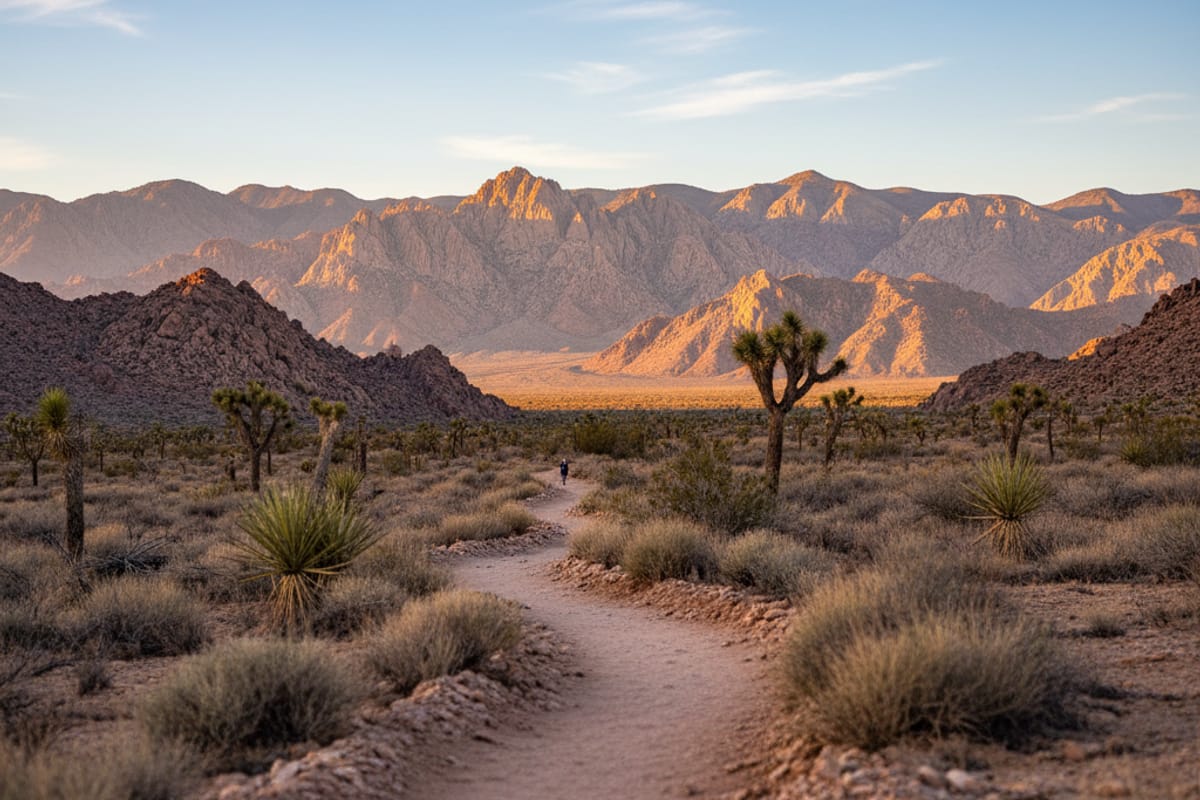
Hunter Creek Falls is the hike that every Reno local recommends first, and it's completely free. The trailhead is a 10-minute drive from downtown (or a 30-minute walk from Midtown), and the trail winds 3 miles through a canyon to a seasonal waterfall that's at its most impressive in spring and early summer. The trail is moderate — some elevation gain and rocky sections — but manageable for anyone in reasonable shape. Bring water and sturdy shoes.
Rancho San Rafael Regional Park covers 580 acres on the north side of Reno and offers meadows, walking trails, and mountain views without charging a cent. The park hosts free community events throughout the year, including the Artown festival in July. The Wilbur D. May Arboretum inside the park charges a small fee ($5), but the rest of the park — including miles of trails and picnic areas — is free.
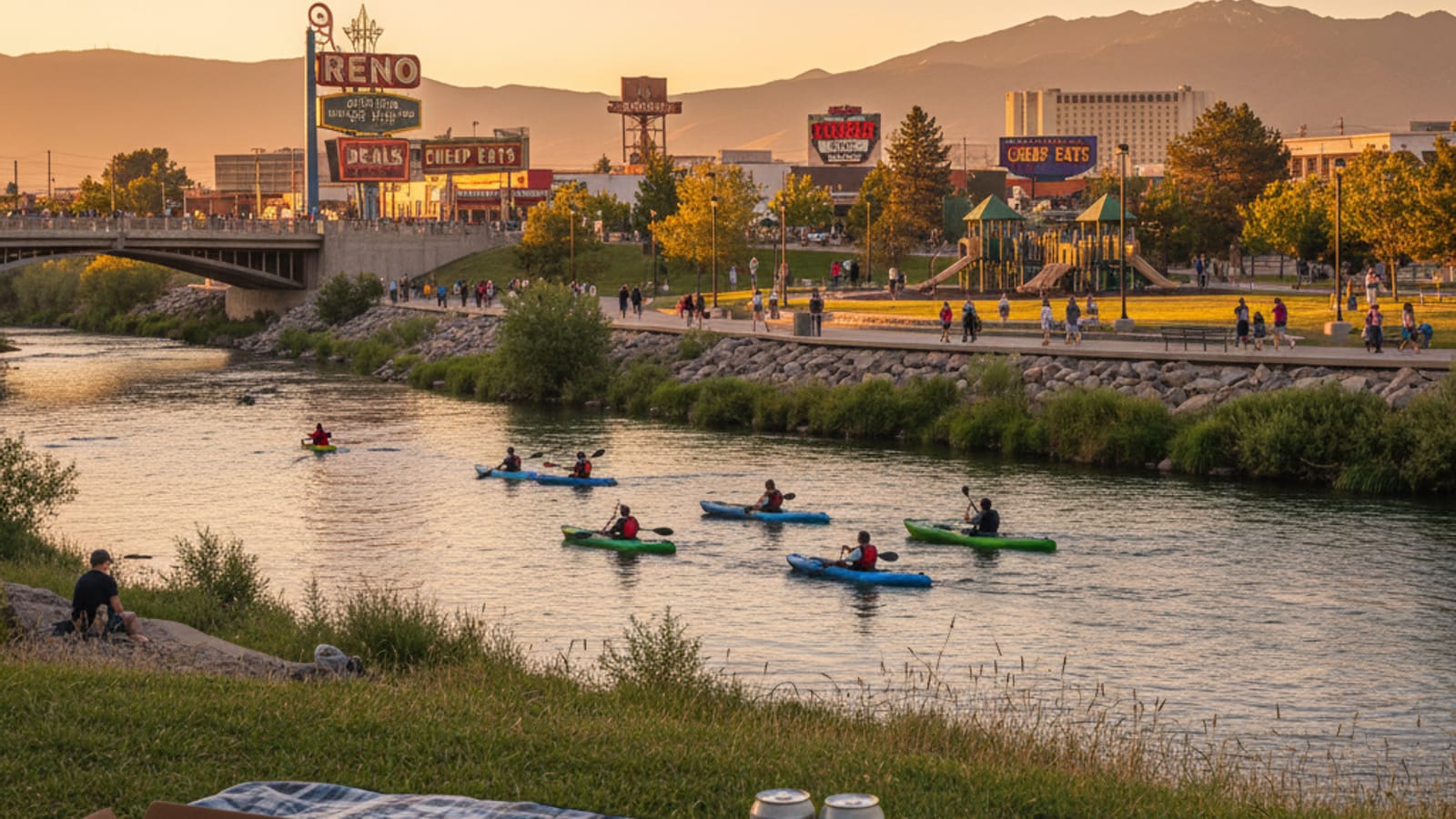
The Truckee River Walk is a paved path that follows the river through downtown and extends for miles in both directions. Walking, jogging, cycling, or just sitting on a bench and watching the water flow past — all free. Wingfield Park, the island in the middle of the river, hosts free concerts and events in summer and is a beautiful spot to hang out any time of year.
Peavine Peak is the mountain that dominates Reno's northern skyline, and you can hike or mountain bike to the summit (8,266 feet) for free. The views from the top encompass the entire Truckee Meadows, Lake Tahoe in the distance, and the desert stretching north into infinity. Multiple trail routes exist, ranging from 4 to 10 miles round trip depending on your starting point.
The Galena Creek Regional Park, south of Reno on the way to Mt. Rose, has free hiking trails through pine forest and along a mountain creek. The Galena Creek Visitor Center has interpretive displays about the local ecology and is staffed by knowledgeable volunteers. It's a cooler, greener alternative to the desert hikes closer to town.
Bartley Ranch Regional Park in south Reno has easy walking trails, equestrian paths, and a historic ranch site — all free. It's less dramatic than the mountain hikes but makes a pleasant morning outing, especially if you're traveling with kids or prefer flat terrain.
The common thread: northern Nevada is overwhelmingly public land managed by the BLM, Forest Service, and state and local parks. You can drive 15 minutes in any direction from downtown Reno and find yourself on a trail with mountain views, desert wildflowers, and nobody else around. The access is free, the scenery is extraordinary, and the only investment required is a good pair of shoes and a water bottle.
 Hunter Creek Falls, Peavine Peak, Rancho San Rafael — all free, all stunning.
Cheap Eats: Eating Well in Reno for Under $15
Reno's food scene has improved dramatically in recent years, and the good news for budget travelers is that quality food is available at every price point. You don't have to choose between cheap and good here — some of the best meals in the city cost less than a mediocre sandwich at a tourist trap in other cities.
Food trucks are the budget eater's best friend in Reno. Most trucks price their meals between $10-15 for a full portion, and the quality frequently exceeds sit-down restaurants charging twice as much. T's Mesquite Rotisserie does smoked brisket tacos for $12 that are genuinely life-changing. Bertha Miranda's al pastor tacos run $3-4 each, and three of them constitute a full, excellent meal. Track truck locations through the Reno Street Food social media pages — they post daily schedules.
Peg's Glorified Ham N Eggs is where you eat breakfast when you want maximum food per dollar. A full breakfast with eggs, bacon, hash browns, and toast runs about $12-15, and the portions are enormous. It's been a Reno institution for decades because the formula is simple: cook good food in big quantities at fair prices. No avocado toast, no artisan anything — just breakfast done right.
Casino food courts and delis are the budget traveler's secret weapon, and they're significantly better in Reno than their reputation suggests. The Eldorado has a quick-service food court with options ranging from pizza to Asian noodles, mostly in the $8-12 range. The Peppermill's 24-hour coffee shop serves diner-style meals at prices that haven't fully caught up with inflation. A burger and fries at 2 AM for $11 is hard to argue with.
Midtown has budget options mixed in with its nicer restaurants. Two Chicks does breakfast and lunch with most items in the $12-16 range. Pizza spots along South Virginia Street sell slices for $3-5. The taco shops scattered through the neighborhood serve authentic Mexican food at authentic Mexican prices — $2-3 per taco, $8-10 for a full plate.
Grocery stores and picnic meals stretch your budget further. Trader Joe's and a well-stocked WinCo (a bulk grocery store with excellent prices) are both easily accessible. Buy sandwich supplies, fruit, and snacks for your Lake Tahoe or Virginia City day trips instead of eating at tourist-priced restaurants at the destination. A picnic at Sand Harbor with food you brought from Reno costs $5 per person instead of $20 at a lakeside café.
The Basque restaurants deserve special mention for budget value. Louis' Basque Corner serves a multi-course meal — soup, salad, bread, beans, sides, and a protein entrée — for $25-35. That's five courses of food. Try getting that volume and quality at any other restaurant genre for the same price. It's one of the best food values in the entire state.
One final hack: many Midtown restaurants run happy hour specials between 3-6 PM with discounted drinks and half-price appetizers. Campo's happy hour, for example, offers $6 cocktails and discounted small plates. You can assemble a full meal from happy hour menus for $15-20 at restaurants where dinner would cost $40.
Pro tip: WinCo Foods on South Virginia Street is a budget grocery powerhouse — bulk bins, low prices, and a deli with prepared foods. Stock up here for day trip picnics. Also, many casino hotels have mini-fridges in the rooms (or will provide one on request), which makes leftovers and grocery runs practical.
Lake Tahoe on a Budget: It Doesn't Have to Be Expensive
Lake Tahoe has a reputation for being expensive, and if you stay in South Lake Tahoe and eat at lakeside restaurants, it is. But if you're using Reno as your base (which is the entire point of this guide), you can experience Tahoe for a fraction of the cost that most visitors pay.
The drive from Reno to Lake Tahoe is free. Gas costs about $8-12 round trip depending on your vehicle. That's your biggest Tahoe expense handled before you even arrive. Compare this to staying at a Tahoe hotel ($200-400 per night in summer) and the savings are immediately obvious.
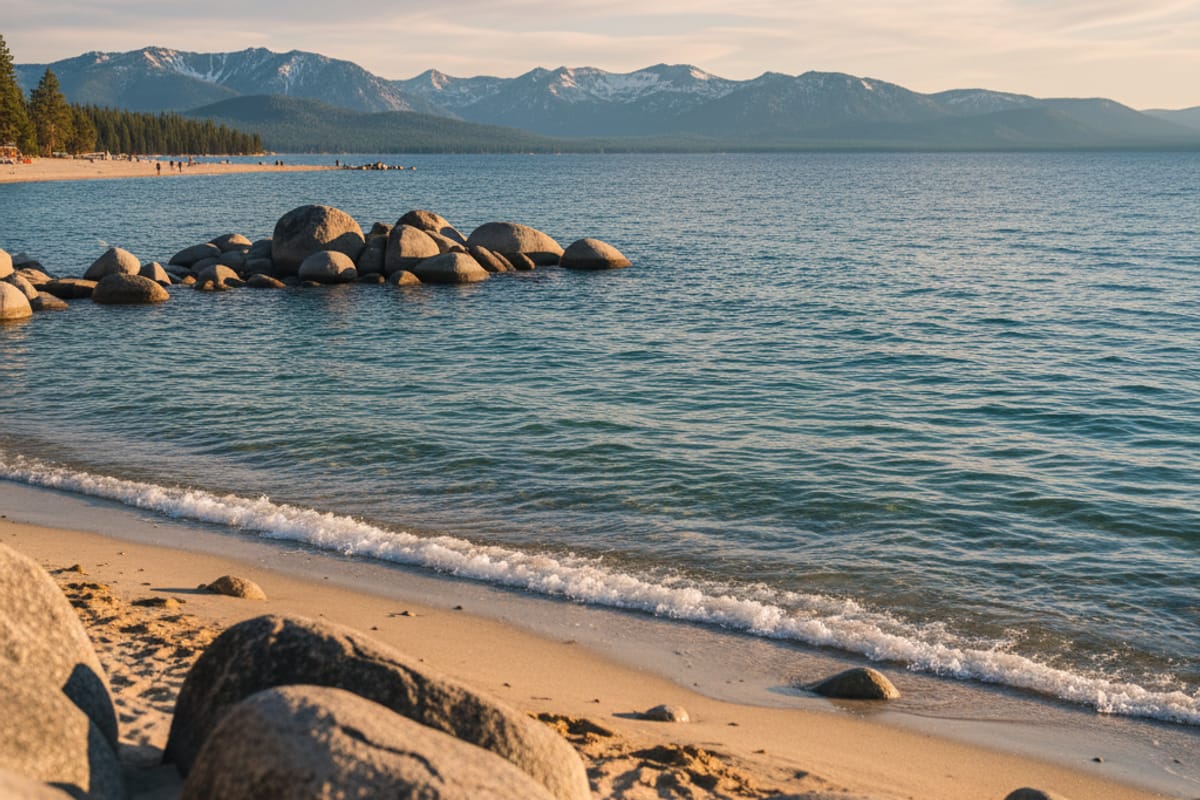
Sand Harbor State Park costs $15 per vehicle and gives you access to one of the most beautiful beaches in North America. Split that between two or three people and you're looking at $5-7 per person for an all-day beach experience. Bring food from Reno, a towel, sunscreen, and a book — everything else is provided by nature.
Free beaches exist if you want to skip even the $15 fee. Hidden Beach (unmarked pullout south of Sand Harbor), Chimney Beach (short hike down from the highway), and the public beaches at Incline Village and Kings Beach are all free to access with free or inexpensive parking.
Hiking around the lake is entirely free. The Tahoe Rim Trail, which circles the entire lake over 165 miles, has multiple trailhead access points on the north and east shores near the Reno approach. You can do day hikes of any length along the trail, and the views are consistently spectacular. The Monkey Rock trail near the Mt. Rose summit and the Flume Trail above the east shore are both free and offer some of the best scenery in the Sierra.
Winter Tahoe on a budget requires more creativity, but it's doable. Mt. Rose ski resort, the closest to Reno, offers lift tickets that are typically $20-40 less than Palisades Tahoe or Heavenly. Midweek skiing is significantly cheaper than weekends. Several resorts offer discounted afternoon tickets (starting at noon or 1 PM) that cut the price nearly in half.
For non-skiers in winter, snowshoeing is essentially free if you own or borrow snowshoes (rental is $15-25 for the day from Reno outdoor shops). The trails around the Mt. Rose summit area and Galena Creek are beautiful in snow and don't require any lift ticket or park fee. Cross-country skiing at Tahoe Meadows (near the Mt. Rose summit) is also free — it's an open, gentle meadow perfect for beginners.
The fundamental insight: Lake Tahoe's expensive reputation comes from the south shore resort infrastructure. The north and east shores, accessed from Reno, are dramatically cheaper. You get the same lake, the same mountains, the same crystal-clear water — just without the resort markup.
Pro tip: The Tahoe Rim Trail trailheads nearest to Reno are Tahoe Meadows (on the Mt. Rose Highway) and Spooner Summit (on Highway 50). Both have free parking and immediate access to spectacular trail sections. Bring layers — mountain weather changes fast, and the elevation means temperatures can drop 20 degrees from the valley.
 Same lake, fraction of the cost — the Reno-to-Tahoe day trip hack.
Free Events and Entertainment: Reno's Year-Round Calendar
Reno has invested heavily in free public events over the past decade, and the result is a calendar packed with entertainment that costs nothing to attend. Timing your visit to coincide with one of these events adds enormous value to an already affordable trip.
Artown is the crown jewel — a month-long arts festival in July that fills Reno with free concerts, theater performances, dance, visual art installations, and workshops. Most events take place at Rancho San Rafael Regional Park and various downtown venues, and the quality is genuinely impressive. Past years have featured internationally touring musicians, acclaimed theater companies, and art installations that draw visitors from across the region. The fact that most of it is free still surprises people.
The Reno River Festival in May is another major free event. Professional kayakers from around the world compete in freestyle events at the Wingfield Park whitewater course, right in the middle of downtown. The surrounding festival includes live music, food vendors, outdoor gear exhibits, and family activities along the river. It's free to watch the competition, and the atmosphere is electric.
First Thursday events happen monthly in Midtown, when galleries open their doors, restaurants run specials, and the neighborhood takes on a block-party atmosphere. The Nevada Museum of Art offers free admission on First Thursdays, making it one of the best free cultural experiences in the city.
Free concerts happen throughout summer at multiple venues. Wingfield Park's amphitheater hosts concerts on the island in the middle of the Truckee River — you literally sit on a small island surrounded by running water while listening to live music. The Believe Plaza downtown hosts events ranging from food festivals to holiday celebrations, many with free admission.
The Reno Aces minor league baseball team plays at Greater Nevada Field downtown, and while the games aren't free, they're close — tickets start at $10-15, and the experience of watching a game in a compact ballpark with the Sierra Nevada visible beyond the outfield wall is one of the most pleasant sports experiences in the West. If you catch a promotional night, tickets can drop even lower.
Burning Man's influence radiates outward from the Black Rock Desert into Reno's cultural scene. Year-round, you'll find Burning Man-adjacent art installations, events, and gatherings throughout the city. The Generator, a community art space in Sparks, hosts workshops and open studio events that are free or very low cost. Several large-scale Burning Man art pieces have been permanently installed in Reno parks and public spaces.
The Truckee River Walk itself is free entertainment on any day — a living, changing scene of runners, cyclists, kayakers, anglers, and families that reflects Reno's relationship with its natural setting. In spring, the snowmelt-swollen river creates rapids through downtown. In summer, tubers float past restaurants and bars. In fall, the cottonwood trees along the banks turn golden. Every season provides a different show, and it never costs a cent.
Full Budget Breakdown: A 3-Day Reno Trip for Under $400
Here's a realistic breakdown of what a thorough, enjoyable, three-day Reno trip costs when you're intentional about spending. This isn't a deprivation budget — it includes good food, real activities, and craft beer. It's just smart about where the money goes.
Accommodation (2 nights): Casino hotel midweek at $50/night = $100. Weekend at $85/night = $170. We'll use $135 as an average for two nights, assuming you're there Thursday-Saturday or Friday-Sunday.
Day 1 — Lake Tahoe Day Trip: Coffee in Midtown ($5), gas to Tahoe and back ($10), Sand Harbor parking ($15), picnic lunch packed from grocery run ($5), afternoon brewery visit with a flight ($14), dinner at a Midtown food truck ($13), evening drinks at a dive bar ($15). Day total: approximately $77.
Day 2 — Virginia City & Midtown: Breakfast at Peg's ($13), gas to Virginia City ($8), mine tour ($13), Virginia City lunch ($13), afternoon exploring Midtown murals and shops (free to $20), happy hour dinner assembled from appetizer specials ($18), evening casino visit with $30 gambling budget ($30). Day total: approximately $115.
Day 3 — Outdoor Adventure & Departure: Morning hike at Hunter Creek Falls (free), coffee ($5), brunch at Two Chicks ($15), afternoon Truckee River Walk (free), one last brewery stop ($10). Day total: approximately $30.
Trip totals: Accommodation $135 + Day 1 $77 + Day 2 $115 + Day 3 $30 = $357 per person.
That's three days of Lake Tahoe, Virginia City, Midtown dining, craft beer, a mine tour, hiking, and casino time for under $400. Try getting that itinerary in any other Western mountain city for the same price. You can't — and that's the Reno budget travel pitch in a nutshell.
Where to cut further: Stay at a hostel or budget Airbnb ($40/night saves $55). Skip the mine tour (saves $13). Pack all lunches (saves $25). Limit brewery visits to one with a single flight (saves $15). Theoretical minimum for the same general itinerary: under $250 per person for three days.
Where to add if budget allows: Upgrade to Whitney Peak Hotel (add $60-80). Kayak rental at Sand Harbor (add $35). Virginia & Truckee Railroad ride (add $15). Dinner at Campo instead of food trucks (add $20). Louis' Basque Corner dinner (add $15 over food truck pricing). These upgrades bring the total to about $500-550, which is still remarkably affordable for everything you're getting.
The bottom line: Reno is one of the last great budget destinations in the American West. The combination of cheap casino hotels, free outdoor recreation, affordable food, and proximity to Lake Tahoe creates a value equation that's hard to beat. The city isn't trying to be expensive — it's trying to be good. And for budget travelers, that makes all the difference.
Pro tip: Track your spending with a simple notes app on your phone. Budget travel works best when you know where your money is going in real-time, not when you check your bank account after the trip. Set a daily target ($75-100 is comfortable for Reno) and adjust as you go. The flexibility to splurge on a great meal because you saved on activities is what makes budget travel sustainable.
Why Trust This Guide
Recommendations from locals across 240+ US cities via Recommended.app community data.
Explore More
This guide is part of our Reno collection. Explore more guides for Reno →
Reno has 153 verified businesses on Recommended.app across 65 categories.
Hidden Gems Weekly
3 hidden gems, 2 local quotes, 1 home hack — every Monday. Free forever.
Unsubscribe anytime. No spam.
More from City Guides
 City Guide
Reno's Hidden Gems: The Biggest Little City Has Big Surprises
 Travel Guide
A Weekend in Reno: Tahoe, Beer & the Biggest Little City
 City Guide
We Asked Reno Locals Where They Actually Eat — Here's What They Said
 City Guide
First Time in Reno? Locals Wish You Knew These 12 Things
 Home Services
Water Damage Restoration Near Me: What to Do in the First 24 Hours (2026 Guide)
 Food & Dining