
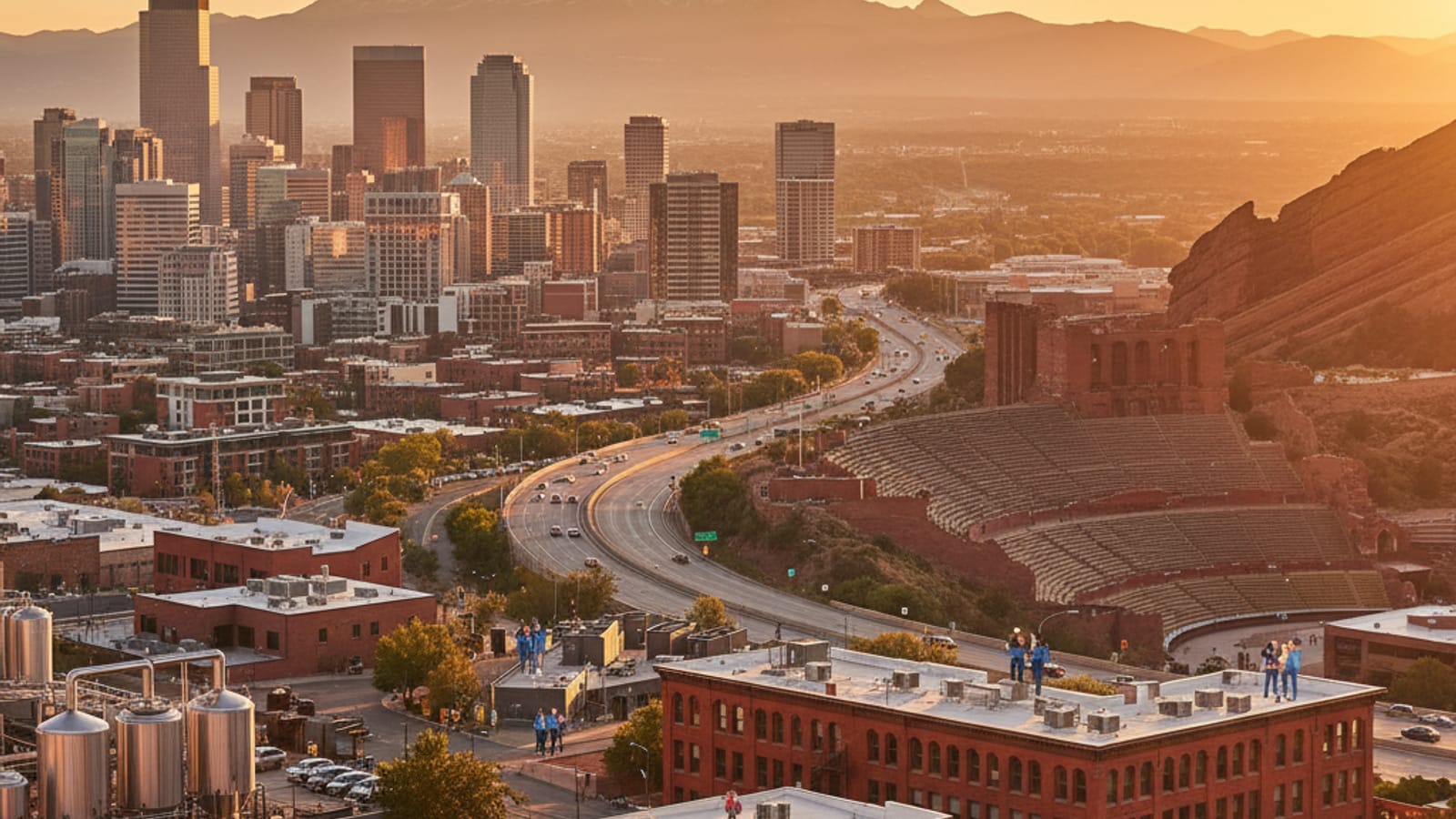
How to spend 72 hours in the Mile High City — mountains, murals, and more craft beer than you can handle
Last updated March 15, 2026 by the Recommended.app research team.
Denver Is Not What You Think It Is
Most people think of Denver as a stopover on the way to the ski slopes, or maybe a place where people wear too much Patagonia. (Cost-of-living gut-check for relocation: our Denver plumber cost guide tracks home-service pricing in the metro.) Both of those things are true, but they miss the point entirely. Denver has quietly become one of the most interesting cities in the American West — a place where a world-class art district sits next to a century-old train station, where you can tour six craft breweries before lunch and still make it to a Red Rocks concert by sunset, and where the Rocky Mountains are so close they feel like a painted backdrop until you realize you can be standing on a 14,000-foot peak in under two hours. (Hiking specifically? See our best hiking near Denver section for trail picks.)
The city sits at exactly 5,280 feet above sea level — one mile high — and that elevation shapes everything about the Denver experience. The sun is more intense (you'll burn faster), alcohol hits harder (your second beer feels like your fourth), and the air is thinner (you'll get winded walking uphill). None of this is a reason to skip Denver. All of it is a reason to come prepared.
Denver's neighborhoods each have a distinct personality, and the city is compact enough that you can experience three or four of them in a single day. RiNo (River North Art District) is the creative heart. LoDo (Lower Downtown) is the historic core around Union Station. Cherry Creek is the upscale shopping district. Capitol Hill is the dive-bar-and-brunch neighborhood. And LoHi (Lower Highlands) has the best restaurant row in the city.
This is your 72-hour playbook for a Denver weekend — built by locals who know the difference between the tourist version and the real thing.
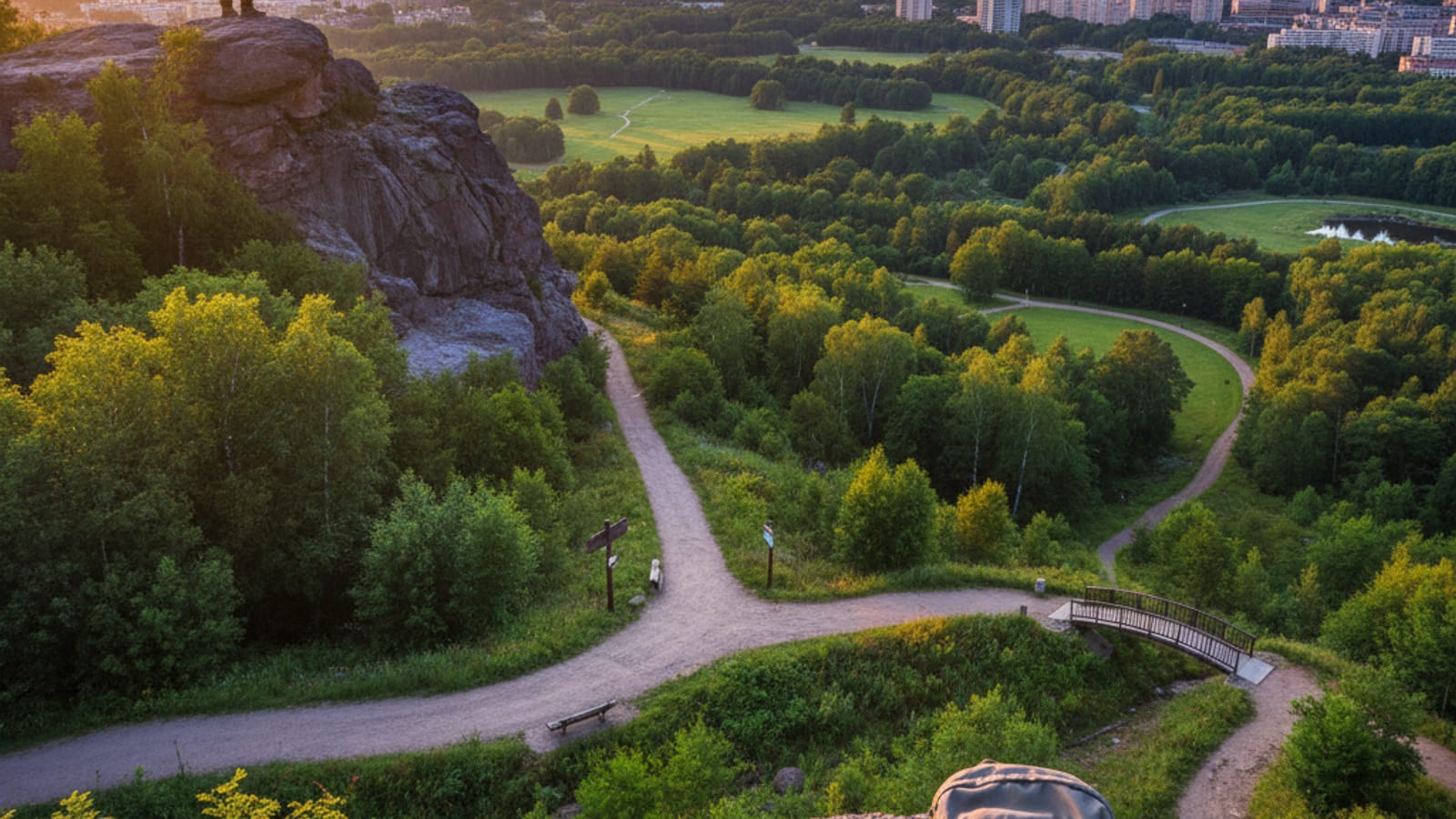
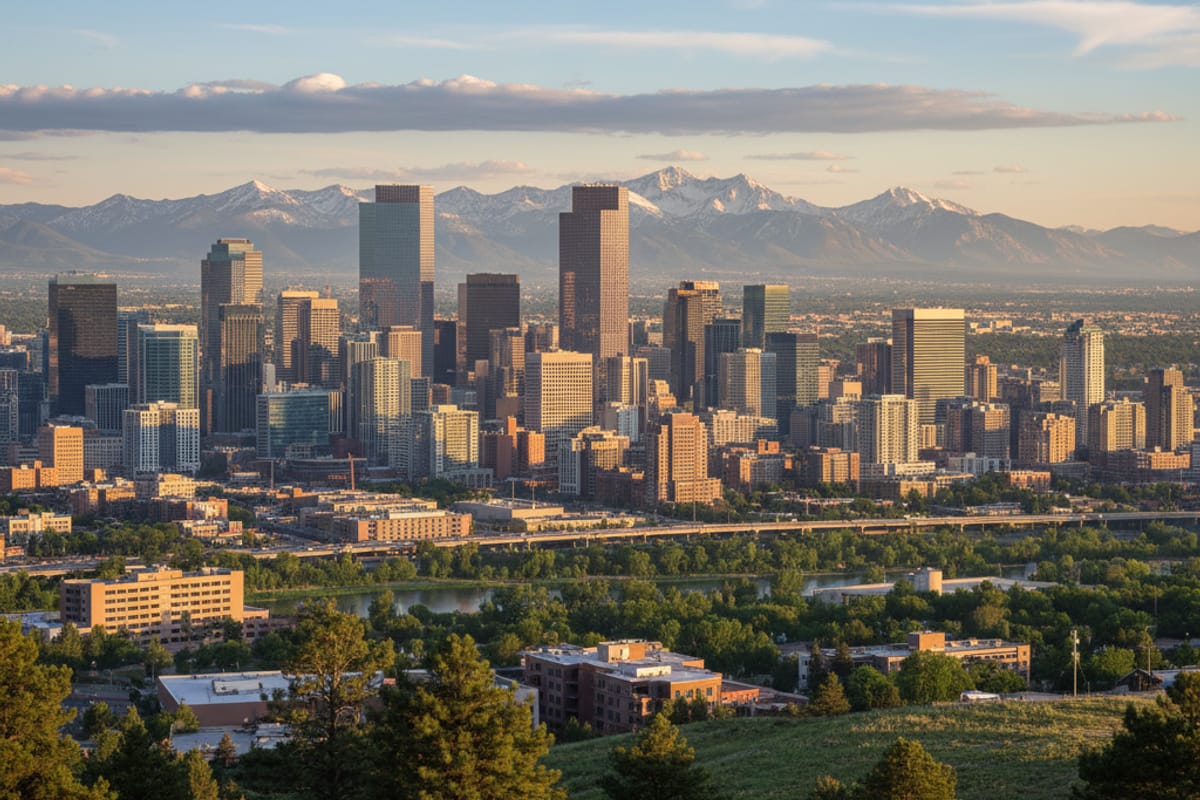 Denver — one mile above sea level, with the Rockies as a permanent backdrop.
Day 1: RiNo Art District & the Brewery Crawl
Start your Denver weekend in RiNo — the River North Art District — which has transformed from a neglected industrial zone into the most vibrant creative neighborhood in the Mountain West. Every surface here tells a story: massive murals cover entire building facades, galleries occupy former warehouses, and the smell of hops and roasting coffee beans hangs in the air.
Begin at The Source Hotel & Market Hall on Brighton Boulevard. This converted 1880s ironworks building houses a curated collection of food vendors, a rooftop pool (hotel guests only, unfortunately), and New Belgium Brewing's Denver taproom on the ground floor. Grab coffee and a pastry from Huckleberry Roasters inside the market — their cortado ($5) is one of the best in the city.
Walk south on Brighton and you'll pass dozens of murals — the annual Crush Walls festival brings street artists from around the world to paint the neighborhood each September. The murals change yearly, which means RiNo looks different every time you visit. For gallery hopping, Ironton Distillery & Crafts has rotating art shows alongside their small-batch spirits (tastings $10-15). Pace Gallery on Larimer Street shows major contemporary artists in a beautiful converted warehouse space — free admission.
Now for the breweries. Denver has more craft breweries per capita than any major city in America, and RiNo is ground zero. Start at Ratio Beerworks on Larimer Street — their Dear You French Saison is one of the most balanced beers in Colorado, and the outdoor patio with string lights and food truck access is peak Denver. Walk two blocks to Epic Brewing Company for bigger, bolder beers (try the Big Bad Baptist imperial stout, 11.8% ABV — respect the altitude). Then hit Bierstadt Lagerhaus on Walnut Street, which makes exactly four German-style lagers using traditional decoction brewing methods. Their Slow Pour Pils takes five minutes to pour and it's worth every second.
For dinner in RiNo, Safta inside The Source Hotel serves modern Israeli cuisine from James Beard Award-winning chef Alon Shaya. The hummus is silky perfection, the lamb shoulder feeds the table, and the pita bread comes warm from a wood-fired oven. Budget $35-55 per person. For something more casual, Cart-Driver on Larimer does wood-fired pizzas and oysters on a patio with killer mountain views — pizzas run $15-19 and the natural wine list is excellent.
Pro tip: The altitude makes alcohol hit significantly harder. A good rule: your first day in Denver, drink one fewer beer than you normally would and add an extra glass of water between each round. This isn't a joke — altitude sickness combined with a brewery crawl is a genuinely miserable experience. You'll also get dehydrated faster than you expect. Carry a water bottle everywhere and drink twice as much water as you think you need.
Day 2: Red Rocks, Union Station & the Best Dinner in Denver
Red Rocks Amphitheatre is 15 miles west of downtown Denver and it's one of the most spectacular concert venues on Earth. Two 300-foot sandstone monoliths form the walls of a natural amphitheater that seats 9,525 people, with the Denver skyline and Great Plains visible in the distance. Even if you don't catch a show, the venue is free and open to the public during the day — you can walk through the amphitheater, explore the Colorado Music Hall of Fame museum, and hike the Trading Post Trail (1.4 miles) that loops through the surrounding red rock formations.
Fitness classes at Red Rocks (Yoga on the Rocks, Film on the Rocks) run in summer and sell out instantly — tickets are $17-22. If you can get concert tickets, do it. The acoustics are supernaturally good, and watching a band play as the sun sets behind the rocks is a once-in-a-lifetime experience. Check the Red Rocks schedule online — shows range from $30-150 depending on the artist.
Afternoon: head back to downtown and explore Union Station. This 1914 Beaux-Arts train station was renovated into Denver's central gathering place — a soaring Great Hall with a cocktail bar, restaurants, shops, and the Crawford Hotel upstairs. The Terminal Bar in the Great Hall serves cocktails in the main waiting room — grab a seat on one of the leather couches and soak in the architecture. Cooper Lounge, the upscale bar on the mezzanine level, has the best Old Fashioned in Denver ($16) and a dimly lit, 1920s vibe.
For the best dinner of your trip, head to LoHi (Lower Highlands), the neighborhood just across the pedestrian bridge from Union Station. Guard and Grace on 17th Street is a modern steakhouse with dry-aged ribeyes ($58), impeccable seafood, and a wine list that goes deep into Napa and Burgundy. For something less formal but equally impressive, Linger occupies a former mortuary (yes, really) on West 32nd Avenue — the rooftop patio has panoramic city views, and the menu spans global street food: Vietnamese banh mi, Indian lamb chops, Japanese izakaya plates. Entrees run $18-32 and the cocktails are creative and strong.
For a late-night drink, walk to Williams & Graham on 33rd Avenue in LoHi. The entrance looks like a bookshop — you push through a hidden door behind the bookcase and enter one of the best speakeasy-style cocktail bars in the country. No reservations, first come first served. Cocktails are $14-18 and the bartenders know what they're doing. Go before 9 PM on weekdays to avoid a wait.
Pro tip: Red Rocks is at 6,450 feet — higher than Denver itself. If you're hiking the trails or doing a fitness class, take it easy. The steps inside the amphitheater are a legit workout at altitude. Bring a jacket even in summer — the venue is exposed and temperatures drop fast after sunset. Parking is free on non-event days. On show nights, arrive early (gates open 90 minutes before showtime) and expect traffic on I-70 westbound.
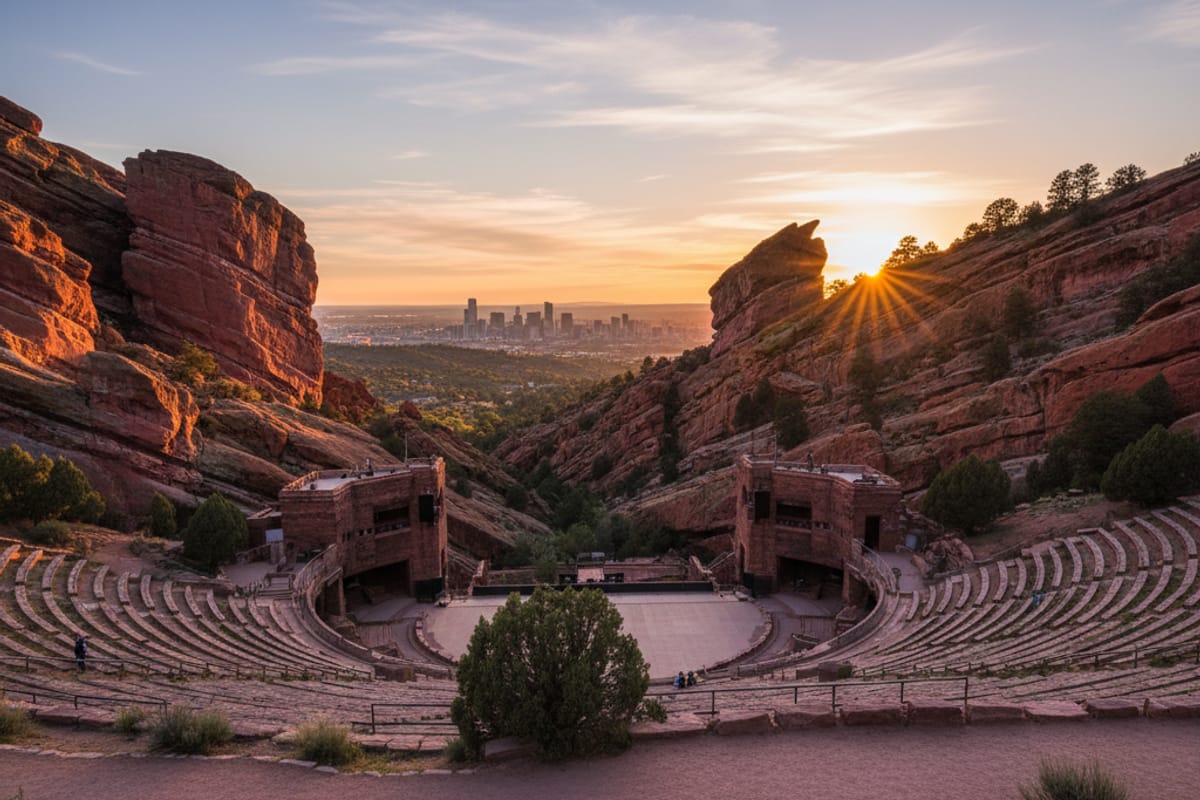 Red Rocks — 300-foot sandstone walls, supernatural acoustics, and sunsets that stop you cold.
Day 3: Rocky Mountain Day Trip
You can't come to Denver and not go into the mountains. The good news: world-class mountain scenery is shockingly close.
Mount Evans Scenic Byway (now renamed Mount Blue Sky Scenic Byway) is the highest paved road in North America, climbing to 14,264 feet. The drive from Denver takes about 90 minutes to the summit, and the views along the way — alpine lakes, ancient bristlecone pine forests, mountain goats grazing above treeline — are staggering. The road is typically open late May through early October, depending on snow. There's a $15 per vehicle fee. At the summit, you can walk a short path to the very top, where the air is thin enough that you'll feel every step. Bring layers — it can be 40°F and windy at the top even when it's 85°F in Denver.
For a less intense mountain experience, Rocky Mountain National Park is 65 miles northwest of Denver (about 90 minutes). Trail Ridge Road crosses the Continental Divide at over 12,000 feet with pullouts that offer views across endless mountain ranges. The Bear Lake area has several easy-to-moderate hikes — Emerald Lake (3.6 miles round trip) passes three alpine lakes surrounded by peaks and is one of the most scenic hikes in Colorado. Timed-entry reservations are required from late May through mid-October ($2 per reservation plus $30 per vehicle park fee). Book these well in advance — they sell out.
If you want mountains without the driving, take the scenic route to Idaho Springs (45 minutes from Denver on I-70). This old mining town has natural hot springs at Indian Hot Springs ($25 per person for the outdoor pool), gold mine tours, and Beau Jo's Pizza — a Colorado institution famous for mountain pies with braided honey-crusted edges and an absurd amount of toppings. A large pizza ($25-35) feeds 2-3 people.
On your way back to Denver, stop at Lookout Mountain in Golden for a panoramic view of the city and plains stretching to the horizon. Buffalo Bill's grave and museum is at the top ($5 admission), and the Lookout Mountain Nature Center has free trails through ponderosa pine forest. The Coors Brewery in Golden offers free tours and tastings — reservations are required and available online.
Pro tip: Altitude sickness is real and it doesn't discriminate based on fitness level. At 14,000+ feet (Mt. Blue Sky summit or Rocky Mountain National Park's high points), you may experience headaches, nausea, shortness of breath, and dizziness. Drink water aggressively the day before, avoid alcohol the night before a mountain day, and ascend slowly. If you feel sick, descend. It's not worth pushing through. Most people adjust to Denver's 5,280 feet in a day, but going above 10,000 feet is a different challenge entirely.
Cherry Creek, Capitol Hill & Where Locals Actually Hang Out
If you have extra time or want to swap out one of the big-ticket activities, Denver's neighborhoods reward exploration.
Cherry Creek is Denver's upscale district — a walkable grid of boutiques, galleries, and restaurants centered on the Cherry Creek Shopping Center and the open-air Cherry Creek North strip. It's polished and pretty, and the food scene has gotten genuinely good. Fruition Restaurant on East 6th Avenue is a farm-to-table standout — the gnocchi with braised rabbit and the seared duck breast are both excellent, with dinner running $40-60 per person. Cherry Creek Trail, a paved bike path, connects the neighborhood to downtown along the creek — rent a bike from one of the Denver B-cycle stations ($7 for a 30-minute ride) and pedal back to LoDo.
Capitol Hill (Cap Hill to locals) is Denver's most eclectic neighborhood — a mix of Victorian mansions, apartment buildings, dive bars, and some of the best brunch spots in the city. Steuben's on East 17th Avenue serves upscale diner food — the fried chicken, mac and cheese, and milkshakes are all excellent, and weekend brunch ($15-22 per person) draws a crowd. Pete's Kitchen on East Colfax is the late-night greasy spoon — open 24 hours, serving green chili smothered burritos and gyros to a crowd of night owls, hospital workers, and people making questionable decisions at 2 AM. A meal is $10-15 and the people-watching is priceless.
The Denver Art Museum in the Civic Center area is worth a visit — the building itself, designed by Daniel Libeskind, is a sharp-angled titanium marvel. The Western American Art collection is one of the best in the country, and the Indigenous arts galleries are thoughtfully curated. General admission is $15, and the first Saturday of every month is free.
For a unique Denver experience, visit Meow Wolf's Convergence Station in the Sun Valley neighborhood. This 90,000-square-foot immersive art installation is part funhouse, part sci-fi narrative, part sensory overload — you crawl through portals, slide down tubes, and explore dozens of themed rooms created by over 300 artists. Tickets are $35-45 and you'll spend 2-3 hours inside. It's unlike anything you've experienced before.
Pro tip: Denver's weather can change dramatically and quickly. A sunny 75°F afternoon can turn into a 55°F thunderstorm in 30 minutes, especially in spring and summer when afternoon storms roll off the mountains. Always carry a light layer and check the hourly forecast. The saying in Colorado is 'if you don't like the weather, wait 15 minutes.' It's mostly true.
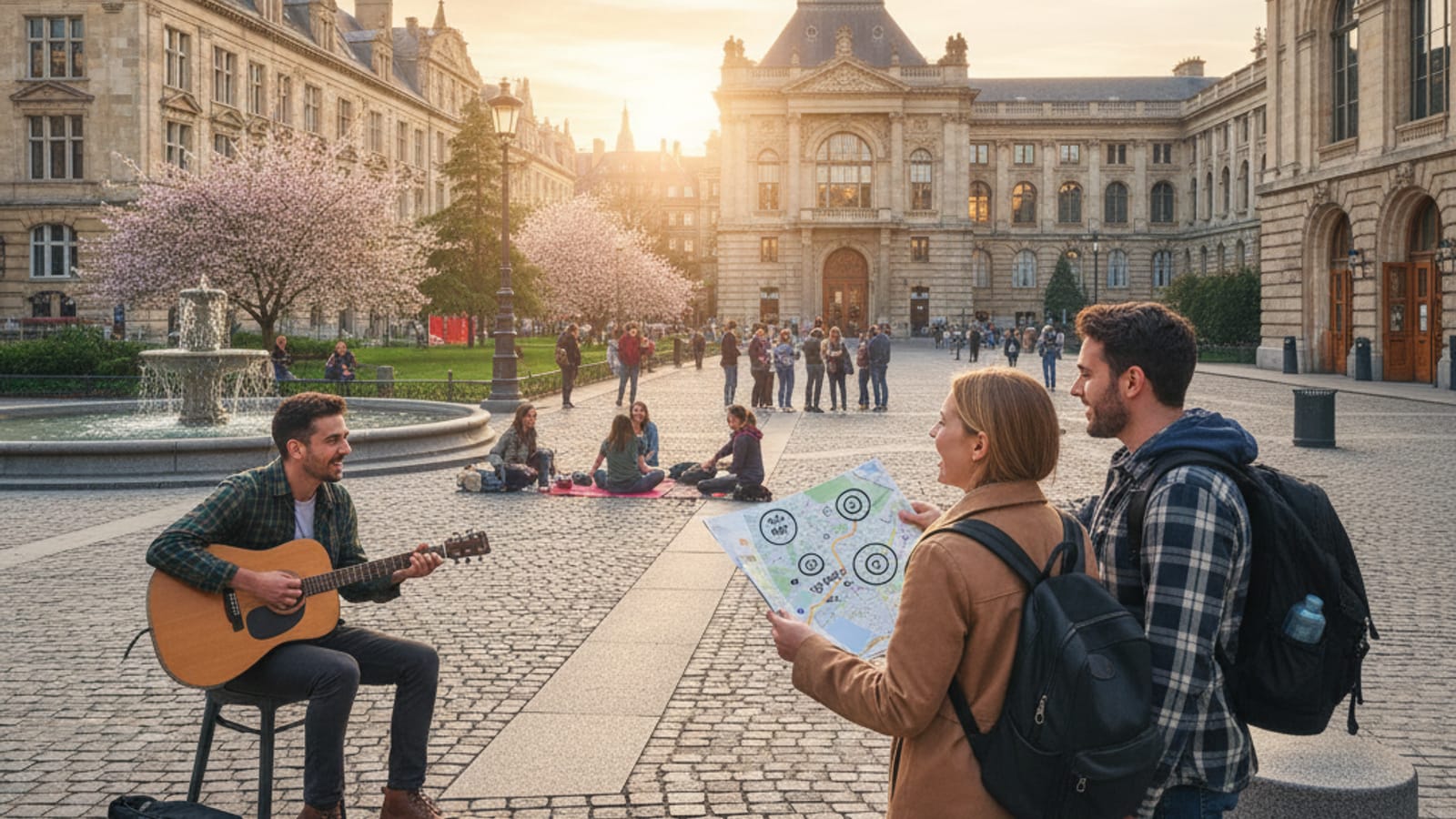
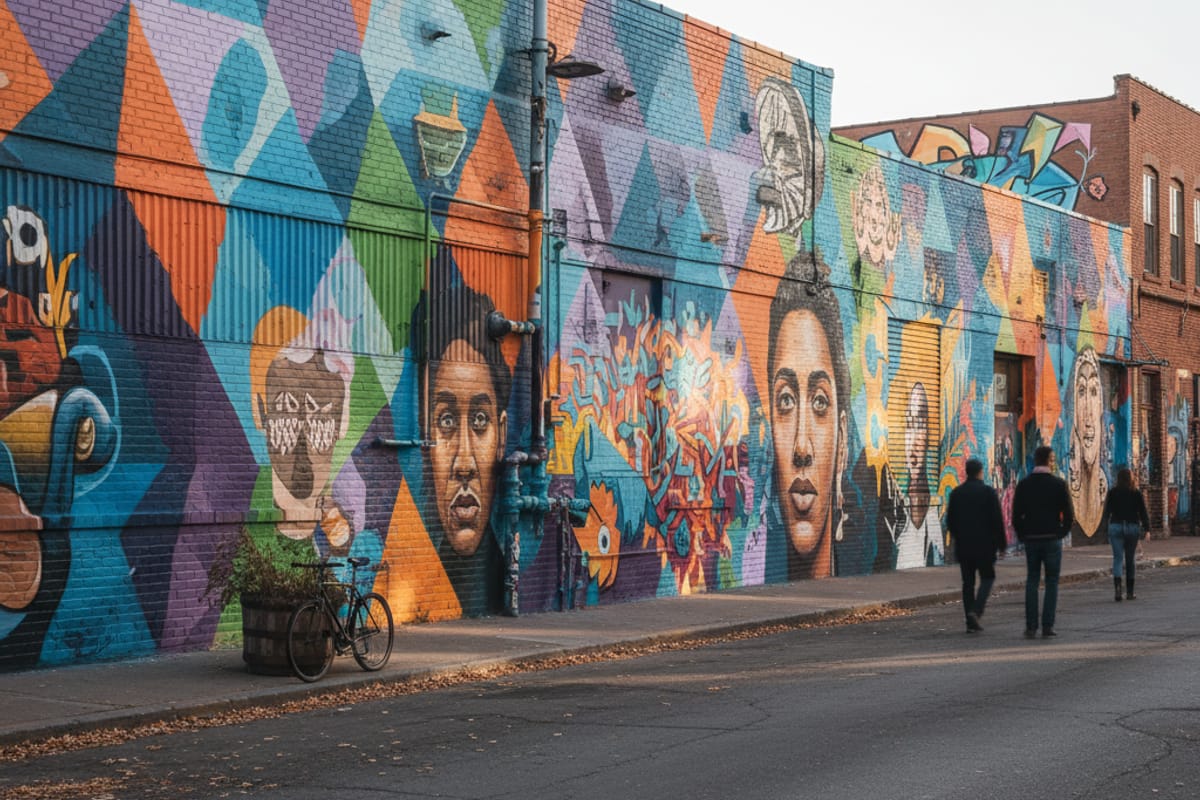 Denver's neighborhoods each have their own personality — from RiNo murals to Cap Hill dive bars.
Budget Breakdown: What a Denver Weekend Actually Costs
Denver is more affordable than coastal cities but has gotten pricier in recent years. Here's an honest breakdown.
Hotels: Downtown/LoDo hotels run $150-300/night. RiNo and LoHi boutique hotels are $120-250. For the best value, look at Capitol Hill or Baker neighborhood — hotels and Airbnbs in the $90-160 range with easy access to everything. The Crawford Hotel inside Union Station ($250-400/night) is the splurge pick — the rooms are beautiful and you're sleeping inside a historic train station.
Food: Breakfast at a coffee shop or taco spot: $8-14. Lunch (brewery food, casual restaurant): $12-20. Nice dinner: $35-60 per person. A full day of eating well runs $55-90, which is very reasonable for a major city. The brewery scene is where Denver really shines on value — pints are $6-8 at most taprooms, and many offer flight tastings for $10-14.
Activities: Red Rocks (non-event day): free. Rocky Mountain National Park: $30/vehicle + $2 reservation. Meow Wolf: $35-45. Denver Art Museum: $15. Denver B-cycle bike rental: $7/30 minutes. Most brewery visits: free to enter, pay for what you drink.
Transit: Denver has a solid light rail system — the A Line runs from the airport to Union Station for $10.50. Within the city, rides are $3-6. Uber/Lyft from downtown to RiNo or LoHi: $8-12. The free MallRide shuttle runs along the 16th Street Mall downtown. Many neighborhoods are walkable once you're in them.
Realistic 3-day budget: $600-1,000 per person including hotel, food, drinks, one mountain day trip, and activities. Denver rewards the curious and the budget-conscious equally — the best murals, mountain views, and people-watching are all free. The biggest budget trap is the brewery crawl (those $7 pints add up across six breweries) and the altitude amplifying everything.
Parking downtown is $15-25/day in garages. If you're renting a car only for the mountain day trip, pick it up on Day 3 and return it that evening — no need to pay for parking on days you're exploring neighborhoods on foot.
Pro tip: Denver International Airport is 25 miles from downtown — farther than most people expect. The A Line train ($10.50, 37 minutes) is the easiest and cheapest way to get to Union Station. Uber/Lyft from DIA to downtown runs $35-55 depending on demand. If you fly in, do not rent a car for your entire trip — you only need one for the mountain day. Use transit and rideshare for the urban days and save yourself the parking headache.
Why Trust This Guide
Recommendations from locals across 240+ US cities via Recommended.app community data.
Explore More
This guide is part of our Denver collection. Explore more guides for Denver →
Denver has 596 verified businesses on Recommended.app across 91 categories, with an average rating of 4.7 out of 5.
Hidden Gems Weekly
3 hidden gems, 2 local quotes, 1 home hack — every Monday. Free forever.
Unsubscribe anytime. No spam.
More from Travel Guides
 Travel Tips
Expedia vs Hotels.com 2026: Which Actually Saves You More Money?
 Travel Guide
Best Hotels in Miami 2026: South Beach to Wynwood (With Real Price Ranges)
 Travel Guide
Best Hotels in Nashville 2026: From Budget East Nashville to Downtown Luxury
 Travel Guide
Best Hotels in Las Vegas 2026: From Budget to High Rollers (With Real Price Data)
 Outdoor & Nature
Best Hiking Near Me: How to Find Great Trails in Any City (2026 Guide)
 Things To Do