
Last updated March 13, 2026 by the Recommended.app research team.
Why Electrical Work Is Different from Every Other Home Project
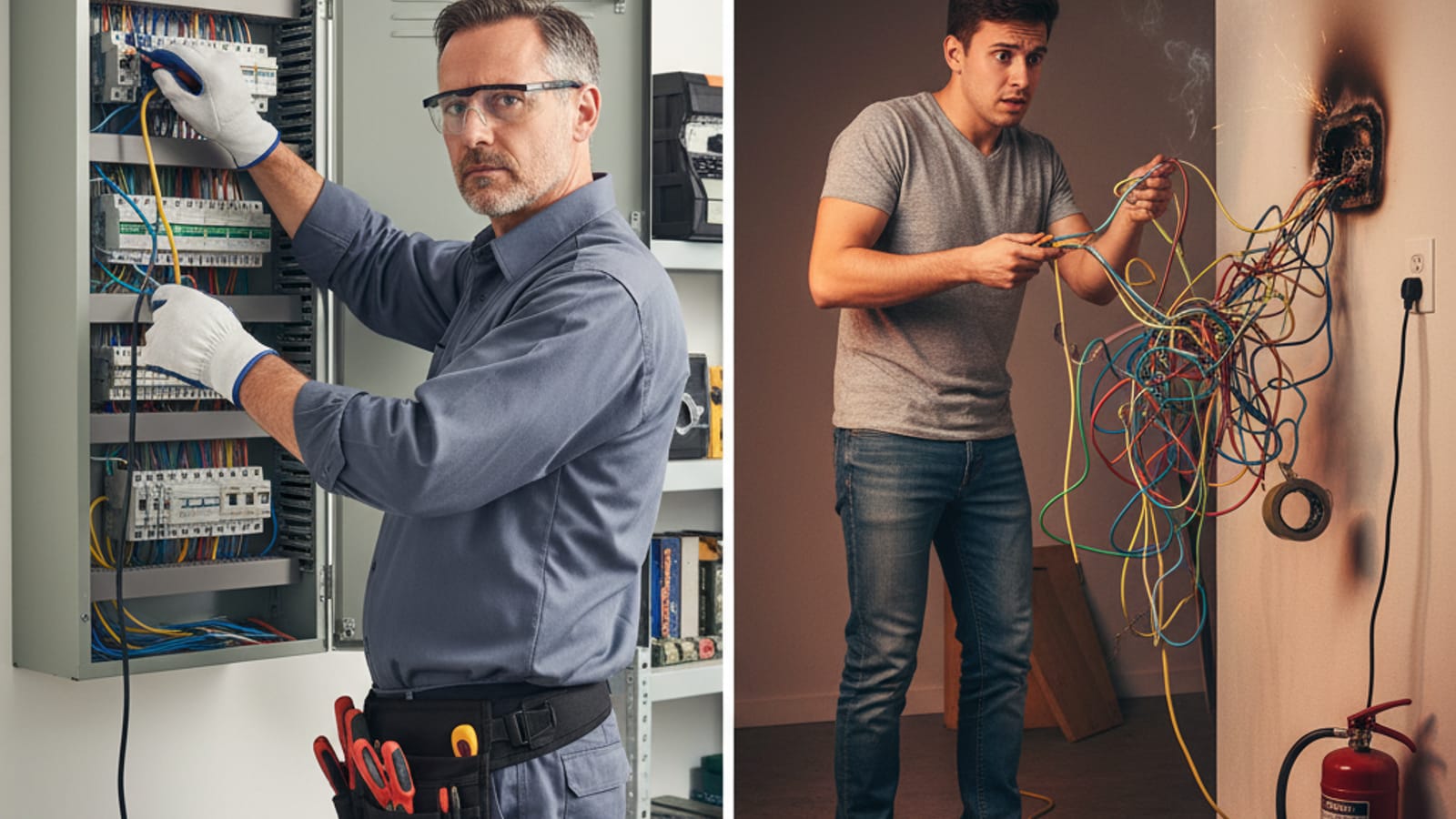
Plumbing mistakes cause leaks. Painting mistakes look bad. Electrical mistakes cause fires, electrocution, and death. That's not hyperbole — the National Fire Protection Association reports that electrical failures cause an average of 46,700 home fires per year in the United States, resulting in 390 deaths and $1.5 billion in property damage.
Unlike most home improvement projects, electrical work also has legal implications. Most jurisdictions require permits for electrical work beyond basic fixture swaps, and unpermitted electrical work can void your homeowner's insurance, fail a home inspection, and create liability issues if something goes wrong.
This guide draws a clear line between what's safe to DIY and what requires a licensed electrician. When in doubt, hire a pro. The cost difference between hiring an electrician and rebuilding after an electrical fire is astronomical.
Electrical Jobs You CAN Safely DIY
These projects are generally safe for a competent homeowner who understands basic electrical safety (always turn off the breaker first, test with a voltage tester, never work on live circuits):
Replacing a light switch: $2–$5 in parts, 15 minutes. Turn off the breaker, swap the wires to the new switch in the same configuration, done. Standard single-pole switches are straightforward.
Replacing a light fixture: $20–$200 for the fixture. If the existing box is already rated for the weight of the new fixture, this is simple — match wires by color (black to black, white to white, green/bare to ground).
Replacing an outlet or cover plate: $1–$10 in parts. Same principle as a light switch — breaker off, match the wires, done. Note: this means replacing with the same type of outlet. Upgrading to GFCI is also DIY-friendly.
Installing a smart thermostat: Most modern smart thermostats are designed for homeowner installation with clear wiring diagrams.
Replacing a doorbell: Low-voltage work (16–24V) that's safe for most homeowners.
Pro tip: Before ANY electrical DIY: turn off the breaker, then test the outlet or switch with a non-contact voltage tester ($15–$25 at any hardware store). Never trust that flipping the breaker actually killed the power — always verify. This single habit prevents the majority of DIY electrical injuries.
Electrical Jobs You Should NEVER DIY
These projects require a licensed electrician. No exceptions, no matter how many YouTube videos you've watched:
Electrical panel upgrades or replacements: $1,500–$4,000 with a licensed electrician. This involves working with the main power feed to your home — 200+ amps that can kill you instantly. Panels also require permits and inspection in every jurisdiction.
Adding new circuits: $200–$500 per circuit. Running new wire through walls, connecting to the panel, and ensuring proper load balancing requires training and permits.
Rewiring a home (knob-and-tube or aluminum wiring replacement): $8,000–$30,000. This is major work that affects every room and requires extensive permits and inspections.
EV charger installation (Level 2, 240V): $500–$2,000. This requires a dedicated 240V circuit from your panel, which means panel work and permits.
Any work in a bathroom, kitchen, or outdoor area requiring GFCI/AFCI protection: While swapping a GFCI outlet is DIY-friendly, running new circuits to wet areas requires understanding NEC code requirements.
Anything involving the meter or service entrance: This is utility-side equipment. Only licensed electricians (and often only the utility company) can work on this.
What a Licensed Electrician Costs in 2026
Knowing the real costs helps you budget and avoid getting ripped off:
Service call / diagnostic fee: $75–$150. Most electricians charge this just to show up and diagnose the problem. Many will waive it if you hire them for the repair.
Hourly rate: $75–$150/hour for a journeyman electrician, $100–$200/hour for a master electrician. Rates vary significantly by city.
Common project costs: Outlet installation (new): $150–$300 each. Ceiling fan installation: $150–$350. Whole-house surge protector: $300–$600. Recessed lighting (per can): $100–$250. Smoke detector hardwiring: $50–$100 per unit. Dedicated 240V circuit: $300–$800.
Emergency rates: After-hours and weekend calls typically add 50–100% to standard rates. If it's not an emergency, wait for a weekday appointment.
Pro tip: Always get a flat-rate quote for the specific job rather than agreeing to hourly billing. Hourly billing incentivizes slow work. A good electrician knows exactly how long a job takes and can give you a firm price upfront.
How to Hire a Good Electrician (and Avoid Bad Ones)
Finding a reliable electrician follows the same principles as hiring any contractor, with a few electrical-specific additions:
Verify their license. Every state requires electricians to be licensed. Check your state's licensing board database. There are two main levels: journeyman (can do the work under supervision) and master (can pull permits and work independently). For most residential work, a master electrician is ideal.
Ask about permits. A good electrician will tell you when a permit is required and handle the process. An electrician who says "we don't need a permit for this" on work that clearly requires one is cutting corners — and putting you at risk.
Get 3 quotes. Electrical pricing varies more than you'd expect. Three quotes give you a realistic range and help identify outliers (both too high and suspiciously low).
Red flags: No license or won't show proof. Says permits aren't needed for major work. Wants to do the work without turning off the power. Demands full payment upfront. Can start "right now" (good electricians are typically booked 1–2 weeks out).
Get Free Quotes from Licensed Electricians
Need electrical work done? We've partnered with Angi to help you find licensed, insured electricians in your area. Get free quotes from multiple pros, compare prices and reviews, and hire with confidence.
Remember: the cost of hiring a licensed electrician is always less than the cost of an electrical fire, a failed home inspection, or a voided insurance policy. When it comes to electricity, "good enough" isn't good enough.
Tools You'll Need
Whether you're doing prep work or small fixes yourself, these tools are worth having. A non-contact voltage tester ($10-15) is the single most important safety tool for any electrical work — it tells you whether a wire is live before you touch it. Check it out on Amazon (https://www.amazon.com/s?k=non+contact+voltage+tester&tag=recommendedapp-20). A wire stripper ($10-15) makes clean, safe cuts when you're swapping outlets or light switches, and a good one handles multiple wire gauges (https://www.amazon.com/s?k=wire+stripper+tool&tag=recommendedapp-20). And an outlet tester ($8-12) plugs right into any outlet and instantly tells you if it's wired correctly — great for checking your own work or testing outlets around the house (https://www.amazon.com/s?k=outlet+tester+receptacle&tag=recommendedapp-20).
Why Trust This Guide
Recommendations from locals across 240+ US cities via Recommended.app community data.
Explore More
Hidden Gems Weekly
3 hidden gems, 2 local quotes, 1 home hack — every Monday. Free forever.
Unsubscribe anytime. No spam.
More from City Guides
 Home Services
Water Damage Restoration Near Me: What to Do in the First 24 Hours (2026 Guide)
 Food & Dining
Best Buffet in Las Vegas 2026: What's Still Worth It After the Great Buffet Collapse
 Food & Dining
Best Coffee Shops in Chicago 2026: 20 Cafes Worth Leaving Your Apartment For
 Food & Dining
Best Restaurants in Hilton Head 2026: 18 Spots Worth Every Dollar
 Food & Dining
Best Restaurants in Charlotte 2026: 20 Spots That Define the Queen City's Food Scene
 Food & Dining