
Last updated March 15, 2026 by the Recommended.app research team.
Why Waikiki Isn't the Real Hawaii (And Where to Go Instead)
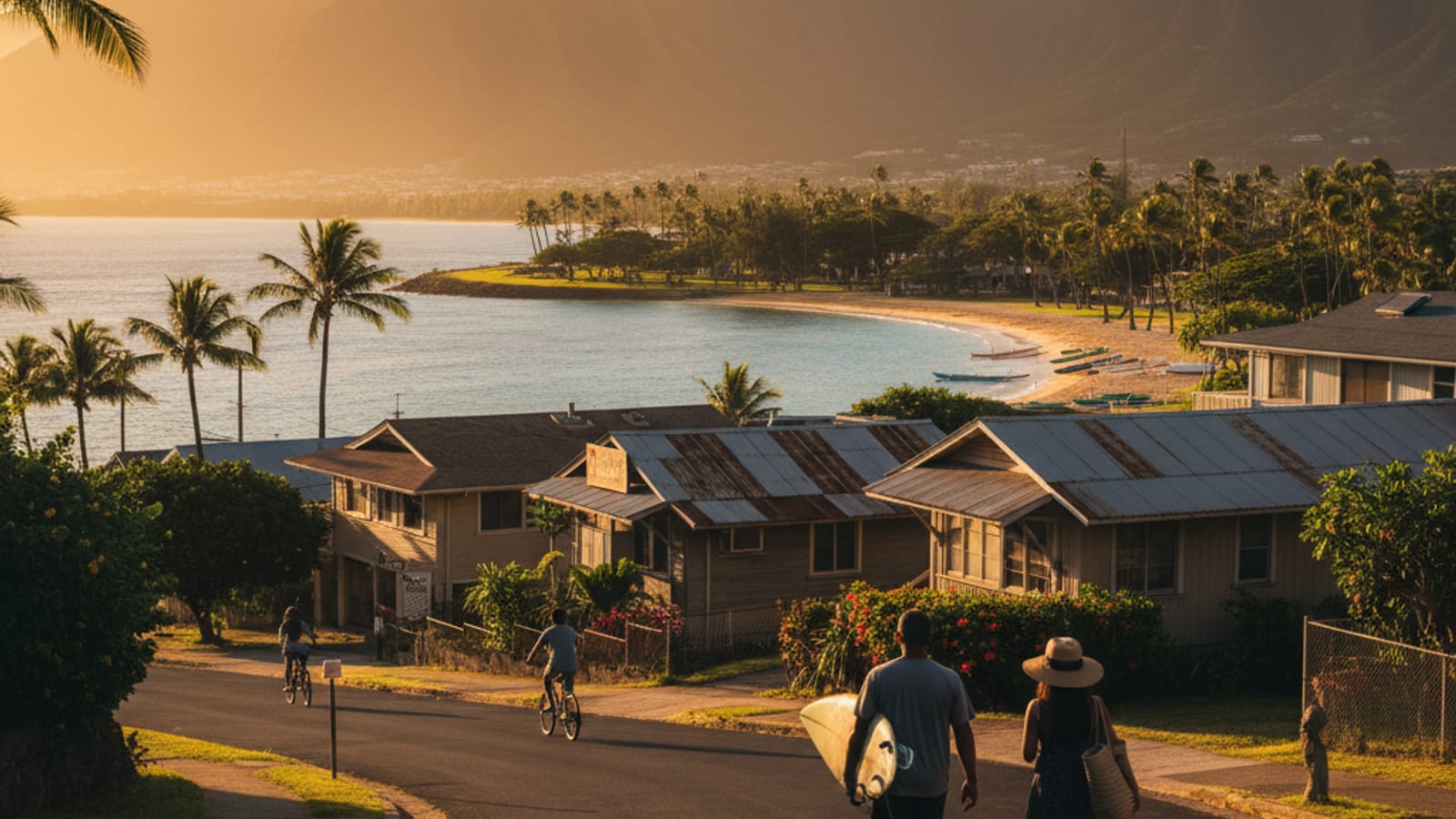
Waikiki is a perfectly nice place. The beach is beautiful, the water is warm year-round, and the hotels are comfortable. For a wider sample of US cities locals are quietly recommending, see the 25 best places to visit in the USA in 2026. It's also a sanitized, resort-corridor version of Hawaii that has about as much to do with real island life as the Epcot Japan pavilion has to do with actual Tokyo.
Here's the thing locals will tell you: Oahu — the island Honolulu sits on — is incredibly diverse. (We dug into the locals-vs-visitors gap in our 2026 Local Experience Report.) In a single day you can go from a world-class art museum to a shrimp truck on the North Shore to a hidden waterfall hike to a Chinatown dim sum restaurant that's been family-run for 50 years. The island is only 44 miles long and 30 miles wide, which means everything is surprisingly close.
The mistake most visitors make is never leaving the three-mile stretch of Waikiki. They eat at hotel restaurants ($40 for a mediocre burger), pay $30 for a beach chair, and go home thinking Hawaii is beautiful but overpriced. And they're half right — it is beautiful, but the overpriced part is optional.
This guide is built around getting you out of the resort bubble and into the places where locals actually spend their time. You'll eat better, spend less, and come home with stories that aren't about a hotel pool.
One practical note: you need a car on Oahu. TheBus system exists and is decent for getting around Honolulu proper, but to reach the North Shore, Kailua, or most hiking trailheads, a rental car is essential. Book early — rental cars on Oahu are notoriously expensive ($80-150/day) and sell out during peak season. Turo (peer-to-peer car rental) is often cheaper at $50-80/day. Off-peak (mid-September through mid-December) is the best time for availability and pricing.
Pro tip: If you must stay in Waikiki, stay on the Diamond Head (east) end near Kapahulu Avenue. It's quieter, closer to the good local restaurants, and a 10-minute walk to the less-crowded Queen's Beach. The central Kalakaua Avenue strip is the most expensive and most hectic part.
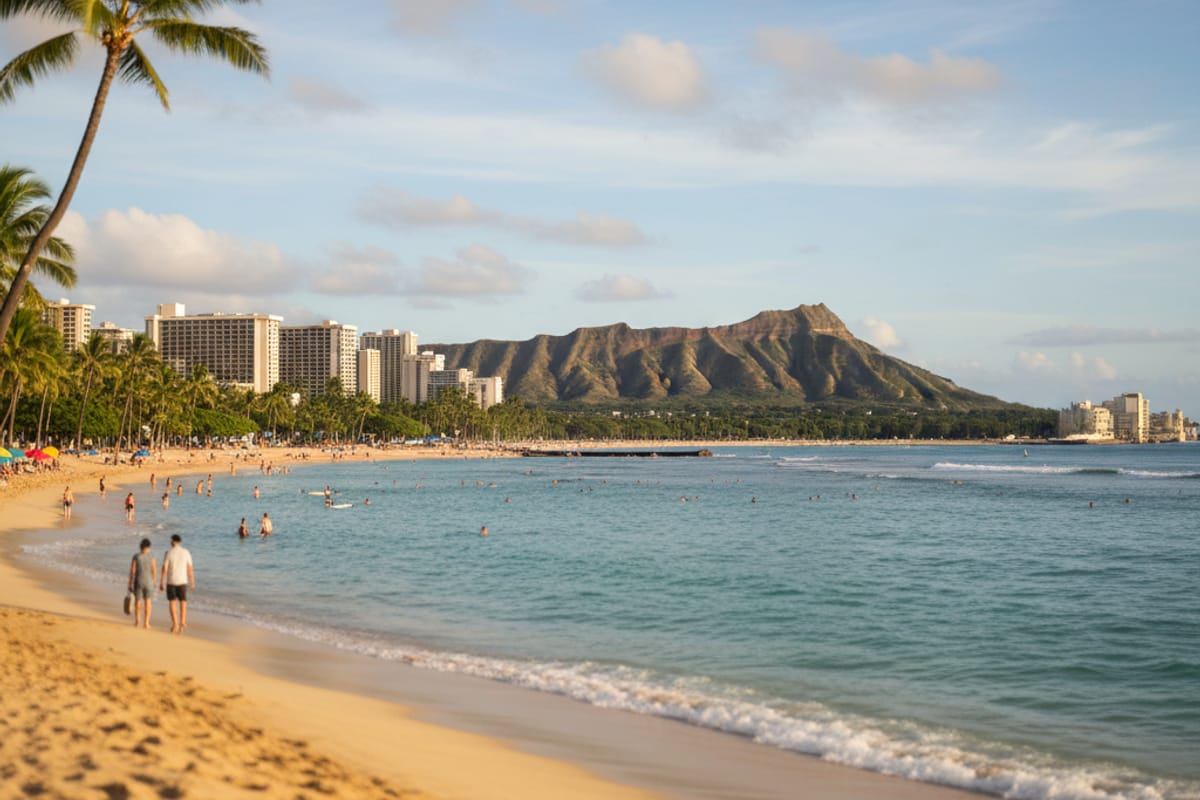 Waikiki is the starting point — not the destination.
Diamond Head at Sunrise & Kailua Beach Day
Diamond Head (Leahi in Hawaiian) is the iconic volcanic crater that forms Waikiki's backdrop, and hiking to the summit is a rite of passage. The trail is 1.6 miles round trip and takes about 45 minutes each way. It's steep in sections — 175 stairs near the top — but it's paved and manageable for most fitness levels. The summit views are spectacular: 360 degrees of coastline, Waikiki below, and the Pacific stretching to the horizon.
The key is going at sunrise. The park opens at 6 AM (you need a reservation — book online at gostateparks.hawaii.gov for $5 per person), and the early morning light turns the crater walls golden. By 9 AM the trail is crowded, the sun is intense, and the magic is gone. Bring a headlamp for the dark tunnel sections, water, and a light jacket — it's breezy at the summit.
After Diamond Head, drive 20 minutes east to Kailua Beach on the windward (east) side of the island. Kailua is consistently ranked among the best beaches in America and it's not hard to see why — powdery white sand, turquoise water, gentle waves perfect for swimming, and a fraction of Waikiki's crowds. The offshore Mokulua Islands are visible from the beach and reachable by kayak (Kailua Beach Adventures rents kayaks for about $70 for a half day).
Kailua town, a short walk from the beach, is a charming small-town counterpoint to Waikiki's high-rises. Kalapawai Market is a local deli that does excellent sandwiches and poke bowls for $10-14. Buzz's Original Steakhouse, right across from the beach, has been serving steaks and seafood since 1962 — the lanai tables at sunset are hard to beat. Dinner for two is about $60-80.
Island Snow, a surf shop on Kailua Road, is famous for its shave ice — and yes, Obama gets his shave ice here when he visits (his vacation home is in the neighborhood). A large shave ice with ice cream on the bottom and condensed milk on top is $6-8 and is one of the best cold treats on the island.
Lanikai Beach, just past Kailua, is even more stunning — a postcard-perfect crescent of sand with crystal-clear water. Access is through residential neighborhood walkways between houses. Parking is extremely limited (there is no parking lot), so walk or bike from Kailua Beach. Go early on weekends.
Pro tip: Diamond Head reservations sell out days in advance during peak season (December-March). Book as soon as your trip is confirmed. The 6:00-6:30 AM entry window is the best — you'll summit right around sunrise. Bring more water than you think you need.
North Shore: Shrimp Trucks, Big Waves & Small-Town Vibes
The North Shore of Oahu is a 40-minute drive from Waikiki and a complete world away. In winter (November through February), this coast produces some of the biggest surfable waves on Earth — 30-foot walls of water at Pipeline, Sunset Beach, and Waimea Bay that attract the world's best surfers and thousands of spectators. In summer, the same beaches are glassy and calm, perfect for swimming and snorkeling.
Haleiwa is the North Shore's main town — a two-block strip of surf shops, art galleries, food trucks, and shave ice stands. Matsumoto Shave Ice has been the most famous shave ice shop on the island since 1951. The line wraps around the block, but it moves fast. A combination shave ice with ice cream and azuki beans is about $5. Aoki's Shave Ice across the street is slightly less famous and slightly better, according to locals — try both and decide for yourself.
The shrimp trucks are the North Shore's culinary identity. Giovanni's Shrimp Truck, parked in Kahuku on the northeast corner of the island, is the original — a graffiti-covered white truck serving garlic shrimp ($15 for a plate with rice and coleslaw) since 1993. The scampi-style garlic butter shrimp is the signature and it's genuinely excellent. Romy's Kahuku Prawns & Shrimp, a short drive up the road, grows their own shrimp in aquaculture ponds behind the restaurant — you can see the ponds from your table. The butter garlic plate is fresher here since the shrimp were literally swimming an hour ago. Fumi's Kahuku Shrimp does a spicy garlic variation that's the favorite of the chili-loving crowd.
Waimea Bay is worth a stop regardless of the season. In summer, the water is calm enough for swimming and cliff jumping from the famous 25-foot rock (locals will show you the safe spot to jump). In winter, the waves are massive and the beach becomes a spectator sport. The parking lot fills up by 10 AM — arrive early or take TheBus route 52 from Haleiwa.
Shark's Cove, between Haleiwa and the shrimp trucks, is the best shore-snorkeling spot on the island during summer months (May through September). The volcanic rock formations create tide pools and channels teeming with tropical fish, sea turtles, and octopuses. Bring your own snorkel gear — rental shops charge $15-20/day, but you can buy a decent set at Walmart for $25. Winter waves make Shark's Cove dangerous and it's closed to swimming.
Turtle Beach (Laniakea Beach) between Haleiwa and the North Shore is where Hawaiian green sea turtles haul out onto the sand to rest. You'll see them almost every day, especially in the afternoon. Stay at least 10 feet away (it's the law) and don't touch them — they're endangered and protected by federal law. Volunteers are usually on-site to educate visitors.
Pro tip: Do the North Shore as a full-day loop: leave Waikiki by 8 AM, drive up the east coast through Kailua, stop at the shrimp trucks in Kahuku for lunch, spend the afternoon in Haleiwa, and drive back along the west coast. You'll see the entire island in one day. Avoid Friday afternoons — traffic on the H-1 back to Honolulu is brutal.
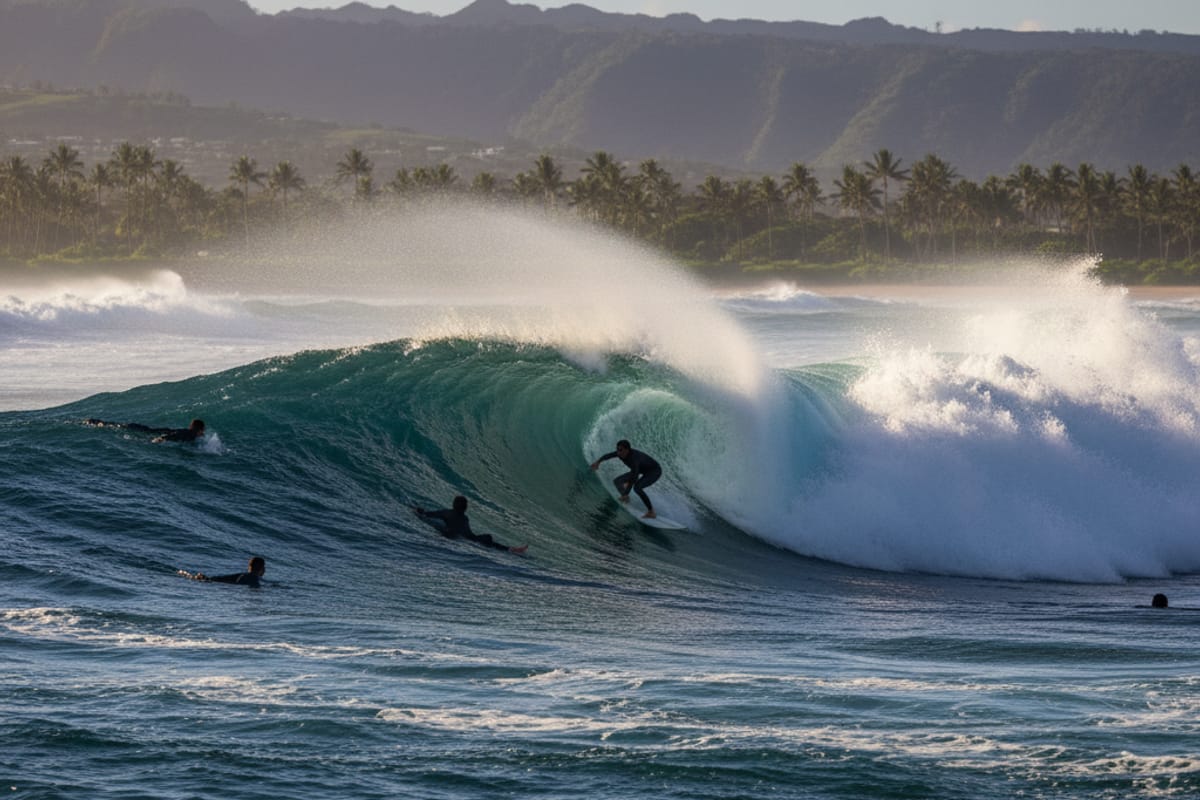 North Shore winter swells — nature's most impressive show.
Chinatown & the Plate Lunch: Eating Like a Local
Honolulu's Chinatown is the oldest Chinatown in America, and it's nothing like the tourist-friendly Chinatowns of San Francisco or New York. It's grittier, more authentic, and packed with some of the best cheap food on the island. The neighborhood spans about eight blocks between downtown Honolulu and the harbor, centered on Hotel Street and Maunakea Street.
The Oahu Market on North King Street is the heart of Chinatown — an indoor market selling fresh fish, roasted duck, tropical fruits, and prepared foods. The dried goods stalls have everything from li hing mui (preserved plum powder that Hawaiians put on absolutely everything) to Chinese herbs. The fish section is extraordinary — whole ahi tuna, opah, and mahi-mahi brought in from the Honolulu Fish Auction that morning.
Legend Seafood Restaurant on North King Street does the best dim sum on the island — cart-service on weekends, with har gow, siu mai, char siu bao, and egg tarts that are all excellent. Go before 10 AM to avoid the wait. Dim sum for two runs about $25-35.
Leonard's Bakery, technically in the Kapahulu neighborhood near Waikiki, is a Honolulu institution that's been making malasadas (Portuguese-style doughnuts) since 1952. These are hot, sugar-coated doughnuts without a hole — crispy outside, pillowy inside, and dangerously addictive. Original malasadas are $1.50 each, filled ones (custard, haupia, dobash) are $2.00. Buy at least three because one will not be enough.
Now let's talk about the plate lunch — Hawaii's unofficial state meal. A plate lunch is a Styrofoam container with two scoops of white rice, one scoop of macaroni salad, and a protein (usually kalua pork, teriyaki chicken, loco moco, or katsu). It's a working-class meal that reflects Hawaii's multicultural heritage — Japanese rice, Portuguese sausage, Filipino adobo, Korean BBQ, all on one plate.
Rainbow Drive-In on Kapahulu Avenue has been the plate lunch standard since 1961. The mixed plate with two proteins is $10-12 and is enough food for two meals. The loco moco (hamburger patty on rice with a fried egg and brown gravy) is the classic comfort food order.
Helena's Hawaiian Food in Kalihi is the Michelin-recognized spot for traditional Hawaiian food — pipikaula (Hawaiian-style beef jerky), laulau (pork wrapped in taro leaves and steamed), and poi. Helena's has been family-run since 1946, and the combination plate ($15-18) is the best introduction to authentic Hawaiian cuisine. Open Tuesday through Friday only, and they close when they sell out.
For poke (diced raw fish), skip the tourist shops in Waikiki and go to Ono Seafood on Kapahulu Avenue. The shoyu poke and the Hawaiian-style poke are both perfect — fresh ahi, simple seasoning, served in a no-frills container. A poke bowl with rice is $12-15. Tamura's Fine Wine & Liquors in Kaimuki also has an excellent poke counter — it's a liquor store that happens to have some of the freshest poke on the island.
Pro tip: Plate lunch spots and poke counters close early — most stop serving by 2-3 PM or when they sell out. Plan lunch for 11 AM-12 PM to get the best selection. Helena's Hawaiian Food regularly sells out by 1 PM, especially on Fridays.
Pearl Harbor, Snorkeling & Hidden Hikes
Pearl Harbor is the most visited attraction in Hawaii, and it's worth every minute. The USS Arizona Memorial sits above the sunken battleship where 1,177 sailors and Marines died on December 7, 1941. The memorial is free, but you need a timed-entry ticket from recreation.gov — these release 60 days in advance and sell out immediately. Set an alarm and book the moment they go live.
The experience starts with a 23-minute documentary film, followed by a short boat ride to the memorial. Standing above the sunken ship, watching oil still leaking to the surface 80+ years later, is profoundly moving. Plan 2-3 hours for the full visit including the museum exhibits. No bags are allowed (there's a bag check for $5), and no flip-flops — wear closed-toe shoes.
The USS Missouri (the battleship where Japan signed the surrender) and the Pearl Harbor Aviation Museum are adjacent and worth adding if you have time. Combination tickets are $50-72 depending on which sites you include.
For snorkeling beyond Shark's Cove, Hanauma Bay is the most famous spot on the island — a volcanic crater that opened to the sea and filled with coral and tropical fish. It's gorgeous but highly regulated: you need a reservation ($25 per person, closed Mondays and Tuesdays), and you must watch a short conservation video before entering. The snorkeling is excellent for beginners — shallow, calm, and teeming with parrotfish, tangs, and wrasses. Bring your own gear to avoid the $20 rental fee.
Electric Beach (Kahe Point) on the west side is the locals' snorkeling spot. Warm water discharged from a nearby power plant attracts massive schools of fish, spinner dolphins, and occasionally sea turtles. It's free, uncrowded, and the underwater visibility is exceptional. The entry is over sharp rocks — wear reef shoes.
For hiking beyond Diamond Head, the Manoa Falls Trail is a 1.6-mile round trip through a lush rainforest to a 150-foot waterfall. It's muddy (always — this is a rainforest), so wear shoes you don't mind trashing. The trailhead is 15 minutes from Waikiki, and there's a $5 parking fee. The Makapu'u Point Lighthouse Trail on the east side is a paved, 2-mile round trip path with some of the best coastal views on the island. From December through April, you can often spot humpback whales breaching offshore.
The Lanikai Pillbox Hike (Ka'iwa Ridge Trail) is a short, steep climb to old WWII bunkers overlooking Lanikai Beach and the Mokulua Islands. The sunrise from the pillboxes is one of the most Instagrammed views in Hawaii for good reason. It's about 1.5 miles round trip, takes 30-45 minutes, and the trail is rocky and uneven — bring a headlamp if you go for sunrise.
Pro tip: Pearl Harbor tickets release exactly 60 days in advance at 7 AM Hawaii time. Set a reminder and book the moment they drop — they sell out within hours. The 7:30 AM and 8:00 AM time slots are best because it's cooler and less crowded. Do NOT bring bags — you'll have to check them and it adds 20 minutes to your visit.
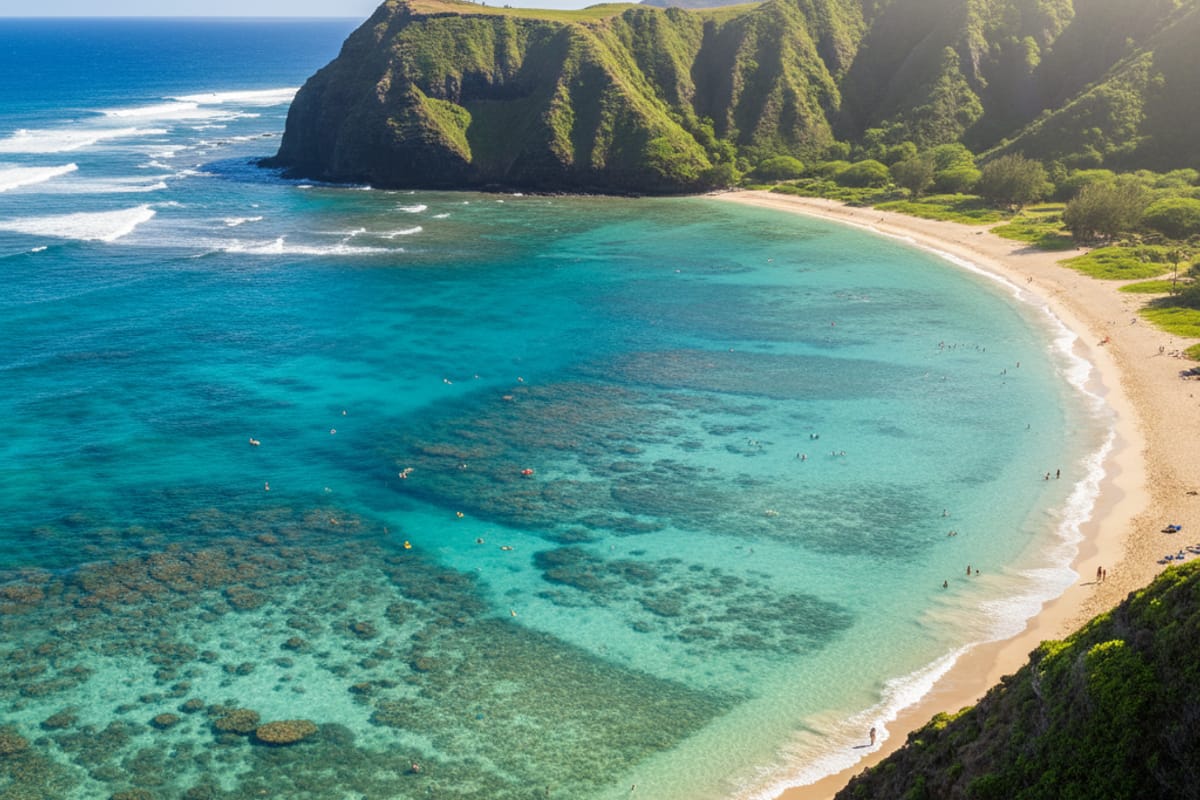 Hanauma Bay — book ahead or you won't get in.
Budget Breakdown & When to Visit
Hawaii has a reputation for being expensive, and it can be — if you eat at resort restaurants, stay in Waikiki high-rises, and book everything through your hotel concierge. But locals live here on normal salaries, and they know how to stretch a dollar.
Flights: From the West Coast, $250-400 round trip is a good deal. From the East Coast, $400-600. Southwest flies to Honolulu and often has sales. The cheapest months to fly are mid-September through mid-December (excluding Thanksgiving week) and mid-January through mid-March.
Hotels: Waikiki hotels range from $150-400/night depending on the season and location. The Outrigger and Hyatt properties are reliably good mid-range options at $180-250/night. For budget, the Surfjack Hotel & Swim Club has a boutique vibe for $160-200/night. Outside Waikiki, vacation rentals in Kailua or the North Shore run $100-200/night and give you a much more local experience.
Rental cars: $80-150/day during peak season, $50-80/day off-peak. Turo is usually cheaper. Book early — cars sell out.
Food: Plate lunches are $10-14. Shrimp truck plates are $14-16. Poke bowls are $12-15. Malasadas at Leonard's are $1.50-2.00 each. Dim sum is $25-35 for two. Grocery stores (Foodland and Don Quijote) have excellent prepared food sections — grab a poke bowl and a bento box for $8-12 and eat on the beach.
Activities: Diamond Head is $5 per person. Hanauma Bay is $25 per person. Pearl Harbor (USS Arizona Memorial) is free but requires a reservation. Beaches are always free. Hiking is free. Snorkeling with your own gear is free.
Realistic 5-day budget: $1,200-1,800 per person including flights from the West Coast, mid-range hotel, rental car, food, and activities. You can go lower by staying outside Waikiki, cooking some meals, and sticking to free activities (beaches, hikes, sunsets). You can go much higher by eating at resort restaurants and booking helicopter tours.
Best time to visit: Mid-September through mid-December is the sweet spot — flights and hotels are cheapest, the weather is warm (80-85°F), the water is calm, and crowds are manageable. The North Shore big wave season starts in November, which is a bonus. December through March is peak season (and whale watching season) — expect higher prices and bigger crowds. Summer is great for families but more expensive than fall.
Why Trust This Guide
Recommendations from locals across 240+ US cities via Recommended.app community data.
Explore More
This guide is part of our Honolulu collection. Explore more guides for Honolulu →
Honolulu has 154 verified businesses on Recommended.app across 66 categories.
Hidden Gems Weekly
3 hidden gems, 2 local quotes, 1 home hack — every Monday. Free forever.
Unsubscribe anytime. No spam.
More from Travel Guides
 Travel Tips
Expedia vs Hotels.com 2026: Which Actually Saves You More Money?
 Travel Guide
Best Hotels in Miami 2026: South Beach to Wynwood (With Real Price Ranges)
 Travel Guide
Best Hotels in Nashville 2026: From Budget East Nashville to Downtown Luxury
 Travel Guide
Best Hotels in Las Vegas 2026: From Budget to High Rollers (With Real Price Data)
 Outdoor & Nature
Best Hiking Near Me: How to Find Great Trails in Any City (2026 Guide)
 Things To Do