
Last updated March 15, 2026 by the Recommended.app research team.
Bellaire Chinatown: The Best Asian Food Outside of Asia
Most American cities have a Chinatown — a few blocks of restaurants, a decorative arch, maybe a dim sum spot that closes by 2 PM. Houston's Chinatown is something else entirely. Stretching along Bellaire Boulevard from Gessner to Highway 6, this is a six-mile corridor of Asian strip malls, supermarkets, restaurants, bakeries, and tea shops that constitutes arguably the most diverse Asian food scene in North America. And almost no one outside of Houston knows about it.
The numbers alone are staggering: over 800 Asian-owned businesses, representing Chinese, Vietnamese, Korean, Malaysian, Indonesian, Thai, Japanese, Taiwanese, and Filipino cuisines. This isn't a tourist zone — there are no walking tours or selfie spots. It's a working neighborhood where families do their weekly shopping at Hong Kong Food Market and grab lunch from food courts that would be Michelin-starred in a less humble setting.
Start at the Dun Huang Plaza food court on Bellaire near Ranchester — inside this unassuming strip mall, you'll find a Taiwanese shaved ice shop (Meet Fresh) serving mango snow with boba for $7, a hand-pulled noodle counter where you watch the chef stretch dough into impossibly thin strands, and a roast duck shop with birds hanging in the window that rival anything in Hong Kong. This single food court has more culinary diversity than most American cities.
For a proper sit-down meal, Mala Sichuan Bistro is the gold standard for Sichuan cuisine in Houston. Their water-boiled fish (shui zhu yu) arrives at your table in a bowl the size of a sink, swimming in chili oil with Sichuan peppercorns that make your lips tingle for an hour. It's $22 and feeds two people easily. The cumin lamb and mapo tofu are equally devastating. Down the street, Crawfish & Noodles invented the Viet-Cajun crawfish genre — garlic butter crawfish tossed with Vietnamese spices over a bed of garlic noodles. A plate runs $18-22 and it's one of the most Houston dishes that exists.
For late-night eating, Tiger Den on Bellaire stays open until midnight and serves rich, porky tonkotsu ramen for $14 that stands with the best in the country. Coco Crêpes Waffles & Coffee nearby is open even later and does Hong Kong-style egg waffles with Nutella and fresh fruit that make an absurdly satisfying 11 PM snack for $8.
Pro tip: Weekend dim sum at Ocean Palace or Kim Son is a Houston institution, but the wait times can exceed 90 minutes after 11 AM. The local move is Golden Dim Sum on Bellaire — it's less famous, slightly less polished, and almost never has a wait. Their har gow (shrimp dumplings) and char siu bao (BBQ pork buns) are exceptional, and a full dim sum meal for two costs about $25-30.
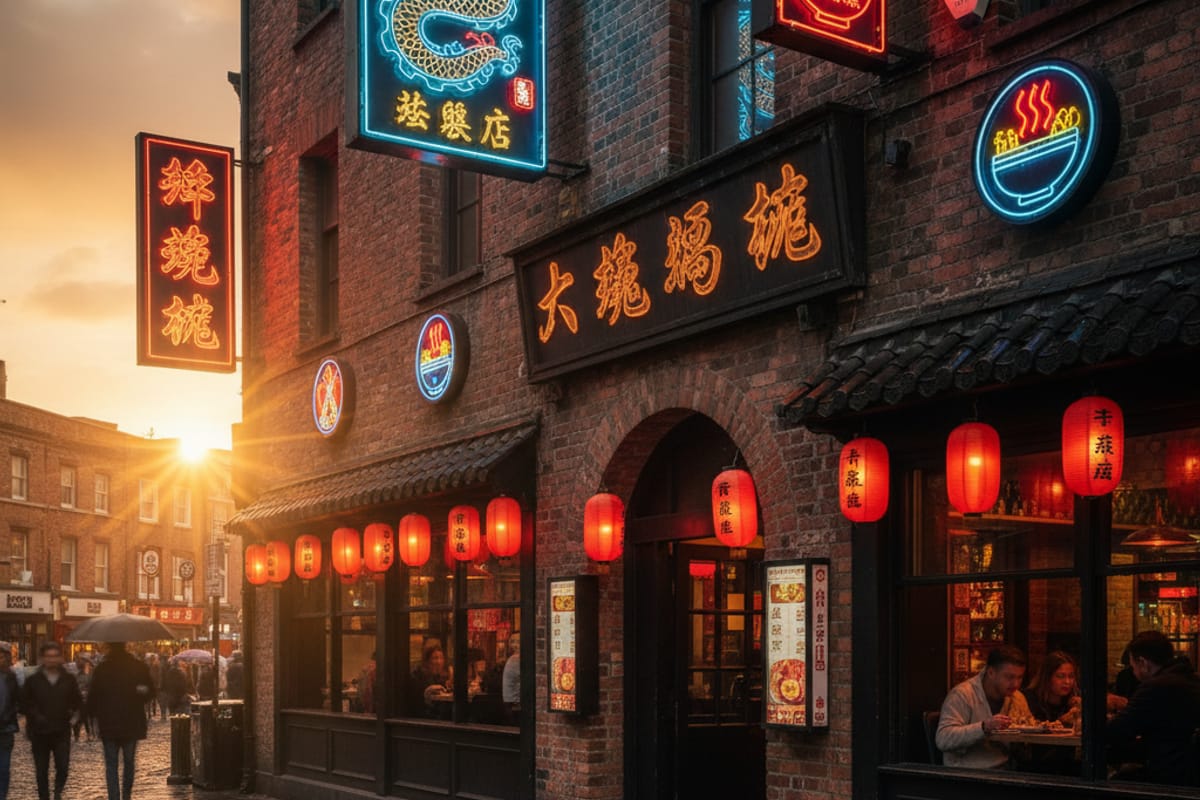 Houston's Chinatown stretches for miles — and every block has something extraordinary.
The Mahatma Gandhi District: Little India on Hillcroft
If Chinatown is Houston's open secret, the Mahatma Gandhi District is its classified document. Officially designated by the city in 2010, this stretch of Hillcroft Avenue between Highway 59 and Bissonnet is home to one of the largest South Asian commercial districts in the United States. Indian, Pakistani, Bangladeshi, and Nepali businesses line both sides of the street — sari shops, jewelry stores, Bollywood video rental spots, spice markets, and restaurants that serve food so authentic it makes you forget which continent you're on.
Himalaya Restaurant is the anchor of the district and one of the most acclaimed restaurants in Houston, full stop. Chef Kaiser Lashkari has been cooking here since 2000, and his menu spans Pakistani, Indian, and Hyderabadi cuisines with a depth that food critics regularly lose their minds over. The fried chicken — yes, fried chicken at a Pakistani restaurant — is seasoned with a proprietary spice blend that people have been trying to reverse-engineer for two decades. An order with naan and raita is about $14. The chicken biryani ($13) is layered with saffron rice and slow-cooked until every grain is infused with flavor. Go during Friday lunch for the goat nihari, a slow-braised stew that sells out by 1 PM.
Across the street, Aga's Restaurant does exceptional Pakistani cuisine — their chicken karahi (a wok-cooked curry with tomatoes and green chiles) is $15 and arrives still sizzling. The haleem (a thick, slow-cooked lentil and meat stew) is available on weekends and is one of the most comforting dishes in the city. Shri Balaji Bhavan on Hillcroft is the go-to for South Indian vegetarian food — their masala dosa (a crispy crepe filled with spiced potatoes) is $9 and stretches nearly two feet across the plate.
Beyond food, the district is worth wandering just for the sensory experience. The spice shops sell whole cardamom, saffron, and dried chiles at a fraction of grocery store prices. The fabric stores carry handwoven silks and embroidered textiles that are works of art. And the bakeries — oh, the bakeries. Aga's Bakery next to the restaurant makes fresh naan, paratha, and kulcha throughout the day, and the smell alone is worth the trip. A bag of fresh naan (four pieces) costs $3.
Most visitors to Houston have never heard of this district, which is exactly why it remains so authentic. There are no tourist accommodations here — no English-language menus designed for newcomers, no toned-down spice levels. Come hungry, come curious, and come with cash — several spots are cash-only or have $10 minimum card purchases.
Pro tip: Friday afternoon is the best time to visit the Gandhi District. Several restaurants prepare special Friday lunch menus (particularly the nihari and haleem), the bakeries are running at full production, and the spice shops restock for the weekend. Parking is tight on Hillcroft — use the lots behind the strip malls rather than fighting for street spots.
The Heights: Houston's Walkable Antidote
Houston is famously a driving city — the joke is that Houstonians drive to their mailbox. The Heights neighborhood is the charming exception. This tree-lined, bungalow-filled neighborhood north of downtown has emerged as one of Houston's most walkable and livable areas, with a main drag along 19th Street and White Oak Drive that's packed with independent shops, restaurants, and bars you can actually stroll between.
19th Street in the Heights is the antique and vintage capital of Houston. A dozen shops line the street selling everything from mid-century modern furniture to Victorian jewelry to old Houston memorabilia. Heights Antiques on Yale is a massive multi-dealer space where you can easily lose two hours. Retropolis is more curated — think 1950s diner signs, vintage concert posters, and the kind of well-maintained oddities that make perfect gifts for people who have everything.
The food scene in the Heights has exploded in recent years. B.B. Lemon on White Oak serves elevated Southern comfort food — their fried chicken sandwich is $16 and frequently cited as the best in Houston. Coltivare on Airline Drive is an Italian restaurant with its own garden on-site; they grow much of what ends up on your plate, and the wood-fired pizzas ($14-18) are exceptional. For breakfast, the Toasted Yolk Cafe does a brunch spread that draws massive weekend crowds — their churro waffle ($13) is absurd in the best possible way.
The Heights Hike and Bike Trail runs north-south through the neighborhood and connects to the broader bayou trail system. On weekends, the trail fills with joggers, families, and dog walkers — it's the most neighborhoody scene Houston has to offer. Donovan Park at the trail's south end has a great playground and usually hosts food trucks on Saturday mornings.
Evening in the Heights means White Oak Music Hall — one of Houston's best live music venues, with an indoor stage, outdoor lawn, and rooftop bar. Check their calendar before your trip; they pull surprisingly big acts for a mid-size venue. After the show, walk to Eight Row Flint on Yale for whiskey cocktails in a refurbished Heights bungalow, or Holler Brewing Company for local craft beer in a space that feels like your coolest friend's garage.
Pro tip: First Saturday Arts Market happens the first Saturday of every month in the Heights, with local artists, food vendors, and live music along 19th Street. It runs 11 AM to 6 PM and is free to attend. Combine it with antique shopping and lunch at Coltivare for a perfect Heights day that costs very little beyond your meals.
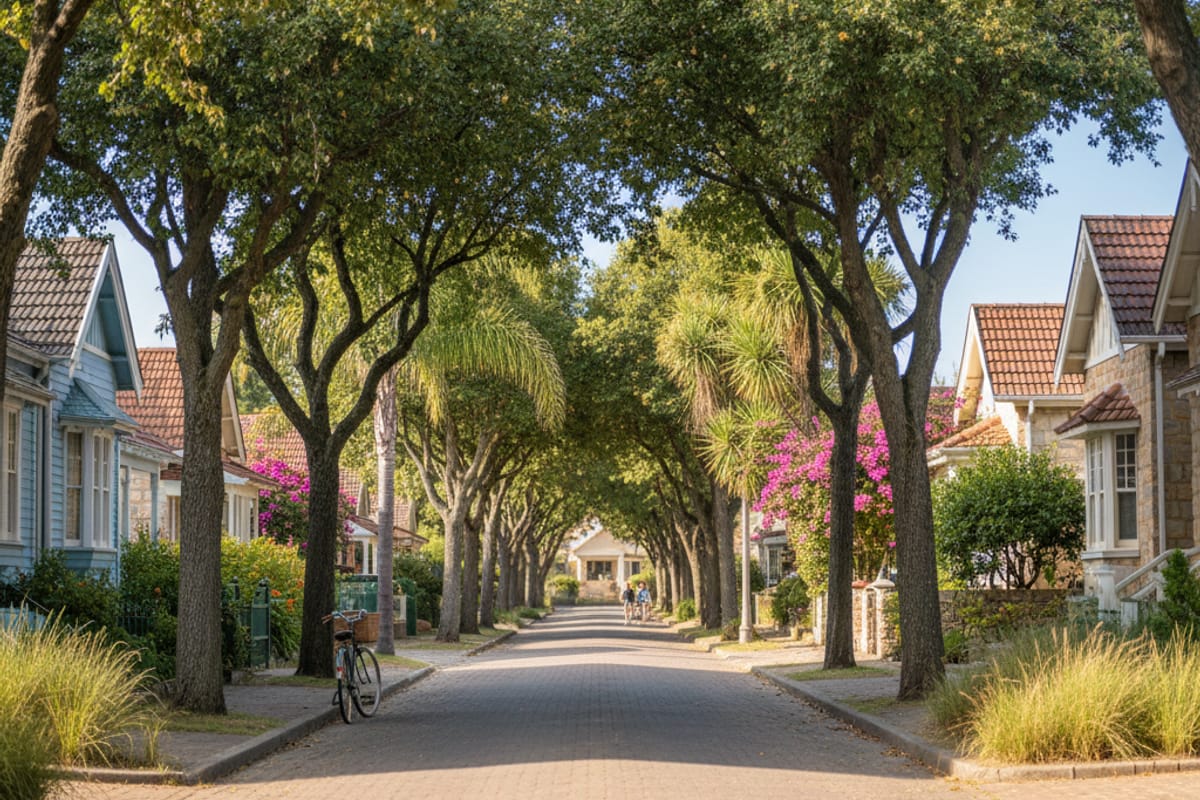 The Heights — Houston's walkable, tree-lined neighborhood full of character.
Market Square Park & the Historic Sixth Ward
Downtown Houston empties out after 5 PM on weekdays, creating an eerie ghost-town quality that confuses first-time visitors. But Market Square Park, at the corner of Travis and Congress near the original center of the city, has become a genuine gathering place that bucks that trend. The park itself is beautifully maintained — public art installations, a dog park, mature live oak trees, and a small performance stage that hosts free events throughout the year.
The real draw is Niko Niko's, a Greek restaurant on the park's edge that's been a Houston institution since 1977. Their gyro plate ($14) is built with hand-stacked meat carved from a massive rotating spit, and the baklava ($5) is made in-house daily. Grab your food and eat at one of the park's picnic tables — it's one of those simple experiences that somehow captures what a city is really about. Nearby, La Carafe is Houston's oldest bar, operating since 1860 in a building that may actually be haunted. The wine is cheap ($6-8 per glass), the jukebox is legendary, and the second-floor balcony overlooking Market Square is the most atmospheric drinking spot in the city.
Walk west from Market Square into the Sixth Ward, one of Houston's oldest neighborhoods. This area was settled in the 1830s and still has Victorian shotgun houses and worker cottages that predate the Civil War. The neighborhood is in transition — some blocks are meticulously restored, others are rough around the edges — but that's what makes it fascinating. The Sixth Ward is where Houston's history as a scrappy, diverse, working-class city is still visible before the condos take over completely.
The adjacent Main Street corridor has been revitalized with the METRORail line running through it. Walk south on Main from Market Square toward Discovery Green and you'll pass through the Theater District — Houston has the second-largest concentration of theater seats in any downtown in America, behind only New York. The Hobby Center, Wortham Theater Center, Jones Hall, and Alley Theatre are all within a few blocks of each other. Check for same-day rush tickets at the box offices; several venues offer $25-30 seats that normally cost $80+ if you show up an hour before curtain.
Discovery Green itself is a 12-acre urban park with free programming year-round — outdoor movies, yoga sessions, live music, food truck festivals, and a seasonal ice rink in winter. The park sits between the George R. Brown Convention Center and the Hilton Americas, and on warm evenings it fills with families, couples, and downtown workers who've discovered that Houston's core actually has a pulse after dark if you know where to look.
Pro tip: La Carafe doesn't have a sign — look for the narrow, weathered building at 813 Congress Street with the cramped doorway. It's cash-only, the stairs to the second floor are steep and narrow, and the whole place feels like it could collapse at any moment. That's the charm. Go after 9 PM on a weeknight for the full experience without the weekend crowds.
The Beer Can House & Houston's Weirdest Art
Houston has a tradition of outsider art that most cities would suppress but Houston — being Houston — celebrates. The Beer Can House at 222 Malone Street in the Rice Military neighborhood is the crown jewel of this tradition. Starting in 1968, retired upholsterer John Milkovisch began covering his entire house with flattened beer cans, beer can lids, and aluminum siding made from — you guessed it — beer cans. By the time he was done, the house was clad in an estimated 50,000 cans, with garlands of can tops hanging from every eave and catching the light like the world's most blue-collar wind chimes.
The house is now managed by the Orange Show Center for Visionary Art and is open to the public on weekends ($5 suggested donation). The interior is as eccentric as the exterior — floors inlaid with marbles and stones, furniture embedded with pulled tabs, and walls covered in beer can mosaics. It sounds kitschy, and it is, but there's also something genuinely moving about a man who spent 18 years turning his home into a work of art using nothing but the materials from his favorite pastime.
The Orange Show itself, located at 2402 Munger Street in the East End, is another Houston original. Built single-handedly by postal worker Jeff McKissack over 25 years, it's a labyrinthine folk art installation made from found objects — tiles, gears, wagon wheels, mannequins, and stadium seating — all dedicated to McKissack's belief that the orange was the perfect food. It's bewildering, beautiful, and completely impossible to explain to someone who hasn't seen it. Open weekends, $5 admission.
The Art Car Museum (nicknamed the Garage Mahal) at 140 Heights Boulevard is free and showcases the art car culture that Houston has made uniquely its own. Houston's Art Car Parade, held every April, is the largest in the world — over 250 vehicles transformed into rolling sculptures. The museum displays cars year-round, from a vehicle covered entirely in buttons to one transformed into a giant fish. It's absurd and joyful and very Houston.
For more conventional public art, the Midtown area around the MATCH (Midtown Arts & Theater Center Houston) has rotating murals and installations. The HUE Mural Festival has turned dozens of building facades across the city into massive canvases — many of the best examples are concentrated along Harrisburg Boulevard in the East End and St. Emanuel Street in EaDo. They're free to see, and the quality rivals any street art scene in America.
The Project Row Houses in the Third Ward is perhaps Houston's most important art space — a collection of restored shotgun-style houses on Holman Street that serve as rotating gallery spaces, artist residencies, and community gathering places. Founded in 1993 by artist Rick Lowe, it's both an art installation and an act of neighborhood preservation. Free to visit, and deeply worth your time.
Pro tip: The Houston Art Car Parade happens every April (usually the second weekend) and draws over 250,000 spectators. It's free, runs along Allen Parkway, and features everything from cars covered in stuffed animals to rolling Viking ships. If your trip coincides, don't miss it — there's nothing else like it in America.
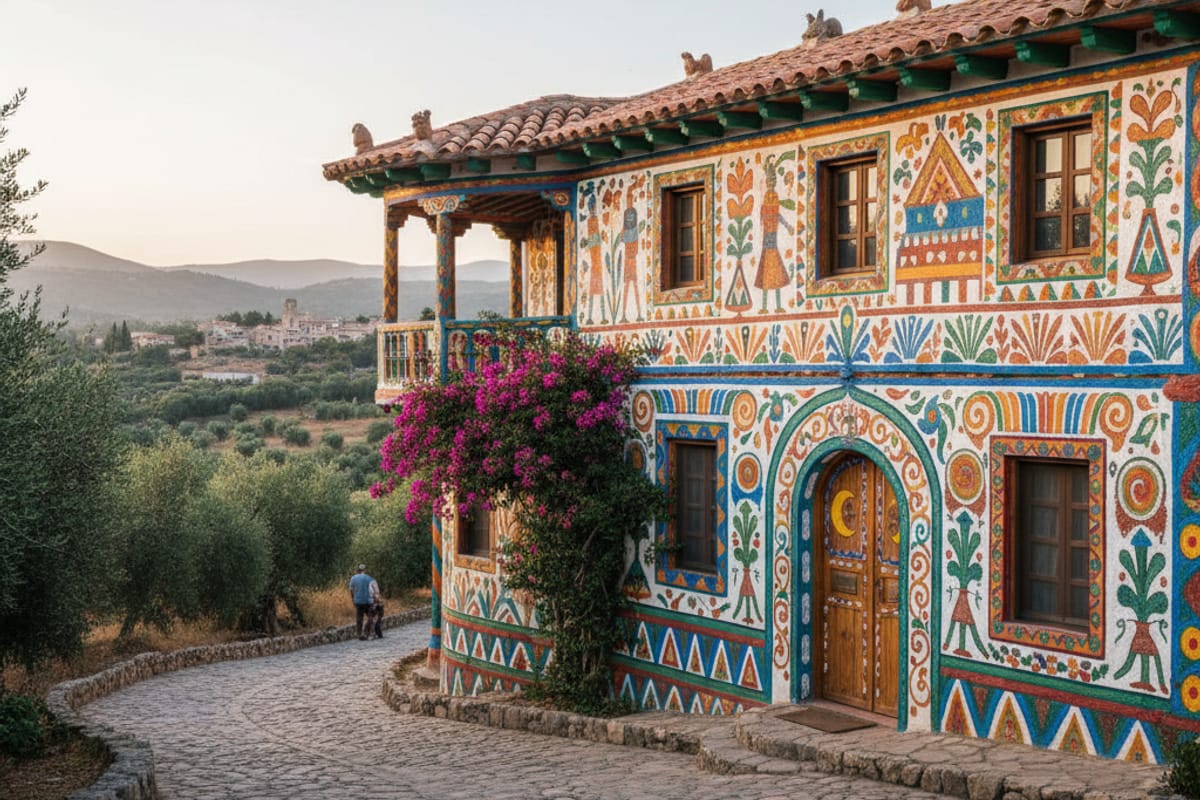 Houston's outsider art scene is wonderfully weird — from beer can houses to art car museums.
The Downtown Tunnel System: Houston's Underground City
Beneath downtown Houston's skyscrapers lies one of the most peculiar urban features in America — a climate-controlled tunnel system stretching over 7 miles beneath the streets, connecting 95 city blocks. Built starting in the 1930s and expanded dramatically in the 1960s and 70s, the tunnels exist because Houston's summers are brutally hot and humid, and downtown workers needed a way to move between buildings without melting into puddles on the sidewalk.
The tunnel system — officially called the Houston Tunnel System — contains over 100 shops, restaurants, and service businesses, essentially creating an underground city that operates on weekday business hours. This is important: the tunnels are almost entirely closed on weekends and after 6 PM on weekdays. They're designed for the downtown workforce, not for tourists, which is exactly what makes them fascinating to visit during business hours.
The best way to access the tunnels is through the Wells Fargo Plaza lobby at 1000 Louisiana Street or the JP Morgan Chase Tower at 600 Travis Street. Once you're underground, the signage is decent but not great — there's a learning curve to navigation, and the tunnels have a sameness that can be disorienting at first. Embrace the mild confusion. You'll stumble past food courts with $8-10 lunch specials, shoe repair shops that have been operating since the 1970s, barber shops where downtown lawyers get their haircuts, and convenience stores selling everything from umbrellas to phone chargers.
The food options in the tunnels are surprisingly good for what's essentially a glorified underground food court. Treebeards does excellent Southern comfort food — their red beans and rice with sausage ($10) is a Houston lunch institution. Bombay Sweets serves Indian chaat and curries for $9-12 that punch well above their food court weight class. The tunnel Chick-fil-A and Subway locations are there too, but you didn't come underground to eat chain food.
Historically, the tunnels were also a response to the energy crisis of the 1970s — keeping workers underground and air-conditioned was more energy-efficient than cooling the outdoor plazas. Today, they're a study in Houston pragmatism. Other cities build beautiful public squares and outdoor promenades. Houston looked at its 98-degree summers with 90% humidity and said, "Let's just go underground." It's not glamorous, but it works, and that's Houston in a nutshell.
The tunnels are free to walk through during business hours — there's no admission or access fee. Budget about 45 minutes to an hour for a thorough exploration, including a lunch stop. It's a perfect activity for a Wednesday or Thursday between museum visits, especially during summer when the above-ground alternative is genuinely miserable.
Pro tip: Download the Houston Downtown Tunnels map from the Downtown Houston website before you go — phone GPS doesn't work underground. The tunnels are busiest between 11:30 AM and 1 PM when the lunch rush hits. Visit before 11 AM or after 2 PM for a quieter experience where you can actually appreciate how bizarre and wonderful this underground world is.
Why Trust This Guide
Recommendations from locals across 240+ US cities via Recommended.app community data.
Explore More
Related guides:
This guide is part of our Houston collection. Explore more guides for Houston →
Houston has 869 verified businesses on Recommended.app across 91 categories, with an average rating of 4.6 out of 5.
Hidden Gems Weekly
3 hidden gems, 2 local quotes, 1 home hack — every Monday. Free forever.
Unsubscribe anytime. No spam.
More from City Guides
 City Guide
We Asked Houston Locals Where They Actually Eat — Here's What They Said
 City Guide
First Time in Houston? Locals Wish You Knew These 12 Things
 Home Services
Water Damage Restoration Near Me: What to Do in the First 24 Hours (2026 Guide)
 Food & Dining
Best Buffet in Las Vegas 2026: What's Still Worth It After the Great Buffet Collapse
 Food & Dining
Best Coffee Shops in Chicago 2026: 20 Cafes Worth Leaving Your Apartment For
 Food & Dining