
Last updated March 15, 2026 by the Recommended.app research team.
Why HVAC Maintenance Is the Best Money You'll Spend All Year
Your HVAC system is the most expensive mechanical equipment in your home — and one of the most neglected. A new central air system runs $3,000–$7,000 installed, and a full HVAC replacement (heating and cooling) can hit $10,000–$15,000. Yet most homeowners skip the one thing that extends its life by 5–10 years: regular maintenance.
A professional tune-up costs $80–$150 per visit — typically done twice a year (spring for AC, fall for heating). That's $160–$300 per year to protect a five-figure investment. Compare that to the average emergency repair call: $300–$600 for a standard fix, $1,000–$2,500 for a compressor or blower motor, and $3,000–$7,000 for a full replacement. The math is simple.
Beyond avoiding breakdowns, a well-maintained system runs 15–25% more efficiently. On a $200/month energy bill, that's $30–$50 in monthly savings — which nearly pays for the tune-up itself. In hot climates like Las Vegas, where AC runs 6+ months a year, the savings are even higher.
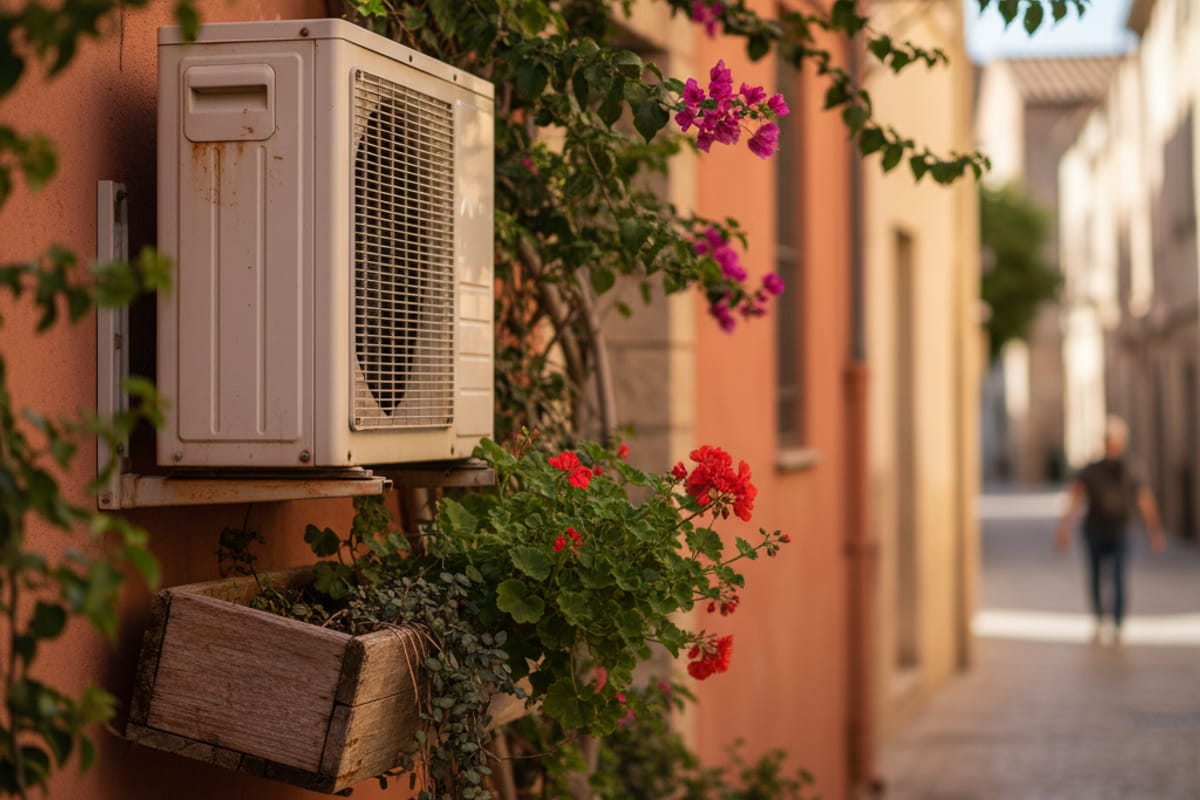 A professional tune-up costs $80–$150 and can prevent thousands in emergency repairs.
The Seasonal Maintenance Schedule Every Homeowner Needs
HVAC maintenance follows a predictable calendar. Here's what to do and when:
Every month: Check and replace your air filter. This is the single most impactful thing you can do. A clogged filter forces your system to work harder, increases energy bills by 5–15%, and accelerates wear on the blower motor. Standard 1-inch filters should be replaced every 30–60 days. Pleated 4-inch filters last 3–6 months. If you have pets, replace more frequently.
Spring (March–April): Schedule your AC tune-up before the summer rush. A technician should clean the condenser coils, check refrigerant levels, test the thermostat, inspect electrical connections, lubricate moving parts, and check the condensate drain. Book early — by May, most HVAC companies are booked 2–3 weeks out.
Fall (September–October): Schedule your heating tune-up. The tech should inspect the heat exchanger (cracks here can leak carbon monoxide), test the ignition system, check gas connections, and clean the burners. This is also the time to reverse your ceiling fans to clockwise rotation to push warm air down.
Before extreme weather: Test your system before you actually need it. Run your AC on the first warm day of spring and your heat on the first cool day of fall. If something is wrong, you'll have time to schedule a repair without paying emergency rates.
Pro tip: Set a recurring calendar reminder for filter changes. The #1 cause of HVAC service calls is a dirty filter — and it's the easiest thing to prevent.
DIY HVAC Maintenance: What You Can (and Can't) Do Yourself
There are several HVAC tasks that are completely DIY-friendly and save you real money:
Replace air filters ($5–$30 per filter): Pull out the old one, slide in the new one. Check the size printed on the side of the existing filter and buy the same dimensions. Arrow on the filter points toward the blower.
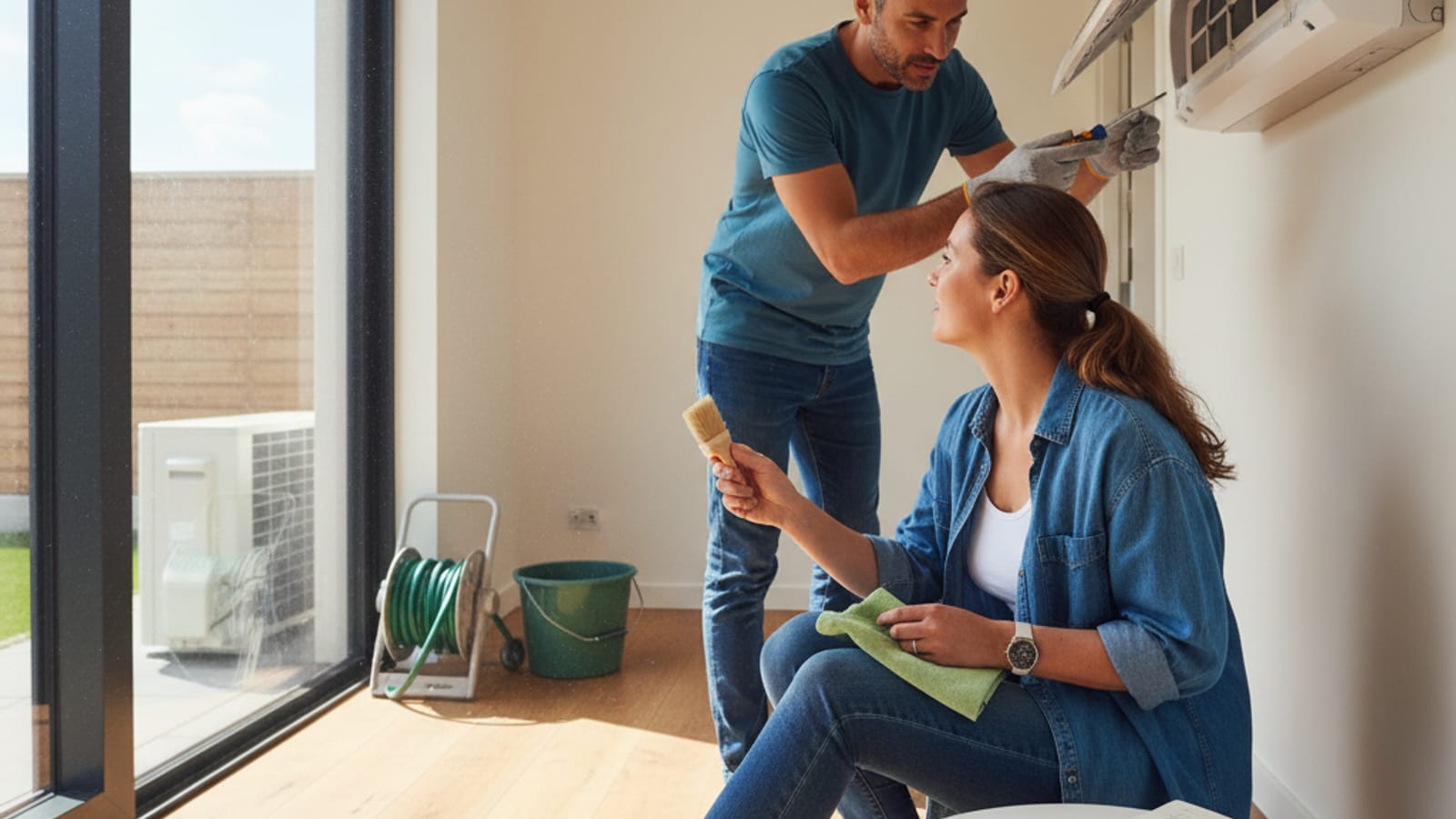
Clean the outdoor condenser unit ($0): Turn off the power at the disconnect box. Remove debris from around the unit — keep 2 feet of clearance on all sides. Gently spray the fins with a garden hose from inside out to remove dirt and grass clippings. Never use a pressure washer.
Clear the condensate drain line ($0–$5): Pour a cup of distilled white vinegar down the drain line every 3 months to prevent algae clogs. A clogged drain line is one of the most common causes of AC shutdowns and water damage.
Program your thermostat ($0): Set it to 78°F when home and 85°F when away in summer. Every degree below 78°F increases your energy bill by 3–5%. A programmable or smart thermostat ($25–$250) pays for itself in a single season.
Do NOT attempt: Anything involving refrigerant (it's illegal without an EPA 608 certification), electrical panel work, gas line connections, or heat exchanger inspection. These require licensed technicians and can be dangerous.
When to Repair vs. Replace Your HVAC System
This is the most expensive decision you'll make as a homeowner when it comes to HVAC. Here's how to decide:
The 50% rule: If the repair costs more than 50% of a new system, replace it. A $2,000 repair on a system that would cost $5,000 to replace is borderline. A $3,500 repair is a clear signal to replace.
The age factor: Central air conditioners last 15–20 years. Furnaces last 15–25 years. Heat pumps last 10–15 years. If your system is past 75% of its expected lifespan and needs a major repair, replacement is usually the better investment.
The refrigerant question: If your system uses R-22 (Freon), which was phased out in 2020, replacement is almost always the right call. R-22 now costs $100–$200 per pound (systems need 5–15 pounds), and supplies are shrinking every year. A new system uses R-410A or R-454B, which are readily available and cheaper.
Repair costs to expect: Capacitor replacement: $150–$350. Blower motor: $400–$700. Compressor: $1,500–$2,500. Evaporator coil: $1,000–$2,000. Heat exchanger: $1,500–$3,000.
Replacement costs to expect: Central AC unit only: $3,000–$7,000 installed. Full HVAC system (AC + furnace): $7,000–$15,000 installed. High-efficiency or heat pump system: $10,000–$20,000 installed.
Pro tip: Get a second opinion before agreeing to any repair over $500. Some techs work on commission and will recommend replacement when a $200 repair would do the job.
Common HVAC Scams and Red Flags to Watch For
The HVAC industry has its share of dishonest operators. Here are the most common scams and how to protect yourself:
Refrigerant overcharging: A tech tells you your system is "low on Freon" and charges $200–$400 to top it off. In reality, a properly installed system should never need a refrigerant top-off — if it's low, there's a leak that needs to be found and fixed. Topping off without fixing the leak is a temporary band-aid that guarantees another expensive service call.
The $49 tune-up bait-and-switch: A company offers an ultra-cheap tune-up, then the tech "finds" $1,000–$3,000 in urgent repairs. Legitimate issues do get found during tune-ups, but be skeptical of high-pressure scare tactics and always get a second opinion.
Unnecessary duct cleaning: Most homes don't need duct cleaning. The EPA states that duct cleaning has never been shown to prevent health problems and recommends it only if there's visible mold, vermin infestation, or ducts are clogged with debris. Companies offering $99 whole-house duct cleaning often upsell expensive add-ons once inside your home.
Oversized replacement units: A dishonest contractor installs a system that's too large for your home because bigger units cost more. An oversized system short-cycles (turns on and off frequently), wears out faster, and actually cools less effectively. Always insist on a Manual J load calculation before purchasing a new system.
How to protect yourself: Get 3 quotes for any major repair or replacement. Verify the contractor's HVAC license and insurance. Ask for before-and-after photos of any repairs. Check Google reviews with at least 50+ reviews and a 4.5+ rating. Never let anyone pressure you into a same-day decision on a repair over $500.
Find Trusted HVAC Pros in Your Area
Regular HVAC maintenance is the cheapest insurance policy for your home's most expensive system. Whether you need a routine tune-up or are facing a major repair decision, getting multiple quotes from licensed, insured professionals is the best way to protect yourself.
For Las Vegas homeowners, HVAC maintenance is especially critical — your AC runs harder and longer than almost anywhere else in the country. Schedule your spring tune-up by early April to avoid the summer rush, and never skip your fall heating check even though winters are mild.
The best time to buy a new HVAC system is late fall or early spring, when contractors are slower and manufacturers often run rebates. Avoid buying during a July heat wave when you have zero negotiating leverage and companies are booking 1–2 weeks out for installation.
Tools You'll Need
Whether you're doing routine maintenance or prepping for a tech visit, these tools are worth having. HVAC filters bought in bulk ($30-50 for a 6-pack) save you money and make it easy to swap them on schedule — buy the right size and keep a stack in the closet. Check it out on Amazon (https://www.amazon.com/s?k=HVAC+air+filters+bulk+pack&tag=recommendedapp-20). A digital thermometer ($10-15) lets you check the temperature difference between your supply and return vents — a 15-20 degree split means your system is running properly (https://www.amazon.com/s?k=digital+thermometer+HVAC&tag=recommendedapp-20). And a fin comb ($8-12) straightens bent condenser fins on your outdoor unit, which improves airflow and efficiency without calling a tech (https://www.amazon.com/s?k=HVAC+fin+comb+condenser&tag=recommendedapp-20).
Why Trust This Guide
Recommendations from locals across 240+ US cities via Recommended.app community data.
Explore More
Hidden Gems Weekly
3 hidden gems, 2 local quotes, 1 home hack — every Monday. Free forever.
Unsubscribe anytime. No spam.
More from City Guides
 Home Services
Water Damage Restoration Near Me: What to Do in the First 24 Hours (2026 Guide)
 Food & Dining
Best Buffet in Las Vegas 2026: What's Still Worth It After the Great Buffet Collapse
 Food & Dining
Best Coffee Shops in Chicago 2026: 20 Cafes Worth Leaving Your Apartment For
 Food & Dining
Best Restaurants in Hilton Head 2026: 18 Spots Worth Every Dollar
 Food & Dining
Best Restaurants in Charlotte 2026: 20 Spots That Define the Queen City's Food Scene
 Food & Dining