
Last updated March 11, 2026 by the Recommended.app research team.
You Don't Need $10,000 to Transform Your Yard
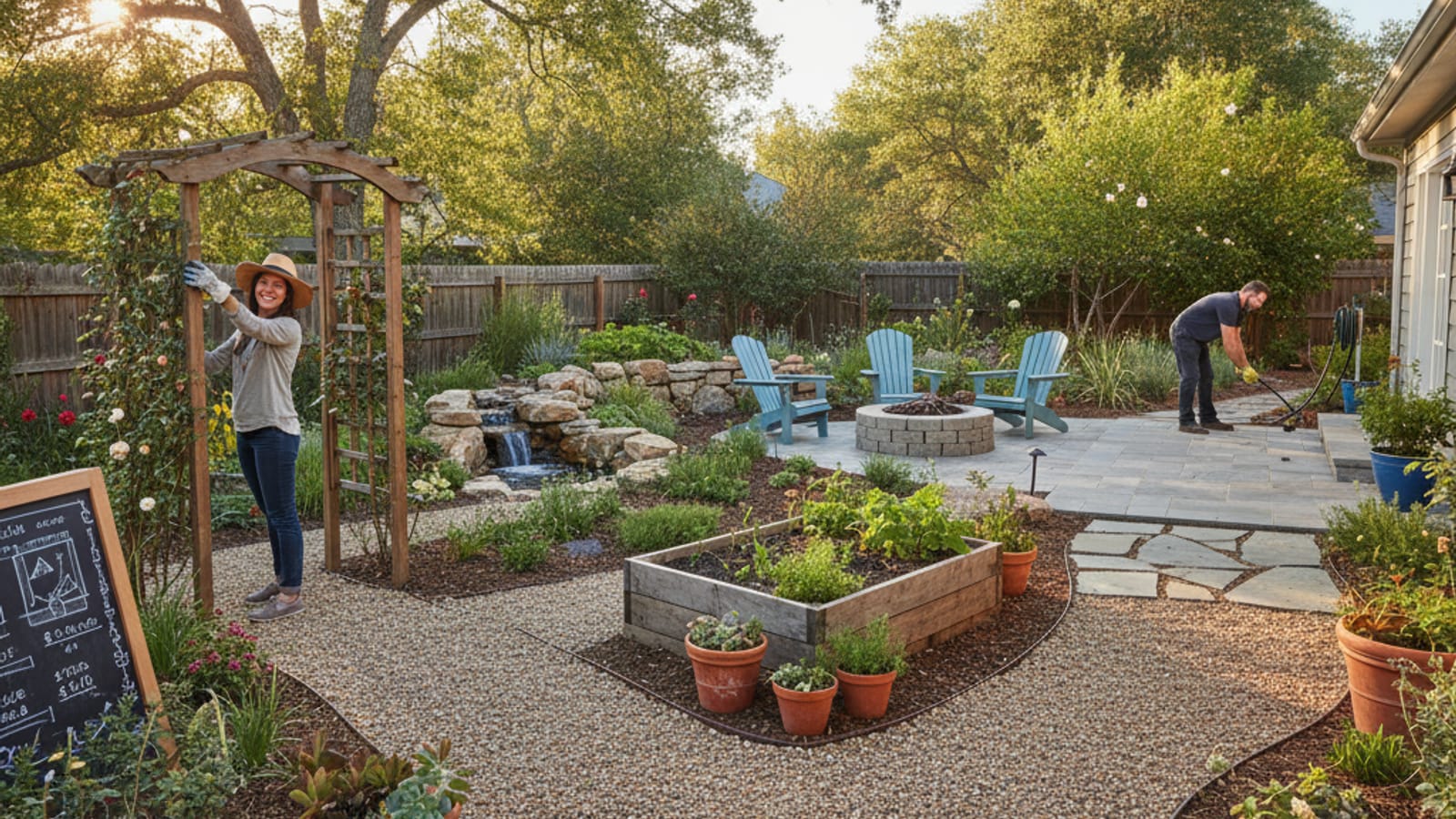
Professional landscaping companies love to quote five-figure projects. And sure, a full landscape design with hardscaping, irrigation, mature trees, and a patio will cost $10,000–$30,000+. But you can make a dramatic visual impact for a fraction of that if you're strategic about where you spend.
The secret is prioritizing the changes that deliver the most visual impact per dollar. A freshly edged lawn with new mulch looks 80% as good as a $15,000 redesign — for about $200 in materials and a weekend of work.
Here are 10 proven strategies, ranked by cost and impact.
1. Edge Everything and Add Fresh Mulch ($50–$200)
This is the single highest-impact, lowest-cost landscaping improvement you can make. Clean edges along beds, walkways, and the driveway instantly make a yard look professionally maintained.
Buy a $30 manual edger or rent a power edger for $40/day. Spend 2–3 hours edging every bed and walkway. Then lay 2–3 inches of fresh hardwood mulch in all beds. A cubic yard of bulk mulch costs $25–$45 (covers about 100 sq ft at 3 inches deep). Most yards need 3–5 cubic yards.
Total cost: $50–$200 in materials. Time: one weekend. Impact: your neighbors will ask if you hired a landscaper.
Pro tip: Buy mulch in bulk from a landscape supply yard, not bags from the hardware store. Bagged mulch costs 3–4x more per cubic yard. Most supply yards will deliver for $30–$50.
2. Plant in Odd Numbers and Layers ($100–$400)
Professional landscapers follow a simple rule: plant in groups of 3, 5, or 7 — never even numbers. Odd groupings look natural and intentional. Even groupings look like a hedge.
Layer your plantings in three tiers: tall plants in the back (ornamental grasses, small trees), medium plants in the middle (shrubs, large perennials), and ground cover or small plants in the front (creeping thyme, low sedums, hostas).
Buy plants at end-of-season sales (September–October) for 50–75% off. Many garden centers also have "scratch and dent" sections with perfectly healthy plants that just look rough from sitting on the lot. They'll bounce back in one growing season.
3. Seed or Overseed Your Lawn ($50–$150)
A thick, green lawn makes everything else look better. And seeding is dramatically cheaper than sod ($0.01–$0.05 per sq ft for seed vs. $0.50–$1.00 for sod).
For bare or thin areas: rake the soil to loosen the top 1/4 inch, spread seed at the recommended rate, cover lightly with straw or peat moss, and water daily for 2–3 weeks. Fall (September–October) is the best time to seed in most climates — the soil is warm, the air is cool, and rain is more reliable.
For an existing lawn that's thin: overseed in fall. Mow short, rake to expose soil, spread seed, and water. Within 4–6 weeks you'll see a dramatically thicker lawn.
4. Add Landscape Lighting ($75–$300)
Solar path lights and LED spotlights transform a yard at night for very little money. A 10-pack of solar path lights costs $25–$60. Two or three LED spotlights aimed at a tree or architectural feature ($20–$40 each) create dramatic uplighting.
Focus lights on three things: the path to your front door, one or two feature trees or plants, and the house number or mailbox. That's it. Subtle lighting looks expensive. Over-lighting looks like a used car lot.
For a bigger upgrade, low-voltage landscape lighting kits ($150–$300) provide consistent, reliable light without the inconsistency of solar. These are DIY-installable — you just push the wire stakes into the ground and connect to a transformer that plugs into an outdoor outlet.
5. Build a Simple Garden Bed ($100–$300)
A new garden bed along the foundation, fence line, or walkway adds structure and color. You don't need a landscape architect — just a garden hose, some edging, and plants.
Lay a garden hose on the ground in the shape you want. Gentle curves look best — avoid straight lines and sharp angles. Cut the edge with a flat spade, remove the grass, add 2–3 inches of compost, plant, and mulch.
For the cheapest option, skip the edging material entirely and just maintain a clean cut edge with a spade twice a year. For a more permanent border, steel landscape edging ($1–$3 per linear foot) gives a clean, modern look.
6. Power Wash Everything ($0–$75)
This isn't technically landscaping, but power washing your driveway, walkways, patio, and siding has a dramatic effect on how your whole property looks. Years of dirt, algae, and staining disappear in minutes.
Rent a power washer for $40–$75/day from any hardware store. Or buy a consumer-grade electric model for $100–$200 if you'll use it regularly. Start with the driveway and walkways, then do the patio and any retaining walls.
The visual difference is genuinely shocking. A power-washed driveway looks like new concrete.
7. Create a Focal Point ($50–$500)
Every well-designed yard has a focal point — something that draws the eye and anchors the space. This doesn't have to be expensive.
Budget focal points: A large decorative pot with a single bold plant ($30–$80). A birdbath ($40–$100). A garden bench ($60–$150). A small water feature ($50–$200). A fire pit ($75–$300 for a simple DIY version with landscape blocks).
Place the focal point where people naturally look — at the end of a walkway, in the center of a bed, or in a corner of the patio.
8. Plant a Tree ($50–$300)
A single well-placed tree adds more long-term value to your property than almost any other landscaping investment. A shade tree on the south or west side of your home can reduce summer cooling costs by 15–35%.
Buy young trees (1–2 inch caliper) for $50–$150 instead of mature specimens ($300–$1,000+). They establish faster and catch up to larger transplants within 3–5 years. Plant in fall for best results.
Choose native species for your climate — they require less water, less maintenance, and support local wildlife. Your county extension office has free recommendations for your specific area.
Pro tip: Call 811 (the national "dig" hotline) before planting any tree. They'll mark underground utility lines for free within 2–3 business days. Hitting a gas or fiber optic line is dangerous and expensive.
9. When to Hire a Pro (and When DIY Saves More)
Most of the projects above are DIY-friendly. But some landscaping work is better left to professionals:
Hire a pro for: Grading and drainage work (improper grading causes foundation damage). Retaining walls over 2 feet tall (structural and permit requirements). Irrigation system installation. Mature tree removal (dangerous and requires insurance). Hardscaping (patios, walkways) if you want it to last.
DIY everything else: Planting, mulching, edging, seeding, lighting, garden beds, and basic maintenance are all homeowner-friendly with basic tools and a YouTube education.
Professional landscaper rates: Basic lawn service runs $30–$80 per visit. Design and installation projects typically start at $1,500–$3,000 and go up from there. Always get 3 quotes.
Get Free Quotes from Landscaping Pros
Need help with a bigger project? We've partnered with Angi to help you find top-rated landscapers in your area. Get free quotes for everything from basic lawn maintenance to full landscape design.
Even if you plan to DIY most of the work, a one-time consultation with a landscape designer ($100–$300) can give you a professional plan to execute on your own timeline and budget.
Why Trust This Guide
Recommendations from locals across 240+ US cities via Recommended.app community data.
Explore More
Hidden Gems Weekly
3 hidden gems, 2 local quotes, 1 home hack — every Monday. Free forever.
Unsubscribe anytime. No spam.
More from City Guides
 Home Services
Water Damage Restoration Near Me: What to Do in the First 24 Hours (2026 Guide)
 Food & Dining
Best Buffet in Las Vegas 2026: What's Still Worth It After the Great Buffet Collapse
 Food & Dining
Best Coffee Shops in Chicago 2026: 20 Cafes Worth Leaving Your Apartment For
 Food & Dining
Best Restaurants in Hilton Head 2026: 18 Spots Worth Every Dollar
 Food & Dining
Best Restaurants in Charlotte 2026: 20 Spots That Define the Queen City's Food Scene
 Food & Dining