
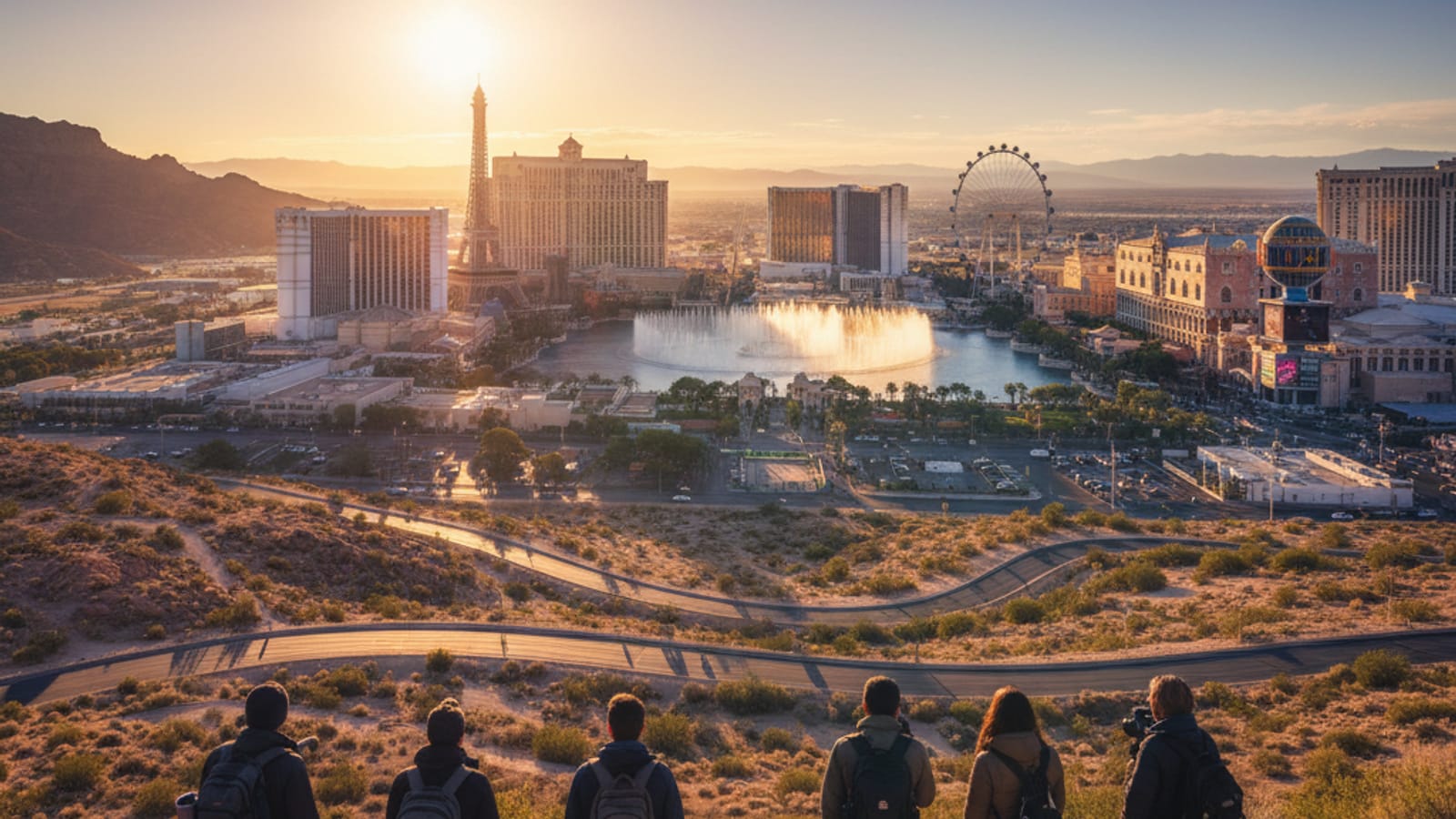
Last updated March 15, 2026 by the Recommended.app research team.
Vegas Is More Than the Strip (Seriously)
Ask any Las Vegas local what they think of the Strip and you'll get an eye roll. It's not that the Strip is bad — it's incredible, honestly — it's that there's an entire city around it that most visitors never see. A city with world-class hiking 20 minutes from your hotel, a downtown arts district that rivals Austin's, and restaurants where chefs cook for locals, not tourists.
This guide is built from real recommendations — the kind of tips you'd get from a friend who's lived in Vegas for years and actually wants you to have a good time, not just lose your money at a slot machine.
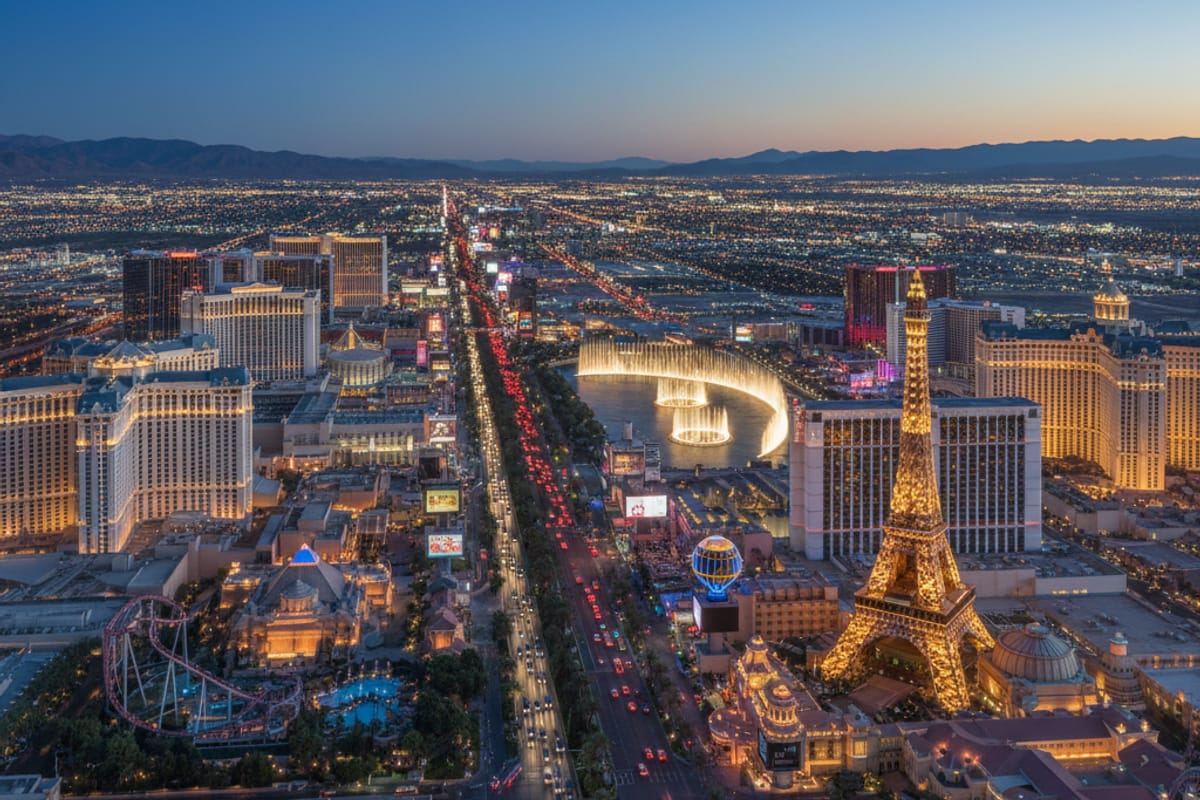 The Strip is just the beginning — the real Vegas is waiting.
Day 1: Get the Strip Out of Your System
Your first day should absolutely be the Strip. Walk it end to end (it's about 4 miles), pop into the Bellagio conservatory (free), watch the fountain show (free), and wander through the Forum Shops at Caesars. The High Roller observation wheel at the LINQ is worth doing once, especially at sunset — tickets run about $25-35 and you get 30 minutes of panoramic views.
For dinner, skip the celebrity chef restaurants with $60 steaks and hit Estiatorio Milos at the Cosmopolitan for Greek seafood or China Poblano by José Andrés for Chinese-Mexican fusion. Both are on the Strip but feel nothing like a tourist trap.
Pro tip: The Bellagio fountain show runs every 15 minutes after 8 PM. The best viewing spot isn't directly in front — walk to the far right side near Drai's for an angled view with the hotel lit up behind it. Way fewer crowds.
Day 2: Red Rock Canyon & Downtown
Morning: Drive to Red Rock Canyon National Conservation Area (20 minutes from the Strip). The 13-mile scenic loop is stunning, but the real experience is hiking Calico Tanks — a moderate 2.5-mile trail that ends with a panoramic view of the entire Las Vegas valley. Bring water. Seriously, bring more water than you think you need.
Afternoon: Head to the Arts District (18b) on Main Street south of Fremont. This neighborhood has changed dramatically in the last few years — independent coffee shops, galleries, breweries, and some of the best restaurants in the city. Esther's Kitchen for Italian and Cornish Pasty Co. for something unique.
Evening: Fremont Street Experience is the old-school Vegas experience. The LED canopy overhead is massive, the live music is free, and the people-watching is unmatched. Container Park (just off Fremont) has a fire-breathing praying mantis sculpture that comes alive after dark. It's weird and wonderful.
Pro tip: Red Rock Canyon opens at 6 AM. Go early in summer — by 10 AM it's over 100°F and the parking lots fill up. The early morning light on the red rocks is incredible for photos.
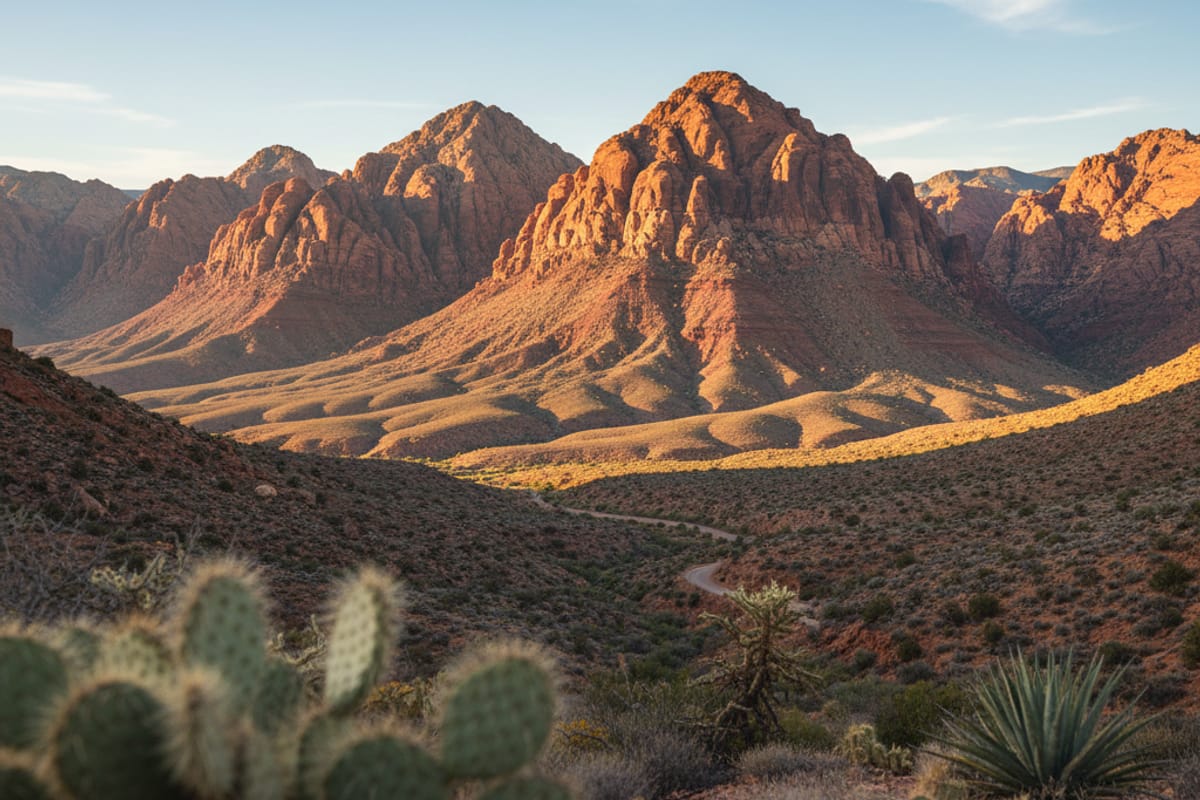 Red Rock Canyon — 20 minutes from the Strip, a world away.
Day 3: Valley of Fire & Local Food
Valley of Fire State Park is an hour northeast of Vegas and it's the most photogenic place in Nevada. The Fire Wave trail (1.5 miles round trip) looks like a painting — swirling red and white sandstone formations that seem impossible. Elephant Rock and the petroglyphs at Mouse's Tank are also worth stops.
When you get back, close out the trip with a food tour of Chinatown. Vegas has one of the best Chinatowns in America — Spring Mountain Road is packed with exceptional Chinese, Korean, Japanese, Thai, and Vietnamese restaurants. Raku for Japanese charcoal grill, Chengdu Taste for Sichuan, or District One for Vietnamese pho. None of these are on the Strip, and that's exactly why they're good.
Pro tip: Valley of Fire doesn't have cell service or shade. Download your map offline before you go, bring a full water bottle per person, and wear a hat. The park entrance fee is $10 per vehicle.
What to Skip (Locals Are Honest About This)
Madame Tussauds — overpriced and underwhelming. The Eiffel Tower Experience — the High Roller has better views for less money. Gordon Ramsay Hell's Kitchen — the food is fine but you're paying for the brand, not the meal; try Bazaar Meat by José Andrés instead for the same price and 10x the experience. Airport slot machines — the payouts are the worst in the entire city.
Also, don't take a taxi from the airport. Use Uber/Lyft or the airport shuttle — taxis in Vegas are notorious for "long-hauling" (taking the freeway instead of the tunnel to pad the fare).
Budget Breakdown: What Vegas Actually Costs
Hotels mid-week: $40-80/night at solid Strip hotels (Tuesdays and Wednesdays are cheapest). Weekend: $120-250/night. Food: You can eat incredibly well for $30-50/day if you leave the Strip for meals. Activities: Red Rock Canyon ($15 per vehicle), Valley of Fire ($10), Fremont Street (free), Bellagio (free), High Roller ($25-35). Shows: Budget $80-150 for one show — Cirque du Soleil is the gold standard.
Realistic budget for 3 days: $500-800 per person including hotel, food, one show, and activities. That's not counting gambling — set a gambling budget separately and treat it as entertainment money, not investment money.
Recommended Travel Gear
A few items that'll make your Vegas trip smoother. A portable charger ($20-30) is essential — between the desert heat and constant photo-taking, your phone battery will drain faster than you expect. Check it out on Amazon (https://www.amazon.com/s?k=portable+charger+power+bank&tag=recommendedapp-20). A refillable water bottle with insulation keeps water cold for hours in 100°F+ heat, which is a lifesaver at Red Rock Canyon and Valley of Fire (https://www.amazon.com/s?k=insulated+water+bottle&tag=recommendedapp-20). And a pair of comfortable walking shoes is non-negotiable — the Strip alone is 4 miles, and you'll be on your feet all day (https://www.amazon.com/s?k=comfortable+walking+shoes&tag=recommendedapp-20).
Why Trust This Guide
Recommendations from locals across 240+ US cities via Recommended.app community data.
Explore More
Related guides:
This guide is part of our Las Vegas collection. Explore more guides for Las Vegas →
Las Vegas has 1,005 verified businesses on Recommended.app across 95 categories, with an average rating of 4.6 out of 5.
Hidden Gems Weekly
3 hidden gems, 2 local quotes, 1 home hack — every Monday. Free forever.
Unsubscribe anytime. No spam.
More from City Guides
 Food & Dining
Best Buffet in Las Vegas 2026: What's Still Worth It After the Great Buffet Collapse
 Food & Dining
The 15 Best Coffee Shops in Las Vegas (2026 Local Picks)
 City Guide
Las Vegas on a Budget: Free and Cheap Things to Do
 City Guide
The Perfect Weekend in Las Vegas: A 2-Day Itinerary
 City Guide
Las Vegas Hidden Gems: Secret Spots the Guidebooks Miss
 City Guide