
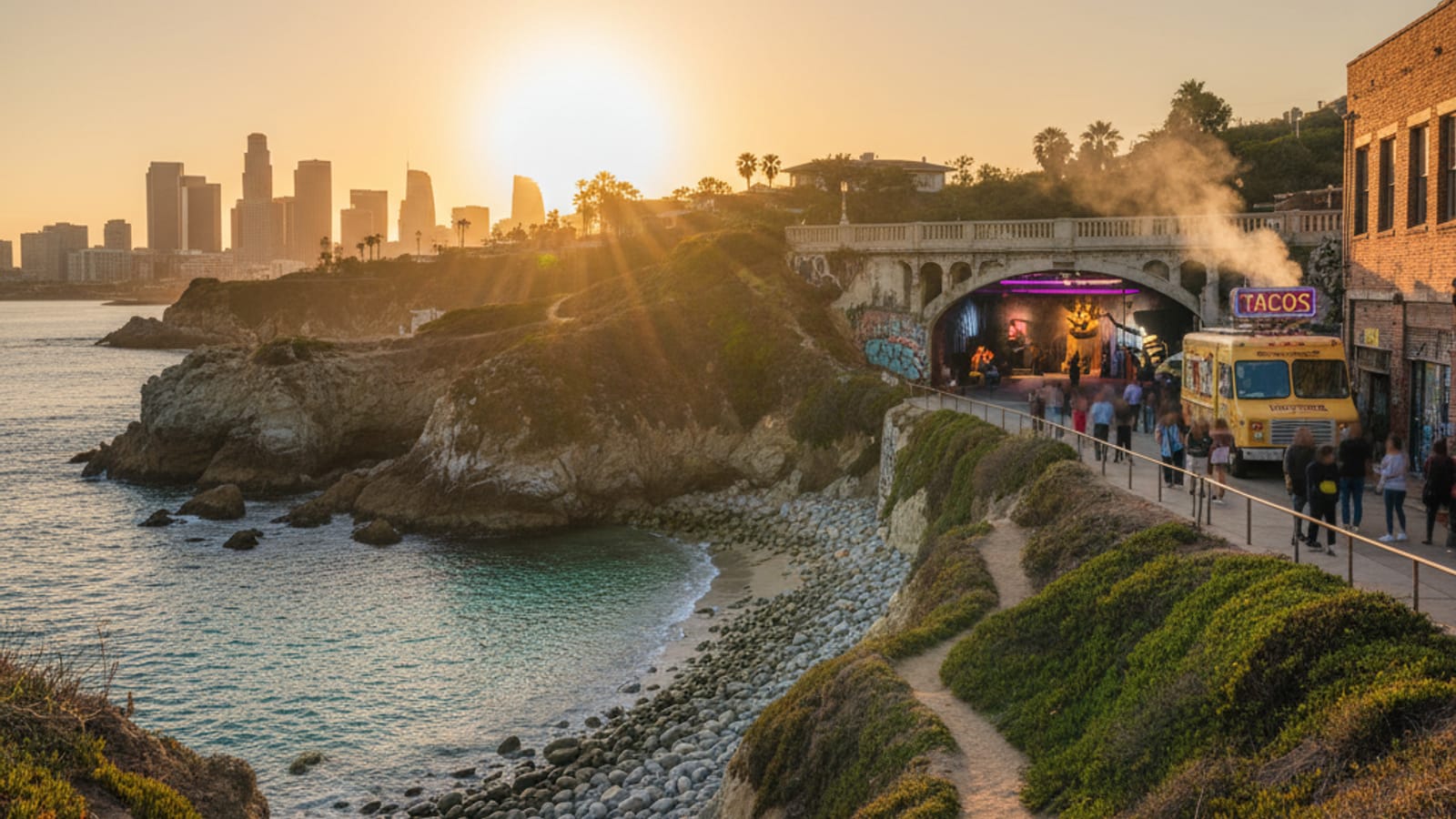
Last updated March 15, 2026 by the Recommended.app research team.
LA's Best-Kept Secrets Are Hiding in Plain Sight
Los Angeles is a city that rewards curiosity. Most visitors hit the same circuit — Hollywood Boulevard, Santa Monica Pier, maybe a celebrity home tour — and leave thinking they've seen LA. They haven't even scratched the surface. The real Los Angeles lives in the quiet side streets of Silver Lake, in the steam rising off a 2 AM bowl of soon dubu in Koreatown, in the hidden staircases that climb through hillside neighborhoods most Angelenos drive past every day without noticing.
This guide is a love letter to the other LA. The one that doesn't show up on postcards. The one where a $3 taco from a truck parked on a side street in East LA will ruin every other taco you ever eat. Where a free museum day at The Broad puts you face-to-face with a Basquiat, no reservation needed. Where a sunrise hike on a trail most people have never heard of gives you the entire city sprawling below, silent and golden.
We've pulled these recommendations from people who actually live here — the bartenders, the gallery owners, the third-generation East LA families, the transplants who came for a year and stayed for a decade. These are the spots they protect. The ones they share reluctantly, with the caveat: don't tell everyone.
We're telling everyone.
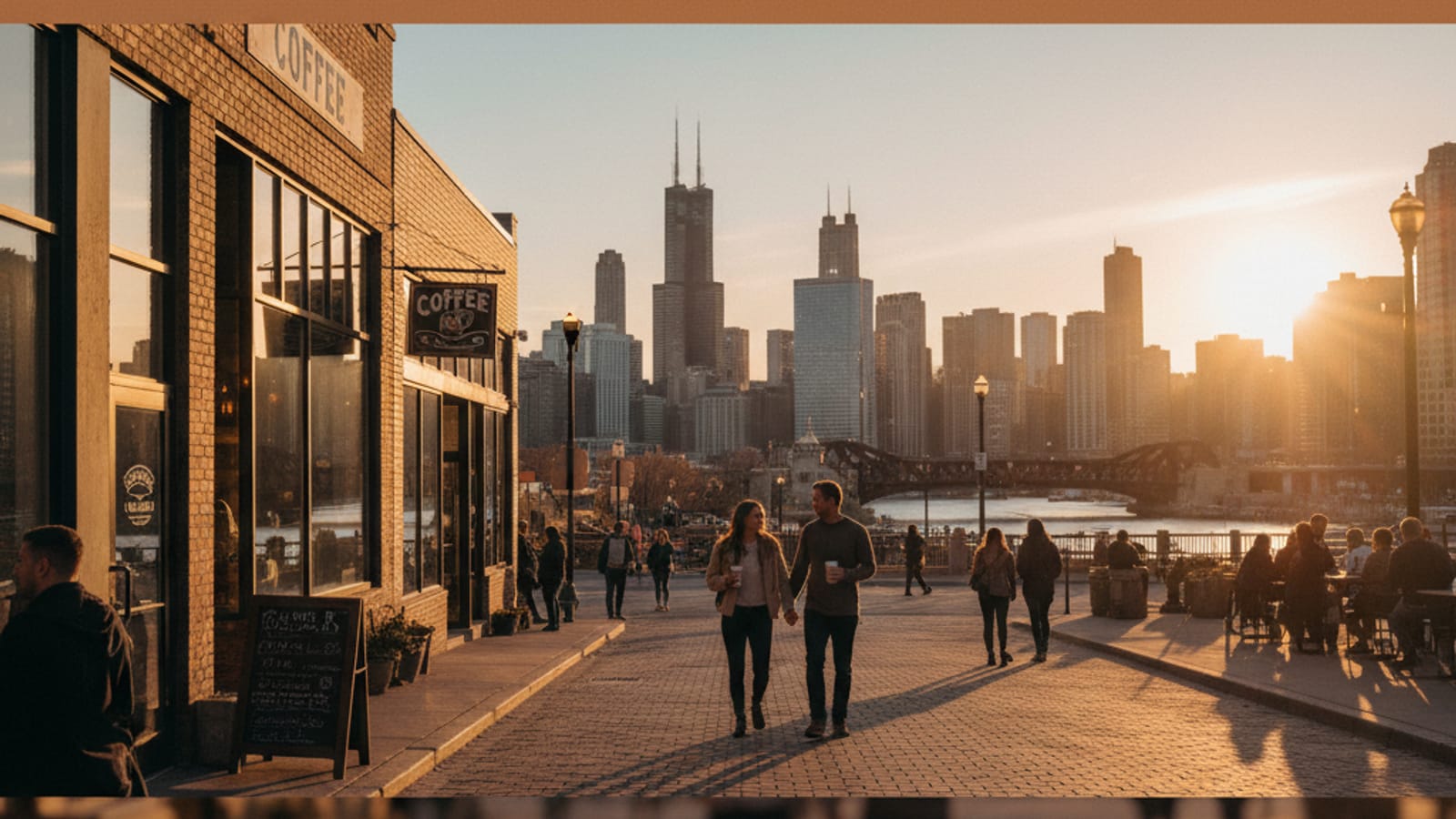
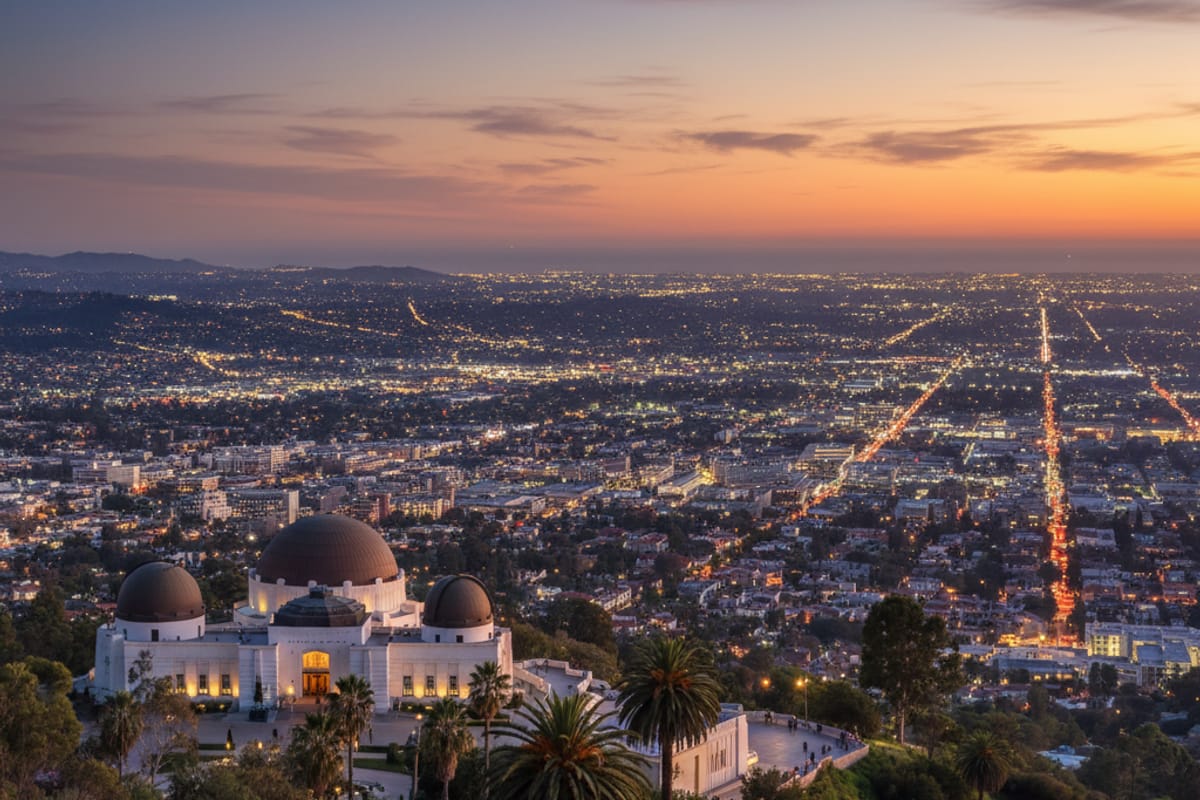 LA sprawls endlessly — and its best spots are scattered across every corner.
Secret Beaches & Coastal Escapes
Everyone knows Santa Monica and Venice Beach. But El Matador State Beach in Malibu? That's the beach that makes people fall in love with California. Dramatic sea stacks, hidden coves, and a fraction of the crowds — you reach it by climbing down a steep bluff staircase off PCH. Parking is $8, and weekday mornings feel like you rented a private beach. Bring a picnic from Malibu Seafood Fresh Fish Market ($12-18 plates) just up the road.
Closer to the city, Abalone Cove Shoreline Park in Rancho Palos Verdes is a tide pool paradise that most LA residents have never visited. The trail down to the cove is moderate, and at low tide you'll find sea anemones, hermit crabs, and starfish. It's a completely different world from the surf-and-sand scene 20 miles north.
For something truly unexpected, Point Dume Natural Preserve offers a cliffside trail with whale-watching opportunities from December through March. The bluff trail is only about half a mile, but the views stretch from Catalina Island to the Santa Monica Mountains. Go at sunset — it's one of the most cinematic spots in all of Southern California, and on weekdays you might have it entirely to yourself.
If you want to combine beach time with culture, the Annenberg Community Beach House in Santa Monica is a hidden gem. Built on the site of Marion Davies' historic estate (she was William Randolph Hearst's partner), it has a pool, free cultural events, and a stretch of beach that's far less chaotic than the pier area. Pool reservations are $10 and fill up fast in summer.
Pro tip: El Matador Beach has almost no cell service and zero amenities — no bathrooms, no lifeguards, no food. Pack everything you need, including water and a bag for trash. The staircase down is steep and can be slippery. Wear real shoes, not flip-flops. And check the tide schedule before you go — at high tide, some of the coves are completely underwater.
Museums & Culture That Won't Cost You a Fortune
The Getty Villa in Pacific Palisades is one of the most underrated museums in America. Modeled after an ancient Roman villa, the building itself is a work of art — colonnaded gardens, reflecting pools, and a collection of Greek, Roman, and Etruscan antiquities that spans 6,500 years. Admission is always free. You just need a timed-entry reservation, which you can book online. The gardens alone are worth the trip, and the outdoor amphitheater hosts performances in summer.
The Broad in downtown LA offers standby admission for free every day. The permanent collection includes works by Jeff Koons, Yayoi Kusama, Jean-Michel Basquiat, and Andy Warhol. The Infinity Mirror Rooms are the star attraction — you step into a small room filled with mirrors and LED lights that create the illusion of infinite space. Lines can be long on weekends, but Tuesday and Wednesday mornings are usually manageable. If you want guaranteed entry, general admission tickets are released online on the first of each month.
The Watts Towers — 17 interconnected sculptural structures built by Italian immigrant Simon Rodia over 33 years using found objects, broken pottery, seashells, and glass — are a UNESCO-recognized work of outsider art in the Watts neighborhood. Guided tours run Thursday through Saturday for $7. Most LA residents have heard of them but somehow never go. That's a mistake.
For something completely different, the Museum of Jurassic Technology in Culver City is one of the strangest places in Los Angeles. It's part real museum, part art installation, part elaborate joke — exhibits include collections of microminiature sculptures visible only through microscopes, dioramas of trailer parks, and a rooftop tea garden where they serve free Russian tea. Admission is $12, and you'll leave questioning what's real and what isn't. That's the point.
Pro tip: The Getty Villa and Getty Center are two different places. The Villa is in Pacific Palisades (antiquities), the Center is in Brentwood (modern art). Both are free, both require reservations, and both have incredible architecture. If you only have time for one, the Villa is the hidden gem — fewer crowds, more intimate, and the setting on the Malibu hillside is stunning.
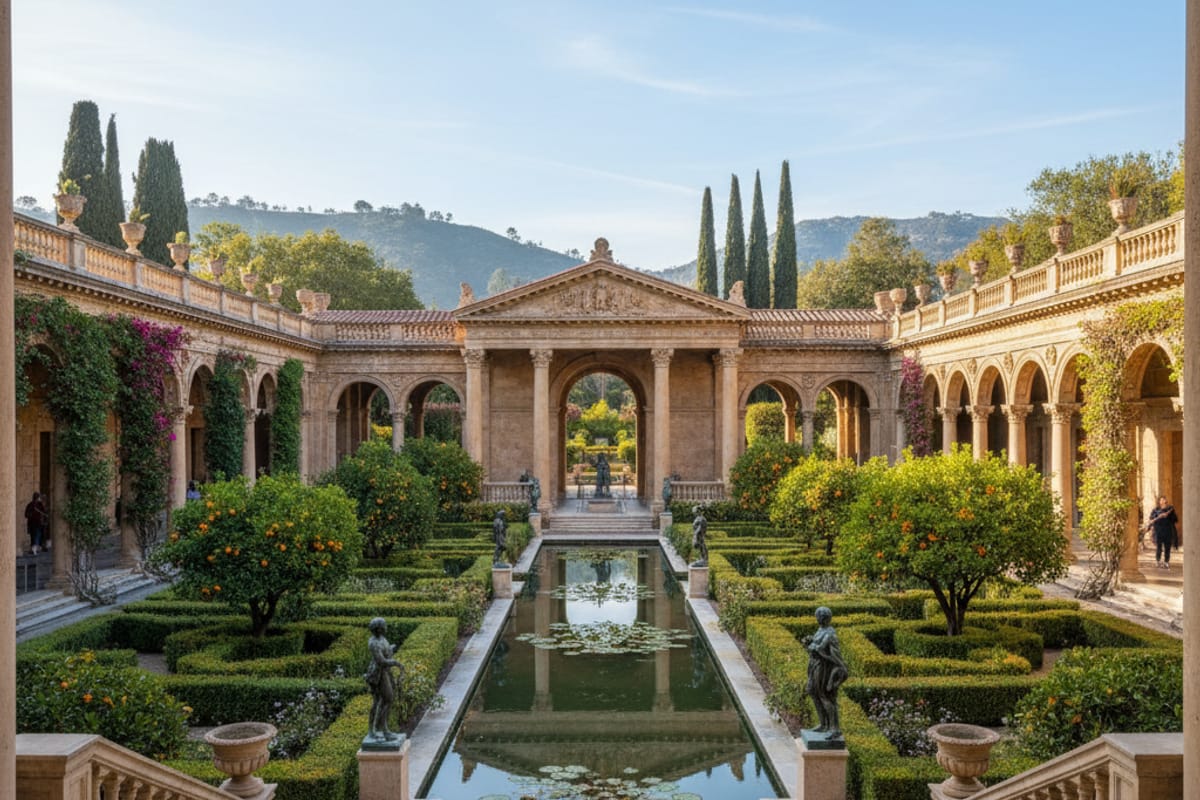 The Getty Villa — free admission, ancient artifacts, and gardens that feel like a Roman escape.
East LA Taco Trucks & the Grand Central Market
East LA is the beating heart of Mexican-American culture in Los Angeles, and the food scene here is not a trend — it's a multi-generational tradition. The taco trucks along Cesar Chavez Avenue and Olympic Boulevard are legendary for a reason. Mariscos Jalisco, a truck usually parked on Olympic near Gage, serves shrimp tacos dorados that Anthony Bourdain called some of the best tacos in America. Crispy, golden tortillas filled with shrimp and topped with a smoky salsa and fresh avocado — $3 each. Get three. You'll want three.
Leo's Tacos, with multiple truck locations across the city, is the al pastor king of LA. The meat is carved off a vertical spit topped with a pineapple, and each taco is a perfect balance of caramelized pork, fresh cilantro, onion, and a squeeze of lime. They're $1.75 each after 6 PM, which is when the al pastor really hits its stride. The truck on La Brea near Venice Boulevard usually has the shortest line.
For a more curated food experience, Grand Central Market downtown has been an LA institution since 1917. The current lineup includes Tacos Tumbras a Tomas (their mole is legendary — the family recipe goes back generations), Sarita's Pupusas, Eggslut for indulgent breakfast sandwiches, and Sticky Rice for Thai street food. Budget $12-20 per person for a full meal. The market gets packed at lunch on weekdays, so arrive before 11:30 AM or after 2 PM.
Don't sleep on Boyle Heights either. Guisados serves braised-meat tacos in handmade corn tortillas — the cochinita pibil and the chicharron in salsa verde are essential. A sampler plate of six mini tacos runs about $14 and it's the best way to try everything. The original location on East 1st Street is small and always has a line, but it moves fast.
Pro tip: If you want the full East LA taco experience, go on a Friday or Saturday night between 8 PM and midnight. The trucks are at their busiest and best, the carne asada smoke fills the streets, and the energy is incredible. Bring cash — many trucks don't take cards. And skip the hot sauce you brought from home. The house salsas at these trucks are made fresh daily, and they range from mild to genuinely punishing. Ask before you drown your taco.
Griffith Park's Hidden Trails & Silver Lake's Indie Scene
Griffith Park is massive — 4,310 acres, making it one of the largest urban parks in North America. Most visitors hike to the Hollywood Sign or Griffith Observatory (both worth doing), but the park's hidden gems are the trails nobody talks about. Fern Dell Nature Trail is a shaded, fern-lined path near the park's western entrance that feels like you've been transported to a Pacific Northwest forest. It's flat, easy, and perfect for a morning walk when you need a break from concrete.
The Old Zoo Trail leads to the abandoned Los Angeles Zoo, which operated from 1912 to 1966. The old animal grottos and cages are still standing, overgrown with vegetation, and open to explore. It's equal parts eerie and fascinating, and it's a flat, easy walk suitable for kids. Locals use the picnic areas here for birthday parties because most tourists don't know it exists.
Bronson Canyon, on the park's south side, is where the Batcave entrance from the 1960s Batman TV series was filmed. The short hike through the canyon ends at the cave — a tunnel through the hillside with views of the Hollywood Sign on the other side. It's less than a mile round trip and parking is free on Canyon Drive.
After your hike, drive 10 minutes south to Silver Lake — LA's indie-culture epicenter. Sunset Boulevard through Silver Lake is lined with independent bookshops, vintage clothing stores, and some of the best coffee in the city. Intelligentsia Coffee on Sunset is the flagship location. Silver Lake Wine on Glendale Boulevard does excellent tastings on weekends ($15-20 for a flight). For dinner, Alimento serves handmade pasta in a casual setting — the rigatoni with pork sugo is a neighborhood favorite, and mains run $18-28.
The Silver Lake Reservoir walking path — a 2.2-mile loop around the reservoir — is where the neighborhood comes alive in the evening. Dog walkers, joggers, couples, families. It's simple and lovely, with views of the Hollywood Sign and the San Gabriel Mountains.
Pro tip: Griffith Park gets dangerously hot in summer. Start any hike before 8 AM if you're visiting between June and September. Bring at least a liter of water per person, wear sunscreen, and stick to shaded trails like Fern Dell if it's above 90°F. The observatory parking lot fills up by 10 AM on weekends — park on the street below and walk up, or take the DASH shuttle bus from the Vermont/Sunset Metro station for free.
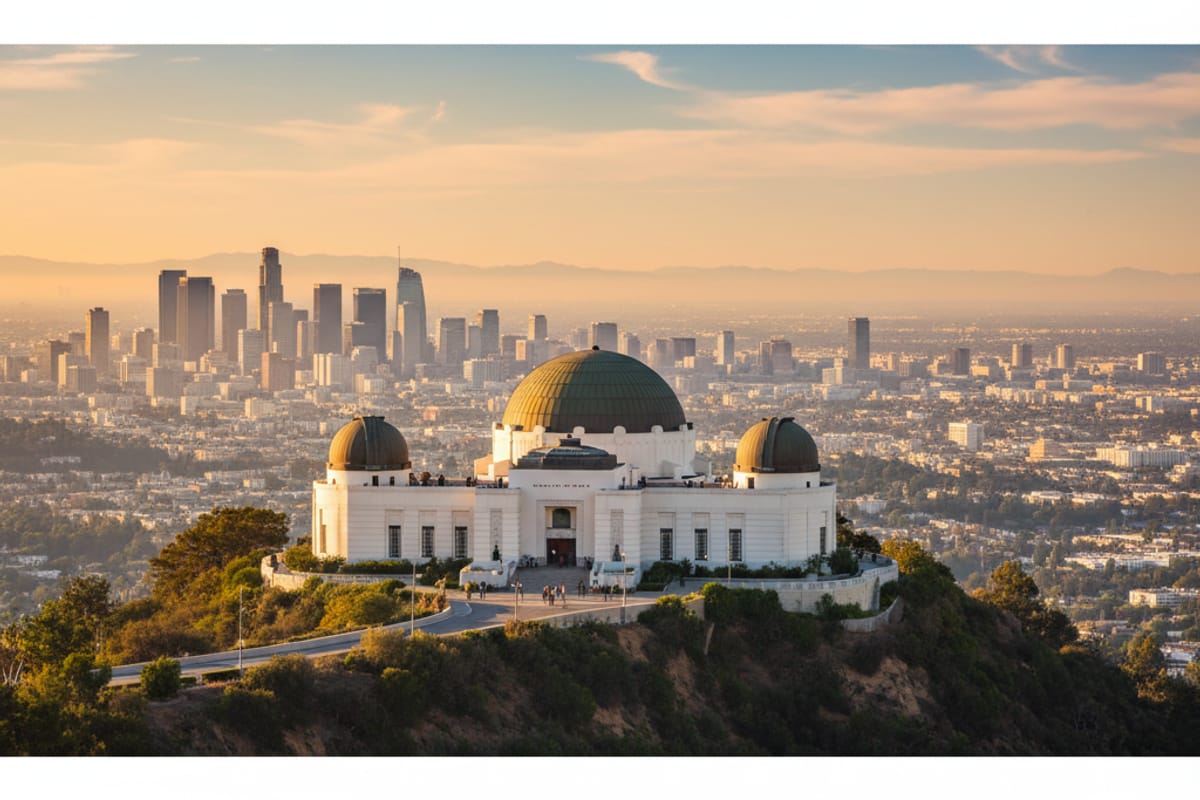 Griffith Park has 4,310 acres of trails, views, and hidden spots most visitors never find.
Koreatown After Dark & the Arts District
Koreatown is a neighborhood that barely exists on the tourist radar, and that's exactly why it's one of the best food destinations in America. The stretch of Western Avenue and 6th Street is packed with Korean BBQ restaurants, fried chicken joints, karaoke bars (noraebangs), and late-night cafes that stay open until 2 or 3 AM.
For Korean BBQ, Park's BBQ on South Western Avenue is the gold standard — prime galbi and wagyu brisket grilled tableside, with banchan (side dishes) that arrive in waves. Budget $35-50 per person for a full meal. For something cheaper and more chaotic, Sun Nong Dan on 6th Street serves gamjatang (pork bone and potato stew) until 2 AM in a tiny, steam-filled room. It's $16 for a massive pot that feeds two. Bring someone you don't mind sweating next to.
The Arts District in downtown LA has transformed from an industrial wasteland into one of the city's most creative neighborhoods over the past decade. Hauser & Wirth gallery occupies a former flour mill on East 3rd Street and shows world-class contemporary art for free. The courtyard restaurant, Manuela, serves Southern-inspired California cuisine in a stunning space — fried chicken with hot honey, cornbread with sorghum butter, and excellent cocktails. Entrees run $22-38.
For a drink with a view, Angel City Brewery on Alameda Street has a massive outdoor patio, rotating food trucks, and a beer lineup that leans toward hoppy IPAs and experimental sours. Pints are $7-9. On First Fridays, the entire Arts District comes alive with gallery openings, pop-up shops, and street food — it's free, walkable, and one of the best nights out in LA.
For late-night food after an Arts District evening, head back to Koreatown for Hanbat Shul Lung Tang, a 24-hour restaurant that serves ox bone soup — milky white, deeply savory broth with rice and meat, for about $14. It's the perfect 1 AM meal, and the restaurant has been open since the 1990s. The regulars will know you're a tourist. They won't care.
Pro tip: Koreatown parking is notoriously terrible. Use the Metro Purple Line — the Wilshire/Western station drops you right in the heart of K-town. If you're doing a late-night food crawl, Uber is your best bet after midnight. Most Korean BBQ restaurants charge a per-person fee whether you eat or not, so don't bring friends who aren't hungry. And yes, the soju will sneak up on you. It's 16-20% alcohol and tastes like water. Pace yourself.
Why Trust This Guide
Recommendations from locals across 240+ US cities via Recommended.app community data.
Explore More
Related guides:
This guide is part of our Los Angeles collection. Explore more guides for Los Angeles →
Los Angeles has 726 verified businesses on Recommended.app across 91 categories, with an average rating of 4.6 out of 5.
Hidden Gems Weekly
3 hidden gems, 2 local quotes, 1 home hack — every Monday. Free forever.
Unsubscribe anytime. No spam.
More from City Guides
 City Guide
Los Angeles on a Budget: Free and Cheap Things to Do
 City Guide
The Perfect Weekend in Los Angeles: A 2-Day Itinerary
 City Guide
We Asked Los Angeles Locals Where They Actually Eat — Here's What They Said
 Home Services
Water Damage Restoration Near Me: What to Do in the First 24 Hours (2026 Guide)
 Food & Dining
Best Buffet in Las Vegas 2026: What's Still Worth It After the Great Buffet Collapse
 Food & Dining