
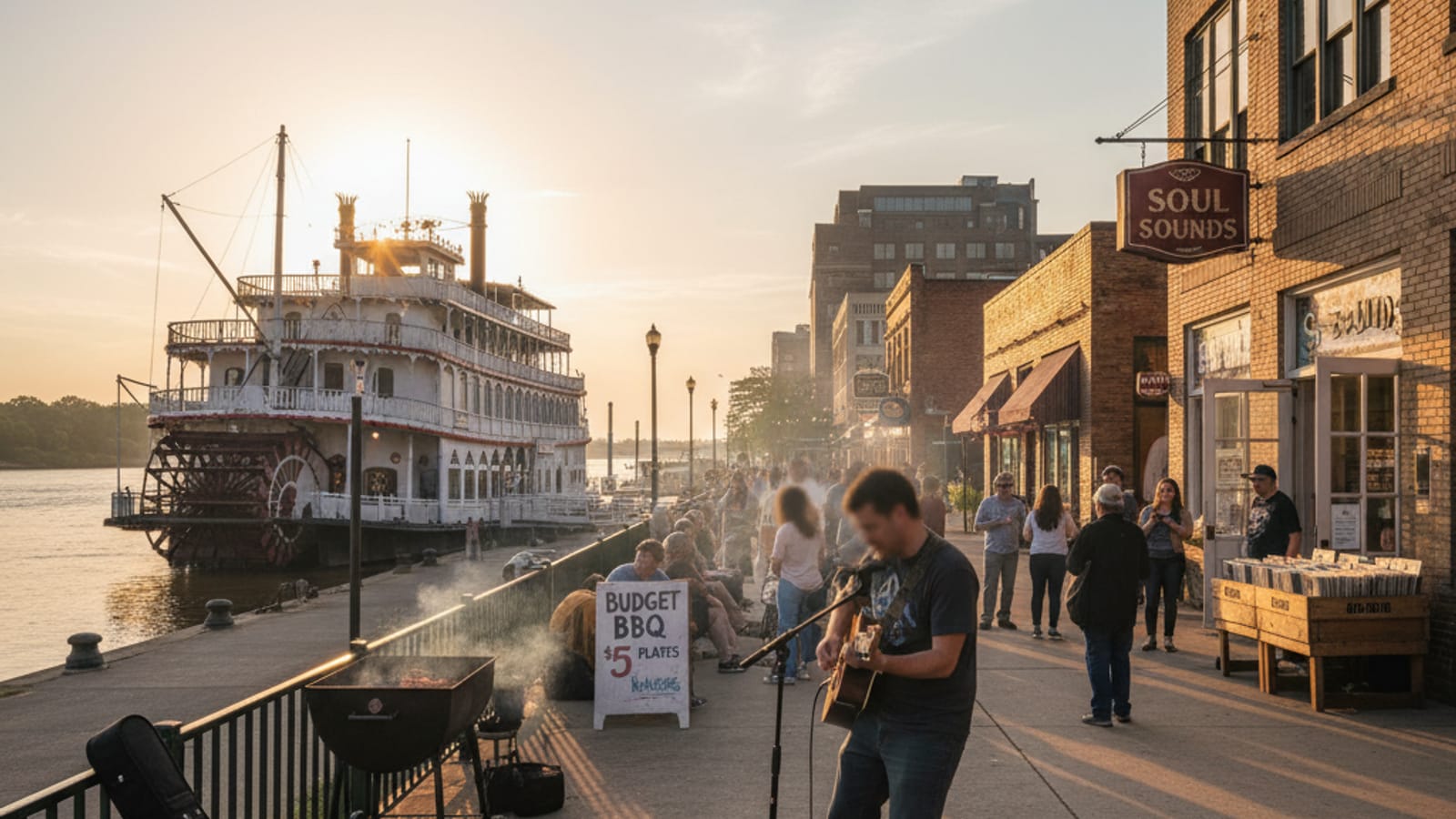
Last updated March 16, 2026 by the Recommended.app research team.
Free Live Music Every Night: Beale Street and Beyond
Memphis is the only major American city where you can hear world-class live music every single night of the week without spending a dime on cover charges. That is not an exaggeration — it is the foundation of the city's music culture, and it is the single biggest reason Memphis is one of the best budget destinations in the country. (For the eat-side complement, our Memphis best-restaurants roundup covers the food half; new here, see our Memphis first-timer guide.)
Beale Street is the centerpiece. The clubs on this three-block stretch do not charge cover. You walk in, you order a drink (there is usually a one-drink minimum, which means a $5-7 beer), and you listen to live blues, rock, soul, and R&B performed by professional musicians who play here nightly. B.B. King's Blues Club has a house band that is genuinely excellent. Rum Boogie Café has walls of signed guitars and a rotating cast of blues acts. King's Palace Café has a more intimate jazz-and-blues setting. On any given Thursday through Saturday, you could spend four hours moving between three clubs, hear three different bands, and spend a total of $15-20 on drinks.
But Beale Street is just the beginning. The Levitt Shell in Overton Park hosts approximately 50 free outdoor concerts per year, mostly from April through October. The quality of the acts is remarkably high for a free venue — nationally touring bands, local favorites, and genre-spanning lineups that draw thousands of Memphians who bring blankets, picnics, and lawn chairs. Elvis Presley played one of his first public concerts at the Levitt Shell (then called the Overton Park Band Shell) in 1954. The tradition of free music in this space stretches back decades, and on a warm Memphis evening (our Memphis hidden gems list tracks the smaller back-room shows too) with good music drifting across the park, there are few better places to be.
The Cooper-Young neighborhood in Midtown has free live music at several venues throughout the week. Young Avenue Deli books bands most nights with no cover charge. Java Cabana has acoustic acts on weekends. The bars along Cooper Street often feature local musicians who play for tips. This is where Memphis musicians hang out when they are not on Beale Street (and a stop in our Memphis weekend itinerary), and the performances can be extraordinary.
South Main Trolley Night, held on the last Friday of every month from 6 to 9 PM, features free live music on the streets along with open galleries and food trucks. It is one of the best free events in Memphis and gives you a window into the city's creative community.
Church services on Sunday morning are another free musical experience that should not be overlooked. Memphis churches — particularly in the Black church tradition — feature gospel music that will leave you stunned. The Full Gospel Tabernacle Church, where Al Green sometimes preaches, is open to the public. Many other churches in Midtown and South Memphis welcome visitors for Sunday services, and the musical component of the service is often a full choir with a band. This is not tourism — it is worship — so approach it with appropriate respect. But the music is extraordinary, and the welcome is genuine.
The total cost of a full weekend of live music in Memphis, including Beale Street drinks, can be as low as $30-50. That is less than a single concert ticket in most major cities, and the variety and quality of what you hear will be unlike anything you have experienced elsewhere.
One more free music experience worth knowing about: street musicians. Memphis has a tradition of busking that predates Beale Street's tourist era. On any given afternoon, you may encounter musicians playing on street corners downtown, in Overton Park, or along the riverfront. Some of these musicians are genuinely exceptional — the street music tradition in Memphis has produced recording artists and touring acts. Toss a few dollars in the hat and enjoy.
Pro tip: Beale Street is busiest (and loudest) Thursday through Saturday. For a more intimate free music experience, go on a Tuesday or Wednesday when the crowds are smaller and the musicians play longer sets. The quality is identical.
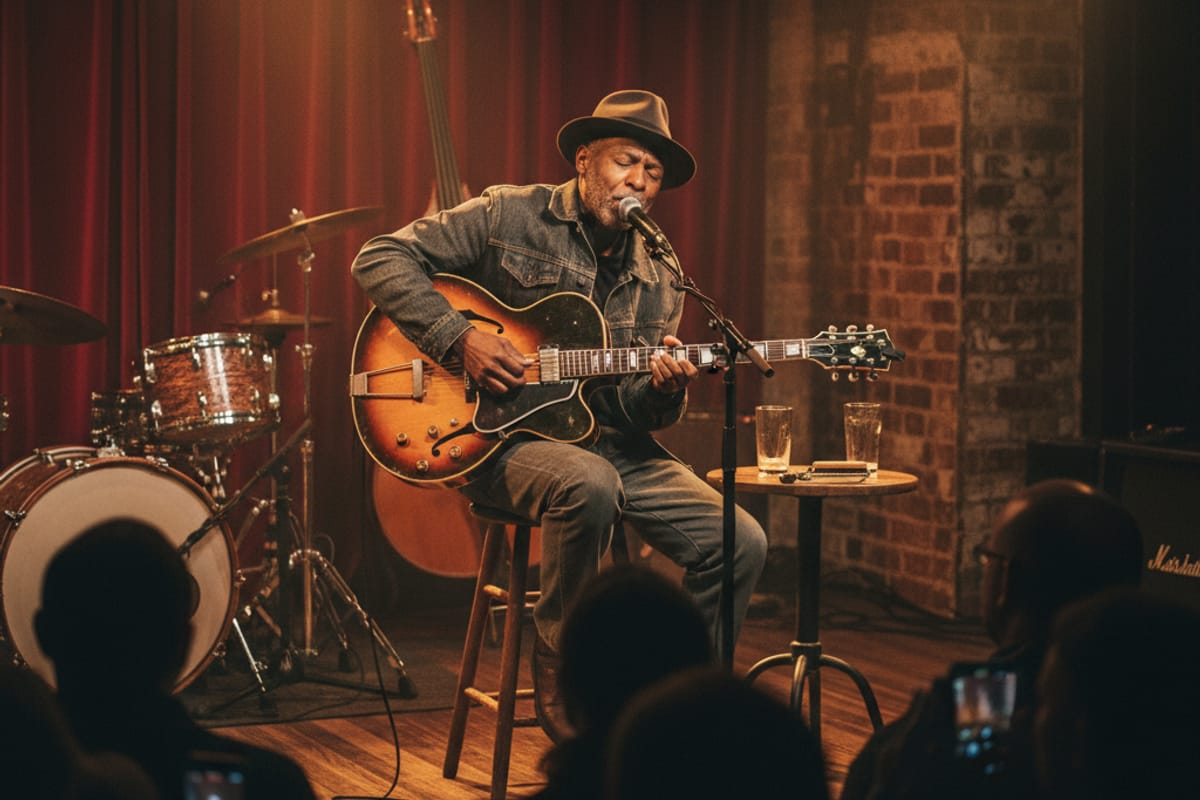 Free live music every night — the foundation of Memphis's budget-friendly appeal.
Cheap BBQ: Full Meals for $10-15
Memphis BBQ is not just some of the best food in America — it is some of the cheapest. The city's legendary BBQ joints operate on a model that prioritizes volume and loyalty over high prices, which means you can eat extraordinarily well for what you would spend on a fast-food meal in most cities.
Payne's Bar-B-Q on Lamar Avenue is the budget champion. A chopped pork sandwich — hand-chopped pork, tangy sauce, cool slaw, on white bread — costs about $6. It is one of the best sandwiches in the country. Two sandwiches and a drink come to roughly $15 and will keep you full for the rest of the day. Payne's is cash only and closes when the meat runs out, which can be as early as 2 PM on busy days. Go for lunch and bring cash.
Central BBQ is slightly more expensive but still remarkably affordable. A pulled pork plate with two sides costs $13-15. The BBQ nachos — a towering pile of chips, pulled pork, cheese, and jalapeños — cost about $12 and are large enough to share between two people, making them one of the best value meals in Memphis. Central has locations on Central Avenue and downtown, both with full menus and consistent hours.
Cozy Corner on North Parkway is famous for its smoked Cornish game hens and BBQ bologna. A whole Cornish hen, smoked until the skin is mahogany and the meat falls off the bone, costs about $8. BBQ bologna — thick slices of bologna charred on the grill and served on white bread — is about $5 for a sandwich and tastes far better than it has any right to. A full meal at Cozy Corner with a side and a drink comes to $10-14.
Charlie Vergos' Rendezvous is the most famous BBQ in Memphis and the most expensive of the big four, but even here the prices are reasonable. A half slab of dry ribs costs about $16, a full slab about $22. With a side and a beer, expect to spend $25-30 per person. For a legendary dining experience in a basement that has served presidents and rock stars since 1948, that is still a remarkable value.
Beyond the big names, Memphis is dotted with neighborhood BBQ joints that serve excellent food at rock-bottom prices. Tom's BBQ & Deli on Getwell Road, Interstate Barbecue on South Third Street, and The Bar-B-Q Shop on Madison Avenue all serve full meals for $10-15. The general rule in Memphis BBQ: the less impressive the building, the better the food and the lower the prices.
For the absolute tightest budget, Memphis grocery stores and gas station delis sometimes have surprisingly good BBQ. Tops Bar-B-Q is a local chain with drive-through locations across the city that serves a solid BBQ sandwich for about $5. It is not Payne's or Central, but it is better than BBQ you would pay twice as much for in other cities.
A realistic food budget for a day in Memphis, if you are focused on BBQ: $25-35 for three meals. Breakfast at a diner ($7-10), BBQ lunch at Payne's or Cozy Corner ($8-12), and BBQ dinner at Central or Rendezvous ($14-25). In what other American city can you eat this well for this little?
Pro tip: Payne's, Cozy Corner, and Tom's BBQ are cash-only or cash-preferred. Bring at least $40-50 in cash for the weekend if you plan to hit the neighborhood BBQ joints. ATMs on Beale Street charge $3-5 fees.
Free Museums, Parks, and Attractions
Memphis has a surprising number of free or nearly free attractions that are worth building an entire day around. You do not need to spend money on admission to have a rich, memorable Memphis experience.
The Big River Crossing is a pedestrian and bicycle bridge that lets you walk across the Mississippi River from Memphis into West Memphis, Arkansas, and back. It is free, it is stunning, and it is one of the most unique urban experiences in America. The bridge is a mile long in each direction, and the views of the Memphis skyline, the river, and the Arkansas flatlands are spectacular. Go at sunset for the best light and photos. The bridge is accessible from Riverside Drive near downtown and is open daily from dawn to dusk. There is genuinely no reason not to do this — it costs nothing, takes about 45 minutes round trip, and gives you a perspective on Memphis and the Mississippi that you cannot get any other way.
Overton Park is 342 acres of green space in Midtown that includes the Old Forest State Natural Area — one of the last remaining old-growth forests in an urban area in the United States. The forest trails are free, well-maintained, and total about 3.5 miles through trees that are over 300 years old. The canopy is so thick that the noise of the city disappears. It feels like hiking in the Smoky Mountains, not walking through the middle of a major city. The rest of Overton Park includes a beautiful greensward, playgrounds, and the Levitt Shell concert venue. All free.
Shelby Farms Park is a 4,500-acre urban park about 15 minutes east of downtown — roughly five times the size of Central Park. Entry is free, parking is free, and there are over 40 miles of trails for hiking, running, and biking. Hyde Lake offers paddleboard and kayak rentals if you want to spend a little money ($10-15 per hour), but just walking the trails and seeing the park's herd of American bison (yes, real bison roaming in a fenced area) costs nothing.
The Mississippi River Greenbelt Park runs along the riverfront in downtown Memphis and is a lovely place for a morning walk or run. The park connects to the Big River Crossing and offers views of the river, Mud Island, and the Hernando de Soto Bridge. Free and peaceful.
The Memphis Music Hall of Fame on South Second Street is a small museum with a modest admission fee (about $8), but on certain days and during events, it offers free or discounted entry. Even from outside, the building's exterior exhibits and murals are worth a look.
Mud Island River Park has a scale model of the entire Lower Mississippi River — 2,000 feet long, flowing with actual water, with every city and geographic feature marked. The park itself is free to walk through (there is a small fee for the museum inside), and walking the river model is one of the most unexpectedly fascinating free experiences in Memphis. It takes about 30 minutes to walk from the Ohio River confluence to the Gulf of Mexico, and the level of detail is remarkable.
The National Civil Rights Museum offers free admission on Mondays from 3 to 5 PM. If you can schedule your visit during this window, you save $18 and experience one of the most important museums in America at no cost. Arrive by 2:30 PM to get in line.
For budget travelers, a full day of free attractions in Memphis could look like this: morning walk in Overton Park Old Forest, afternoon at the Big River Crossing and Mississippi River Greenbelt, evening at the Levitt Shell for a free concert (in season), and night on Beale Street for free live music. Total cost: $0 in admission, plus whatever you spend on food and drinks.
Pro tip: The Big River Crossing is exposed with no shade. In summer, walk it early in the morning or at sunset to avoid the heat. Bring water. The round trip takes about 45 minutes at a walking pace.
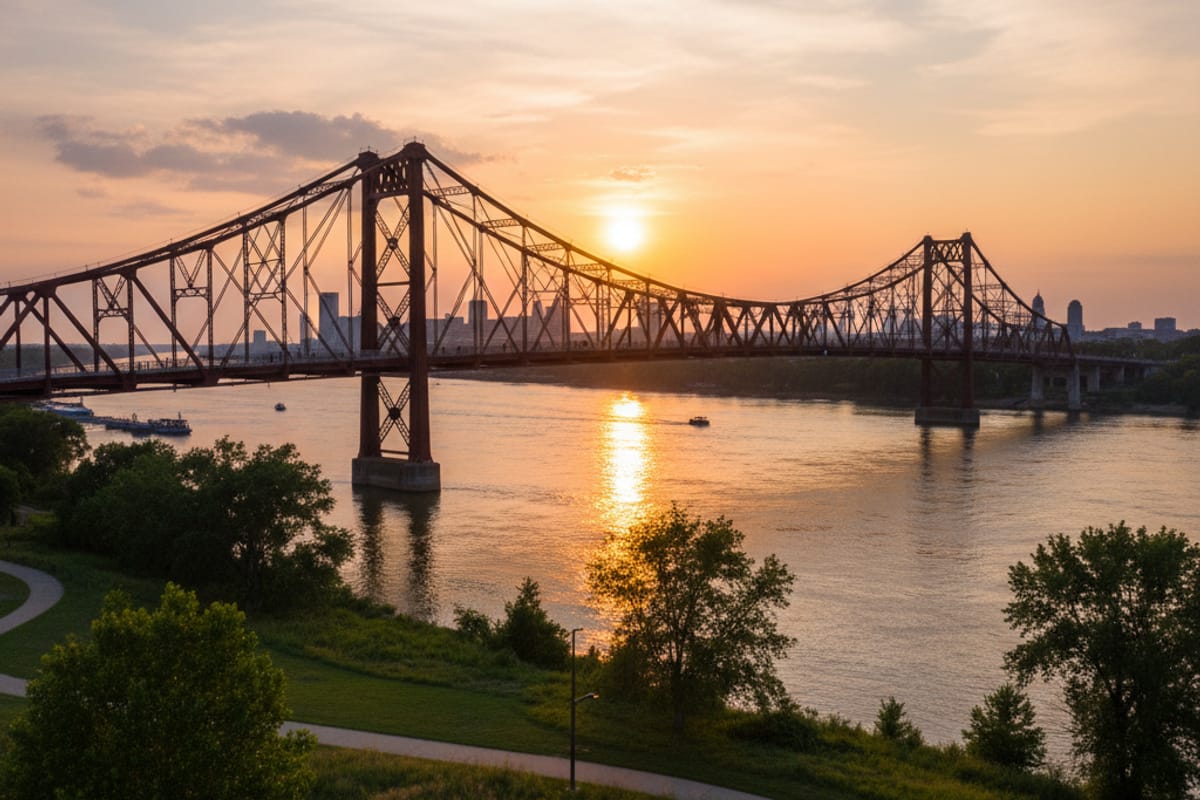 The Big River Crossing — walk across the Mississippi for free and get the best views of Memphis.
Affordable Hotels: Where to Stay Without Overpaying
Memphis hotel prices are significantly lower than comparable cities, and with a little strategy, you can find a comfortable, well-located room for far less than you would pay in Nashville, New Orleans, or Austin.
Downtown Memphis is the most convenient base for visitors, and even downtown prices are reasonable. Mid-range hotels in the downtown and South Main area — including chains like Hampton Inn, Holiday Inn, and Courtyard by Marriott — typically run $100-140 per night on weekends and $80-110 on weekdays. These hotels put you within walking distance of Beale Street, the National Civil Rights Museum, South Main restaurants, and the riverfront. For a weekend trip, paying $100-140 per night for a downtown hotel in a major American city is genuinely excellent value.
The South Main district has several newer boutique-style hotels that offer a more distinctive experience for $120-170 per night. The Central Station Hotel, housed in a beautifully restored train station, is the standout, though it trends toward the higher end of that range. Staying in South Main gives you walkable access to excellent restaurants, the trolley line, and a neighborhood feel that downtown hotels lack.
For the tightest budgets, Elvis Presley Boulevard (the road that leads to Graceland) has numerous budget hotels and motels in the $60-90 per night range. These are basic but clean, and they put you close to Graceland, which saves you a trip across town on one of your touring days. The trade-off is that you will need to drive or rideshare to Beale Street and downtown attractions (about 15 minutes). Days Inn, Motel 6, and several independent motels along this corridor offer the lowest rates in the Memphis area.
Midtown Memphis, near Cooper-Young and Overton Park, has a handful of vacation rentals and B&Bs that offer a neighborhood experience at $80-120 per night. Staying in Midtown puts you in the heart of local Memphis life, within walking distance of the best neighborhood restaurants and bars, and a short drive to everything else. This is the best option for travelers who prefer to experience a city like a local rather than a tourist.
Hostels are limited in Memphis, but there are a few options. Check for shared-accommodation listings that run $30-50 per night. These are usually in Midtown or near the university and cater to younger travelers and backpackers.
Booking tips for Memphis hotels: weekday rates are significantly lower than weekends, so if you can shift your trip to include a Thursday night instead of a Saturday, you will save money. Avoid Elvis Week (the week surrounding August 16), when hotel prices spike across the city. Spring and fall offer the best combination of weather and rates. Summer is the cheapest season for hotels because of the oppressive heat, but you will pay for it in sweat and discomfort when walking outdoors.
For the best deal, book directly through the hotel's website rather than through a third-party booking site. Many Memphis hotels offer a best-rate guarantee and sometimes include perks like free parking or breakfast when you book direct. Free parking is common at budget and mid-range hotels outside of downtown, which saves you $15-25 per night compared to downtown hotel parking fees.
An often overlooked option: the Guest House at Graceland, Elvis Presley's official hotel, occasionally runs promotions that bring the rate down to $140-160 per night, which is competitive with downtown hotels and includes a resort-style experience with a pool, on-site restaurant, and Graceland access. Check for midweek promotions and off-season deals.
Pro tip: If you book a downtown hotel, ask about parking costs upfront — they range from $15-25 per night and are sometimes not included in the room rate. Budget hotels on Elvis Presley Boulevard almost always include free parking.
Getting Around Memphis: MATA Transit and Other Options
Memphis is primarily a car city, but budget travelers have several options for getting around without renting a vehicle. The Memphis Area Transit Authority (MATA) operates bus routes throughout the city, and the combination of buses, the Main Street Trolley, and rideshares can cover all the major attractions on a budget.
The Main Street Trolley is the most tourist-friendly transit option in Memphis. The vintage streetcars run along Main Street from the Pinch District in the north through downtown and into the South Main Arts district. The trolley costs $1 per ride or $3.50 for an all-day pass, and it connects many of the key visitor areas — South Main restaurants, the National Civil Rights Museum area, downtown, and Beale Street (a short walk from Main Street). The trolley runs daily, and the vintage cars are charming enough that the ride itself is part of the experience. It is one of the few remaining heritage streetcar lines in America.
MATA bus routes cover the broader city, including routes to Graceland and the Stax Museum. The fare is $1.75 per ride or $3.50 for a day pass. Route 34 runs from downtown to Graceland along Elvis Presley Boulevard. Route 39 connects downtown with the Stax Museum area in South Memphis. Bus service is functional but not frequent — headways of 20-40 minutes are typical, so plan your schedule around the bus timing rather than expecting to walk up and hop on.
Rideshare services (Uber and Lyft) are plentiful in Memphis and surprisingly affordable. A ride from downtown to Graceland costs about $12-15. Downtown to Cooper-Young is $8-10. Downtown to the Stax Museum is $10-12. For a full day of sightseeing that includes Graceland, Sun Studio, and the Civil Rights Museum, total rideshare costs would be about $40-50. Split between two travelers, that is $20-25 per person, which is competitive with a rental car when you factor in parking fees.
The free shuttle between Graceland, Sun Studio, and the Rock 'n' Soul Museum on Beale Street runs hourly and is one of the best budget transit options in Memphis. If you plan your Saturday around these three attractions (which is a natural itinerary anyway), the shuttle eliminates all transportation costs between them.
Biking is a growing option in Memphis. The city has expanded its bike lane network significantly, and bike rental is available at Shelby Farms Park ($10-15 per hour) and through various rental shops. The Shelby Farms Greenline, an 11-mile paved trail connecting Shelby Farms to Midtown, is an excellent cycling route. For getting between attractions, biking is feasible if you are comfortable riding in a mid-size Southern city, though the distances between Graceland, downtown, and Cooper-Young are too far for casual cycling.
Walking is viable within specific zones. Downtown Memphis, Beale Street, South Main, and the riverfront are all walkable from each other. Cooper-Young is walkable once you arrive. But Memphis is spread out enough that walking between zones (downtown to Cooper-Young is about 3 miles, downtown to Graceland is 10 miles) requires supplemental transportation.
For the tightest budget, the optimal strategy is: stay downtown, walk to Beale Street and South Main, use the free shuttle for the Graceland-Sun Studio loop, take MATA buses to other attractions, and use rideshare for evening trips to Cooper-Young or other neighborhoods. Total transportation budget for a weekend: $20-35 per person. That is remarkably low for a city where you will visit attractions spread across a 15-mile radius.
Pro tip: Download the MATA transit app for real-time bus tracking and route planning. The trolley runs on a fixed schedule that is posted at each stop. Rideshare surge pricing is rare in Memphis except during major events like Beale Street Music Festival.
Complete Budget Breakdown: A Memphis Weekend for Under $400
Here is a realistic, detailed budget for a complete Memphis weekend experience — two nights, all major attractions, excellent food, and live music — for under $400 per person. This is not a bare-bones trip. This is a genuinely rich experience at a price that makes Memphis one of the best-value destinations in America.
Accommodation: Two nights at a downtown hotel at $110 per night, split between two travelers, equals $110 per person. If you are traveling solo, budget $220 for two nights. For the tightest budget, a hotel on Elvis Presley Boulevard at $70 per night brings the solo cost to $140 for two nights.
Food (two full days): Saturday breakfast at a downtown diner ($8). Saturday lunch at Payne's BBQ — two sandwiches and a drink ($15). Saturday dinner at Rendezvous — half slab of dry ribs, side, and a beer ($25). Sunday brunch at Cafe 1912 ($12). Sunday lunch at Central BBQ — pulled pork plate ($15). Snacks and coffee throughout the weekend ($12). Total food: $87 per person. For a tighter budget, replace Rendezvous with Central BBQ ($15 dinner) and Cafe 1912 with the Arcade Restaurant ($10 brunch), bringing the food total to $65.
Attractions: Graceland basic mansion tour ($45). Sun Studio tour ($15). National Civil Rights Museum ($18 — or free if you go Monday 3-5 PM). Stax Museum ($15). Beale Street (free — no cover charges). Total attractions: $93, or $75 if you time the Civil Rights Museum for free Monday admission.
Transportation: Free shuttle between Graceland, Sun Studio, and Rock 'n' Soul Museum. Main Street Trolley day pass ($3.50 per day, two days = $7). Two rideshare trips to Cooper-Young and Stax ($20). Walking for downtown, Beale Street, and South Main ($0). Total transportation: $27 per person.
Beale Street evening: Three drinks across three clubs over the course of the evening ($20). Tips for musicians ($10-15). Total Beale Street: $30-35.
Miscellaneous: Souvenirs, extra coffee, unexpected expenses ($20-30).
Grand total for the comfortable budget: $350-385 per person (with a travel partner sharing the hotel room). Solo traveler total: $460-500.
Grand total for the tight budget (budget hotel, cheaper meals, free Civil Rights Museum admission): $280-320 per person with a partner. Solo: $380-420.
Compare this to a similar weekend in Nashville ($500-700 per person), New Orleans ($550-800), or Austin per our Austin live music and food guide ($450-650), and the value of Memphis becomes stark. No other major American city offers this concentration of world-class music, food, and history at these prices.
The reason Memphis is so affordable is simple: the city has not yet experienced the tourism-driven price inflation that has hit Nashville and Austin. The BBQ joints still charge what BBQ joints have always charged. The hotels have not been replaced by boutique properties charging $300 per night. The music on Beale Street is still free because that is how it has always been. Memphis is a city that measures its value in experience rather than exclusivity, and for budget travelers, that generosity is the greatest discovery of all.
Memphis will not nickel and dime you. It will feed you, play you some music, show you its history, and send you home full — in every sense of the word — for less than you would spend on a quiet weekend in most American cities. The only expensive thing about Memphis is the urge to book a return trip before you have even left.
Why Trust This Guide
Recommendations from locals across 240+ US cities via Recommended.app community data.
Explore More
This guide is part of our Memphis collection. Explore more guides for Memphis →
Memphis has 228 verified businesses on Recommended.app across 75 categories.
Hidden Gems Weekly
3 hidden gems, 2 local quotes, 1 home hack — every Monday. Free forever.
Unsubscribe anytime. No spam.
More from Travel Guides
 Travel Guide
A Perfect Memphis Weekend: Music, History & Smoky BBQ
 Travel Tips
Expedia vs Hotels.com 2026: Which Actually Saves You More Money?
 Travel Guide
Best Hotels in Miami 2026: South Beach to Wynwood (With Real Price Ranges)
 Travel Guide
Best Hotels in Nashville 2026: From Budget East Nashville to Downtown Luxury
 Travel Guide
Best Hotels in Las Vegas 2026: From Budget to High Rollers (With Real Price Data)
 Outdoor & Nature