
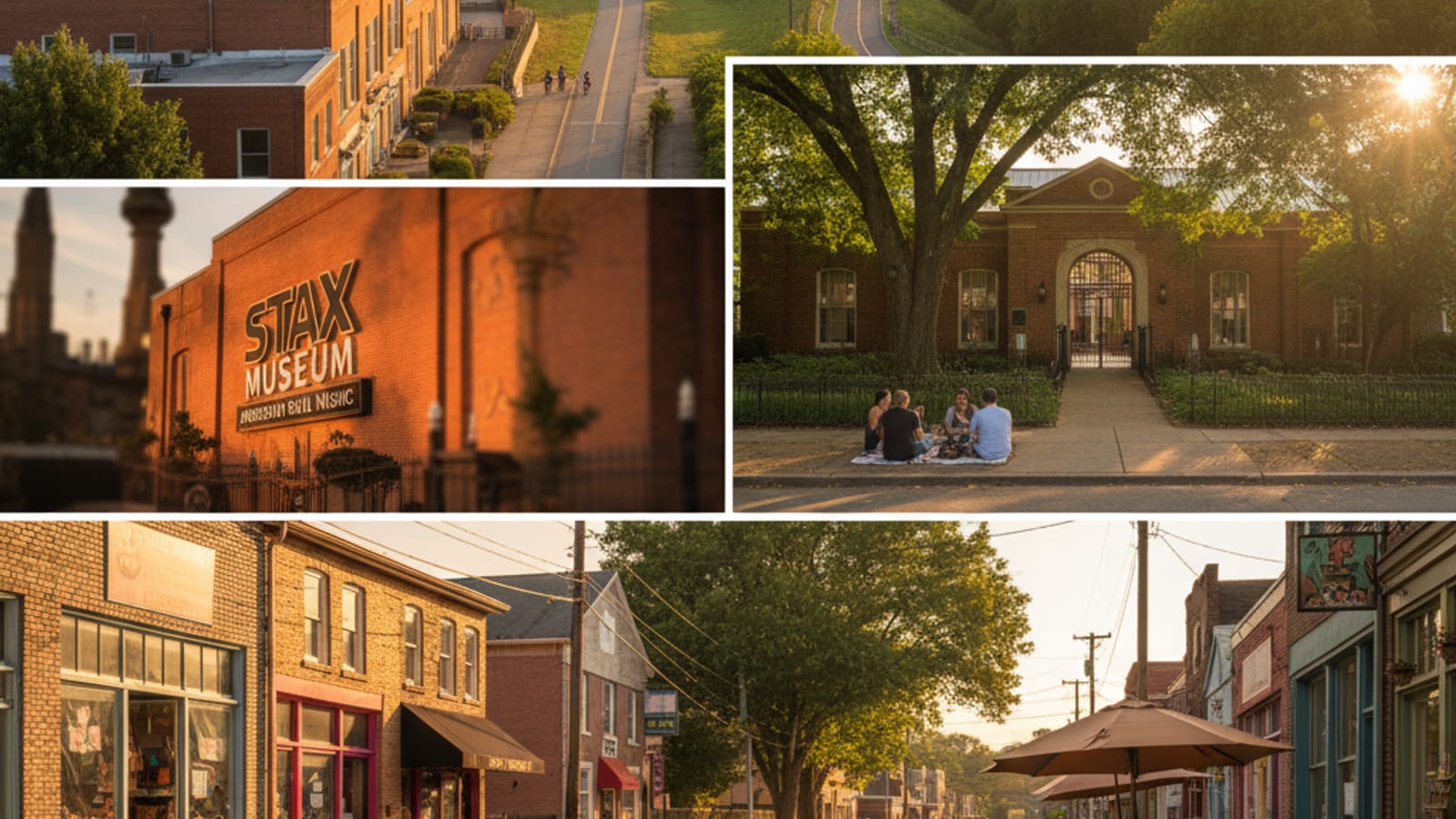
Last updated March 16, 2026 by the Recommended.app research team.
Cooper-Young: The Neighborhood That Defines Modern Memphis
If Beale Street is the Memphis that tourists come to see, Cooper-Young is the Memphis where locals actually live, eat, and hang out. This walkable intersection of Cooper Street and Young Avenue in Midtown is the creative heart of the city — a tight-knit neighborhood of independent restaurants, bars, vintage shops, bookstores, and galleries that feels like it has been curated by people who genuinely love their city. Because it has been.
The Cooper-Young neighborhood emerged in the 1990s when artists, musicians, and young professionals started renovating the area's stock of early-20th-century bungalows and Craftsman homes. Today it is one of the most vibrant neighborhoods in the American South, with a walkable commercial district that punches far above its weight. You can spend an entire afternoon here without running out of things to do.
Start at Burke's Book Store on Cooper Street, one of the oldest independent bookstores in Memphis. It has been open since 1875 — that is not a typo — and the current location is a beautifully curated shop with a strong local section and regular author events. Across the street, Flashback is a vintage clothing and furniture store that could occupy you for an hour. Java Cabana is the neighborhood coffee shop with live music on weekends and a patio that fills up on nice evenings.
For food, the choices are outstanding. The Beauty Shop is a restaurant literally built inside a former beauty salon — the original hair dryer chairs are still mounted on the wall, and the creative Southern-meets-global menu changes seasonally. Young Avenue Deli is the neighborhood's anchor bar, with a great beer selection and live music most nights. Tsunami is a Pacific Rim restaurant that would be notable in any city and is exceptional for Memphis. Sweet Grass is the date-night spot with a seasonal Southern menu that takes Low Country cooking seriously.
The Cooper-Young Festival, held every September, takes over the entire intersection with live music stages, food vendors, art booths, and about 130,000 people. It is the largest one-day arts festival in the Mid-South and one of the best free events in Memphis. Even if you miss the festival, Cooper-Young on any given weekend evening — with the restaurants full, music drifting out of the bars, and people walking their dogs past murals and string lights — is one of the most pleasant urban experiences in the South.
The neighborhood is about a 10-minute drive from downtown Memphis, and free street parking is generally easy to find. This is a place where you park your car and walk, and where a conversation with a stranger at the bar will likely lead to three more recommendations for things to do while you are in town.
Pro tip: The Cooper-Young Farmers Market runs every Saturday morning year-round in the parking lot behind First Congregational Church. It's one of the best farmers markets in Memphis, with local produce, baked goods, and live music.
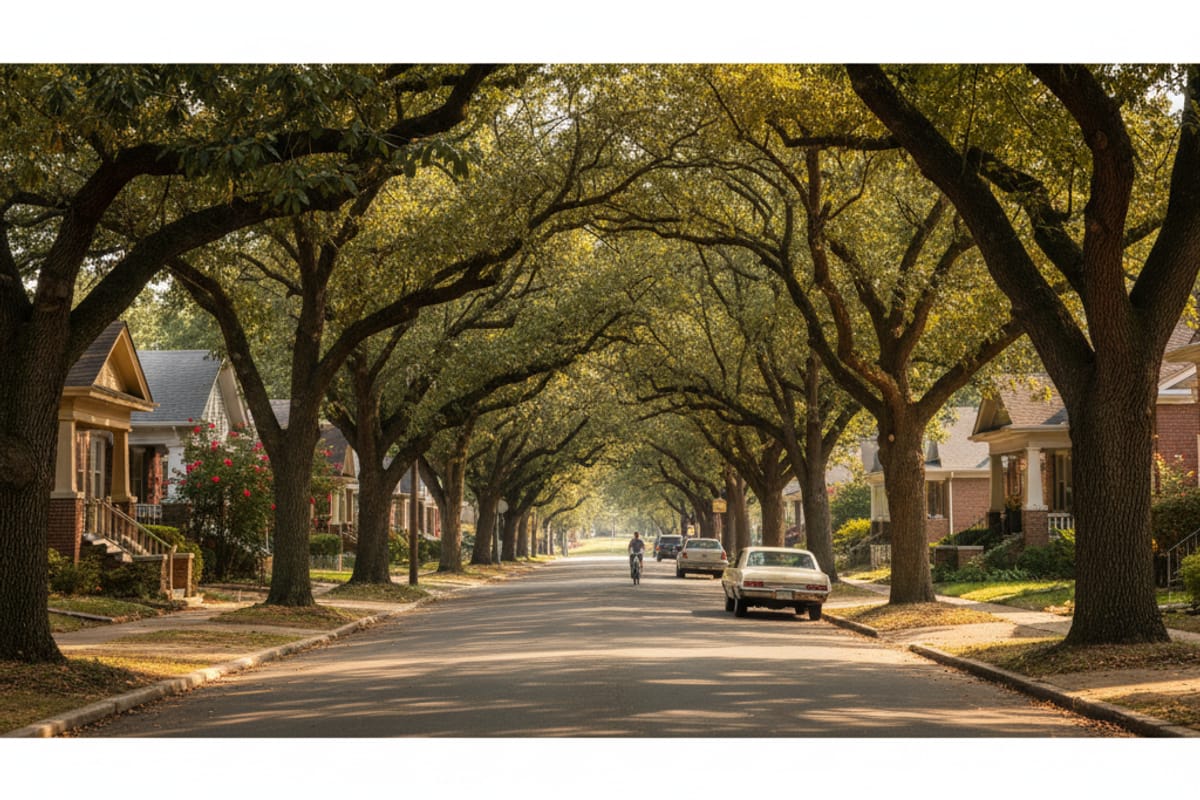 Cooper-Young — the walkable, vibrant heart of Midtown Memphis.
Stax Museum of American Soul Music: More Than Motown's Rival
The Stax Museum of American Soul Music is the most underrated music museum in America. While tourists flock to Sun Studio and Graceland, the Stax Museum sits in the Soulsville neighborhood of South Memphis and tells the story of the record label that gave the world Otis Redding, Isaac Hayes, Sam and Dave, Booker T. and the MGs, the Staple Singers, and dozens of other artists who defined the sound of soul music in the 1960s and 1970s.
The original Stax Records studio was demolished in 1989, and the museum was built on the same site, recreating the exterior of the original building — a converted movie theater where some of the greatest recordings in American music history were made. Inside, the museum is extraordinary. The collection includes Isaac Hayes' gold-plated Cadillac Eldorado (with fur-lined interior and 24-karat gold exterior trim), the original studio equipment, costumes, instruments, and interactive exhibits that let you hear how the Stax sound was created.
What makes the Stax Museum special is how it tells the story. This is not just a music museum — it is a story about race, community, entrepreneurship, and the power of art to cross racial boundaries. Stax Records was one of the first integrated workplaces in the South. The house band, Booker T. and the MGs, was a mixed-race group recording together in Memphis during the height of segregation. The museum addresses this directly and powerfully, connecting the music to the broader social context of the civil rights era.
The museum takes about two hours to experience thoroughly. Admission is around $15 for adults. On the same campus, the Stax Music Academy provides free music education to young people from the surrounding neighborhood, continuing the legacy of the original studio. If you happen to visit during a student concert or recital, stay and listen — the talent coming out of this program is remarkable.
The surrounding Soulsville neighborhood is historically significant but economically disadvantaged. The museum's presence has been a catalyst for revitalization, and the Stax Museum operates with a deep commitment to the community. Visiting and supporting it is one of the most meaningful things you can do as a tourist in Memphis.
Don't skip the gift shop, which has an exceptional vinyl collection. And if you visit on a Saturday, the Soulsville neighborhood sometimes has food vendors outside the museum with some of the best soul food you will find anywhere — this is the kind of cooking that doesn't make it into guidebooks because it doesn't have a permanent storefront.
Pro tip: Combine Stax with a drive down McLemore Avenue and a visit to the Full Gospel Tabernacle Church, where Al Green still occasionally preaches on Sundays. Call ahead to confirm — when Al Green is preaching, the church fills up fast.
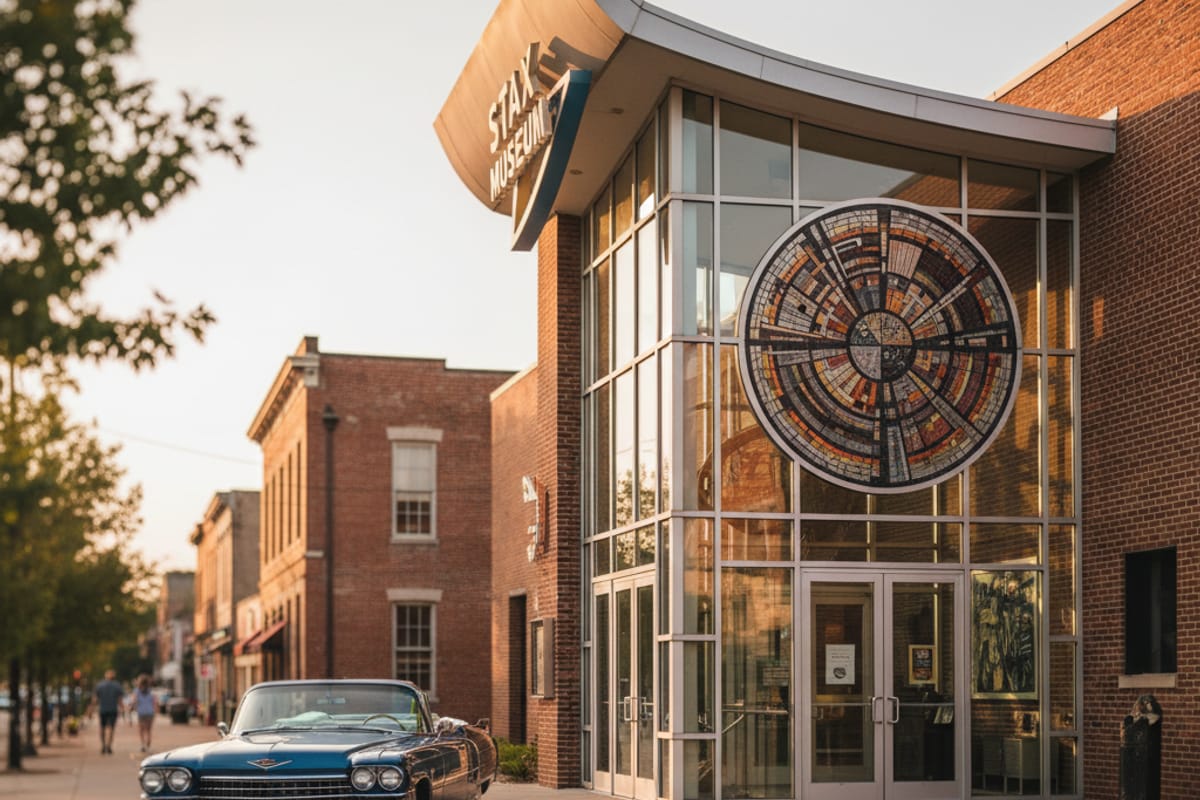 The Stax Museum — built on the site where Otis Redding recorded 'Sittin' On The Dock of the Bay.'
Overton Park: Memphis Zoo, Brooks Museum, and Ancient Forest
Overton Park is 342 acres of green space in the middle of Midtown Memphis, and it contains three distinct attractions that would each be worth a visit on their own. Together, they make Overton Park one of the best urban parks in the American South and a place where you could easily spend an entire day.
The Memphis Zoo occupies the northwest corner of the park and is consistently ranked among the top zoos in America. The Giant Panda exhibit was a major draw for years (the pandas were returned to China in 2023), but the zoo remains excellent, with a particularly strong collection of African animals, a beautiful Cat Country exhibit, and Northwest Passage, where you can watch sea lions swim past an underwater viewing window. Admission is about $20 for adults, and the zoo is free for Memphis residents on Tuesdays.
The Memphis Brooks Museum of Art has been located in Overton Park since 1916, making it the oldest and largest art museum in Tennessee. The permanent collection spans 9,000 years and includes notable works of Renaissance art, Impressionism, and a particularly strong collection of art from the American South. The museum is planning a move to a new waterfront location on the Mississippi River, so check current hours and location before visiting. When it is in Overton Park, the building itself — a Beaux-Arts gem — is part of the experience.
But the hidden gem within Overton Park is the Old Forest State Natural Area — one of the last remaining old-growth forests in an urban area in the United States. These 126 acres of forest have never been logged, and some of the trees are over 300 years old. Walking the trails through the Old Forest feels impossibly removed from the city that surrounds it. The canopy is so thick that sound drops away. You can hear woodpeckers and see deer on trails that feel like they belong in the Smoky Mountains, not the middle of a major city.
The Old Forest trails are free, well-maintained, and total about 3.5 miles. They are flat and easy, suitable for all fitness levels. The East Parkway entrance has the best access point for the forest trails. Early morning is the best time for bird watching — the forest is home to over 100 species of birds, including pileated woodpeckers, great horned owls, and various warblers during migration season.
Overton Park also has a lovely greensward — a large open field where locals play frisbee, have picnics, and let their dogs run on nice days. On weekends, the park has a farmers market and food trucks. The Levitt Shell, a bandshell on the park grounds, hosts free outdoor concerts throughout the summer, including the annual Elvis birthday tribute in January (Elvis played one of his first public concerts at the Levitt Shell in 1954, when it was called the Overton Park Band Shell).
Pro tip: The Levitt Shell hosts about 50 free concerts per year, mostly from April through October. Check their schedule online — the quality of the acts is surprisingly high for a free outdoor venue, and the atmosphere on a warm Memphis evening is magical.
South Main Arts District: Galleries, Trolleys, and the New Memphis
The South Main Arts District is where the new Memphis is being built. This stretch of South Main Street, running roughly from Peabody Place to the National Civil Rights Museum, has transformed over the past decade from a neglected warehouse district into one of the most exciting creative neighborhoods in the South. Art galleries, boutiques, craft cocktail bars, and restaurants now fill the ground floors of renovated industrial buildings, and the vintage Main Street Trolley clangs past on its tracks, connecting South Main to downtown and Beale Street.
The anchor event is the South Main Trolley Night, held on the last Friday of every month. From 6 to 9 PM, the galleries open their doors, the restaurants set up sidewalk seating, food trucks line the street, and musicians play on corners and in doorways. The crowd is a mix of artists, young professionals, families, and tourists who somehow found their way off Beale Street. It is the best free night out in Memphis, and it gives you a window into the city's creative community that you will not find anywhere else.
Even on non-Trolley nights, South Main is worth visiting. The galleries are open during regular business hours, and many of them show genuinely interesting work — this is not tourist art, it is a real gallery scene with working artists. Robinson Gallery features contemporary Southern photography. David Lusk Gallery shows a mix of established and emerging artists from across the South. The Marshall Arts gallery is an eclectic, artist-run space with rotating exhibits that range from traditional painting to experimental installations.
For food and drink, South Main has some of Memphis's best options. Bedrock Eats and Sweets started as a food truck and now has a permanent spot serving elevated comfort food. The Arcade Restaurant, open since 1919, claims to be the oldest restaurant in Memphis and serves classic diner food in a beautifully preserved space — Elvis used to eat here regularly, and his booth is still available (just ask). Loflin Yard is an indoor-outdoor bar built around a courtyard with fire pits, Adirondack chairs, and a stage for live music. It is one of the best hangout spots in Memphis regardless of the weather.
The area around South Main also includes the Orpheum Theatre, one of the grand old movie palaces of the South, now a performing arts venue with a full Broadway series and film screenings. The Memphis Music Hall of Fame is a small but worthwhile museum on South Second Street with exhibits about the city's extraordinary musical heritage.
The Main Street Trolley runs through South Main and costs $1 per ride or $3.50 for an all-day pass. It is a charming and practical way to move between South Main, downtown, and the river. The trolley cars are vintage and the ride itself is part of the experience — it is one of the few remaining heritage streetcar lines in America.
South Main is also where many of Memphis's new hotels are opening, making it an excellent base for exploring the city. Staying in South Main puts you within walking distance of the Civil Rights Museum, the trolley to Beale Street, and a neighborhood that shows you what Memphis is becoming, not just what it was.
Pro tip: Trolley Night is the last Friday of every month from 6-9 PM. Mark it on your calendar if you're in town — it's the single best free event in Memphis for experiencing the local art and music scene.
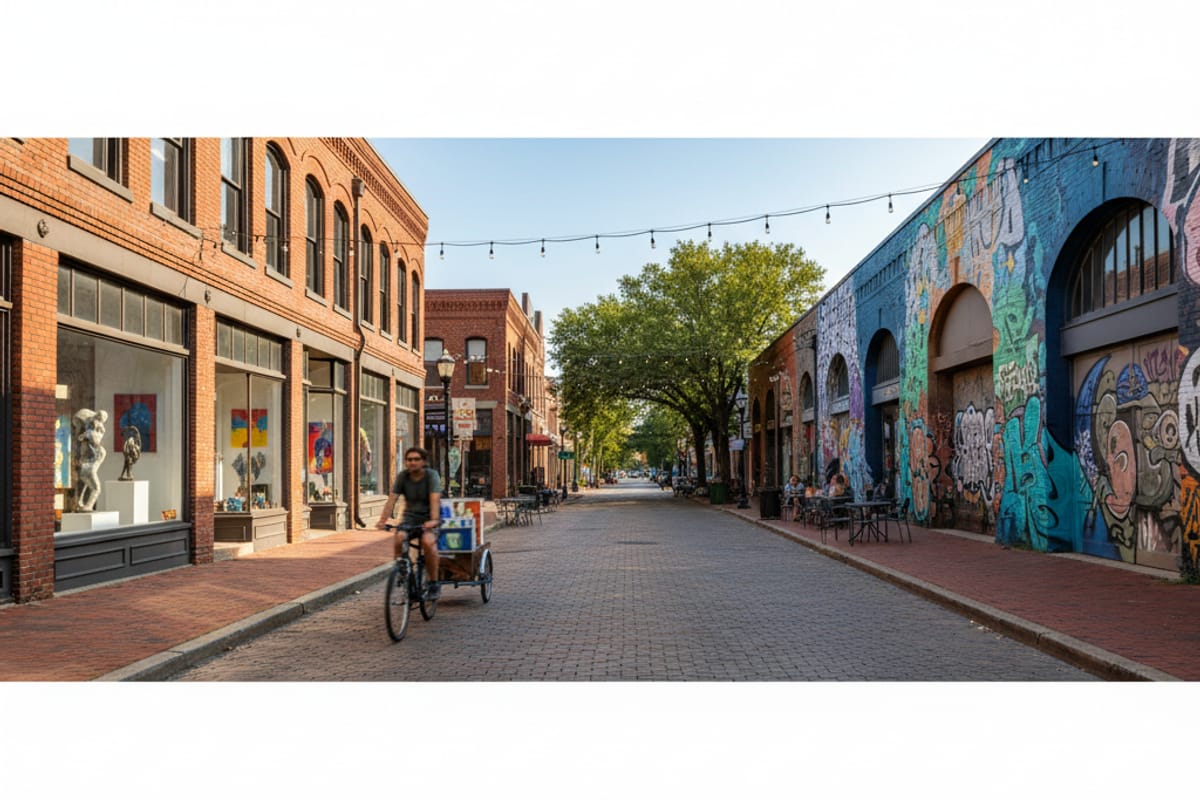 South Main — vintage trolleys, art galleries, and the creative pulse of modern Memphis.
Shelby Farms Park: America's Great Urban Wilderness
Shelby Farms Park is one of the largest urban parks in the United States — at 4,500 acres, it is roughly five times the size of Central Park. And yet most Memphis visitors have never heard of it. Located about 15 minutes east of downtown, Shelby Farms is where Memphians go to escape the city without actually leaving it.
The park has over 40 miles of trails for hiking, running, and mountain biking. The Shelby Farms Greenline, an 11-mile paved trail, connects the park to Midtown Memphis and is one of the most popular cycling and running routes in the city. The mountain bike trails range from beginner-friendly to genuinely technical, and the trail system is well-maintained and well-marked.
The centerpiece of the park is the 80-acre Hyde Lake, where you can rent kayaks, canoes, and paddleboards. On a calm morning, paddling across Hyde Lake with the Memphis skyline visible in the distance is one of those experiences that redefines your idea of what an urban park can be. Fishing is also popular — the lake is stocked with bass, catfish, and bluegill, and a Tennessee fishing license is required.
Shelby Farms also has a massive off-leash dog park (one of the largest in the country), a playground complex called Woodland Discovery Playground that is genuinely impressive even by adult standards, and a buffalo herd. Yes, a herd of American bison roams a fenced section of the park, and you can see them from the road and several viewing areas. The bison have been in the park since 1994 and are one of Memphis's most unexpected and beloved attractions.
The park hosts events throughout the year, including outdoor movie screenings, food truck festivals, and the Starry Nights holiday light display in November and December. The Shelby Farms Park Conservancy has invested heavily in infrastructure, and the park now has a beautiful visitor center, multiple picnic pavilions, and a café.
For visitors, the most accessible experience is renting bikes at the visitor center and riding the Greenline or the park trails. Bike rentals are about $10-15 per hour, and the trails are flat enough for casual riders. Pack a picnic and plan to spend at least half a day here.
Shelby Farms is free to enter, and parking is free. It is one of the great hidden gems not just of Memphis but of American urban parks in general. The fact that a city with the history, music, and food culture of Memphis also has a 4,500-acre wilderness park would be surprising if Memphis weren't already a city full of surprises.
The park is also home to the Shelby Farms Greenline connector trails, which are expanding to eventually link the park to the Wolf River corridor and other green spaces across the city. Memphis is quietly building one of the most impressive urban trail networks in the South, and Shelby Farms is the hub of it all.
Pro tip: The Woodland Discovery Playground at Shelby Farms is one of the best playgrounds in the South if you're traveling with kids. It has zip lines, climbing structures, water features, and a nature play area. Bring towels and a change of clothes — kids will get wet.
Local Juke Joints: The Real Sound of Memphis
Beale Street is the famous music street, but the real sound of Memphis lives in the juke joints — small, no-frills neighborhood bars where the blues are still played the way they were meant to be heard: loud, raw, and close enough to feel the vibrations in your chest. These are not tourist attractions. They are living, breathing pieces of American musical culture, and visiting one is the single most authentic thing you can do in Memphis.
Wild Bill's is the most well-known juke joint in Memphis, and it has earned that reputation honestly. Located in a nondescript building in North Memphis, Wild Bill's opens on Friday and Saturday nights and operates on its own schedule. There is no website, no reservation system, and no guarantee of what time the music will start. You show up, you pay a small cover (usually $5-10), you bring your own liquor (yes, it's BYOB — you can buy setups inside, meaning cups, ice, and mixers), and you settle in for an evening of blues that will rearrange your understanding of what live music can be. The crowd is mixed, the dancing is enthusiastic, and the musicians play until they are done, not until a predetermined set time.
Wild Bill's is not in a tourist-friendly area, and if you are uncomfortable being the only visitor in a room full of locals, it may not be for you. But if you approach it with respect and genuine interest, you will be welcomed warmly. The regulars at Wild Bill's are proud of their juke joint and happy to share it with people who appreciate what it is.
Beyond Wild Bill's, the Memphis juke joint scene is scattered and somewhat underground. Mr. Handy's Blues Hall on Beale Street is a more accessible option — it has the atmosphere of a juke joint in a tourist-friendly location, with older blues musicians who play traditional styles. It is not as raw as Wild Bill's, but it is a good entry point.
The Blues City Café on Beale Street also hosts late-night blues sets in its Band Box room that can feel remarkably intimate for a Beale Street venue. After midnight on weekends, when the party crowd has moved on, the Band Box sometimes has veteran musicians playing extended sets to a small, dedicated audience. These late-night sets are some of the best live music experiences in Memphis.
For a truly local experience, ask your bartender or hotel concierge about house parties with live music. Memphis has a tradition of informal gatherings where musicians play in backyards, living rooms, and garages. These are not advertised and you will not find them on Google, but they happen regularly, and being invited to one is like being handed a key to the real Memphis.
The juke joint tradition is a direct descendant of the places where the blues were born — small rooms in the Mississippi Delta where field workers gathered on Saturday nights to drink, dance, and listen to music that expressed their lives. Memphis inherited and preserved that tradition, and it continues today in ways that are genuine, unpolished, and profoundly moving.
If you visit Memphis and only experience Beale Street, you have heard Memphis at concert volume. If you find your way into a juke joint, you have heard Memphis whisper its secrets. Both are worth experiencing, but only one will stay with you for the rest of your life.
Pro tip: Wild Bill's is BYOB — bring your own bottle and buy setups (cups, ice, mixers) inside. The venue is cash only. Go on a Friday or Saturday night after 10 PM for the best experience. Take a rideshare — the neighborhood is not well-lit for walking.
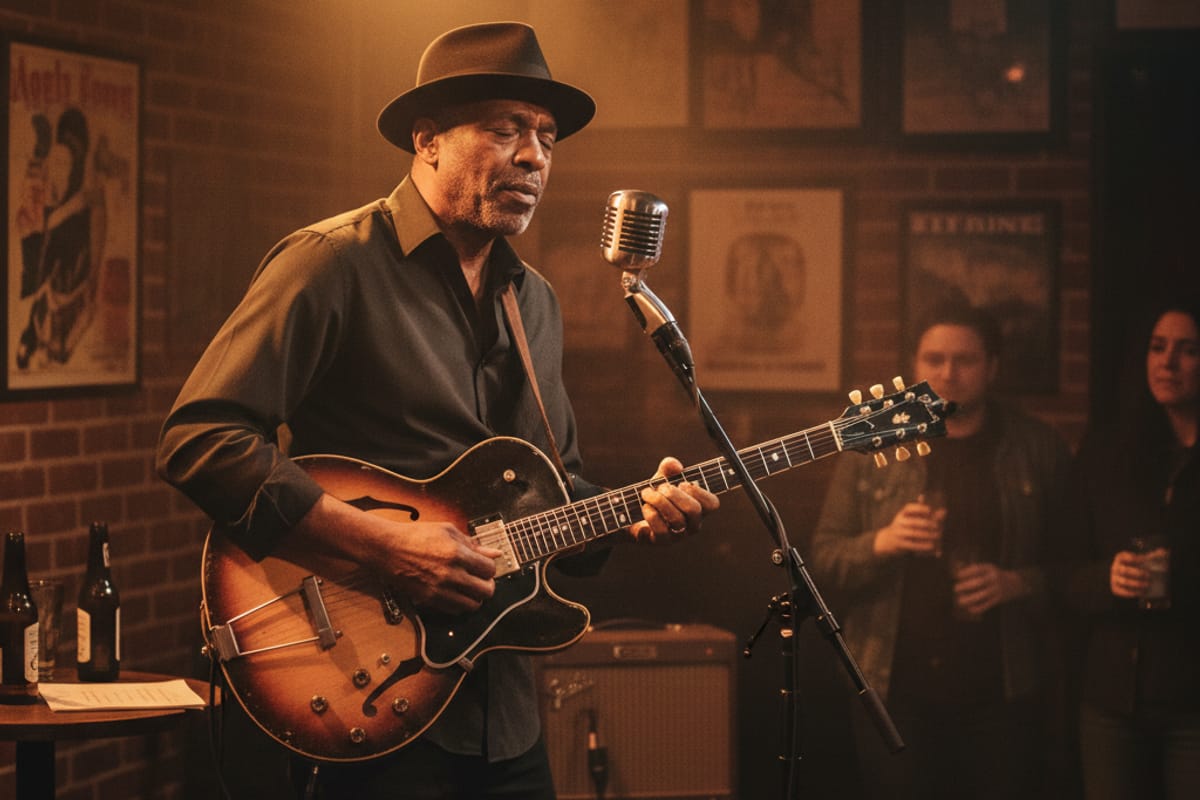 The juke joints of Memphis — where the blues are played the way they were meant to be heard.
Why Trust This Guide
Recommendations from locals across 240+ US cities via Recommended.app community data.
Explore More
Related guides:
This guide is part of our Memphis collection. Explore more guides for Memphis →
Memphis has 228 verified businesses on Recommended.app across 75 categories.
Hidden Gems Weekly
3 hidden gems, 2 local quotes, 1 home hack — every Monday. Free forever.
Unsubscribe anytime. No spam.
More from City Guides
 City Guide
First Time in Memphis? Locals Wish You Knew These 12 Things
 City Guide
We Asked Memphis Locals Where They Actually Eat — Here's What They Said
 Home Services
Water Damage Restoration Near Me: What to Do in the First 24 Hours (2026 Guide)
 Food & Dining
Best Buffet in Las Vegas 2026: What's Still Worth It After the Great Buffet Collapse
 Food & Dining
Best Coffee Shops in Chicago 2026: 20 Cafes Worth Leaving Your Apartment For
 Food & Dining