
Last updated March 16, 2026 by the Recommended.app research team.
Saturday Morning: Graceland and the Elvis Experience
Start your Saturday early. Graceland opens at 9 AM, and you want to be there when the doors open. (Want context for why Memphis is on locals' shortlist? See our 25 best places to visit in the USA in 2026.) The parking lot fills up by mid-morning on weekends, and the earlier you arrive, the smaller your tour group will be and the more intimate the experience feels. Book your tickets online in advance — the basic mansion tour ($45) is sufficient for most visitors, though the full experience ($80) adds the car museums, the planes, and additional exhibits.
The Graceland mansion tour takes about 90 minutes. (Doing the trip cheap? Our Memphis budget travel guide covers the same weekend at a third of the cost.) You will walk through Elvis Presley's home with an audio guide narrated by John Stamos, which is an unexpected choice that somehow works. The rooms are preserved almost exactly as they were when Elvis lived there — the Jungle Room with its green shag carpet ceiling, the TV room where he famously shot a television set, the racquetball court turned trophy room, and the Meditation Garden where Elvis is buried alongside his parents and grandmother. The Meditation Garden is the emotional center of the visit, and even people who are not Elvis fans find it moving.
After the mansion, the Elvis Presley's Memphis complex across the street has the car collection, the two private planes (including the Lisa Marie, a full-size Convair 880 jet with a gold-plated interior), and rotating exhibits. If you did the full ticket, plan another 60-90 minutes here. If you did the basic tour, walk through the gift shop (it is large and actually interesting) and grab lunch.
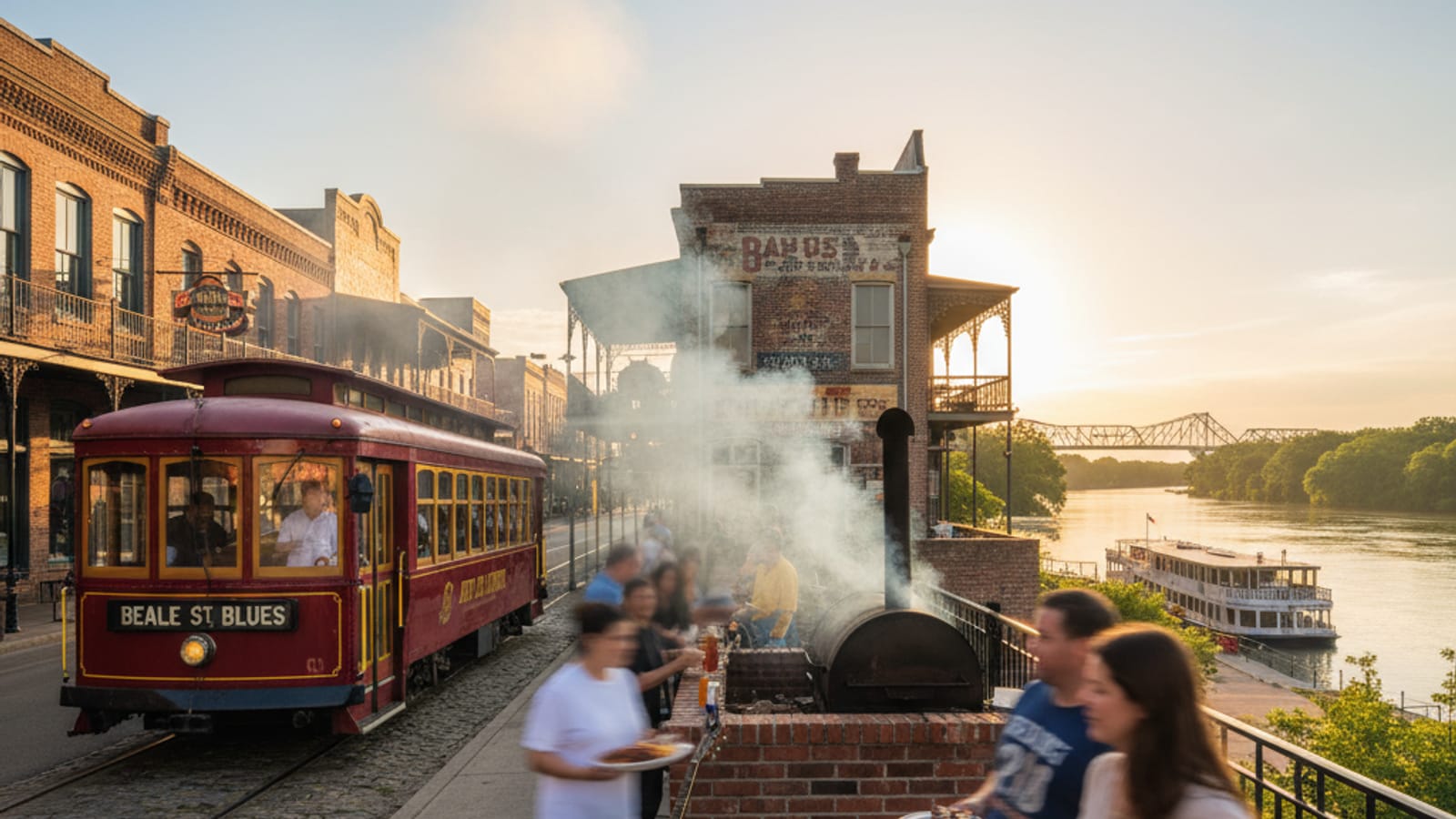
For lunch, drive 10 minutes to Central BBQ on Central Avenue. This is your first Memphis BBQ experience, and Central is the perfect introduction — the pulled pork is smoky and tender, the dry ribs are exceptional, and the BBQ nachos are a Memphis institution. A pulled pork plate with two sides runs about $14, and it will fuel you through the afternoon. The Central Avenue location has a patio and a neighborhood feel that is more pleasant than the downtown outpost.
After lunch, drive to Sun Studio on Union Avenue, about 15 minutes from Central BBQ. Sun Studio runs guided tours every half hour, costs $15, and takes about 45 minutes. This is where Elvis recorded his first songs, where Johnny Cash found his sound, and where rock and roll was literally invented. The guides are musicians who tell stories rather than recite facts, and you will stand on the X on the floor where Elvis stood in 1954 and hold the same microphone Johnny Cash used. The acoustics of the room are unchanged, and Sun Studio still operates as a working recording studio at night.
There is a free shuttle between Graceland, Sun Studio, and the Rock 'n' Soul Museum on Beale Street that runs hourly. If you would rather not drive, this shuttle is an excellent way to connect the three sites. But having a car gives you more flexibility for lunch stops and timing.
By the time you finish Sun Studio, it will be mid-afternoon. Head back to your hotel, shower, and prepare for Beale Street.
Pro tip: Book Graceland tickets online in advance to skip the ticket line. The basic mansion tour is the must-do; the VIP add-ons are nice but not essential. Arrive by 9 AM to avoid the biggest crowds.
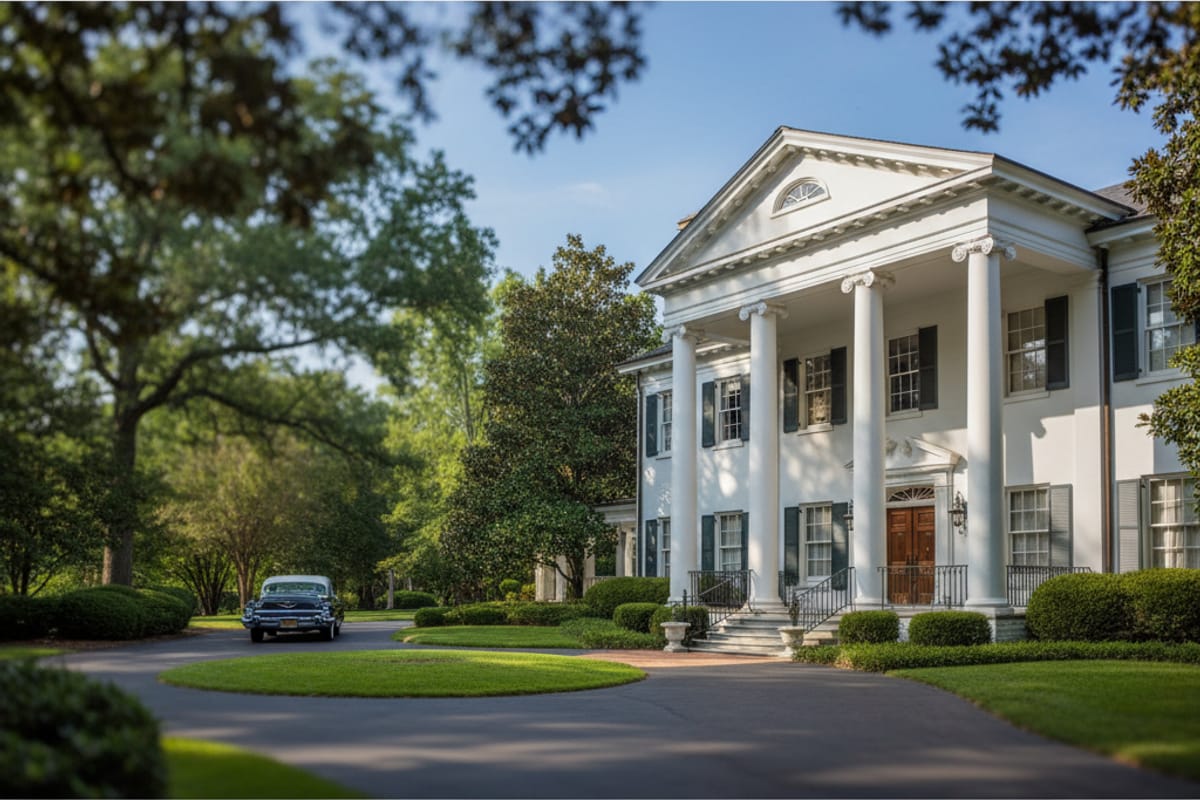 Graceland — start your Memphis weekend at the King's home.
Saturday Afternoon: The National Civil Rights Museum
After Sun Studio, make your way to the National Civil Rights Museum at the Lorraine Motel on Mulberry Street. This is one of the most important museums in America, and it deserves at least two to three hours of your time. Plan accordingly — do not rush this visit.
The museum is built around the Lorraine Motel where Dr. Martin Luther King Jr. was assassinated on April 4, 1968. Room 306, where he was staying, is visible through the window. The balcony where he was standing is preserved with a wreath marking the exact spot. Before you even enter the main exhibits, the sight of that balcony will stop you in your tracks.
Inside, the museum traces the entire arc of the American civil rights movement, from the earliest resistance to slavery through the modern era. The exhibits are immersive and unflinching. You will walk through a replica of the bus where Rosa Parks refused to give up her seat. You will sit at a recreated Woolworth's lunch counter and listen to audio recordings of the abuse that sit-in protesters endured. You will see a burned Freedom Rider bus and read the threatening letters sent to Dr. King. Each room deepens the story, building toward the final exhibit — the room documenting the assassination itself, with the view from the boarding house window across the street to the motel balcony.
This museum is not entertainment. It is education at its most powerful, and it will affect you emotionally. Give yourself permission to take breaks. There are benches throughout, and the courtyard outside is a good place to sit and process what you have seen. Many visitors describe this as one of the most important experiences of their lives, and they are not exaggerating.
Admission is about $18 for adults. The museum is closed on Tuesdays. On Mondays, admission is free from 3 to 5 PM, which is an excellent deal if your schedule aligns. For a Saturday visit, expect moderate crowds — the museum is large enough that it rarely feels overcrowded, even on busy days.
After the museum, walk to the South Main Arts District, which begins just steps away. This is a good time for a drink and some decompression. Loflin Yard, an outdoor bar and courtyard with fire pits and Adirondack chairs, is a five-minute walk from the museum and is the perfect place to sit quietly with a cocktail before heading to Beale Street. The Arcade Restaurant, the oldest restaurant in Memphis, is also in South Main if you want a late-afternoon snack or early dinner before the evening begins.
The emotional weight of the Civil Rights Museum followed by the warmth of the South Main neighborhood is one of the defining contrasts of a Memphis visit. The city holds its history honestly, and it holds its present joyfully. Both are essential to understanding what Memphis is.
Pro tip: The museum gift shop has an excellent selection of books about the civil rights movement, including many titles not easily found elsewhere. It's one of the best museum gift shops in the country.
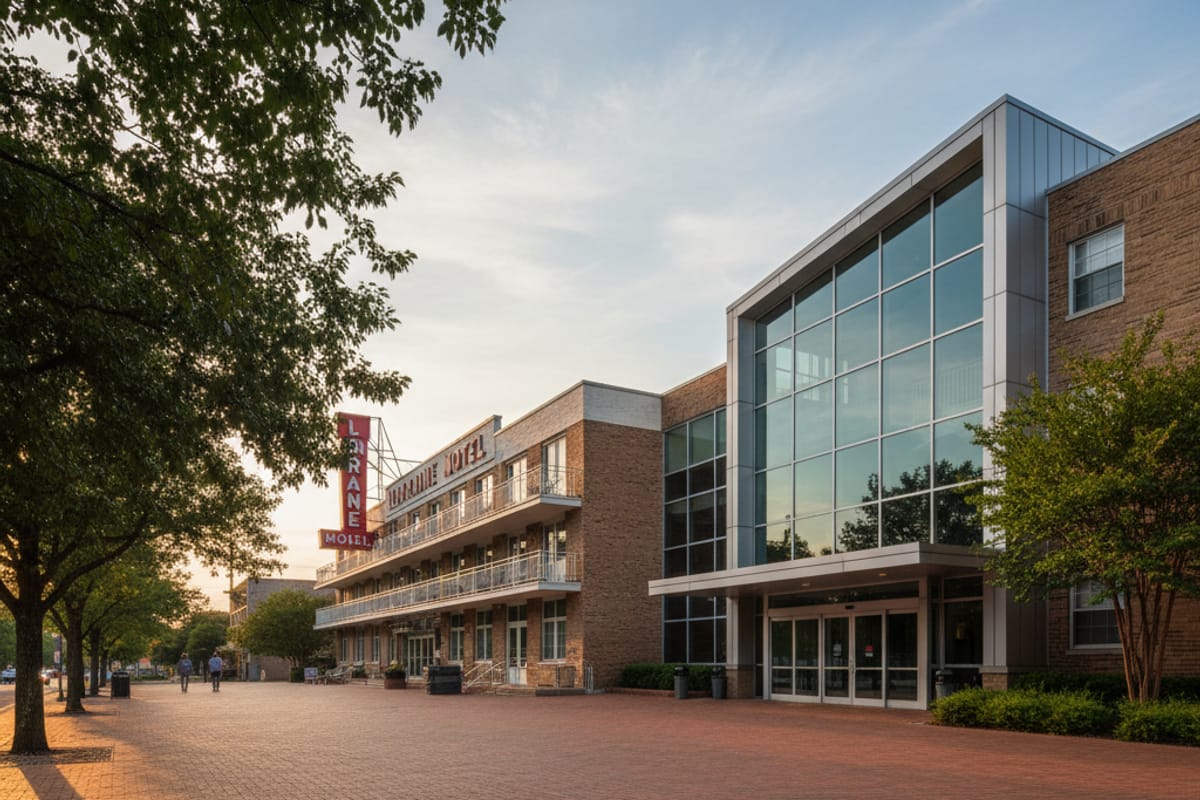 The Lorraine Motel — preserved as a memorial and one of the most powerful museums in America.
Saturday Evening: Beale Street and Live Blues
Beale Street after dark is Memphis at full volume. The three-block stretch between Second and Fourth Streets closes to traffic on weekend evenings and becomes a pedestrian boulevard of neon signs, open doors, and live blues pouring out of every venue. This is where W.C. Handy codified the blues, where B.B. King played before the world knew his name, and where you are about to spend one of the most memorable evenings of your trip.
Start the evening with dinner at Charlie Vergos' Rendezvous, which is technically not on Beale Street but close enough — it is in an alley off General Washburn Alley, a short walk from Beale. The basement dining room has been serving its iconic dry ribs since 1948. Order a full slab of dry ribs, a beer, and red beans. The ribs here are charcoal-cooked rather than smoked, with a proprietary spice rub that has a vinegary kick. This is your second BBQ experience of the day (after Central for lunch), and the contrast between the two styles is one of the pleasures of a Memphis food weekend. Dinner at Rendezvous costs about $25-35 per person and takes about an hour.
After dinner, walk to Beale Street. Most clubs do not charge a cover, though they require a one-drink minimum. Start at B.B. King's Blues Club, the anchor venue with a house band that plays nightly and touring acts on weekends. The band is excellent, the sound system is professional, and the dance floor fills up after 10 PM. Across the street, Rum Boogie Café has a great blues band and walls covered with signed guitars. If you want something rowdier, Silky O'Sullivan's has dueling pianos and a beer garden with actual goats wandering around.
The best music on Beale Street is often at the smaller, less flashy venues. King's Palace Café has live jazz and blues in a more intimate setting, and the Cajun food is surprisingly good. Mr. Handy's Blues Hall books older, traditional blues musicians who play the genre the way it was meant to be played — slow, soulful, and devastatingly good. If you can get a seat at Mr. Handy's on a Saturday night, you are in for something special.
For the adventurous: after midnight, when the tourist crowds thin out, some Beale Street venues enter a second mode. The Blues City Café's Band Box room sometimes hosts extended late-night jam sessions where visiting and local musicians sit in. These sets are unplanned, unrehearsed, and sometimes transcendent. If you are still standing at midnight, walk into the Band Box and see who is playing.
The Beale Street experience runs from about 7 PM to 3 AM on weekends. Pace yourself — two to three venues over the course of an evening is ideal. Tip the musicians. They are the reason Beale Street exists, and most of them rely on the tip jar for their income. Five to ten dollars per set is standard and appreciated.
Walk back to your hotel along the Mississippi Riverfront, which is a short walk from the eastern end of Beale Street. The river at night, with the bridge lit up and the Arkansas side glowing in the distance, is a beautiful way to end a day that started at Graceland and ends with the blues ringing in your ears.
Pro tip: Rendezvous is closed on Sundays and Mondays, so Saturday dinner is your window. Get there by 6:30 PM to avoid the longest wait. If you eat dinner earlier, you can start your Beale Street crawl by 8 PM and catch the first sets at most venues.
Sunday Morning: Cooper-Young Brunch
After a late night on Beale Street, Sunday morning calls for a slow, generous brunch in the Cooper-Young neighborhood. Drive or take a rideshare 10 minutes south of downtown to Midtown, and you will find yourself in a tree-lined neighborhood of bungalows, coffee shops, and restaurants that feels a world away from the neon of Beale Street.
The brunch destination depends on your mood. If you want something indulgent and creative, The Beauty Shop is a restaurant built inside a former beauty salon, with the original hair dryer chairs still mounted on the wall. The weekend brunch menu includes dishes like lemon ricotta pancakes, shrimp and grits, and a fried chicken biscuit that is one of the best breakfast sandwiches in Memphis. Brunch runs $15-22 per person, and the cocktails — especially the Bloody Mary — are excellent.
If you want something simpler and more classic, Cafe 1912 on Cooper Street serves French-inspired pastries, quiche, and croissants that are baked fresh daily. The garden patio is one of the most pleasant breakfast spots in Memphis, and the coffee is serious. Expect a 20-30 minute wait on Sunday mornings, but the patio makes the wait enjoyable.
For a more soulful experience, drive to Alcenia's in downtown Memphis instead. Miss Alcenia may hug you when you walk in, the menu is handwritten, and the food — fried chicken, salmon croquettes, sweet potato pancakes, and the famous Ghetto Aid punch — is soul food at its most joyful. Alcenia's is only open for breakfast and lunch, and Sunday morning is one of the best times to go.
Whichever brunch spot you choose, spend the post-meal hour walking Cooper-Young. Browse Burke's Book Store, which has been open since 1875 and has a wonderful local section. Poke through Flashback for vintage clothing and furniture. Walk past the murals, the string lights, and the neighborhood gardens. Cooper-Young on a Sunday morning, with church bells in the distance and the smell of coffee and biscuits in the air, is Memphis at its most charming.
If you need coffee to power through the morning, Java Cabana on Young Avenue is the neighborhood coffee shop, or try City and State if you swing back through South Main. Both serve excellent espresso and have the kind of relaxed Sunday morning energy that Memphis does better than almost any other Southern city.
By late morning, you should be fed, caffeinated, and ready for your final Memphis museum experience.
Pro tip: The Beauty Shop takes brunch reservations and you should make one, especially for Sunday. Cafe 1912 is first-come, first-served. Alcenia's is closed on Mondays, so Sunday is your last chance — arrive before 10 AM for the shortest wait.
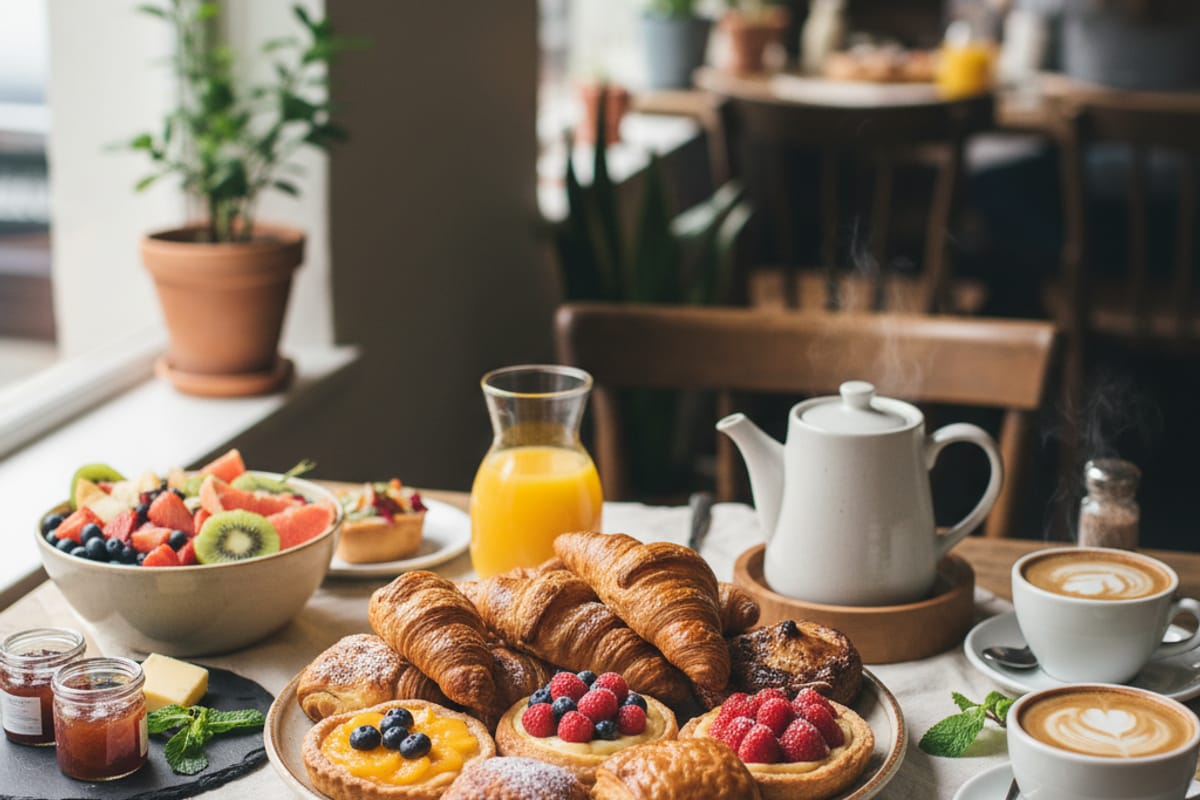 Sunday brunch in Cooper-Young — the perfect antidote to a late night on Beale Street.
Sunday Afternoon: Stax Museum and Soulsville
Your Sunday afternoon belongs to the Stax Museum of American Soul Music, one of the most underrated museums in America. Located in the Soulsville neighborhood of South Memphis, about 15 minutes from Cooper-Young, the Stax Museum tells the story of the record label that gave the world Otis Redding, Isaac Hayes, Sam and Dave, Booker T. and the MGs, the Staple Singers, and a catalog of recordings that defined the sound of American soul music.
The museum is built on the exact site of the original Stax Records studio, a converted movie theater where these recordings were made. The exterior recreates the original building. Inside, the collection is extraordinary: Isaac Hayes' gold-plated Cadillac Eldorado with its fur-lined interior, original studio equipment, costumes, instruments, and interactive exhibits that let you understand how the Stax sound was constructed.
What elevates the Stax Museum above a typical music museum is the way it weaves the music into the broader story of Memphis and America. Stax Records was one of the first integrated workplaces in the South. The house band, Booker T. and the MGs, was a mixed-race group recording together during the height of segregation. The museum does not shy away from this context — it embraces it, showing how the music was inseparable from the social and political forces that surrounded it. The parallel with the Civil Rights Museum you visited yesterday is powerful: both institutions tell the story of how Memphis shaped America, one through activism and one through art.
Plan to spend about two hours at the Stax Museum. Admission is approximately $15 for adults. The museum is well-designed and moves at a good pace — the exhibits build on each other, and the audio stations let you hear the music in context. The final room, which plays a montage of Stax performances, is a perfect ending.
After the museum, take a drive down McLemore Avenue, the street where the studio stood. The neighborhood is modest and historically underinvested, but it is the birthplace of some of the most joyful music ever recorded. If it is a Sunday, you might consider stopping at the Full Gospel Tabernacle Church on South Hale Street, where Reverend Al Green — yes, that Al Green — still occasionally preaches. The service is open to the public and includes the kind of gospel singing that will leave you speechless. Call ahead to confirm whether Al Green will be presiding, as his schedule varies.
For a late lunch after the museum, drive to Payne's Bar-B-Q on Lamar Avenue for your third and final Memphis BBQ experience. The chopped pork sandwich at Payne's — pork, slaw, and tangy sauce on white bread for about six dollars — is the perfect farewell meal. It is the BBQ equivalent of Memphis itself: no flash, no frills, just substance and soul. Cash only, and they close when the meat runs out, so do not wait too long.
With Graceland, Sun Studio, the Civil Rights Museum, Beale Street, Cooper-Young, and Stax behind you, your Memphis weekend is complete. You have heard the blues where they were born, eaten BBQ at three of the greatest joints in America, stood in the room where rock and roll was invented, and visited a museum that changed the way you think about American history. Memphis does not try to impress you with polish. It impresses you with authenticity, and that is why people who visit once almost always come back.
Pro tip: If you time it right, you can visit the Stax Museum, catch the end of Al Green's service at Full Gospel Tabernacle, and hit Payne's for a late lunch all in the same afternoon. The three locations are within a 10-minute drive of each other.
Budget Breakdown: What a Memphis Weekend Costs
Memphis is one of the most affordable weekend destinations in the South, and you can have a deeply rich experience without spending a fortune. Here is a realistic budget breakdown for the itinerary above, per person assuming double occupancy.
Hotels in downtown Memphis or on South Main run $100-160 per night on weekends. The Guest House at Graceland is the splurge option at $180-250 per night. Budget chains on Elvis Presley Boulevard are available for $70-90. For this itinerary, two nights comes to $200-320 per person for a mid-range downtown hotel, or $140-180 per person for a budget option.
Food is where Memphis shines as a value destination. Saturday lunch at Central BBQ is $14-18 per person with a drink. Saturday dinner at Rendezvous is $25-35. Sunday brunch at The Beauty Shop is $15-22. Sunday lunch at Payne's is $6-8. Add in drinks on Beale Street (budget $25-40 for an evening), coffee and snacks ($10-15 per day), and your total food budget for the weekend is $100-150 per person. That is astonishingly low for the quality of what you are eating.
Attractions have fixed prices that are reasonable by any standard. Graceland basic tour is $45. Sun Studio is $15. The National Civil Rights Museum is $18. The Stax Museum is $15. Beale Street itself is free — the clubs do not charge cover, though there is usually a one-drink minimum. Total attractions budget: $93 per person for all four major sites.
Transportation depends on your approach. If you are driving, parking at downtown hotels runs $15-25 per night, and attraction parking is $5-15 per stop. Total parking for the weekend is about $50-70. If you are relying on rideshares, budget $60-80 for the weekend's rides between Graceland, Sun Studio, Cooper-Young, the Stax Museum, and Beale Street. The free shuttle between Graceland, Sun Studio, and the Rock 'n' Soul Museum can save you some of that.
Realistic total for a Memphis weekend: $450-650 per person for a comfortable trip, or $350-500 per person on a tighter budget. That includes two nights in a hotel, every major attraction, four restaurant meals, drinks on Beale Street, and transportation. For what you get — Graceland, the birthplace of rock and roll, one of America's most important civil rights sites, world-class BBQ, live blues on Beale Street, and the Stax Museum — this is one of the best values in American travel.
Memphis does not charge a premium for its culture. The music is free on Beale Street. The BBQ sandwiches are six dollars. The history is told honestly and accessibly. This is a city that shares itself generously, and a weekend here will give you more meaningful experiences per dollar than almost anywhere else in America.
One final tip: if you can extend your trip to Monday, the Civil Rights Museum offers free admission from 3 to 5 PM. That saves you $18 and lets you move the museum visit from your packed Saturday to a more relaxed Monday afternoon. It also frees up Saturday afternoon for additional exploration — the Big River Crossing, a pedestrian bridge that lets you walk across the Mississippi River to Arkansas and back, is free and spectacular at sunset.
Why Trust This Guide
Recommendations from locals across 240+ US cities via Recommended.app community data.
Explore More
This guide is part of our Memphis collection. Explore more guides for Memphis →
Memphis has 228 verified businesses on Recommended.app across 75 categories.
Hidden Gems Weekly
3 hidden gems, 2 local quotes, 1 home hack — every Monday. Free forever.
Unsubscribe anytime. No spam.
More from Travel Guides
 Travel Tips
Memphis on a Budget: Cheap BBQ, Free Music & Southern Soul
 Travel Tips
Expedia vs Hotels.com 2026: Which Actually Saves You More Money?
 Travel Guide
Best Hotels in Miami 2026: South Beach to Wynwood (With Real Price Ranges)
 Travel Guide
Best Hotels in Nashville 2026: From Budget East Nashville to Downtown Luxury
 Travel Guide
Best Hotels in Las Vegas 2026: From Budget to High Rollers (With Real Price Data)
 Outdoor & Nature