
Last updated March 15, 2026 by the Recommended.app research team.
French Quarter vs. Frenchmen Street: Know the Difference
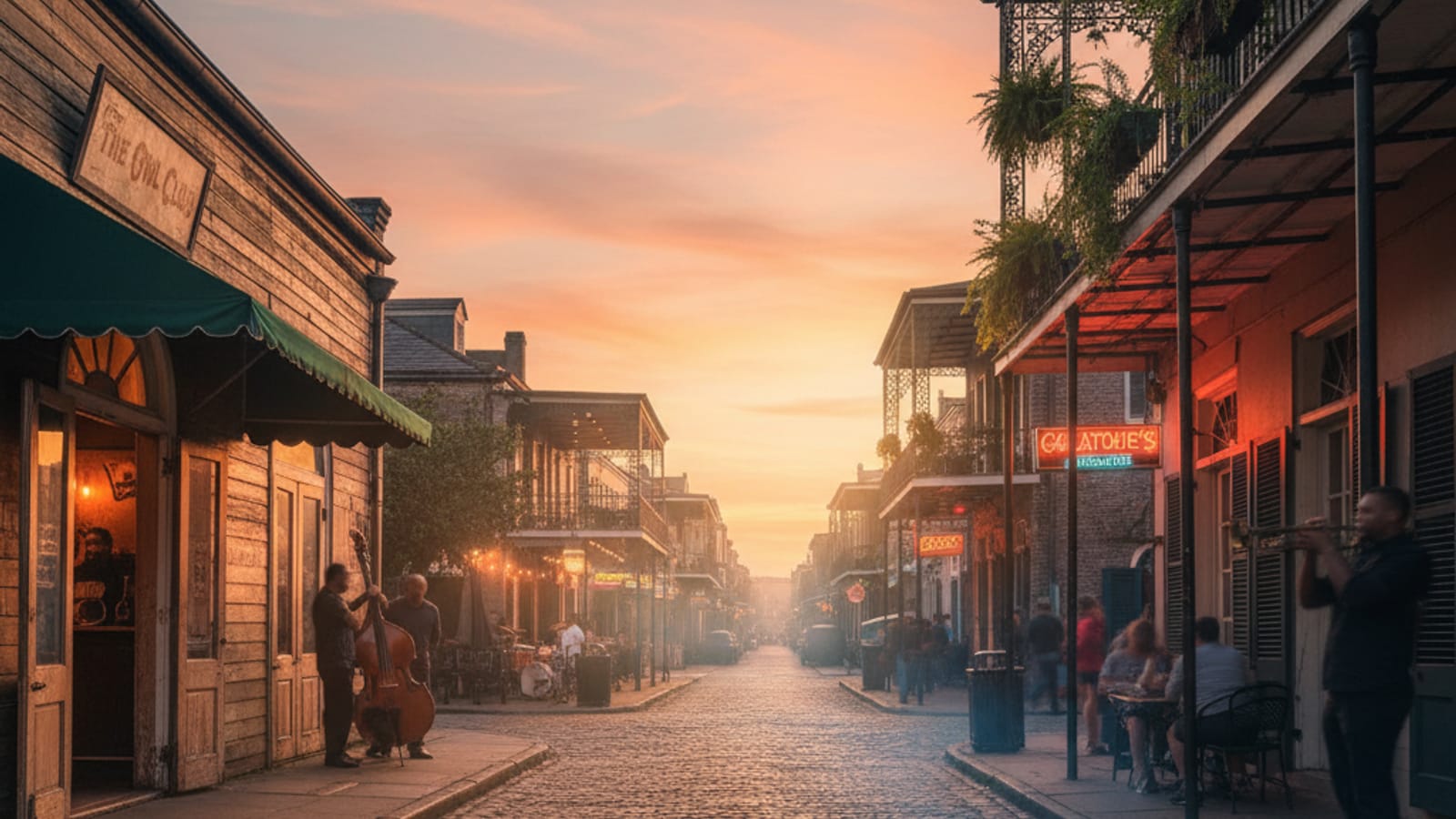
Here's the single most important thing to understand about New Orleans: the French Quarter is for tourists, and Frenchmen Street is for everyone else. That's an oversimplification, but it's directionally true. Bourbon Street — the main drag of the French Quarter — is a neon-lit corridor of frozen daiquiri shops, cover bands, and bachelor parties. It's worth walking once for the spectacle, but you'll be over it in 30 minutes.
Frenchmen Street, located just east of the Quarter in the Marigny neighborhood, is where New Orleanians actually go to hear music. The clubs here are intimate, the musicians are world-class, and most venues have no cover charge. The Spotted Cat Music Club is the gold standard — a tiny, packed room where brass bands and jazz trios play every night starting around 6 PM. d.b.a. next door has a slightly bigger space and tends to book blues and funk acts. The Maison is three floors of different genres happening simultaneously.
Now, the French Quarter isn't all tourist traps. Jackson Square is genuinely beautiful, especially at golden hour when the street performers are out. St. Louis Cathedral is the oldest cathedral in continuous use in North America, and the Cabildo museum next door is where the Louisiana Purchase was signed. Royal Street (one block from Bourbon) is lined with antique shops, art galleries, and street musicians playing jazz with no amplification — just talent echoing off 200-year-old buildings.
The key is knowing when to be in the Quarter. Early morning is magical — grab a coffee at Café Du Monde (more on that below), walk the empty streets, watch the delivery trucks rumble over the cobblestones. By noon it starts getting crowded. By 8 PM on a weekend, Bourbon Street becomes a zoo. That's when you head to Frenchmen.
Pro tip: Frenchmen Street gets crowded after 10 PM on weekends. Show up at 7 PM for a relaxed set, grab a spot near the front, and you'll have the best seat in the house. Most clubs don't charge cover before 9 PM either.
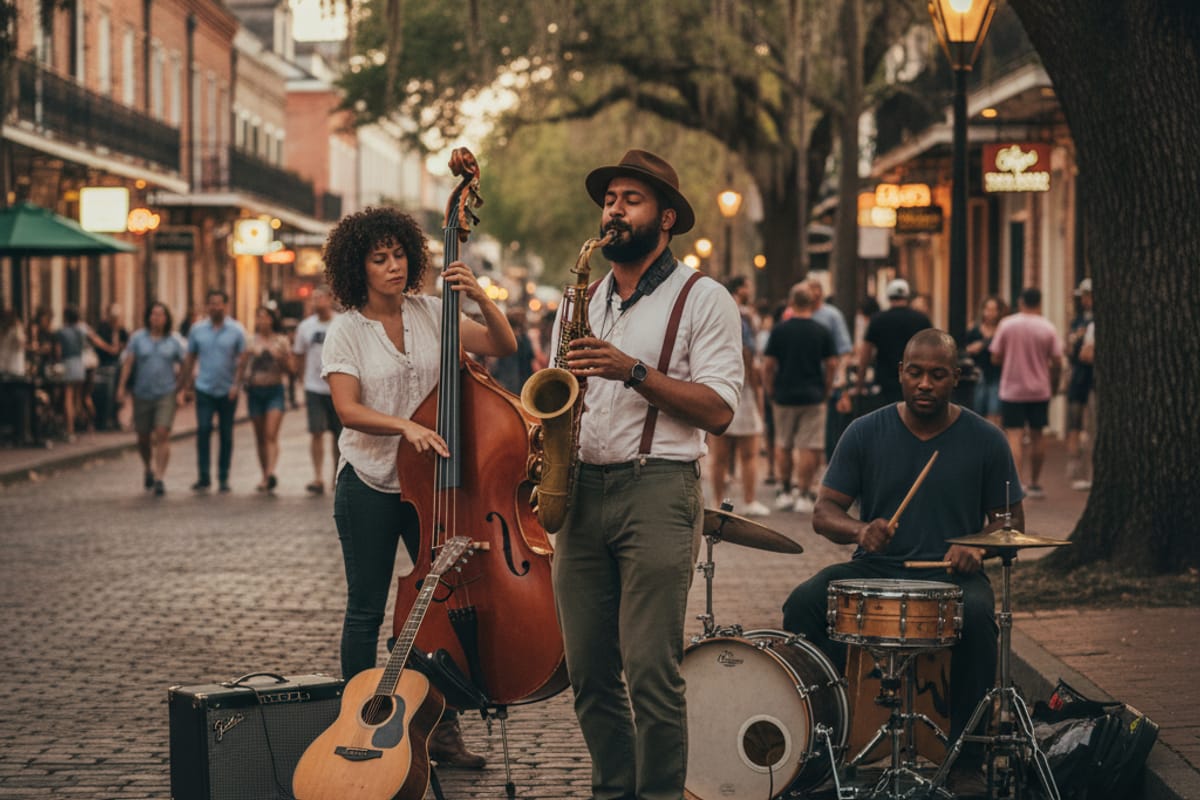 Frenchmen Street — where the real music lives.
The Food: Where to Eat Like a Local (Not a Tourist)
New Orleans might be the best food city in America, and that's not hyperbole. The culinary tradition here is centuries old — a fusion of French, Spanish, African, Caribbean, and Cajun influences that created something entirely unique. But you need to know where to go, because the Quarter is full of mediocre restaurants coasting on location.
Let's start with the legends. Commander's Palace in the Garden District is the restaurant that trained Emeril Lagasse, Paul Prudhomme, and dozens of other famous chefs. The 25-cent martini lunch is real — order a three-course lunch for about $40-50 and add martinis for a quarter each (limit three). The turtle soup and the pecan-crusted Gulf fish are non-negotiable. Dress code is business casual — no shorts, no flip-flops.
For po'boys, skip the French Quarter shops and go to Parkway Bakery & Tavern in Mid-City. The roast beef po'boy at Parkway is a religious experience — slow-cooked beef swimming in gravy on Leidenheimer bread that's crispy on the outside and pillowy inside. The shrimp po'boy is also outstanding. Plan for a 20-30 minute wait on weekends, but the line moves fast.
Café Du Monde is touristy, yes, but it's also a genuine institution that's been serving beignets and chicory coffee since 1862. Go at 7 AM on a weekday to avoid the hour-long lines. Order the beignets (they only serve one thing — it's beignets or nothing) and a café au lait. You will be covered in powdered sugar. Accept this.
For something more adventurous, Cochon on Tchoupitoulas Street does Cajun cuisine that'll make you rethink everything you thought you knew about Southern food. The cochon (whole roasted pig with cracklins) is the signature, but the rabbit and dumplings and the Louisiana shrimp and grits are phenomenal. Dinner for two with drinks runs about $80-100.
Mosca's, about 30 minutes outside the city in Avondale, is a legendary Italian-Creole roadhouse that's been family-run since 1946. The chicken à la grande and the Italian oysters are unlike anything you'll find anywhere else. Cash only, no reservations for small parties, and the building looks like it might fall down — that's part of the charm.
For breakfast, don't sleep on the Warehouse District. Ruby Slipper Café has multiple locations, but the original on O'Keefe is the best. The BBQ shrimp and grits and the eggs Cochon de Lait are both outstanding. Expect a 30-45 minute wait on weekends — put your name in and walk around the neighborhood.
Pro tip: Commander's Palace 25-cent martini lunch is only available on weekdays. Make a reservation at least a week in advance — this isn't a walk-in kind of place. And seriously, don't wear shorts. They will turn you away.
Garden District & Magazine Street: The Beautiful Walk
The Garden District is the New Orleans that Hollywood puts in movies — enormous antebellum mansions draped in live oaks and Spanish moss, wrought-iron fences, and streets so pretty they feel like a film set. The best way to experience it is on foot. Start at the Cemetery of Lafayette No. 1 on Washington Avenue (the above-ground tombs are iconic), then walk down Prytania Street past the mansions.
You'll pass the Buckner Mansion (used in American Horror Story: Coven), the Brevard-Wisdom House (also known as the Rosegate House, once owned by novelist Anne Rice), and dozens of other jaw-dropping homes. Free walking tours run daily — the Save Our Cemeteries tour is particularly good and costs about $25.
Magazine Street runs parallel to St. Charles Avenue for about six miles and is the best shopping street in New Orleans. This isn't mall shopping — it's independently owned boutiques, vintage stores, record shops, and art galleries. Funky Monkey has curated vintage clothing. Trashy Diva does retro-style dresses and lingerie. Aidan Gill For Men is an old-school barbershop where you can get a hot-towel shave and a whiskey.
For a break, duck into Stein's Market & Deli on Magazine for a sandwich — it's a Jewish deli in the middle of the Deep South that somehow works perfectly. The Rachel (pastrami, coleslaw, Swiss, Russian dressing on rye) is the move. Or hit District Donuts Sliders Brew a few blocks down for craft doughnuts and espresso.
The St. Charles Streetcar runs along St. Charles Avenue, one block from Magazine Street, and is the oldest continuously operating streetcar line in the world. It costs $1.25 per ride (exact change or a Jazzy Pass), and riding it from Canal Street to the Riverbend takes about 45 minutes. It's one of the best cheap tours in any American city — you'll pass Tulane, Loyola, Audubon Park, and the entire Garden District from a wooden streetcar built in the 1920s.
Pro tip: The St. Charles Streetcar doesn't take credit cards. Buy a Jazzy Pass ($3 for a day pass) at any Walgreens or the RTA office. It works on all streetcars and buses, and it's way more convenient than digging for exact change.
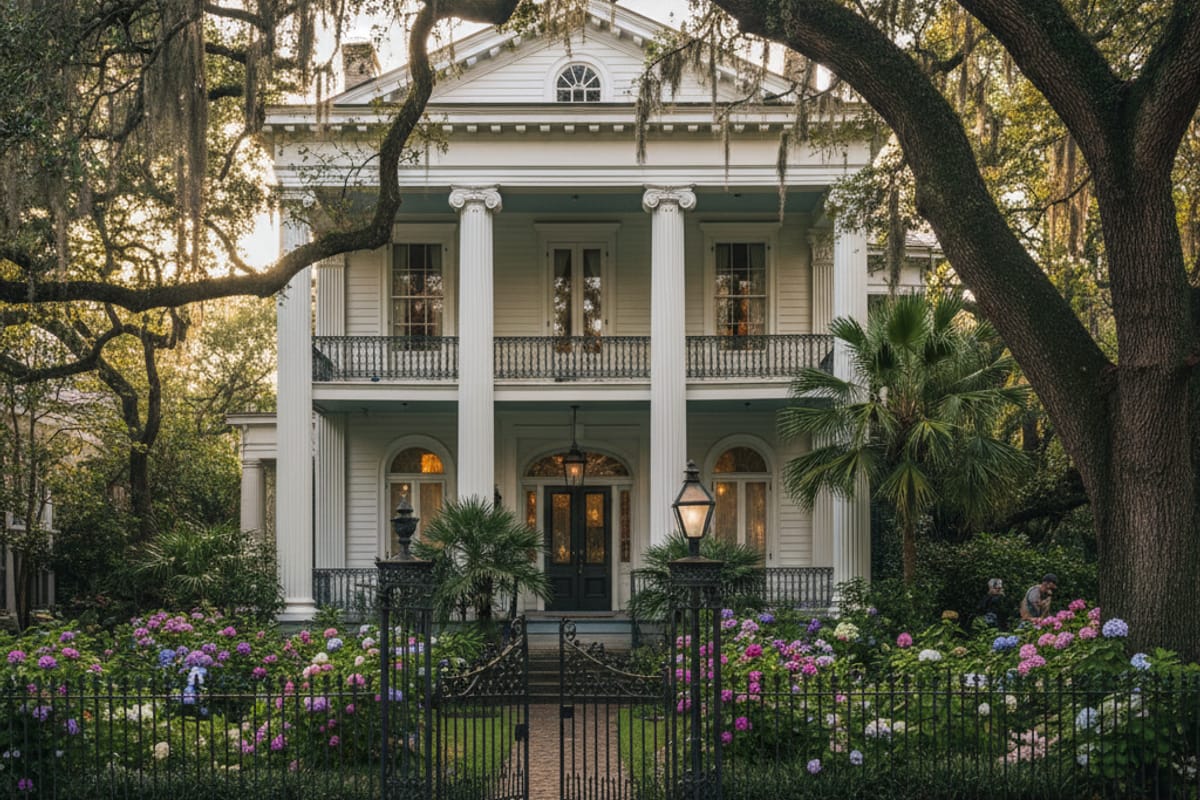 Garden District mansions — worth every step of the walk.
The Jazz Clubs & Music Scene: A Night-by-Night Guide
New Orleans is the birthplace of jazz, and live music isn't something you seek out here — it finds you. Street musicians on Royal Street can be as good as anyone on a stage. Brass bands march through neighborhoods on Sunday afternoons. Second line parades happen almost every weekend from September through May.
For sit-down jazz, Preservation Hall in the French Quarter is the real deal. It's a tiny, 100-year-old venue with no drinks, no food, and wooden benches — just incredible traditional jazz in an intimate space. Shows start at 8 PM, 9 PM, and 10 PM nightly. Tickets are $25-50 online or $20 cash at the door (if seats are available, which they often aren't). Buy in advance.
The Spotted Cat on Frenchmen Street is where locals go for nightly jazz, swing, and brass band shows. There's no cover charge most nights, but there's a one-drink minimum and the bartenders remember if you don't tip. Show up before 8 PM to get a spot. The energy here on a Friday night is electric — people dancing in the aisles, musicians feeding off the crowd, sweat dripping from the ceiling.
Snug Harbor, also on Frenchmen, is the premium jazz club — table seating, a real sound system, and nationally known artists. Tickets are $25-45 depending on the act. Charmaine Neville plays here regularly, and if you can catch her, do it.
For something completely different, check out Tipitina's Uptown. This is the legendary venue where Professor Longhair, the Neville Brothers, and Dr. John built their careers. The music tends toward funk, R&B, and rock, and the vibe is a sweaty, joyful dance party. Cover varies from free to $30 depending on the act.
Bulldog on Magazine Street does a live jazz brunch on Sundays that's one of the city's best-kept secrets. Sit on the patio, order a Bloody Mary, and listen to a trio play while you eat. It's the most New Orleans thing you can do on a Sunday morning.
Pro tip: Second line parades are free, public, and absolutely incredible. Check WWOZ's calendar (wwoz.org/programs/second-line) for the schedule. These are neighborhood brass band parades that wind through the streets — just follow the music and the dancing. Wear comfortable shoes and bring cash for the food and drink vendors who follow the parade.
Cocktail Culture: The City That Invented the Cocktail
New Orleans has a legitimate claim to being the birthplace of the American cocktail. The Sazerac — rye whiskey, Peychaud's bitters, absinthe, sugar — was invented here in the 1850s and is the official cocktail of the city. The Sazerac Bar at the Roosevelt Hotel is the place to drink one. The bar itself is gorgeous — Art Deco murals, dark wood, white-jacketed bartenders who take their craft seriously. A Sazerac here costs about $16, and it's worth every penny.
The French 75 Bar at Arnaud's restaurant is another must. Named after the French 75 cocktail (gin, champagne, lemon juice, sugar), this bar feels like stepping into the 1920s. The bartenders here are among the best in the city, and the French 75 itself is crisp and perfect. Cocktails run $14-18.
Pat O'Brien's is famous for the Hurricane — a sweet, rum-based drink that comes in a distinctive glass you can keep. It's touristy, absolutely, but the courtyard with the flaming fountain is genuinely beautiful, and one Hurricane is a rite of passage. Just don't have three of them — they're deceptively strong and you will regret it.
For modern cocktails, Cure on Freret Street was one of the first craft cocktail bars in New Orleans and it's still one of the best. The menu changes seasonally, the bartenders know their stuff, and the atmosphere is dark and moody without being pretentious. Cocktails are $13-16. Bar Tonique on N. Rampart Street is similar in quality but more casual — think neighborhood bar with world-class drinks.
Cane & Table on Decatur Street does Caribbean-inspired cocktails in a gorgeous courtyard setting. The rum program is outstanding, and the proto-tiki drinks (their term for pre-tiki-era Caribbean cocktails) are unlike anything you'll find elsewhere. Try the Missionary's Downfall — rum, peach, mint, pineapple, falernum. It's dangerous because it tastes like juice.
For a truly unique experience, Lafitte's Blacksmith Shop on Bourbon Street is the oldest bar in America, built between 1722 and 1732. It's lit entirely by candlelight, has no air conditioning in the front room, and serves a purple voodoo drink that locals pretend to hate but secretly enjoy. Skip the rest of Bourbon Street, but don't skip Lafitte's.
Pro tip: New Orleans has open container laws that work in your favor — you can walk around with a drink in a plastic cup (no glass). When you leave a bar, ask for a 'go cup.' This is normal and expected. Just don't bring glass containers onto the street.
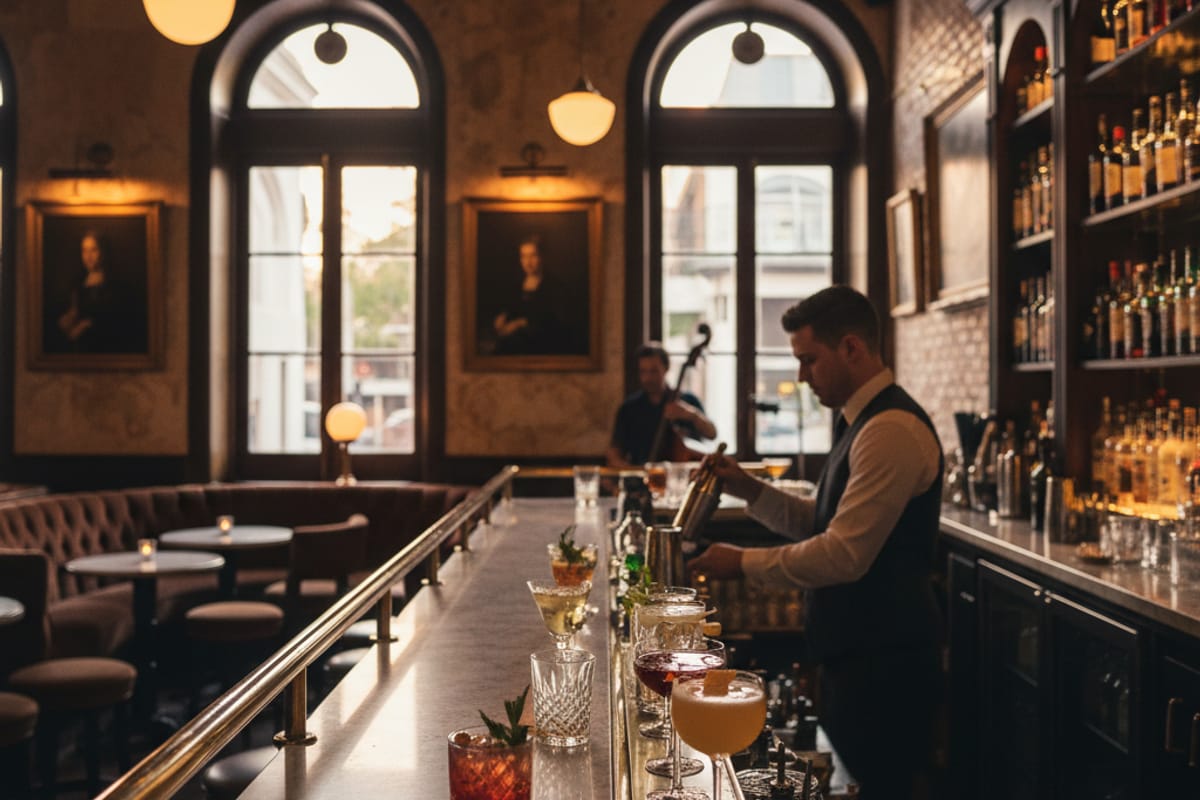 The Sazerac — invented here, perfected here.
Budget Breakdown & Practical Tips
New Orleans is surprisingly affordable compared to other major food cities. Here's what things actually cost:
Hotels: The French Quarter and CBD (Central Business District) run $120-250/night depending on the season. The Marigny and Bywater neighborhoods have great Airbnbs for $80-150/night and put you closer to Frenchmen Street. Avoid visiting during Mardi Gras or Jazz Fest unless you're specifically going for those events — hotel prices triple and everything is packed.
Food: You can eat incredibly well for $30-50/day. A po'boy at Parkway is $12-15. Beignets at Café Du Monde are $4.29 for an order of three. A plate lunch (meat, two sides, bread) at a local spot like Coop's Place or Mothers runs $12-18. Commander's Palace lunch is $40-50 per person. Dinner at Cochon is $40-50 per person with drinks.
Drinks: Cocktails at high-end bars are $14-18. Draft beer at neighborhood bars is $4-6. A frozen daiquiri from a walk-up window is $5-8. Go cups are free — just ask.
Music: Most Frenchmen Street clubs have no cover. Preservation Hall is $20-50. Tipitina's varies from free to $30. Street music is always free.
Transportation: The streetcar is $1.25 per ride or $3 for a day pass. Uber/Lyft rides within the city are typically $8-15. Walking is the best way to see the Quarter, Garden District, and Frenchmen — everything is close together.
Realistic 3-day budget: $600-900 per person including hotel, food, drinks, music, and transportation. New Orleans rewards people who walk, eat at local spots, and listen to free music on the street. You can have an absolutely world-class trip here without spending a fortune.
Best time to visit: October through early December is the sweet spot — the brutal summer humidity has broken, hotel prices are reasonable, and the city is alive with festivals. March through May is also excellent but more crowded (and more expensive during Jazz Fest, which runs late April to early May). Summer (June-August) is hot, humid, and prone to afternoon thunderstorms, but hotel deals are excellent and the crowds are thin.
Why Trust This Guide
Recommendations from locals across 240+ US cities via Recommended.app community data.
Explore More
Related guides:
This guide is part of our New Orleans collection. Explore more guides for New Orleans →
New Orleans has 174 verified businesses on Recommended.app across 72 categories.
Hidden Gems Weekly
3 hidden gems, 2 local quotes, 1 home hack — every Monday. Free forever.
Unsubscribe anytime. No spam.
More from City Guides
 City Guide
New Orleans Hidden Gems: Secret Spots the Guidebooks Miss
 City Guide
We Asked New Orleans Locals Where They Actually Eat — Here's What They Said
 City Guide
New Orleans on a Budget: Free and Cheap Things to Do
 City Guide
The Perfect Weekend in New Orleans: A 2-Day Itinerary
 Home Services
Water Damage Restoration Near Me: What to Do in the First 24 Hours (2026 Guide)
 Food & Dining