
Last updated March 14, 2026 by the Recommended.app research team.
Why Florida Springs Are Worth Skipping the Beach For
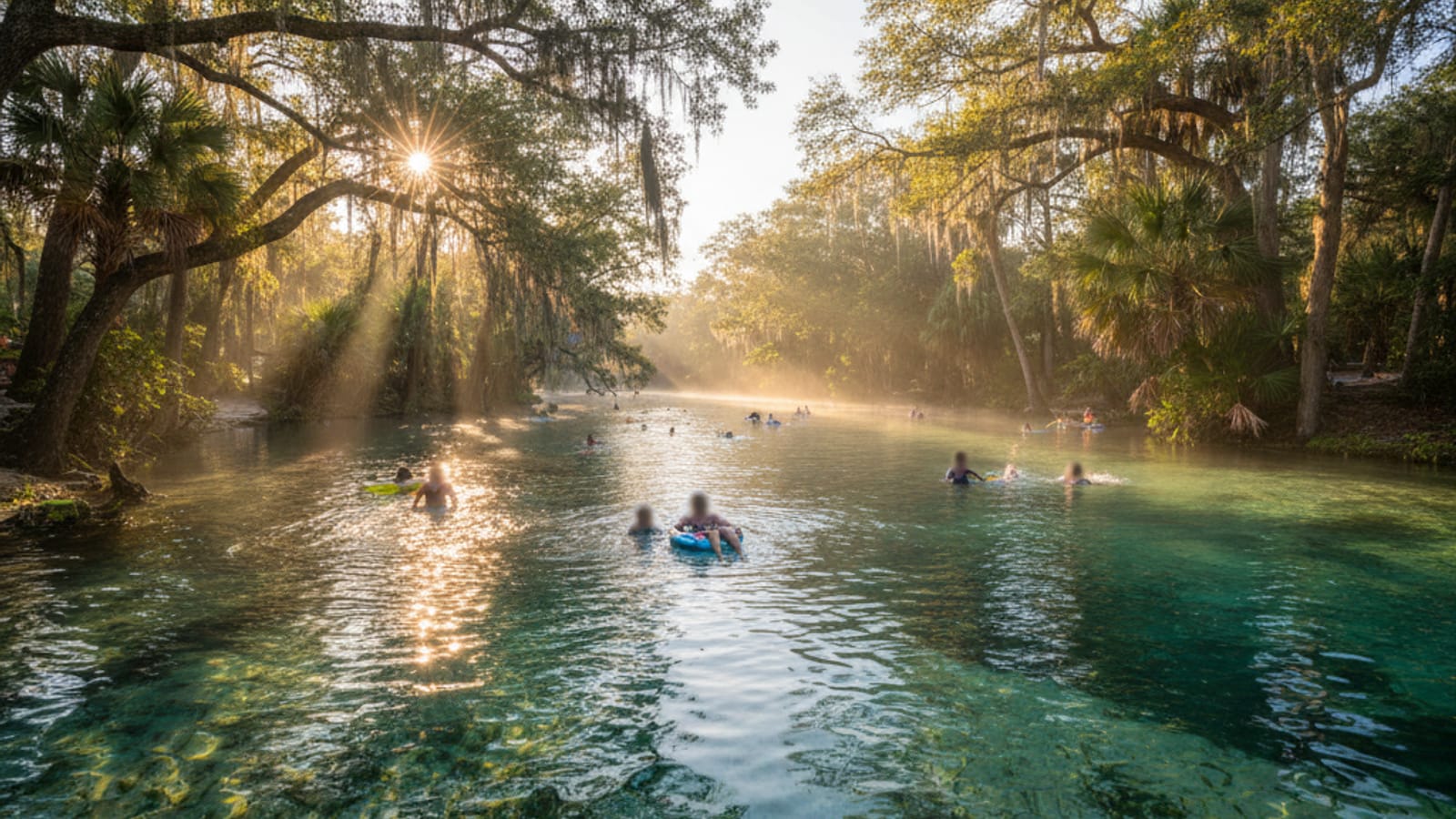
Florida has over 700 freshwater springs — more than any other state. The water is filtered through limestone aquifers for decades before emerging at the surface, which means it's absurdly clear. You can see every fish, turtle, and blade of grass on the bottom from 30+ feet above. The temperature is a constant 68–72°F year-round, which feels refreshing in summer and surprisingly warm in winter.
Most Orlando visitors have no idea these springs exist, which means they're significantly less crowded than the beaches (at least on weekdays). Within 30–90 minutes of Orlando, you can swim in water so clear it looks like a swimming pool carved into the jungle.
Here's every spring worth visiting, ranked by distance from downtown Orlando.
Wekiwa Springs State Park (30 Minutes)
The closest major spring to Orlando and the best option if you only have a few hours. The spring head is a large swimming area surrounded by a sandy beach and towering oaks. The water is emerald green and crystal clear.
What to do: Swim in the spring head (the main attraction). Rent a canoe or kayak ($20 for 2 hours) and paddle down the Wekiva River — you'll likely see turtles, herons, and possibly otters. Hike the 13 miles of trails through sand pine scrub forest.
Practical info: Entry is $6 per vehicle (up to 8 people). Open 8 AM to sundown. No tubes or inflatables allowed in the spring head. There's a concession stand but bringing a cooler is smarter. Weekends hit capacity by 10–11 AM in summer — arrive early or go on a weekday.
Best for: Families, first-time spring visitors, anyone short on time.
Pro tip: The Wekiva River canoe trail is where the real magic is. The spring head gets crowded but the river is peaceful — paddle upstream from the canoe launch for 30 minutes and you'll have near-total solitude.
Kelly Park / Rock Springs (40 Minutes)
This is the spring that goes viral on social media. Rock Springs feeds a lazy-river-style spring run where you can tube through a jungle canopy for about 30 minutes. The water is shallow, clear, and gentle — you just float and watch the tree canopy pass overhead.
What to do: Tube the spring run (the main event). The run is about 0.5 miles — most people do it 2–3 times. You can also swim at the spring head, hike, and picnic. There's a small camping area if you want to stay overnight.
Practical info: Entry is $5 per vehicle. Open 8 AM–6 PM (last entry at 4 PM in winter). Bring your own tube (any size) or rent one from vendors outside the park ($5–$10). No glass containers. No alcohol.
The catch: Kelly Park is tiny and hits capacity fast. On weekends from March through October, the park closes to new vehicles by 9:30–10:00 AM. This is not an exaggeration. If you're going on a weekend, be in line by 8:00 AM.
Best for: Tubing enthusiasts, Instagram-worthy photos, anyone who loves lazy rivers.
Pro tip: Tuesday through Thursday are the sweet spot — warm enough to enjoy, empty enough to actually get in. If you must go on a weekend, arrive at 7:45 AM. Once the park closes, it doesn't reopen until cars leave.
Blue Spring State Park (45 Minutes)
Blue Spring is famous for one thing: manatees. From November through March, hundreds of West Indian manatees migrate into the spring run to escape the cold St. Johns River. On peak days in January, you can see 300+ manatees from the boardwalk. It's one of the most incredible wildlife experiences in the eastern United States.
The catch: Swimming is closed during manatee season (mid-November through mid-March). The rest of the year, the spring run is open for swimming and it's gorgeous — a 2,600-foot-long run with visibility of 100+ feet.
What to do: During manatee season, walk the boardwalk and watch from the viewing platforms. The manatee count is posted daily on the park's website. Outside manatee season, swim in the spring run, kayak the St. Johns River ($25 for 2 hours), or hike the trails.
Practical info: Entry is $6 per vehicle. The park hits capacity on peak manatee days — arrive before 9 AM. There's a small campground and cabin rentals.
Best for: Wildlife lovers, photographers, families with young kids who want to see manatees up close.
Silver Springs State Park (90 Minutes)
Silver Springs is where glass-bottom boats were invented in 1878. Six Tarzan movies were filmed here. The spring produces 550 million gallons of water per day, making it one of the largest artesian springs in the world.
The clarity is otherworldly — the spring vents are 80 feet below the surface and visible from a kayak. Fish swim through the gin-clear water like they're flying. Turtles rest on submerged logs that look like they're floating in air.
What to do: Rent a kayak ($25 for 2 hours) and paddle the spring run — this is the #1 experience here. The glass-bottom boat tour ($14 for adults) is the classic experience and great for families. Hike or bike the 10+ miles of trails.
Practical info: Entry is $2 per person (one of the cheapest parks in the system). Kayak rentals are at the in-park concessionaire — no reservation needed on weekdays, reserve ahead for weekends. Swimming is allowed in a designated area of the Silver River but not in the main spring.
Best for: Kayakers, photographers, anyone who wants the clearest water they've ever seen.
Pro tip: Go early morning for the best water clarity and wildlife viewing. The springs are clearest before boat and kayak traffic stirs up the bottom. A 9 AM kayak launch gives you the best light and the emptiest water.
More Springs Worth the Drive
If you're a spring junkie or have extra days, these are worth the trip:
Alexander Springs (75 minutes): A large, deep spring pool surrounded by subtropical forest. One of the few springs where you can actually swim laps. Great for snorkeling — the spring vent is visible from the surface. Entry $6 per vehicle.
De Leon Springs State Park (60 minutes): Famous for the Old Spanish Sugar Mill restaurant inside the park, where you cook your own pancakes on a griddle built into your table. The spring is beautiful for swimming. Entry $6 per vehicle.
Rainbow Springs State Park (90 minutes): The spring head is spectacular — multiple spring vents creating a turquoise pool. Tubing the Rainbow River is a 2-hour float through pristine Florida wilderness. Tube rentals available outside the park ($15–$20).
Ginnie Springs (2 hours): Privately owned and the most popular spring for scuba diving and cave diving in Florida. Seven springs on one property. Camping, tubing, kayaking, and the clearest water in the state. Entry $15–$20 per person (more expensive because it's private).
Essential Spring Trip Tips
A few things every first-time spring visitor needs to know:
Don't wear sunscreen in the springs. Chemical sunscreen damages the delicate spring ecosystems. Wear a rash guard, sun hat, and UV-protective clothing instead. Mineral (zinc oxide) sunscreen is the lesser evil if you must use sunscreen.
Bring water shoes. Spring bottoms are rocky limestone. Water shoes ($10–$20 at any Walmart) make a huge difference.
Bring cash. Many spring parks and nearby vendors are cash-only or charge fees for card transactions.
Arrive early — really early. We cannot stress this enough. Popular springs close at capacity on weekends by mid-morning. 8 AM arrival is the rule.
Check water levels. After heavy rain, spring clarity decreases temporarily as tannin-stained river water flows back into the spring runs. Check the park's social media or call ahead after storms.
Respect the wildlife. Don't chase or touch manatees — it's a federal crime (seriously). Don't feed fish or turtles. Stay on marked trails. Pack out all trash.
Why Trust This Guide
Recommendations from locals across 240+ US cities via Recommended.app community data.
Explore More
Related guides:
This guide is part of our Orlando collection. Explore more guides for Orlando →
Orlando has 680 verified businesses on Recommended.app across 85 categories, with an average rating of 4.7 out of 5.
Hidden Gems Weekly
3 hidden gems, 2 local quotes, 1 home hack — every Monday. Free forever.
Unsubscribe anytime. No spam.
More from City Guides
 City Guide
Orlando on a Budget: Free and Cheap Things to Do
 City Guide
Orlando Hidden Gems: Secret Spots the Guidebooks Miss
 City Guide
The Perfect Weekend in Orlando: A 2-Day Itinerary
 City Guide
Orlando's Craft Breweries Locals Drive Across Town For
 City Guide
Orlando Beyond the Theme Parks: A Local
 City Guide