
Last updated March 16, 2026 by the Recommended.app research team.
Summer Hotel Deals: 60-70% Off Peak Rates (Yes, Really)
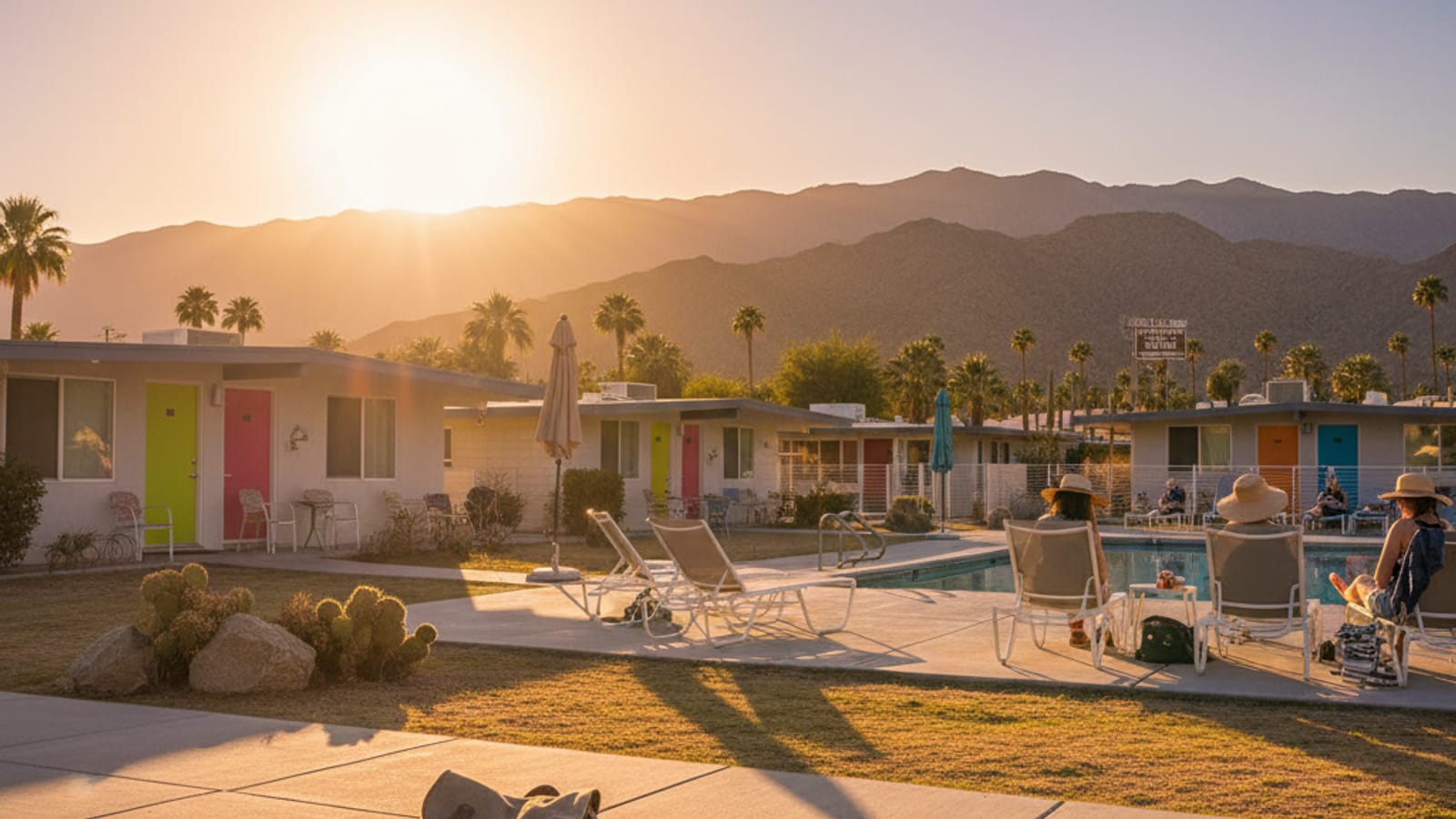
Here's the secret that makes Palm Springs one of the best budget destinations in California: between June and September, hotel rates collapse. (For the spend-anything version of the same trip, see our Palm Springs weekend itinerary.) The same boutique hotel room that costs $350 per night in February drops to $89-120 in July. The same luxury resort charging $600 in March can be had for $180-250 in August. The reason is simple and honest: it's brutally hot. Daytime temperatures in Palm Springs during summer average 108-115°F, with occasional spikes above 120°F. The outdoor pool that's refreshing in January becomes a warm bath in July. The hiking that's glorious in March becomes genuinely dangerous in June.
But here's what the tourism board won't tell you: a summer Palm Springs trip, approached strategically, is one of the best travel values in the American West — a pattern we found across the locals-vs-visitors gap in our 2026 Local Experience Report. The pools are still open. The restaurants are still serving. The Aerial Tramway still runs (and the temperature at the top is a blissful 70-80°F even when it's 115°F below). The mid-century architecture doesn't care what month it is. And the resorts, desperate to fill rooms during the dead season, offer packages that border on absurd — free breakfast, spa credits, resort fee waivers, late checkout, room upgrades.
The key is to restructure your itinerary around the heat. Pool time moves to early morning and late afternoon. Any outdoor activity happens before 9 AM or after 5 PM. Midday is for air-conditioned museums, long restaurant lunches, spa treatments, or simply retreating to your room for a nap. This is actually how locals live during summer — they're not enduring the heat, they've adapted to it, and the pace of life slows to a meditative crawl that's genuinely restorative.
Specific booking strategies for summer savings: book directly on hotel websites rather than through third-party sites — properties like the Ace Hotel, the Saguaro, and the Arrive all run direct-booking specials that include extras you won't get through Expedia. Look for "summer sizzler" or "hot deal" packages that bundle breakfast, parking, and resort fee waivers. Use Google Hotels to set a price alert for your target dates — rates fluctuate daily and a well-timed booking can save $50-100 per night. And don't overlook Airbnb: private pools and mid-century modern homes that rent for $400/night in March drop to $120-150 in summer, giving you a full house with a pool for less than a standard hotel room in peak season.
The sweet spot for summer value is mid-June through mid-July. By August, some restaurants start closing for vacation, and by September the heat is still intense but the deal frenzy has subsided slightly. June offers the full slate of restaurants, the best hotel deals, and a town that's quiet enough to feel like your private resort.
Pro tip: Call hotels directly after booking online — ask if there are any unadvertised upgrades or perks available for your dates. In summer, front desk managers have wide latitude to upgrade rooms, add pool cabana time, or throw in breakfast because occupancy is so low. Being friendly goes a long way.
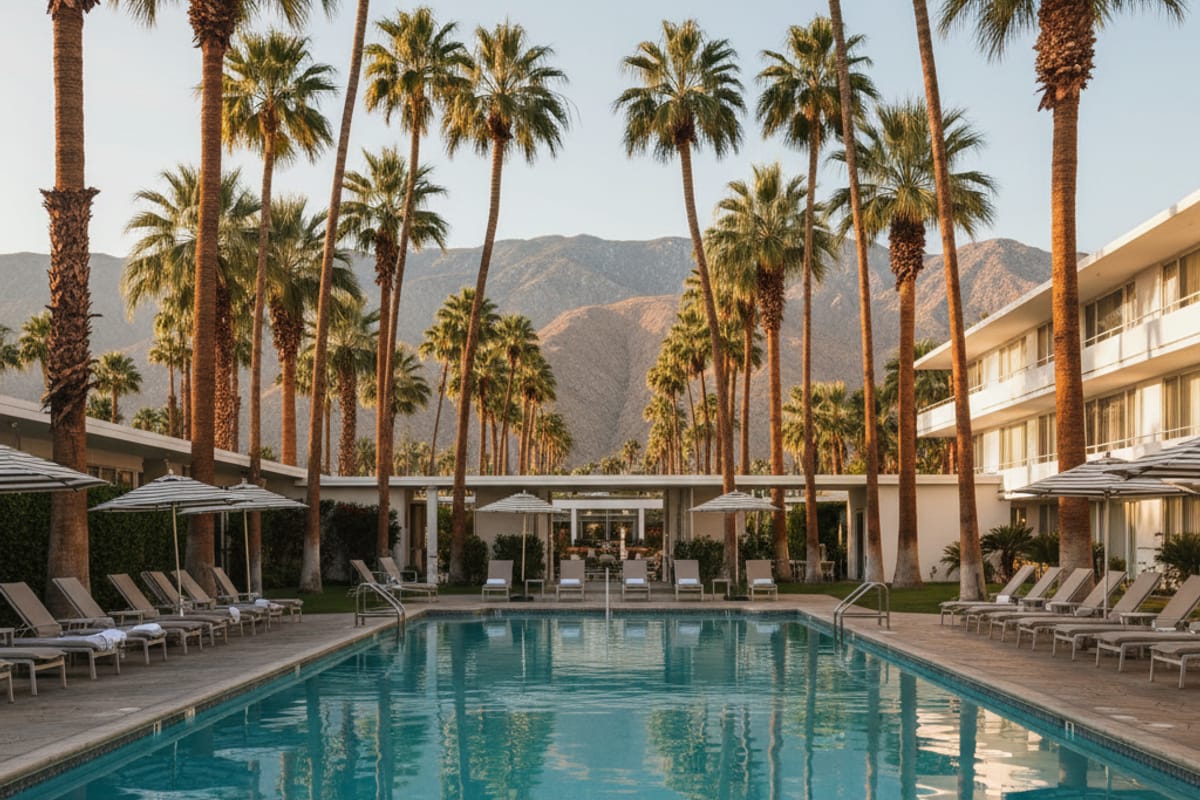 This pool costs $350/night in February and $89 in July. Same pool. Same mountains.
Free Hikes: World-Class Desert Trails That Cost Nothing
Palm Springs is surrounded by some of the best hiking in Southern California, and many of the best trails are completely free. This is public desert land, Bureau of Land Management territory, and state park trails that don't charge admission — a rarity in a region where everything seems to have a ticket price.
The Lykken Trail is the quintessential Palm Springs hike — a 4.5-mile out-and-back trail that starts right at the edge of downtown (literally a block from Palm Canyon Drive) and climbs along the base of the San Jacinto Mountains with panoramic views of the entire Coachella Valley. The trail gains about 850 feet in elevation and takes 2-3 hours round trip. The views are stunning at any time of year, but sunrise hikes are particularly magical — the light painting the desert floor gold while the mountains above are still cool and shadowed. Free, no permit required, open year-round.
The Museum Trail connects the Palm Springs Art Museum to the Desert View scenic overlook via a steep 1-mile climb that rewards with one of the best views in the area. It's a quick, intense workout — 800 feet of elevation gain in a mile — and popular with locals as a morning fitness hike. The trailhead is right behind the museum. Free, open year-round.
The Bump and Grind Trail in nearby Palm Desert is a moderate 4-mile loop with beautiful desert flora, rocky terrain, and sweeping valley views. Despite its suggestive name (it refers to the grinding gears of the old mining trucks that used the route), it's a family-friendly trail with well-maintained pathways and interpretive signs about desert ecology. Free, open year-round, parking available at the trailhead on Painters Path.
The Big Morongo Canyon Preserve, about 25 minutes north of Palm Springs, is a hidden gem maintained by the Bureau of Land Management. This desert oasis sits where the Mojave and Sonoran deserts meet, creating a unique riparian habitat with cottonwood-lined streams, over 250 bird species, and a boardwalk trail system that's accessible to all fitness levels. The main loop is about 1.5 miles and passes through marshes, woodlands, and desert scrub — the biodiversity in such a small area is remarkable. Completely free, open dawn to dusk.
The Tahquitz Canyon trail is the one exception to the free list — it's $12.50 per adult — but it deserves mention because the 2-mile trail leads to a 60-foot seasonal waterfall that's one of the most photographed natural features in the Coachella Valley. Managed by the Agua Caliente Band of Cahuilla Indians, the canyon has significant cultural history and the ranger-led interpretive hikes add tremendous value. If you're going to spend money on one hike, make it this one.
Pro tip: All desert hikes require water — much more than you think. Bring at least one liter per person per hour of hiking, more in summer. Start early (before 8 AM in peak season, before 6 AM in summer) and tell someone your route. The desert is beautiful but unforgiving, and dehydration sneaks up faster than you expect in dry heat.
Cheap Eats: Eating Well for $30 a Day
Palm Springs has a reputation as a pricey resort town, and the restaurant scene along Palm Canyon Drive can reinforce that impression. But eat like a local instead of a tourist and you can have three satisfying meals a day for $25-35 — not at fast food chains, but at genuinely good places that just happen to be affordable.
Breakfast ($6-12): The Palm Springs Koffi chain has three locations around town and serves excellent coffee and pastries — a drip coffee and a croissant runs about $7 and fuels a solid morning. For something more substantial, Rick's Desert Grill on North Palm Canyon has classic diner breakfasts (two eggs, toast, hash browns) for $8-10 that are exactly what you want before a hike. If you're staying at an Airbnb or vacation rental with a kitchen, the Palm Springs Vons or Ralph's grocery stores have everything you need for breakfast at home — eggs, avocados, bread, and coffee for a fraction of restaurant prices.
Lunch ($8-15): Tyler's Burgers is the undisputed champion of cheap lunch in Palm Springs — a half-pound cheeseburger under $10 at a walk-up window that's been a local institution since 1996. The line moves fast and the quality is outstanding. El Jefe at the Saguaro hotel does excellent street-style tacos for $4-5 each — three tacos and a drink puts you at $18, which is a feast. For something lighter, Natural Health Sciences of Arizona (locals call it the "juice bar") on Indian Canyon Way makes fresh smoothies and acai bowls for $8-12 that double as a meal in the heat.
Dinner ($12-20): Las Casuelas Terraza on Palm Canyon Drive has been serving Mexican food since 1958, and their combination plates — enchiladas, rice, beans — run $14-18 and are genuinely satisfying. The margaritas are $10 and strong. Shanghai Red's in the Fisherman's Market & Grill offers fish and chips, grilled fish plates, and seafood tacos in the $12-16 range with generous portions. Wang's in the Desert does Chinese food that's well above average, with lunch specials carrying over into early dinner at $12-15 per plate.
The real budget hack: many of Palm Springs' best restaurants run happy hour specials that effectively turn a $50 dinner into a $25 one. Workshop Kitchen's Social Hour (Mon-Fri 5-6 PM) has $8-10 cocktails and discounted small plates. Dead or Alive takes $3 off cocktails during their 4-6 PM happy hour. Stringing together a late lunch, a happy hour, and a light late snack is a classic local strategy for eating well on a budget while still experiencing the best restaurants in town.
Grocery stores are your secret weapon for keeping food costs down. The Vons on East Palm Canyon has a decent deli counter, pre-made sandwiches and salads, and everything you need for poolside picnics. A bag of groceries for snacks, breakfast items, and poolside supplies runs $20-30 and covers two days of supplementary eating.
Pro tip: Download the Yelp app and sort by price range ($ and $$) to find budget-friendly restaurants near your location. In Palm Springs, the affordable gems tend to be on North Palm Canyon and Indian Canyon Way rather than the touristy south Palm Canyon strip.
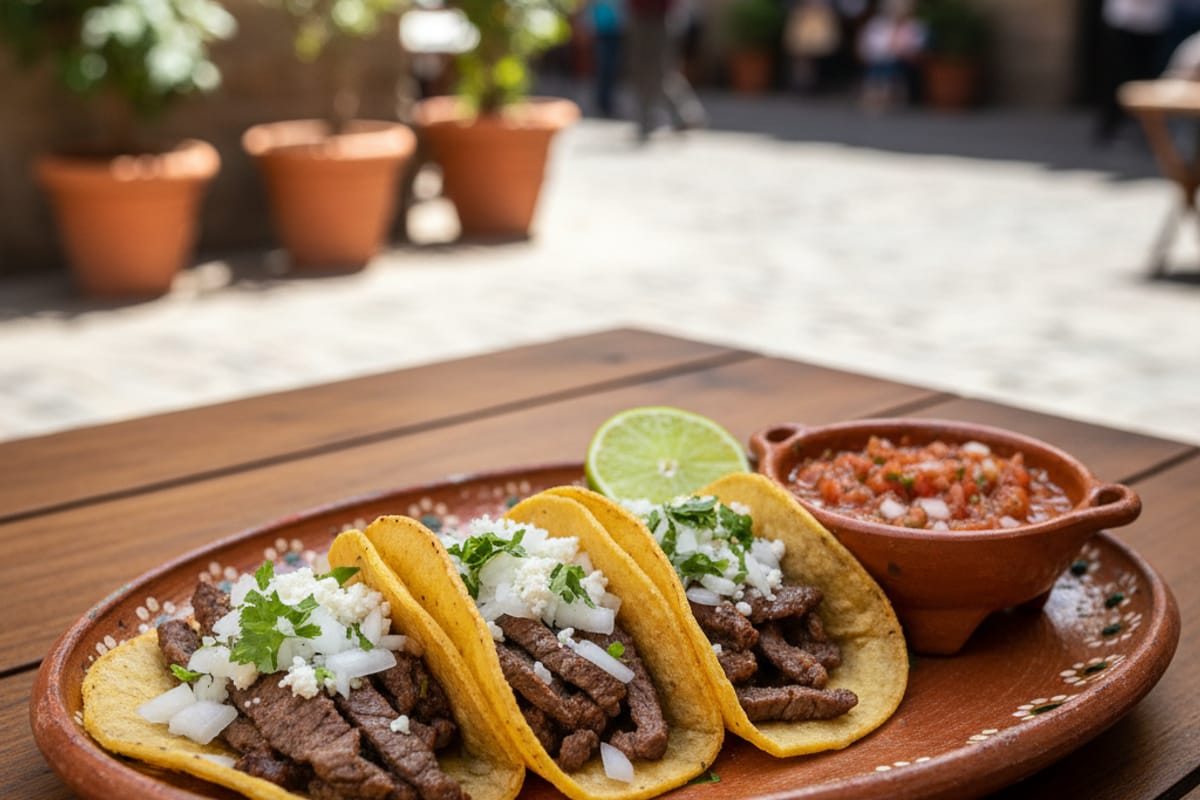 Street-style tacos at El Jefe — $5 each and genuinely excellent.
VillageFest: Palm Springs' Best Free Entertainment
Every Thursday evening from October through May, Palm Canyon Drive closes to traffic and transforms into VillageFest — a street fair, farmers market, art walk, and block party rolled into one. It's the single best free event in Palm Springs and worth planning your trip around if you can swing a Thursday night stay.
The festival stretches for several blocks along the main drag, with roughly 200 vendors setting up booths that range from local produce and artisan foods to handmade jewelry, desert photography, vintage clothing, and arts and crafts. The quality varies — some booths sell mass-produced souvenirs, others offer genuinely unique handmade goods — but the browsing itself is entertaining and the people-watching is world-class. Palm Springs residents take VillageFest seriously, and the crowd is a fascinating mix of retirees, young creatives, tourists, and desert eccentrics.
The food vendors are the highlight for budget travelers. Tamale stands sell fresh, handmade tamales for $2-3 each that are legitimately some of the best you'll eat anywhere. There are kettle corn vendors, crepe stations, barbecue smokers, and several stands selling fresh-squeezed lemonade and aguas frescas for $3-5. You can eat a full, delicious dinner wandering the festival for $10-15 — try doing that at any Palm Canyon Drive restaurant.
Live music plays at several points along the route, with local bands covering everything from jazz standards to classic rock to Latin music. It's not headliner-level entertainment, but it's free, the sound carries well in the dry desert air, and dancing in the street on a warm Thursday night is one of those simple pleasures that makes travel worthwhile.
The festival runs from 7 PM to 10 PM during the cooler months and has been a Palm Springs tradition for over 30 years. Street performers, caricature artists, and palm readers add to the carnival atmosphere. Parking is free in the city lots a block or two off Palm Canyon Drive, but arrive by 6:30 PM if you want to park close — by 7:30 PM you'll be parking several blocks away.
During the summer months (June-September), VillageFest takes a break due to the heat. If you're visiting in summer, the Thursday night void is partially filled by various hotel pool parties and bar events that pop up seasonally — check the Ace Hotel and the Saguaro calendars for recurring summer events. The Palm Springs Aerial Tramway also hosts occasional "Ride & Dine" events on summer evenings that include the tram ride and dinner at the mountaintop restaurant for a bundled price.
Pro tip: The best strategy for VillageFest is to arrive at 6:30 PM, park in the lot behind the Hyatt on Tahquitz Canyon Way, and walk the entire festival north to south before doubling back to buy from the vendors that caught your eye. This way you see everything before committing your dollars.
Off-Season Timing: When the Deals Are Best
Palm Springs has three distinct pricing seasons, and understanding them is the single most important factor in planning a budget trip. The difference between peak and off-peak pricing is not subtle — it can mean the difference between spending $1,200 for a weekend and spending $400 for the same experience.
Peak Season (January - April): This is when everyone wants to be in Palm Springs. The weather is perfect — sunny, 70-85°F, low humidity, clear skies. Modernism Week in February draws 150,000 visitors. The Coachella and Stagecoach music festivals in April pack the valley to capacity. Hotel rates are at their highest ($200-400/night mid-range, $400-800+ luxury), restaurants are fully booked, and attractions have their longest lines. If you must visit during peak season, book at least 2-3 months in advance and expect to pay premium prices for everything. The one saving grace: January, before the festival season kicks in, is the "quietest" peak month and sometimes offers slightly lower rates.
Shoulder Season (May, November - December): This is the sweet spot for budget travelers who don't want to deal with extreme heat. May temperatures are warm but manageable (85-95°F), November is gorgeous (75-85°F), and December brings cool evenings, holiday decorations, and a festive atmosphere. Hotel rates drop 30-40% from peak — that $300 room becomes $180-210. Restaurants are easier to get into, trails are less crowded, and the overall pace is more relaxed. November in particular offers nearly the same weather as peak season at a significant discount.
Off-Season / Summer (June - September): Maximum savings, maximum heat. Hotel rates plummet 60-70% from peak. A $350/night boutique hotel becomes $89-120. A $600/night luxury resort drops to $180-250. Airbnb prices follow suit. Many restaurants close for vacation or reduce hours, but the core dining scene stays open. The Aerial Tramway runs on a modified schedule, and the Palm Springs Art Museum stays air-conditioned and open. The heat is real — 108-120°F during the day — but early mornings (before 8 AM) and evenings (after 6 PM) are surprisingly pleasant at 80-90°F.
The absolute best value dates in Palm Springs are the first two weeks of June and the first two weeks of November. June offers summer pricing before the worst heat arrives and before restaurants start taking summer breaks. November offers near-peak-season weather at shoulder-season prices, with the added bonus of the Modernism Week Fall Preview (a more relaxed, less expensive version of the February event). If I could only visit Palm Springs once on a budget, I'd pick the first week of November without hesitation.
One more timing hack: regardless of season, midweek stays (Sunday-Thursday) are consistently 20-40% cheaper than weekend rates. A Tuesday-Wednesday Palm Springs trip in November at a mid-range hotel can run under $100/night — resort-town quality at motel-town prices.
Pro tip: Set Google Hotels price alerts for your target dates 6-8 weeks in advance. Palm Springs hotel pricing is dynamic and fluctuates daily based on occupancy forecasts. A room that's $180 today might drop to $130 next week if bookings are slow. Patience and flexibility save real money.
Complete Budget Breakdown: A Palm Springs Weekend for Under $400
Let's put it all together with a realistic, no-sacrifice budget for a 2-night Palm Springs weekend in shoulder season (May or November), assuming two travelers sharing costs.
Accommodation: 2 nights at a comfortable hotel with pool (Caliente Tropics, Skylark, or similar), shoulder season rate: $130-160/night. Split between two people: $130-160 per person total. If you book an Airbnb with a private pool, you can find options at $100-130/night in shoulder season — split two ways, that's $100-130 per person for two nights with your own pool.
Transportation: Gas from Los Angeles (100 miles each way): $25-35 depending on your vehicle. Parking is free at most hotels and free on the street in downtown. Total: $25-35 per person if carpooling.
Food (2 days): Day 1 — Breakfast: coffee and pastry at Koffi ($7). Lunch: Tyler's Burgers ($10). Happy hour at Workshop Kitchen ($15 for a drink and a small plate). Dinner: VillageFest tamales and street food ($12). Day 1 total: $44. Day 2 — Breakfast: grocery store yogurt and fruit ($5). Lunch: El Jefe tacos ($16). Dinner: Las Casuelas Terraza combo plate and margarita ($25). Day 2 total: $46. Food total: $90 per person.
Activities: Aerial Tramway ($30). Indian Canyons ($9). Lykken Trail hike (free). Museum Trail hike (free). Palm Springs Art Museum, Thursday evening (free). VillageFest (free). Hotel pool (free). Self-guided architecture walking tour (free). Activities total: $39 per person.
Drinks and extras: Two happy hours ($30). One evening cocktail at Dead or Alive ($14). Date shake at Shields ($7). Incidentals ($15). Total: $66 per person.
Grand total per person: $350-430 for a 2-night Palm Springs weekend with excellent food, the Aerial Tramway, hiking, architecture, pool time, and nightlife. In summer, drop the hotel costs by 60% and the total falls to $250-320 per person.
For comparison, a similar-quality weekend in Scottsdale, Sedona, or any Hawaiian island would run $600-1,000+ per person. Palm Springs delivers legitimate resort-town experience — world-class architecture, stunning natural scenery, excellent food and drink — at a price point that's accessible to almost anyone willing to be strategic about timing.
The desert doesn't charge for its best features. The sunsets are free. The mountain views are free. The dry, warm air that loosens every tight muscle in your body is free. The stars at night — more visible here than in almost any other resort town in America — are free. Palm Springs has always been a place where the natural setting does most of the work. Your job is just to show up, slow down, and let it.
Pro tip: Track your spending in real time with a simple notes app on your phone. Budget travel fails when you lose track of small purchases that add up. A $5 coffee here, a $7 smoothie there, and suddenly you've spent $40 on drinks you don't remember. Set a daily spending target and check it at lunch and dinner.
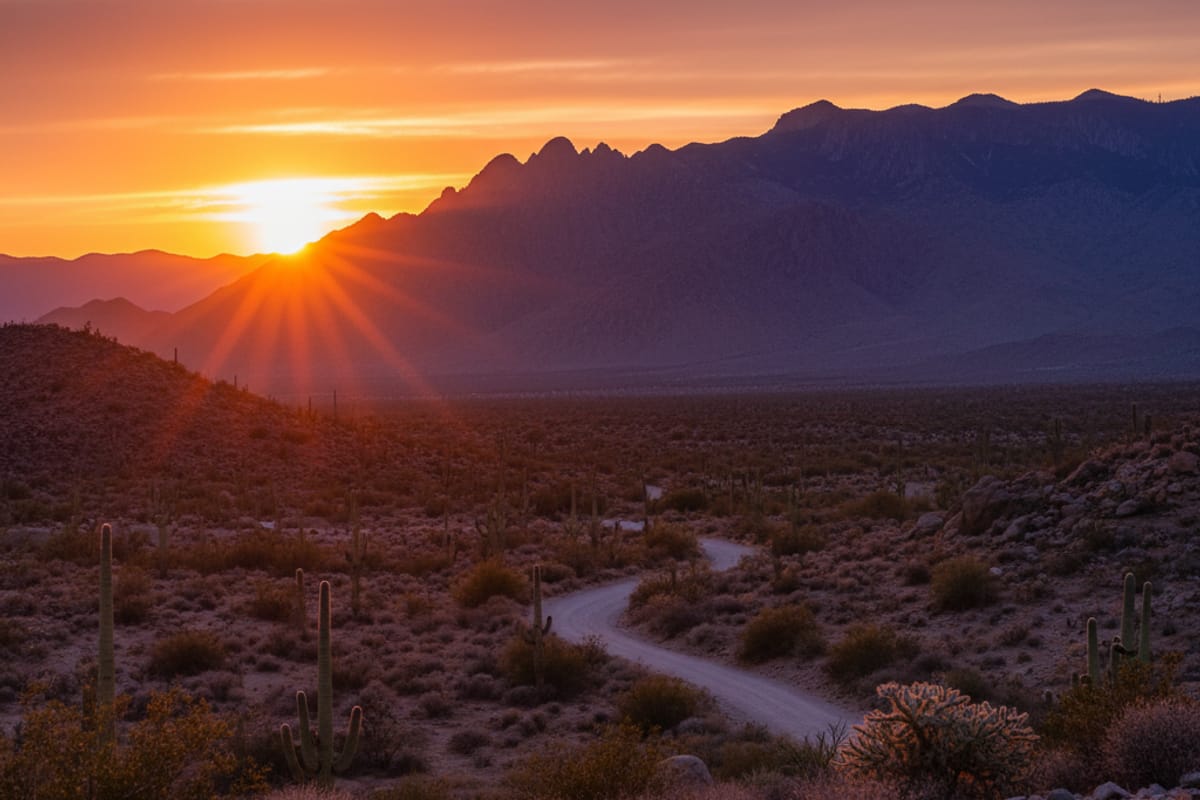 The best things about Palm Springs — the views, the air, the pace — cost nothing.
Why Trust This Guide
Recommendations from locals across 240+ US cities via Recommended.app community data.
Explore More
This guide is part of our Palm Springs collection. Explore more guides for Palm Springs →
Palm Springs has 162 verified businesses on Recommended.app across 60 categories.
Hidden Gems Weekly
3 hidden gems, 2 local quotes, 1 home hack — every Monday. Free forever.
Unsubscribe anytime. No spam.
More from Travel Guides
 Travel Guide
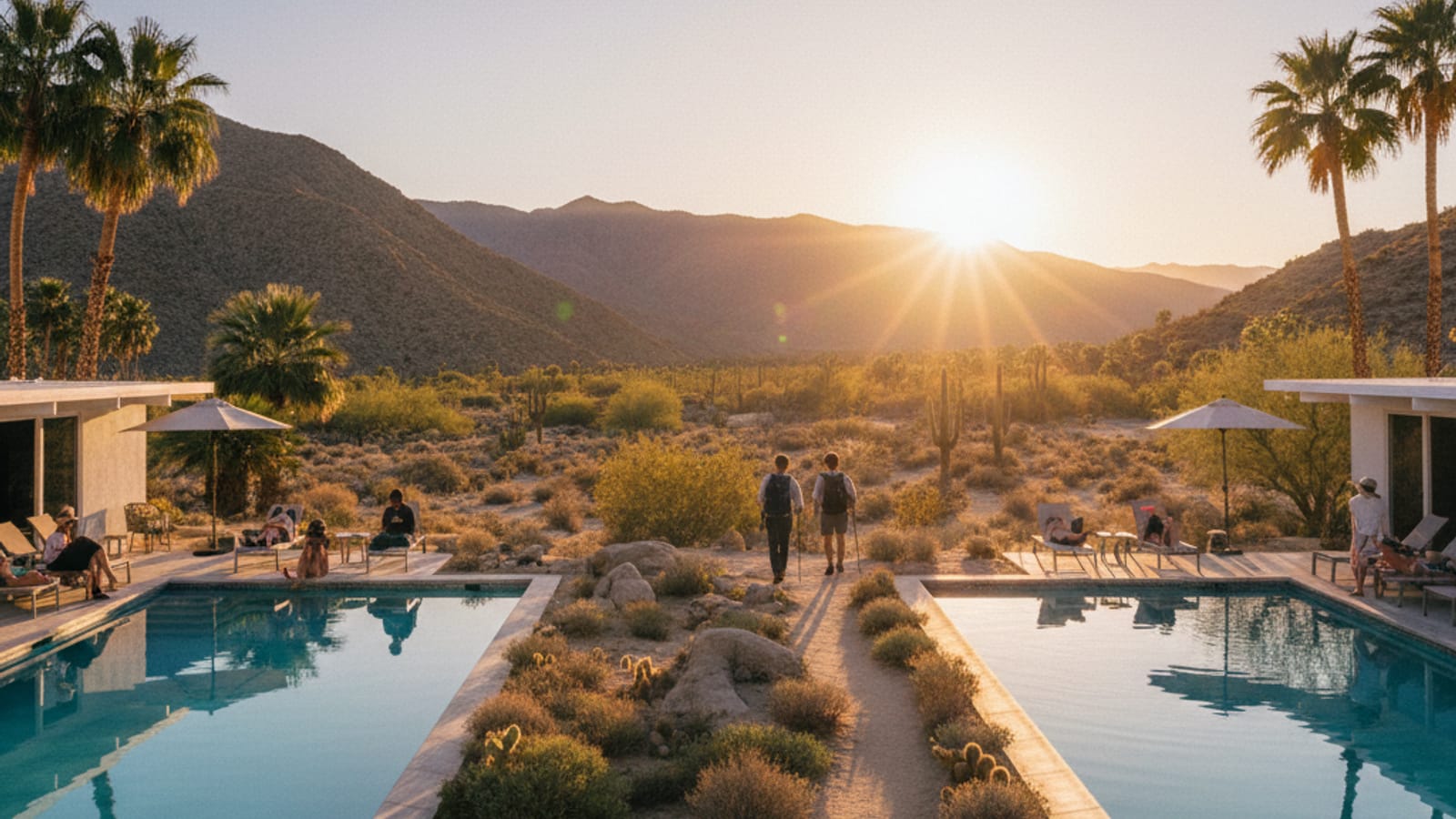
The Perfect Palm Springs Weekend: Pool, Hike, Repeat
 Travel Tips
Expedia vs Hotels.com 2026: Which Actually Saves You More Money?
 Travel Guide
Best Hotels in Miami 2026: South Beach to Wynwood (With Real Price Ranges)
 Travel Guide
Best Hotels in Nashville 2026: From Budget East Nashville to Downtown Luxury
 Travel Guide
Best Hotels in Las Vegas 2026: From Budget to High Rollers (With Real Price Data)
 Outdoor & Nature