
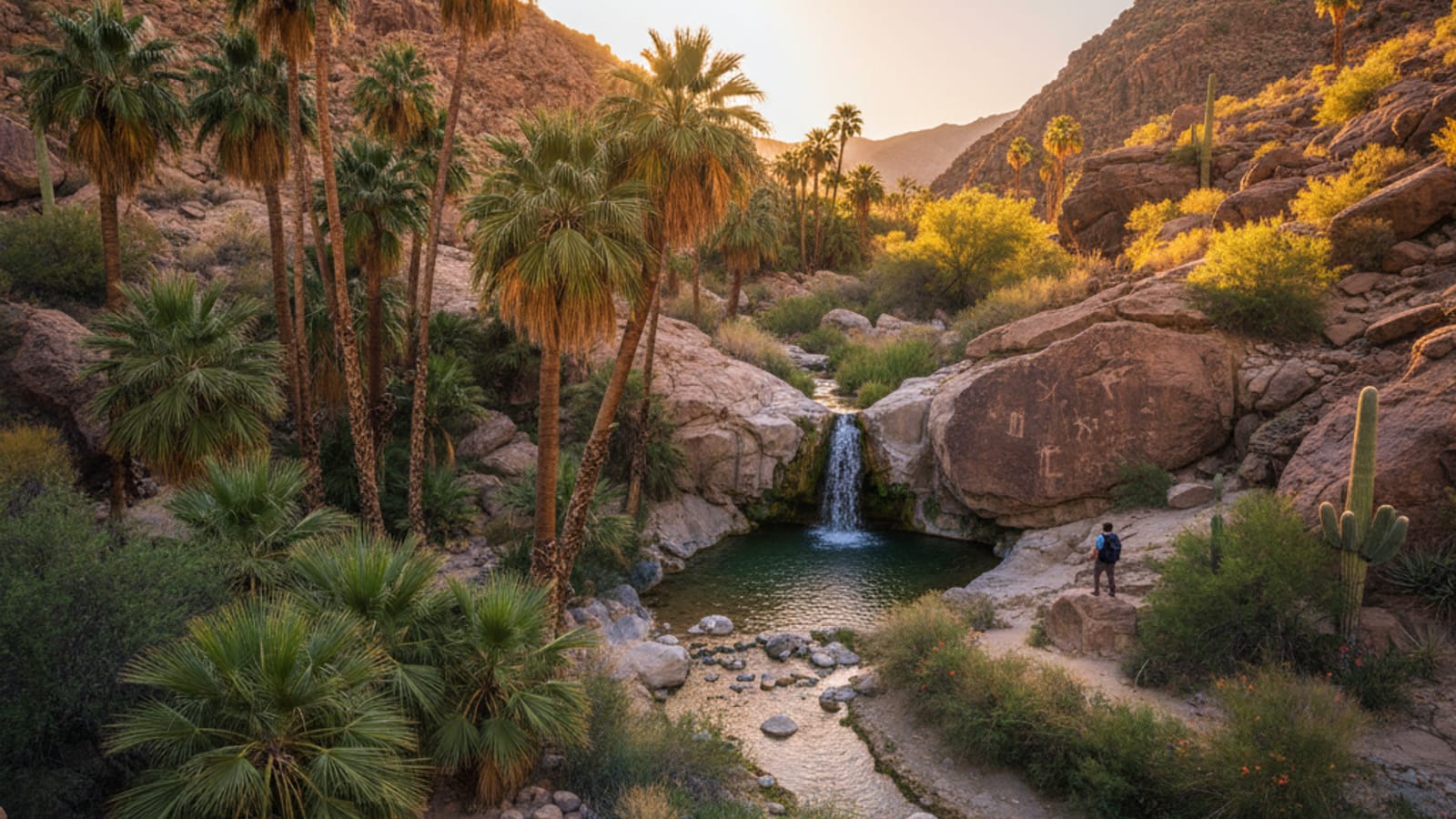
Last updated March 16, 2026 by the Recommended.app research team.
Indian Canyons: Ancient Palm Oases Hidden in the Mountains
Indian Canyons is the most underrated attraction in the entire Coachella Valley, and that's partly by design. Managed by the Agua Caliente Band of Cahuilla Indians, these canyons on the south side of Palm Springs contain some of the most spectacular natural scenery in Southern California — palm-lined oases, seasonal waterfalls, dramatic rock formations, and centuries-old native trails — all within a ten-minute drive of downtown. And yet most visitors skip them entirely in favor of another poolside margarita.
The three main canyons are Palm Canyon, Andreas Canyon, and Murray Canyon, each with its own character and trail system. Palm Canyon is the showstopper — a 15-mile-long canyon that contains the largest natural palm oasis in North America. The main trail follows a creek through groves of native Washingtonia filifera fan palms, some of which are over 2,000 years old. The trunks are massive, the canopy creates dappled shade, and the sound of running water in the middle of the desert is almost disorienting. The Trading Post at the trailhead sells drinks and snacks, and has a small museum about Cahuilla history that's worth a quick stop.
Andreas Canyon is smaller but arguably more beautiful — a lush, shaded canyon with a creek running through massive boulders and more than 150 species of plants within a half-mile area. The loop trail is just over a mile and is flat enough for almost anyone. Birdwatchers love this spot — you might see canyon wrens, hooded orioles, Costa's hummingbirds, and the occasional roadrunner doing its cartoonish sprint through the underbrush.
Murray Canyon is the least visited and the most rewarding for hikers willing to put in a little effort. The trail runs about 2 miles to a seasonal waterfall, with several creek crossings that may require getting your feet wet in winter and spring. The solitude here is the real draw — it's entirely possible to hike Murray Canyon on a weekday and not see another person. Admission to Indian Canyons is $9 for adults, and the canyons are open from 8 AM to 5 PM, October through June. They close during summer due to extreme heat and flash flood risk.
Pro tip: Start early in the morning, especially on weekends. The parking lot at Palm Canyon fills up by 10 AM during peak season, and there's no overflow parking. Bring a hat and at least a liter of water per person even for short hikes — the canyon floor is shaded but the access trails are not.
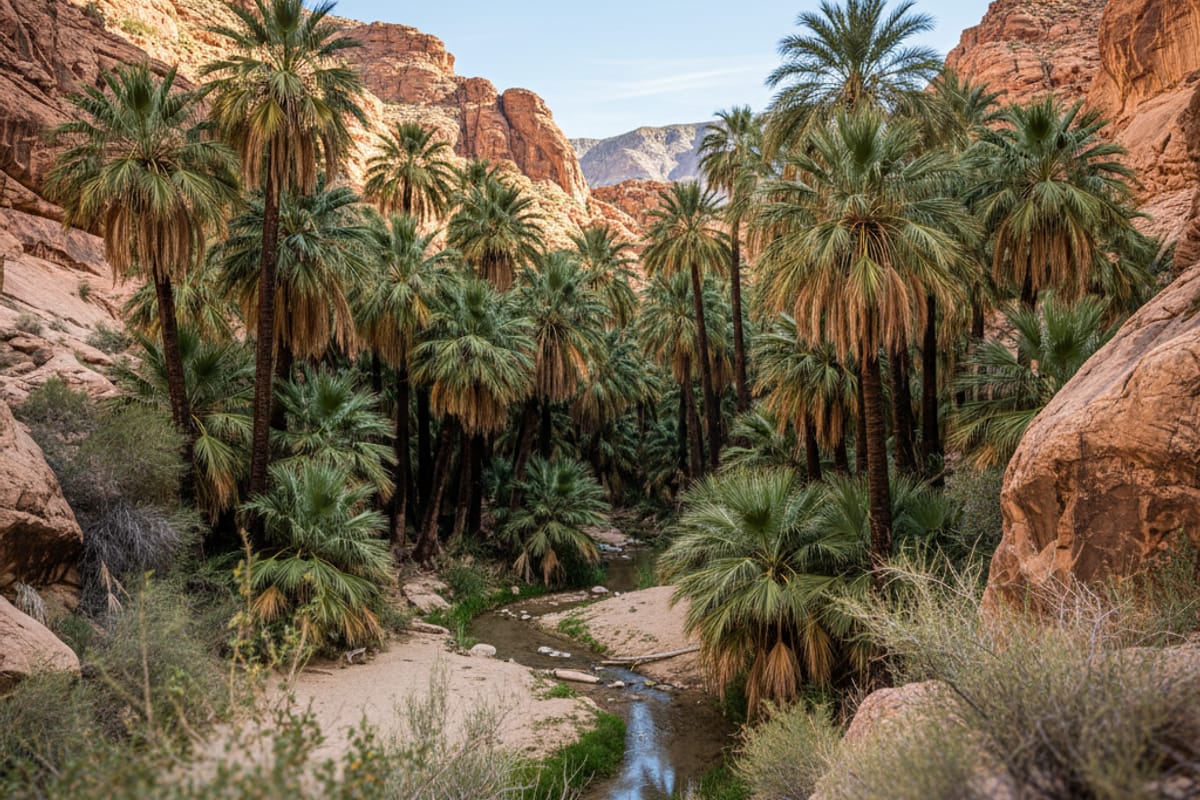 Indian Canyons — ancient palm oases hidden just minutes from downtown.
Sunnylands: A Presidential Retreat Open to Everyone
Sunnylands is one of the most remarkable places in the Coachella Valley, and it operates with an almost absurd level of understatement for what it actually is. Built in 1966 by publishing magnate Walter Annenberg and his wife Leonore, this 200-acre estate in Rancho Mirage hosted every U.S. president from Eisenhower to Obama, as well as Queen Elizabeth II, Frank Sinatra, Bob Hope, and dozens of other heads of state and Hollywood royalty. It was where Reagan and Thatcher strategized, where Nixon retreated after Watergate, and where Obama hosted President Xi Jinping for their first bilateral summit in 2013.
Today, the Annenberg Foundation operates Sunnylands as a public garden and historic house museum, and the experience is genuinely world-class. The nine-acre garden surrounding the visitor center features over 53,000 arid plants arranged in sweeping, colorful patterns — agaves, cacti, desert wildflowers, and palo verde trees that glow yellow-green in the afternoon light. Walking the garden paths is free (though a $2 donation is suggested), and the visitor center has excellent exhibits on the estate's history and the Annenbergs' art collection.
The real treasure is the guided house tour, which takes you inside the main residence — a 25,000-square-foot A. Quincy Jones-designed masterpiece that blends mid-century modern architecture with the Annenbergs' personal art collection, which includes original works by Picasso, Monet, van Gogh, and Rothko hanging in rooms where presidents once slept. The pink-and-green color palette of the interiors is wildly specific and somehow perfect. Tours must be reserved online in advance ($48 per person), often sell out weeks ahead, and are worth every penny.
The grounds also include a championship golf course (not open to the public) and the original putting green where presidents played. The gift shop is surprisingly tasteful, with books on desert architecture, Annenberg history, and botanical prints. Plan to spend 60-90 minutes in the gardens and visitor center, or 2-3 hours if you're doing the house tour. It's open Thursday through Sunday, September through June, and closed during the brutal summer months.
Pro tip: Book the house tour the moment tickets become available — they release dates about a month in advance and popular time slots sell out within hours. The 9 AM tour is the best: cooler temperatures, softer light, and the house photographs beautifully in the morning.
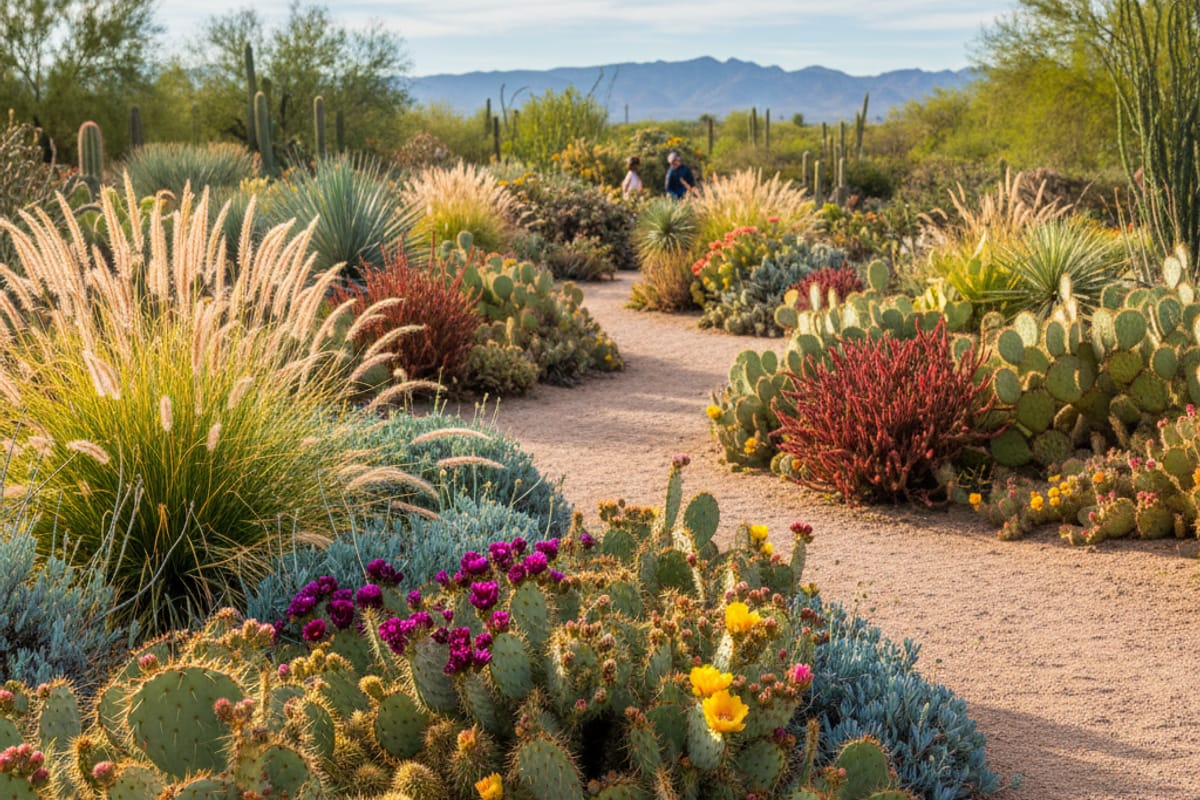 Sunnylands' gardens — 53,000 arid plants in one of the most storied estates in America.
Windmill Tours: Inside the Coachella Valley's Iconic Turbines
If you've ever driven Interstate 10 from Los Angeles to Palm Springs, you've seen them — thousands of wind turbines spinning on the western edge of the Coachella Valley, covering the San Gorgonio Pass in a surreal forest of white steel. Most people blow past them at 80 miles an hour. A few slow down for photos. Almost nobody actually goes inside — and they should, because the windmill tours are genuinely fascinating.
Palm Springs Windmill Tours operates two-hour guided excursions that take you into the wind farm itself, right up to the base of the turbines — some of which tower 300 feet tall with blades spanning 150 feet. You'll learn about the science of wind energy, the history of how this particular pass became one of the most productive wind corridors in the world (the temperature differential between the desert and the coast creates a natural wind tunnel), and the surprisingly contentious politics of renewable energy in a conservative-leaning county.
The tours run $50 per person and depart from a staging area just off the interstate. You ride in an open-air vehicle through the wind farm while a guide explains the three generations of turbine technology visible in the field — from the small, boxy 1980s-era turbines (many now decommissioned) to the massive modern units that can each power 1,000 homes. Standing directly beneath a spinning turbine while the guide explains the engineering is genuinely awe-inspiring. The whooshing sound of the blades, the scale of the machinery, and the stark desert backdrop create an experience that's part science lesson, part art installation.
Reservations are required and the tours operate year-round, though summer tours depart earlier to avoid the worst heat. The morning tours are best for photography — the light hits the turbines beautifully and the winds tend to be strongest in the late morning, so the blades are really moving. It's one of those activities that sounds niche until you do it, and then you can't stop telling people about it.
Pro tip: Wear closed-toe shoes and bring sunglasses — the wind farm is windy (obviously) and dust gets kicked up by the vehicle. Sunscreen is essential as there's zero shade during the tour. The gift shop sells surprisingly cool wind turbine models and renewable energy merchandise.
Cabot's Pueblo Museum: A Desert Dreamer's Handmade Castle
Cabot's Pueblo Museum in Desert Hot Springs is one of the strangest, most personal, and most moving places in the entire Coachella Valley, and almost nobody visits it. Built entirely by hand over 24 years by Cabot Yerxa — a homesteader, artist, prospector, and genuine desert eccentric — this four-story, 35-room Hopi-inspired pueblo structure sits on a bluff overlooking the valley and tells the story of a man who fell in love with the desert and spent his life building a monument to it.
Yerxa arrived in Desert Hot Springs in 1913, discovered the natural hot springs that would give the town its name, and began constructing his pueblo in 1941 using found materials — railroad ties, telephone poles, discarded wood, desert stones, and anything else he could scavenge. He worked alone, without blueprints, adding rooms as inspiration struck. The result is a labyrinthine structure with 150 windows (no two alike), hand-carved doors, winding staircases, and a rooftop terrace with views stretching from the San Jacinto Mountains to the Little San Bernardino range.
Guided tours run about 45 minutes and cost $13.50 for adults. The guides are knowledgeable and clearly passionate about Cabot's story — his time living with the Alaskan Inuit, his years as a Hollywood extra, his friendship with the Cahuilla people, and his quiet advocacy for desert conservation decades before it was fashionable. The museum contains his personal art collection, Native American artifacts, and a collection of tools and objects that illustrate a self-sufficient desert life that has largely vanished.
The grounds include a sculpture garden with Waokiye, a 43-foot-tall Native American figure carved from a sequoia tree by artist Peter Toth. It's part of Toth's "Trail of the Whispering Giants" series — one carved figure in every state — and seeing it against the desert sky is unexpectedly powerful. The museum is open October through May, Thursday through Sunday, and is well worth the 15-minute drive from downtown Palm Springs. Bring a few extra dollars for the donation box — this place runs on a shoestring budget and deserves every bit of support.
Pro tip: Combine a visit to Cabot's with a soak at one of the nearby Desert Hot Springs mineral spas. El Morocco Inn & Spa and the Spring Resort & Spa both offer day-use mineral pool access for $15-25 and are within five minutes of the museum.
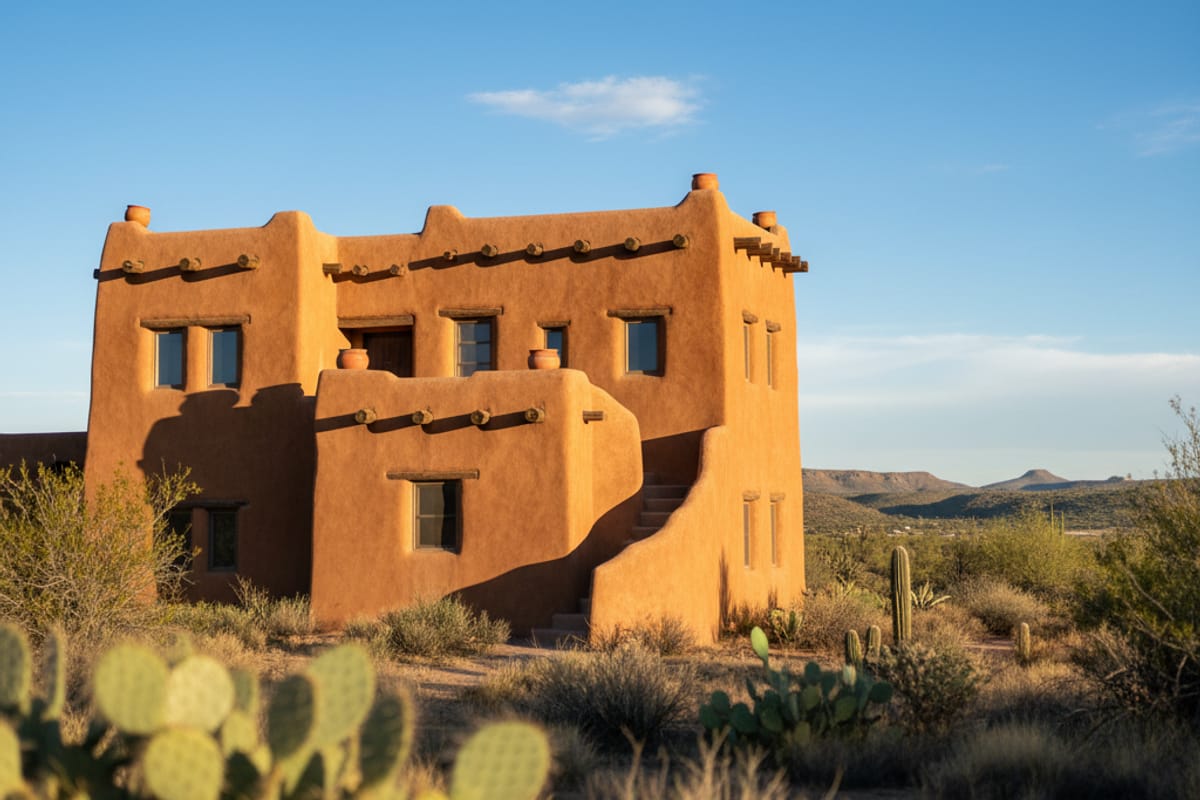 Cabot's Pueblo Museum — 24 years of handmade desert devotion.
Shields Date Garden: A Coachella Valley Institution Since 1924
Shields Date Garden in Indio has been growing dates and serving date shakes since 1924, making it one of the oldest continuously operating businesses in the Coachella Valley. It's also one of the most wonderfully quirky. Founded by Floyd Shields, who learned date cultivation from U.S. Department of Agriculture researchers experimenting with imported Algerian date palms, the garden has grown into an 18-acre oasis of towering Medjool and Deglet Noor palms that produces some of the finest dates in North America.
The date shake is the thing. Let's get that out of the way. It's a simple milkshake blended with Shields' own dates, and it is transcendently good — rich, creamy, caramel-sweet but not cloying, with a depth of flavor that no other date shake in the valley quite matches. They've been making it the same way for a century, and you'll understand why within the first sip. The shake alone is worth the 25-minute drive from Palm Springs. Get the large. You'll want the large.
Beyond the shake, the garden itself is a genuine agricultural experience. You can walk through the date groves, learn about the cultivation process (date palms must be hand-pollinated — every single cluster), and visit the shop where you can sample and buy a dozen varieties of dates ranging from the common Medjool to the crystallized Barhi and the deeply caramelized Khadrawy. The shop also sells date bread, date crystals for baking, date honey, and an array of date-based products that make excellent gifts.
The most gloriously bizarre feature of Shields is the Romance and Sex Life of the Date film — a 15-minute educational movie about date pollination that has been screening continuously in their small theater since 1949. The narration is earnest and just suggestive enough to be charming, and the fact that they're still showing it 77 years later in an era of streaming and smartphones is a testament to the Coachella Valley's commitment to its agricultural heritage. Admission to the garden and film is free. You'll spend about an hour here, walk out with a bag of dates and a smile, and tell every person you meet about the date shake.
Pro tip: If you're visiting during date harvest season (September through December), ask if they're doing any tastings or tours of the active harvesting process. The workers climb 30-foot ladders to hand-cut clusters — it's fascinating to watch and gives you real appreciation for how labor-intensive date farming remains.
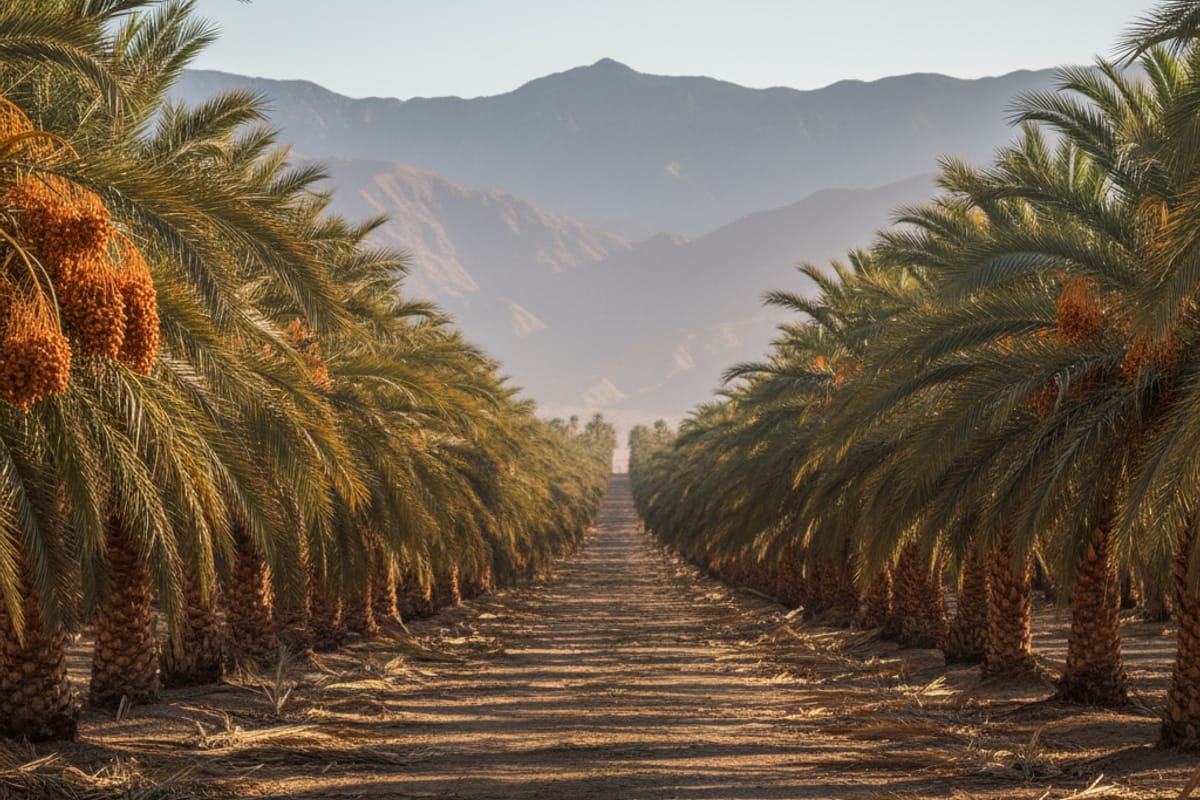 Shields Date Garden — making the valley's best date shake since 1924.
Desert Hot Springs: The Mineral Water Oasis Next Door
Desert Hot Springs sits just 15 minutes north of downtown Palm Springs, separated by the San Andreas Fault — and that geological boundary is exactly what makes this small, unassuming town special. The fault creates two distinct underground aquifer systems: cold water on the Palm Springs side, and naturally heated mineral water on the Desert Hot Springs side. The result is a town sitting on top of naturally hot, mineral-rich water that has been drawing soakers and healers since the 1940s.
The town has reinvented itself over the past decade from a somewhat forgotten neighbor to a legitimate spa destination with dozens of small, boutique mineral water resorts. These aren't massive corporate spas — they're intimate properties with 10-30 rooms, each with its own mineral pool fed directly from underground springs. The water temperatures vary by property but generally range from 90°F to 104°F, with mineral compositions that include lithium, sulfate, and calcium — minerals that proponents claim ease joint pain, reduce stress, and improve skin health.
The Miracle Springs Resort & Spa is the largest and most well-known option, with eight mineral pools at varying temperatures and a full-service spa. Day passes run about $30 on weekdays and $40 on weekends. For a more intimate experience, the Azure Palm Hot Springs is a boutique property with just 14 rooms and a gorgeous mineral pool surrounded by mature palm trees and desert landscaping. Their day pass is $25 and includes pool access and use of the outdoor shower gardens.
El Morocco Inn & Spa is a personal favorite — a beautifully restored mid-century motor lodge with a mineral pool that stays at a perfect 92°F. The aesthetic is 1960s Palm Springs with a Moroccan twist, and the rooms have been thoughtfully updated while keeping the retro character intact. Day-use mineral pool passes are $20. The Spring Resort & Spa caters to a younger, design-conscious crowd with a crystal-clear mineral pool, a cactus garden, and an on-site restaurant that sources from local farms.
The beauty of Desert Hot Springs is its accessibility and its lack of pretension. These are not $500-a-night luxury resorts (though a few are heading that direction). Most rooms run $100-200/night, day passes are $15-40, and the soaking experience is the same mineral water that has been bubbling out of the ground for millennia. Come with sore muscles from a Joshua Tree hike, sink into a 102°F mineral pool as the sun sets behind the San Jacinto Mountains, and understand why Cabot Yerxa built his entire life around this place.
Pro tip: Visit Desert Hot Springs on a weekday if possible. Weekend day passes often sell out at the smaller properties, and the pools can feel crowded. Tuesday through Thursday you'll often have the mineral pools nearly to yourself, and some properties offer discounted weekday rates.
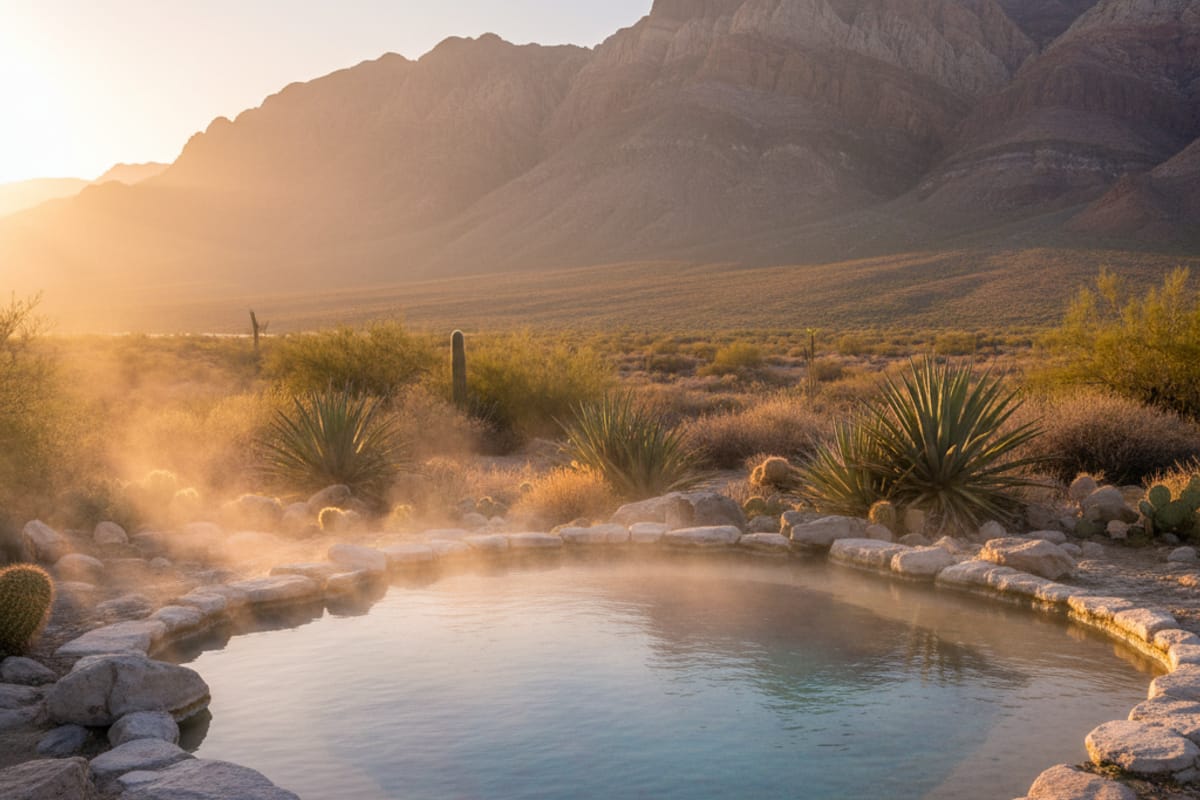 Desert Hot Springs — natural mineral water soaking without the luxury price tag.
Why Trust This Guide
Recommendations from locals across 240+ US cities via Recommended.app community data.
Explore More
Related guides:
This guide is part of our Palm Springs collection. Explore more guides for Palm Springs →
Palm Springs has 162 verified businesses on Recommended.app across 60 categories.
Hidden Gems Weekly
3 hidden gems, 2 local quotes, 1 home hack — every Monday. Free forever.
Unsubscribe anytime. No spam.
More from City Guides
 City Guide
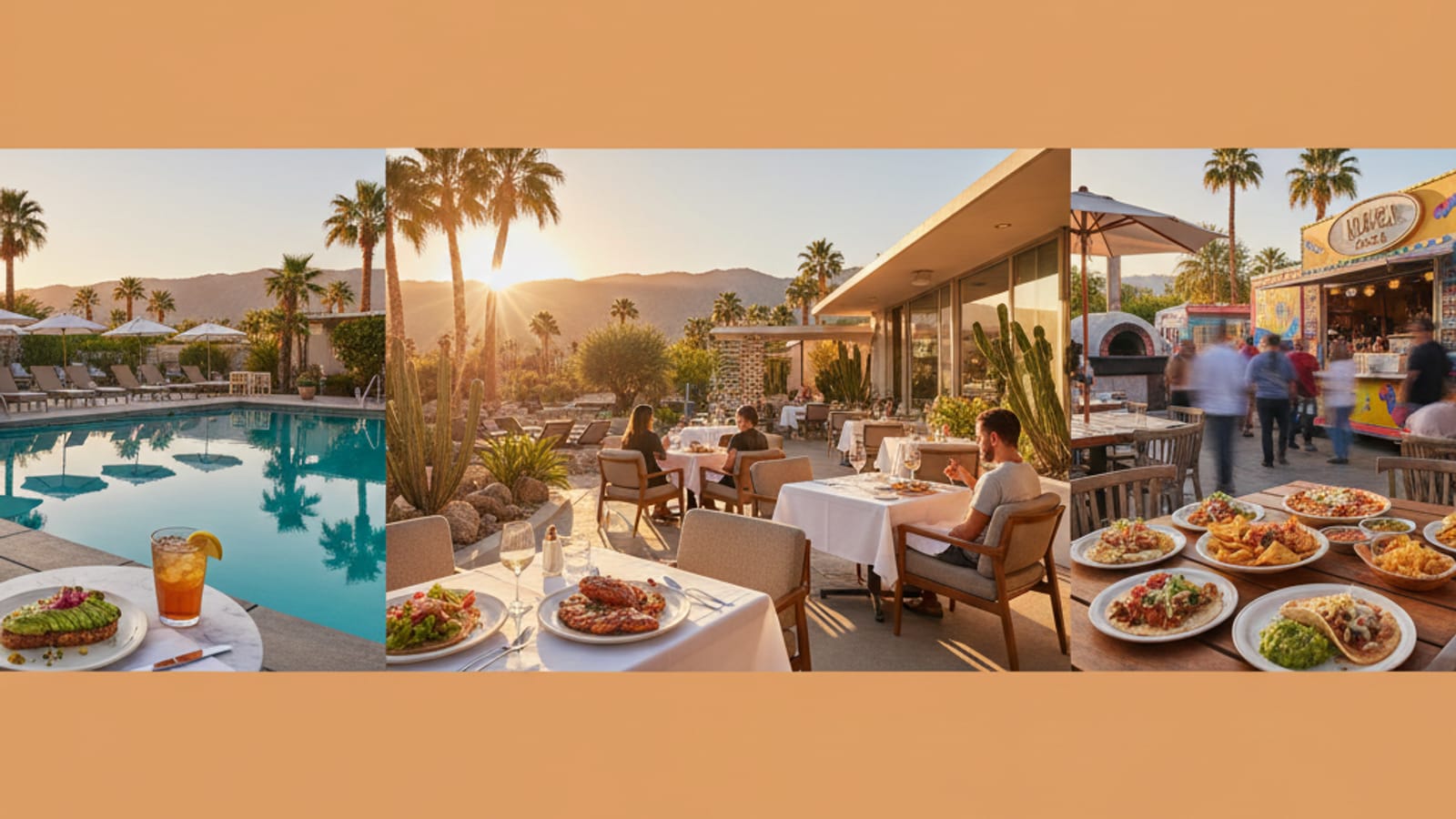
We Asked Palm Springs Locals Where They Actually Eat — Here's What They Said
 City Guide
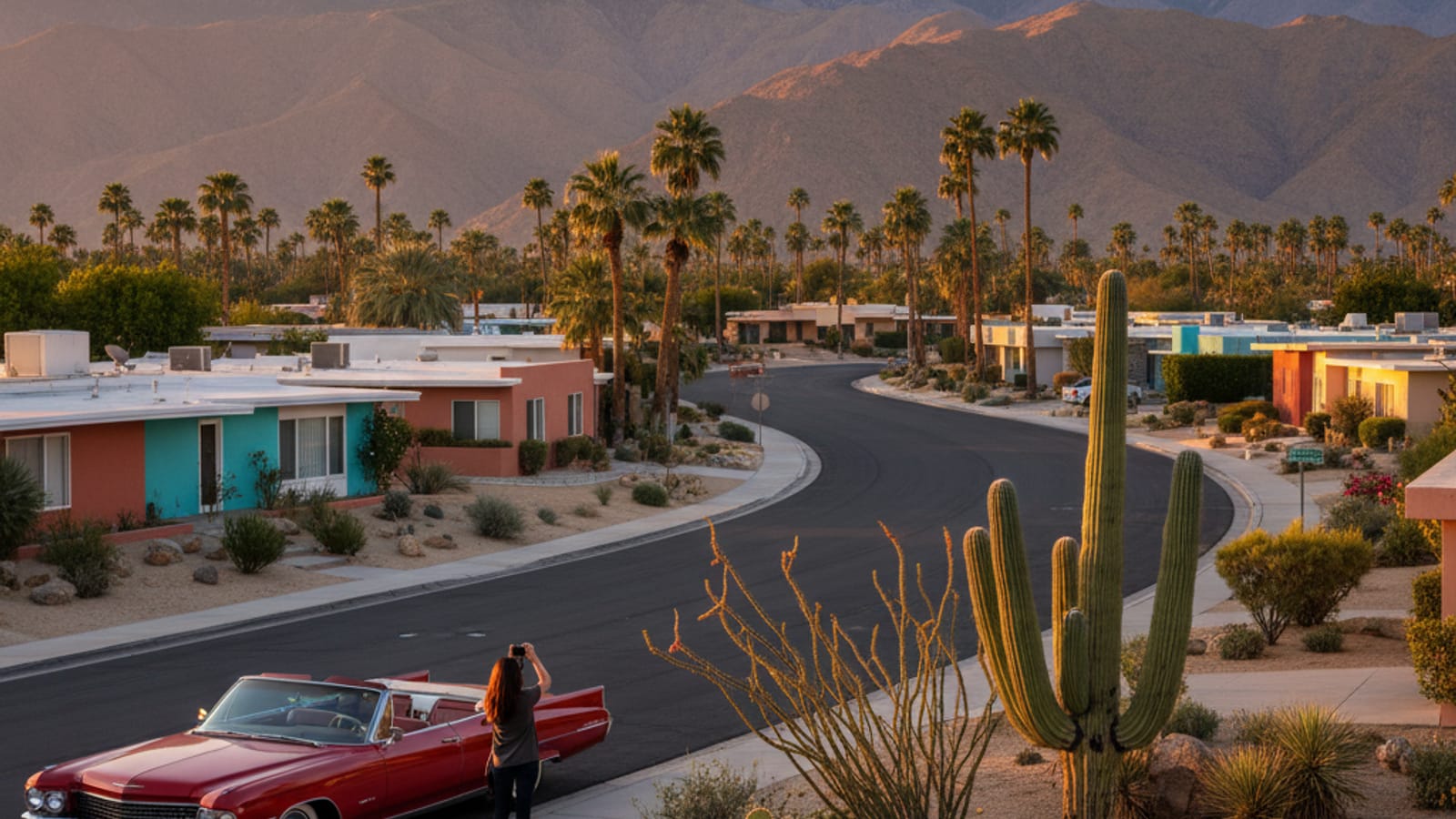
First Time in Palm Springs? Locals Wish You Knew These 12 Things
 Home Services
Water Damage Restoration Near Me: What to Do in the First 24 Hours (2026 Guide)
 Food & Dining
Best Buffet in Las Vegas 2026: What's Still Worth It After the Great Buffet Collapse
 Food & Dining
Best Coffee Shops in Chicago 2026: 20 Cafes Worth Leaving Your Apartment For
 Food & Dining