
Last updated March 15, 2026 by the Recommended.app research team.
Phoenix Is Not What You Think It Is
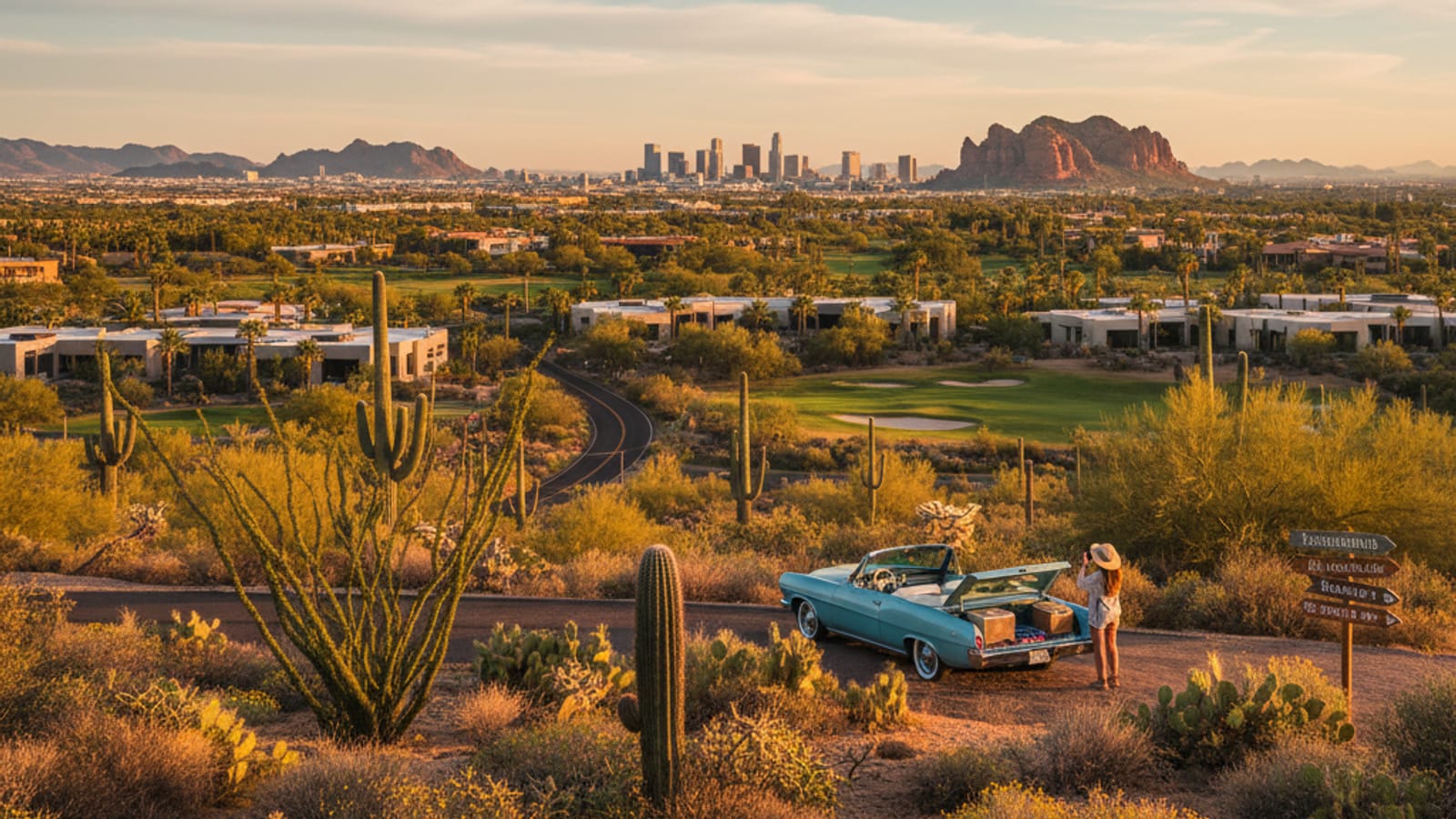
Most people picture Phoenix as a flat, endless sprawl of strip malls baking in 115-degree heat. And honestly, in July, they're not entirely wrong. But visit between October and April and you'll discover one of the most underrated cities in the American West — a place where you can hike a mountain before breakfast, eat some of the best Mexican food north of the border at lunch, wander through world-class desert gardens in the afternoon, and close the night at a rooftop bar in Old Town Scottsdale watching the sun paint the McDowell Mountains in shades of orange and purple.
The Phoenix metro area — locals call it the Valley of the Sun — is massive. It sprawls across roughly 500 square miles and encompasses cities like Scottsdale, Tempe, Mesa, and Chandler. That sounds intimidating, but it actually works in your favor: each area has a distinct personality, and once you understand the layout, getting around is straightforward. The freeways are well-designed, parking is abundant (and usually free), and rush hour is genuinely mild compared to LA or Chicago.
This guide is built from recommendations by people who actually live here — the kind of advice you'd get from a friend who moved to Phoenix five years ago and can't believe more people don't visit. We'll cover what to see, where to eat, what to skip, and how to do it all without blowing your budget.
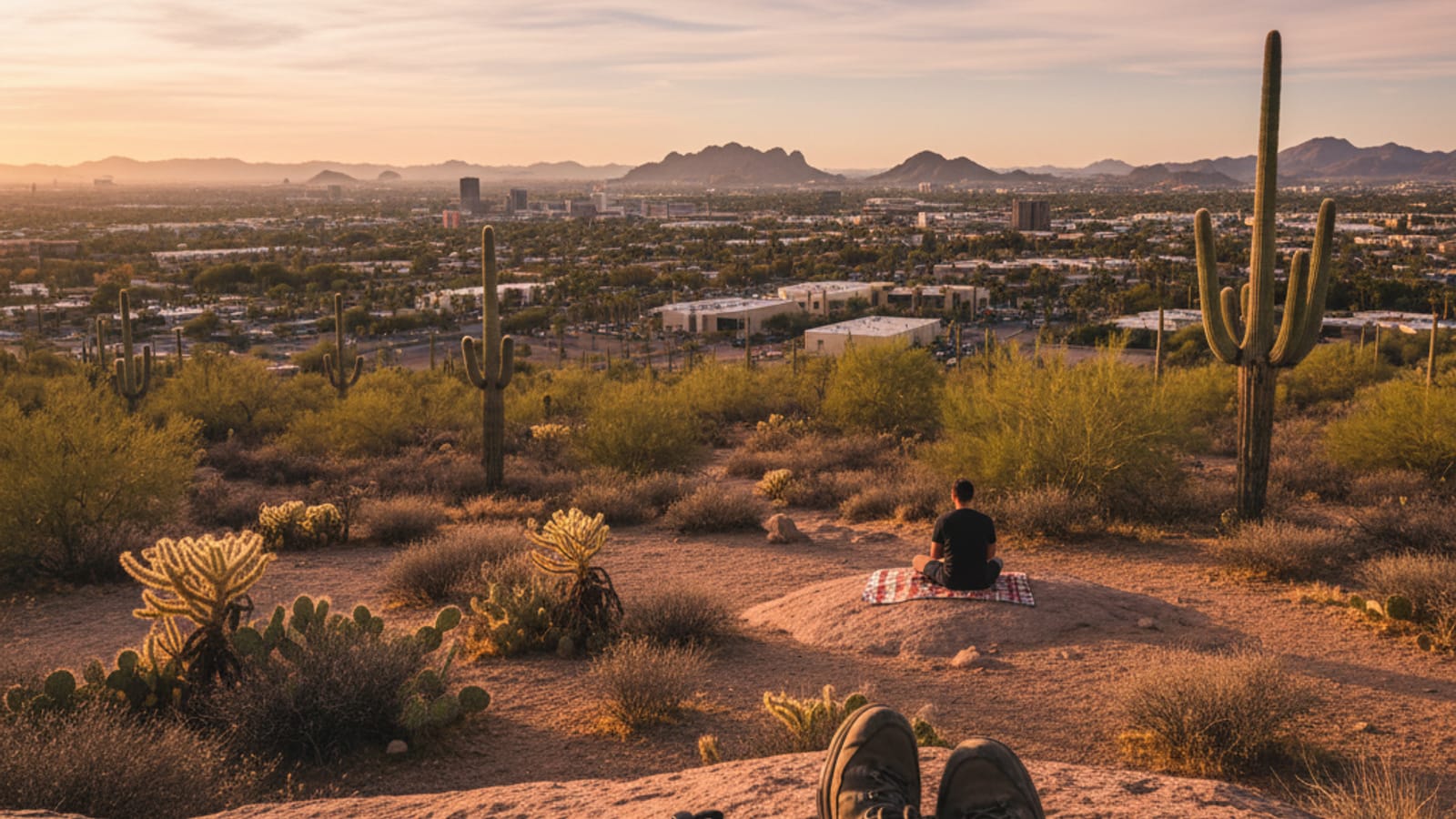
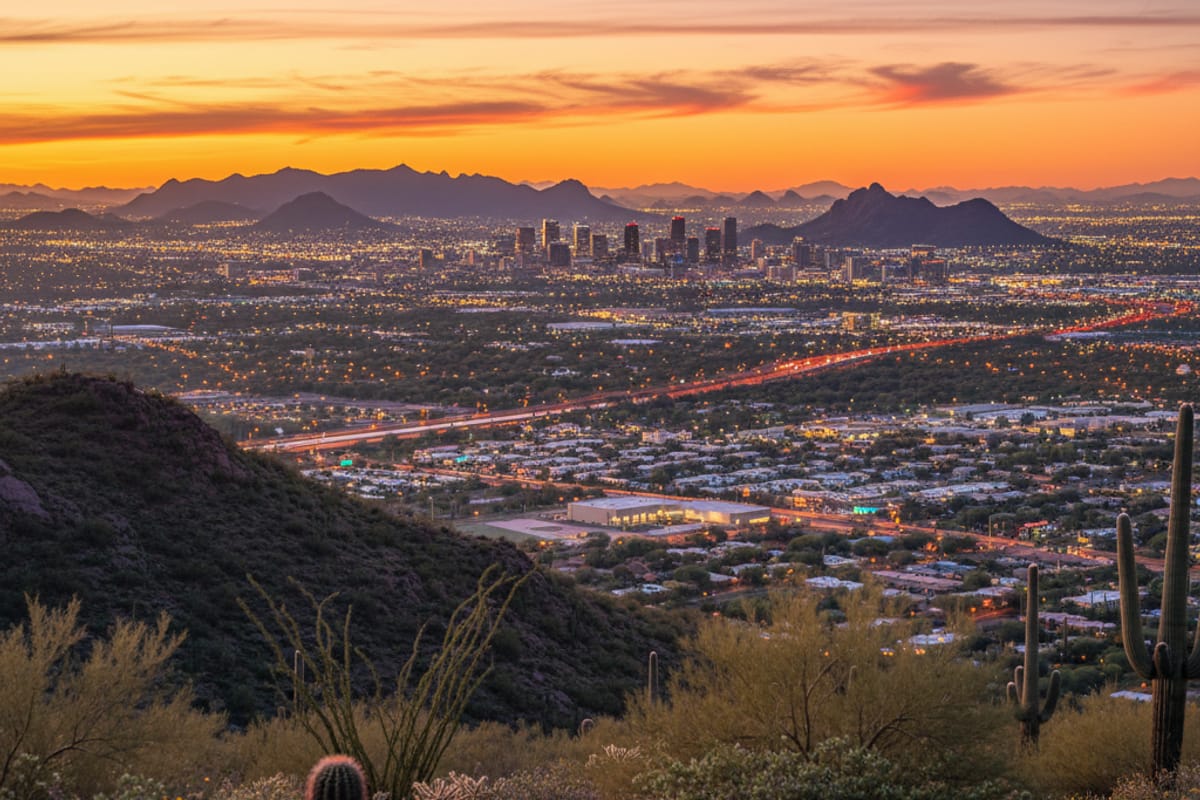 The Valley of the Sun delivers sunsets that look almost fake.
Camelback Mountain: The Iconic Phoenix Hike
If you only do one outdoor activity in Phoenix, make it Camelback Mountain. This 2,704-foot peak sits right in the middle of the city — you can see it from almost anywhere — and hiking it is a rite of passage for visitors and locals alike.
There are two trails to the summit. Echo Canyon is the more popular route: 1.2 miles one way with 1,280 feet of elevation gain. It's steep, rocky, and involves some hand-over-foot scrambling near the top. Cholla Trail on the east side is slightly longer at 1.5 miles but spreads the elevation gain out more evenly. Neither trail is a casual stroll — both are rated strenuous, and people regularly need rescuing when they underestimate the difficulty or the heat.
The summit views are spectacular. You can see the entire Valley of the Sun spread out below you — downtown Phoenix to the south, Scottsdale to the northeast, the Superstition Mountains on the eastern horizon. On clear days after a rain, you can see all the way to Four Peaks and the snow-capped Mogollon Rim.
The trailhead parking lots fill up fast, especially on weekends. Echo Canyon's lot has about 80 spaces and is typically full by 7 AM on Saturdays from October through April. The city implemented a reservation system for peak times — check the Phoenix Parks website before you go. If Camelback is too crowded, Piestewa Peak (formerly Squaw Peak) is nearby with similar views and slightly fewer people. The Summit Trail there is 1.2 miles with 1,200 feet of gain.
Pro tip: Start your Camelback hike before sunrise. The trailhead opens at 5 AM, and early morning temperatures can be 20-30 degrees cooler than midday. Bring at least 32 ounces of water per person even in winter — the desert air dehydrates you faster than you realize. And wear proper hiking shoes, not sandals or sneakers. The rocks are loose and unforgiving.
Old Town Scottsdale: Art, Shopping & the Best Night Out
Old Town Scottsdale is the social heart of the Phoenix metro area. It's where the art galleries cluster along Marshall Way, where the nightlife scene centers on Saddlebag Trail and the Entertainment District, and where some of the best restaurants in the valley set up shop.
During the day, start at the Scottsdale Museum of Contemporary Art (SMoCA) — admission is just $10, or free on Thursdays. Then walk the Scottsdale Arts District along Main Street and Marshall Way. You'll find dozens of galleries showing everything from Western art to contemporary sculpture. Every Thursday evening from October to May, the Scottsdale ArtWalk opens galleries late with free wine and live music — it's one of the best free events in the city.
The shopping in Old Town ranges from kitschy souvenir shops selling turquoise jewelry to high-end boutiques on Fifth Avenue. If you want authentic Southwestern art and crafts, skip the tourist shops and head to the Heard Museum Shop (in Phoenix proper) or the galleries on Marshall Way.
For dinner in Old Town, Citizen Public House on North 68th Street is a local favorite — their pork belly and smoked chicken are outstanding, and the whiskey list runs to 400 bottles. Hash Kitchen, right on Scottsdale Road, does over-the-top brunch with a build-your-own bloody mary bar featuring 30+ toppings. For a splurge, Maple & Ash in the Scottsdale Quarter serves wood-fired steaks and seafood in a gorgeous space — expect to spend $80-120 per person.
The nightlife in Old Town is concentrated in the Entertainment District around Saddlebag Trail. It skews young — lots of ASU students and twenty-somethings — with clubs, bars, and rooftop lounges packed on Friday and Saturday nights. If that scene isn't your thing, head to the Bevvy on North Scottsdale Road for craft cocktails in a more relaxed setting, or Coach House on Camelback Road for a beloved dive bar that's been serving cheap beers since 1959.
Pro tip: Thursday night ArtWalk in Scottsdale (October through May, 7-9 PM) is the single best free activity in the Phoenix metro. Park at the Scottsdale Waterfront garage — it's free after 5 PM — and walk the gallery circuit. Many galleries pour complimentary wine.
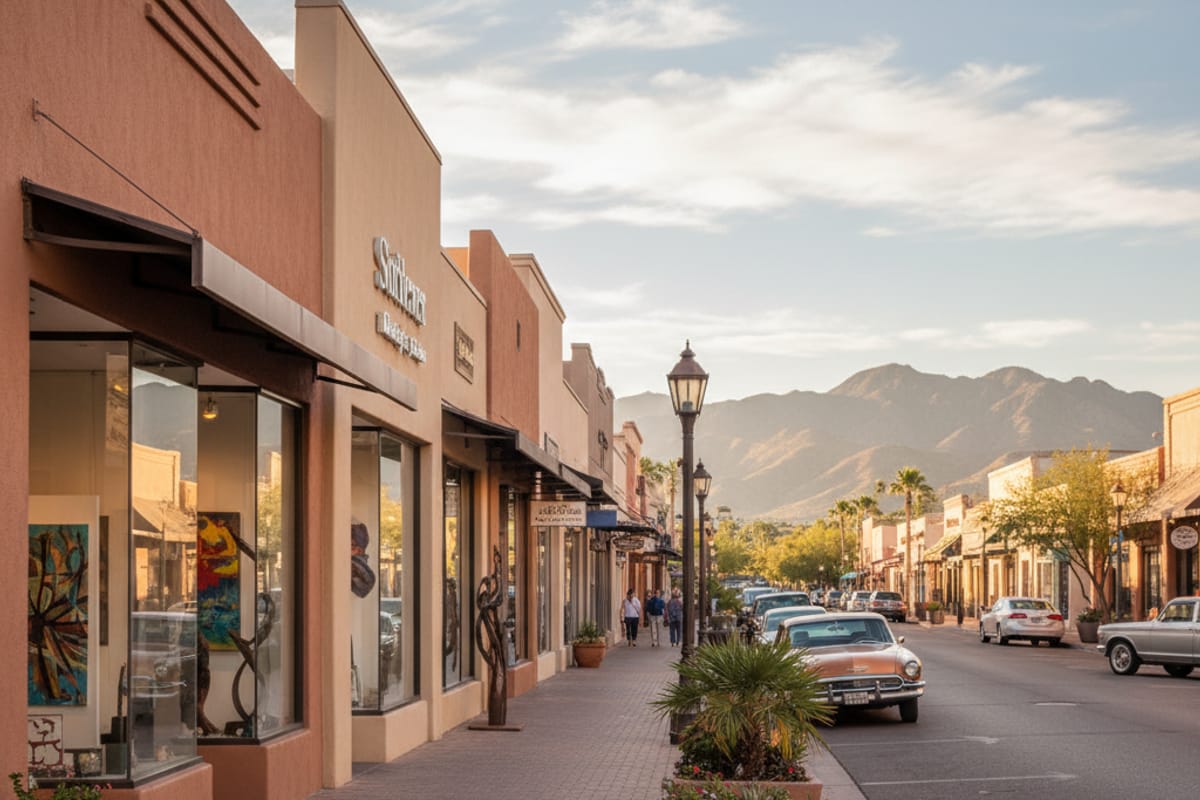 Old Town Scottsdale — part art gallery, part party district, entirely worth your time.
Desert Botanical Garden & Papago Park
The Desert Botanical Garden in Papago Park is the single best place in Phoenix to understand the Sonoran Desert ecosystem. Spread across 140 acres, it houses more than 50,000 plants from desert environments around the world, including one of the most comprehensive collections of cacti and succulents on the planet.
The garden has five main trails, all paved and easy to walk. The Desert Discovery Loop takes you through the signature saguaro collection — some of these giants are over 200 years old and stand 40 feet tall. The Plants and People of the Sonoran Desert trail explains how the O'odham and other indigenous peoples have used desert plants for food, medicine, and building materials for thousands of years. The Wildflower Trail (best in March and April) explodes with color after winter rains.
Admission is $25 for adults, but it's worth every penny. Plan to spend 2-3 hours. Go in the late afternoon to catch the golden hour light on the saguaros — the photo opportunities are incredible. From October through May, the garden hosts special evening events: Las Noches de las Luminarias in December features thousands of hand-lit luminaria bags lining the paths, and the spring flashlight tours let you see night-blooming flowers and nocturnal desert creatures.
While you're in Papago Park, hike to the Hole in the Rock — a short, easy trail that leads to a natural opening in the red butte formation. It takes about 10 minutes to reach and offers panoramic views of the Phoenix skyline. It's especially popular at sunset but gets crowded, so arrive 45 minutes before golden hour to claim a spot.
The Phoenix Zoo is also in Papago Park, right next to the Botanical Garden. It's solid but not spectacular — worth visiting if you have kids, but adults without children should prioritize the garden. There's a good fish taco stand near the zoo entrance called The Stand, where you can grab a quick lunch for about $10-12.
Pro tip: Desert Botanical Garden offers half-price admission on the second Tuesday of every month. If your dates are flexible, plan your visit around this. Also, members of other botanical gardens may get reciprocal discounts — check before you pay full price.
The Mexican Food Scene: This Is Why You're Really Here
Let's be direct: Phoenix has the best Mexican food in the United States. Yes, better than San Antonio. Yes, better than LA (though LA partisans will fight you on this). The concentration of incredible Mexican restaurants — from high-end Oaxacan cuisine to $2 street tacos — is unmatched anywhere in America.
The essential stop is Barrio Cafe on 16th Street in the Garfield neighborhood. Chef Silvana Salcido Esparza has been serving inventive Mexican cuisine here since 2002, and the restaurant is regularly cited as one of the best Mexican restaurants in the country. The cochinita pibil (slow-roasted pork) is legendary, and the guacamole is prepared tableside with seven ingredients. Entrees run $18-32. Reservations are essential — this place fills up every single night.
Los Sombreros on East Main Street in Mesa is another must-visit. It looks unassuming from the outside — a small building in a strip mall — but the interior is beautiful and the food is refined Sonoran-Mexican cuisine. Their green corn tamales, available seasonally in summer and fall, draw lines out the door. Dinner for two with drinks runs about $60-80.
For tacos, head south. South Phoenix and the areas around 16th Street and Baseline Road are packed with taquerias serving the real deal. Tacos Chiwas on North 16th Street in the Melrose District serves Chihuahua-style tacos — the carne asada and the bean and cheese are impossibly good, and most tacos are $3-4 each. Taco Guild on East Indian School Road operates out of a converted church and does creative taco interpretations — the duck confit taco with mole negro is unforgettable.
Carolina's Mexican Food on Mohave Street near downtown has been making flour tortillas by hand since 1968. People line up before they open at 7 AM for breakfast burritos the size of your forearm, stuffed with machaca (dried shredded beef), eggs, and green chile. A burrito and coffee will set you back about $8. Get there early — the line moves fast but it's long.
For a modern take, Otro Cafe in South Scottsdale does Mexican-influenced brunch with dishes like churro French toast and chilaquiles that could convert even the most skeptical diner. And if you want to go upscale, Talavera at the Four Seasons in North Scottsdale serves refined Mexican cuisine with valley views — expect to spend $60-80 per person for dinner without drinks.
Pro tip: If you can only eat at one Mexican restaurant in Phoenix, make it Barrio Cafe. But book your reservation the moment you book your flight — weekend tables fill up 2-3 weeks in advance. If you can't get a reservation, try walking in right when they open at 5 PM on a weekday. Bar seating is first-come, first-served.
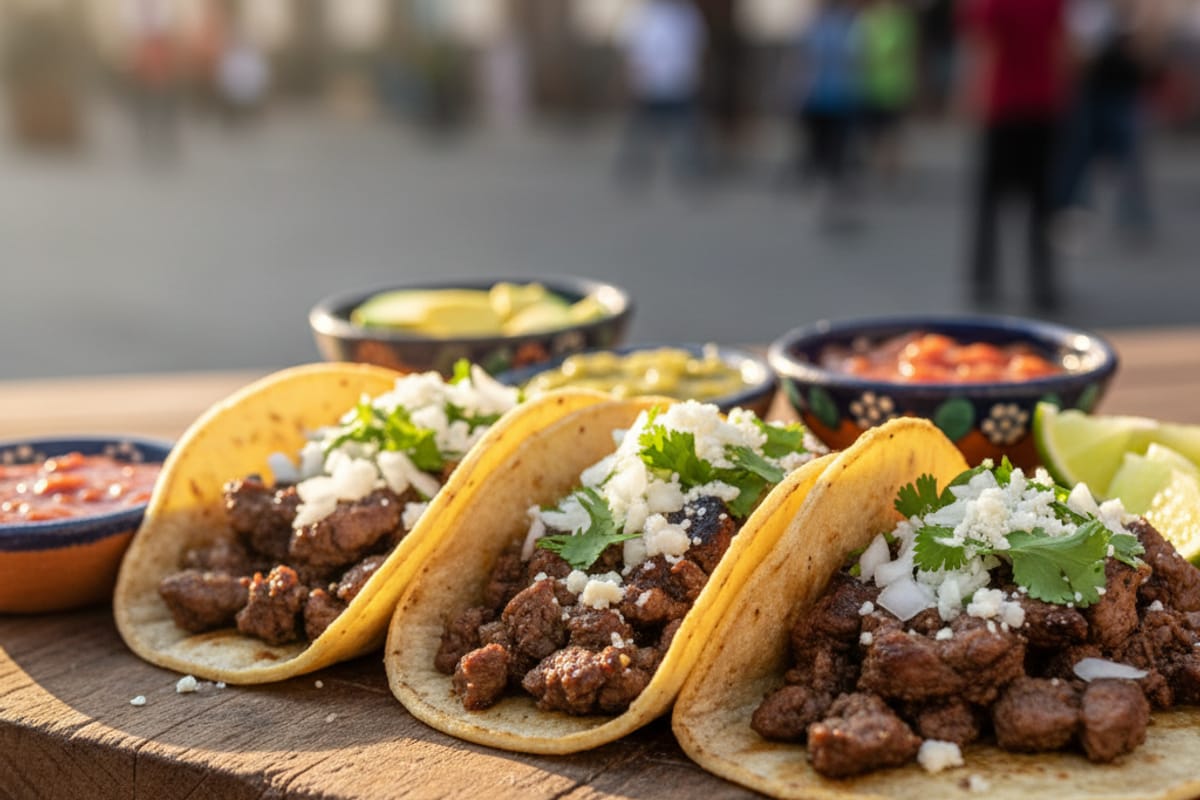 Phoenix's Mexican food scene is the real deal — and the real reason to visit.
Budget Tips & What Phoenix Actually Costs
Phoenix is surprisingly affordable compared to other major Western cities. Hotels in central Phoenix or Tempe run $100-150/night during peak season (October-April), and you can find deals under $80 midweek. In summer (May-September), prices plummet — luxury resorts that charge $400/night in February drop to $120-150 in July. The trade-off is obvious: it's brutally hot. But the pools are amazing, everything is air-conditioned, and the city functions perfectly well in the heat.
Food costs are reasonable. You can eat like a king for $30-40/day if you hit taquerias for lunch and mid-range restaurants for dinner. A breakfast burrito at Carolina's is $6-8, tacos at Tacos Chiwas are $3-4 each, and even sit-down dinner at Barrio Cafe tops out around $35 per person for food.
Activities are affordable too. Camelback Mountain and Piestewa Peak are free. Papago Park and Hole in the Rock are free. The Desert Botanical Garden is $25, the Heard Museum is $22, and the Phoenix Art Museum is $20 (with free admission on first Fridays and Wednesday evenings). South Mountain Park — the largest municipal park in the country — is completely free with miles of hiking and mountain biking trails.
Getting around does require a car. Phoenix is a driving city, and while the Valley Metro light rail connects downtown Phoenix, Tempe, and Mesa, it doesn't reach Scottsdale or most hiking trailheads. Rental cars are cheap here — often $30-45/day — and parking is almost always free outside of downtown. Uber and Lyft work well throughout the metro area, with most rides running $8-15.
Realistic budget for a long weekend (3 nights): $600-900 per person including hotel, rental car, food, and activities. That's for the October-April peak season — summer trips can run 30-40% less. The biggest variable is your hotel: if you want a resort experience in Scottsdale with a pool and spa, budget $200-350/night. If you're fine with a clean, central hotel in Tempe or downtown Phoenix, $90-130/night is easy to find.
Why Trust This Guide
Recommendations from locals across 240+ US cities via Recommended.app community data.
Explore More
This guide is part of our Phoenix collection. Explore more guides for Phoenix →
Phoenix has 523 verified businesses on Recommended.app across 93 categories, with an average rating of 4.6 out of 5.
Hidden Gems Weekly
3 hidden gems, 2 local quotes, 1 home hack — every Monday. Free forever.
Unsubscribe anytime. No spam.
More from City Guides
 Travel Tips
Phoenix on a Budget: How to Enjoy the Desert Without Overspending
 City Guide
12 Hidden Gems in Phoenix That Even Locals Overlook
 Travel Guide
The Perfect Phoenix Weekend: 48 Hours of Desert, Food & Culture
 City Guide
We Asked Phoenix Locals Where They Actually Eat — Here's What They Said
 Home Services
Water Damage Restoration Near Me: What to Do in the First 24 Hours (2026 Guide)
 Food & Dining