
Last updated March 15, 2026 by the Recommended.app research team.
Food Carts: The Heart and Soul of Portland Eating
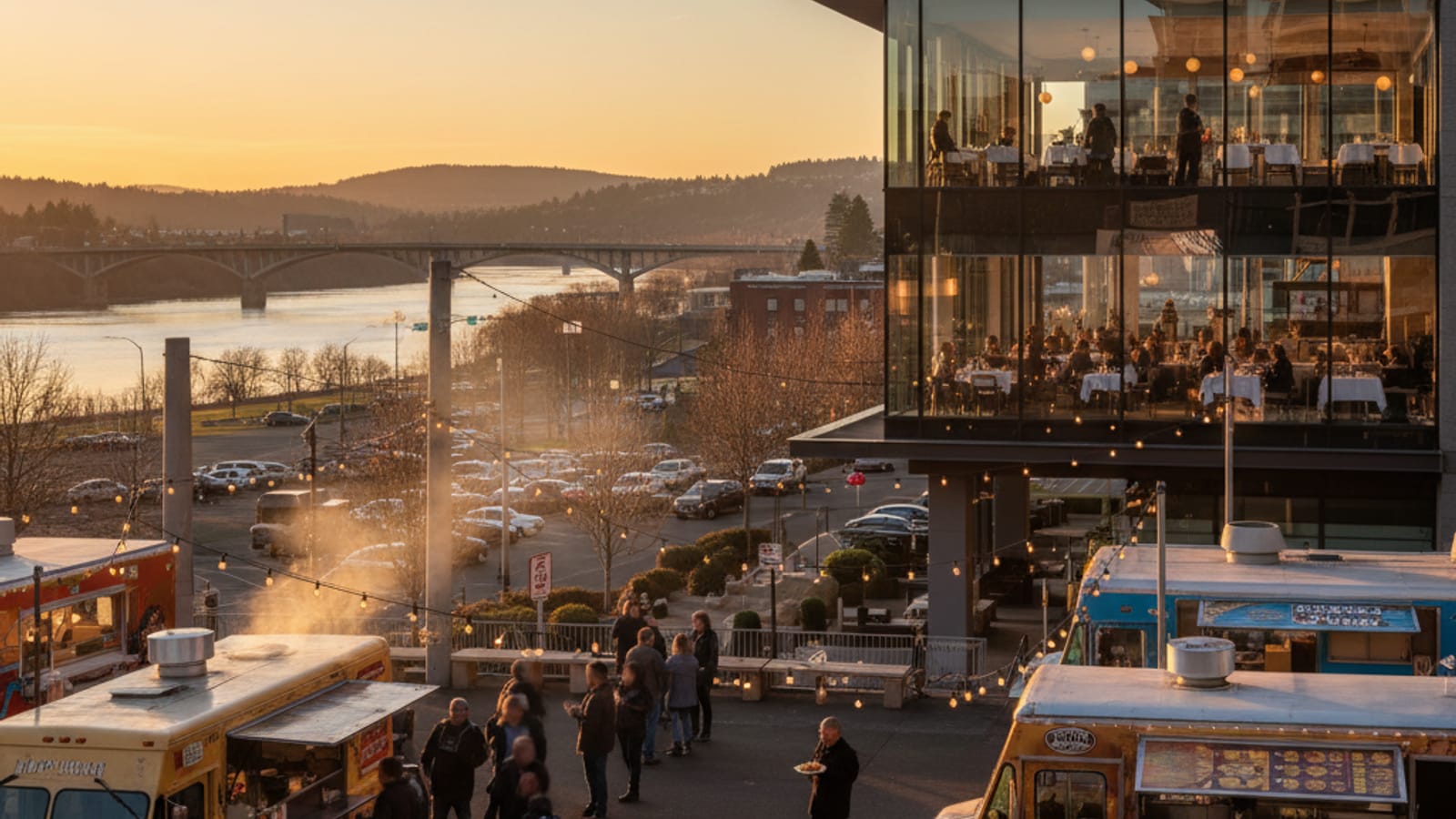
Portland's food cart scene isn't a novelty — it's the backbone of the city's culinary identity. With over 500 carts operating across the city, this is where chefs test concepts, immigrants share their food traditions, and Portlanders eat some of their best meals of the week. The barrier to entry is low (opening a cart costs a fraction of a brick-and-mortar restaurant), which means the diversity of cuisines and the willingness to take risks is unlike anything you'll find in traditional restaurant scenes.
Nong's Khao Man Gai is the food cart that proved a single-dish cart could become a Portland institution. Nong Poonsukwattana serves one thing: Hainanese chicken and rice, a Thai street food staple of poached chicken over jasmine rice with a punchy ginger-garlic-chili sauce. The chicken is impossibly tender, the rice is cooked in chicken broth for extra richness, and the sauce — which she also bottles and sells — has a balance of heat, tang, and umami that keeps people coming back weekly. There are now multiple locations, but the original cart vibe is where you want to be. A plate runs about $12 and it's one of the best $12 you'll spend anywhere in America.
Matt's BBQ on North Mississippi Avenue brought Texas-style barbecue to Portland and immediately raised the bar for what a food cart could achieve. Pitmaster Matt Vicedomini uses a custom-built offset smoker and sources his beef from local ranches. The brisket — smoked for 14-16 hours over oak and cherry wood — has a bark so flavorful you'd eat it alone. Burnt ends, when available, sell out by noon. The pulled pork is excellent, the ribs are outstanding, and the smoked baked beans are a side dish that other restaurants would build an entire menu around. Budget $15-20 for a full plate with sides.
Koi Fusion started the Korean-Mexican food cart movement in Portland before that fusion concept went mainstream nationally. Their Korean BBQ tacos layer marinated bulgogi over corn tortillas with kimchi slaw and a spicy gochujang crema. The kimchi quesadilla is a sleeper hit — crispy tortilla, melted cheese, tangy fermented cabbage. Prices are reasonable at $10-14 for a full meal. The cart moves between locations, so check their social media for the daily position.
Other carts worth seeking out: Viking Soul Food for lefse wraps filled with Nordic-inspired fillings (the smoked salmon with dill cream is extraordinary). Güero on SE Division for birria tacos that rival anything in Los Angeles. Boke Bowl's original cart for ramen done right — rich tonkotsu broth, handmade noodles, impeccable toppings. PDX Sliders for smash burgers at $4 each that have no business being that good at that price.
The food cart pod system means you're never committed to a single choice. Most pods have 5-15 carts, covered seating, and often a nearby bar. You can order a main from one cart, a side from another, and dessert from a third. It's the ultimate format for indecisive eaters and adventurous ones alike.
Pro tip: The best time to hit food carts is weekday lunches between 11:30 AM and 1 PM when everything is freshly prepped and lines haven't peaked. Many popular carts sell out of their best items by 2 PM. If you're visiting on a weekend, arrive by 11 AM for the full menu at popular spots like Matt's BBQ.
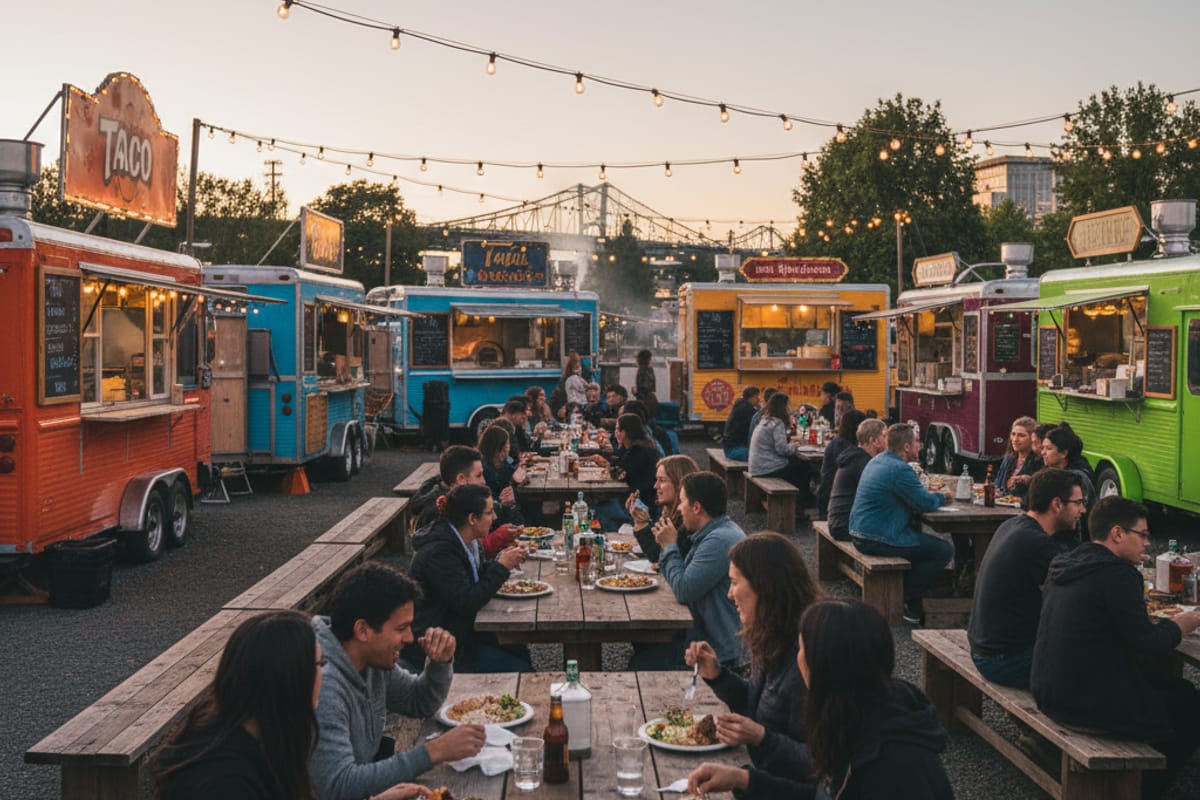 Food cart pods — Portland's answer to the food hall, but better.
Fine Dining: Where Portland Gets Seriously Creative
Portland's fine dining scene operates by different rules than most cities. There's no dress code culture here — you'll see people in flannel and Birkenstocks at restaurants that would require a blazer in New York. What Portland's high-end restaurants do share with their coastal counterparts is an obsessive commitment to ingredient sourcing, technique, and creativity. What they don't share is the pretension or the markup.
Canard on SE 3rd Avenue, from the team behind the acclaimed Le Pigeon, is the restaurant that best embodies Portland's fine dining philosophy. It's technically a wine bar, but the food is anything but casual. The menu changes frequently but revolves around perfectly executed dishes that balance French technique with Pacific Northwest ingredients. Duck liver mousse on toast is a staple — silky, rich, and paired with seasonal fruit compotes. The burger, available during happy hour, is widely considered one of the best in the city. Happy hour prices ($6 wine, $5 small plates) make this accessible in a way that most restaurants at this level simply aren't. Dinner for two runs $80-120 before drinks.
Langbaan, hidden behind the PaaDee Thai restaurant on SE 28th Avenue, is Portland's most extraordinary dining experience. You enter through PaaDee's dining room, pass through the kitchen, and arrive in a 24-seat space where chef Akkapong Earl Ninsom serves a multi-course Thai tasting menu that draws on regional traditions most Americans have never encountered. We're not talking pad Thai — we're talking northeastern Isaan-style laab with toasted rice powder, southern Thai curries with fresh turmeric and wild betel leaves, and desserts incorporating pandan, coconut, and seasonal fruits. The tasting menu runs $95-125 per person and requires reservations weeks in advance. It's worth every penny and every day of planning.
Kann on SE Division Street brings the flavors of Haiti to Portland through chef Gregory Gourdet's deeply personal cooking. The menu is a celebration of Haitian and Caribbean cuisines filtered through Gourdet's fine-dining training (he's a Top Chef alum). Dishes like grilled octopus with pikliz (Haitian pickled vegetable relish), black rice with coconut milk, and jerk-rubbed pork showcase flavors that are bold, complex, and unlike anything else in the city. The space is beautiful, the cocktail program is outstanding, and dinner runs $60-90 per person.
Other high-end spots worth reserving: Castagna on SE Hawthorne for a tasting menu that rivals anything in San Francisco at half the price. Eem on N Williams for Thai-meets-Texas-BBQ in a neon-lit space with killer cocktails. Tusk on NE 28th for vegetable-forward Middle Eastern-influenced cooking that will make carnivores forget about meat. Ox on NE Martin Luther King Jr. Boulevard for Argentine-inspired grilled meats — the bone marrow and the hanger steak are both essential orders.
Pro tip: Portland's best restaurants take reservations through Resy or direct phone calls — OpenTable has less coverage here than in other cities. For Langbaan, book exactly 30 days in advance when new dates drop. For Canard, happy hour seating is first-come-first-served and the bar fills by 4:30 PM on weekends. Arrive early or eat at the bar.
Brunch: Portland Takes It Personally
Portland's brunch culture borders on religious. On any given weekend morning, half the city is standing in line for eggs, and the other half is arguing about which line is worth standing in. The waits can be brutal — 45 minutes to two hours at the most popular spots — but the payoff is brunch food that most cities can't match at any price point.
Screen Door on SE Burnside Street East is the brunch that put Portland on the national map. The menu is Southern-inspired comfort food executed with Pacific Northwest precision. The praline bacon is the signature dish — thick-cut bacon glazed with brown sugar and pecans, caramelized until it shatters like brittle. The fried chicken and waffles use a buttermilk brine and a housemade waffle that's crispy outside and custardy inside. Shrimp and grits come with andouille sausage and a Creole sauce that would hold its own in Charleston. Weekend waits regularly hit 90 minutes. Weekday breakfast service (same menu, no wait) is the move if you can swing it. Entrees run $16-22.
Tasty n Alder on SW 12th Avenue downtown is the brunch for people who want substance over scene. Chef John Gorham's menu pulls from multiple cuisines without feeling scattered. The chocolate potato donuts are warm, dense, and dusted in cinnamon sugar. The Tasty Bowl with braised pork, kimchi, and a fried egg is a hangover cure that doubles as one of the best dishes in the city. The steak and eggs use a hanger steak that's cooked better than most steakhouse versions. The space is loud, the energy is high, and the tables turn faster than Screen Door. Expect 30-45 minute waits on weekends. Budget $18-25 per person.
Beyond the big names, Portland's brunch depth is staggering. Gravy on N Mississippi Avenue does biscuits and gravy that are borderline transcendent — buttermilk biscuits the size of softballs split open and drenched in pork sausage gravy. Sweedeedee on N Cook Street has a bakery case that will test your willpower — the morning bun and the fruit galettes are both exceptional. Pine State Biscuits on SE Belmont Street started as a food cart and now has multiple locations; their Reggie Deluxe (a biscuit with fried chicken, bacon, cheese, and gravy) is a heart attack on a plate and worth every calorie.
For a less crowded, more refined brunch experience, try Tusk on NE 28th Avenue — their weekend brunch menu features shakshuka, house-baked bread, and seasonal vegetable dishes in a beautiful light-filled space. Or head to St. Honoré Boulangerie, a French bakery with locations on NW 23rd and in the Sellwood neighborhood, where the croissants are flaky, the pain au chocolat is perfect, and the café au lait is exactly what you want on a Portland morning.
Pro tip: To skip the lines at Screen Door: go for weekday breakfast (same menu, no wait), or put your name in on the Yelp waitlist app 30 minutes before you plan to arrive. At most popular brunch spots, sitting at the bar or counter gets you seated 2-3 times faster than waiting for a table. Solo diners and couples have a huge advantage here.
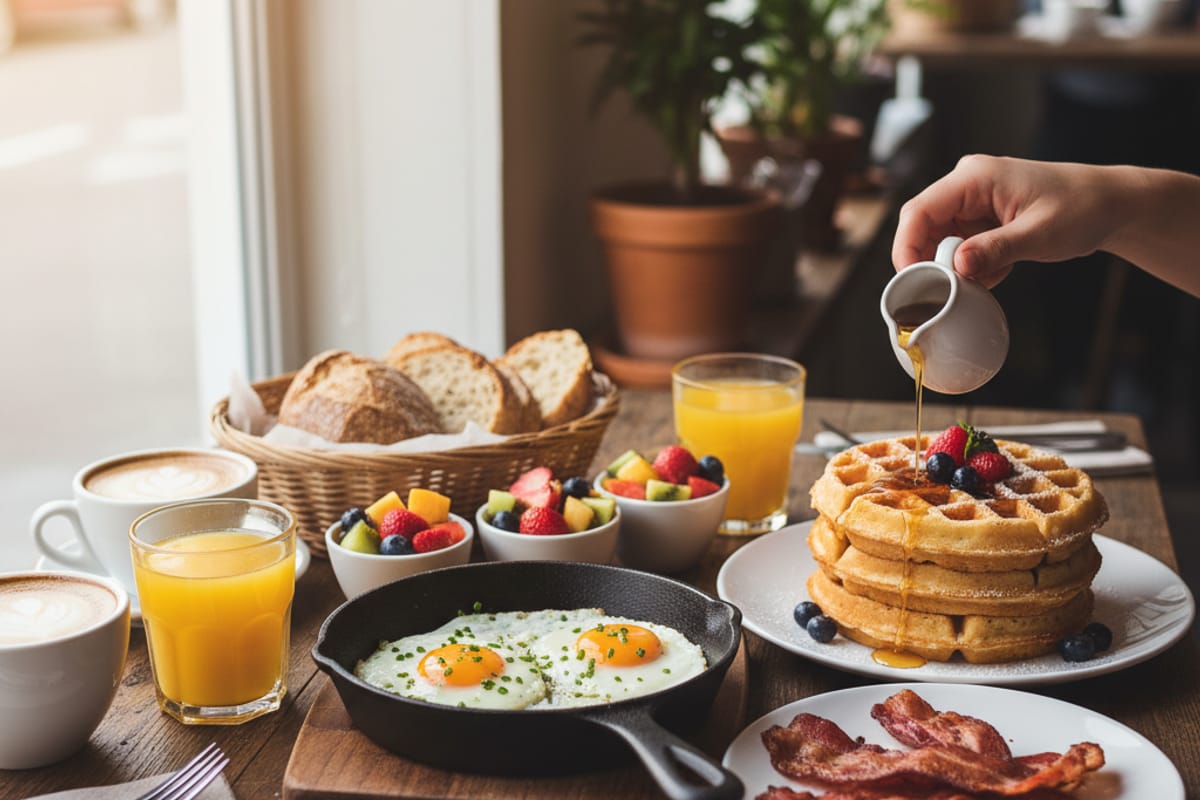 Portland brunch — worth the wait, every single time.
Division Street: Portland's Best Restaurant Corridor
SE Division Street between SE 30th and SE 50th Avenues has the highest concentration of excellent restaurants per block in Portland — possibly in any city west of New York. The stretch isn't long (about a mile), but the density of quality is absurd. You could eat every meal on Division for a week and never repeat a restaurant or have a bad experience.
The street's restaurant boom started with Pok Pok, Andy Ricker's Thai restaurant that won a James Beard Award and single-handedly changed how Americans think about Thai food. Pok Pok has since closed its Portland location, but its influence radiates through every restaurant on the street. The standard it set — deep regional authenticity, bold flavors, no dumbing down for American palates — became Division Street's culinary DNA.
Ava Gene's at SE 32nd and Division is the current crown jewel. The Italian restaurant sources almost exclusively from local farms (they literally have a list of farms on the menu), and the seasonal approach means the menu changes weekly. The pasta is handmade daily, and whatever the seasonal vegetable side dish is, order it — the kitchen treats vegetables with the same seriousness most restaurants reserve for proteins. The cacio e pepe is a reliable stunner. Wine list is deep and Italian-leaning. Dinner runs $50-75 per person.
Kann, chef Gregory Gourdet's Haitian-inspired restaurant, landed on Division and immediately became one of the most important restaurants in the city. The flavors here — scotch bonnet peppers, allspice, fresh herbs, charred everything — are bold and unapologetic. The griot (fried pork) is a must-order, as is whatever fish dish is on the menu that night. The bar program uses rum, citrus, and Caribbean spices in cocktails that are as thoughtful as the food.
Other Division Street essentials: Eb & Bean for vegan soft serve that skeptics enjoy (the rotating flavors use real ingredients, not chemical substitutes). Roman Candle Baking Co. for sourdough pizza and pastries in a bakery that smells like heaven. Bollywood Theater for Indian street food — the thali plates give you a sampler of multiple dishes for $16-18, and the chai is made from scratch with whole spices.
The street is walkable end to end, and parking is manageable on weekday evenings. TriMet bus #4 runs the length of Division with stops every two to three blocks. For a Division Street dinner crawl, start with cocktails and snacks at Kann, move to Ava Gene's for pasta, and finish with soft serve at Eb & Bean. You'll spend about $80-100 per person for one of the best dining experiences in the Pacific Northwest.
Pro tip: Division Street restaurants are busiest on Friday and Saturday evenings — reservations are essential at Ava Gene's and Kann. For walk-in dining, Tuesday and Wednesday evenings are your best bet. Many Division Street restaurants have excellent happy hours between 4-6 PM that let you sample high-end cooking at significant discounts.
Food Halls: Pine Street Market and Beyond
Portland embraced the food hall concept naturally — it's essentially a permanent, indoor version of the food cart pod that the city pioneered. Pine Street Market, in a restored 1880s industrial building on SW Pine Street downtown, is the flagship and still the best.
Pine Street Market houses about a dozen vendors under one roof, with communal seating, a full bar, and an atmosphere that's lively without being overwhelming. The standout vendors have become destinations in their own right. Marukin Ramen serves tonkotsu and shio ramen that rivals dedicated ramen shops in the city — the broth is simmered for 18 hours and has a depth that instant gratification culture doesn't usually allow for. A bowl runs $14-17. Salt & Straw has a location here for their inventive ice cream flavors (the salted caramel with bone marrow snickerdoodle is their most Portland creation). Kim Jong Smokehouse does Korean BBQ with a smoky American twist — the smoked brisket bibimbap is a genre-defying dish that shouldn't work but absolutely does.
MAPP, the food hall's craft cocktail bar, anchors the space with drinks that take the food hall experience from casual to intentional. The bartenders are serious about their craft — these aren't soda-gun cocktails but properly built drinks with fresh-pressed juices, house-made syrups, and thoughtful spirit selections. A cocktail runs $12-15, which is standard Portland bar pricing.
Beyond Pine Street Market, Portland has several newer food halls worth visiting. Providore Fine Foods on SE Sandy Boulevard is part food hall, part specialty grocery, part cooking school. The prepared food counter has rotisserie chicken, house-cured charcuterie, and seasonal salads. The cheese section alone is worth a visit — over 200 varieties, with knowledgeable staff who'll let you taste before buying. The cooking classes ($65-85) focus on seasonal Pacific Northwest ingredients and fill up weeks in advance.
Ocean, also at Pine Street Market, does poke bowls with sushi-grade fish that's sourced daily. The build-your-own format lets you customize rice, protein, and toppings, and a regular bowl runs $14-16. It's a clean, fresh lunch option that balances out the heavier food cart meals you'll be eating elsewhere.
Food halls work particularly well in Portland's rainy months (October through May). When the weather makes outdoor food cart dining uncomfortable, Pine Street Market provides the same variety and casual energy with the crucial addition of a roof. Lunchtime on weekdays is the sweet spot — all vendors are open, the seating is available, and you can sample multiple spots without fighting weekend crowds.
The food hall concept also gives visitors an efficient introduction to Portland's food scene. If you're in town for just one day and want to taste as many things as possible, Pine Street Market lets you sample ramen, barbecue, ice cream, poke, and cocktails in a single stop. It's not the deepest Portland food experience — that requires neighborhood exploration and food cart adventuring — but it's an excellent starting point and a reliable fallback when decision fatigue hits.
Pro tip: Pine Street Market is open daily but vendor hours vary — most are open 11 AM to 9 PM, with some closing earlier on Sundays. The market gets crowded at lunch (12-1 PM) and dinner (6-7 PM). Hit it at 11:30 AM or 5 PM for the best seating options. The market is a 5-minute walk from Pioneer Courthouse Square and the MAX light rail Green and Orange lines.
Where to Skip: Honest Advice on Portland's Overhyped Spots
Portland's food scene is deep enough that you don't need to waste a meal on places coasting on reputation. Here's some honest guidance on where your time and money are better spent elsewhere.
Voodoo Doughnut: This is Portland's biggest tourist trap and it's not close. The line wraps around the building, the doughnuts are mediocre at best (stale by afternoon), and the entire experience is built on Instagram novelty rather than quality. For actually great doughnuts, go to Blue Star Donuts on SW 12th Avenue — brioche-style doughnuts with inventive glazes like blueberry bourbon basil and Cointreau creme brulee. Or Pip's Original on NE Fremont for small-batch, made-to-order mini doughnuts with house chai that puts every other doughnut shop in the city to shame. Both are locally beloved. Neither has a 45-minute line.
The Portland Saturday Market is charming for about 20 minutes, but the food vendors are tourist-oriented and overpriced compared to actual food carts five minutes away. Walk through for the craft booths, skip the food entirely, and eat at a cart pod instead.
Any restaurant in the Pearl District with a line out the door on a Saturday night is likely riding location rather than kitchen quality. The Pearl has good restaurants (Deschutes, Andina, Mediterranean Exploration Company), but the best food in Portland is overwhelmingly east of the river in neighborhoods like Division, Hawthorne, Alberta, and Mississippi.
Chain restaurants that have opened Portland locations (even trendy national chains) are never the move. Portland has enough independent restaurants that you never need to eat at a chain, and the local options will be better and often cheaper. This extends to coffee — skip Starbucks and hit Stumptown, Coava, Heart, or Courier Coffee instead. Portland's independent coffee roasters are world-class, and they're everywhere.
Brunch spots with 2-hour waits on weekends that don't offer a weekday alternative: the food is usually good, but a 2-hour wait is never worth it when Portland has dozens of excellent brunch spots with 20-minute waits or walk-in availability. Be flexible with your brunch plans. The third-best brunch spot with no wait beats the best brunch spot with a 90-minute line every single time.
One more: don't eat at the airport assuming Portland's food culture extends there. PDX has a few decent spots (Laurelwood Brewing, Bamboo Sushi), but airport restaurants are airport restaurants. Eat in the city before your flight.
Pro tip: The best resource for current Portland restaurant recommendations is the Eater Portland website and their regularly updated maps. The 'Where to Eat Right Now' list is curated by local food writers who actually eat at these places regularly. Also follow local food accounts on Instagram — Portland's food community is active and honest about what's good and what's coasting.
Why Trust This Guide
Recommendations from locals across 240+ US cities via Recommended.app community data.
Explore More
This guide is part of our Portland Or collection. Explore more guides for Portland Or →
Hidden Gems Weekly
3 hidden gems, 2 local quotes, 1 home hack — every Monday. Free forever.
Unsubscribe anytime. No spam.
More from City Guides
 City Guide
First Time in Portland? Locals Wish You Knew These 12 Things
 City Guide
Portland's Hidden Gems: The Weird, Wonderful Spots Locals Love
 Travel Guide
A Perfect Portland Weekend: Coffee, Hikes & the Best Food Cart City in America
 Travel Tips
Portland on a Budget: The Cheapest Great Food City in America
 Home Services
Water Damage Restoration Near Me: What to Do in the First 24 Hours (2026 Guide)
 Food & Dining