
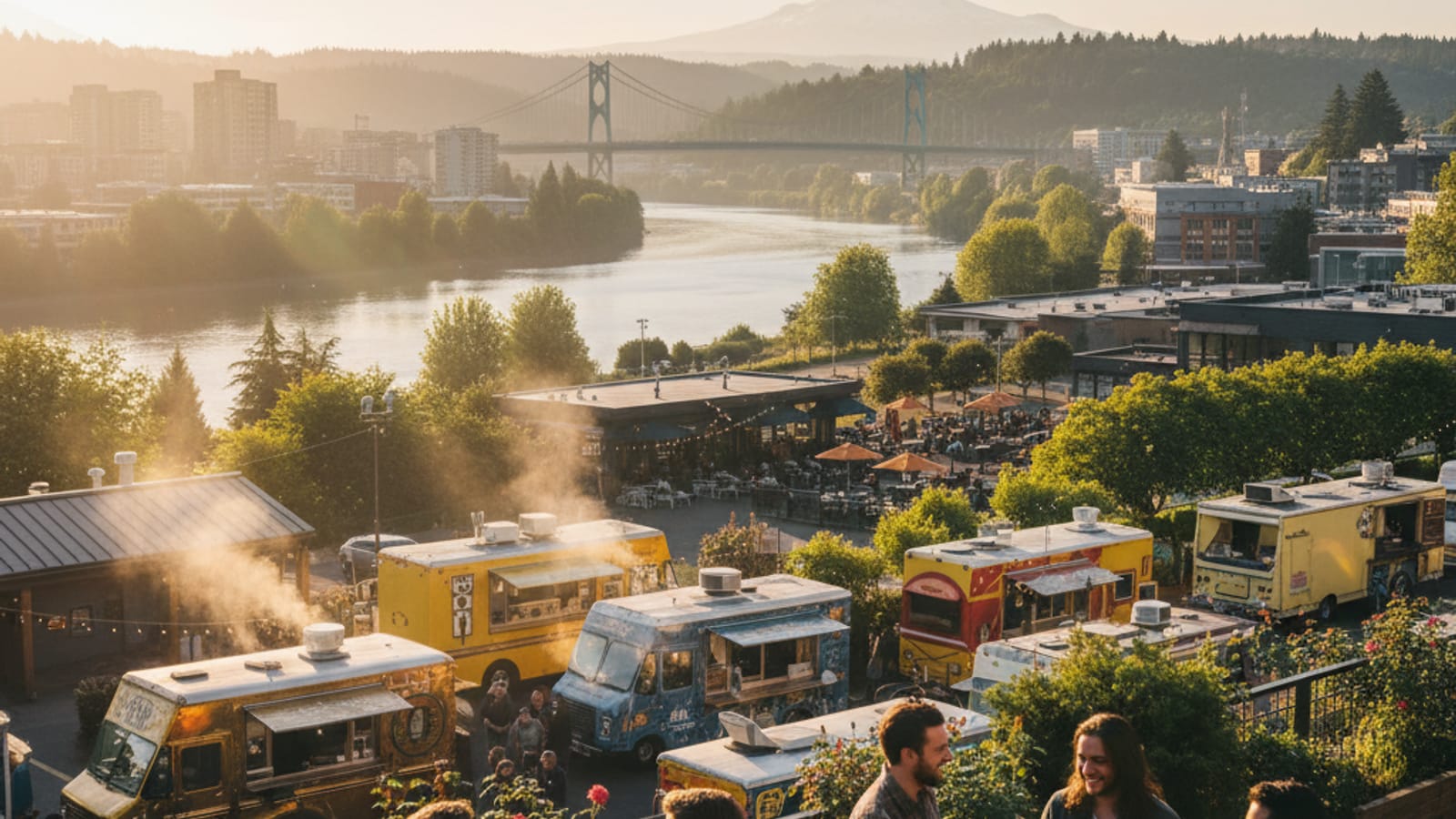
Last updated March 15, 2026 by the Recommended.app research team.
Food Cart Culture: Portland's Greatest Innovation
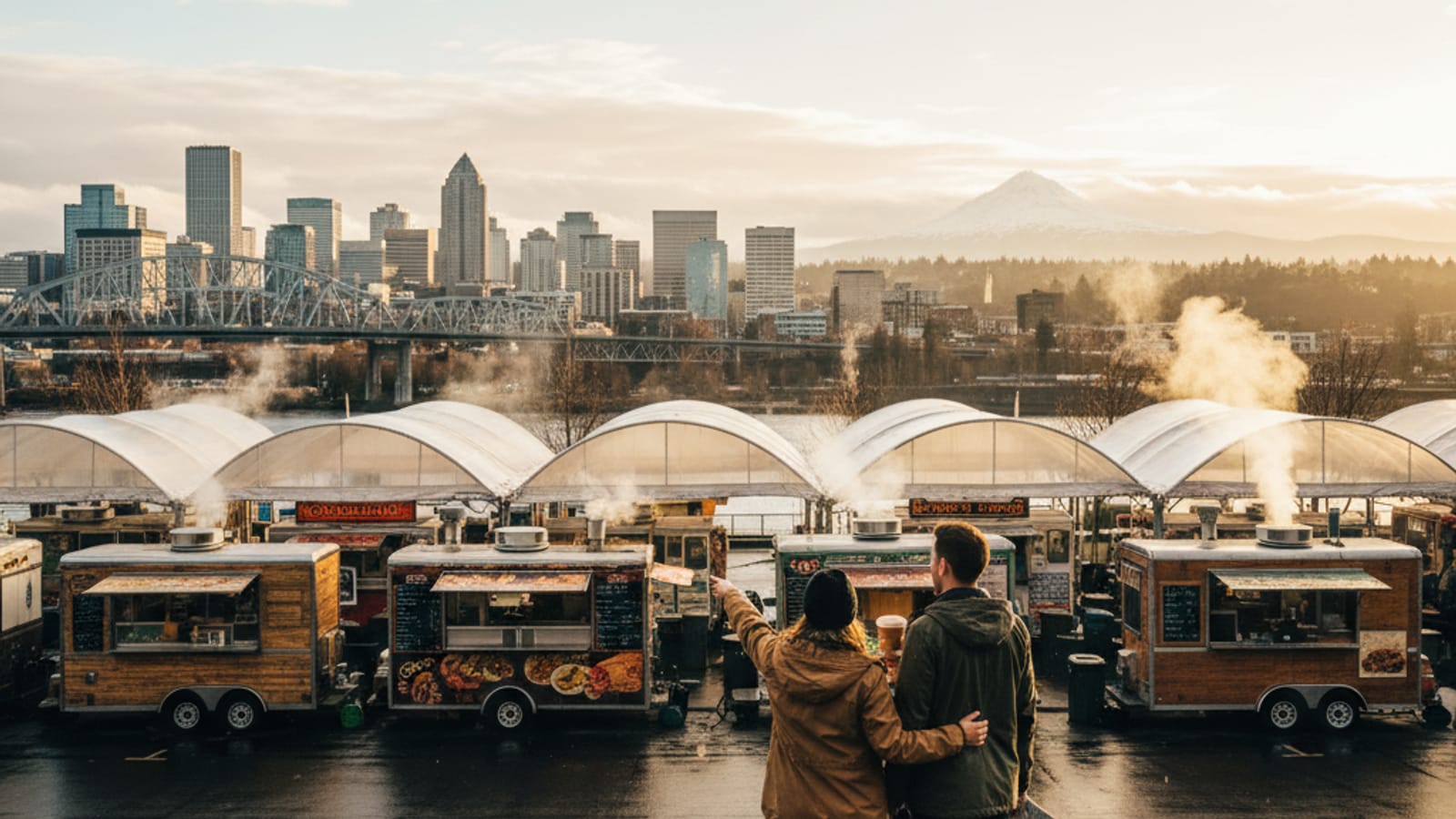
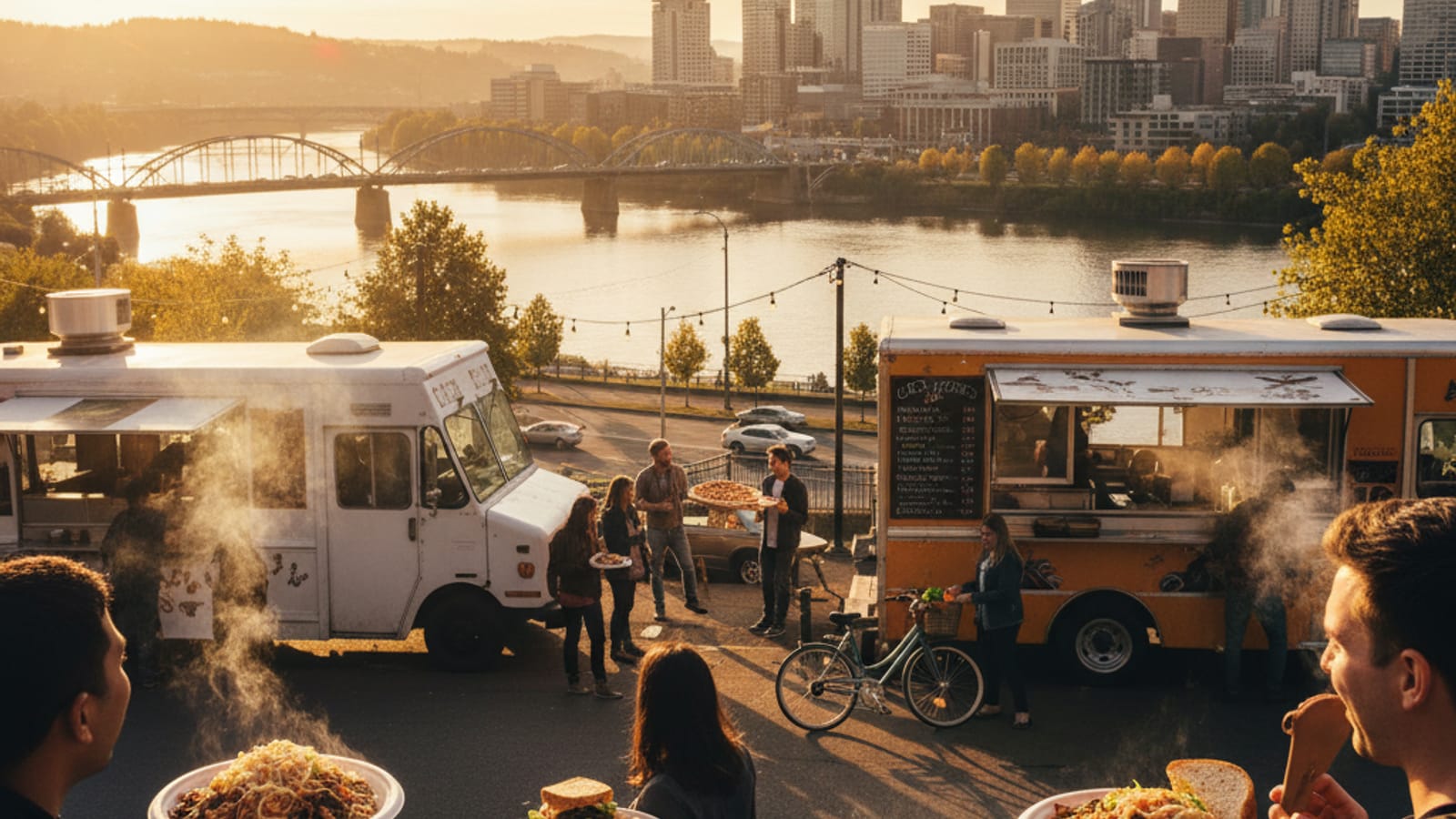
Portland didn't invent the food cart, but Portland perfected it. With over 500 food carts spread across dozens of permanent pods throughout the city, this is the single best street food scene in America — and it's not even close. Forget the trendy food hall concept that other cities keep copying. Portland's food carts are the real thing: independent operators cooking food they're passionate about, served out of converted trailers and shipping containers, at prices that make sit-down restaurants feel like robbery.
The most famous pod is Cartlandia on SE 82nd Avenue, with over 30 carts representing cuisines from Ethiopian to Filipino to Salvadoran. But don't sleep on the smaller pods scattered through neighborhoods — some of the best carts in the city operate in pods with just five or six vendors. The Hawthorne Asylum on SE Hawthorne Boulevard is a great example: a curated collection of carts with covered seating and a full bar next door.
For your first food cart experience, start with the legends. Nong's Khao Man Gai serves one dish — Thai chicken and rice — and it's absolute perfection. The chicken is poached so gently it practically melts, and the sauce is a ginger-chili masterpiece that people literally buy by the bottle. Matt's BBQ on North Mississippi Avenue does Texas-style brisket that would hold its own in Austin. The burnt ends sell out by 1 PM most days, so plan accordingly. Koi Fusion started as a single cart doing Korean-Mexican tacos and has expanded, but the original cart format is still where the magic lives.
What makes Portland's food cart scene special isn't just the food — it's the economics. A full meal at most carts runs $8-14. You can eat lunch for under $10 at places that would charge $22 for the same plate if they had a roof and a hostess. That means you can eat at three different carts in a single visit, sampling cuisines you'd never try at restaurant prices. Two tacos from one cart, a bowl of pho from another, and a dessert crepe from a third — all for under $30.
Pro tip: Food carts keep irregular hours and many are cash-only (though this is changing). Check Instagram or Google Maps for current hours before trekking across town. Tuesday and Wednesday are the most common days for carts to be closed. Bring cash in small bills — nothing kills the vibe like holding up a line asking if they can break a $50.
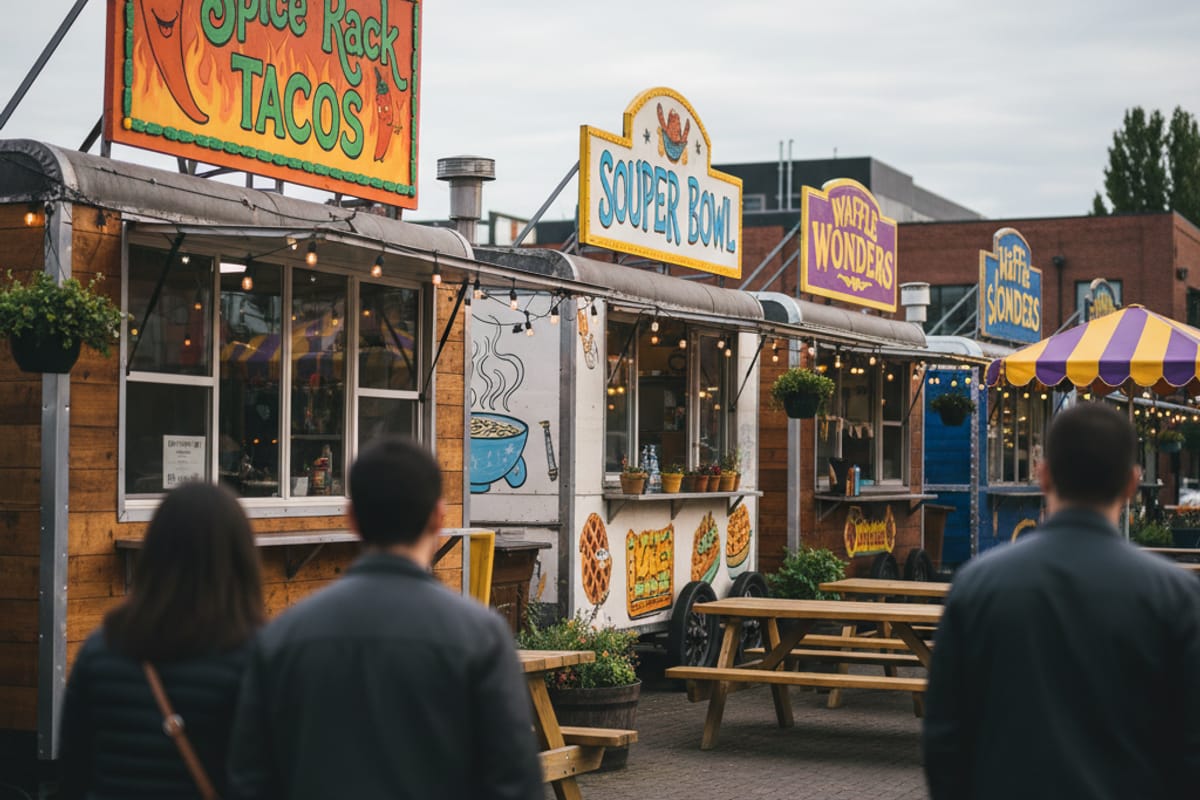 Over 500 food carts make Portland the street food capital of America.
Powell's City of Books: A Full City Block of Literary Heaven
Powell's City of Books on West Burnside Street is the largest independent bookstore in the world, and calling it a bookstore feels like calling the Grand Canyon a ditch. It occupies an entire city block, spans four floors, contains over a million books, and is organized into nine color-coded rooms. You will need the map they hand out at the entrance. This is not optional. People get genuinely lost in here.
What makes Powell's different from any other large bookstore is that new and used books are shelved together, organized by subject rather than condition. You might find a brand-new hardcover next to a beautifully worn 1970s paperback of the same title — and the used copy is $6 instead of $28. The rare book room on the top floor is worth a visit even if you're not buying. First editions, signed copies, and antique volumes behind glass cases. It's more museum than retail.
Plan to spend at least two hours here, and that's if you're disciplined. Most people who say they'll pop in for 20 minutes emerge blinking into the daylight an hour and a half later carrying a bag of books they didn't know they needed. The Pearl Room (blue section) has an excellent selection of Pacific Northwest regional titles — hiking guides, local history, indigenous culture, and nature writing. The coffee shop inside the store, World Cup Coffee, is a solid place to sit with your growing stack and figure out which ones are actually coming home with you.
Powell's also anchors one end of the Pearl District, Portland's most walkable upscale neighborhood. After the bookstore, wander down NW 13th Avenue through galleries, boutiques, and some excellent restaurants. Deschutes Brewery Portland Public House is nearby for a post-shopping pint, and if you time it right, the Pearl District hosts First Thursday art walks on the first Thursday of each month — galleries open late, wine is poured, and the whole neighborhood becomes a free cultural event.
The store hosts author readings and events almost every evening, and they're almost always free. Check the events calendar before your trip — catching a reading by a favorite author in the world's greatest bookstore is the kind of memory that sticks.
Pro tip: Powell's opens at 10 AM daily but the best time to visit is weekday mornings when the store is practically empty. Weekend afternoons get crowded, especially the ground floor. If you're buying multiple used books, ask about their loyalty program — it's free and gives you credit toward future purchases.
Craft Brewery Scene: 75+ Breweries and Counting
Portland has more breweries per capita than any city on Earth. That's not marketing — that's a verifiable fact. With over 75 breweries inside city limits and dozens more in the surrounding metro area, you could visit a different brewery every day for three months and still have places left on the list. The beer here isn't just good — it's the standard that the rest of the American craft beer movement measures itself against.
The big names are worth visiting for a reason. Deschutes Brewery on NW 11th Avenue in the Pearl District is an Oregon institution — their Mirror Pond Pale Ale basically defined the Pacific Northwest pale ale style, and the Portland pub has exclusive small-batch beers you can't get anywhere else. Great Notion Brewing on NW 28th Avenue specializes in hazy IPAs and fruited sours that look like smoothies and taste like heaven. Their mango milkshake IPA has a cult following, and the Alberta Street location has a full restaurant.
But the real Portland brewery experience is finding the smaller spots that don't have national distribution. Wayfinder Beer in the Central Eastside makes the best lagers in the Pacific Northwest — clean, crisp, technically perfect beer in a city obsessed with hazy IPAs. It's a contrarian move that works brilliantly. Culmination Brewing on NE Killingsworth has a huge outdoor patio and rotating food carts. Breakside Brewery in Milwaukie (just south of the city) won a Gold Medal at the Great American Beer Festival and their taproom is worth the short drive.
The Inner Southeast — roughly the area between the Willamette River and SE 30th Avenue, from Burnside south to Division — is the densest concentration of breweries in the city. You can walk between five or six taprooms without ever needing a car or a rideshare. Start at Hair of the Dog on SE Yamhill, work your way to Base Camp Brewing on SE Taylor, and finish at Cascade Brewing Barrel House on SE Belmont for their world-class sour ales.
Most breweries offer tasting flights for $8-15, which is the smart way to sample widely without committing to full pints. Many have food carts parked outside or full kitchens inside. Dog-friendly patios are the norm, not the exception. And because this is Portland, there's zero pretension — you can walk into any brewery in hiking clothes and trail-dusty boots and fit right in.
Pro tip: If you're doing a brewery crawl, download the Brewvana app or book one of their guided tours ($40-80). They handle transportation between breweries and give you behind-the-scenes access that walk-in visitors don't get. Alternatively, the TriMet bus system connects most brewery-heavy neighborhoods for $2.50 a ride.
The Neighborhoods: Alberta, Hawthorne, Division & Beyond
Portland is fundamentally a city of neighborhoods, each with a personality so distinct that crossing a single street can feel like entering a different city. The downtown core exists, but unlike most American cities, it's not where the action is. The real Portland lives in the neighborhoods east of the Willamette River, and getting to know even two or three of them will give you a deeper experience than a week spent in the city center.
Alberta Arts District (NE Alberta Street, roughly between NE 15th and NE 33rd) is Portland at its most creative and community-driven. Murals cover nearly every available wall. Independent galleries sit next to vintage clothing stores, which sit next to tiny restaurants run by immigrant families cooking the food of their home countries. Salt & Straw started here before becoming a national ice cream brand — the original shop on NE Alberta still has lines out the door for flavors like honey lavender and pear with blue cheese. Last Thursday on Alberta (the last Thursday of each month, April through September) turns the entire street into a massive block party with art vendors, street musicians, food carts, and performance art.
Hawthorne District (SE Hawthorne Boulevard, between SE 30th and SE 50th) is the neighborhood that earned Portland its reputation for being quirky. This is where you'll find vintage shops stacked three deep, record stores that still matter, and the kind of independent businesses that make you remember what retail felt like before everything became a chain. Movie Madness on SE Belmont (one block south) is a video rental store — yes, still operational — that doubles as a museum of movie memorabilia, with props and costumes from Hollywood films lining the walls. Hawthorne is also home to Bagdad Theater & Pub, a McMenamins venue where you can watch second-run movies for $5 while drinking craft beer in a beautifully restored 1927 movie palace.
Division Street (SE Division, between SE 30th and SE 50th) has transformed over the past decade into Portland's most exciting restaurant corridor. Pok Pok, the Thai restaurant that put Portland on the national food map, operated here for years (it's since closed, but its influence is everywhere). Ava Gene's does farm-to-table Italian with a seasonal menu that changes weekly. Eb & Bean serves vegan soft serve that converts skeptics. The density of quality on this stretch is remarkable — you could eat every meal on Division for a week and never have a bad one.
Other neighborhoods worth exploring: Mississippi Avenue for boutique shopping and Great Notion Brewing's taproom. St. Johns for the Cathedral Park views under the St. Johns Bridge. Sellwood for antique shopping and Oaks Bottom Wildlife Refuge. Each one rewards a slow afternoon of wandering.
Pro tip: Portland neighborhoods are very bikeable, and the city's Biketown bike-share program ($1 to unlock plus $0.10 per minute) is the ideal way to neighborhood-hop on a dry day. Stick to the designated bike lanes — Portland drivers are generally bike-aware, but the protected lanes on Williams Avenue and the Waterfront are the safest and most scenic routes.
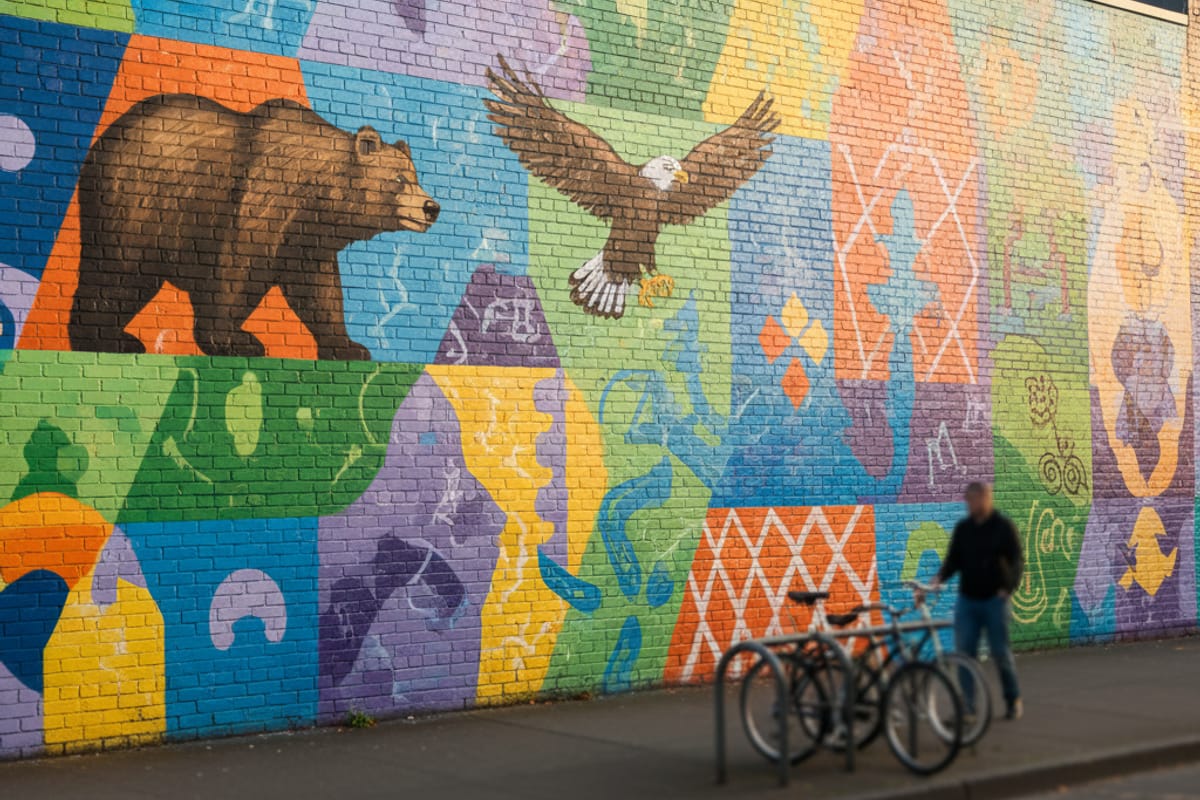 Alberta Arts District — where every wall tells a story.
Columbia River Gorge Day Trip: Waterfalls and Wonder
The Columbia River Gorge is 30 minutes east of Portland and it's one of the most spectacular natural landscapes in the American West. An 80-mile-long canyon carved by the Columbia River between Oregon and Washington, the Gorge is home to over 90 waterfalls on the Oregon side alone. If you only take one day trip from Portland, this is it — no contest.
Multnomah Falls is the headliner and for good reason. At 620 feet, it's the tallest waterfall in Oregon and the most-visited natural recreation site in the Pacific Northwest. The Benson Bridge at the base of the upper falls is the classic photo spot, and the 2.4-mile round-trip hike to the top is moderately challenging with a payoff view that's worth every switchback. The falls are free to view from the base, though you'll need a parking permit ($5) or take the Columbia Gorge Express shuttle from Gateway Transit Center in Portland ($5 round trip, no parking hassle).
But here's what most first-timers miss: the Historic Columbia River Highway connects a string of waterfalls that are just as beautiful and far less crowded. Wahkeena Falls has a misty, fairy-tale quality. Horsetail Falls is right off the road — you can see it from your car and be standing at its base in a two-minute walk. Latourell Falls has a basalt amphitheater behind the cascade that feels like something from Iceland. You can hit four or five waterfalls in a single morning by driving the old highway.
For something more adventurous, Eagle Creek Trail is a 12-mile out-and-back hike that passes through tunnels carved into cliff faces, crosses narrow bridges over deep gorges, and ends at Tunnel Falls — a 175-foot cascade where the trail literally passes behind the waterfall. It's one of the best day hikes in Oregon, but it requires real hiking preparation: good boots, water, layers, and an early start.
On the way back to Portland, stop in the town of Hood River for dinner. Full Sail Brewing has a deck overlooking the Columbia River where you can watch windsurfers and kitesurfers tacking across the water. Double Mountain Brewery does wood-fired pizza that would be excellent in any city but feels transcendent after a day of hiking. The drive back to Portland along I-84 at sunset, with the river glowing and the Gorge walls turning orange, is one of those moments that reminds you why you travel.
The Gorge is accessible year-round but each season offers something different. Spring brings peak waterfall flow from snowmelt. Summer is warm and clear with wildflower meadows. Fall foliage in October is spectacular. Winter is quiet and moody, with frozen falls and dramatic clouds. There's no bad time — just different kinds of beautiful.
Pro tip: From May through September, Multnomah Falls requires a timed-use permit on weekends and holidays. Permits are free but limited — they're released online at recreation.gov two weeks in advance and sell out within minutes. Set a calendar reminder. Alternatively, visit on a weekday morning when no permit is needed and crowds are a fraction of weekend levels.
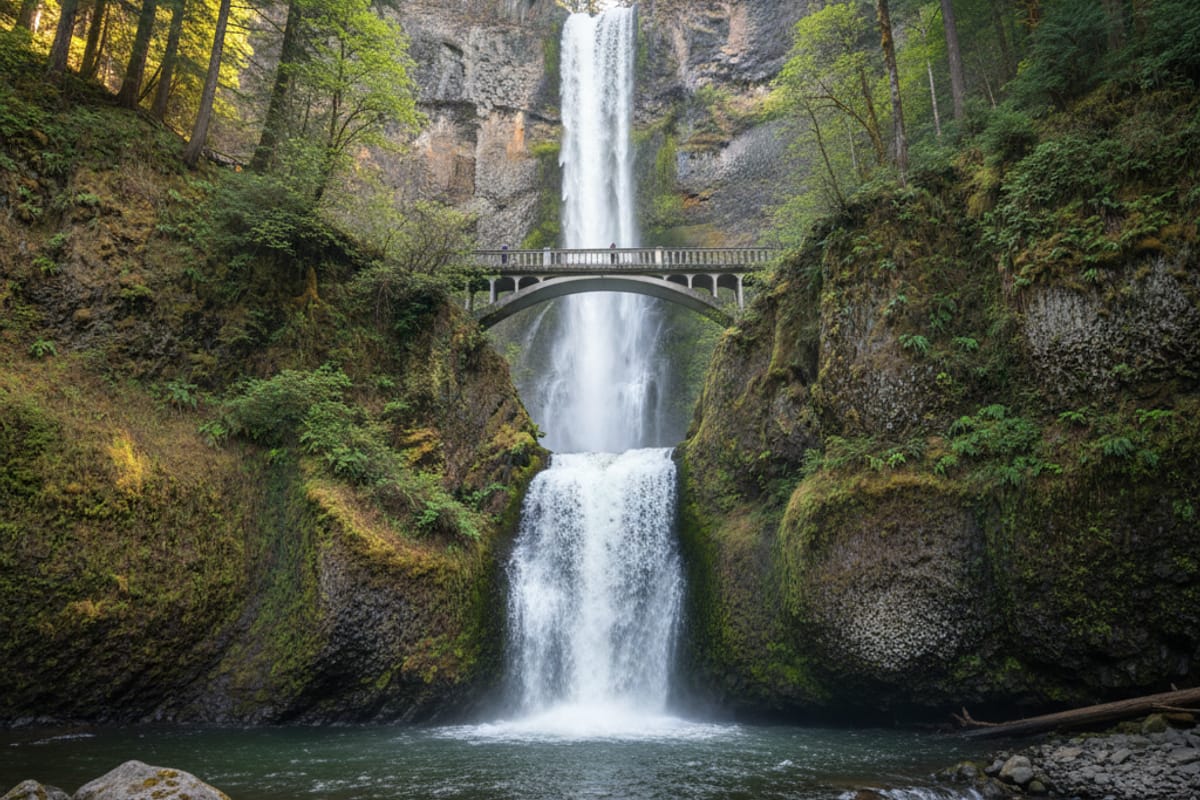 Multnomah Falls — 620 feet of pure Pacific Northwest majesty.
Budget Tips: Portland Is Cheaper Than You Think
Portland consistently ranks among the most affordable major cities on the West Coast for visitors, and a few strategic choices can stretch your budget dramatically. Here's the honest breakdown of what a Portland trip actually costs.
Accommodation: Downtown hotels run $150-250/night, but neighborhoods like the Lloyd District and close-in Southeast have solid options for $100-160. The HI Portland Hostel in the Hawthorne District is genuinely excellent — clean, social, well-located — with dorm beds starting at $40 and private rooms around $90. Airbnb options in residential neighborhoods like Sunnyside, Richmond, and Montavilla often come in under $100/night for entire apartments.
Food: This is where Portland becomes a budget traveler's dream. Food cart meals average $8-12. A massive breakfast burrito from one of the taco carts is $7 and will carry you to a late lunch. Happy hours in Portland are legendary — most restaurants offer significant discounts between 3-6 PM, and some of the best restaurants in the city participate. Canard on SE 3rd Avenue does a happy hour with $6 wine and $5 charcuterie plates that would cost triple at dinner. Screen Door on SE Burnside has a weekday happy hour with their famous fried chicken biscuit for under $10.
Transit: Portland's TriMet system covers the entire metro area with buses, MAX Light Rail, and the Portland Streetcar. A day pass is $5, and it gets you everywhere you need to go — including to the Columbia Gorge Express shuttle. The city is also extremely walkable and bikeable. Between walking, biking, and transit, you can easily do a Portland trip without ever needing a rental car or rideshare.
Free activities are abundant: Powell's City of Books (free to browse for hours), Forest Park (5,200 acres of trails, no admission fee), the Portland Japanese Garden exterior grounds, First Thursday gallery walks, Last Thursday on Alberta, Tom McCall Waterfront Park, and the Eastbank Esplanade — a floating walkway on the Willamette River that's one of the best urban walks in America.
The secret budget weapon: Oregon has no sales tax. Everything you buy — clothes, books, food, souvenirs — is the listed price. Coming from states with 8-10% sales tax, this adds up fast, especially on shopping. A $50 jacket at a vintage store on Hawthorne is actually $50, not $54.50.
Realistic 3-day budget: $400-600 per person including accommodation, food, transit, and activities. If you're hostel-staying and food-cart-eating, you can do Portland for under $350. This is a city that rewards budget travelers — some of the best experiences cost nothing at all.
Pro tip: Download the TriMet app (called 'Hop Fastpass') and load a day pass before you arrive. It works on all buses, MAX trains, and the streetcar. The app also has real-time arrival info, which is essential because Portland buses can run a few minutes off schedule in rainy weather — which is most of the time from October through May.
Why Trust This Guide
Recommendations from locals across 240+ US cities via Recommended.app community data.
Explore More
This guide is part of our Portland Or collection. Explore more guides for Portland Or →
Hidden Gems Weekly
3 hidden gems, 2 local quotes, 1 home hack — every Monday. Free forever.
Unsubscribe anytime. No spam.
More from City Guides
 City Guide
Portland's Hidden Gems: The Weird, Wonderful Spots Locals Love
 Travel Guide
A Perfect Portland Weekend: Coffee, Hikes & the Best Food Cart City in America
 Travel Tips
Portland on a Budget: The Cheapest Great Food City in America
 City Guide
We Asked Portland Locals Where They Actually Eat — Here's What They Said
 Home Services
Water Damage Restoration Near Me: What to Do in the First 24 Hours (2026 Guide)
 Food & Dining