
Last updated March 15, 2026 by the Recommended.app research team.
Forest Park: 5,200 Acres of Wilderness Inside the City
Forest Park is Portland's most extraordinary secret hiding in plain sight. At 5,200 acres, it's one of the largest urban forests in the United States — bigger than New York's Central Park by a factor of six. And unlike most urban green spaces, this isn't a manicured park with paved paths and decorative flower beds. This is actual Pacific Northwest temperate rainforest: towering Douglas firs draped in moss, sword ferns taller than your waist, and a canopy so thick that even heavy rain feels like mist by the time it reaches the forest floor.
The crown jewel is Wildwood Trail, a 30.2-mile path that winds through the entire length of the park from the Vietnam Veterans Memorial in Washington Park to Newberry Road at the northern terminus. You don't need to hike the whole thing — most people pick a section and do an out-and-back or loop using connector trails. The Wildwood Trail from the Pittock Mansion trailhead to the Stone House (about 3 miles round trip) is the most popular section and delivers huge canopy views with minimal elevation gain.
But the real hidden gem within the hidden gem is the Balch Creek loop. Start at the Lower Macleay Park trailhead on NW Upshur Street, hike along Balch Creek (the only year-round stream in the park), and you'll reach the Stone House — a moss-covered WPA-era structure built in the 1930s that looks like something out of a fantasy novel. The ruins of the old stone shelter, half-reclaimed by the forest, are one of the most photographed spots in Portland. The full loop via Wildwood and Upper Macleay trails is about 4.5 miles with moderate elevation gain.
What stuns most visitors is how quickly you transition from city to deep forest. You can be sitting in a coffee shop on NW 23rd Avenue, walk 10 minutes to a trailhead, and within 15 minutes of hiking feel like you're in the Cascade Mountains. The forest is home to over 100 bird species, including pileated woodpeckers, great horned owls, and the occasional bald eagle. Black-tailed deer are common, and there have been occasional cougar sightings — though encounters are extremely rare.
Forest Park is free, open year-round from 5 AM to 10 PM, and requires no permits. The trails are well-maintained by the Forest Park Conservancy, which runs volunteer events if you want to give back during your visit. This park alone would be worth a trip to Portland — the fact that it comes free with one of America's best food and beer cities is almost unfair.
Pro tip: The Lower Macleay Park trailhead has extremely limited street parking, especially on weekends. Take the TriMet bus #15 to NW Thurman & 28th and walk five minutes to the trailhead instead. Bring layers even in summer — the forest canopy keeps temperatures 10-15 degrees cooler than the city, and morning fog is common through July.
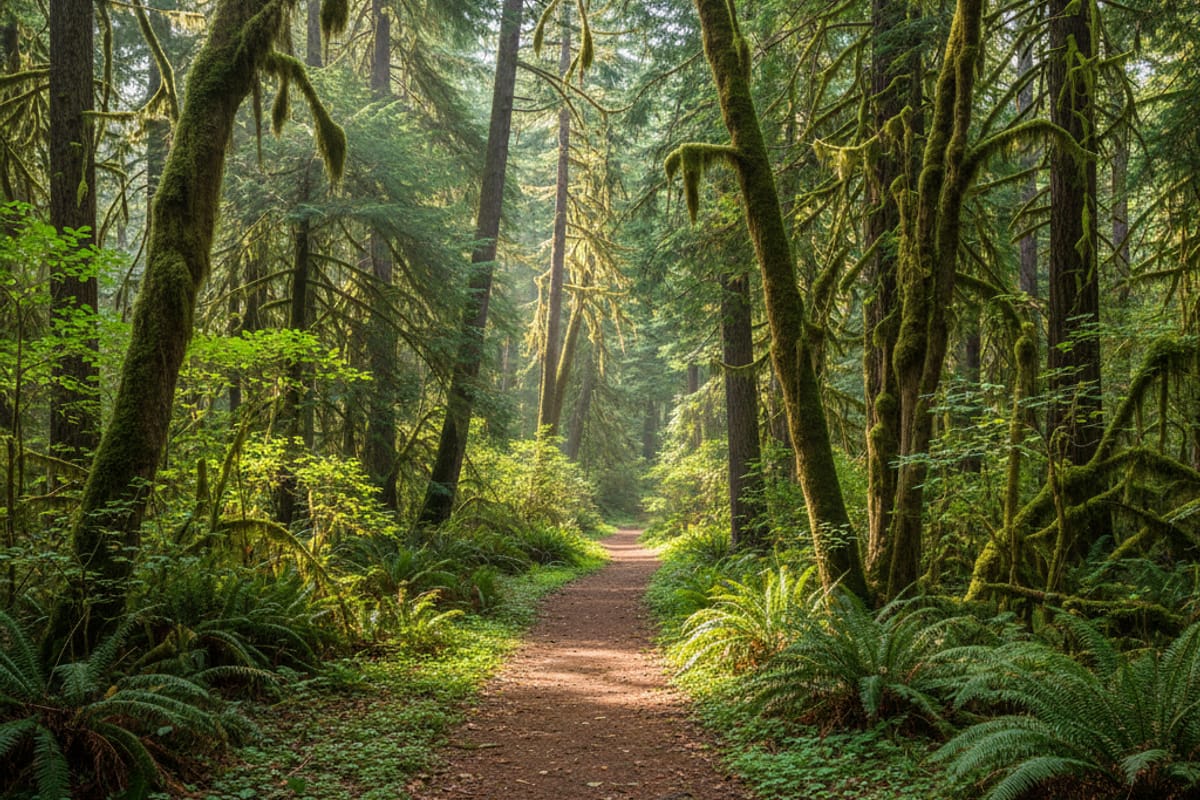 Forest Park — 5,200 acres of ancient forest, 10 minutes from downtown.
Cathedral Park: Portland's Most Dramatic Hidden Spot
Cathedral Park sits beneath the St. Johns Bridge in the St. Johns neighborhood of North Portland, and the first time you see it, you'll understand the name immediately. The bridge's gothic arches soar overhead, creating a cathedral-like effect that's genuinely awe-inspiring — especially in the late afternoon when the light comes through at an angle and the concrete pillars cast long shadows across the grass.
The St. Johns Bridge itself is arguably the most beautiful bridge in Portland, which is saying something for a city famous for its bridges. Built in 1931, its twin 400-foot towers and suspension cables have an art deco elegance that photographs incredibly well from the park below. The bridge spans the Willamette River at one of its most scenic stretches, with Forest Park rising on the west bank and the park sloping down to the riverfront on the east.
Cathedral Park is where Portland locals go for picnics, sunset watching, and the annual Cathedral Park Jazz Festival in July — a free three-day event with live music under the bridge arches. On normal days, the park is quiet and uncrowded. You can walk along the river, sit on the grassy hillside, or explore the concrete columns up close. Kayakers and stand-up paddleboarders launch from the small boat ramp at the park's edge, and watching them paddle under the bridge at golden hour is one of those only-in-Portland moments.
The surrounding St. Johns neighborhood is worth exploring on its own. St. Johns has maintained a small-town feel despite being technically part of Portland — the main strip on Lombard Street has locally owned shops, a vintage movie theater (the St. Johns Twin Cinema with $4 tickets), and excellent food. John Street Cafe does a breakfast that locals consider among the best in North Portland. Tienda y Taqueria Santa Cruz serves some of the most authentic Mexican food in the city from a tiny storefront that's easy to miss.
To reach Cathedral Park, take the TriMet bus #44 from downtown Portland — it drops you within a five-minute walk. By car, there's a small parking lot off North Pittsburgh Avenue. The park is free and open dawn to dusk. Come at sunset for the best photography conditions, or on a foggy morning for a moody, atmospheric experience that looks nothing like any Portland postcard you've ever seen.
Pro tip: The best photo angle of the St. Johns Bridge from Cathedral Park is from the southeast corner of the park, near the boat ramp. Arrive 30-45 minutes before sunset for the golden hour light hitting the bridge towers. On clear days, you can sometimes see Mount St. Helens from this vantage point.
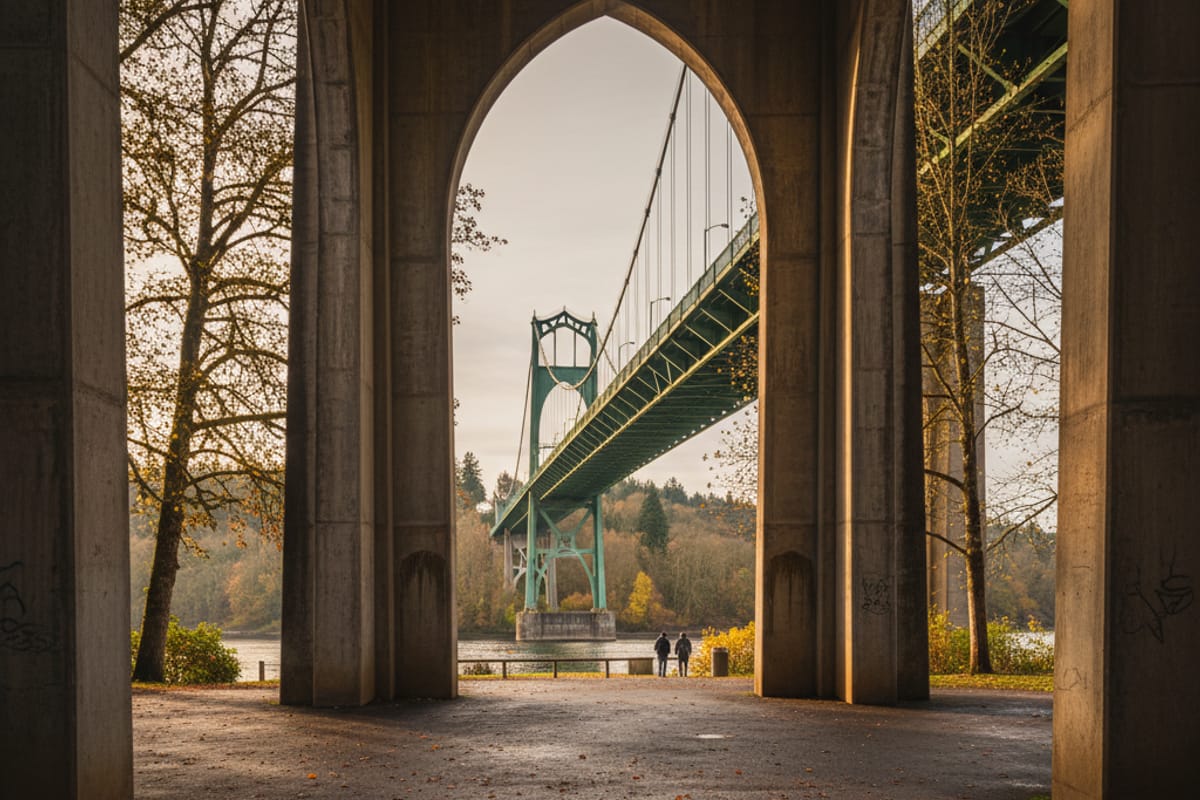 Cathedral Park — gothic arches, golden light, and zero crowds.
Sellwood Antique Row: Treasure Hunting on 13th Avenue
Sellwood, in Portland's far southeast, is the city's antique district — and it's not the dusty, overpriced kind. SE 13th Avenue between Tacoma and Malden Streets is lined with over a dozen antique stores, vintage shops, and curiosity dealers packed into a six-block stretch that you could spend an entire afternoon exploring without covering everything.
Stars Antique Mall is the anchor — a massive multi-dealer space with over 100 vendor booths spread across two floors. The range is extraordinary: mid-century modern furniture, vintage Pyrex, antique medical equipment, Victorian jewelry, old maps, vintage clothing from every decade, vinyl records, taxidermy, and things you didn't know existed until you saw them. Prices are reasonable by antique mall standards — you'll find genuine vintage pieces for $20-50 that would be triple the price in a curated boutique in the Pearl District.
Stars gets the most traffic, but the smaller shops along the row are where serious hunters find the best pieces. Sellwood Peddler specializes in mid-century furniture and has a rotating inventory that local interior designers watch carefully. 1805 Antiques focuses on Americana and industrial salvage — old factory signs, architectural hardware, vintage tools. House of Vintage on SE Hawthorne (a short drive or bus ride from Sellwood) is technically not on the row but deserves mention — it's a 14,000-square-foot warehouse of vintage clothing organized by era, from 1920s flapper dresses to 1990s band tees.
Beyond antiques, Sellwood is one of Portland's most charming residential neighborhoods. The streets are lined with Victorian and Craftsman homes, many impeccably maintained, and the overall vibe is quiet and leafy in a way that feels distinctly un-urban. Oaks Bottom Wildlife Refuge, accessible from the Springwater Corridor trail on the neighborhood's western edge, is a 163-acre wetland habitat where great blue herons wade through marshes and red-tailed hawks circle overhead — all within city limits.
The Sellwood Bridge, rebuilt in 2016, connects the neighborhood to the west side and has a pedestrian and bike lane with views of the Willamette River and the Oaks Amusement Park — a charmingly old-school amusement park with a roller skating rink that dates to 1905. It's the oldest continuously operating amusement park in America, and riding the rickety roller coaster costs $4.
For food in Sellwood, Jade Teahouse & Patisserie on SE 13th does beautiful Asian-inspired pastries and excellent tea service. Gino's on SE Milwaukie Avenue is a neighborhood Italian joint with handmade pasta and a wine list curated by people who clearly care. Neither of these is a tourist destination — they're neighborhood restaurants that happen to be very, very good.
Pro tip: Visit Sellwood antique shops on weekday mornings for the best selection and fewest crowds. Many dealers restock on Monday and Tuesday, so midweek visits often yield the freshest inventory. If you're buying furniture or large items, most shops will hold pieces for 24-48 hours and can recommend local shipping services for getting your finds home.
Peninsula Park Rose Garden: The Original Portland Rose Garden
Everyone knows about the International Rose Test Garden in Washington Park — it's in every Portland guidebook, every tour bus itinerary, every Instagram hashtag. What almost nobody knows is that Portland has an older, more intimate, and arguably more beautiful rose garden that most tourists never visit: Peninsula Park Rose Garden in the Piedmont neighborhood of North Portland.
Built in 1913, Peninsula Park was Portland's first public rose garden and the first community rose garden in the city — predating the famous test garden by four years. The sunken formal garden contains nearly 9,000 rose plantings across 65 varieties, arranged in geometric beds around a central fountain in a design that owes more to European formal gardens than Pacific Northwest casual landscaping. The sunken layout — the garden sits below the surrounding parkland — creates a sheltered microclimate that extends the bloom season and gives the space an enclosed, intimate feeling that the sprawling test garden lacks.
Peak bloom runs from late May through June, when the garden is an overwhelming sensory experience — thousands of roses in full flower, the air thick with fragrance, bees buzzing between bushes, and surprisingly few people around to share it with. Even in mid-June, when the test garden in Washington Park is packed shoulder to shoulder, Peninsula Park might have a dozen visitors.
The surrounding park is equally excellent. Peninsula Park covers 16 acres and includes Portland's only public outdoor swimming pool (a stunning octagonal pool built in 1913 — free to use in summer), tennis courts, basketball courts, a playground, and a community center. The park is bordered by some of North Portland's most beautiful residential streets — wide sidewalks, mature trees, and Craftsman bungalows that real estate agents describe with adjectives like charming and character-filled.
The Piedmont neighborhood around the park has its own quiet appeal. Piedmont Station on N Killingsworth has good coffee and pastries. Expatriate on N Prescott serves Southeast Asian-inspired cocktails and small plates in a dimly lit space that feels like a Bangkok side street. The neighborhood is residential and unpretentious — you won't find tourist infrastructure here because this isn't a tourist area. That's exactly what makes it special.
Peninsula Park is free, open from 5 AM to midnight, and accessible via TriMet bus #4 on N Lombard or bus #72 on N Killingsworth. Street parking is easy outside of pool hours in summer. Bring a book, a blanket, and a willingness to sit among 9,000 roses and wonder why you've been fighting for space at the test garden all these years.
Pro tip: If you want to see both rose gardens, visit Peninsula Park first (morning, when the light is soft and roses are most fragrant) and the International Rose Test Garden in the afternoon. The test garden's hillside location means afternoon light illuminates the roses against the Mt. Hood backdrop — the classic Portland photo. But Peninsula Park will be the one you remember.
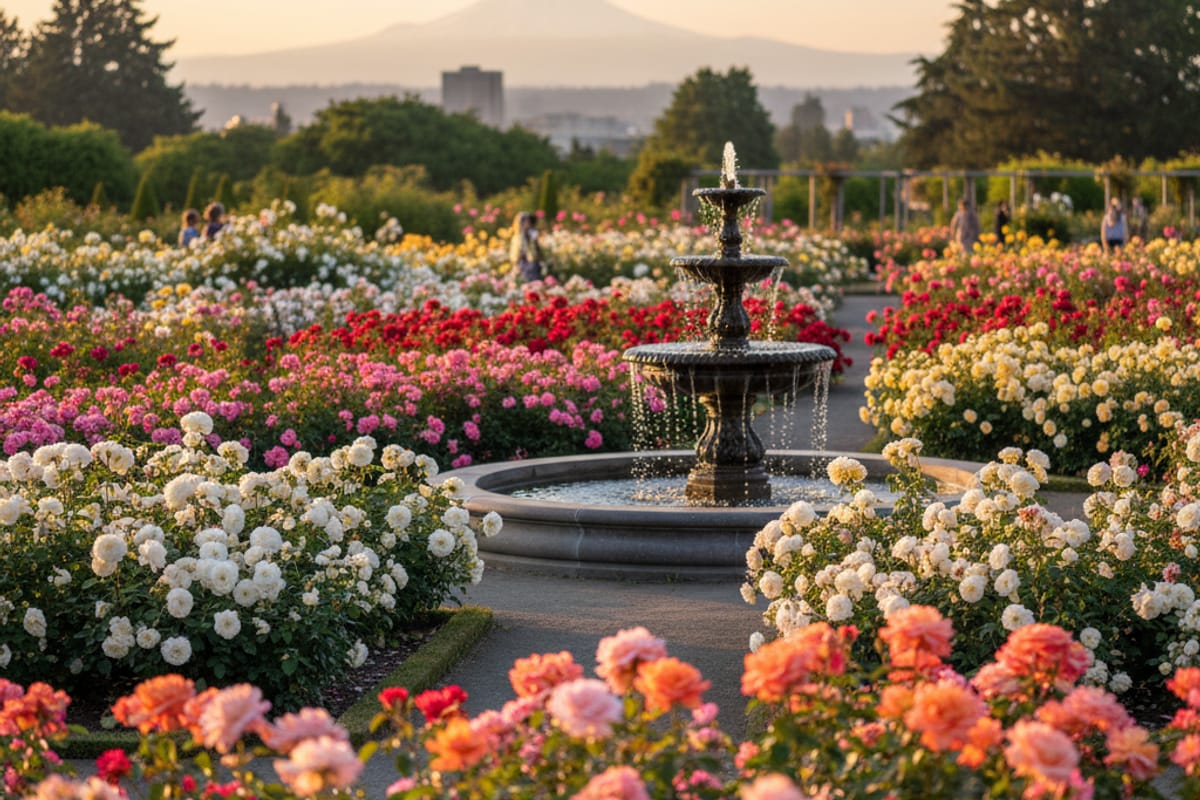 Peninsula Park — Portland's original rose garden, without the crowds.
McMenamins Movie Theaters: Beer, Pizza & Films in Converted Landmarks
McMenamins is a Pacific Northwest institution that defies easy categorization. Part brewery, part hotel chain, part restaurant group, part historic preservation society — the McMenamin brothers have spent decades buying up old buildings (schools, hotels, funeral homes, Masonic lodges, a former county poor farm) and converting them into venues where you can eat, drink, watch movies, and soak in hot tubs, all surrounded by the brothers' signature psychedelic artwork.
For first-time visitors, the movie theaters are the essential McMenamins experience. The Bagdad Theater & Pub on SE Hawthorne Boulevard is a 1927 movie palace with ornate Mediterranean-revival architecture, a massive single screen, and the ability to order craft beer, pizza, and burgers delivered to your seat while you watch second-run films. Tickets are around $5. The experience of watching a movie in a restored 1920s theater with a pint of Terminator Stout and a slice of pepperoni pizza is uniquely Portland — it shouldn't work, but it absolutely does.
The Kennedy School in Northeast Portland is even more surreal. A former elementary school built in 1915, McMenamins converted the entire building into a hotel, restaurant, brewery, multiple bars, a soaking pool, and a movie theater in what used to be the school auditorium. You can drink a beer in the former detention room (now a small bar called, naturally, Detention), watch a movie in the auditorium, and sleep in a converted classroom. The hallways are covered in original student artwork preserved during the renovation, alongside new McMenamins murals. It's weird, it's wonderful, and it's become one of Portland's most beloved community spaces.
Edgefield in Troutdale (about 20 minutes east of Portland, near the Columbia Gorge entrance) is the McMenamins flagship — a 74-acre former county poor farm converted into a resort with a hotel, winery, brewery, distillery, multiple restaurants, a golf course, gardens, a glass-blowing studio, and outdoor concert venue. The soaking pool here has views of Mount Hood. Summer concerts at Edgefield bring national acts to a stage set among the estate's gardens and historic buildings.
Other McMenamins worth visiting: the Crystal Ballroom on West Burnside, a 1914 dance hall with a floating spring-loaded dance floor that's now one of Portland's best live music venues. The Mission Theater on NW Glisan, another movie-and-pub venue in a converted Scandinavian temperance hall. The St. Johns Theater & Pub in North Portland for the most neighborhood-y, locals-only McMenamins experience.
The McMenamins model has been copied by other cities but never successfully replicated. It works in Portland because the city has the inventory of characterful old buildings, the culture of supporting independent business, and the customer base that would rather watch a $5 movie with craft beer than pay $18 for a corporate multiplex experience. It's adaptive reuse at its most creative and community-minded.
Pro tip: McMenamins movie screenings are general admission — there are no reserved seats. For popular weekend showings at the Bagdad, arrive 20-30 minutes early to get a good seat. The theaters don't show first-run movies (they typically screen films that have been out for 4-8 weeks), so check the schedule online before going. Most McMenamins are cash-free and accept cards only.
Mississippi Avenue: Portland's Most Complete Neighborhood Strip
Mississippi Avenue in North Portland might be the single best street in the city for a first-time visitor who wants to experience everything Portland does well in a compact, walkable stretch. Between N Fremont and N Skidmore Streets — roughly six blocks — you'll find craft breweries, food carts, independent boutiques, live music venues, bookstores, record shops, and some of the best restaurants in the city. It's all of Portland condensed into a 15-minute walk.
Start at the south end near N Fremont. Lovely's Fifty Fifty does wood-fired pizza with seasonal toppings sourced from local farms — the crust has a blistered, chewy perfection that rivals anything in Brooklyn or Naples. A few doors down, Meadow on Mississippi is a specialty salt, chocolate, and flower shop where you can taste single-origin chocolates and artisan salts from around the world. It sounds precious, but it's genuinely fascinating — the salt tastings are free and will change how you think about seasoning food.
Mississippi Records is a vinyl-only record shop that's become a pilgrimage destination for music obsessives worldwide. The selection leans toward soul, jazz, world music, and underground rock, with an emphasis on discovery over nostalgia. The staff curates with a deep knowledge and genuine enthusiasm that the algorithm-driven music world has mostly killed. Budget $30-50 because you will buy something.
For beer, StormBreaker Brewing has a large patio and a solid lineup of Pacific Northwest-style ales. The Mississippi location of Great Notion Brewing is the flagship — their hazy IPAs and fruit-forward sours are among the most creative beers in the city. Between the two breweries, Mississippi Studios is one of Portland's best small music venues — an intimate room with excellent sound that books indie, folk, Americana, and jazz acts. Check their calendar and try to catch a show.
The food cart pod at the north end of Mississippi (near N Skidmore) rotates vendors but consistently features excellent options. Matt's BBQ, which started here, set the standard for Portland food cart ambition — Texas-style barbecue cooked in a custom smoker, served out of a cart, at a quality level that most brick-and-mortar BBQ restaurants can't touch. The brisket is legendary, the pulled pork is exceptional, and the sides (especially the smoked baked beans) are made with the same obsessive attention as the meat.
Mississippi Avenue is also one of the best streets in Portland for people-watching. The neighborhood attracts a cross-section of the city — young families, artists, musicians, food enthusiasts, and longtime residents who remember when this strip was mostly vacant lots and auto repair shops. The transformation over the past 15 years has been dramatic but has managed to retain an independent, community-oriented character. There are no chain stores on Mississippi. No corporate restaurants. No franchises. Every business is locally owned, and many of them are deeply personal expressions of the people who run them.
To get to Mississippi, take the TriMet Yellow Line MAX to the N Prescott Street station — it's a three-minute walk to the heart of the strip. Street parking is available but can be tight on weekend evenings. Come with an appetite, a curiosity for small businesses, and enough battery on your phone for photos — this is one of those streets that looks as good as it tastes.
Pro tip: Mississippi Avenue gets lively on weekend evenings, especially Friday and Saturday. If you want to do dinner at Lovely's Fifty Fifty, make a reservation — they don't take walk-ins easily on weekends. For a more relaxed experience, visit on a weekday afternoon when you can linger in shops, take your time at the record store, and grab a brewery patio seat without waiting.
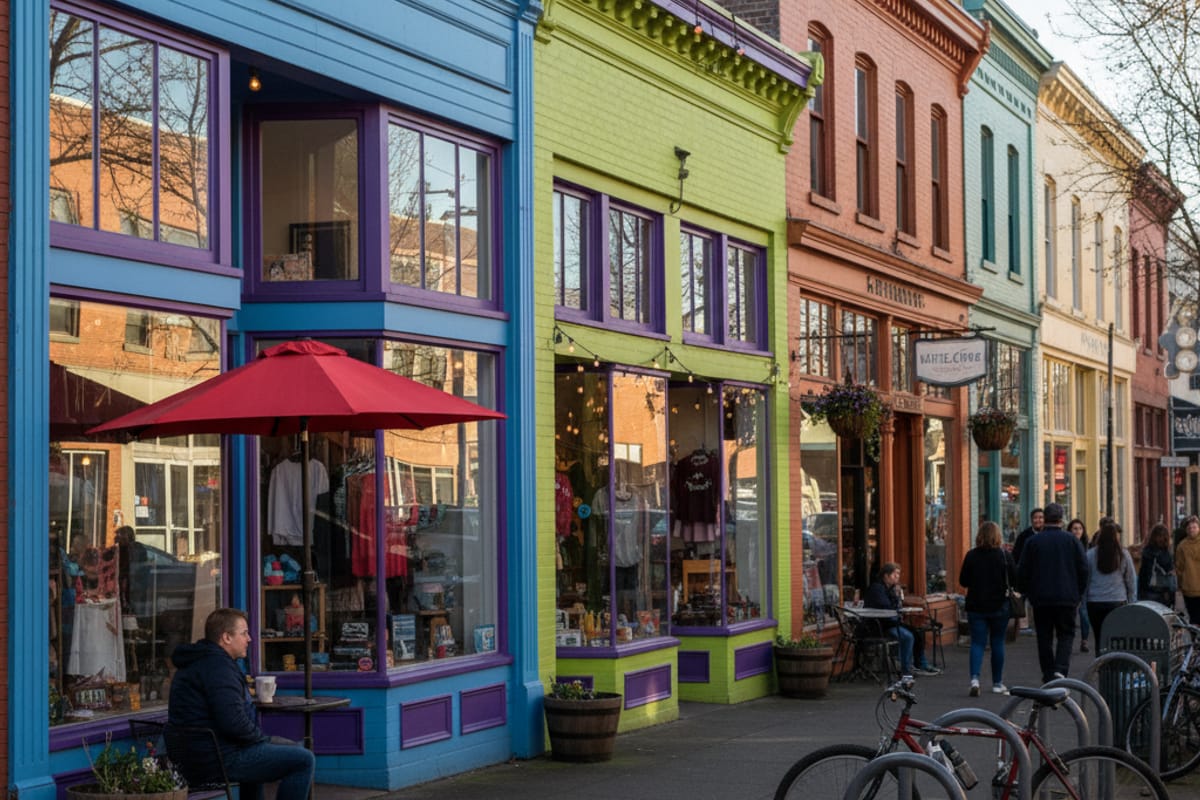 Mississippi Avenue — six blocks, zero chains, infinite Portland charm.
Why Trust This Guide
Recommendations from locals across 240+ US cities via Recommended.app community data.
Explore More
This guide is part of our Portland Or collection. Explore more guides for Portland Or →
Hidden Gems Weekly
3 hidden gems, 2 local quotes, 1 home hack — every Monday. Free forever.
Unsubscribe anytime. No spam.
More from City Guides
 City Guide
First Time in Portland? Locals Wish You Knew These 12 Things
 Travel Guide
A Perfect Portland Weekend: Coffee, Hikes & the Best Food Cart City in America
 Travel Tips
Portland on a Budget: The Cheapest Great Food City in America
 City Guide
We Asked Portland Locals Where They Actually Eat — Here's What They Said
 Home Services
Water Damage Restoration Near Me: What to Do in the First 24 Hours (2026 Guide)
 Food & Dining