
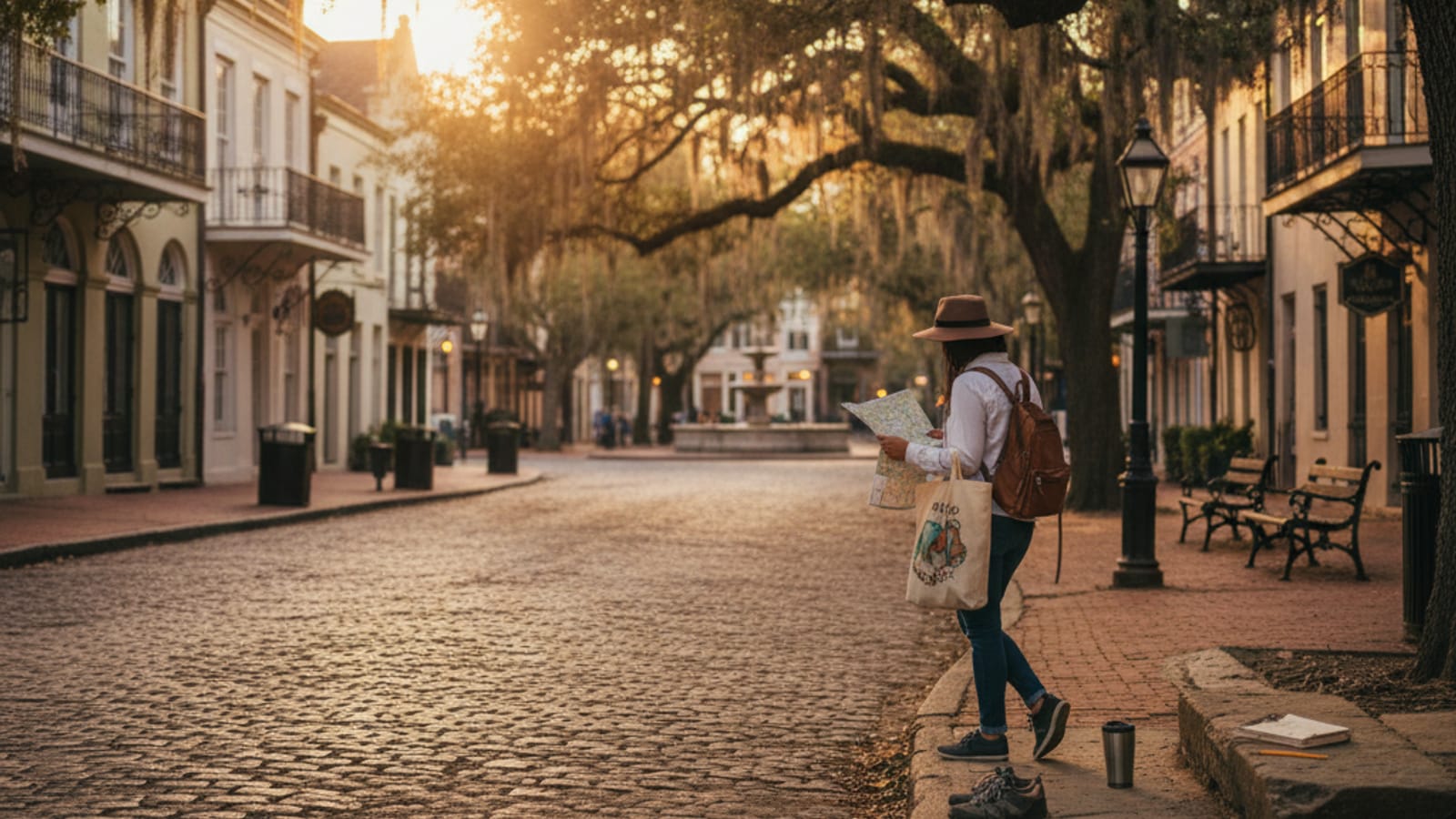
Last updated March 16, 2026 by the Recommended.app research team.
Free Squares Walking: The Best Thing in Savannah Costs Nothing
Here is the single best piece of budget travel advice for Savannah: the most beautiful and rewarding experience in the city is completely free. Walking the 22 historic squares of Savannah's Historic District costs zero dollars, takes about two hours, and is more memorable than any paid attraction in the city.
Savannah's squares were designed by General James Oglethorpe in 1733 as public gathering spaces, and nearly 300 years later, that's exactly what they still are. Each square is a small, shaded park surrounded by historic architecture, live oaks draped in Spanish moss, monuments, and park benches. Walking from one to the next — they're spaced about a block apart on a rough grid — creates a rhythm that's meditative and endlessly interesting.
You don't need a guide for this walk. You don't need an app. You just need comfortable shoes and a willingness to look up. Start at Johnson Square (the oldest, established 1733) at the north end of Bull Street, and walk south. Bull Street runs through five squares in a straight line — Johnson, Wright, Chippewa, Madison, and Monterey — and each one is worth a stop.
Chippewa Square is where the Forrest Gump bench scene was filmed. The bench is in the Savannah History Museum now, but the square itself is gorgeous. Monterey Square has the Mercer-Williams House from Midnight in the Garden of Good and Evil on its southwest corner. Madison Square has the best-preserved surrounding architecture. But the less-famous squares are often the most peaceful. Troup Square is usually deserted and has a beautiful armillary sphere sundial. Whitefield Square, at the southern end, has a gazebo that's a favorite wedding venue. Calhoun Square is the only one where every original building still stands.
From the southernmost squares, it's a short walk to Forsyth Park — 30 acres of green space anchored by the iconic white fountain that's Savannah's most photographed landmark. The park is free, open all day, and beautiful at every hour. Walk the one-mile perimeter loop, sit by the fountain, or just find a bench under an oak tree and watch the city go by.
If you want context and history for your walk without paying for a guided tour, the Visit Savannah website has a free downloadable walking map with brief descriptions of each square. There are also several free podcast walking tours available through apps like VoiceMap that narrate your walk as you go.
The squares walk is the foundation of a budget Savannah trip. Do it first thing in the morning when the light is golden and the city is quiet, and you'll understand why people who come to Savannah once almost always come back. This is a city that gives its best stuff away for free.
Pro tip: The ideal time for the squares walk is 7:30-9:30 AM, before the tour groups start. You'll have the squares nearly to yourself, the light is perfect for photos, and the temperature is comfortable even in summer. Bring coffee from your hotel.
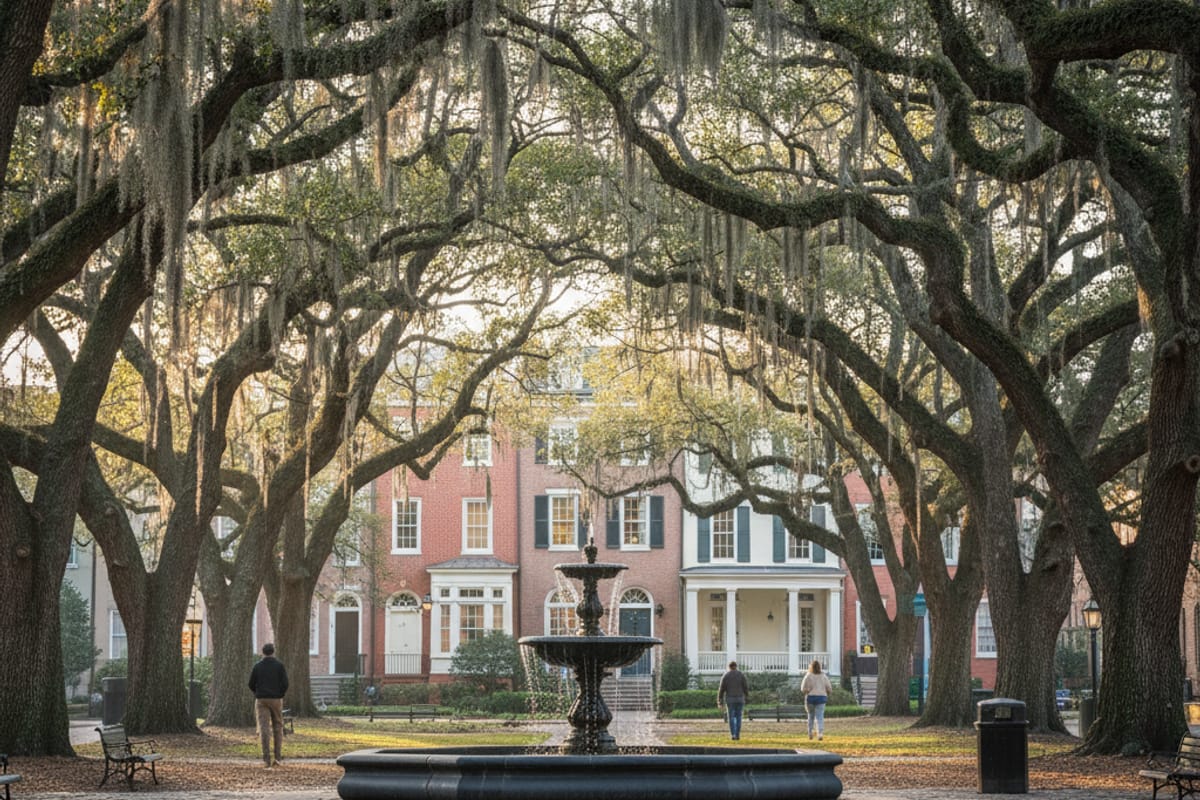 Twenty-two squares, centuries of history, and the most beautiful walking city in America — all free.
Cheap Eats: Incredible Meals for Under $15
Savannah is a city where you can eat extraordinarily well on a tight budget. The Southern food tradition here is rooted in making simple ingredients delicious, and that ethos translates directly into affordable restaurants that serve food far better than their prices suggest.
Zunzi's on Drayton Street is the budget food hero of Savannah. This South African-inspired sandwich shop serves massive sandwiches and bowls for $12-15 that will fuel you for an entire afternoon. The Conquistador — a roasted chicken sandwich with their signature Zunzi sauce — has won local "Best Of" awards for years. The Godfather (meatball sub) is enormous. Portions are genuinely huge — a regular sandwich at Zunzi's is a large anywhere else. There's usually a line, and it's always worth it.
Vinnie Van Go-Go's at City Market serves the best pizza in Savannah, and it's outrageously affordable. Huge slices of thin-crust pizza for $4-5, full pies for $10-18 depending on toppings. The crust is chewy and slightly charred, the sauce is tangy, and the ingredients are fresh. Cash only, no reservations, and the line stretches out the door on weekend evenings. This is the meal that Savannah college students survive on, and for good reason.
Back in the Day Bakery in the Starland District is breakfast heaven on a budget. Biscuits with homemade preserves for $4-5. Cinnamon rolls for $5. Coffee and a pastry for under $8. The quality rivals bakeries in cities where the same pastry would cost three times as much. Get there early on weekends — the cinnamon rolls sell out before 10 AM.
For lunch under $10, the food trucks and vendors in Starland Yard offer rotating options from wood-fired pizza to Korean tacos, all in the $8-12 range. Bull Street Taco, usually parked nearby, serves $3-5 tacos that are genuinely excellent — the carnitas with pickled onion is the standout.
The Sentient Bean on the southern edge of Forsyth Park is a coffee shop with a small food menu — sandwiches, soups, and baked goods, all under $10 — and the kind of chill, intellectual atmosphere that makes you want to sit for hours. They show independent films, host live music, and the coffee is excellent.
Here's the budget eating strategy: do one big, special meal per day (Mrs. Wilkes at $35 for the all-you-can-eat lunch, or a nice dinner) and keep the other meals cheap with spots like Zunzi's, Vinnie Van Go-Go's, and Back in the Day. You can eat three meals a day in Savannah for $30-40 total if you're strategic, and nothing you eat at that price will be mediocre. This is not a city where cheap food means bad food — it's a city where cheap food means standing in line with locals who know exactly where the value is.
Pro tip: Mrs. Wilkes' Dining Room ($35 for all-you-can-eat family-style Southern food) is technically not a budget meal, but it's the best value in the city. You'll eat enough fried chicken, collard greens, mac and cheese, and cornbread to skip dinner entirely. Think of it as lunch and dinner combined for $35.
Affordable Accommodations: B&Bs, Motels & Smart Choices
Savannah accommodations range from $60/night motels to $400/night historic inns, and the good news for budget travelers is that even the affordable options are charming. This is a city where a $90/night motel can have more character than a $300/night chain hotel in another city.
The Thunderbird Inn on Oglethorpe Avenue is the budget traveler's secret weapon. It's a retro-themed motel from the 1960s that's been lovingly restored with vintage furniture, bold colors, and a personality that most hotels twice the price can't match. Rooms start around $80-100/night depending on the season, and it's walking distance to the Historic District. They leave fresh-baked cookies in the lobby. A motel that leaves cookies. This is why people love Savannah.
Bed and breakfasts in and around the Historic District are often surprisingly affordable, especially on weekdays and in the off-season (June through August, January through February). Rooms in smaller B&Bs run $80-130/night and typically include breakfast — which means one less meal to buy. The Eliza Thompson House, Ballastone Inn, and Green Palm Inn all offer rooms in the $100-150 range that include breakfast and are in prime Historic District locations.
Vacation rentals through Airbnb and VRBO can be excellent value, especially for groups. A two-bedroom apartment in the Historic District can run $100-150/night, which splits to $50-75/person with a friend. Look for units in the Starland District or Victorian District (just south and east of the Historic District) for lower prices with easy walking distance to everything.
For the true budget traveler, the motels on Abercorn Street south of the Historic District offer rooms for $50-70/night. They're not fancy, but they're clean and functional, and you're a 10-minute drive or 25-minute walk from the squares. The savings over a Historic District hotel — easily $50-100/night — adds up fast over a multi-day stay.
Timing matters enormously for Savannah hotel prices. March through May (spring) and October (peak season for ghost tours and events) command premium prices. June through August is hot and humid, which keeps prices 20-40% lower. January and February are the cheapest months — you'll find Historic District B&Bs for $80/night that cost $180 in April. The weather in winter is mild by Northern standards (highs in the 50s-60s) and the city is beautifully empty.
One more trick: if you're driving to Savannah, several hotels outside the Historic District include free parking. Parking in the Historic District itself costs $10-20/day at meters and garages, so free parking at your hotel saves $20-40 over a weekend. The Thunderbird Inn, for example, includes free parking.
Pro tip: Book accommodations at least 2-3 weeks in advance for spring visits (March-May) and October. For summer and winter travel, you can often find last-minute deals. Check the hotel's direct website in addition to booking sites — many Savannah B&Bs offer better rates for direct bookings.
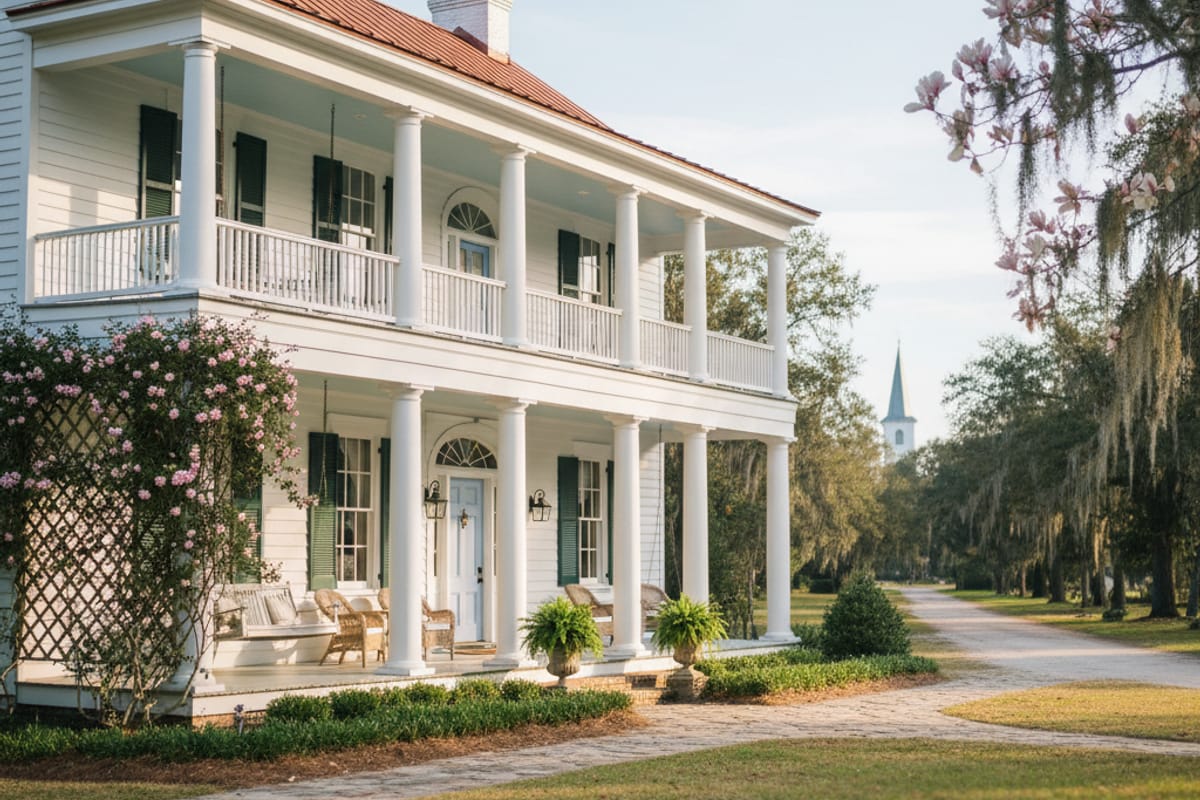 Savannah's B&Bs and boutique motels offer charm and character at prices that undercut chain hotels in most cities.
Open Container Laws: Walk With a Drink and Save Money
Savannah is one of the few cities in America where you can legally walk around with an alcoholic drink in the Historic District. This is not a gimmick or a recent change — it's been the law for decades, and it's one of the best budget travel features in any American city. Here's why, and here's how to use it.
The rules are simple: your drink must be in a plastic cup (no glass bottles, no cans, no open containers with lids). The cup must be 16 ounces or less. You must stay within the Historic District boundaries (roughly, the area from River Street south to Jones Street, and from MLK Jr. Boulevard east to East Broad Street). That's it. Walk into any bar, ask for your drink in a to-go cup, and walk out the door.
Why is this a budget saver? Because the markup on drinks at sit-down restaurants and upscale bars is enormous compared to what you'd pay at a casual bar or dive. A cocktail at a nice restaurant on River Street might cost $14-16. The same drink in a to-go cup from a dive bar on Congress Street costs $5-8. Multiply that difference by four or five drinks over an evening, and you've saved $30-40 — enough to cover a meal.
The best to-go drink spots for budget travelers: Pinkie Masters on Drayton Street is Savannah's most legendary dive bar — cheap drinks, local crowd, zero pretension. The Rail Pub on West Congress is another no-frills bar with $4-5 beers and well drinks. Club One on Jefferson Street has affordable drinks and is one of Savannah's most iconic nightlife venues. Crystal Beer Parlor on Jones Street has been serving since 1933 and has surprisingly reasonable prices for its pedigree.
Here's the ultimate budget Savannah evening: buy a $5-6 drink in a to-go cup from Pinkie Masters or The Rail Pub, walk the squares as the sun sets, sit on a bench with your drink and watch the city glow under gas lanterns. You've spent less than $10 and you're having one of the best evenings of your trip. No cover charge, no minimum, no reservations needed.
The open container zone also makes self-guided tours much more enjoyable. Instead of paying $25-30 for a pub crawl ghost tour, do your own walking tour with a drink in hand. Download a free walking tour podcast, grab a to-go cup, and explore at your own pace. You'll see the same squares and hear the same stories for a fraction of the cost.
A few things to be aware of: the open container law applies to the Historic District only. If you wander into other neighborhoods with an open drink, you can be cited. Don't get sloppy — Savannah police are tolerant of responsible drinking but will absolutely intervene if you're causing problems. And please, carry your cup to a trash can when you're done. The squares stay beautiful because people take care of them.
This is genuinely one of the features that makes Savannah special. The ability to walk through one of America's most beautiful historic districts with a cocktail in hand, at your own pace, for a few dollars — it's the kind of freedom that most American cities have regulated away. Enjoy it responsibly.
Pro tip: Most bars will automatically offer a to-go cup when you're leaving. If they don't, just ask. Some bars sell "walking cups" — larger souvenir cups that you can refill. It's a Savannah thing, and nobody will look at you funny for asking.
Free Museums, Parks & Attractions: More Than You Can See in a Week
Savannah has an absurd amount of free things to do for a city its size. You could easily fill a three-day trip without spending a dollar on attractions. Here's the complete list of the best free experiences.
The 22 Historic District Squares — already covered, but worth repeating: this is the best free attraction in Savannah and one of the best free attractions in any American city. Two hours of walking through nearly 300 years of history, architecture, and landscape design.
Forsyth Park — 30 acres of green space with the iconic fountain, a one-mile walking loop, a weekly farmers' market (Saturday mornings, free to browse), and some of the most beautiful trees in the South. The park hosts free outdoor concerts and events throughout the year.
The Cathedral Basilica of St. John the Baptist on Lafayette Square is one of the most stunning church interiors in America. The stained glass windows, painted ceiling, and marble altars are extraordinary, and entry is free. Sunday Mass here is a moving experience even if you're not Catholic — the music and the setting are transcendent.
The First African Baptist Church on Montgomery Street is one of the oldest Black congregations in North America, with roots dating to 1773. The church offers free guided tours that tell the story of enslaved people who built the building, the role of the church in the Underground Railroad (holes in the floor of the basement were breathing holes for people hiding beneath), and the ongoing significance of Black churches in Southern history. This is one of the most important historical sites in Savannah and it's free.
SCAD Museum of Art on Turner Boulevard is free and features rotating exhibitions of contemporary art in a beautifully converted railroad depot. The quality rivals museums in cities ten times Savannah's size. Additional SCAD galleries scattered throughout the Historic District — Gutstein Gallery, Pinnacle Gallery, Ex Libris — are also free.
The Savannah Waterfront and River Street are free to walk. The cobblestone streets, the river views, the Waving Girl statue, and the Factor's Walk elevated walkways above River Street are all accessible at no charge. The best river views are from the bluff above, accessible via stairways near City Hall.
Colonial Park Cemetery is one of the oldest burial grounds in Georgia, dating to the 1750s. The headstones, ironwork, and massive live oaks make it one of the most atmospheric spots in the city. It's free, open during daylight hours, and usually quiet enough to hear the birds.
Emmet Park on the eastern edge of the Historic District has a monument to Savannah's Irish heritage and beautiful views of the river. The Vietnam War Memorial in the park is quietly powerful.
Wormsloe Historic Site (technically $10 admission) is often confused with the free Skidaway Island State Park, which has hiking trails through maritime forest and salt marsh. If you want a nature experience without the Wormsloe fee, Skidaway is excellent and much less crowded.
The Forsyth Park Fragrant Garden, designed for visually impaired visitors, is a sensory experience worth seeking out — herbs, flowers, and plants chosen for their scent and texture, all labeled in Braille. It's tucked behind the main fountain and most visitors walk right past it.
Bottom line: between the squares, the parks, the churches, the cemeteries, and the SCAD galleries, you could spend three full days in Savannah doing only free things and still not see everything. This is a city that was built for walking and looking, and neither of those costs a dime.
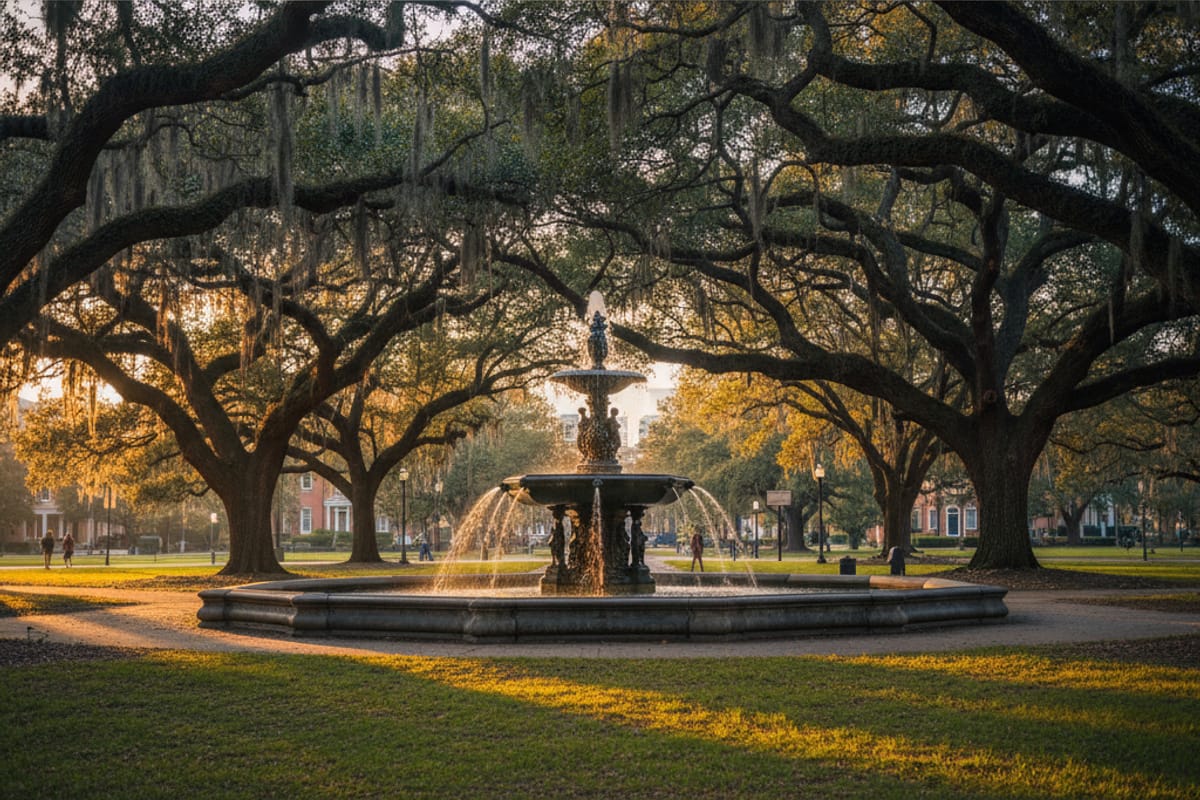 Forsyth Park, the squares, churches, cemeteries, and SCAD galleries are all free — Savannah gives away its best experiences.
Complete Budget Breakdown: What a Savannah Trip Actually Costs
Here's the full, honest budget breakdown for a Savannah trip at three price levels. These are based on real 2026 prices and assume two people traveling together.
Budget tier ($50-75/person per day): Sleep at a motel on Abercorn Street ($55-70/night, splitting to $28-35/person). Breakfast from Back in the Day Bakery ($5-7) or free hotel breakfast. Lunch from Zunzi's or Vinnie Van Go-Go's ($10-14). Dinner at a casual restaurant or food truck ($12-18). One to-go cocktail from a dive bar ($5-6). Activities: walk the squares (free), Forsyth Park (free), churches and cemeteries (free), SCAD galleries (free). Daily total: $60-80/person. Over three days: $180-240/person.
Mid-range tier ($100-150/person per day): Sleep at a Historic District B&B with breakfast included ($110-150/night, splitting to $55-75/person). Lunch at a sit-down restaurant ($15-20). One special dinner like The Olde Pink House ($45-60 with drinks). One paid attraction like a ghost tour ($25-30) or Tybee Island lighthouse ($12). Two to-go cocktails ($10-12). Daily total: $115-155/person. Over three days: $345-465/person.
Splurge tier ($200-300/person per day): Sleep at a historic inn like The Kehoe House ($220-350/night, splitting to $110-175/person). Brunch at Collins Quarter ($20-28). Dinner at The Grey or Olde Pink House ($55-80 with drinks and tip). Mrs. Wilkes lunch ($35). Ghost tour ($28), carriage ride ($25), Mercer-Williams House ($12.50). Cocktails at Artillery or Abe's ($30-40). Daily total: $210-310/person. Over three days: $630-930/person.
Transportation costs (not included above): Uber from Savannah airport to Historic District ($15-25 each way). No car needed in the Historic District. Uber to Tybee Island ($30-40 each way) or rent a car for a day ($40-60 plus gas). Free DOT shuttle in the Historic District. Parking in the Historic District: $10-20/day at meters and garages.
The hidden savings in Savannah: no car needed (saves $40-60/day in rental and parking), open container laws (saves $20-30/day versus sitting at bars), enormous amount of free attractions (saves $30-50/day versus cities like Charleston or New Orleans where paid attractions are more central to the experience), and generous restaurant portions (Zunzi's sandwich is two meals, Mrs. Wilkes lunch replaces two meals).
Compared to similar Southern destinations: Savannah runs roughly 25-35% cheaper than Charleston, 20-30% cheaper than New Orleans, and about the same as Asheville but with better free attractions. For a historic, walkable, beautiful city with world-class food and genuine culture, Savannah is one of the best values in American travel.
The biggest budget mistake people make in Savannah is paying for things that are free. Don't pay for a walking tour — the squares are self-explanatory and free podcast tours exist. Don't pay for a trolley tour — walking is better and free. Don't eat on River Street when the same quality food is cheaper two blocks up the hill. Don't rent a car unless you're going to Tybee or Wormsloe. Savannah was designed for walking, and the best experiences — the squares, the moss, the architecture, the light — are available to everyone, regardless of budget.
Pro tip: The single best budget hack in Savannah: visit in January or February. Hotel prices drop 30-50%, restaurants are uncrowded (no waiting at Mrs. Wilkes or Leopold's), the weather is mild (50s-60s), and the city has a quiet, intimate beauty that the packed spring season can't match. Winter Savannah is a secret that budget travelers should exploit.
Why Trust This Guide
Recommendations from locals across 240+ US cities via Recommended.app community data.
Explore More
This guide is part of our Savannah collection. Explore more guides for Savannah →
Savannah has 154 verified businesses on Recommended.app across 69 categories, with an average rating of 4.7 out of 5.
Hidden Gems Weekly
3 hidden gems, 2 local quotes, 1 home hack — every Monday. Free forever.
Unsubscribe anytime. No spam.
More from City Guides
 City Guide
First Time in Savannah? Locals Wish You Knew These 12 Things
 Travel Guide
A Perfect Savannah Weekend: History, Ghosts & Sweet Tea
 City Guide
Savannah's Hidden Gems: The Squares, Streets & Spots Tourists Walk Right Past
 City Guide
We Asked Savannah Locals Where They Actually Eat — Here's What They Said
 Home Services
Water Damage Restoration Near Me: What to Do in the First 24 Hours (2026 Guide)
 Food & Dining