
Last updated March 16, 2026 by the Recommended.app research team.
The Historic District Squares: Savannah's Living Rooms
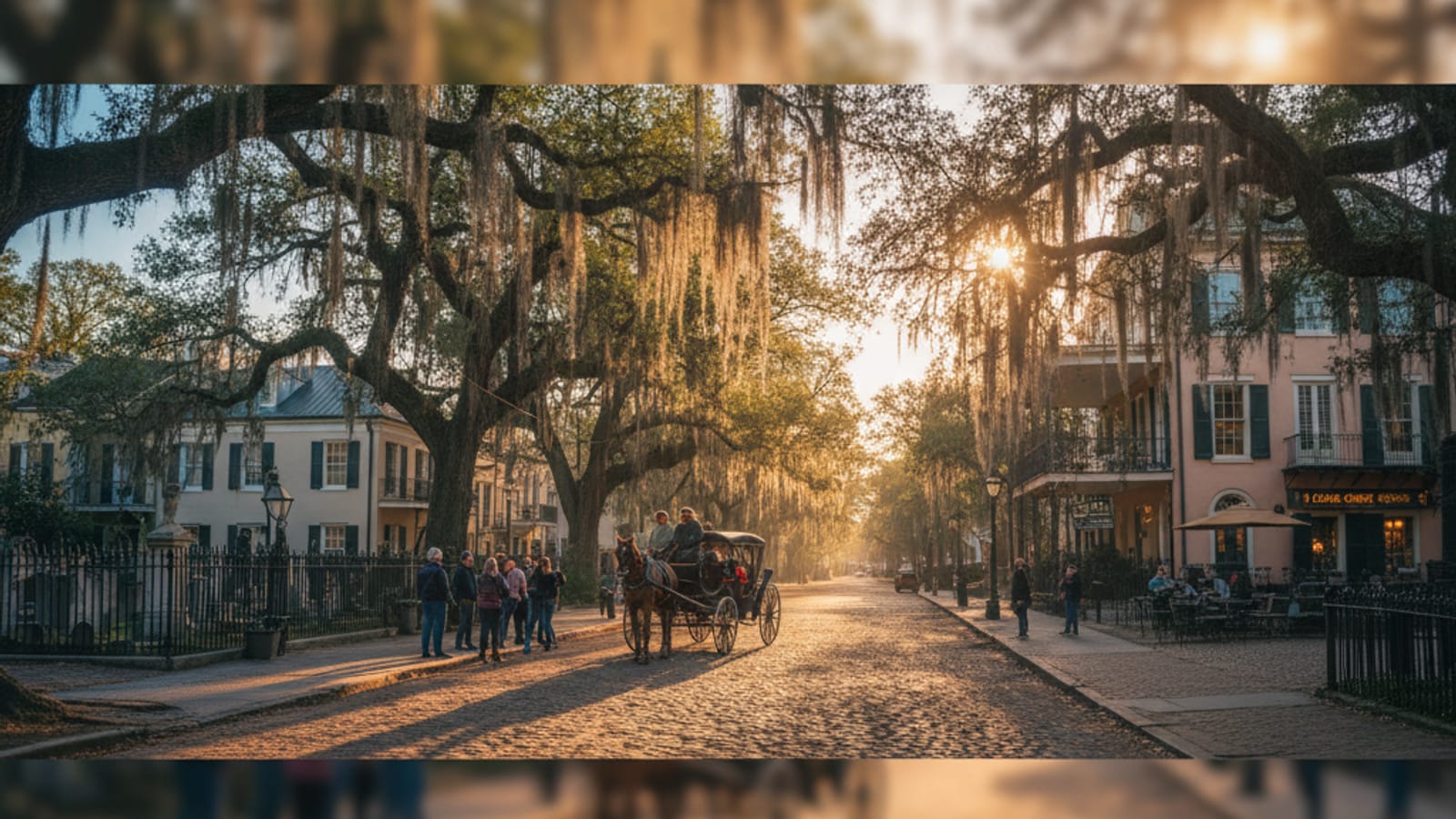
Savannah's historic district is built around 22 squares — small, shaded parks surrounded by gorgeous antebellum architecture, live oaks dripping with Spanish moss, and park benches that practically beg you to sit down and stay a while. These squares aren't just decorative. They're the reason Savannah feels fundamentally different from every other American city. General James Oglethorpe designed them in 1733 as part of his original city plan, and they've defined the rhythm of life here ever since.
The most famous is Chippewa Square, where the Forrest Gump bench scene was filmed. The actual bench is in the Savannah History Museum now, but people still flock to the square to take photos. Monterey Square is arguably the most beautiful, with the Mercer-Williams House (of Midnight in the Garden of Good and Evil fame) anchoring the southwest corner. Madison Square features a statue of Sergeant William Jasper and is surrounded by some of the best-preserved townhouses in the district.
But here's the thing locals will tell you: the less famous squares are often the best ones. Troup Square has a working armillary sphere and is usually deserted. Whitefield Square at the southern end of the district is a favorite for weddings. Calhoun Square, the only square with all its original buildings still intact, gives you the most authentic sense of what Savannah looked like 200 years ago.
The best way to experience the squares is on foot, early in the morning. By 7 AM the light is filtering through the oak canopy, the Spanish moss is practically glowing, and you'll have the squares almost entirely to yourself. Start at Johnson Square (the oldest) and walk south. You'll pass through about a dozen squares in under two miles, and each one has its own character, its own monuments, and its own stories. This is not a walk to rush. Bring coffee, take your time, and let the city unfold at its own pace.
Pro tip: Download a free walking map of the squares from Visit Savannah's website before you go. The squares are on a rough grid, but the streets between them can be confusing for first-timers. A map keeps you from accidentally looping back to the same square twice.
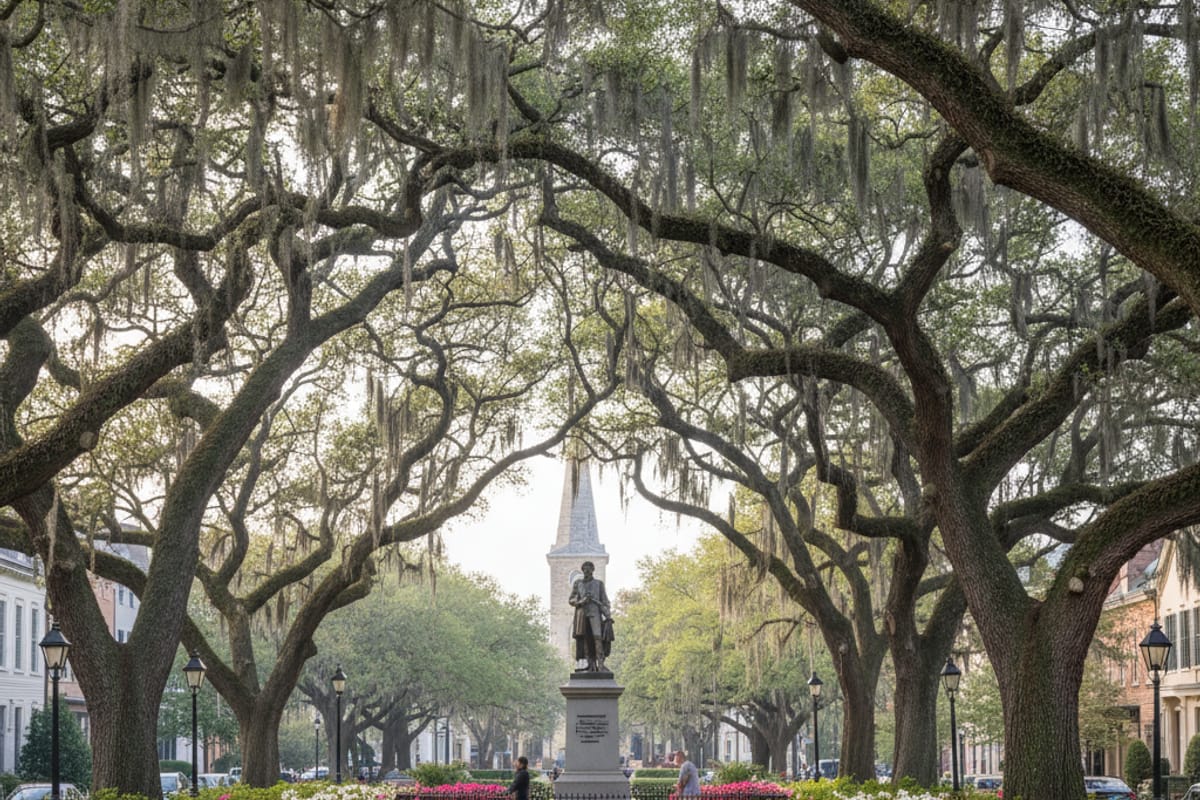 Savannah's squares are the heart of the city — there are 22 of them, each one unique.
River Street: Tourist Trap or Worth Your Time?
River Street runs along the Savannah River on a set of old cotton warehouses converted into shops, restaurants, and bars. The cobblestones are original ballast stones from 18th-century ships, and the whole stretch has an undeniable energy — street performers, candy shops, art galleries, and riverboats chugging past.
Let's be honest: River Street has tourist trap energy. Some of the restaurants are mediocre and overpriced, some of the shops sell the same mass-produced souvenirs you'd find in any tourist district in America, and on weekend nights it can feel more like Bourbon Street than a historic waterfront.
But there are genuine reasons to go. The River Street Sweets praline shop has been making pralines since 1973, and watching them hand-pull the candy on marble slabs is worth a visit even if you don't buy anything (you'll buy something — they give out free samples and they're impossibly good). The Waving Girl statue at the eastern end tells the story of Florence Martus, who allegedly waved at every ship entering the port for 44 years. The view from the bluff above River Street, especially at sunset, is one of the best in the city.
For food on River Street, Vic's On the River is the standout — Lowcountry cuisine in a beautifully restored warehouse with river views. It's pricier than average but the shrimp and grits are legitimately excellent. For a drink, try the Cotton Sail Hotel's rooftop bar for craft cocktails above the river.
The trick to River Street is timing. Go on a weekday morning or late afternoon, skip the weekend evening crowds, and be selective about where you spend your money. There's real history and beauty here underneath the souvenir shops — you just have to know where to look.
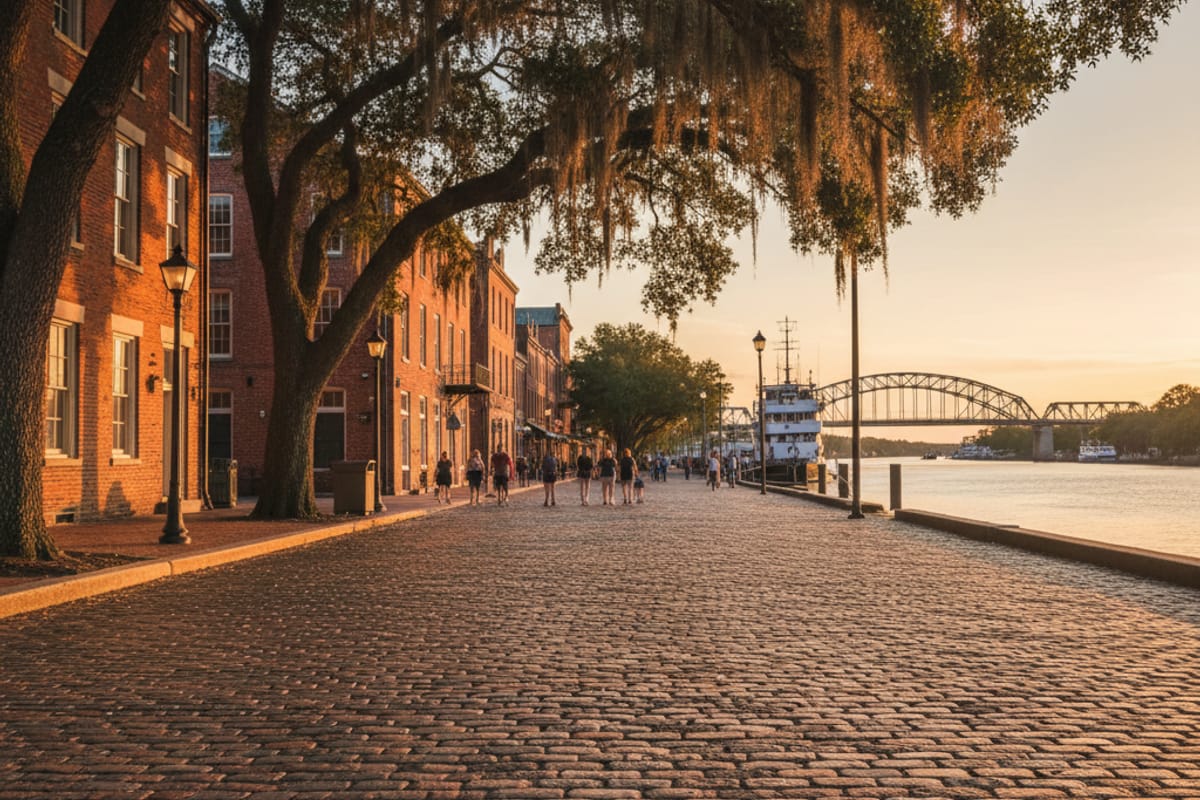 River Street's cobblestones are original ballast stones from 18th-century trading ships.
Ghost Tours: Savannah Is America's Most Haunted City
Savannah has been called the most haunted city in America, and unlike most cities that make that claim, Savannah has the receipts. The city was built on top of colonial-era burial grounds, survived fires, yellow fever epidemics that killed thousands, and the Civil War (Sherman famously spared Savannah during his March to the Sea, which means the buildings — and allegedly their ghosts — are still here).
Ghost tours are a massive industry in Savannah, and the quality ranges from genuinely compelling historical storytelling to cheesy jump scares with actors hiding behind tombstones. Here's how to pick a good one.
The best walking ghost tours focus on history first and ghost stories second. Blue Orb Tours and Ghost City Tours both offer well-researched walks through the historic district that weave documented history with reported paranormal activity. You'll visit spots like the Marshall House (a hotel that served as a Civil War hospital — guests still report unexplained sounds and apparitions), the Sorrel-Weed House (where multiple paranormal investigation shows have filmed), and the Colonial Park Cemetery, where thousands of yellow fever victims were buried in mass graves.
The Sorrel-Weed House offers standalone tours that are worth doing separately from a walking tour. The building has a documented history of tragedy — including at least two deaths on the property — and the basement investigation tour lets you use actual ghost-hunting equipment. Is it real? That's for you to decide. But standing in a pitch-black basement of a house built in 1841 with an EMF detector going off is an experience you won't forget.
For something different, the hearse tours drive you around in an actual converted hearse. It's campy and fun and surprisingly informative. The pub crawl ghost tours let you drink at haunted bars between stops, which is peak Savannah.
Book your ghost tour for your first evening in the city. It's the best possible introduction to Savannah's history, and walking through the squares at night with Spanish moss swaying overhead will set the tone for your entire trip.
Pro tip: The 9 PM tours tend to be the most atmospheric — it's fully dark, the squares are lit by gas lanterns, and the mood is perfect. Book in advance during peak season (March-May and October), as the best tours sell out days ahead.
Mrs. Wilkes' Dining Room: The Most Famous Meal in the South
Mrs. Wilkes' Dining Room at 107 West Jones Street is not a restaurant. It's an institution. It's a boarding house that has been serving family-style Southern lunch since 1943, and it is — without exaggeration — one of the most talked-about dining experiences in the American South.
Here's how it works: there's no menu. You show up, you wait in line (more on that in a second), you sit at a communal table with strangers, and platters of food start appearing. Fried chicken, collard greens, black-eyed peas, mashed potatoes, cornbread, sweet potato soufflé, mac and cheese, biscuits, and whatever else the kitchen has prepared that day. You eat as much as you want. When a platter empties, they bring a fresh one. The whole experience costs about $35 per person as of 2026.
The food is extraordinary. The fried chicken has a thin, impossibly crispy crust with juicy meat inside. The collard greens are braised until they melt. The mac and cheese is the kind your grandmother would make if your grandmother was a culinary genius. But what makes Mrs. Wilkes special isn't just the food — it's the experience. Sitting elbow-to-elbow with strangers, passing platters back and forth, making conversation with people from all over the world who are all having the same reaction of pure, stunned delight. It's communal dining at its best.
Now, the line. Mrs. Wilkes serves lunch only, Monday through Friday, 11 AM to 2 PM. The line starts forming by 9:30 AM, and by 10:30 it can stretch around the block. This is not an exaggeration. People fly to Savannah specifically for this meal.
Here's the strategy: arrive by 10 AM on a Tuesday or Wednesday for the shortest wait. Bring a book or podcast. The line itself is part of the experience — you'll meet fellow food pilgrims, trade travel tips, and build anticipation for what's coming. When you finally sit down and that first platter of fried chicken lands on the table, you'll understand why people wait two hours for lunch.
They accept cash and cards now, but there's no tipping — it's included. And don't try to make a reservation. There aren't any. Everybody waits in the same line, from tourists to celebrities to the governor.
Pro tip: Mrs. Wilkes is closed on weekends and doesn't serve dinner. Plan your visit for a weekday. If the line looks impossibly long, don't bail — it moves faster than you'd expect because the communal tables turn over efficiently.
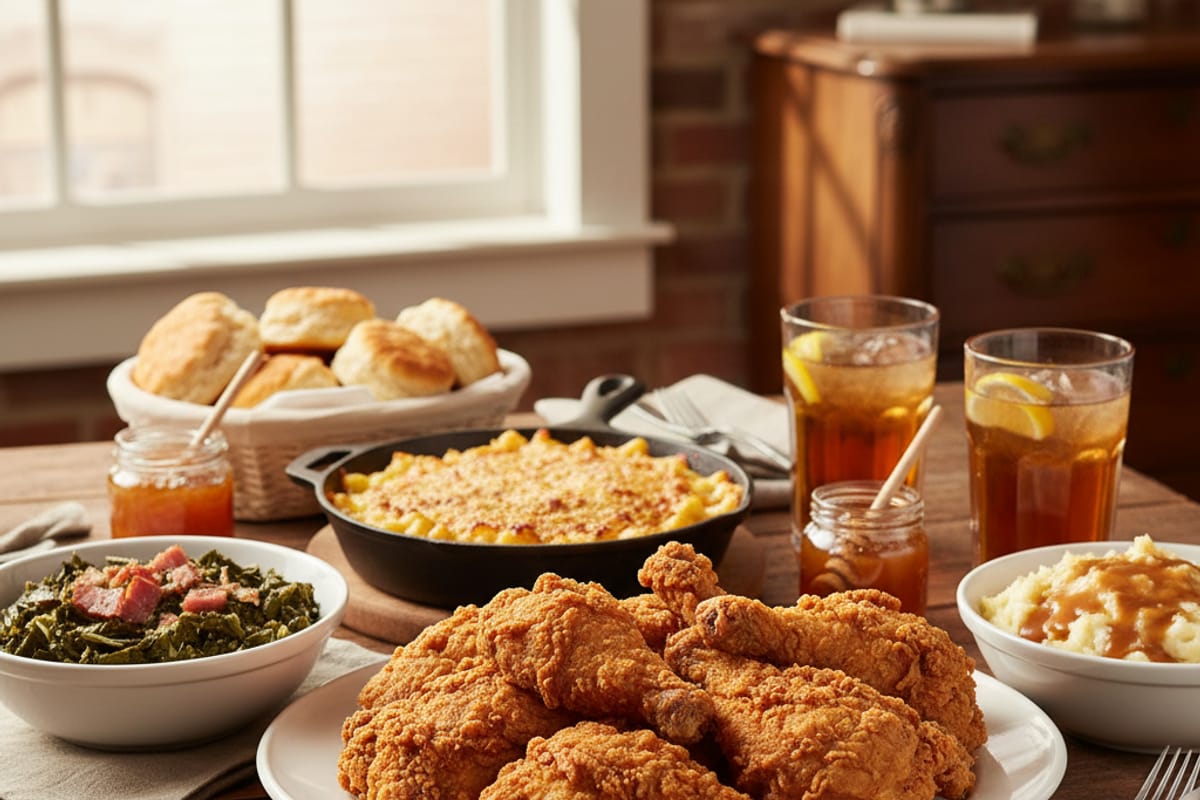 Family-style platters of fried chicken, collard greens, and cornbread — the Mrs. Wilkes experience.
Forsyth Park: Savannah's Central Park
Forsyth Park is 30 acres of green space at the southern edge of the historic district, and it's the kind of park that makes you want to move to a city. The iconic white fountain at the north end — modeled after fountains in Paris and Cusco — is the most photographed spot in Savannah, and for good reason. On a sunny afternoon with the fountain misting, live oaks arching overhead, and Spanish moss swaying in the breeze, it looks like a movie set. It's not. It's just Tuesday in Savannah.
The park is the social hub of the city. On weekends, you'll find pickup soccer games on the south end, families having picnics, runners on the perimeter path (exactly one mile around), dog walkers, and artists painting en plein air. The Forsyth Park Cafe in the old fort building on the park's north end serves solid breakfast and lunch — grab a table on the patio and you've got one of the best seats in the city.
The Saturday morning Forsyth Farmers' Market (9 AM to 1 PM) is one of the best farmers' markets in the Southeast. Local vendors sell Lowcountry produce, fresh shrimp, homemade pimento cheese, artisan bread, honey from local apiaries, and prepared foods from some of Savannah's best small-batch kitchens. It's a great way to stock up on picnic supplies if you're planning a day in the park.
For first-timers, here's the move: grab coffee and a pastry from the Forsyth Park Cafe, find a bench near the fountain, and just sit. Watch the city wake up. Watch the joggers and the dog walkers and the college students from SCAD heading to class. Savannah is a city that rewards stillness, and Forsyth Park is the best place to practice it.
The park connects to the historic district via Bull Street, one of the most beautiful streets in America. Walking north on Bull from Forsyth takes you through five squares in about 15 minutes and deposits you in the heart of the district. It's the best possible commute from relaxation to exploration.
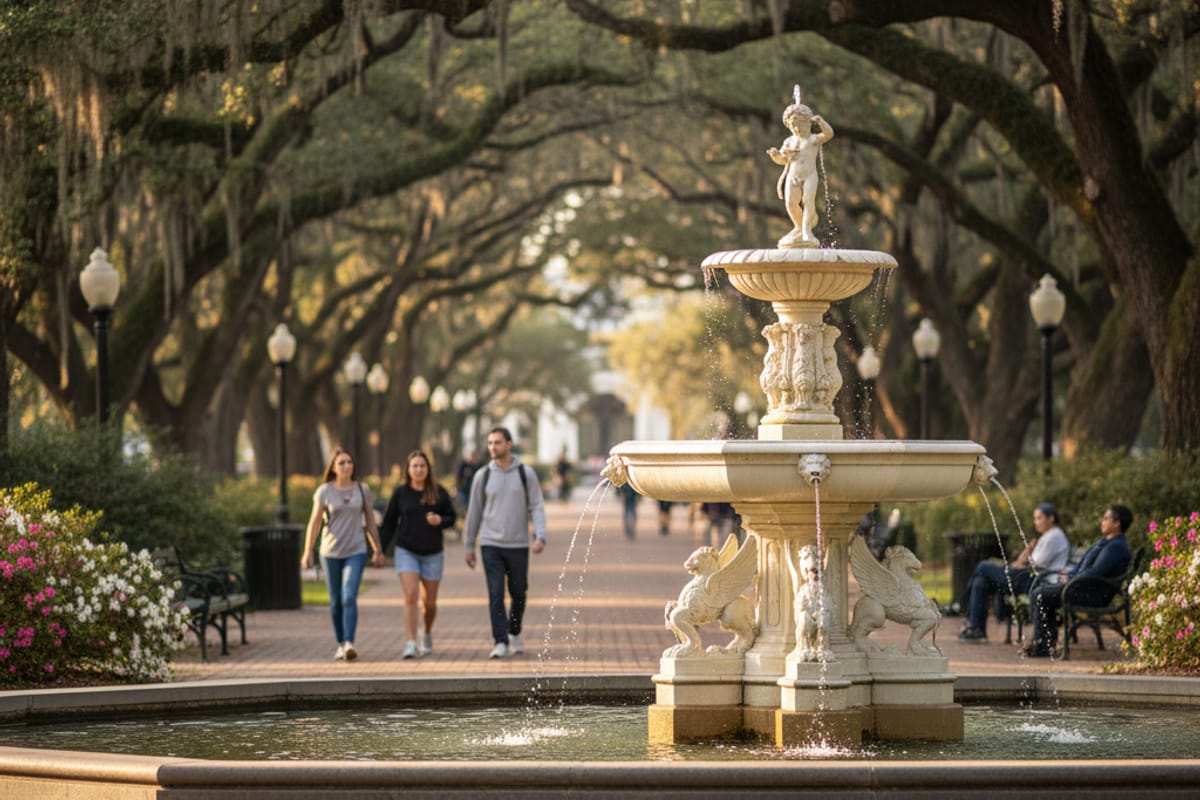 The Forsyth Park fountain is Savannah's most iconic landmark — and it looks this good in person.
Budget Tips: Savannah Is Cheaper Than You Think
Savannah is one of the most affordable historic cities in America, and a surprising amount of the best stuff is free. Here's how to do it without breaking the bank.
Accommodation: Skip the big hotels on Bay Street and book a B&B or vacation rental in the historic district. Prices range from $80-150/night for a charming room in a converted townhouse, and you'll be steps from everything. The Thunderbird Inn on Oglethorpe Avenue is a retro-cool motel with rooms starting around $90 that locals actually recommend. For real budget travelers, there are solid options on the edges of the historic district for $60-80/night.
Food: Mrs. Wilkes is $35 for an all-you-can-eat feast. Zunzi's on Drayton Street serves massive South African sandwiches for $12-15 that will fuel you for the entire afternoon. Vinnie Van Go-Go's on City Market has the best pizza in the city for $10-15 a pie. The Back in the Day Bakery in Starland District serves pastries and breakfast for under $10. You can eat incredibly well in Savannah for $30-40/day.
Free activities: Walking the 22 squares is free. Forsyth Park is free. The Cathedral Basilica of St. John the Baptist is free to visit and the interior is jaw-dropping. The First African Baptist Church — one of the oldest Black churches in North America — offers free tours. Many of the historic churches are open to visitors at no charge. The Savannah Waterfront is free to walk.
Open container laws: Savannah is one of the few cities in America where you can legally walk around with an alcoholic drink in a plastic cup. Buy a to-go cup from any bar in the historic district and stroll the squares with a cocktail. This alone saves you money — you can nurse a $6 beer from a dive bar while doing your own walking tour instead of paying $15 for a drink at a sit-down restaurant.
Transportation: You don't need a car in the historic district. Everything is walkable within a 1-2 mile radius. The free DOT shuttle runs a loop through the district if your feet need a break. If you want to visit Tybee Island (you should), it's a 25-minute drive — split an Uber with friends or rent a car for just that day.
Realistic budget for a 3-day trip: $400-600 per person including accommodation, food, one ghost tour ($25-30), and spending money. That's remarkably affordable for a city this beautiful and this full of things to do. Savannah proves that you don't need to spend a fortune to have an unforgettable trip — you just need to know where to look.
Pro tip: Savannah's open container zone covers most of the historic district. The rule: your drink must be in a plastic cup (no glass, no cans) and under 16 ounces. Most bars will pour your drink into a to-go cup automatically if you ask. It's one of Savannah's best features and saves you a fortune on bar tabs.
Why Trust This Guide
Recommendations from locals across 240+ US cities via Recommended.app community data.
Explore More
This guide is part of our Savannah collection. Explore more guides for Savannah →
Savannah has 154 verified businesses on Recommended.app across 69 categories, with an average rating of 4.7 out of 5.
Hidden Gems Weekly
3 hidden gems, 2 local quotes, 1 home hack — every Monday. Free forever.
Unsubscribe anytime. No spam.
More from City Guides
 Travel Guide
A Perfect Savannah Weekend: History, Ghosts & Sweet Tea
 Travel Tips
Savannah on a Budget: One of America's Most Walkable (and Affordable) Historic Cities
 City Guide
Savannah's Hidden Gems: The Squares, Streets & Spots Tourists Walk Right Past
 City Guide
We Asked Savannah Locals Where They Actually Eat — Here's What They Said
 Home Services
Water Damage Restoration Near Me: What to Do in the First 24 Hours (2026 Guide)
 Food & Dining