
Last updated March 16, 2026 by the Recommended.app research team.
The Starland District: Savannah's Coolest Neighborhood
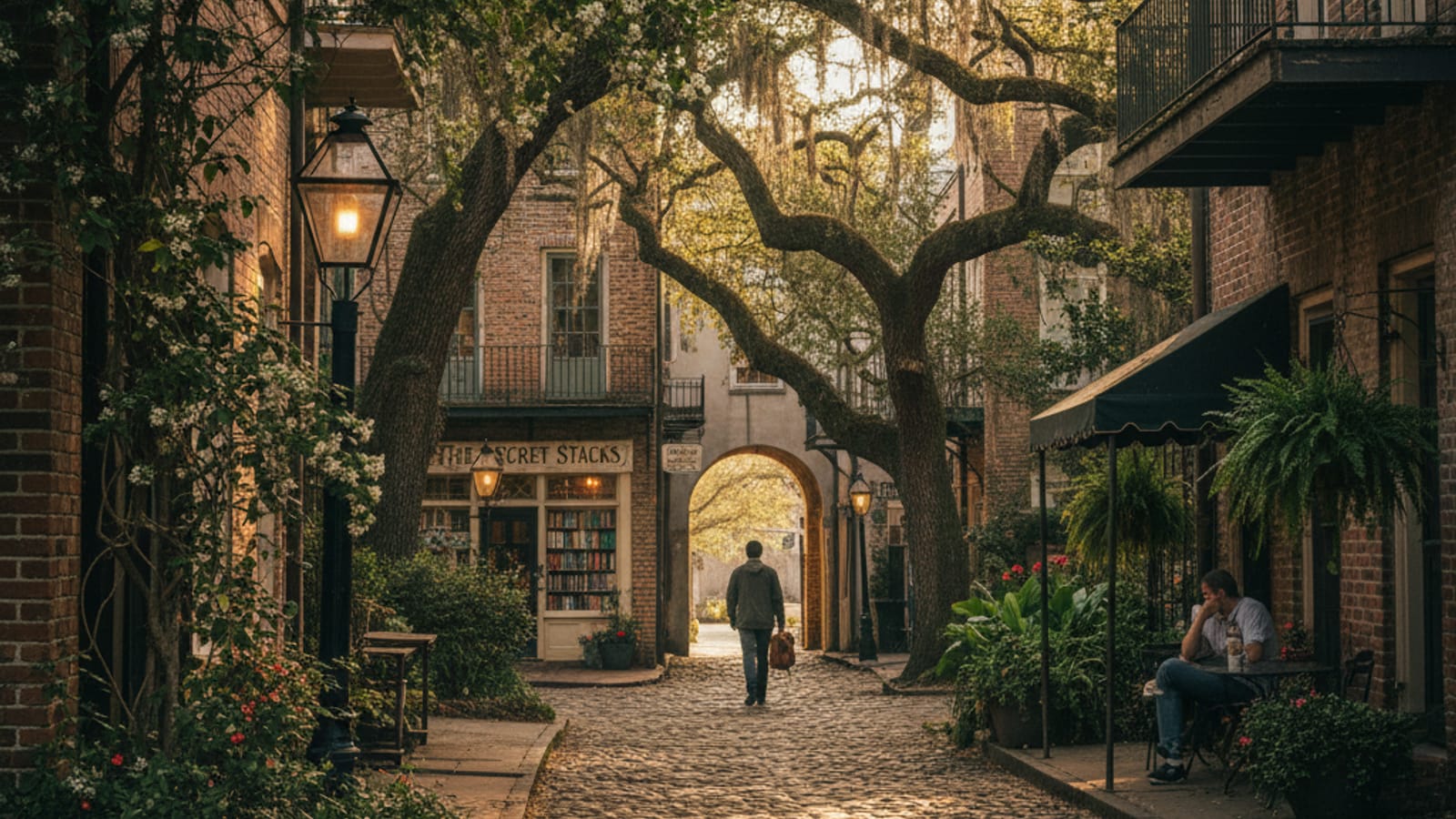
Ask a tourist where to go in Savannah and they'll say River Street and the Historic District. Ask a local and they'll say Starland. This neighborhood — centered around the intersection of Bull Street and 40th Street, just south of Forsyth Park — has quietly become the most interesting part of the city, and most visitors never set foot in it.
Starland was historically a working-class neighborhood of small shotgun houses and corner stores. Over the past decade, artists, chefs, and small business owners have transformed it into a creative hub without completely erasing its character. The result is a neighborhood that feels authentically Savannah — not a manufactured arts district built for Instagram, but a real place where people live and work and make things.
The anchor is Starland Yard, an open-air food court and gathering space in a converted lot. Local food vendors rotate through, there's usually live music on weekends, and the vibe is relaxed in a way that the Historic District's more polished restaurants can't quite replicate. Two Tides Brewing Company is right next door — their hazy IPAs are among the best in Georgia, and the taproom has the energy of a neighborhood living room.
Back in the Day Bakery on Bull Street is the bakery that put Starland on the map. Cheryl Day's biscuits, cinnamon rolls, and pastries have been featured in every food magazine that matters, and the line on Saturday mornings is a testament to their quality. Get there by 8 AM or accept that the cinnamon rolls will be gone.
The Starland section of Bull Street also has vintage shops, independent bookstores, small galleries, and coffee shops that actually roast their own beans. It's a walkable, bikeable neighborhood that rewards slow exploration. If the Historic District is Savannah's grand parlor, Starland is its studio apartment — smaller, messier, more creative, and way more fun to hang out in.
The best time to visit is Saturday morning through early afternoon. Start at the bakery, wander through the shops, grab a beer at Two Tides, and eat your way through Starland Yard. You'll wonder why no one told you about this place sooner.
Pro tip: Starland is about a 10-minute walk south of Forsyth Park. You can combine them into a single morning — Forsyth Park farmers' market first, then walk south on Bull Street into Starland for bakery and browsing.
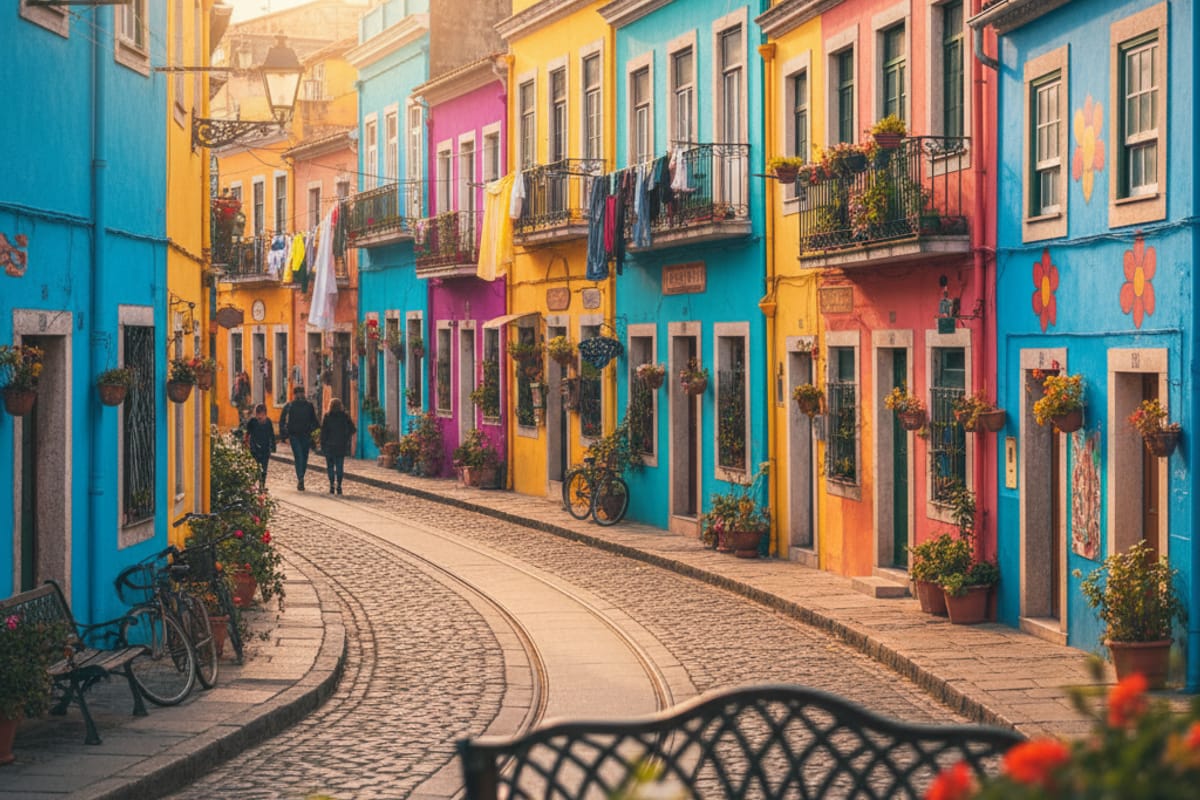 Starland District is where Savannah's creative class eats, drinks, and hangs out.
Bonaventure Cemetery: The Most Beautiful Place in Savannah
Bonaventure Cemetery is not a hidden gem in the traditional sense — it appeared in Midnight in the Garden of Good and Evil and plenty of guidebooks mention it. But here's why it still qualifies: most tourists either skip it entirely (it's a 15-minute drive from the Historic District, which is apparently too far for some people) or they do a quick drive-through and leave. Both are mistakes. Bonaventure deserves at least two hours on foot, and it might be the single most beautiful place in Savannah.
The cemetery sits on a bluff overlooking the Wilmington River, on the site of a former plantation that burned down during a dinner party in 1771. According to legend, the guests carried their plates outside and finished dinner while watching the house burn. That story tells you everything you need to know about Savannah's relationship with beauty and impermanence.
The landscape is otherworldly. Live oaks form cathedral-like canopies over the paths. Spanish moss hangs so thick in places that it blocks out the sky entirely. Victorian-era sculptures — weeping angels, draped urns, broken columns — emerge from the green like apparitions. The graves themselves read like a history of Savannah: Georgia governors, Civil War generals, poets, artists, and ordinary families whose stories are carved in stone.
The most famous resident is Johnny Mercer — the songwriter who wrote "Moon River," "That Old Black Magic," and dozens of other American standards. His grave is marked by a simple bench near the river. Sit there on a quiet morning and you'll understand why Savannah produces so many artists and dreamers.
Conrad Aiken, the Pulitzer Prize-winning poet, is also buried here. His gravestone is a bench facing the river, and the inscription reads: "Cosmos Mariner, Destination Unknown." Ships passing on the Wilmington River blow their horns in salute. This is not a myth — it actually happens, and if you're there at the right time, it will give you chills.
Don't try to see everything. Get a map at the entrance, find the Mercer and Aiken graves, then just wander. The most beautiful corners of Bonaventure are the ones you stumble onto accidentally — a forgotten grave from the 1850s wrapped in resurrection ferns, a sculpture half-hidden by moss, a path that opens suddenly onto a river view. This is a place for wandering, not checking boxes.
Pro tip: Visit Bonaventure on a weekday morning for the most peaceful experience. Shannon Scott gives walking tours of the cemetery that are more like history lectures — deeply researched, beautifully told, and worth every penny. Book in advance on his website.
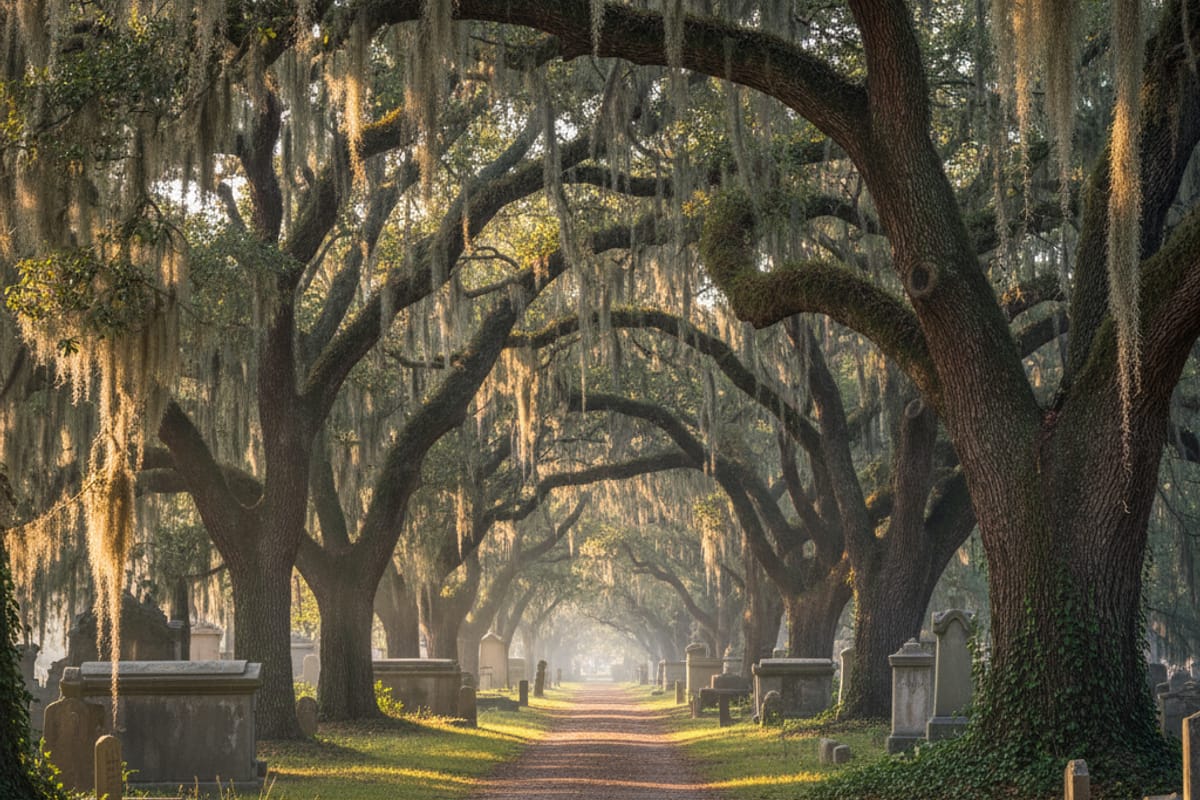 Bonaventure Cemetery is haunting, beautiful, and unlike anywhere else in America.
Wormsloe Historic Site: The Most Photographed Road in Georgia
If you've seen a photo of Savannah, there's a good chance it was taken at Wormsloe. The entrance road — a 1.5-mile avenue lined with 400 live oaks draped in Spanish moss, forming a perfect natural tunnel — is the single most iconic image of the coastal South. It's been used in movies, magazine covers, wedding shoots, and about a million Instagram posts. And somehow, it still takes your breath away in person.
Wormsloe Historic Site is about 20 minutes south of the Historic District on the Isle of Hope. It's the ruins of the oldest standing structure in Savannah — the tabby (a concrete made from oyster shells) ruins of Noble Jones's fortified home, built in the 1740s when Georgia was still a brand-new colony. Jones was one of the original colonists who arrived with Oglethorpe, and his estate stretched across 822 acres of marsh and maritime forest.
Beyond the famous avenue, Wormsloe has nature trails through maritime forest and salt marsh, a small museum about colonial Georgia, and a recreated colonial homestead with living history demonstrations. The trails are flat and easy, winding through dense forest to overlooks of the Skidaway Narrows. You'll see herons, egrets, and possibly dolphins in the water.
The whole experience takes about 90 minutes to two hours. Drive slowly down the oak avenue (there's a 15 mph speed limit, and you'll want to go even slower), park at the museum, walk the trails, visit the tabby ruins, and then drive back out. The avenue looks completely different depending on the light — morning sun filtering through the canopy creates a completely different mood than late afternoon golden hour.
Admission is $10 for adults. It's a state historic site, not a private attraction, so it's well-maintained and never feels exploitative. Pack bug spray in summer — the marshes breed mosquitoes that are aggressive and numerous.
This is one of those places that photographs beautifully but is even better in person. The scale of the avenue, the sound of birds in the canopy, the smell of salt marsh on the breeze — no photo captures all of that. Go see it for yourself.
Pro tip: For the best photos of the oak avenue, arrive right when Wormsloe opens at 9 AM. The morning light is softer, the crowds are nonexistent, and you'll have the avenue to yourself. Bring a telephoto lens if you have one — compressing the perspective makes the avenue look endless.
The Back Alleys and Lanes of the Historic District
Savannah's famous squares get all the attention, but the narrow lanes and alleys between them are where the city hides its most intimate beauty. These passages were originally designed for carriage access to the rear of townhouses, and many of them have been preserved as quiet, mossy corridors lined with garden walls, wrought-iron gates, and hidden courtyards.
Jones Street is widely considered the most beautiful street in Savannah — and one of the most beautiful in America. It runs east-west between the squares, shaded by a continuous canopy of live oaks, with perfectly preserved townhouses on both sides. The cobblestone sections, gas lanterns, and front gardens make it look like a movie set for a period drama. Walk it slowly. Every doorway, every gate, every window box has something to notice.
But Jones Street is famous enough that it appears in guidebooks. The real hidden beauty is in the lanes. Whitaker Street south of Gaston has a series of narrow passages between townhouses that open into secret gardens. Gordon Lane, accessible from Gordon Street between Bull and Whitaker, is a cobblestone alley so quiet and overgrown you'll forget you're in a city. Factor's Walk, the elevated walkway system above River Street, connects a series of iron bridges and passages that most tourists walk right under without realizing they exist.
The carriage houses behind the grand homes have been converted into some of Savannah's most charming small residences and studios. You can't enter them (they're private homes), but peering through wrought-iron gates into tiny courtyard gardens filled with fountains, ferns, and jasmine gives you a sense of the hidden domestic life of the city.
The best way to find these spots is to deliberately get lost. Put your phone away, pick a direction, and walk. Turn down any alley that looks interesting. Push through any gate that's open. In Savannah, the most beautiful things are almost always just around the corner from where everyone else is looking.
The Historic District is a grid, so you can't really get lost — any direction will eventually lead you back to a square you recognize. That freedom to wander without consequence is one of Savannah's greatest gifts to visitors.
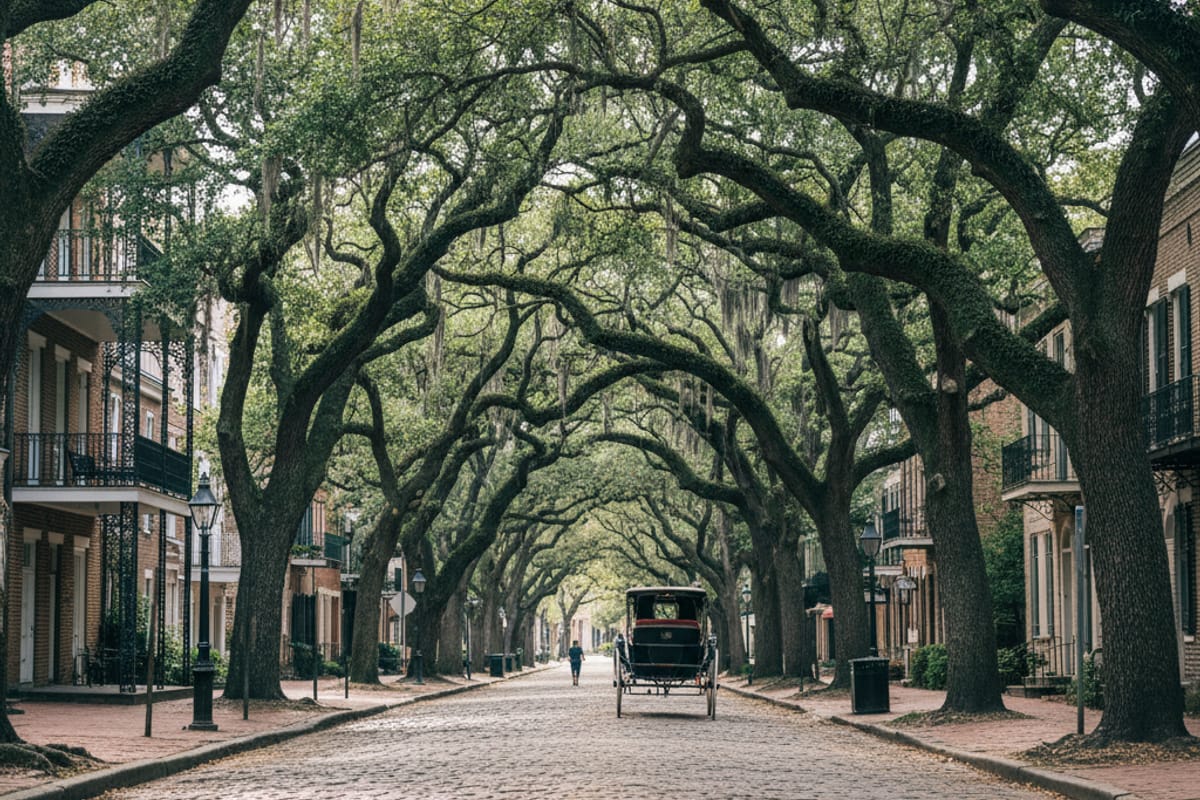 Jones Street is considered one of the most beautiful streets in America — and the lanes behind it are even more enchanting.
SCAD Galleries: Free World-Class Art Everywhere
The Savannah College of Art and Design — SCAD — has transformed this city in ways that are hard to overstate. What started as a single restored building in 1978 has grown into a sprawling campus that occupies dozens of historic buildings throughout the city. And the best part for visitors: their galleries are free, open to the public, and genuinely world-class.
SCAD Museum of Art on Turner Boulevard is the flagship. The building itself — designed by renowned architect Christian Sottile — is a former railroad depot transformed into a sleek, modern exhibition space. Shows rotate regularly and feature both emerging student artists and internationally recognized names. The permanent collection includes Walter Hood installations and works from SCAD's extensive photography holdings. Admission is free.
But the SCAD galleries scattered throughout the Historic District are where you'll find the most surprising work. Gutstein Gallery on Bull Street, Pinnacle Gallery on Drayton, and Ex Libris on Madison Square all showcase student and faculty work in rotating exhibitions. The quality is consistently excellent — these students are serious, and the faculty includes working artists with international reputations.
SCAD's presence means that Savannah has an artistic infrastructure that cities three times its size would envy. The students bring energy, creativity, and a constant influx of new ideas. You'll see their influence everywhere — in the murals on Starland District buildings, in the design of local restaurants and shops, in the street art that appears on construction walls, and in the independent galleries that have sprung up throughout the city.
Every fall, SCAD hosts the Savannah Film Festival, which draws major Hollywood films and independent features for premieres and panels. The SCAD deFINE ART festival in February brings contemporary artists from around the world for lectures, installations, and exhibitions. Both are open to the public.
Even if you don't seek out the galleries specifically, SCAD's influence is unavoidable. The college has restored more than 100 historic buildings across the city, turning abandoned warehouses, theaters, and mansions into studios, dorms, and performance spaces. Walking through Savannah is like walking through a living design school, and the education is free for anyone paying attention.
If you're interested in art, architecture, or design, schedule at least half a day for the SCAD galleries. Start at the museum, then walk to whichever Historic District galleries are showing new work (check SCAD's website for current exhibitions). You'll see more interesting art in a Savannah afternoon than in most cities' entire gallery districts.
Pro tip: SCAD's annual Sidewalk Arts Festival (usually in late April) transforms Forsyth Park into an open-air gallery where hundreds of students create chalk murals on the sidewalks. It's free, it's incredible, and it's one of the best events in Savannah's calendar.
Tybee Island: Savannah's Beach Secret
Tybee Island is Savannah's beach — a small barrier island 20 minutes east of the Historic District with a laid-back, slightly scruffy charm that feels nothing like the polished resort beaches of Hilton Head or Kiawah. Locals call it "Savannah's Beach," and it's where they go when they want sand, salt water, and cold beer without pretension.
The beach itself is wide, relatively uncrowded (especially compared to other Southeast beaches), and faces east, which means spectacular sunrises. The sand is firm enough to walk on for miles. At low tide, sandbars emerge that create shallow pools perfect for kids. The water is warm enough for swimming from May through October, though the Atlantic here is more "refreshing" than "tropical."
But the real Tybee experience is in the town itself. The Tybee Island Light Station is one of the tallest and oldest lighthouses in America — the climb to the top (178 steps) rewards you with 360-degree views of the island, the Atlantic, and the marshes stretching back toward Savannah. The current lighthouse dates to 1736, making it one of the oldest structures in Georgia.
The food on Tybee is unpretentious and excellent. The Crab Shack on Chimney Creek is a rambling outdoor restaurant built over the marsh where you crack fresh crab and peel shrimp while watching gators in the creek below (yes, real alligators — they're fed and lazy, but still). Sundae Cafe serves creative Southern-influenced dishes in a tiny cottage. Huc-A-Poos is the pizza-and-beer joint that locals claim as their own.
For something truly special, kayak or paddleboard through the back creeks and marshes behind Tybee. The marsh ecosystem is stunning — you'll paddle through cordgrass meadows, see dolphins surfacing, and possibly spot manatees in summer. Several outfitters on the island rent equipment and offer guided tours.
The biggest mistake tourists make with Tybee is treating it as a quick beach detour. Give it at least a full half-day, ideally a full day. Arrive in the morning, climb the lighthouse, eat seafood for lunch, spend the afternoon on the beach or in a kayak, and stay for sunset. Tybee at golden hour, with the lighthouse silhouetted against the sky and the marsh glowing amber, is one of the most beautiful things on the Georgia coast.
There's one more Tybee secret that most visitors miss: Little Tybee Island, an uninhabited barrier island accessible only by boat or kayak from the south end of Tybee. It has pristine, completely empty beaches, nesting sea turtles, and not a single building. Kayak outfitters offer trips there, and it's the wildest beach experience you can have within 30 minutes of a major city.
Pro tip: Drive to Tybee on a weekday to avoid weekend beach traffic. Parking on the island can be tricky in summer — the lots near the lighthouse and pier fill up fast. Street parking is free in some residential areas a few blocks back from the beach.
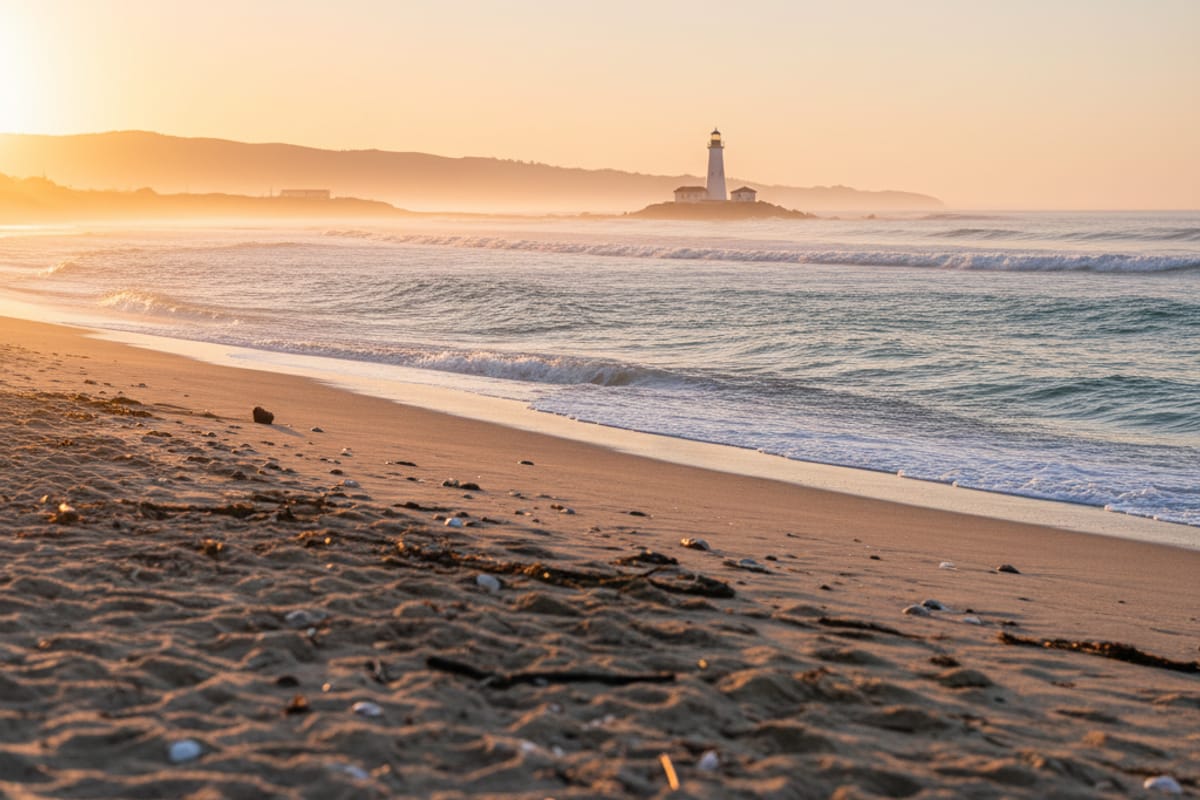 Tybee Island is Savannah's beach — 20 minutes from the Historic District and a world away from resort pretension.
Why Trust This Guide
Recommendations from locals across 240+ US cities via Recommended.app community data.
Explore More
This guide is part of our Savannah collection. Explore more guides for Savannah →
Savannah has 154 verified businesses on Recommended.app across 69 categories, with an average rating of 4.7 out of 5.
Hidden Gems Weekly
3 hidden gems, 2 local quotes, 1 home hack — every Monday. Free forever.
Unsubscribe anytime. No spam.
More from City Guides
 City Guide
First Time in Savannah? Locals Wish You Knew These 12 Things
 Travel Guide
A Perfect Savannah Weekend: History, Ghosts & Sweet Tea
 Travel Tips
Savannah on a Budget: One of America's Most Walkable (and Affordable) Historic Cities
 City Guide
We Asked Savannah Locals Where They Actually Eat — Here's What They Said
 Home Services
Water Damage Restoration Near Me: What to Do in the First 24 Hours (2026 Guide)
 Food & Dining