
Last updated March 16, 2026 by the Recommended.app research team.
Old Town Scottsdale: Where It All Starts
Old Town Scottsdale is the beating heart of the city and the place where most first-time visitors naturally gravitate. Stretching across a walkable grid of streets lined with adobe-style buildings, galleries, restaurants, and bars, Old Town manages to balance genuine Southwestern charm with a polished resort-town energy that never feels too corporate. The area is loosely divided into a few distinct zones, and understanding them will help you get the most out of your time here.
The Arts District sits on the western edge of Old Town, anchored by the Scottsdale Museum of Contemporary Art (SMoCA) and the Scottsdale Center for the Performing Arts. On Thursday evenings from October through May, the weekly ArtWalk brings dozens of galleries to life with open doors, wine pours, and live artist demonstrations. It is free, it is social, and it is one of the best introductions to the local creative scene. Walk along Main Street and Marshall Way and you will find everything from traditional Western bronze sculpture to cutting-edge contemporary installations.
The Entertainment District is where the nightlife concentrates, particularly along Saddlebag Trail and Scottsdale Road. On weekend nights the bars fill up quickly, drawing a younger crowd from across the Phoenix metro area. During the day, however, these same blocks are quiet and pleasant for walking, with boutique shops and casual restaurants that are far more relaxed than the evening energy would suggest.
The Fifth Avenue shopping district rounds out the Old Town experience. This is where you will find Southwestern jewelry, handcrafted leather goods, cactus nurseries, and local artisan shops that sell things you will not find at any mall back home. Budget at least two to three hours to explore Old Town properly, and do not rush through the side streets. Some of the best galleries and smallest shops hide just off the main drag. Start your visit at the Scottsdale Waterfront, walk along the Arizona Canal path, and let the grid reveal itself to you naturally.
Old Town is also incredibly well connected to the rest of the city. The free Scottsdale Trolley runs through the area and connects to several nearby resort districts, making it easy to park once and explore on foot or by transit for the rest of the day.
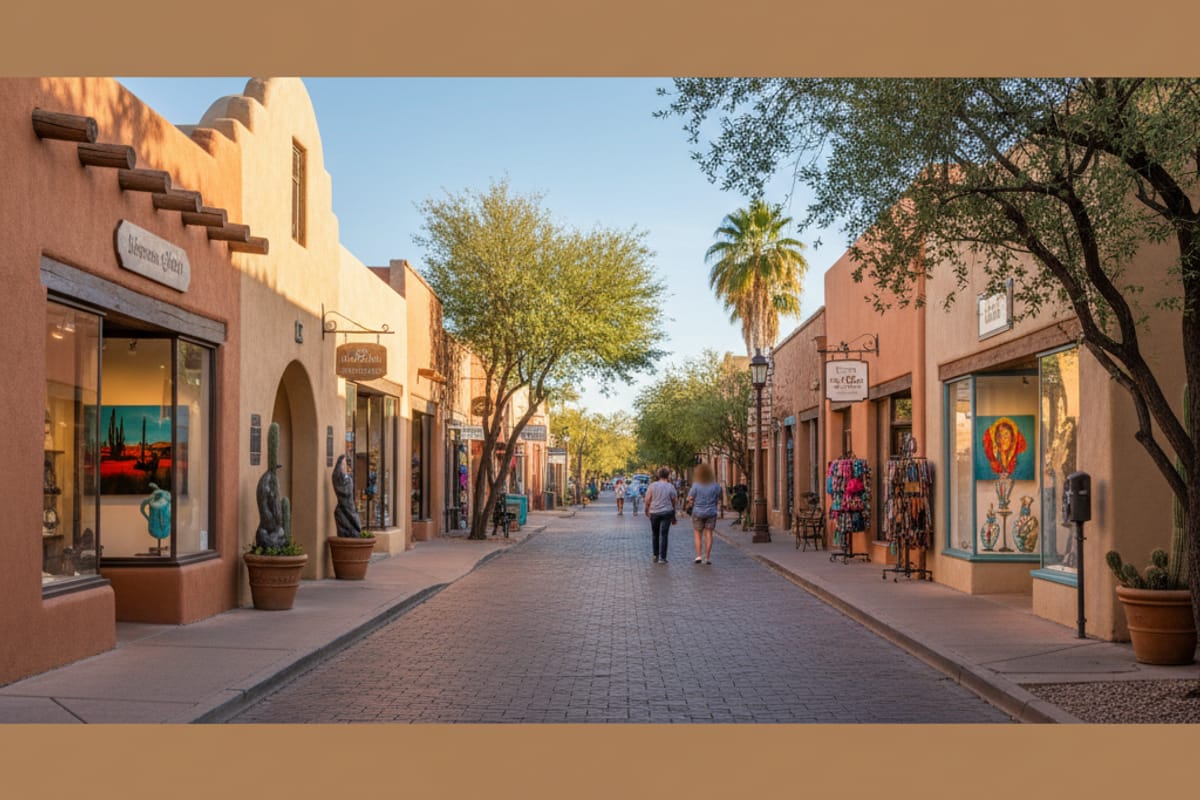 Old Town Scottsdale — walkable, gallery-rich, and full of surprises.
Spa Culture: Scottsdale's Defining Luxury
Scottsdale has more spas per capita than virtually any city in the country, and spa culture here is not just an indulgence — it is woven into the identity of the place. From massive destination spas attached to world-class resorts to intimate day spas tucked into strip malls, there is a treatment room for every budget and every definition of relaxation.
The big names are worth knowing. The Spa at the Phoenician is routinely ranked among the top resort spas in North America, offering rooftop relaxation pools, a full menu of desert-inspired treatments (think prickly pear sugar scrubs and turquoise sage wraps), and a level of pampering that justifies the splurge at least once. Joya Spa at the Omni Scottsdale Resort combines outdoor treatment rooms with fire features, desert gardens, and a vibe that feels more spiritual retreat than hotel amenity. The Spa at Civana in nearby Carefree takes a wellness-focused approach with meditation, breathwork, and movement classes layered into the spa experience.
But here is the local secret: you do not need to stay at a resort to use its spa. Most Scottsdale resort spas are open to non-guests by reservation, and many offer midweek specials and summer discounts that bring luxury treatments into a surprisingly reasonable price range. A 60-minute massage at a top resort spa will run you anywhere from $180 to $280 depending on the season. During the summer months, when temperatures soar and tourist traffic drops, those same treatments can be found for $120 to $160.
For a more affordable option, local day spas like Inspire Day Spa and LaVida Massage deliver excellent treatments at roughly half the resort price. And if you just want to soak and relax without a formal treatment, check whether your hotel has a spa pool or hydrotherapy circuit — many mid-range Scottsdale hotels include these amenities for guests at no additional charge.
Book your spa appointments early in your trip rather than saving them for the last day. The relaxation carries forward, and you will enjoy your hiking and exploring more with loosened muscles and a calmer state of mind. Most spas recommend arriving 30 to 60 minutes before your appointment to use the steam rooms, saunas, and relaxation lounges, so factor that into your schedule.
Pro tip: Many resort spas offer a 'spa day pass' that includes access to pools, saunas, steam rooms, and relaxation lounges without booking a treatment. These passes typically run $50-75 and are the best-value luxury experience in Scottsdale. Call ahead — they are not always advertised online.
McDowell Sonoran Preserve: The Desert at Your Doorstep
The McDowell Sonoran Preserve is one of the largest urban preserves in the United States, covering more than 30,000 acres of pristine Sonoran Desert landscape directly within the Scottsdale city limits. This is not a manicured park with paved paths and playground equipment. This is raw, wild desert — saguaro cacti towering 40 feet overhead, javelinas trotting across trails, roadrunners doing their jerky sprint through the brush, and the kind of silence that city-dwellers forget exists.
For first-time visitors, the Gateway Trailhead is the best starting point. It has a large parking lot, clean restrooms, a ramada with interpretive signs, and direct access to several trails of varying difficulty. The Gateway Loop Trail is a 4.5-mile moderate hike that serves as a perfect introduction to the preserve, winding through classic desert terrain with excellent saguaro forest views and manageable elevation changes. If you want something shorter, the Bajada Nature Trail is a flat, easy 0.4-mile interpretive loop that identifies the plants and geological features around you.
More experienced hikers should tackle the Tom's Thumb Trail, a challenging 4.2-mile out-and-back that climbs to a dramatic granite formation overlooking the entire valley. The last half-mile is steep and rocky, but the views from the top are extraordinary — on a clear day you can see all the way from Camelback Mountain to Four Peaks. Start early, bring trekking poles if you have them, and do not underestimate the sun exposure on the return trip.
Two critical safety notes for desert hiking. First, hydration is not optional. Bring a minimum of one liter of water per hour of hiking, and drink before you feel thirsty. Dehydration in the Sonoran Desert can escalate from mild discomfort to medical emergency faster than most people realize. Second, watch where you put your hands and feet. Rattlesnakes are present in the preserve and are most active in the early morning and late afternoon during warmer months. They are not aggressive, but they will defend themselves if stepped on or startled. Stay on the trail, look before you sit, and you will be fine.
The best times to hike are October through April, when temperatures are comfortable and the desert is at its most visually stunning. If you visit in March or April after a wet winter, the wildflower bloom turns the desert floor into a carpet of gold, purple, and orange poppies. It is one of the most spectacular natural events in the American Southwest.
Pro tip: The Gateway Trailhead parking lot fills up by 8 AM on weekend mornings from November through March. Arrive by 7 AM or use the Brown's Ranch Trailhead on the north side as an alternative — it's less crowded and has equally stunning trails.
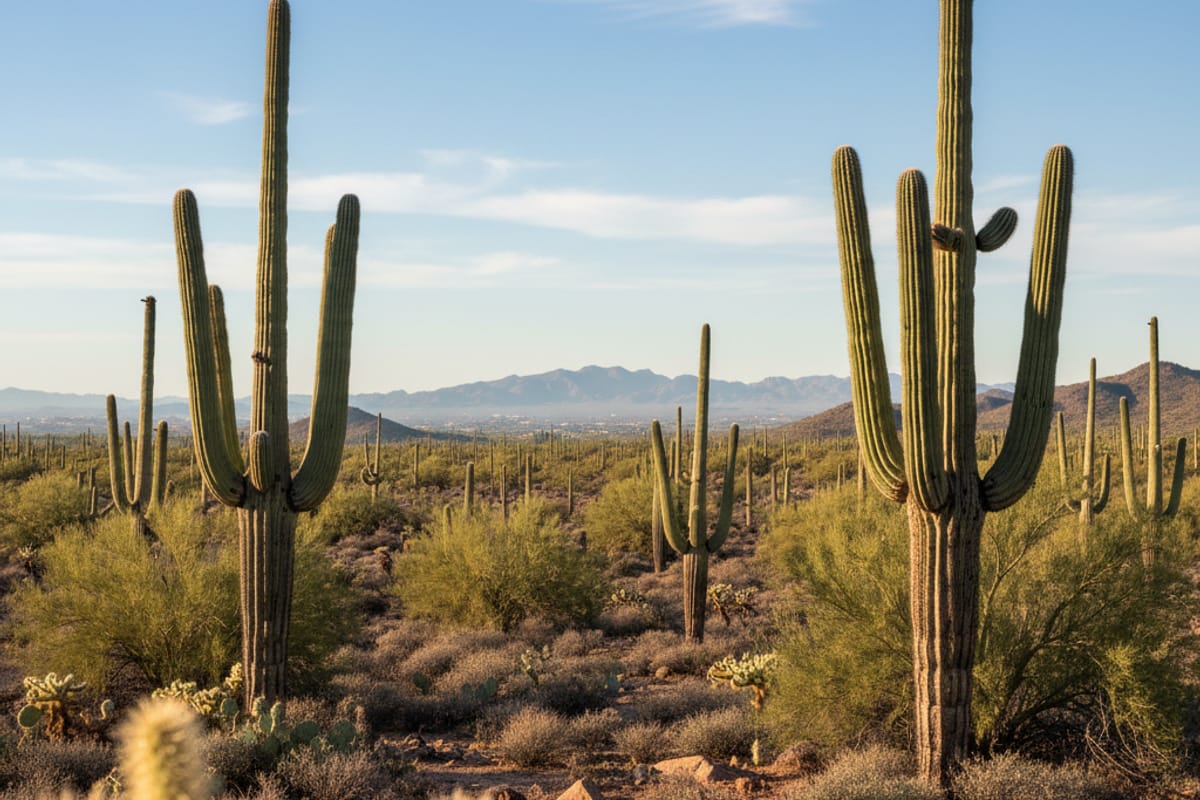 McDowell Sonoran Preserve — 30,000 acres of wild desert within city limits.
Taliesin West: Frank Lloyd Wright's Desert Masterpiece
Taliesin West is the winter home and studio that Frank Lloyd Wright built in the foothills of the McDowell Mountains beginning in 1937, and it is one of the most important architectural sites in the United States. Wright and his apprentices constructed the compound using desert masonry — a technique that embedded local rocks and sand directly into concrete forms, making the buildings look as if they grew organically from the desert floor. It is a UNESCO World Heritage Site and the headquarters of the Frank Lloyd Wright Foundation, and no first visit to Scottsdale is complete without seeing it.
Several tour options are available, ranging from a 60-minute highlights tour to a 90-minute behind-the-scenes experience that includes Wright's private living quarters and the apprentice court where his students lived and worked. The longer tour is worth the extra cost. You will learn about Wright's philosophy of organic architecture, his complicated personal life, and the way this desert laboratory influenced some of the most iconic buildings of the 20th century, including the Guggenheim Museum in New York.
The site itself is stunning even before you step inside. The approach drive winds through pristine desert, and the low-slung buildings emerge from the landscape in a way that feels inevitable rather than imposed. Wright oriented every structure to frame specific mountain views, and the interplay of indoor and outdoor spaces, of light and shadow, of rough stone and delicate origami-folded roof panels, is something you have to experience in person to appreciate.
Practical details: tours run daily and should be booked online in advance, especially during the peak winter season from January through March. General admission tours start at around $40 for adults. There is no food service on site, so eat before or after your visit. The gift shop has an excellent collection of Wright-designed items, from prints to furniture reproductions, and is worth browsing even if you are not a buyer.
Pair your Taliesin West visit with a morning hike at the nearby McDowell Sonoran Preserve. The two are only about 15 minutes apart by car, and the combination of desert hiking and architectural immersion makes for one of the most memorable days you can have in Scottsdale. If you are an architecture enthusiast, also consider driving through the Arcosanti experimental community (about 70 miles north on I-17) for another visionary desert building project, this one by Wright's former student Paolo Soleri.
Pro tip: The golden hour light at Taliesin West is extraordinary. Book the latest afternoon tour available during your visit — you will see the buildings the way Wright intended them to be seen, with warm desert light flooding through the translucent roof panels and the surrounding mountains glowing orange and red.
The Scottsdale Dining Scene: Where to Eat Well
Scottsdale's restaurant scene has matured dramatically over the past decade, evolving from a predictable mix of steakhouses and resort buffets into a genuinely interesting dining city with independent chef-driven restaurants, outstanding Mexican food, and a farm-to-table ethic supported by Arizona's surprisingly productive agricultural regions.
Citizen Public House in Old Town is the restaurant locals recommend most consistently. The menu changes seasonally, but the smoked prime rib and the pork belly appetizer are legendary. The cocktail program is one of the best in the state, and the bartenders actually know what they are doing — order an old fashioned or a dealer's choice and you will not be disappointed. Reservations are essential on weekends, and the bar seats are first-come, first-served for walk-ins.
FnB is a tiny, intensely personal restaurant run by chef Charleen Badman, who won a James Beard Award for Best Chef Southwest. The menu is driven by whatever is fresh at the local farms that week, and the vegetable dishes are so good they will make you forget about meat entirely. The roasted beets with pistachio and the wood-fired cauliflower have achieved cult status. FnB seats maybe 40 people, does not take reservations for parties under six, and fills up fast — arrive when the doors open.
For a special occasion, Cafe Monarch consistently ranks among the top restaurants in Arizona. The prix fixe menu is $100 to $130 per person, but the quality rivals fine dining restaurants in New York and San Francisco at half the price. The patio seating under string lights in their courtyard garden is one of the most romantic dinner settings in the Southwest.
For casual meals, Postino in Old Town has an excellent wine and bruschetta bar (the $5 pitchers of wine before 5 PM on weekdays are legendary), and Farm & Craft serves health-conscious bowls and salads that are genuinely satisfying. Hash Kitchen is the brunch spot — a build-your-own Bloody Mary bar with over 30 ingredients and creative brunch dishes that are actually worth the weekend wait.
Do not overlook the Mexican food. The Phoenix-Scottsdale metro area has some of the best Mexican cuisine in the country outside of Los Angeles, and Barrio Queen in Old Town delivers excellent tableside guacamole, handmade tortillas, and creative tacos in a vibrant setting. For something more traditional, drive 15 minutes south to the Guadalupe neighborhood for Los Dos Molinos, where the New Mexican-style green chile will rearrange your sinuses in the best possible way.
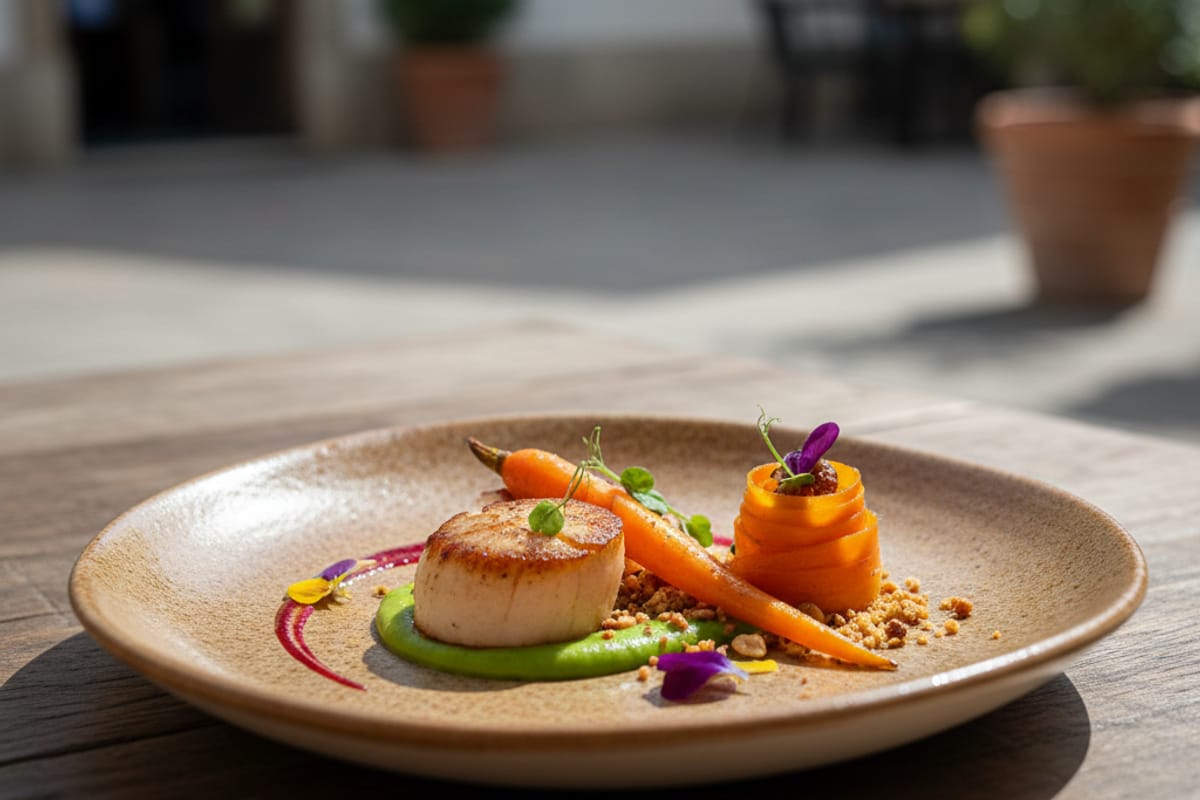 Scottsdale's dining scene punches well above its weight — chef-driven, seasonal, and surprisingly affordable.
Budget Tips: Making Scottsdale Affordable
Scottsdale has a reputation as an expensive destination, and it can be — if you book a peak-season resort suite and eat every meal at a celebrity chef restaurant. But the reality is that Scottsdale is surprisingly affordable with a little strategic planning, and the gap between budget and luxury experiences here is narrower than you might think.
Timing is everything. Scottsdale's peak season runs from January through April, when snowbirds from the Midwest and Northeast flock to the desert for warm weather. Hotel rates during this window are at their highest, often $300 to $500 per night at the major resorts. But from late May through September, those same resorts slash rates by 50 to 70 percent. A $450 winter night at the Phoenician becomes a $150 summer night, and all the same amenities are available. Yes, it is hot — often exceeding 110 degrees Fahrenheit — but you will spend most of your time in air-conditioned comfort or poolside, and the mornings and evenings are surprisingly pleasant.
The shoulder seasons of October through November and late April through May offer the best balance of comfortable weather and moderate pricing. Expect to pay roughly 30 to 40 percent less than peak-season rates during these windows.
Free activities in Scottsdale are plentiful. Hiking in the McDowell Sonoran Preserve is free (including parking at most trailheads). The Thursday night ArtWalk is free. The Scottsdale Waterfront along the canal is free for walking, jogging, and people-watching. The Scottsdale Civic Center park hosts free outdoor concerts and events throughout the cooler months.
For food, skip room service and resort restaurants for most meals and eat where locals eat. A breakfast burrito from a local taqueria costs $6 to $8. A lunch bowl at Farm & Craft runs $12 to $16. Happy hour at Citizen Public House offers discounted cocktails and appetizers from 4 to 6 PM on weekdays. Postino's $5 pitchers of wine and $5 bruschetta boards before 5 PM are arguably the best happy hour deal in the entire city.
Transportation can be a hidden cost. If you are staying at a resort, the rideshare to Old Town and back can add up. Consider renting a car — daily rates in Scottsdale are often as low as $35 to $50 per day, and parking at most Old Town garages is free for the first two hours. If you are on a tight budget, the free Scottsdale Trolley covers the most popular corridors.
Realistic budget for a three-day Scottsdale trip: $600 to $1,000 per person including hotel, food, one spa treatment, hiking, and a Taliesin West tour. During summer, you can cut that to $400 to $650. That is remarkably affordable for a destination that consistently appears on lists of America's most luxurious cities.
Pro tip: The best budget hack in Scottsdale: book a mid-range hotel in Old Town rather than a resort. You get walkable access to restaurants, bars, and galleries without the $40/night resort fee that most luxury properties charge on top of the room rate. Hotels like Hotel Valley Ho and The Saguaro offer genuine Scottsdale style at a fraction of the full-resort price.
Why Trust This Guide
Recommendations from locals across 240+ US cities via Recommended.app community data.
Explore More
This guide is part of our Scottsdale collection. Explore more guides for Scottsdale →
Scottsdale has 147 verified businesses on Recommended.app across 67 categories, with an average rating of 4.5 out of 5.
Hidden Gems Weekly
3 hidden gems, 2 local quotes, 1 home hack — every Monday. Free forever.
Unsubscribe anytime. No spam.
More from City Guides
 City Guide
Scottsdale's Hidden Gems: Desert Secrets Beyond the Resorts
 Travel Tips
Scottsdale on a Budget: Yes, It's Possible (Here's How)
 Travel Guide
The Perfect Scottsdale Weekend: Spa, Hikes & Desert Sunsets
 City Guide
We Asked Scottsdale Locals Where They Actually Eat — Here's What They Said
 Home Services
Water Damage Restoration Near Me: What to Do in the First 24 Hours (2026 Guide)
 Food & Dining