
Last updated March 15, 2026 by the Recommended.app research team.
Pike Place Market: How to Actually Enjoy It
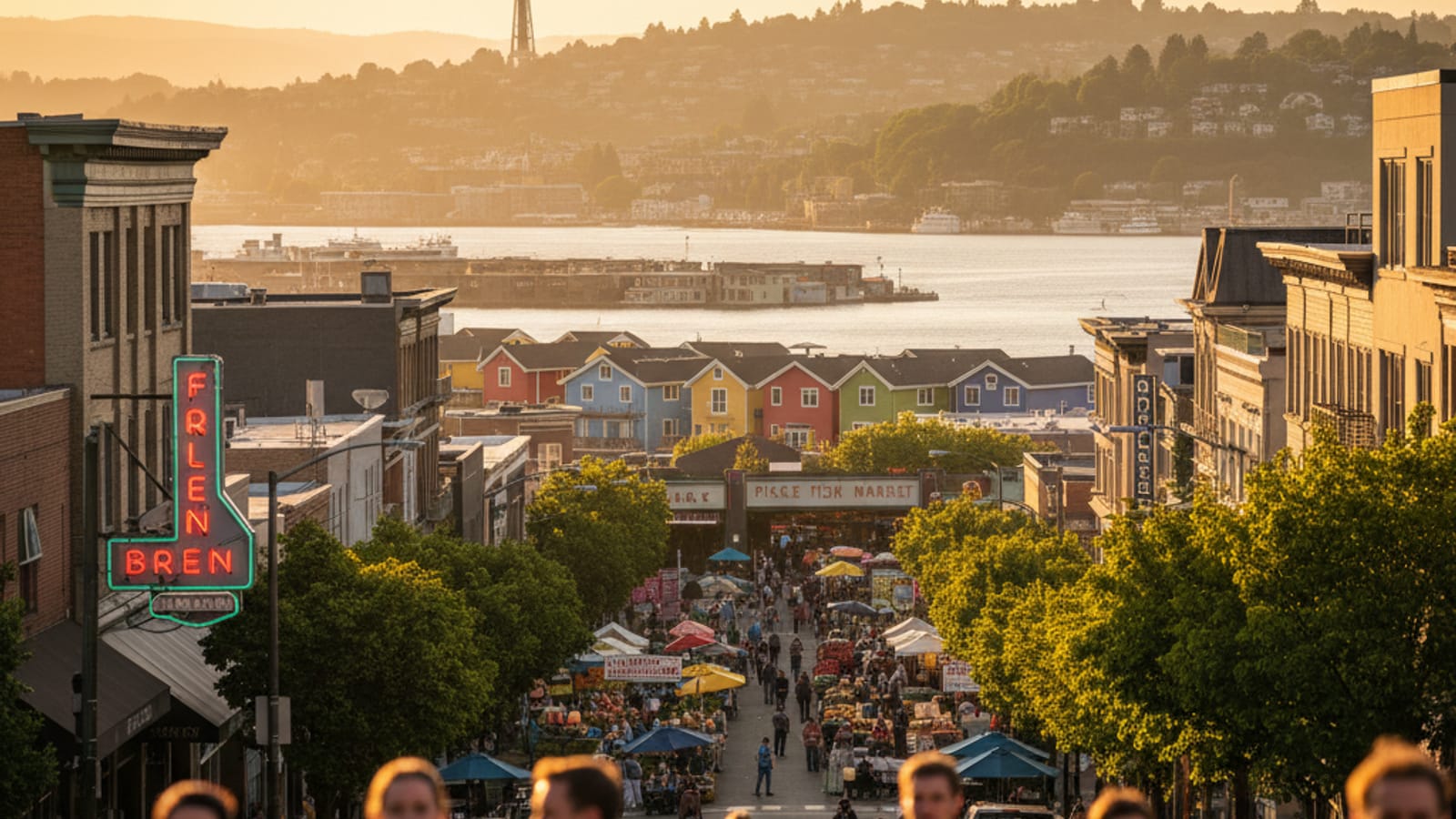
Pike Place Market is the most visited attraction in Seattle, and for good reason — it's been operating since 1907 and it's the oldest continuously operated farmers' market in the United States. But most visitors do it wrong. They show up at noon on a Saturday, fight through the crowds, watch the fish throwers at Pike Place Fish Co., buy a Starbucks at the 'original' location (it's not technically the original, but that's another story), and leave thinking they've seen it.
Here's how to actually experience Pike Place. Go on a weekday morning, ideally Tuesday or Wednesday, and arrive by 9 AM. Start at the main arcade on the west side — this is where the flower vendors set up, and the displays are genuinely stunning. Prices are absurdly good compared to flower shops — $5-8 for a beautiful bouquet.
Then head downstairs. Most visitors don't realize Pike Place has multiple levels below the main floor. The Down Under shops are a labyrinth of tiny stores selling vintage posters, old coins, comic books, and handmade jewelry. It's weird and wonderful and almost empty compared to the main level.
For food at the market, skip the tourist-facing restaurants and go to Beecher's Handmade Cheese. Watch them making cheese through the window, then order the 'World's Best' Mac & Cheese — it's $7 for a cup and it lives up to the name. Piroshky Piroshky does Russian hand pies that are flaky, stuffed, and perfect for eating while walking — the smoked salmon piroshky is the one. Pike Place Chowder has won more awards than any chowder shop in the country. The New England clam chowder is outstanding, but the smoked salmon chowder is the local favorite.
For the freshest seafood to cook yourself, Pure Food Fish Market has been in operation since 1911 and the staff actually knows what they're selling (unlike the more famous fish-throwing stand, which is largely performative). Ask them what's in season and how to cook it.
Pro tip: The 'original Starbucks' at Pike Place always has a 30-60 minute line. If you must go, the coffee is identical to every other Starbucks. Instead, walk two blocks to Ghost Alley Espresso, a tiny shop hidden in the market's lower levels that serves genuinely excellent espresso with zero wait.
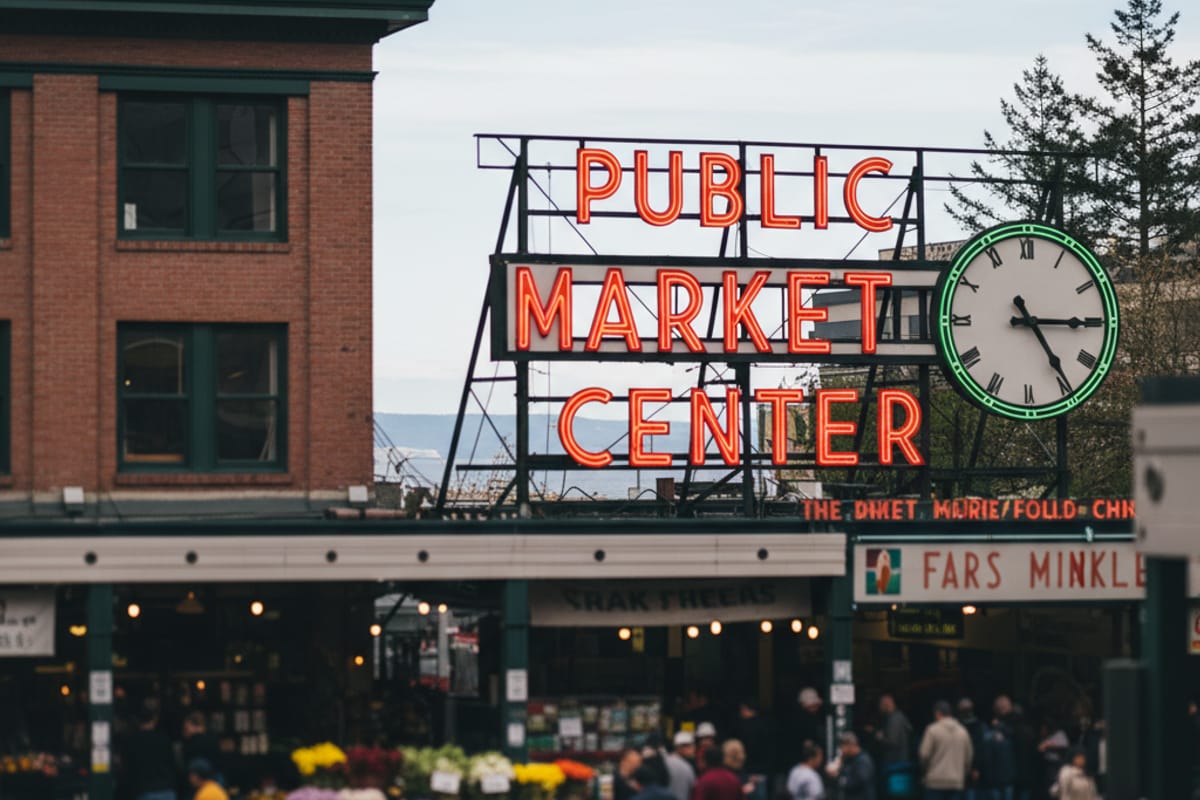 Pike Place on a weekday morning — the way it's meant to be experienced.
Capitol Hill: The Heart of Seattle's Coffee & Culture Scene
Capitol Hill is Seattle's most vibrant neighborhood — a dense, walkable mix of coffee shops, restaurants, bars, bookstores, and vintage clothing stores centered around Broadway and Pike/Pine Streets. This is where Seattle's music scene lives (Sub Pop Records, the label that launched Nirvana and Soundgarden, is based here), and it's the epicenter of the city's legendary coffee culture.
Let's talk coffee, because this is Seattle and coffee is serious business. Victrola Coffee Roasters on Pike Street is the neighborhood's living room — spacious, friendly, and serving some of the best pour-overs in the city. They roast their own beans on-site and the baristas actually care about what they're making. A pour-over is about $5, and it's worth lingering.
Elm Coffee Roasters on Melrose Avenue is the minimalist counterpoint — a beautiful, light-filled space with a small menu executed perfectly. Their espresso is consistently ranked among the best in Seattle. Stumptown Coffee (yes, it started in Portland, but Seattle adopted it) on 12th Avenue has a great space and an excellent cold brew program.
Beyond coffee, Capitol Hill's food scene is outstanding. Altura on Broadway does Italian tasting menus using Pacific Northwest ingredients — it's a splurge at $90-120 per person, but it's a genuinely special meal. For something more casual, Stateside on Pike Street does Vietnamese-French fusion that's creative without being precious — the pho French dip and the shaking beef are both excellent. Dinner for two with drinks is about $60-70.
Taylor Shellfish Farms on Melrose Avenue is an oyster bar where you can eat some of the freshest shellfish in America — Totten Inlet Virginicas, Shigoku, Kumamoto — all farmed in Washington State waters. A dozen oysters run about $24-30, and they have a solid wine list to match.
For nightlife, Neumos on Pike Street is the iconic live music venue — mid-size, great sound, and consistently good bookings. Linda's Tavern on Pine Street is a neighborhood dive bar that happens to be the last place Kurt Cobain was seen alive. The backyard patio is one of the best in the city.
Pro tip: Capitol Hill's coffee shops are busiest from 9-11 AM on weekends. Go early (before 8 AM) or after lunch for the best experience. Most shops close by 5-6 PM, so don't plan a late-afternoon coffee run.
Fremont & Ballard: Quirky Sights and Craft Beer
Fremont calls itself 'The Center of the Universe' and has a sign to prove it. This small neighborhood north of the ship canal is Seattle at its weirdest and most lovable. The Fremont Troll — a massive concrete sculpture under the Aurora Bridge, clutching a real Volkswagen Beetle — is the must-see. It sounds kitschy, and it is, but it's also genuinely impressive in person. Nearby, a Cold War-era rocket is bolted to the side of a building, and a bronze statue of Lenin salvaged from Slovakia stands at a main intersection. Fremont doesn't take itself seriously, and that's why locals love it.
The Fremont Sunday Market runs year-round (rain or shine, because this is Seattle) and is a great mix of local vendors, vintage goods, food trucks, and crafts. It's smaller and more curated than Pike Place, with fewer tourists and better prices.
Ballard, just west of Fremont, has transformed from a Scandinavian fishing village into Seattle's craft beer capital. The Ballard Brewery District has over a dozen breweries within walking distance of each other. Stoup Brewing has the best outdoor patio. Reuben's Brews consistently wins national awards — their Crikey IPA is a Pacific Northwest classic. Obec Brewing does excellent Czech-style lagers in a taproom that feels like a Prague beer hall. Most breweries offer tasters for $2-3 each, so you can sample widely without committing.
For food in Ballard, The Walrus and the Carpenter on Ballard Avenue is one of the best oyster bars in the country — tiny, always packed, no reservations (or very limited ones). Show up at 4:30 PM when they open and you might get a seat at the bar. The Penn Cove mussels and the steak tartare are both perfect.
Ballard Avenue itself is worth a stroll — it's a preserved historic street with independent shops, a great bookstore (Secret Garden Books), and some of the best restaurants in the city. Cafe Besalu does French pastries that rival anything in Paris — the almond croissant sells out by 10 AM on weekends, so go early.
The Hiram M. Chittenden Locks (Ballard Locks) connect Puget Sound to Lake Washington and Lake Union. Watching boats navigate the locks is surprisingly fascinating, and from June through September you can watch salmon swimming up the fish ladder through underwater windows. Free admission, free parking, and a beautiful botanical garden on the grounds.
Pro tip: Ballard brewery hopping works best on a Saturday afternoon. Start at Stoup around 1 PM, work your way down the street, and end at Reuben's. Most breweries close by 9-10 PM. Bring cash for food trucks parked outside the breweries — they rotate but are always good.
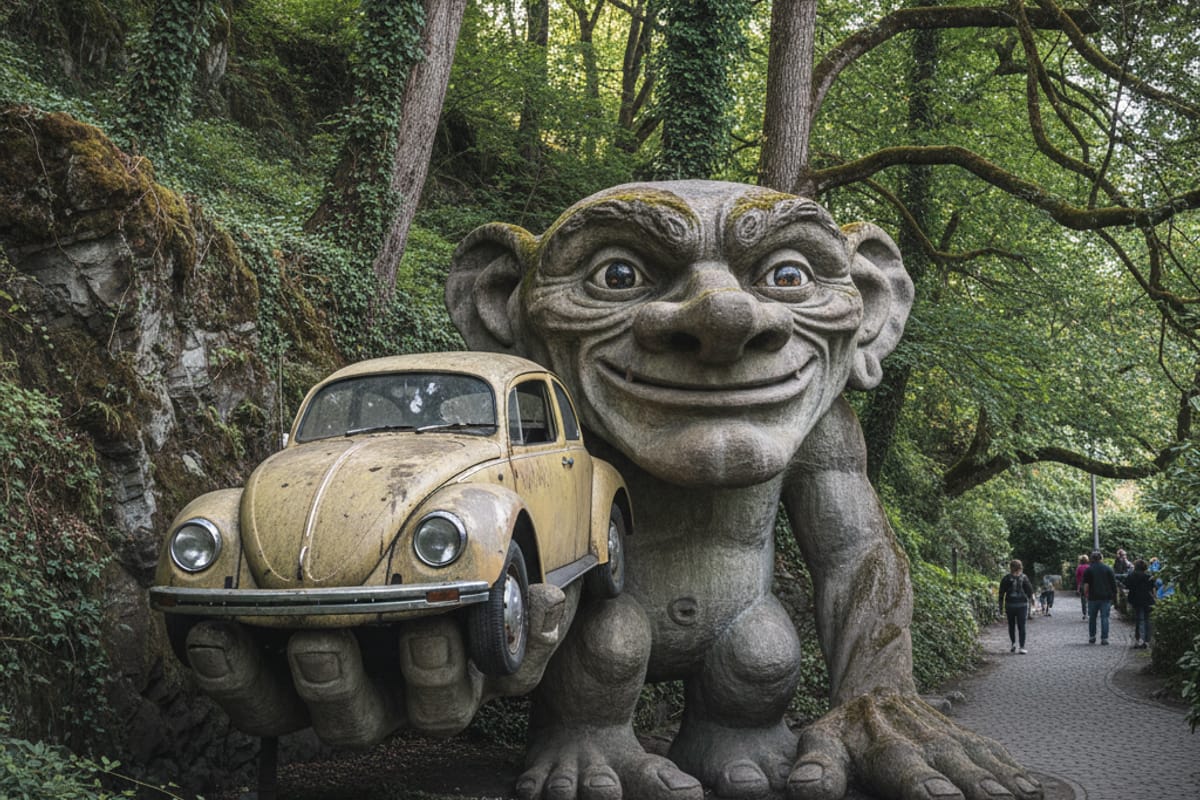 The Fremont Troll — Seattle at its wonderfully weird best.
International District & the Waterfront
Seattle's International District (also called the Chinatown-International District or CID) is one of the most authentic Asian food neighborhoods in America. Unlike many Chinatowns that have become tourist attractions, the CID is a working neighborhood where families have been running restaurants for generations.
Tai Tung on King Street is the oldest Chinese restaurant in Seattle, open since 1935. Bruce Lee used to eat here — his favorite booth is marked. The Szechuan-style dishes are the strength — try the kung pao chicken or the salt-and-pepper prawns. Dinner for two is about $25-35.
Uwajimaya is a massive Asian grocery store and food court that's worth exploring even if you're not buying groceries. The food court has stalls serving everything from teriyaki to pho to fresh sushi rolls, all for $8-12. The bookstore section has an excellent manga and Japanese stationery collection.
For pho, Pho Bac on King Street has been the standard-bearer since 1982. The rare beef pho is clean, aromatic, and deeply satisfying — $11-14 for a bowl. For dim sum, Jade Garden on King Street does a traditional cart-service dim sum on weekends that's chaotic, loud, and delicious. Go before 11 AM to avoid the worst of the wait — plan for 30-45 minutes regardless.
The waterfront has been completely revitalized since the Alaskan Way Viaduct was torn down. The new waterfront park stretches from Pioneer Square to the Olympic Sculpture Park and is a beautiful walk with views of Puget Sound, the Olympic Mountains, and ferries crossing the water. The Seattle Great Wheel ($15) is fine for views, but the free overlook at the Olympic Sculpture Park is honestly better.
The Seattle Aquarium on the waterfront is compact but well-done — the underwater dome with swimming salmon and the sea otter exhibit are highlights. Admission is $30-35 for adults. It's best for families or anyone with a couple of hours to kill on a rainy afternoon.
Pro tip: The International District is best explored on foot during lunch hours (11 AM-2 PM) when all the restaurants are bustling. Many places are cash-only or have minimum card charges, so bring at least $20 in cash.
Day Trip: Ferry to Bainbridge Island
The Washington State Ferry from downtown Seattle to Bainbridge Island is one of the best cheap thrills in the Pacific Northwest. The ride is 35 minutes each way, and the views of the Seattle skyline, Mount Rainier, and the Olympic Mountains are spectacular. The ferry runs about every 60 minutes, and walk-on passengers pay $9.45 each way (you only pay going west — the return is free). If you drive, it's $16.60 for a standard vehicle plus driver.
Once on Bainbridge, walk off the ferry and straight into the town of Winslow. It's a charming, walkable downtown with independent bookstores, wine tasting rooms, and cafes. Blackbird Bakery does excellent pastries and coffee — the marionberry scone is a Pacific Northwest classic. Hitchcock on Winslow Way is a farm-to-table restaurant that changes its menu constantly based on what's available from local farms. Lunch for two is about $50-60.
For a longer adventure, rent bikes in Winslow (Classic Cycle has rentals for about $40/day) and ride to Bainbridge Island Brewing for a post-ride pint. The island has quiet roads, forests, and water views that feel nothing like the city you just left.
Bloedel Reserve is a 150-acre public garden on the north end of the island that's stunning in any season. The Japanese garden, the moss garden, and the reflection pool are all world-class. Admission is $17 for adults, and you need to reserve a time slot online. It's a 15-minute drive from the ferry terminal — you'll need a car or rideshare to get there.
The best strategy: take the morning ferry (the 9:10 AM or 10:25 AM sailing is ideal), explore Winslow, have lunch, then take the afternoon ferry back and watch the sunset light up the Seattle skyline from the water. It's one of the best half-day trips from any major American city.
Pro tip: Sit on the upper deck on the west side of the ferry going to Bainbridge (starboard side) for the best views of Mount Rainier. On the return trip, sit on the east side (port) for the Seattle skyline. The outdoor decks are cold and windy even in summer — bring a jacket.
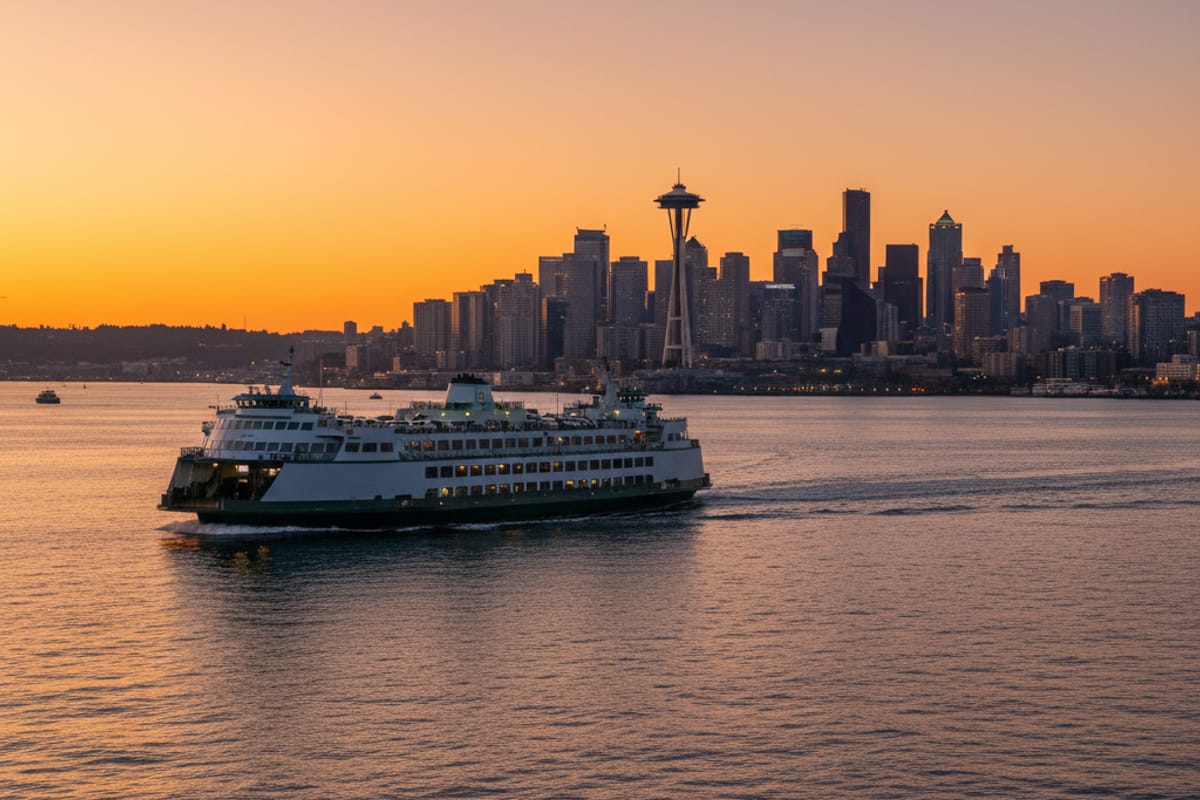 The Bainbridge ferry — $9.45 for views like this.
Budget Breakdown & Dealing with the Rain
Let's address the elephant in the room: the rain. Seattle's reputation as America's rainiest city is actually misleading. Seattle gets less total rainfall than New York, Houston, or Atlanta. What Seattle gets is persistent drizzle — light, misty rain that falls for days at a time, especially from October through April. The key is layers and a waterproof jacket. Locals don't use umbrellas (seriously, it's a dead giveaway that you're a tourist). A good rain shell and water-resistant shoes are all you need.
The best time to visit Seattle is July through September. The weather is genuinely stunning — 70-80°F, clear skies, long days (it doesn't get dark until 9:30 PM in June), and Mount Rainier is visible almost every day. This is when Seattle feels magical. May and October are shoulder season — slightly cooler, occasional rain, but fewer crowds and lower prices.
Now, the budget. Seattle isn't cheap, but it's more affordable than San Francisco or New York.
Hotels: Downtown and Capitol Hill hotels run $150-250/night. The University District and Ballard have options for $100-150/night. Hostels (like the HI Seattle in the International District) are $40-60/night for a dorm bed.
Food: Pike Place Market meals are $8-15. Dim sum in the International District is $15-20/person. Capitol Hill casual dining is $15-25/plate. A nice dinner at a Ballard restaurant is $40-60/person with drinks.
Coffee: Espresso drinks are $5-7 citywide. Pour-overs are $5-6. Drip coffee is $3-4.
Activities: Pike Place Market is free to walk. The Bainbridge ferry is $9.45 walk-on. Museum of Pop Culture (MoPOP) is $36 for adults. Seattle Art Museum is $24.95 (first Thursday of the month is free). The Ballard Locks are free. Most brewery tastings are $2-3 per pour.
Transportation: Link Light Rail from the airport to downtown is $3.25. Bus fare is $2.75. Uber/Lyft within the city is $10-18. Seattle is walkable if you don't mind hills — Capitol Hill is called that for a reason.
Realistic 3-day budget: $700-1,000 per person including hotel, food, coffee (lots of coffee), activities, and transportation. Seattle rewards walkers, coffee drinkers, and people who like neighborhoods more than big attractions.
Why Trust This Guide
Recommendations from locals across 240+ US cities via Recommended.app community data.
Explore More
This guide is part of our Seattle collection. Explore more guides for Seattle →
Seattle has 487 verified businesses on Recommended.app across 93 categories, with an average rating of 4.6 out of 5.
Hidden Gems Weekly
3 hidden gems, 2 local quotes, 1 home hack — every Monday. Free forever.
Unsubscribe anytime. No spam.
More from City Guides
 City Guide
Seattle on a Budget: Free and Cheap Things to Do
 City Guide
The Perfect Weekend in Seattle: A 2-Day Itinerary
 City Guide
We Asked Seattle Locals Where They Actually Eat — Here's What They Said
 City Guide
Seattle Hidden Gems: Secret Spots the Guidebooks Miss
 Home Services
Water Damage Restoration Near Me: What to Do in the First 24 Hours (2026 Guide)
 Food & Dining