
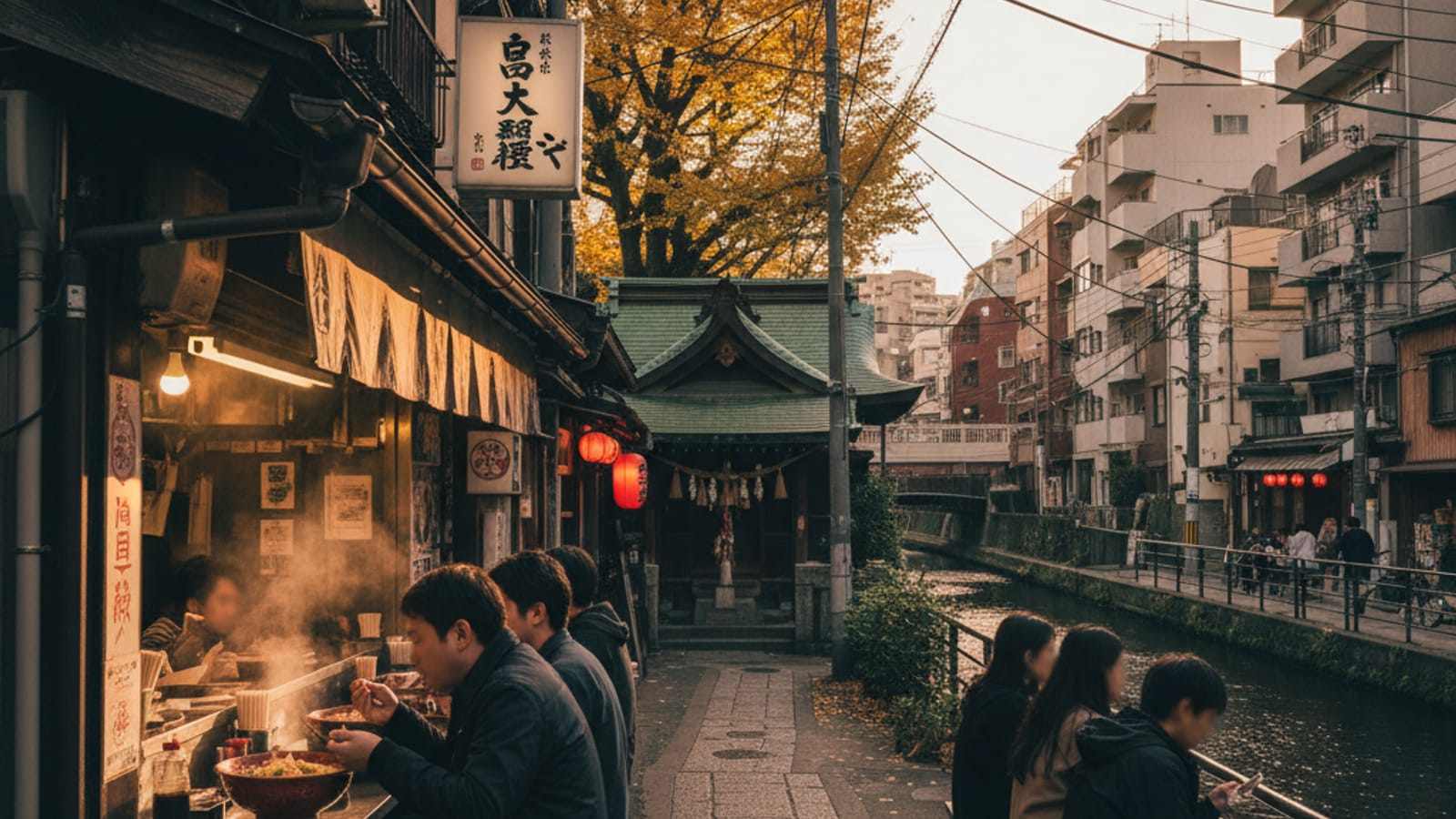
Tokyo hidden gems in 2026 are layered behind the neon. The city that 15 million tourists visited in 2025 is actually thousands of intimate neighborhoods, each with its own personality, food culture, and rhythms. While tourists pack Shibuya Crossing and Sensō-ji, Tokyo residents live in a city of standing ramen counters with 8 seats, basement jazz bars, neighborhood shrines nobody photographs, and konbini (convenience stores) that serve better food than most restaurants worldwide.
Last updated April 2026. 400 bookable Tokyo experiences on Recommended.app.
Food
1. Omoide Yokocho (Memory Lane) — Shinjuku
A narrow alley of tiny yakitori bars under the train tracks behind Shinjuku Station. Each bar seats 6-10 people. Grilled chicken skewers, beer, and smoke. ¥500-800 per skewer (£2.50-4). Go after 7pm when the lanterns light up. This is postwar Tokyo preserved in amber.
2. Tsukiji Outer Market — Chuo
The inner fish market moved to Toyosu, but the outer market is still here and still the best food street in Tokyo. Tamagoyaki (rolled omelette on a stick, ¥200), fresh sashimi bowls (¥1,500-2,500), strawberry daifuku mochi (¥300). Go at 7-9am before crowds build.
3. Fuunji — Shinjuku
The best tsukemen (dipping ramen) in Tokyo. A tiny counter with 12 seats. The concentrated fish broth with thick noodles is extraordinary. ¥900 (£4.50). Expect a 15-minute queue at lunch. Buy your ticket from the vending machine — no English needed, just press the first button.
4. Konbini Culture — Everywhere
7-Eleven, Lawson, and FamilyMart in Japan serve food that would be restaurant-quality anywhere else. Onigiri (rice balls, ¥120-180), egg sandwiches (¥200), nikuman (meat buns, ¥180). A full meal for under ¥500 (£2.50). The Lawson egg sandwich is legendary.
5. Standing Sushi — Shimbashi/Ginza
Tachinomi (standing-only) sushi bars serve fresh nigiri for ¥100-300 per piece. No reservation, no frills, extraordinary fish. Midori Sushi in Ginza and Sushi Dai in Toyosu are famous, but the unnamed standing bars near Shimbashi Station are where salarymen eat daily.
Culture & Experiences
6. Yanaka — North Tokyo
The neighborhood that survived the war. Wooden houses, temple cats, a cemetery where the last shogun is buried, and Yanaka Ginza shopping street (retro candy shops, hand-carved chopsticks, ¥200 croquettes). This is Edo-era Tokyo without the theme park feel of Asakusa.
7. Shimokitazawa — Setagaya
Tokyo's vintage and music neighborhood. Tiny live houses (live music venues), vintage clothing shops with ¥500 finds, curry restaurants in basements, and independent bookstores. This is where young Tokyo creatives live. Take the Odakyu Line from Shinjuku (3 stops).
8. TeamLab Borderless (Azabudai Hills) — Minato
Reopened in 2024 at Azabudai Hills. Digital art installations that respond to your movement. ¥3,800 (£19). Weekday mornings are least crowded. This is genuinely unlike any museum in the world — the art has no boundaries between installations.
9. Golden Gai — Shinjuku
200+ bars in a 6-alley block, each seating 5-10 people. Some are themed (horror, punk, jazz, manga). Cover charges ¥500-1,500. Drinks ¥700-1,200. Go after 9pm. Some bars are tourist-friendly, others are regulars-only (a sign in the window will say). This is Tokyo nightlife at its most intimate.
10. Meiji Shrine — Harajuku
Everyone lists Meiji Shrine, but most tourists rush through. Slow down. The 170,000-tree forest was planted in 1920 and is now an old-growth ecosystem. Walk the main path slowly, see the sake barrels and wine barrels (gifts from France), and visit on a weekday morning when you might see a traditional wedding procession. Free.
Neighborhoods
11. Koenji — Suginami
The punk and counterculture neighborhood. Vintage stores, record shops (¥300 vinyl), tiny izakayas, and the Koenji Awa Odori festival in August (12,000 dancers). This is anti-Shibuya — deliberately messy, independent, and cheap.
12. Daikanyama/Nakameguro — Meguro
Tokyo's most stylish neighborhoods. T-Site (the most beautiful bookstore in the world), canal-side cafes, independent boutiques. Nakameguro's cherry blossom season (late March) is when Tokyo's most beautiful people come out. Free to walk.
Day Trips
13. Kamakura — 1 Hour South
The Great Buddha, 65+ temples, and hiking trails through bamboo forests. ¥2,000-3,000 for day trip transport. Less crowded than Kyoto, more accessible from Tokyo. The Enoden coastal train to Enoshima Island is one of the most scenic rides in Japan.
14. Hakone — 90 Minutes Southwest
Hot springs (onsen), Lake Ashi boat cruise, Mt. Fuji views (on clear days), and the Hakone Open-Air Museum. The Hakone Free Pass (¥6,100) covers all transport for 2 days. The ryokan (traditional inn) experience with kaiseki dinner is worth one night.
15. Nikko — 2 Hours North
The most ornate shrines in Japan — Tōshō-gū is covered in gold leaf and intricate carvings (the opposite of Kyoto's minimalism). Sacred bridges, waterfalls, and cedar forests. ¥2,700 for the JR day pass. Less touristy than Kyoto or Kamakura.
Tokyo Money Tips
- IC card (Suica/Pasmo) — tap-on tap-off for trains and buses. Also works at konbini and vending machines.
- ¥500 lunches — many restaurants have teishoku (set meal) lunches for ¥500-800 that cost ¥1,500+ at dinner.
- Free temples — Most neighborhood shrines are free. Sensō-ji is free. You only pay at the major temple complexes.
- 100-yen shops — Daiso and Seria are Japan's dollar stores but the quality is genuinely excellent. Great for souvenirs.
Explore More
Related guides:
This guide is part of our Tokyo collection. Explore more guides for Tokyo →
Tokyo has 171 verified businesses on Recommended.app across 63 categories.
Hidden Gems Weekly
3 hidden gems, 2 local quotes, 1 home hack — every Monday. Free forever.
Unsubscribe anytime. No spam.
More from City Guides
 Home Services
Water Damage Restoration Near Me: What to Do in the First 24 Hours (2026 Guide)
 Food & Dining
Best Buffet in Las Vegas 2026: What's Still Worth It After the Great Buffet Collapse
 Food & Dining
Best Coffee Shops in Chicago 2026: 20 Cafes Worth Leaving Your Apartment For
 Food & Dining
Best Restaurants in Hilton Head 2026: 18 Spots Worth Every Dollar
 Food & Dining
Best Restaurants in Charlotte 2026: 20 Spots That Define the Queen City's Food Scene
 Food & Dining