
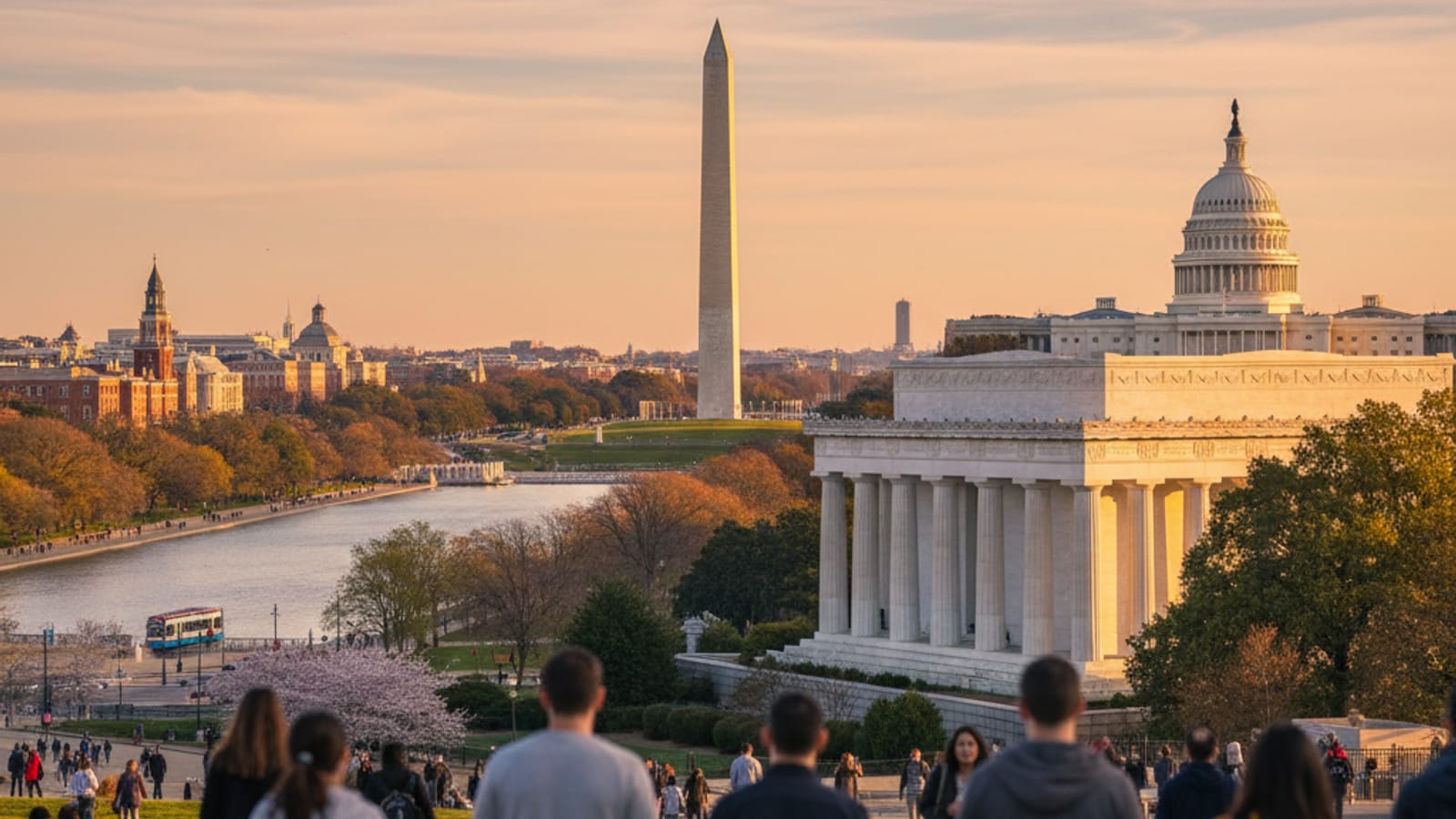
The most free things to do of any city in America — and the best paid ones too
Last updated March 15, 2026 by the Recommended.app research team.
The Smithsonian Strategy: Which Museums to Prioritize
Washington DC has 17 Smithsonian museums and galleries, and every single one is free. Free admission, free special exhibits, free everything. This is arguably the greatest cultural bargain in the world. The problem is that you can't see them all — not even close. Trying to speed-run five museums in a day will leave you exhausted and remember nothing. Here's how to be strategic.
The National Air and Space Museum is the most visited museum in America for a reason. The Wright Brothers' actual 1903 Flyer, the Spirit of St. Louis, the Apollo 11 command module, a real SR-71 Blackbird — the collection is staggering. The museum reopened after a massive renovation and the new galleries are outstanding. Plan 2-3 hours minimum. The Boeing Milestones of Flight Hall on the first floor is the must-see if you're short on time.
The National Museum of African American History and Culture (NMAAHC) is the hardest ticket to get and the most important museum in DC. Timed-entry passes are free but released online at 8 AM on Wednesdays for the following week — and they sell out within minutes. Book exactly when they drop. The museum traces the African American experience from slavery through the civil rights movement to the present day. The lower-level history galleries are emotionally intense — plan at least 3-4 hours and don't rush.
The National Museum of Natural History has the Hope Diamond, a massive African elephant in the rotunda, and an ocean hall with a life-size whale model. It's the best museum for families with kids, and you can see the highlights in 90 minutes. The human origins exhibit is fascinating and underrated.
The National Gallery of Art (technically not Smithsonian, but also free) has one of the best art collections in the world — Vermeer, Rembrandt, Monet, Da Vinci, and a Calder mobile in the East Building atrium that's worth the visit alone. The sculpture garden between the two buildings has a fountain in summer and an ice rink in winter. Plan 2-3 hours.
The National Museum of American History has the actual Star-Spangled Banner (the flag that inspired the anthem), Julia Child's kitchen, Abraham Lincoln's top hat, and Dorothy's ruby slippers. It's a greatest-hits collection of American artifacts. The new democracy exhibit is excellent. Plan 90 minutes to 2 hours.
The Hirshhorn Museum (contemporary art) and the Renwick Gallery (craft and decorative arts) are smaller, less crowded, and often have the most surprising exhibits. If you have an extra hour, one of these will reward you.
My recommended strategy for a 3-day trip: Day 1 — NMAAHC (morning, 3-4 hours) and Natural History (afternoon, 90 minutes). Day 2 — Air and Space (morning, 2-3 hours) and National Gallery of Art (afternoon, 2-3 hours). Day 3 — skip museums entirely and explore neighborhoods.
Pro tip: NMAAHC timed passes drop at 8 AM Eastern on Wednesdays. Set an alarm, have the website loaded, and book the earliest morning slot available. If you can't get passes, walk-up entry is sometimes available after 1 PM on weekdays — get in line by 12:30 PM. It's worth the effort.
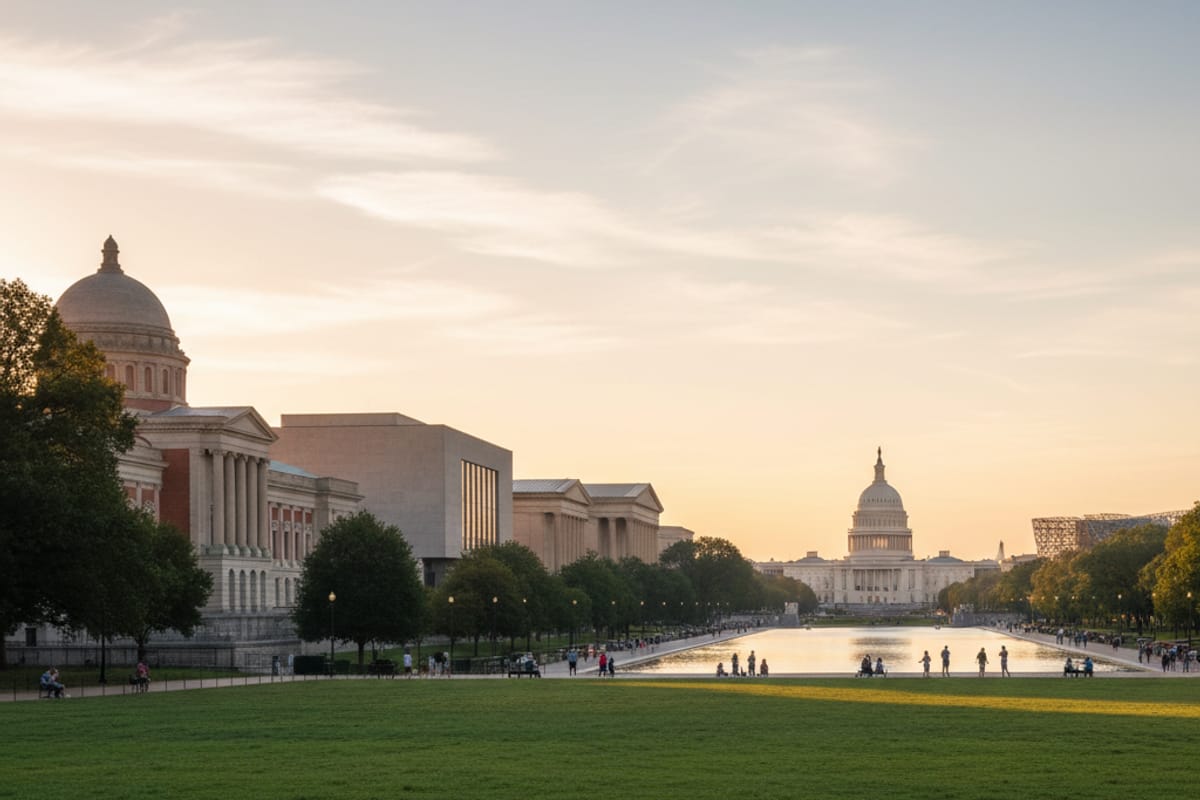 The National Mall — the greatest free museum campus on Earth.
The National Mall Walking Route: A Practical Guide
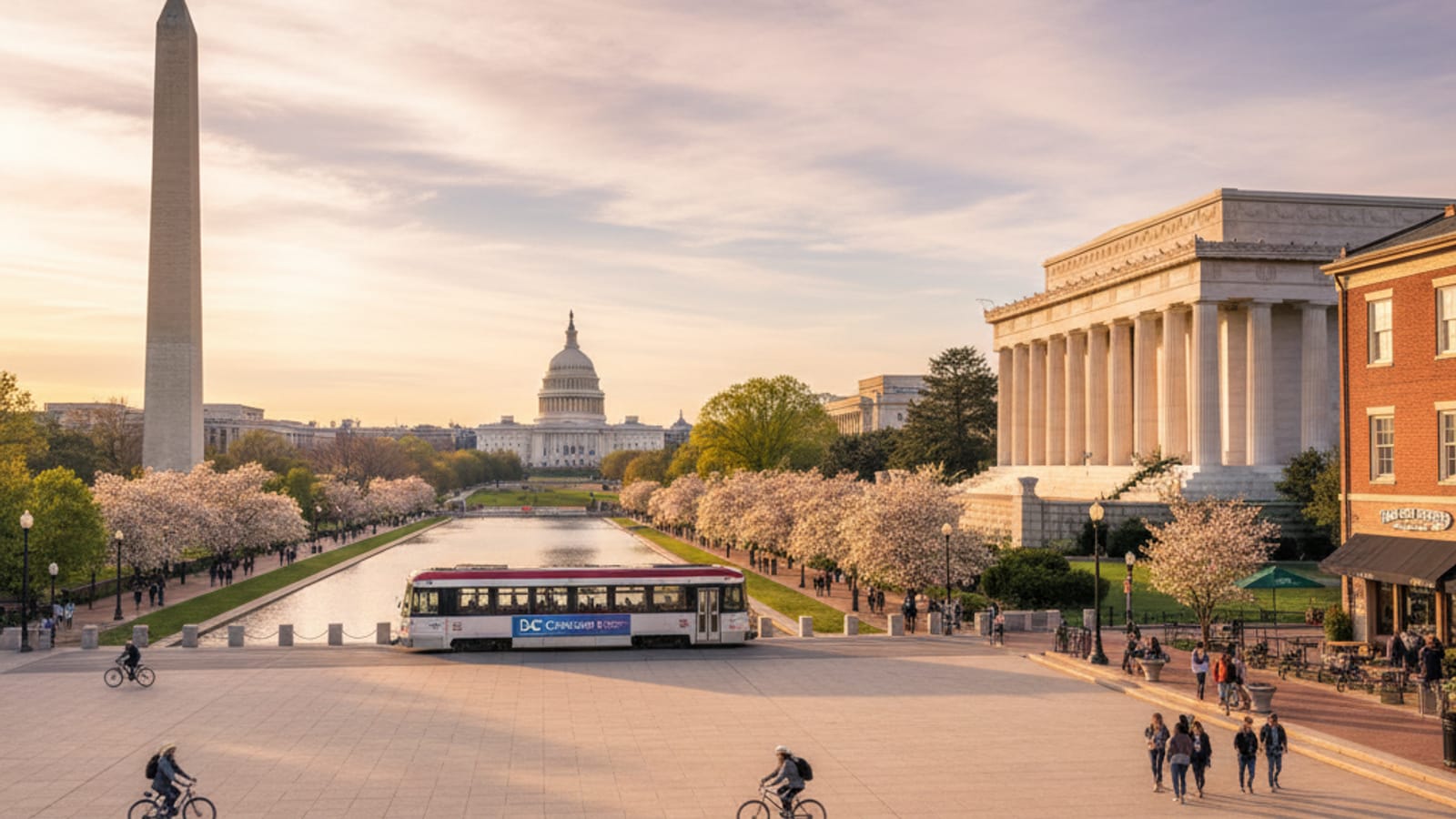
The National Mall stretches roughly two miles from the U.S. Capitol to the Lincoln Memorial, with the Washington Monument in the center. Walking the full Mall plus the Tidal Basin (where the Jefferson Memorial and cherry blossoms are) is about 4-5 miles. It's doable in a day, but it's a lot of walking on flat, exposed ground with minimal shade.
Here's the route that works best. Start at the Lincoln Memorial in the early morning. The memorial is open 24 hours and is at its most powerful when it's quiet — stand inside, read the Gettysburg Address on the wall, and look out across the Reflecting Pool toward the Washington Monument. It's one of those moments that lives up to the hype.
From Lincoln, walk along the south side of the Reflecting Pool toward the World War II Memorial. This memorial is massive and well-designed — the fountains, the state pillars, and the Freedom Wall (each gold star represents 100 Americans killed) are all moving. The Korean War Memorial, just south, has life-size steel soldier statues walking through juniper bushes that represent the Korean landscape. At night, the soldiers' reflections in the polished wall double their number — representing the 'missing in action.' The Vietnam Veterans Memorial (the Wall) is nearby — finding names and leaving tributes is a tradition that's quietly heartbreaking.
Continue east to the Washington Monument. Timed-entry tickets are free but required — book at recreation.gov. The elevator ride to the top takes 70 seconds and the 360-degree views from the observation deck are the best in the city. On a clear day you can see the Blue Ridge Mountains.
Cross south to the Tidal Basin for the Jefferson Memorial and the Martin Luther King Jr. Memorial. The MLK Memorial is relatively new (2011) and features a 30-foot statue of King emerging from a stone, with quotes inscribed on the surrounding walls. The Jefferson Memorial is classical and beautiful, especially at sunset when the light hits the columns.
The FDR Memorial, along the Tidal Basin, is the most underrated memorial on the Mall — four outdoor 'rooms' representing FDR's four terms, with waterfalls, sculptures, and quotes carved into granite. It's rarely crowded and it's beautiful.
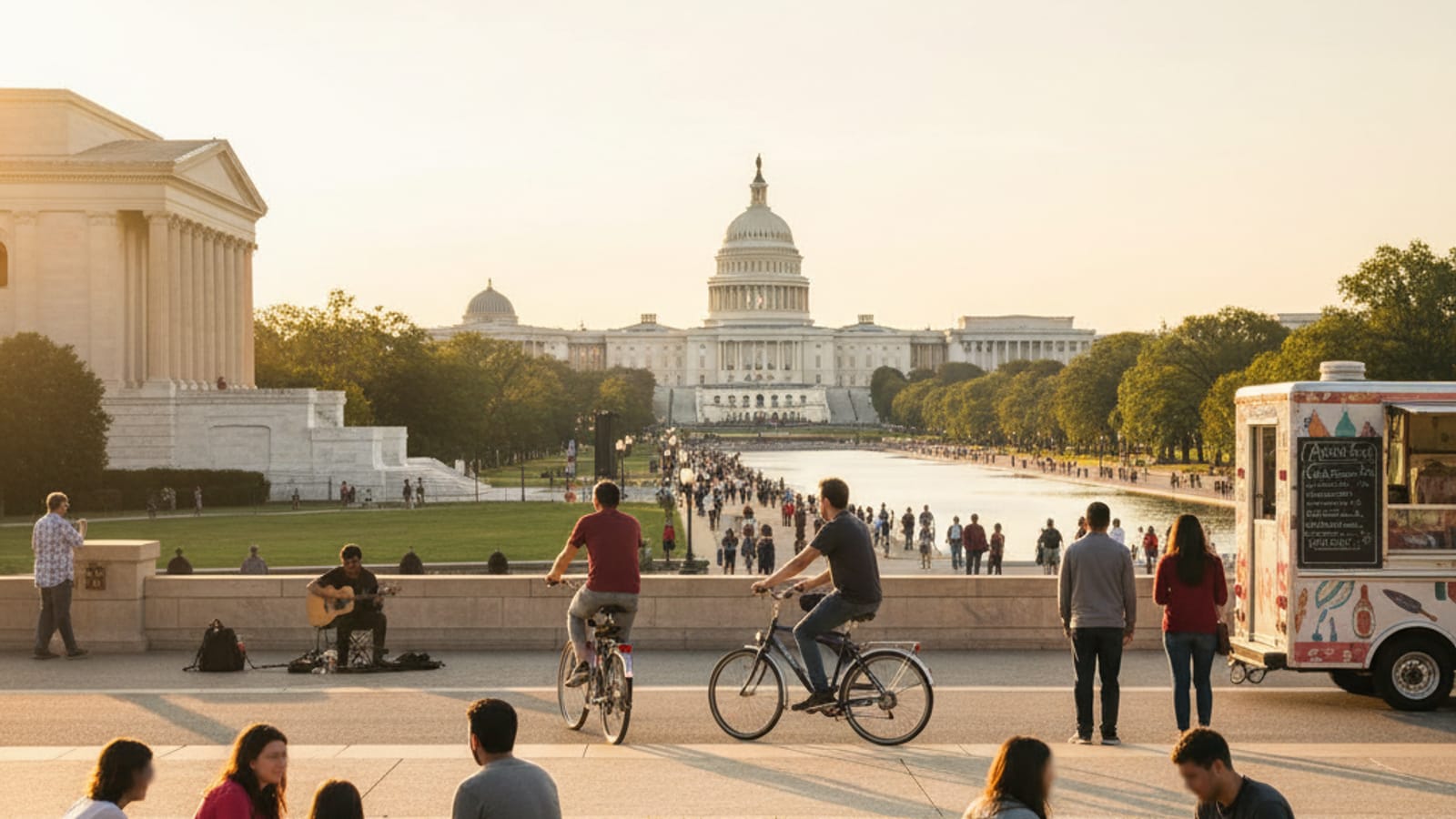
For lunch during your Mall walk, there's a food truck corridor on Madison Drive between the museums. Prices are reasonable ($8-14 for a meal) and the variety is good — Thai, Ethiopian, barbecue, falafel. The museum cafeterias are also decent, especially the one in the National Gallery of Art.
Pro tip: Walk the Mall early in the morning or late in the afternoon. Midday (11 AM-3 PM) in summer is genuinely dangerous — the Mall has almost no shade and temperatures can exceed 100°F on the pavement. Bring water, sunscreen, and a hat. In spring and fall, midday is fine and the light is beautiful.
Georgetown: Food, Shopping & the Waterfront
Georgetown is DC's oldest neighborhood — it predates the city itself, founded in 1751 when Washington DC was still swampland. Today it's an upscale village of Federal-style townhouses, cobblestone streets, and a dense commercial strip along M Street and Wisconsin Avenue. It's touristy, but the food is genuinely good and the architecture is beautiful.
The Georgetown Waterfront Park along the Potomac is one of the best public spaces in DC — a landscaped promenade with fountains, benches, and views of the Kennedy Center and Roosevelt Island across the river. On warm evenings, the waterfront restaurants open their patios and the whole area comes alive. Fiola Mare on the waterfront does upscale Italian seafood — the crudo platter and the lobster ravioli are both excellent, but it's a splurge at $50-70/person for dinner.
For more affordable Georgetown eats, Martin's Tavern on Wisconsin Avenue has been a neighborhood institution since 1933. JFK proposed to Jackie in Booth 3 (it's marked with a plaque). The food is classic American — burgers, crab cakes, pot roast — and dinner for two with drinks is about $50-70. Baked & Wired, a short walk from the waterfront, is the best bakery in DC — the cupcakes are massive and the coffee is excellent. Get the strawberry cupcake and a cortado for about $9.
The Georgetown shopping scene is anchored by small boutiques and national chains. The highlight for visitors is the C&O Canal towpath — a flat, tree-lined trail that runs along the historic Chesapeake & Ohio Canal. You can walk or bike it for miles; the first section through Georgetown is the most scenic. Rent bikes from Capital Bikeshare ($2 per 30-minute ride, stations everywhere).
Dumbarton Oaks is Georgetown's hidden gem — a 10-acre garden estate owned by Harvard University that's open to the public. The terraced gardens, wisteria arbors, and rose garden are stunning, especially in spring. Admission to the gardens is $10 (free November through mid-March). The museum inside has a world-class collection of Byzantine art and pre-Columbian artifacts, also free.
For the best views in Georgetown, walk across the Key Bridge to the north end of Roosevelt Island. The Theodore Roosevelt Island is a 90-acre nature preserve in the middle of the Potomac with trails, a memorial plaza, and surprising wildlife (deer, herons, turtles) just minutes from the city. Free, uncrowded, and completely different from the monument-and-museum experience.
Pro tip: Georgetown has no Metro station — it's the only major DC neighborhood without one. Walk from Foggy Bottom-GWU station (about 15 minutes), take the DC Circulator bus ($1), or bike via Capital Bikeshare. Don't drive — parking in Georgetown is a nightmare and garages charge $20-30.
 Georgetown's waterfront — perfect for an evening stroll.
Adams Morgan, U Street & the Nightlife Corridor
If the National Mall is DC's public face, U Street and Adams Morgan are its personality. These adjacent neighborhoods north of downtown are where DC goes to eat, drink, dance, and be loud. The vibe is young, diverse, and unpretentious — a welcome contrast to the buttoned-up political culture that dominates the rest of the city.
U Street has a deep history. Before it was a nightlife corridor, it was the 'Black Broadway' — the commercial and cultural heart of DC's African American community from the 1920s through the 1960s. Duke Ellington grew up a few blocks away. The legendary Howard Theatre (opened 1910, now restored and operating) hosted Ella Fitzgerald, James Brown, and Marvin Gaye. Ben's Chili Bowl on U Street has been serving chili half-smokes (a DC-specific smoked sausage) since 1958 and survived the 1968 riots when most of the block burned. A chili half-smoke with everything is $7.50 and it's a mandatory experience.
For nightlife, U Street has some of the best bars in DC. The Gibson is a reservations-only cocktail bar behind an unmarked door on U Street — ring the bell and they'll let you in. The cocktails are creative, expertly made, and about $15-17 each. The setting is dark, intimate, and feels like a speakeasy without the gimmick. Nellie's Sports Bar is a beloved LGBTQ+ sports bar with a rooftop, drag brunches on weekends, and a vibe that's welcoming to everyone. The weekend drag brunch ($25-35 including food) is one of the best shows in DC.
12th Street Ale House is a no-frills neighborhood bar with $5 draft beers and a jukebox that locals actually use. It's the antidote to every overdesigned cocktail bar in the city.
Adams Morgan, just north of U Street, is DC's international dining corridor. 18th Street is lined with restaurants serving Ethiopian, Salvadoran, Japanese, French, and Lebanese food, often within a few doors of each other. Donburi does Japanese rice bowls that are fast, cheap ($12-15), and genuinely good — the katsu don and the salmon don are both excellent. Mintwood Place does upscale French-American in a beautiful townhouse setting — the duck confit and the burger are both outstanding. Dinner for two with wine is about $90-110.
Ambar on 18th Street does Balkan small plates and has an all-you-can-eat brunch deal for $35 that includes unlimited small plates and drinks. It's one of the best brunch values in the city.
For Ethiopian food — DC has the largest Ethiopian population of any city outside Africa — Dukem on U Street and Zenebech Injera on 18th Street in Adams Morgan are both excellent. If you've never had Ethiopian food, order a combination platter ($16-22) and eat with injera bread instead of utensils. It's communal, flavorful, and unlike anything else.
The live music scene on U Street is excellent. The 9:30 Club is one of the best mid-size music venues in America — if a band you like is playing here, buy tickets immediately. Black Cat, nearby, has a more indie/punk vibe and cheaper tickets ($12-25). Pearl Street Warehouse in the Wharf district books Americana and roots music in an intimate setting.
Pro tip: Adams Morgan and U Street are walking distance from each other — start with dinner on 18th Street in Adams Morgan, then walk south to U Street for drinks and live music. The walk takes about 15 minutes and passes through some beautiful residential streets. Take the Metro to U Street/Cardozo station (Green/Yellow line) to get there.
Eastern Market, Capitol Hill & Cherry Blossom Tips
Capitol Hill is more than just the U.S. Capitol building — it's a residential neighborhood of rowhouses, tree-lined streets, and one of the best weekend markets in America. Eastern Market, on 7th Street SE, has been operating since 1873. The indoor market (Tuesday through Sunday) has butchers, bakers, cheese vendors, and a lunch counter that does blueberry buckwheat pancakes on weekends that draw a serious line.
The outdoor flea market (weekends only) is the real draw — local artists, vintage furniture, handmade jewelry, antique maps, and secondhand books spread across a city block. It's curated enough to be interesting but authentic enough that you can actually find deals. The surrounding blocks have independent bookstores (Capitol Hill Books is a wonderfully chaotic used bookstore stuffed floor-to-ceiling), coffee shops (Peregrine Espresso is one of the best in DC), and restaurants.
Barracks Row on 8th Street SE is Capitol Hill's dining strip. Cava Mezze does excellent Greek small plates — the roasted lamb, the saganaki cheese, and the spreads are all outstanding. Dinner for two with drinks is about $60-80. Good Stuff Eatery, owned by Spike Mendelsohn from Top Chef, does gourmet burgers with hand-spun milkshakes for $12-16. The Farmbird sandwich at Ambar's sister restaurant Ambar Capitol Hill is a local favorite.
Ted's Bulletin on 8th Street does diner food elevated — the homemade Pop-Tarts at brunch are famous and the milkshakes come with an optional booze float ($14-16). Weekend brunch is packed; go at 9 AM or expect a 45-minute wait.
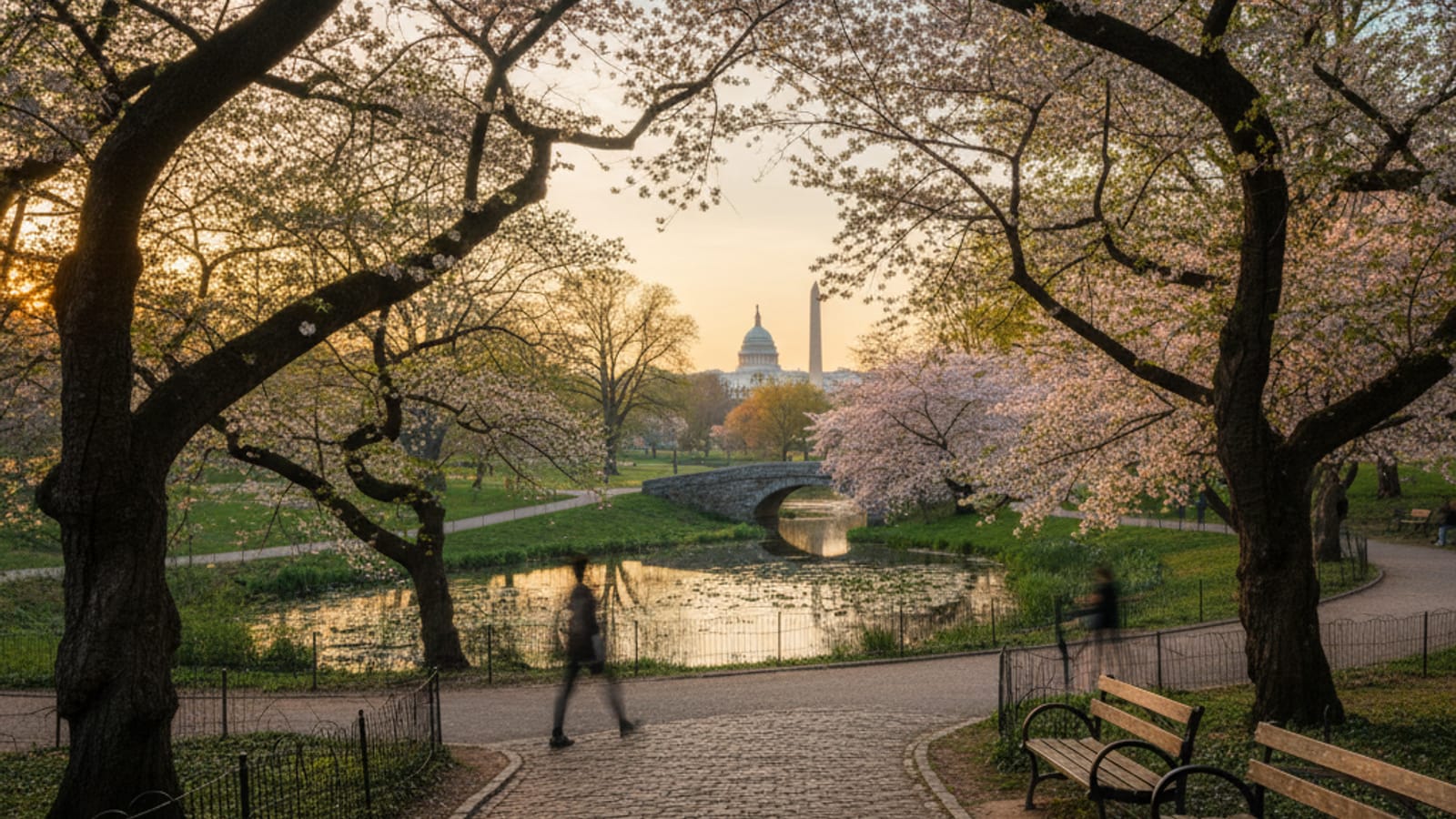
Now, cherry blossoms. If you're visiting between late March and mid-April, the Tidal Basin cherry blossoms are one of the most spectacular natural displays in America. Around 3,700 cherry trees — most gifted by Japan in 1912 — explode into pink and white blooms for about two weeks. Peak bloom varies year to year (the National Park Service tracks predictions on nps.gov), but it typically falls between March 25 and April 7.
The Tidal Basin gets incredibly crowded during peak bloom — millions of visitors in a two-week window. Here's how to beat the crowds: go at sunrise (6-7 AM on a weekday). The light is golden, the crowds are nonexistent, and the reflections on the water are perfect. The path around the Tidal Basin is about 2 miles and takes 45 minutes to walk. The stretch between the Jefferson Memorial and the MLK Memorial has the densest concentration of trees.
Alternative cherry blossom spots that locals know: the Kenwood neighborhood in Bethesda, Maryland (just outside DC) has residential streets lined with massive cherry trees that are arguably more beautiful than the Tidal Basin — and completely uncrowded. The National Arboretum in northeast DC has cherry trees, azaleas, and the stunning Capitol Columns installation (the original columns from the Capitol building, relocated to a meadow). Both are free.
Pro tip: Cherry blossom peak bloom is unpredictable — it can happen anytime from mid-March to mid-April. Don't book a trip solely for the blossoms unless you have flexibility. If you can't visit during peak bloom, the blossoms along the National Mall and in Georgetown are still beautiful a few days before and after peak.
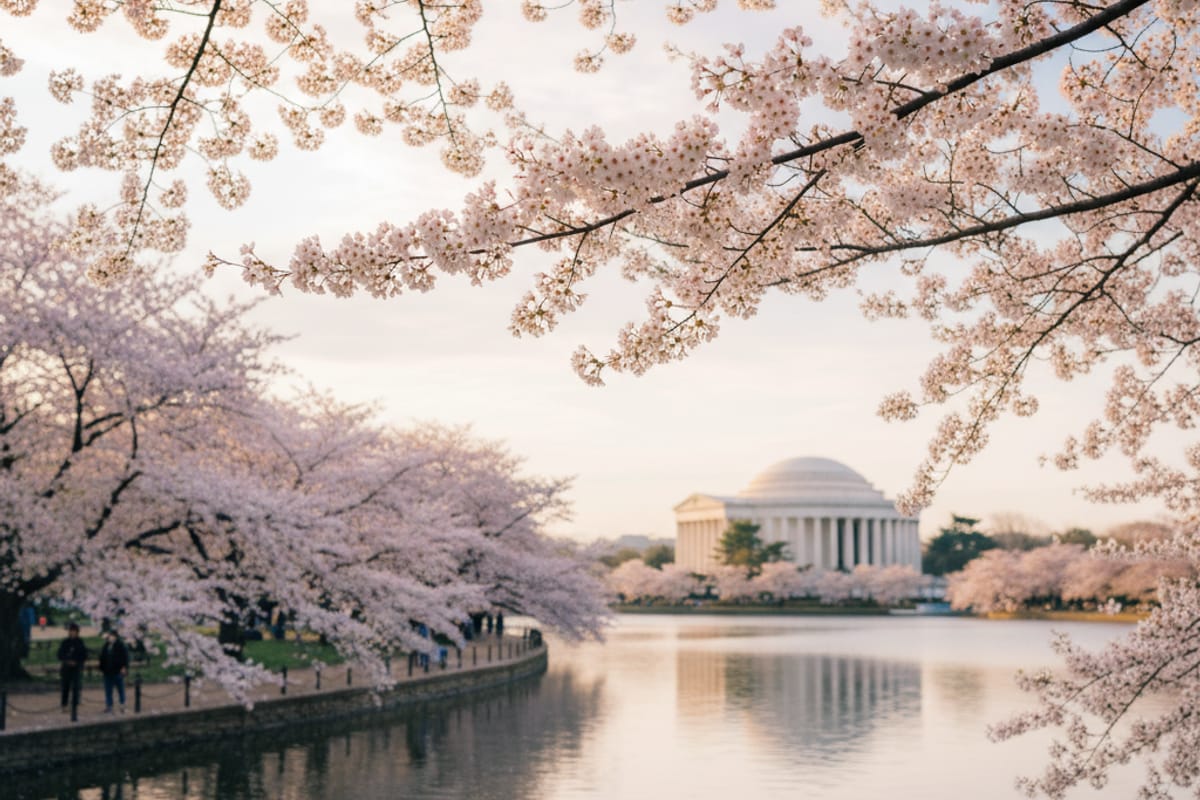 Peak bloom at the Tidal Basin — arrive at sunrise for this view without the crowds.
Budget Breakdown: DC on the Cheap
Washington DC might be the best budget travel destination in America for one simple reason: the best stuff is free. The Smithsonian museums, the National Gallery, the monuments, the memorials, the Library of Congress, the National Archives (see the actual Declaration of Independence and Constitution), the National Zoo — all free. You could spend a week here without paying a single museum admission.
Hotels: Downtown and Dupont Circle hotels run $150-300/night. Capitol Hill and U Street have boutique options for $130-200/night. Arlington, Virginia (one Metro stop across the river) has chain hotels for $100-150/night. Hostels like HI Washington DC in the Chinatown area are $40-60/night for a dorm.
Food: Ben's Chili Bowl is $7-10. Food trucks on the Mall are $8-14. Eastern Market lunch is $8-14. Casual dining in Adams Morgan and U Street is $12-20/plate. A nice dinner in Georgetown or Capitol Hill is $35-50/person. Ethiopian combination platters are $16-22.
Transportation: The DC Metro is excellent and covers most of the city. Fares are $2-6 depending on distance and time of day. A 7-day unlimited pass is $38 (worth it for 3+ days). Capital Bikeshare is $2 per 30-minute ride. The National Mall is entirely walkable. Uber/Lyft within the city is $8-15.
Activities: Smithsonian museums — free. National Gallery of Art — free. Monuments and memorials — free. Library of Congress tour — free. National Zoo — free. National Archives — free (timed entry required). Washington Monument — free (timed entry required). The only paid attractions most visitors need are the optional ones: International Spy Museum ($25), Newseum (now moved, check current status), and Mount Vernon ($28, George Washington's estate, 30 minutes south of the city and absolutely worth it).
Drinks: Cocktails at upscale bars are $14-18. Craft beer at neighborhood bars is $6-9. Happy hours in DC are excellent — many bars do half-price drinks and appetizers from 4-7 PM on weekdays. The best happy hour deal in the city might be Clyde's of Georgetown — $4 drafts and $6 cocktails.
Realistic 3-day budget: $450-700 per person including hotel, food, transportation, and zero museum admission. That makes DC one of the cheapest major-city trips in America. The museums alone would cost $100+ per day in any other city.
Best time to visit: Late March through May (cherry blossoms, mild weather, 55-75°F) and September through November (the summer heat and humidity break, fall foliage in Rock Creek Park, fewer crowds). Summer (June-August) is hot and humid (90°F+) but the long days mean more time at outdoor monuments. Winter is cold but the cheapest time for hotels, and the museums are blissfully uncrowded.
Why Trust This Guide
Recommendations from locals across 240+ US cities via Recommended.app community data.
Explore More
This guide is part of our Washington Dc collection. Explore more guides for Washington Dc →
Washington Dc has 191 verified businesses on Recommended.app across 53 categories.
Hidden Gems Weekly
3 hidden gems, 2 local quotes, 1 home hack — every Monday. Free forever.
Unsubscribe anytime. No spam.
More from City Guides
 City Guide
The Perfect Weekend in Washington DC: A 2-Day Itinerary
 City Guide
Washington DC Hidden Gems: Secret Spots the Guidebooks Miss
 City Guide
Washington DC on a Budget: Free and Cheap Things to Do
 City Guide
We Asked Washington, DC Locals Where They Actually Eat — Here's What They Said
 Home Services
Water Damage Restoration Near Me: What to Do in the First 24 Hours (2026 Guide)
 Food & Dining