
Last updated March 16, 2026 by the Recommended.app research team.
Affordable Skiing: How to Hit the Slopes Without the Sticker Shock
Skiing is expensive everywhere, but Salt Lake City offers more ways to reduce the cost than almost any other ski destination. The key is knowing which resorts, which days, and which strategies give you the best snow for the least money.
Brighton Resort in Big Cottonwood Canyon is the budget skier's best friend. Lift tickets are $90-130 depending on the date (compared to $180+ at Park City or Snowbird), and they frequently run midweek deals that drop prices to $70-80. Brighton also offers night skiing on Wednesday through Saturday evenings for about $55 — you ski from 4 PM to 9 PM under the lights, which is a unique and genuinely thrilling experience. The terrain is well-suited for intermediates, the vibe is local and unpretentious, and the snow quality is identical to its more expensive neighbors.
Alta, while not the cheapest on the sticker, is often the best value. Lift tickets run $120-150, but the resort bans snowboarders, which means fewer people on the mountain and more runs per hour. You're effectively getting more skiing for your dollar. Alta also has a no-frills sensibility — the base area lodges are simple, the food is reasonable by resort standards ($12-16 for a solid lunch), and the focus is entirely on the skiing. The snow here averages over 550 inches per year, making it one of the snowiest resorts in North America.
The real money-saving strategy is the UTA ski bus. For $5 round trip, you eliminate the need for a rental car on ski days entirely. The bus picks up at multiple downtown stops, drops you at the resort base, and runs frequently throughout the day. No parking fees ($20-30 at most resorts), no gas, no stress about driving a snowy canyon road. The UTA GoRide app lets you buy tickets and track bus locations in real time.
Rent equipment in the valley, not at the resort. Shops like Ski N See, Canyon Sports, and Breeze Ski Rentals in Salt Lake City charge $35-45 per day for a complete ski or snowboard package. The same gear at a resort rental shop costs $60-80. Most valley shops will let you pick up gear the evening before and return it the morning after at no extra charge, giving you maximum time on the mountain.
If you're skiing more than two days, the math changes dramatically. The Ikon Base Pass (which covers Snowbird, Brighton, Solitude, and Alta with blackout dates) costs about $650 for the season. If you ski three days, that's roughly $217 per day — not much savings. But ski five or more days and you're under $130 per day at resorts that charge $150-180 at the window. College students and military get additional discounts of 20-30%.
For the absolute cheapest ski day possible: Brighton midweek with valley rental gear and the UTA bus comes to about $110-120 all-in. That's a full day of skiing at a legitimate resort with 500+ inches of annual snowfall, 30 minutes from a major city. Try getting that deal in Colorado or California.
Pro tip: Check the resorts' social media pages on slow midweek days — they occasionally post flash sales and promotional codes. Also, if you're visiting in late March or April, spring skiing deals drop prices 30-40% across all resorts. The snow is softer and the sun is warm, but there's still plenty of coverage at higher elevations.
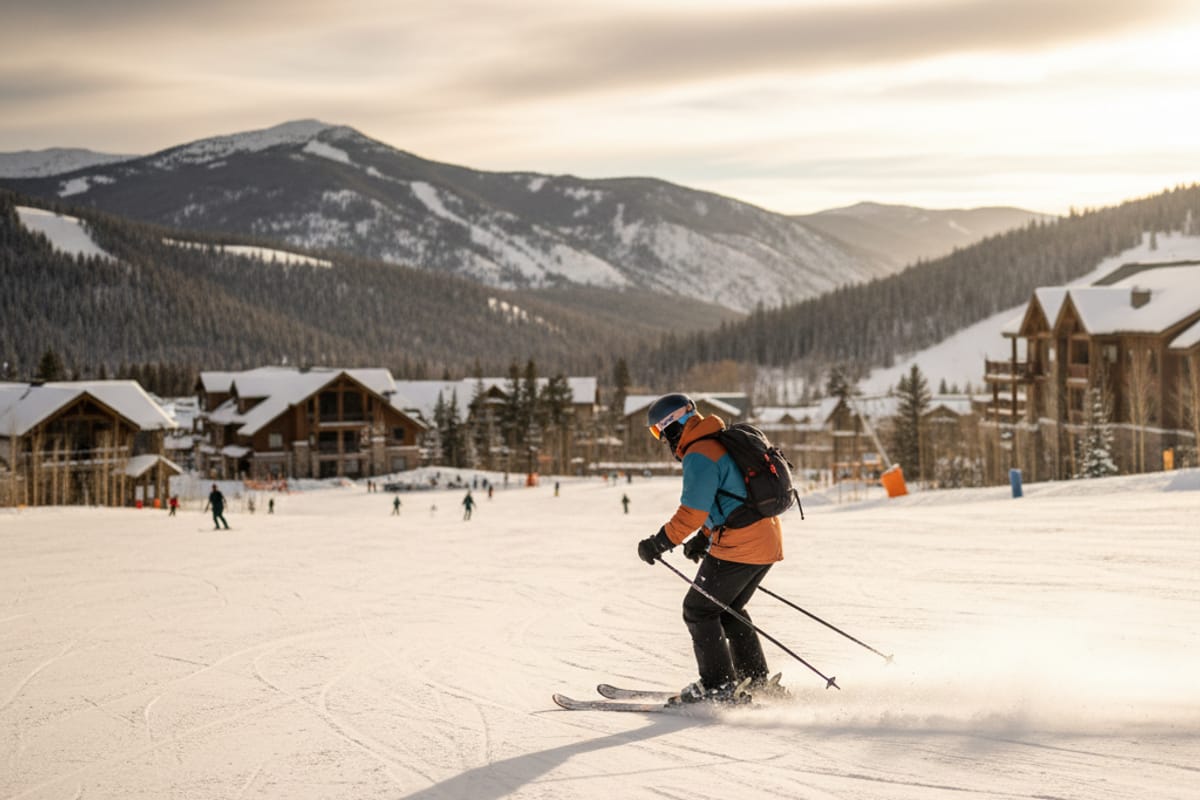 Brighton night skiing — $55 for four hours under the lights on legitimate terrain.
Free Hikes That Rival National Parks
Salt Lake City's biggest budget advantage isn't cheap hotels or affordable restaurants — it's the fact that some of the most spectacular hiking in the American West starts within city limits and costs absolutely nothing.
City Creek Canyon is the most accessible hike in Salt Lake City because it literally starts downtown. The trailhead is at the north end of State Street, just past the Utah State Capitol. The paved trail follows City Creek through a narrow canyon that feels increasingly wild as you walk — within 15 minutes you're surrounded by cottonwood trees, Gambel oaks, and the sound of the creek, and the city feels miles away. The full trail extends about 6 miles one-way with 1,200 feet of elevation gain, but most people walk 2-3 miles and turn around. On odd-numbered calendar days the road is closed to cars and open to bikes, making it even more peaceful. Free parking is available at the trailhead, or walk from downtown in 10 minutes.
The Bonneville Shoreline Trail runs along the foothills of the Wasatch Range, following the ancient shoreline of prehistoric Lake Bonneville (which covered much of Utah 15,000 years ago). The trail extends for over 100 miles from Nephi to the north end of the Salt Lake Valley, but you can access it from dozens of points. The most popular section runs from the Natural History Museum south to Emigration Canyon — a 4-mile stretch with panoramic views of the entire valley, the Great Salt Lake, and the Oquirrh Mountains. The trail is well-maintained, moderately graded, and spectacular at sunset. Free parking at various trailheads.
Living Room Lookout is the hike every local recommends to visitors. Starting from the University of Utah campus behind the Natural History Museum, the trail climbs 1,000 feet in about 1.5 miles to a collection of stone "furniture" — chairs, couches, and tables arranged by hikers over the years — perched on a ridge with a jaw-dropping view of the Salt Lake Valley. The ascent is steep and rocky in places, but the payoff is extraordinary. Budget 2-3 hours round trip and bring water. The trailhead is free and accessible by TRAX (University line to the Fort Douglas station, then a 15-minute walk).
Dog Lake in Big Cottonwood Canyon (when snow-free, typically June through October) is a 6-mile round trip through evergreen forest to a beautiful alpine lake at 8,740 feet. The trailhead at Mill D parking area is free. Cecret Lake near Alta is an easy 1.5-mile round trip to a glacial lake at 9,875 feet surrounded by wildflowers in July and August — one of the most photographed spots in the Wasatch. Also free.
Red Butte Garden, while technically an admission-charged venue ($14 for adults), has extensive free trails on the hillside above the garden that are open to the public. The views from the upper trails rival those from the paid sections, and the wildflower blooms from May through August are stunning.
Every single one of these hikes is accessible by public transit or a short drive from downtown. No national park entrance fees, no reservation systems, no permits required (for day hiking). This is the advantage Salt Lake City has over every other Western city: world-class outdoor recreation that's genuinely free and genuinely accessible.
Pro tip: The Wasatch trails are at altitude (most start between 5,000-7,000 feet and climb higher). If you're coming from sea level, drink extra water, go slower than you think you need to, and be honest about your fitness level. Afternoon thunderstorms are common in summer — start early and be heading down by 1 PM. Trail conditions are tracked at wasatchhiking.com.
Cheap Eats: Outstanding Food Under $15
Salt Lake City's food scene has gotten a lot of attention for its upscale restaurants, but the real revelation for budget travelers is how well you can eat for under $15 per meal. The city's ethnic diversity, refugee communities, and local food culture combine to create a cheap-eats landscape that rivals cities twice its size.
Red Iguana on North Temple is the first name everyone mentions, and rightfully so. A plate of enchiladas swimming in house-made mole negro, with rice and beans, costs $16-18 — but the portions are so generous that one plate easily feeds two light eaters or provides dinner plus lunch the next day. Go at 11 AM when doors open for zero wait, or put your name in at Red Iguana 2 across the street.
One More Noodle House on State Street near 3400 South serves hand-pulled noodles made to order. A massive bowl of beef noodle soup — rich broth, tender meat, springy fresh noodles — costs $12. It's one of the most satisfying cheap meals in the city and the kind of dish that makes you question why you ever pay more for lunch. Watch the noodle maker work the dough — it's mesmerizing and it's part of the experience.
Mahider Ethiopian at 3364 South State Street does combination platters of stews served on injera bread. The vegetarian combination ($14) includes five different preparations — lentils, collard greens, split peas, cabbage, and beets — each with distinct spicing, all scooped up with the spongy, tangy flatbread. It's flavorful, filling, and one of the best meatless meals in the city at any price.
Caputo's Market & Deli (multiple locations) makes Italian sandwiches on house-baked bread for $12-14. The Hot Coppa — spicy coppa, provolone, roasted peppers, olive tapenade — is a top-five sandwich in Salt Lake City. Add a bag of their house-made pasta chips ($4) and you've got an excellent lunch for under $18.
Taco stands and trucks are everywhere, and the best ones cluster along North Temple and State Street south of downtown. Street tacos run $2-3 each, and four tacos with a drink is a complete meal for under $12. Lone Star Taqueria in Cottonwood Heights does fish tacos ($3.50 each) that are worth the 15-minute drive from downtown.
For breakfast, Lazy Day Cafe on 900 East does enormous portions of classic American breakfast for $9-13. The biscuits and gravy ($10) use house-made sausage gravy and the portion could sustain a lumberjack. Blue Plate Diner on 2100 South in Sugar House has a similar approach — big portions, quality ingredients, reasonable prices ($10-14 for most dishes), and a neighborhood vibe.
Grocery stores are another budget strategy. Harmons and Smith's are the local chains, and both have excellent prepared food sections. A rotisserie chicken ($7-9), a container of potato salad ($5), and a bag of rolls ($3) gives you a solid dinner for two for about $15-17. The downtown Harmons on 100 South has an exceptional cheese counter and bakery if you want to assemble a picnic for a hike.
Pro tip: Download the Too Good To Go app before your trip. Several SLC bakeries and restaurants list "surprise bags" of unsold food for $4-6 that would normally cost $15-20. Pick up a bag from a bakery in the evening and you've got breakfast sorted. Also, many SLC restaurants offer significantly cheaper lunch menus compared to dinner — The Copper Onion's lunch burger is the same one served at dinner, but the overall bill is 30% lower.
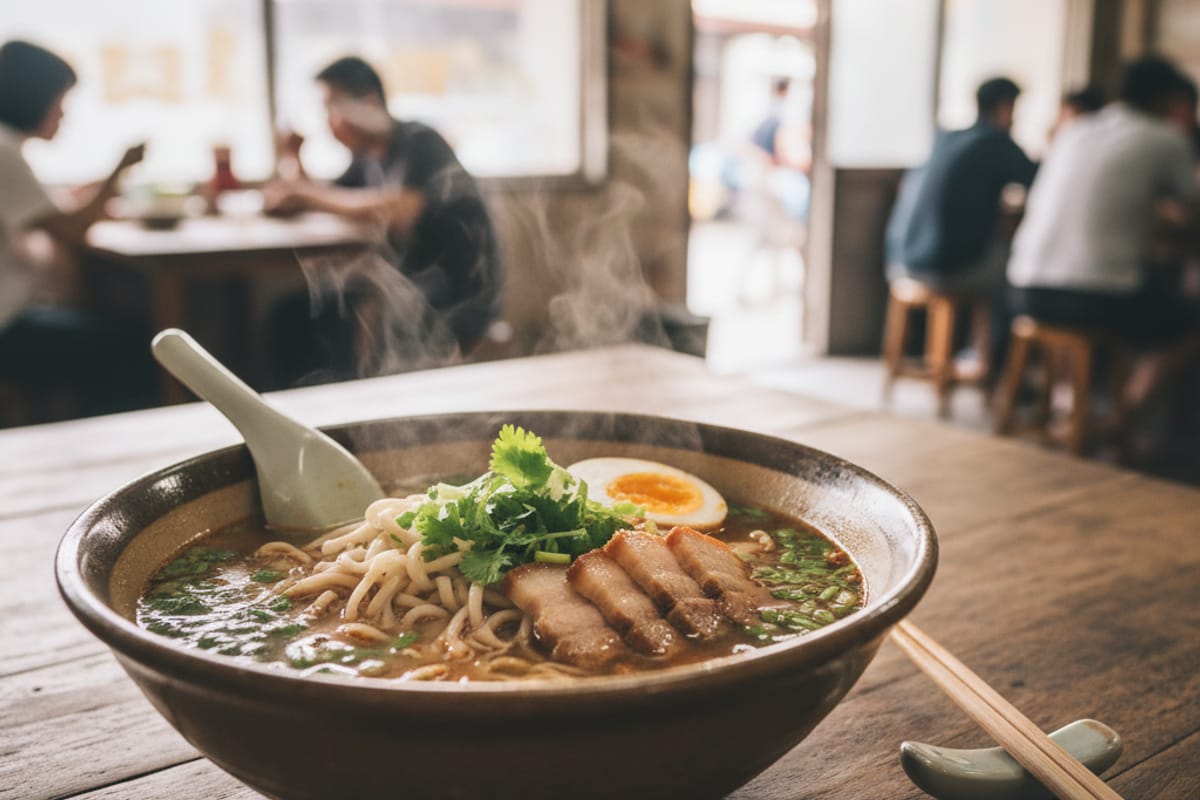 Hand-pulled noodle soup for $12 — Salt Lake City's cheap eats scene is no joke.
Getting Around: UTA Transit Is Your Secret Weapon
Salt Lake City has the best public transit system of any mid-size Western city, and using it is the single most impactful budget decision you'll make on your trip. The Utah Transit Authority (UTA) operates TRAX light rail, FrontRunner commuter rail, buses, and ski buses across the metro area, and the system is clean, reliable, and shockingly cheap.
The TRAX light rail has four lines that connect the airport, downtown, the University of Utah, Sugar House, and the southern suburbs. A one-way fare is $2.50, and a day pass is $6.25. The airport-to-downtown ride takes about 25 minutes and drops you right in the center of town — no $30 Uber needed. Trains run every 15 minutes during the day and every 20 minutes in the evening, with service from about 5 AM to 11:30 PM.
The Free Fare Zone is the real gem. Within downtown — roughly bounded by North Temple, 400 South, 200 East, and 600 West — all TRAX rides and bus rides are completely free. You can hop on and off without tapping a card or buying a ticket. This covers the core downtown area including Temple Square, the Convention Center, the Gallivan Center, City Creek Center, and the Gateway district. For a weekend visitor staying downtown, this means most of your in-city transportation is literally free.
The UTA ski bus system is the best deal in American skiing. For $5 round trip (yes, five dollars), you get door-to-resort-base transportation to Snowbird, Alta, Brighton, and Solitude. Buses run from multiple downtown pickup points starting at 7 AM, with return service until late afternoon. During peak ski season, buses run every 15-20 minutes to Little Cottonwood Canyon (Snowbird/Alta) and every 30 minutes to Big Cottonwood Canyon (Brighton/Solitude). You avoid canyon traffic, parking fees ($20-30), and the stress of driving on potentially icy roads.
The FrontRunner commuter rail connects SLC to Provo (south) and Ogden (north) for $2.50-5.50 depending on distance. If you want to visit the Ogden arts scene or Provo's restaurant row without renting a car, FrontRunner gets you there in about an hour. Trains run hourly on weekdays and every two hours on Saturdays (no Sunday service, unfortunately).
For getting to trailheads, the bus system covers more than you'd expect. Bus #220 goes up Emigration Canyon (access to Bonneville Shoreline Trail), Bus #209 and #210 serve the Cottonwood Canyons (hiking trailheads in summer, ski resorts in winter), and Bus #41 connects downtown to the University of Utah area for access to Red Butte Garden and the Living Room Lookout trailhead.
If you do need a car for a day — maybe for the Bonneville Salt Flats or Spiral Jetty — Turo (peer-to-peer car rental) is available in SLC with rates starting at $30-40 per day, often cheaper than traditional rental companies. Uber and Lyft are reliable and affordable — a ride from downtown to the airport is about $15-20, and rides within the central city are $6-12.
The UTA GoRide app is the one app you absolutely need. It handles TRAX, bus, and ski bus tickets, shows real-time vehicle locations, and plans routes. Download it before you arrive and load a day pass — it'll save you money and time from the moment you land.
Pro tip: Buy the UTA day pass ($6.25) on mornings when you'll use transit more than twice — it pays for itself after three rides. On ski days, the $5 ski bus fare is separate from the day pass but still far cheaper than any alternative. If you're staying more than three days, the weekly pass ($20) is an extraordinary deal that gives you unlimited rides on all UTA services except FrontRunner.
Free Attractions: More Than You Can Fit in a Week
Salt Lake City has an unusual abundance of free things to do, and many of them are genuinely world-class — not the kind of "free" attractions that feel like they should be free. Between the cultural sites, the outdoor spaces, and the community events, you could fill a week in SLC without spending a dime on activities.
Temple Square is the most visited attraction in Utah (more than any national park in the state), and it's completely free. The 35-acre campus includes the Tabernacle (with its famous organ and daily free recitals at noon), the Conference Center (rooftop garden with panoramic views), the Family History Library (the world's largest genealogical library — trace your ancestry for free with expert help), and beautifully maintained gardens that change with the seasons. Whether or not you have any interest in the LDS Church, the architecture, history, and gardens are worth 90 minutes of your time.
The Utah State Capitol is free to enter and explore. The interior rotunda, the murals depicting Utah history, and the views from Capitol Hill are all excellent. The surrounding Memory Grove Park and City Creek Canyon trails are also free — you can start a hike right from the Capitol steps.
Liberty Park is SLC's central park — 80 acres of mature trees, walking paths, a pond, tennis courts, a public pool (small fee in summer), playgrounds, and the Chase Home Museum of Utah Folk Arts (free). On Sunday mornings from June through October, the Liberty Park Farmers Market is one of the biggest in the state, with free live music and free samples from vendors.
The Gallivan Center downtown hosts free concerts throughout the summer — the Twilight Concert Series brings nationally known acts to a downtown amphitheater, with past performers including major indie and alternative artists. The concerts are free, general admission, and the atmosphere is incredible. Check the schedule before your trip.
First Friday Gallery Stroll happens on the first Friday of every month. Dozens of galleries in the Granary District, downtown, and other neighborhoods open their doors from 6-9 PM with free admission, often with complimentary wine and snacks. It's one of the best free cultural events in the city and a great way to meet locals.
The Leonardo science and art museum at Library Square has free admission on the third Friday of every month. The permanent exhibits explore the intersection of science, technology, and art, and the temporary exhibitions are often excellent. Even when it's not free Friday, admission is only $14.
Gilgal Sculpture Garden, tucked behind homes in a residential neighborhood on 500 South, is one of the strangest and most fascinating free attractions in any American city. Twelve sculptures and 70+ engraved stones created over 18 years by a local bishop blend religious symbolism, literary references, and pure enigma.
International Peace Gardens in Jordan Park (1000 South and 900 West) features gardens representing over 25 nations, with culturally specific plants, sculptures, and architecture. It's free, peaceful, and a surprisingly moving experience — each garden was designed by representatives of that nation's community in Utah.
The Clark Planetarium at the Gateway has free admission to its exhibit halls (the IMAX theater and star shows have a fee). The Space Shuttle exhibit and the Earth science displays are excellent, and it's a great option for families or anyone interested in space and astronomy.
Pro tip: Plan your trip around the first Friday of the month to catch the Gallery Stroll, or around the third Friday for free Leonardo museum admission. If neither works, the city's free outdoor attractions alone — City Creek Canyon, Bonneville Shoreline Trail, Liberty Park, Temple Square, the Capitol — are enough to fill three or four days without repeating anything.
The Complete Budget Breakdown: SLC on $75 a Day
Here's how to do Salt Lake City for $75 per day per person, covering accommodation, food, activities, and transportation. This isn't a bare-bones, sleep-in-your-car budget — it's a comfortable trip with real meals, real activities, and real enjoyment.
Accommodation: $30-40 per person per night. A mid-range downtown hotel at $90-120 per night split between two people puts you at $45-60 each. For true budget travelers, hostels like the Avenues Hostel run $30-35 per night for a dorm bed. Airbnb private rooms in residential neighborhoods are $50-70 per night. If you're traveling solo, the hostel route keeps accommodation at the very bottom of this budget.
Food: $25-35 per day. Breakfast from a grocery store or bakery (Too Good To Go bag, $4-6, or grocery items, $5-8). Lunch at One More Noodle House, Mahider Ethiopian, or a taco truck ($10-15). Dinner at Red Iguana, Sugarhouse Barbecue, or home-cooked at your rental ($10-18). This isn't deprivation eating — these are genuinely excellent meals that locals eat regularly. If you cook one meal per day at an Airbnb, you can push food costs down to $15-20 per day.
Transportation: $5-10 per day. TRAX from the airport: $2.50. Downtown Free Fare Zone: $0. UTA day pass for exploration days: $6.25. UTA ski bus on ski days: $5. Average across a 4-5 day trip: $5-8 per day. No rental car needed unless you're doing the Bonneville Salt Flats or Spiral Jetty.
Activities on non-ski days: $0-15 per day. Most of the best things to do in Salt Lake City are free: Temple Square, Capitol Hill, City Creek Canyon, Bonneville Shoreline Trail, Liberty Park, Gallery Stroll, parks and gardens. The Natural History Museum ($18) and Tracy Aviary ($12) are the main paid attractions, and both are worth it. Averaged across a trip, activity costs are minimal.
Skiing (the big variable): $110-160 per day all-in. This is the one category that blows the $75/day budget, and there's no way around the fact that skiing is an expensive sport. But here's how to minimize it: Brighton midweek with valley rental and ski bus totals about $110-120. Night skiing at Brighton brings it down to $90-100. If you ski one day of a four-day trip, the daily average increase is only $25-35 per day.
Sample 4-day budget (one ski day):
Accommodation (3 nights at hostel or split hotel): $100-160 Food (4 days): $100-140 Transportation (including ski bus): $25-35 Skiing (1 day, Brighton midweek with rental): $115-135 Activities (museum + aviary): $30 Total: $370-500 per person for 4 days Per-day average: $93-125 per person
Sample 4-day budget (no skiing):
Accommodation (3 nights): $100-160 Food (4 days): $100-140 Transportation: $20-30 Activities: $30-45 Total: $250-375 per person for 4 days Per-day average: $63-94 per person
That puts a non-ski Salt Lake City trip firmly in the $75/day range, and even with skiing you're under $125/day for an experience that would cost $200-300/day in Aspen, Vail, or Jackson Hole.
The bottom line: Salt Lake City is one of the most underpriced destinations in the American West. The skiing is world-class, the hiking is free, the food is excellent and affordable, the transit system works, and the cultural attractions are largely free. It's the rare city where budget travel doesn't mean compromising on experience — you just spend less while doing the same things everyone else does.
Why Trust This Guide
Recommendations from locals across 240+ US cities via Recommended.app community data.
Explore More
This guide is part of our Salt Lake City collection. Explore more guides for Salt Lake City →
Salt Lake City has 165 verified businesses on Recommended.app across 65 categories.
Hidden Gems Weekly
3 hidden gems, 2 local quotes, 1 home hack — every Monday. Free forever.
Unsubscribe anytime. No spam.
More from City Guides
 City Guide
10 Hidden Gems in Salt Lake City That Surprise Every Visitor
 Travel Guide
A Weekend in Salt Lake City: Skiing, Food & Mountain Views
 City Guide
First Time in Salt Lake City? Locals Wish You Knew These 12 Things
 City Guide
We Asked Salt Lake City Locals Where They Actually Eat — Here's What They Said
 Home Services
Water Damage Restoration Near Me: What to Do in the First 24 Hours (2026 Guide)
 Food & Dining