
Last updated March 16, 2026 by the Recommended.app research team.
Saturday Morning: Hit the Slopes Early
Your Salt Lake City weekend starts at 7 AM. Yes, early. But when world-class skiing is 30 minutes from your hotel, you don't sleep in.
If you're an intermediate-to-advanced skier or snowboarder, head to Snowbird in Little Cottonwood Canyon. Take the UTA ski bus from downtown — it picks up at several stops along 200 South and drops you at the resort base in about 40 minutes. The bus costs $5 round trip and runs every 15-20 minutes starting at 7 AM. This isn't just cheaper than driving; it's faster on busy mornings when the canyon road backs up for miles. Download the UTA GoRide app the night before and buy your bus ticket in advance.
Snowbird opens at 9 AM, and you want to be on the Aerial Tram for the first upload. The tram takes you to the 11,000-foot summit of Hidden Peak in about 10 minutes, and on a clear morning the panoramic views of the Wasatch Range, the Salt Lake Valley, and the distant Uinta Mountains are staggering. From the top, the Regulator Johnson run drops 3,240 vertical feet back to the base — one of the longest continuous descents in North America.
If you're a beginner or prefer a mellower experience, Brighton in Big Cottonwood Canyon is more forgiving. The terrain is gentler, the crowds are smaller, and lift tickets are about $30 cheaper than Snowbird. The UTA ski bus serves Big Cottonwood Canyon as well. Brighton's Majestic chairlift accesses wide-open intermediate runs with spectacular views, and the learn-to-ski packages ($120 including rental, lesson, and limited lift ticket) are excellent.
Buy your lift tickets online at least 48 hours in advance — you'll save 15-25% compared to window prices. Snowbird day passes run $140-180 depending on the date; Brighton is $90-130. If you don't have your own gear, rent from one of the valley shops rather than at the resort — Ski N See has several SLC locations with full packages (skis, boots, poles) starting at $35/day compared to $60+ at the resort rental shops.
Ski hard until about 1 PM. The morning light is the best for snow conditions, the groomers are freshest, and by afternoon the runs start getting choppy from traffic. Grab a quick lunch at Snowbird's Forklift restaurant (burgers, chili, sandwiches, $12-18) or Brighton's Alpine Rose (surprisingly decent pizza, $14-16 for a personal pie). Then catch the bus back down the canyon.
You'll be back downtown by 2:30-3 PM with tired legs, rosy cheeks, and a deep appreciation for why Salt Lake City exists.
Pro tip: Check the Utah Avalanche Center forecast (utahavalanchecenter.org) before heading to the mountains, especially after big storms. This is more relevant for backcountry, but it also gives you intel on snow conditions. For resort skiing, check the resort's snow report at 6 AM — if Snowbird got 8+ inches overnight, expect the canyon road to have delays and plan to take the bus.
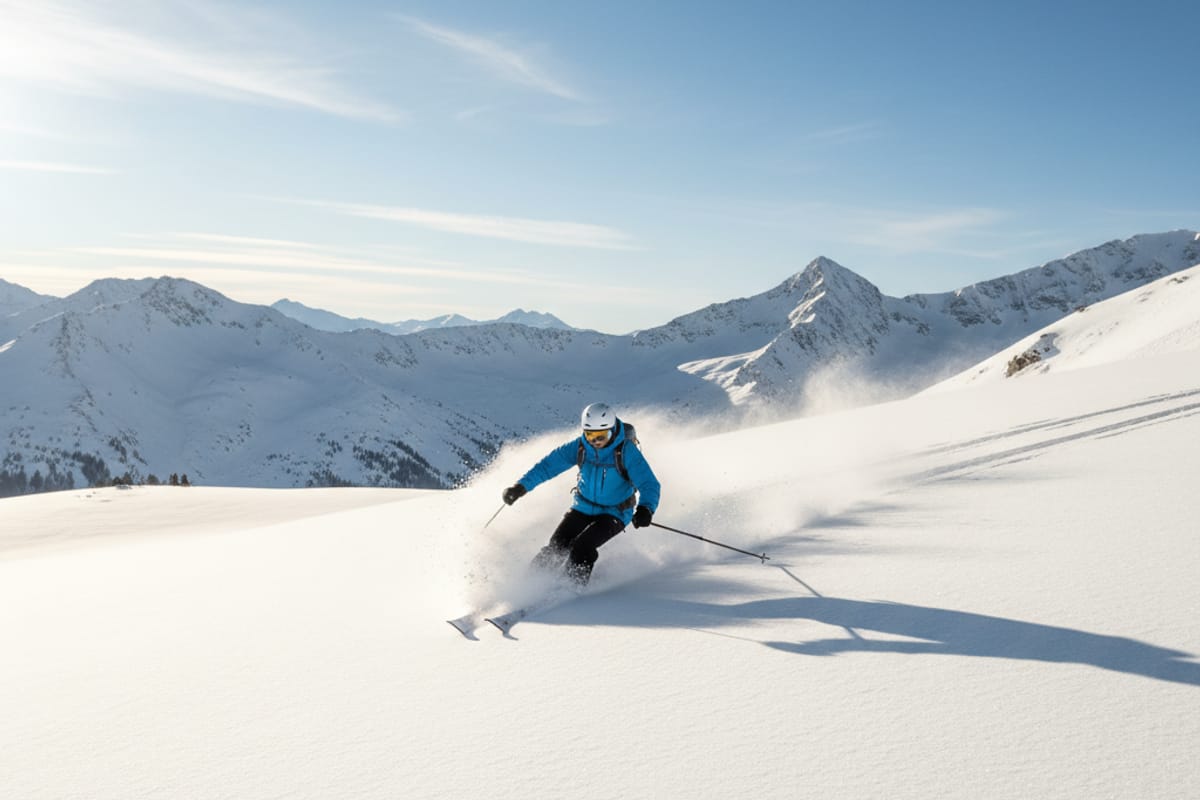 First tracks at Snowbird — 3,240 vertical feet of the Greatest Snow on Earth.
Saturday Afternoon: Exploring Downtown on Foot
Back downtown by mid-afternoon, you've got a few hours before dinner to explore on foot. Salt Lake City's downtown is compact and walkable, and the grid system (numbered streets radiating from Temple Square) makes navigation effortless.
Start at City Creek Center, the open-air shopping center adjacent to Temple Square. The retractable glass roof is architecturally impressive, and the creek that runs through the center (with live trout swimming in it) is a charming touch. You don't need to buy anything — it's worth walking through just to see the design. Tiffany & Co., Nordstrom, and Madewell anchor the retail, but the real draws are the rooftop views and the people-watching.
Walk south along Main Street from City Creek to the Gallivan Center (about four blocks). This stretch is the heart of SLC's urban revival — independent shops, coffee roasters, and restaurants have replaced the vacant storefronts that defined downtown a decade ago. Stop at Blue Copper Coffee for a cortado ($5) or La Barba Coffee for a pour-over ($6). Both are among the best coffee roasters in the Mountain West.
The Gallivan Center is a public plaza that hosts ice skating in winter (through mid-March, $9 including skate rental) and concerts in summer. Even when there's no event, it's a pleasant place to sit and watch the city move around you. The surrounding blocks — 200 South, 300 South, Main Street — are walkable and increasingly vibrant.
If your legs aren't too destroyed from skiing, walk east on 200 South toward the Central Library. The Salt Lake City Public Library on 400 South is worth visiting even if you never read books — the architecture is stunning, with a sweeping glass wall, a rooftop garden, and interior spaces that feel more like a modern art museum than a library. The views from the upper floors are excellent, and there's a small cafe on the ground floor. The library is free and open to the public.
For a different vibe, head to the Granary District south of 700 South. This formerly industrial neighborhood has become SLC's arts hub, with galleries, studios, and creative businesses filling converted warehouses. Fisher Brewing has a beautiful taproom here, and the Saturday afternoon vibe is relaxed and arty. On the first Friday of each month, the Granary District hosts a gallery stroll with open studios, free art, and a community atmosphere.
Pro tip: The TRAX light rail is free within the downtown "Free Fare Zone" — roughly bounded by 400 South, North Temple, 400 West, and 200 East. You can hop on any TRAX train or bus within this zone without paying. It's the fastest way to get from City Creek to the Gallivan Center or the library.
Saturday Evening: A Night of Exceptional Dining
You've skied all morning and explored all afternoon. You're hungry in a way that only a day of physical activity at altitude can produce. It's time for the best meal of your weekend.
If you want the quintessential Salt Lake City dinner experience, make a reservation at The Copper Onion on Broadway (300 South). This is the restaurant that put SLC on the national food map, and it delivers consistently. Start with the burrata ($16) or the seasonal soup, then order the dry-aged burger ($18) — it's one of the best burgers in the Mountain West, and that's not hyperbole. If you want something more substantial, the pan-roasted chicken ($28) or the nightly fish special are excellent. The wine list is smart and fairly priced, with most glasses in the $12-16 range. Plan to spend $50-70 per person with drinks.
For a more adventurous option, Takashi on Market Street serves sushi that would be remarkable in any city, let alone one that's a thousand miles from the ocean. Chef Takashi Gibo sources fish daily from both coasts, and the quality is evident in every piece. The omakase menu ($85-120) is a splurge, but a two-person dinner of nigiri, a shared roll, and a couple of appetizers runs about $50-65 per person — very reasonable for this level of sushi. The jalapeño yellowtail roll is the signature dish and it's earned its reputation.
If you'd rather keep it casual after a big day, Red Iguana on North Temple is hard to beat. Seven house-made mole sauces, generous portions, and a bill that rarely exceeds $25 per person including a margarita. The restaurant doesn't take reservations, and evening waits can hit 45 minutes on Saturdays — put your name in at Red Iguana 2 across the street for a shorter wait.
After dinner, walk to Water Witch on 300 South for cocktails. It's an unmarked bar behind a heavy wooden door — no signage, just a moody, intimate space with craft cocktails made with house-made syrups and tinctures. Cocktails are $12-16, the bartenders are knowledgeable, and the vibe is perfect for a nightcap. If you want something livelier, Bar X on 200 South has a great atmosphere and a legendary two-for-one happy hour (5-7 PM, if you time dinner right you can hit this first). Bars close at 1 AM in Utah, so don't dawdle.
The walk between all of these restaurants and bars is 10-15 minutes at most — downtown SLC is compact and well-lit at night. An Uber back to your hotel is $8-12 if your legs are done.
Pro tip: If you want The Copper Onion on a Saturday night, book at least a week in advance. For a more spontaneous evening, walk along 300 South between State Street and 200 East — you'll pass Copper Onion, Copper Common, Current Fish & Oyster, and several other excellent options. Check availability at each and grab the first table that opens up. You genuinely can't go wrong on this block.
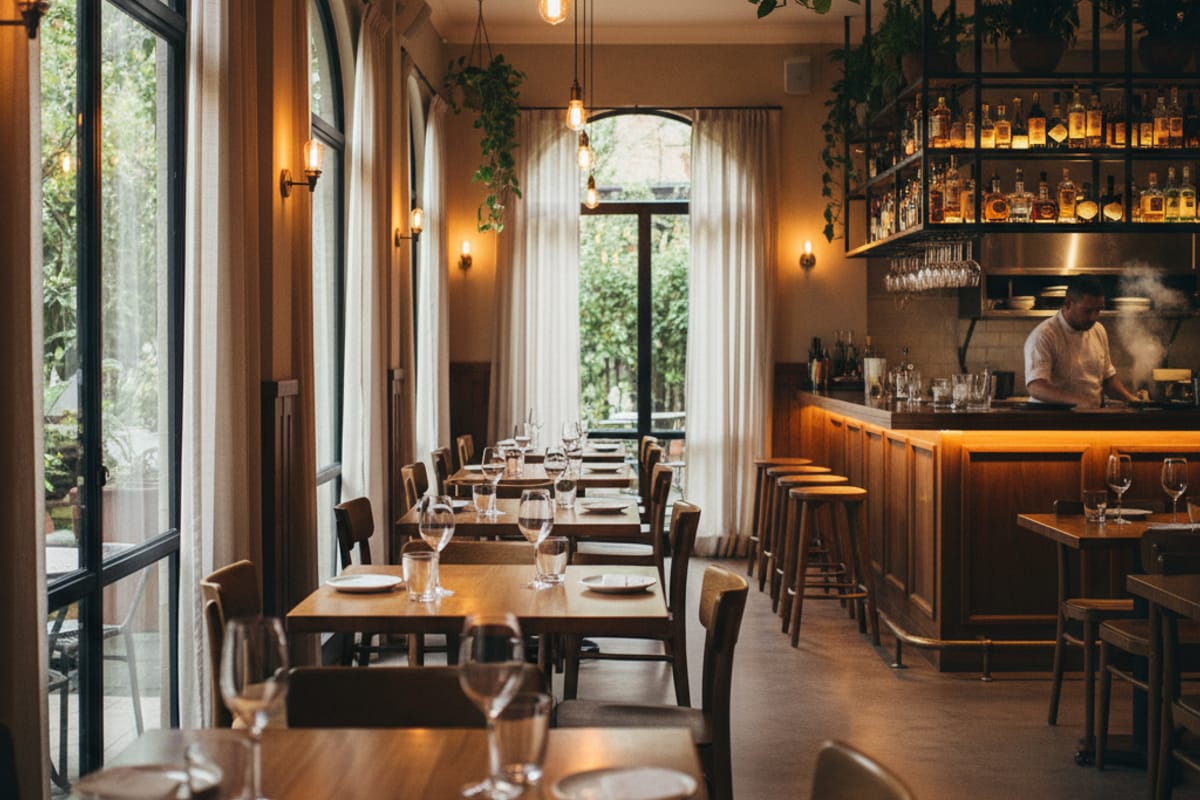 Saturday night in SLC — world-class dining without the world-class prices.
Sunday Morning: Temple Square and Capitol Hill
Sunday morning in Salt Lake City has a particular energy. The city feels a little quieter, the mountains are sharp against the sky, and Temple Square takes on an added significance as the church bells ring across downtown.
Start your day with breakfast at Eggs in the City on 100 South, a colorful, eclectic spot that does creative brunch dishes in a space covered floor to ceiling with murals and local art. The lemon ricotta pancakes ($14) are the signature, but the breakfast burrito ($13) — scrambled eggs, chorizo, black beans, roasted peppers, and three sauces — is a powerhouse. The coffee is strong and the portions are generous. No reservations, but Sunday mornings are less crowded than Saturdays. Budget 45 minutes for breakfast.
Walk north to Temple Square after breakfast — it's about 10 minutes on foot. Even if you're not religious, the 35-acre campus is architecturally impressive and historically significant. The Tabernacle's acoustics are legendary — if you arrive before or after the noon organ recital, volunteers often demonstrate by dropping a pin at one end of the 170-foot hall while you listen from the other. The Conference Center's rooftop garden offers one of the best free views in the city, and the Family History Library across the street is the largest genealogical library in the world (free to use).
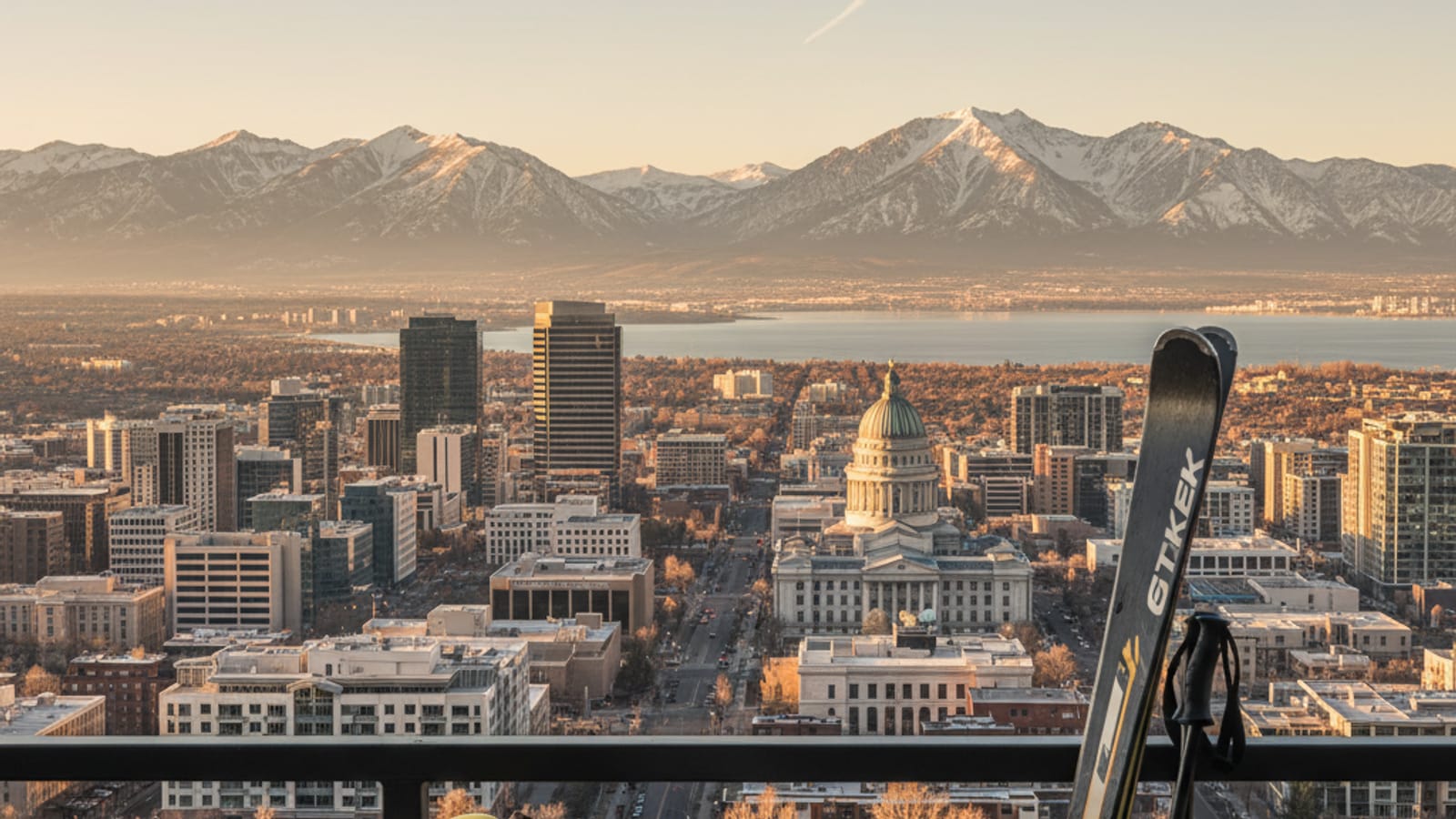
Spend about 90 minutes at Temple Square, then walk north up State Street to the Utah State Capitol on Capitol Hill. The walk takes about 15 minutes and takes you through a historic residential neighborhood with beautiful homes. The Capitol building itself is free to enter, and the interior rotunda is impressive — the murals depict scenes from Utah history, and the dome is patterned after the U.S. Capitol. The real reward is the exterior: the Capitol sits on a hill with panoramic views of the city, the Wasatch Range to the east, and the Oquirrh Mountains to the west. On a clear Sunday morning, this is one of the most beautiful vistas in any American city.
The surrounding Memory Grove Park, just below the Capitol, is a peaceful, shaded walking path along City Creek that's popular with joggers and dog walkers. The war memorials along the path are moving, and the canyon narrows into a surprisingly wild-feeling landscape just minutes from downtown. You could easily spend 30-45 minutes here.
Pro tip: If you visit Temple Square on a Sunday, the Tabernacle Choir broadcasts a live performance at 9:30 AM (doors open at 8 AM, arrive by 8:30 for a guaranteed seat). It's free, it's extraordinary, and it's one of the longest-running continuous broadcast programs in American radio history. Even if choral music isn't your thing, the experience of hearing that choir in that acoustic space is unforgettable.
Sunday Afternoon: Natural History Museum of Utah
The Natural History Museum of Utah (NHMU) is one of the best natural history museums in the country, and it deserves your entire Sunday afternoon. Located at the University of Utah campus on the east bench of the city, about 15 minutes by car or Uber from downtown, the museum occupies a stunning modern building designed by Ennead Architects that's built into the hillside, with copper-clad exterior walls that echo the colors of the surrounding landscape.
The building alone is worth the trip. The Rio Tinto Center (as the building is formally known) was completed in 2011 and immediately won multiple architecture awards. The interior galleries are organized by theme — Past Worlds, Land, Life, First Peoples, and Sky — and the flow through the building takes you from deep geological time to the present day. Floor-to-ceiling windows throughout the museum frame the Wasatch Mountains, connecting the exhibits to the actual landscape they describe.
The dinosaur hall is the headliner, and it's spectacular. Utah is one of the richest dinosaur fossil sites in the world, and the museum has an extraordinary collection of specimens found within the state. The mounted skeletons of Allosaurus, Utahraptor (discovered in Utah and named for the state), Ceratosaurus, and several other species are displayed in dynamic poses that convey scale and movement. The preparation lab, where paleontologists work on new specimens in real time, has a glass wall so visitors can watch the painstaking process of excavating fossils from rock. It's mesmerizing.
The First Peoples gallery covers 12,000 years of human history in the Great Basin, with artifacts, oral histories, and interactive exhibits created in collaboration with Utah's tribal nations. It's one of the most thoughtful and respectful Indigenous history exhibits in any American museum. The Great Salt Lake gallery explains the lake's unique ecology, its importance to migrating birds (it's a critical stop on the Pacific Flyway), and the environmental challenges it faces from drought and water diversion.
The museum's outdoor terraces offer some of the best views in Salt Lake City — the entire valley spreads out below you, with the Great Salt Lake visible to the northwest and the Wasatch peaks towering to the east. On a clear day, the visibility stretches for 50 miles or more.
Admission is $17.95 for adults, $13.95 for children (3-12), and free for kids under 3. Plan for 2-3 hours to see everything properly. The museum shop is excellent, with a strong selection of books, fossils, Utah-themed gifts, and educational toys. The on-site cafe is decent for a quick lunch — sandwiches, salads, and snacks in the $10-14 range — but you're better off eating downtown before or after your visit.
After the museum, if you have time before your flight, drive five minutes further up the hill to the This Is The Place Heritage Park, a living history village that recreates Utah's pioneer settlement era. It's hokey in the best possible way, with costumed interpreters, a working blacksmith, and heritage breed animals. Admission is $15 for adults, and kids love it.
Pro tip: The museum is least crowded on Sunday afternoons after 2 PM. The dinosaur hall gets the most foot traffic — start there, then work backward through the other galleries for a less congested experience. The rooftop terrace on the top floor is the best photo spot and most visitors don't make it up there.
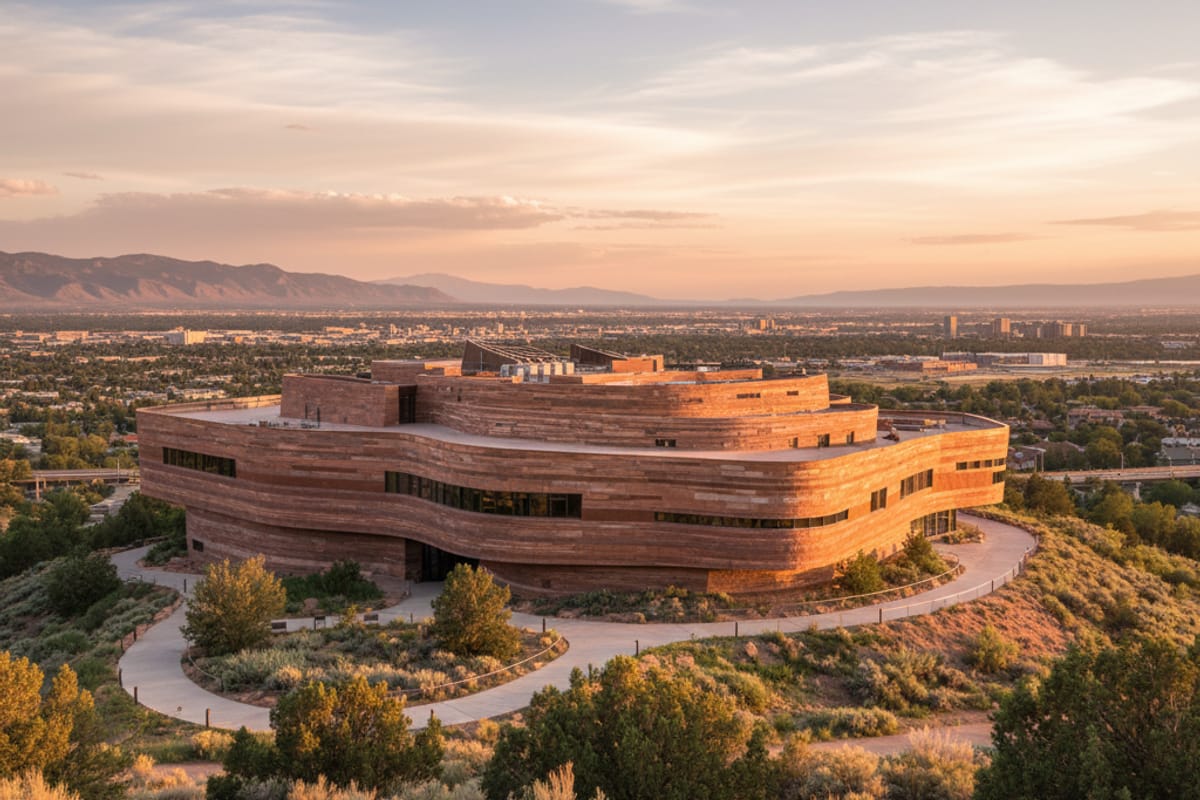 The Natural History Museum of Utah — world-class exhibits in a building built into the hillside.
Budget Breakdown: What This Weekend Actually Costs
Here's the honest math for a weekend in Salt Lake City, assuming two people sharing costs where applicable.
Friday night hotel (arrive late): $110-150 for a solid downtown hotel (AC Hotel, Hyatt Place, or Hampton Inn). Saturday night hotel: same, $110-150. If you book both nights together, many hotels offer a slight discount. Total lodging: $220-300 for two nights.
Skiing on Saturday: Lift tickets at Snowbird, bought online in advance, $130-160 per person. UTA ski bus, $5 round trip per person. Rental equipment from a valley shop, $35-45 per person if needed. On-mountain lunch, $15-20 per person. Total skiing: $185-230 per person (with rentals) or $150-185 per person (with own gear).
Food for the weekend (beyond ski lunch): Saturday breakfast/coffee, $10-15 per person. Saturday dinner at Copper Onion with drinks, $55-70 per person. Saturday cocktails at Water Witch, $15-20 per person. Sunday brunch at Eggs in the City, $16-20 per person. Sunday lunch/snack, $10-15 per person. Total food and drink: $106-140 per person.
Activities beyond skiing: Temple Square (free). Utah State Capitol (free). Natural History Museum of Utah, $17.95 per person. Coffee at Blue Copper or La Barba, $5-6. Uber rides around town, $20-30 total for the weekend. Total activities: $43-54 per person.
Grand total per person for the weekend: $554-724 per person. That includes two nights at a good hotel, a full day of skiing, meals at excellent restaurants, museum admission, and transportation.
For comparison: a similar weekend in Aspen or Vail would run $1,200-1,800 per person. Jackson Hole: $900-1,400. Park City (staying in PC): $800-1,100. Salt Lake City delivers comparable skiing and arguably better dining at roughly half the cost of its competitors.
Money-saving tips: Fly into SLC midweek — flights are dramatically cheaper Tuesday through Thursday. Stay at a hotel with free breakfast to cut one meal. Buy the Ikon Pass base if you'll ski 3+ days this season — it pays for itself in two Snowbird days. Use the UTA Free Fare Zone downtown to avoid Uber charges. Pack snacks for the mountain instead of buying on-site.
Why Trust This Guide
Recommendations from locals across 240+ US cities via Recommended.app community data.
Explore More
This guide is part of our Salt Lake City collection. Explore more guides for Salt Lake City →
Salt Lake City has 165 verified businesses on Recommended.app across 65 categories.
Hidden Gems Weekly
3 hidden gems, 2 local quotes, 1 home hack — every Monday. Free forever.
Unsubscribe anytime. No spam.
More from City Guides
 City Guide
10 Hidden Gems in Salt Lake City That Surprise Every Visitor
 Travel Tips
Salt Lake City on a Budget: Affordable Skiing, Free Hikes & Cheap Eats
 City Guide
First Time in Salt Lake City? Locals Wish You Knew These 12 Things
 City Guide
We Asked Salt Lake City Locals Where They Actually Eat — Here's What They Said
 Home Services
Water Damage Restoration Near Me: What to Do in the First 24 Hours (2026 Guide)
 Food & Dining