
Last updated March 16, 2026 by the Recommended.app research team.
Free Hikes: The Sonoran Desert Is Your Playground
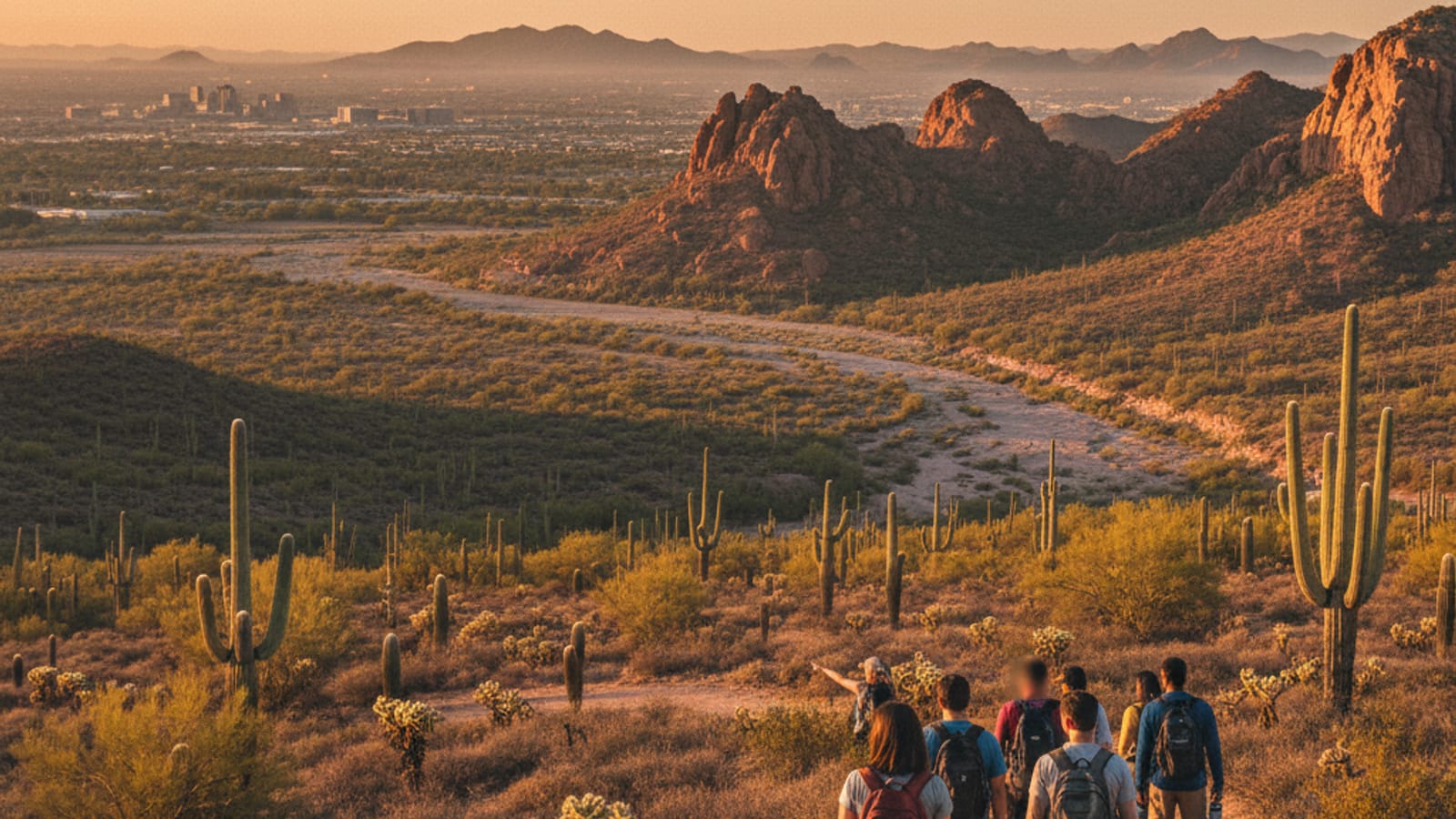
Tucson is surrounded by five mountain ranges and hundreds of miles of hiking trails, and the vast majority of them cost absolutely nothing. This isn't a city where nature is locked behind entrance fees and parking charges — the desert is right there, accessible from nearly every neighborhood, and it's spectacular.
Tucson Mountain Park, which wraps around the west side of the city adjacent to Saguaro National Park, has dozens of free trails through classic Sonoran Desert landscape. The Gates Pass Scenic Overlook is one of the best free viewpoints in southern Arizona — a short drive from town that ends at a pullover with panoramic views of the Avra Valley and the distant Baboquivari Peak. At sunset, the sky turns colors that don't seem real. The David Yetman Trail starts near Gates Pass and meanders 6.1 miles through saguaro forest, past petroglyphs, and through a desert wash. It's moderately strenuous, completely free, and one of the best hikes in the Tucson area.
The Catalina State Park on the city's north side charges $7 per vehicle, but the adjacent Finger Rock Trail, Pima Canyon Trail, and Ventana Canyon Trail — all accessed from trailheads within the city limits — are completely free. Finger Rock is a strenuous 4.6-mile climb up a dramatic canyon in the Santa Catalina Mountains, ending at a distinctive rock spire visible from much of Tucson. It's challenging, but the views from the upper reaches are some of the best in the city, and you won't pay a dime.
The Rillito River Park trail runs for 12 miles along a paved path that follows the Rillito River wash through the heart of Tucson. It's flat, accessible, paved, and connects to several other linear parks that extend the trail system to over 50 miles. Cyclists, runners, walkers, and families use these paths daily, and they're free, open dawn to dusk, and surprisingly scenic — the views of the Santa Catalina Mountains from the river path are excellent.
Starr Pass Trails on the southwest side of town offer a network of mountain biking and hiking trails through rolling desert terrain with saguaros, chollas, and palo verde trees. The trails are well-marked, the terrain is varied, and the entire area is free to access.
A few hiking tips that'll save you money and keep you safe: bring your own water (at least one liter per hour of hiking), start early (by 7 AM in summer), wear closed-toe shoes (not sandals — the desert has thorns, spines, and the occasional rattlesnake), and download trail maps on your phone before you go because cell service is spotty in the mountains. Every one of these hikes is free, and every one of them delivers the kind of desert scenery that people pay hundreds of dollars for at resort spas. The only investment required is your time and some sunscreen.
Pro tip: Tucson Hiking Guide (tucsonhikingguide.com) is a free resource with detailed descriptions, difficulty ratings, and directions for every trail in the Tucson area. It's maintained by local hikers and is far more useful than the generic trail apps.
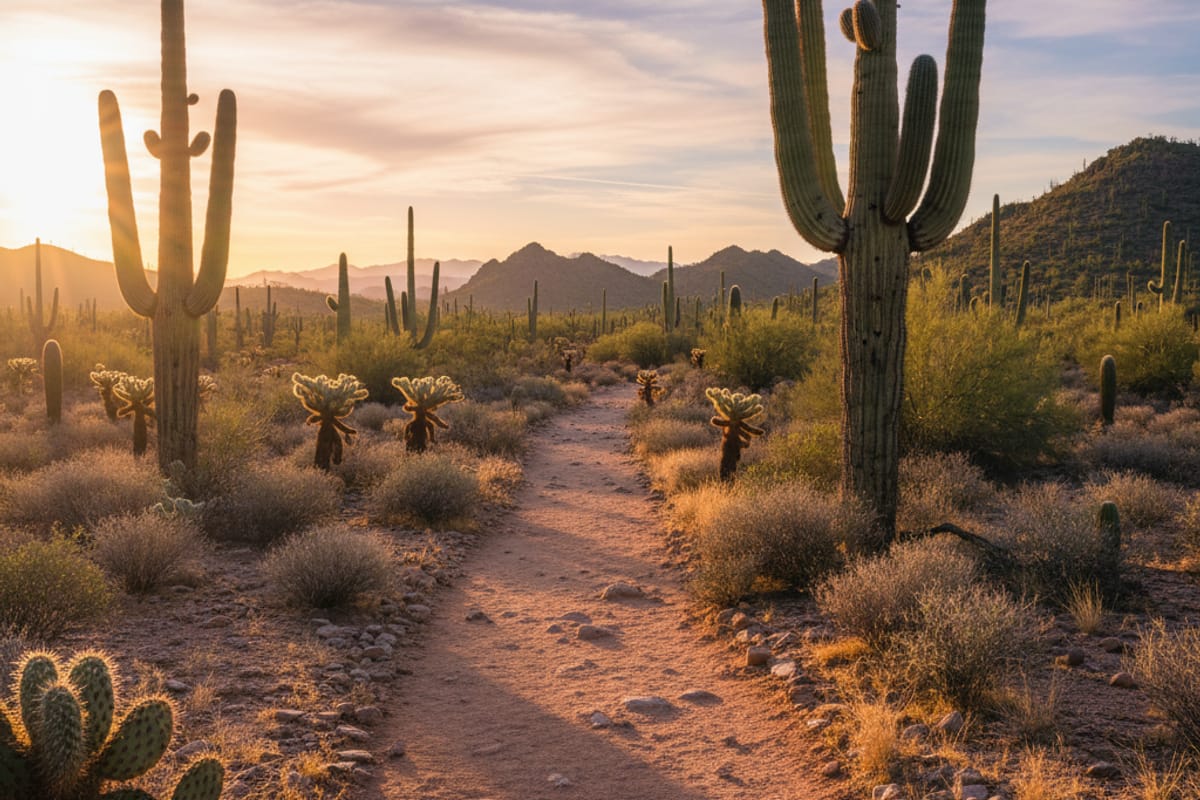 Gates Pass — one of dozens of free hiking and viewing areas around Tucson.
Cheap Eats: World-Class Food for Almost Nothing
Tucson is the rare city where the cheapest food is also the best food. America's first UNESCO City of Gastronomy earned that title not because of fancy restaurants, but because of the family-run taquerias, street food stands, and bakeries that have been serving extraordinary food at working-class prices for generations.
The Sonoran hot dog — Tucson's signature dish — costs $3 to $4 at El Guero Canelo, BK Carne Asada & Hot Dogs, and the dozen other stands that serve them across the South Side. Two hot dogs and a drink is a full meal for about $10, and it's one of the best things you'll eat in Arizona at any price point. El Guero Canelo won a James Beard Award for this $4 hot dog. Let that sink in.
Tacos at South Side taquerias average $2 to $3 each. Two or three tacos is a satisfying meal, so you're looking at $5 to $9 for lunch. Tacos Apson on South 12th Avenue does mesquite-grilled carne asada that rivals steakhouse quality for a fraction of the price. Taqueria Pico de Gallo on South 6th has tacos al pastor — pork carved from a vertical spit with caramelized pineapple — that cost $2.50 each and taste like they should cost ten times that.
Mexican bakeries (panaderías) are one of Tucson's best budget secrets. La Estrella Bakery on South 12th Avenue sells conchas, cuernos, orejas, and other pan dulce for about $0.75 to $1.50 each. A bag of four or five pastries costs $4 to $5 and makes a perfect breakfast or afternoon snack. Pair them with a cup of champurrado (Mexican hot chocolate) or café de olla (coffee brewed with piloncillo and cinnamon) for another $2 to $3.
Tumerico on East 6th Street serves plant-based Mexican food — enchiladas, tostadas, soups, and aguas frescas — for about $8 to $12 per meal. The food is creative, deeply flavorful, and the portion sizes are generous. It's one of the best values in the city for a sit-down lunch.
The cheese crisp at El Minuto Cafe — a giant flour tortilla baked until crisp and covered in melted cheese and green chile — is the size of a medium pizza and costs about $7 to $8. Split one between two people as an appetizer, or eat the whole thing yourself as a meal. No judgment here.
For groceries and self-catering, the Food City and Cardenas Markets stores on the South Side have incredible deli and bakery sections — fresh tortillas, prepared salsas, rotisserie chickens, and prepared Mexican dishes at supermarket prices. A grocery run for a full day's worth of food can easily come in under $15 per person.
Even the sit-down restaurants in Tucson are remarkably affordable compared to other Southwest cities. A full dinner at a quality Mexican restaurant like Mi Nidito or El Charro runs $12 to $20 per person. At Café Poca Cosa — arguably the best restaurant in the city — dinner is $30 to $40 per person, which is fine dining quality at casual dining prices. In Scottsdale, an equivalent meal would be $70 to $90.
Pro tip: Tuesday and Wednesday evenings are the cheapest times to eat out in Tucson. Many restaurants have midweek specials, and you'll rarely wait for a table. Happy hours at downtown bars typically run 4 to 6 PM and offer half-price appetizers and $4 to $6 margaritas.
Summer Hotel Deals: The Heat Is Your Leverage
Tucson's biggest budget advantage isn't food or free hikes — it's summer hotel pricing. From June through August, daytime temperatures regularly exceed 100 degrees Fahrenheit, and the tourist crowds vanish. Hotels that charge $150 to $200 per night in the comfortable winter months drop to $50 to $80 per night in summer. Some resort properties cut rates by 50 to 70 percent.
This isn't a small difference. A weekend at the Arizona Inn — one of the most beautiful historic hotels in the Southwest — might cost $350 per night in February but drops to $120 to $160 per night in July. The JW Marriott Starr Pass, a full-service resort with a pool, spa, and golf course, drops from $300+ to $100 to $150 per night in summer. The Tucson Marriott University Park runs summer rates around $75 to $95 per night for a modern, well-located hotel.
The question is whether the heat is manageable. The answer is yes, with a strategy. Early mornings (before 9 AM) and evenings (after 6 PM) are perfectly pleasant — temperatures are often in the 80s, with dry air that feels dramatically different from humid summer heat in the East or Midwest. The middle of the day is brutally hot, so plan indoor activities (museums, restaurants, shopping on 4th Avenue) between 11 AM and 4 PM, and schedule outdoor activities for the bookend hours.
Monsoon season — roughly late June through September — adds another dimension. Tucson's summer monsoons bring dramatic afternoon thunderstorms that drop temperatures 10 to 15 degrees in minutes, create stunning cloud formations and lightning displays, and produce double rainbows that arc over the desert. Locals love monsoon season because the desert turns green, wildflowers bloom, and the evening air after a storm is some of the freshest, most alive air you'll ever breathe.
Hotel booking strategy: book directly with the hotel rather than through third-party sites during summer. Many Tucson hotels offer summer packages that include breakfast, parking, or attraction tickets that you won't find on Expedia or Booking.com. Call the hotel directly and ask about their best summer rate — front desk staff are often authorized to offer deals that aren't listed online.
Hostels and alternative lodging: Tucson doesn't have a huge hostel scene, but Airbnb and VRBO options in the midtown and university areas run $40 to $70 per night for a private room or small casita. Some of these are converted guesthouses behind main residences and offer a more authentic Tucson experience than a chain hotel — adobe walls, desert gardens, and morning coffee on a patio with mountain views.
Pro tip: The best summer hotel deals are in late June (before July 4th) and August (after families return to school-prep mode). These shoulder periods within the summer have the lowest demand and the deepest discounts.
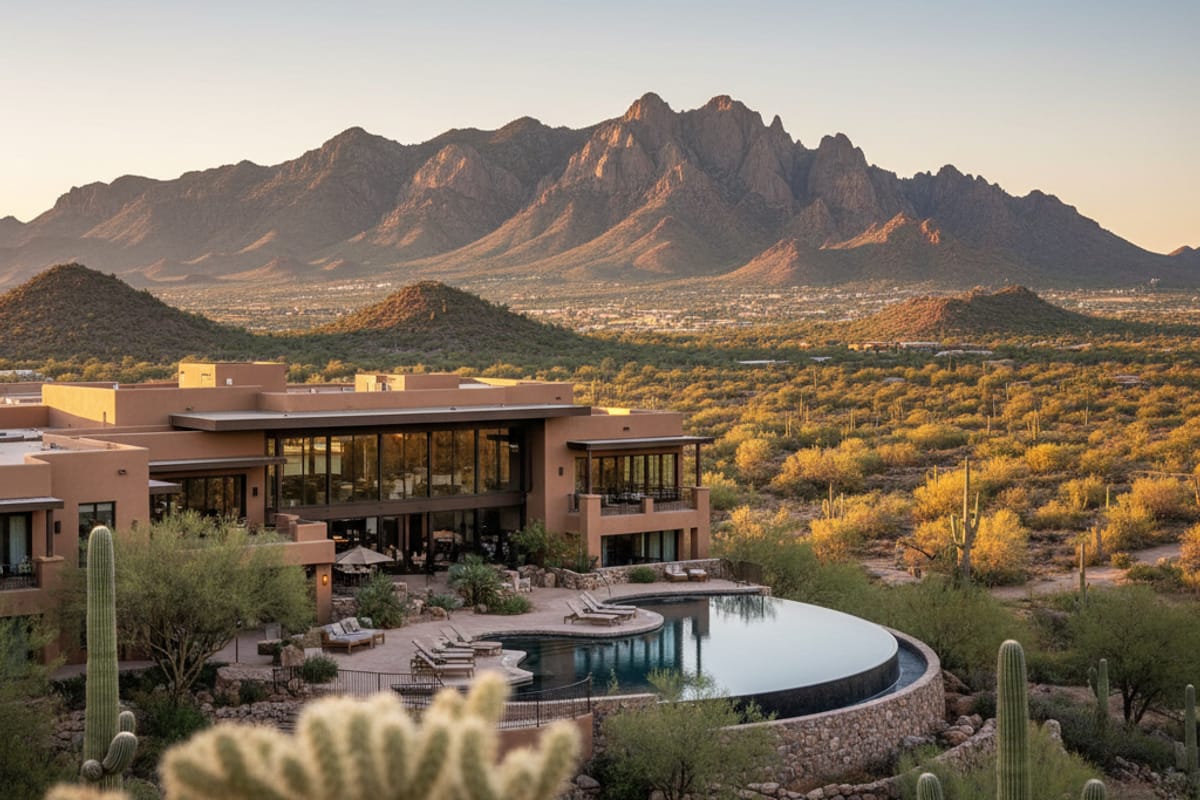 Summer hotel rates in Tucson drop 50-70% — the heat is your bargaining chip.
Free Attractions: Culture, History & Desert Beauty at No Cost
Tucson has a remarkable number of free attractions that aren't filler — they're genuine highlights that would be worth paying for. Here's what you can experience without spending a dime.
Barrio Viejo is free to walk and is one of the most beautiful and historically significant neighborhoods in the Southwest. The colorful adobe houses, murals, garden walls, and the El Tiradito Wishing Shrine make this a must-visit that costs nothing. Walk South Meyer Avenue and South Convent Avenue for the best concentration of photogenic buildings.
The University of Arizona campus is home to several free museums and attractions. The Arizona State Museum is free on the first Saturday of every month and houses one of the best collections of Native American pottery and textiles in the world. The university's Flandrau Science Center has a free outdoor mineral and gem display, and the campus itself — with its Southwestern architecture, palm-lined walkways, and mountain views — is a pleasant place to spend an hour.
The 4th Avenue district is free to walk, browse, and people-watch. Window-shopping at the independent bookstores, vintage shops, and artist studios costs nothing. The 4th Avenue Street Fair (held in spring and fall) is free admission and features hundreds of artisan vendors, food stands, and live music. The Second Saturdays downtown art walk is also free, with galleries and shops staying open late with refreshments.
The Tucson Botanical Gardens offer free admission on the first Tuesday of every month. On other days, admission is about $15, but the free day makes it accessible for budget travelers. The gardens are particularly beautiful during the butterfly exhibit in fall and the holiday lights display in December.
Mission San Xavier del Bac — called the White Dove of the Desert — is a stunning 18th-century Spanish colonial mission church on the Tohono O'odham San Xavier Indian Reservation, about 15 minutes south of downtown. It's free to visit, and the interior is one of the most beautiful church interiors in the United States — ornate carvings, painted ceilings, and centuries of devotional history. The fry bread stands in the parking lot serve some of the best fry bread in southern Arizona for $3 to $5.
Gates Pass sunset viewpoint is free and offers one of the most spectacular sunset panoramas in Arizona. The Tucson Mountains frame the western horizon, and on a clear evening, the sky cycles through oranges, pinks, purples, and deep reds as the sun drops behind the peaks. Arrive 30 to 45 minutes before sunset for the best spot.
The Reid Park Zoo has a free admission day once a month (check their website for dates). It's a small, well-managed zoo with a nice collection of African, Asian, and South American animals. It's particularly good for families with young children.
The Pima County Public Library system has a Culture Pass program that provides free passes to museums and attractions for library cardholders. If you're staying long enough to get a temporary library card (available to visitors), this can save significant money on attractions like the Desert Museum, Pima Air Museum, and the Tucson Children's Museum.
Getting Around: Transit, Bikes & Smart Car Strategy
Tucson is a spread-out city, and how you navigate it has a significant impact on your budget. Here's how to get around without overspending on transportation.
The Sun Link streetcar is free. It runs a four-mile route connecting the University of Arizona, 4th Avenue, and downtown Congress Street — which happens to cover most of the best restaurants, bars, shops, and cultural attractions in the city center. The streetcar runs every 10 to 15 minutes during peak hours and every 20 minutes during off-peak. It's clean, reliable, and a genuine alternative to driving for the central corridor.
Sun Tran buses cover the rest of the city for $1.75 per ride or $4.50 for a day pass. The routes are useful for getting to popular areas like the South Side taqueria district, midtown shopping, and some trailheads. Bus service is less frequent on weekends, so check schedules. The SunGO card can be loaded online and works on both buses and the streetcar.
Bike sharing through Tugo lets you rent bikes for short trips around the central city. Stations are located near the university, downtown, and 4th Avenue. Single rides start at $2.50 for 30 minutes. Tucson has invested significantly in bike infrastructure over the past decade — the city's Loop multi-use path system covers over 130 miles of paved trails, many of which are completely separated from car traffic. If the weather cooperates (meaning mornings and evenings in summer, or nearly any time from October through April), biking is one of the best ways to experience the city.
For attractions outside the central core — Saguaro National Park, the Desert Museum, Mount Lemmon, Sabino Canyon — you'll need a car. Rental cars from Tucson International Airport (TUS) typically run $35 to $50 per day. The airport is small, pickup is fast, and the drive to most hotels is 15 to 20 minutes. If you're only staying in the city center and not visiting the parks, you can skip the rental car entirely and rely on the streetcar, buses, and occasional rideshare.
Uber and Lyft are available throughout Tucson and are generally affordable for in-town trips — expect $8 to $15 for most rides within the city. However, rides to Saguaro National Park or the Desert Museum run $20 to $30 each way, which adds up quickly. For park visits, a rental car is more economical if you're visiting more than one.
Parking is free or cheap almost everywhere in Tucson. Downtown has metered parking, but the meters are reasonable ($1 per hour) and free on Sundays. Most attractions, shopping districts, and restaurants have free parking lots. This is a stark contrast to cities like San Francisco, Portland, or even Phoenix, where parking alone can cost $15 to $25 per day.
The smartest budget strategy: rent a car for one day to hit the national park, Desert Museum, and Mount Lemmon in a single loop. Use the free streetcar, buses, and your feet for the rest of the trip. One day of car rental ($35 to $50) plus two to three days of free and cheap transit keeps your transportation costs under $75 for a long weekend.
Pro tip: Tucson International Airport (TUS) is smaller and less chaotic than Phoenix Sky Harbor (PHX). If your airfare to Tucson is within $30 to $40 of a Phoenix fare, fly into Tucson — you'll save time, stress, and the 90-minute drive south on I-10.
Full Budget Breakdown: A Tucson Weekend for Under $400
Here's a realistic, line-by-line budget for a three-day, two-night Tucson trip for one person. This isn't a deprivation budget — it includes excellent food, the city's best attractions, and comfortable lodging. It's just smart spending in a city that rewards it.
Lodging (two nights): $140 to $200 at a mid-range hotel in the university or downtown area. Summer pricing: $100 to $160. Boutique option: Hotel Congress at $100 to $160 per night gives you character, location, and a bar downstairs.
Food: Breakfast day one — panadería pastries and coffee, $5 to $7. Lunch day one — Sonoran hot dogs at El Guero Canelo, $10 to $12. Dinner day one — Mi Nidito or taqueria trail, $15 to $20. Breakfast day two — hotel breakfast or Barista Del Barrio, $6 to $10. Lunch day two — Seis Kitchen at Mercado, $12 to $15. Dinner day two — tacos and agua fresca, $8 to $12. Day three breakfast — bakery and coffee, $5 to $7. Snacks and drinks — $10 to $15. Total food: $71 to $98.
Activities: Saguaro National Park — $25 per vehicle (divide by travel companions, or $25 solo). Arizona-Sonora Desert Museum — $25. Mount Lemmon recreation pass — $5. Mission San Xavier del Bac — free. Barrio Viejo walking — free. 4th Avenue — free. Gates Pass sunset — free. Tucson Museum of Art — $12 (skip if tight on budget). Hotel Congress live music — $5 to $15. Total activities: $72 to $82 per person, or $47 to $57 if you skip the museum and live music.
Transportation: One-day car rental for park and mountain day — $35 to $50. Gas — $15 to $20. Streetcar — free. One or two Uber/Lyft rides — $16 to $30. Total transportation: $66 to $100.
Grand total: $349 to $480 per person for a three-day, two-night Tucson trip with excellent food, the city's top attractions, and comfortable lodging.
Summer grand total: $280 to $400 per person, thanks to dramatically lower hotel rates.
Compare that to similar weekends in other Southwest destinations: Scottsdale ($700 to $1,200), Sedona ($600 to $1,000), Santa Fe ($550 to $900), San Diego ($500 to $850). Tucson delivers an experience that's richer in culture, history, and authentic food than any of these destinations, and it costs 40 to 60 percent less.
The bottom line: Tucson is one of the best travel values in the American West. The best food costs almost nothing, the best scenery is free, and the hotels haven't been inflated by luxury resort pricing. You don't have to sacrifice quality to travel here affordably — you just have to know where to go. And now you do.
One final money-saving tip: buy a National Parks annual pass ($80) if you plan to visit any other national parks within the year. It covers Saguaro National Park and pays for itself in three or four park visits. If you're only visiting Saguaro, the single-park pass at $25 is the better value. Either way, this is money well spent — Saguaro National Park is one of the most unique and visually stunning parks in the system, and every dollar of your entrance fee goes directly toward protecting it.
Why Trust This Guide
Recommendations from locals across 240+ US cities via Recommended.app community data.
Explore More
This guide is part of our Tucson collection. Explore more guides for Tucson →
Tucson has 168 verified businesses on Recommended.app across 59 categories.
Hidden Gems Weekly
3 hidden gems, 2 local quotes, 1 home hack — every Monday. Free forever.
Unsubscribe anytime. No spam.
More from City Guides
 City Guide
Tucson's Hidden Gems: The Desert City Foodies and Stargazers Love
 Travel Guide
A Desert Weekend in Tucson: Cacti, Stars & the Best Mexican Food North of the Border
 City Guide
We Asked Tucson Locals Where They Actually Eat — Here's What They Said
 City Guide
First Time in Tucson? Locals Wish You Knew These 12 Things
 Home Services
Water Damage Restoration Near Me: What to Do in the First 24 Hours (2026 Guide)
 Food & Dining