
Last updated March 16, 2026 by the Recommended.app research team.
World-Class Skiing Is 30 Minutes From Downtown
Let's start with the obvious: Salt Lake City has the best access to skiing of any major city in America. That's not an exaggeration — you can land at the airport, grab your rental car, and be standing at the base of a world-class resort within 45 minutes. The 2002 Winter Olympics were held here for a reason, and the infrastructure they built has only gotten better since.
Park City Mountain Resort is the largest ski resort in the United States, with over 7,300 acres of skiable terrain across 330+ trails. It's about 35 minutes east of downtown SLC via I-80 through Parley's Canyon. Lift tickets run $180-230 per day at the window, but you can save 20-30% by buying online at least 7 days in advance. The town of Park City itself is worth a visit even if you don't ski — Historic Main Street is lined with galleries, restaurants, and shops, and it's the home of the Sundance Film Festival every January.
Snowbird sits in Little Cottonwood Canyon, just 25 minutes from downtown, and it's the resort locals love most. The terrain is steeper and more challenging than Park City, the snow is consistently deeper (averaging over 500 inches per year), and the vibe is less polished and more rugged. The Aerial Tram takes you to the 11,000-foot summit of Hidden Peak, where the views stretch across the entire Wasatch Range. Lift tickets are $140-180, and the parking lot fills up by 9 AM on powder days — arrive early or take the UTA ski bus from downtown for $5 round trip.
Alta is Snowbird's neighbor in Little Cottonwood Canyon and it holds a special distinction: it's one of only three remaining resorts in the U.S. that bans snowboarders. If you're a skier, this is paradise — uncrowded runs, 550 inches of annual snowfall, and a deliberately old-school atmosphere. Lift tickets are around $120-150, making it one of the more affordable options. The Alf Engen Museum at the base tells the fascinating history of skiing in Utah.
Brighton and Solitude in Big Cottonwood Canyon round out the options. Brighton is beloved by locals for its affordable night skiing ($55 for a night session) and relaxed terrain parks. Solitude lives up to its name — it's the least crowded Wasatch resort and has excellent intermediate terrain. Both are about 30 minutes from downtown.
The real insider move is the Ikon Pass or the Alta-Snowbird combo pass if you're visiting for more than two days. A multi-day pass can bring your per-day cost down to $80-100, which is remarkable for this caliber of skiing.
Pro tip: Take the UTA ski bus from downtown to Snowbird or Alta for just $5 round trip. It runs every 15 minutes on peak days, drops you right at the resort base, and you skip the nightmare of parking in Little Cottonwood Canyon. Download the UTA GoRide app before your trip.
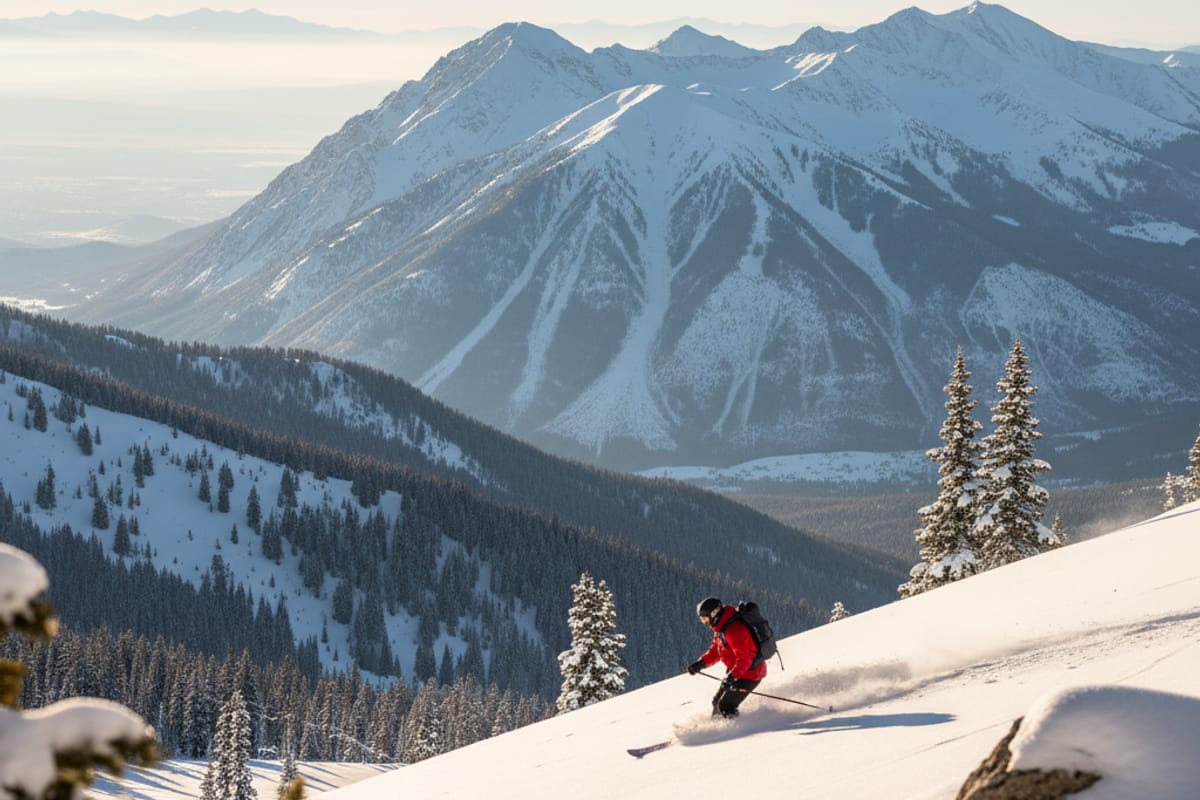 The Greatest Snow on Earth — and it's 30 minutes from your hotel.
Temple Square and the City's Complex History
You can't visit Salt Lake City without spending time at Temple Square, and that's true whether you're LDS, curious, or completely secular. The 35-acre campus is the spiritual headquarters of The Church of Jesus Christ of Latter-day Saints, and it's also one of the most architecturally impressive religious sites in the Western Hemisphere. The Salt Lake Temple took 40 years to build (1853-1893) and the granite walls are nine feet thick at the base. As of recent years, it's been undergoing a major seismic renovation, but the grounds and surrounding buildings remain open.
The Tabernacle is a must-see — the acoustics are so precise that you can hear a pin drop from 170 feet away. Free organ recitals happen daily at noon (and at 2 PM on Sundays). The organ itself has 11,623 pipes and the sound fills the domed space in a way that gives you goosebumps regardless of your musical taste. The Conference Center next door seats 21,000 people and has a rooftop garden with wildflowers and a creek — the views of the valley from up there are spectacular and it's completely free.
The Family History Library across the street is the largest genealogical library in the world, with records spanning over 100 countries. Even if you're not into genealogy, it's a fascinating place to spend an hour — the volunteers will help you trace your family history using databases that aren't available anywhere else, and it's all free.
Beyond Temple Square, the city's relationship with the LDS Church is more nuanced than outsiders expect. Salt Lake City proper actually voted overwhelmingly progressive in recent elections, and the city has a thriving LGBTQ+ community, a vibrant arts scene, and a diversity of thought that surprises almost every first-time visitor. The Beehive House and Lion House, both on South Temple Street, offer free tours and give insight into the early history of the settlement.
The Utah State Capitol building sits on Capitol Hill overlooking the city and it's worth the walk up for the views alone. The building is free to enter, the interior rotunda is gorgeous, and on a clear day you can see from the Oquirrh Mountains to the west all the way to the Wasatch peaks to the east. The surrounding gardens bloom beautifully from May through September.
Pro tip: Visit the Tabernacle for the free noon organ recital. Arrive 10 minutes early to get a seat near the center — the acoustics are best in the middle rows. The Thursday night rehearsal of the Tabernacle Choir (8 PM, free) is an unforgettable experience even if choral music isn't your thing.
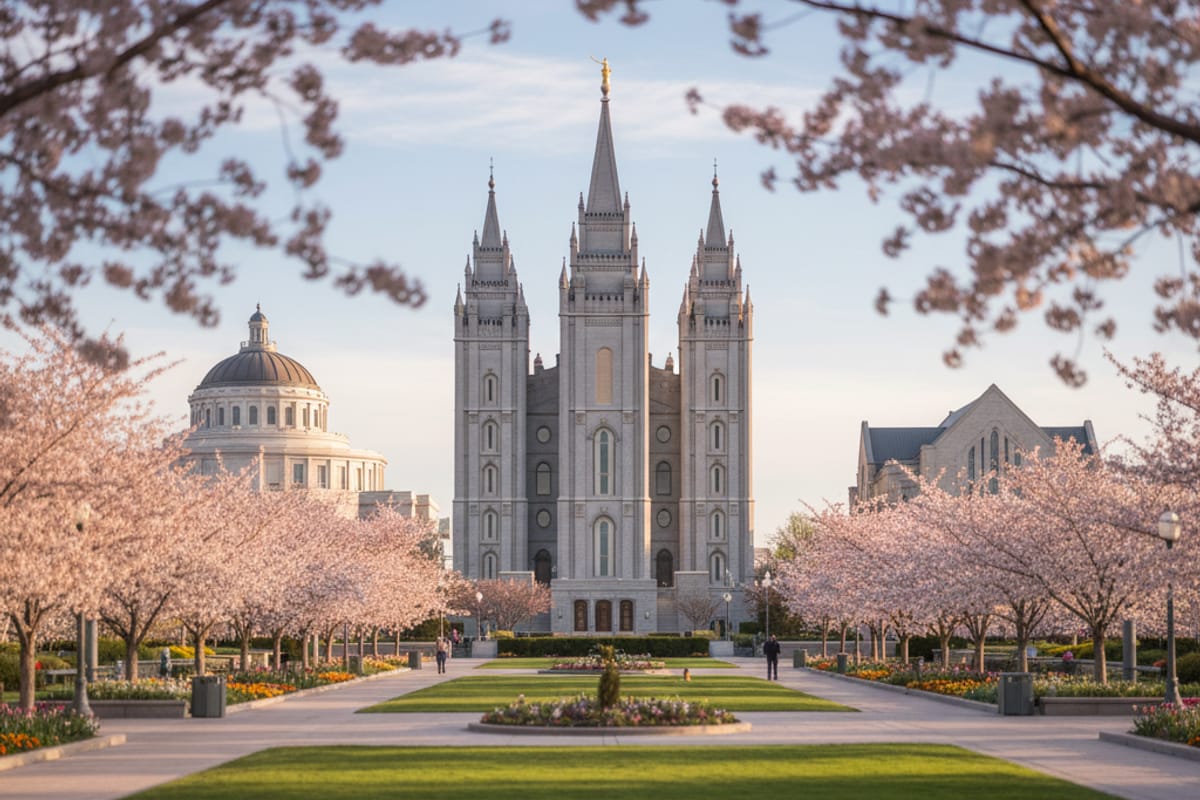 Temple Square — architecturally stunning regardless of your beliefs.
The Downtown Food Scene Will Genuinely Surprise You
If you're expecting Salt Lake City's restaurant scene to be bland chain restaurants and Jell-O salads, prepare to have your assumptions demolished. The city has undergone a culinary revolution over the past decade, driven by young chefs, an influx of diverse communities, and a local food movement that takes advantage of Utah's surprisingly excellent agricultural output.
The Copper Onion on Main Street is the restaurant that put SLC's food scene on the national map. Chef Ryan Lowder's menu changes seasonally, but the burger — dry-aged beef with house pickles and a brioche bun — is a permanent fixture for good reason. Dinner entrees run $22-38, and the weekend brunch is one of the best in the city. Reservations are essential for dinner; walk-ins can usually grab a bar seat.
Red Iguana, just west of downtown on North Temple, has been serving what many consider the best Mexican food in the intermountain West since 1985. The mole sauces are legendary — they make seven different varieties daily, from the rich, chocolatey negro to the bright, nutty pipián verde. The combination plate lets you try three moles for about $18. The wait can stretch to 45 minutes on weekends, but they opened Red Iguana 2 across the street to handle overflow. Both locations are equally excellent.
Takashi on Market Street is a revelation — a sushi restaurant in a landlocked state that would hold its own in Tokyo. Owner Takashi Gibo trained in Japan and sources fish daily from both coasts. The omakase menu ($85-120) is a masterclass in precision, but even a simple lunch of nigiri ($28-35) is extraordinary. The jalapeño yellowtail roll is the most popular item and it's earned its reputation.
HSL (Handle Salt Lake) on 100 South focuses on local and seasonal ingredients with a menu that rotates almost weekly. The wood-fired dishes are standouts, and the cocktail program is among the best in the state. Dinner runs $25-40 per plate. Current Fish & Oyster, from the same restaurant group, does seafood with a similar farm-to-table philosophy and their raw bar is excellent.
For breakfast, don't miss Ruth's Diner in Emigration Canyon — it's been open since 1930, making it one of the oldest restaurants in Utah, and the mile-high biscuits are a local institution. The patio seating along the creek is stunning in summer. Eggs in the City on 100 South downtown does creative brunch dishes — the lemon ricotta pancakes are exceptional — in a colorful, casual space.
Pro tip: Red Iguana doesn't take reservations, so go at 11:30 AM or 4:30 PM to beat the rush. If you go at peak times, put your name in at Red Iguana 2 across the street — the wait is usually 15 minutes shorter and the food is identical.
Craft Beer in a State Known for Strict Liquor Laws
Utah's liquor laws have a reputation for being confusing, and honestly, they are a little quirky. But the craft beer scene has thrived despite — or maybe because of — the regulations. Here's what you need to know: beer sold in grocery stores and gas stations is now 5% ABV (this changed in 2019). For anything stronger, you go to a brewery, bar, or state liquor store. Bars require you to order food with your first drink in some cases, and beer-only taverns (which don't serve liquor) have more relaxed rules. It sounds complicated, but in practice you just walk in, sit down, and order.
Epic Brewing Company near the gateway district was one of the first breweries in Utah to push against the low-ABV stereotype. Their Big Bad Baptist imperial stout — barrel-aged with coffee and cocoa nibs — is one of the most decorated beers in the country. The taproom on State Street pours their full lineup, including high-point beers you can't get at the grocery store. Flights run $10-14 and the staff is passionate about walking you through the options.
Uinta Brewing is the largest craft brewery in Utah and their Hop Nosh IPA is practically the state's unofficial beer. Their massive brewery and taproom in the industrial west side of town has 20+ beers on tap, a full restaurant, and an outdoor patio that's packed on summer evenings. Tours run on Saturdays for $5 and include generous tastings. The Detour Double IPA and Cutthroat Pale Ale are local favorites.
Wasatch Brewery in Sugar House (and their sibling brand Squatters) leans into the Utah humor with beers like Polygamy Porter (tagline: "Why have just one?") and Evolution Amber. The Sugar House pub is a neighborhood institution — great burgers, a solid tap list, and a patio that fills up during University of Utah football games. Pints run $5-7, which is refreshingly cheap compared to craft beer prices in coastal cities.
Fisher Brewing in the Granary District occupies a beautifully restored historic building and focuses on European-style lagers and farmhouse ales. It's a quieter, more refined experience than the bigger breweries, and the outdoor beer garden is one of the best hangout spots in the city. Grid City Beer Works downtown does excellent IPAs and sours and has a creative food menu to match.
SaltFire Brewing in South Salt Lake is the local's brewery — never crowded, always experimental, and consistently excellent. Their hazy IPAs rival anything coming out of New England, and they frequently collaborate with other Utah breweries on limited releases.
Pro tip: Download the Visit Salt Lake app for a "Brewery Passport" that gets you discounts at participating breweries. Also, the state liquor stores close on Sundays and holidays, so stock up on Saturday if you want anything beyond beer for your hotel room.
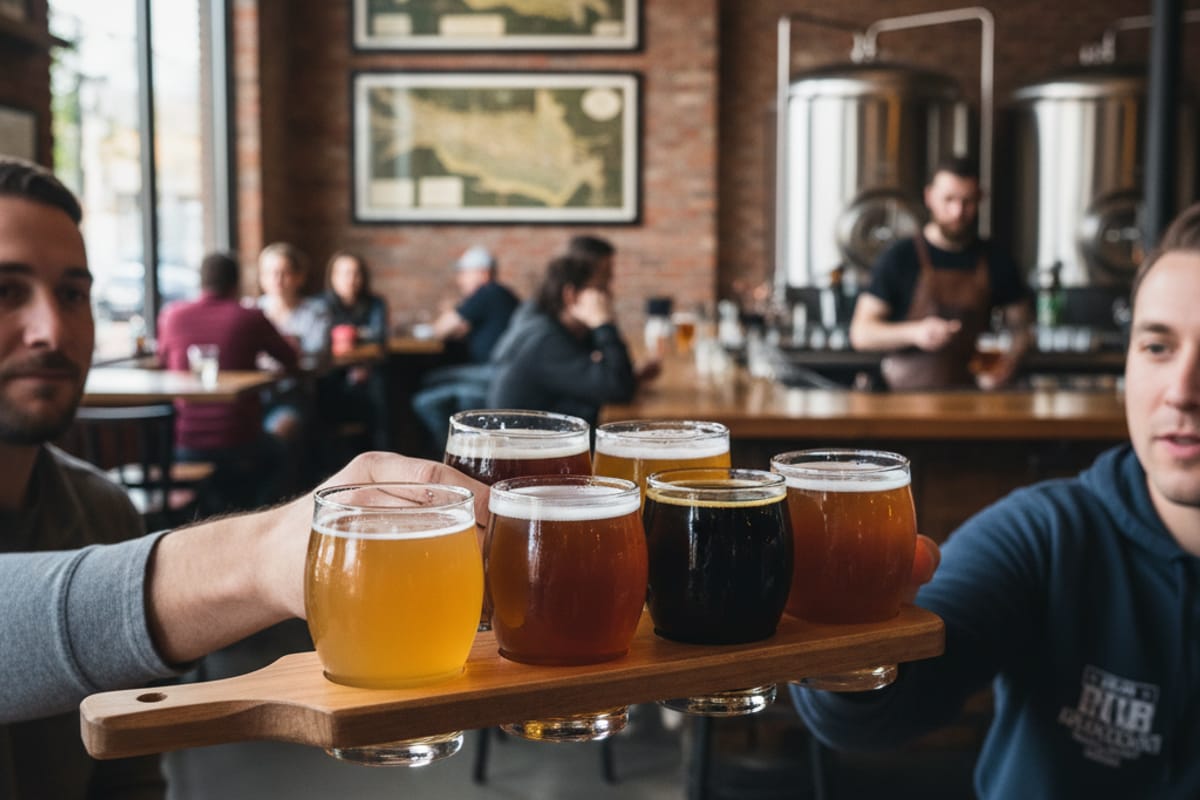 Utah's craft beer scene is thriving — don't believe the stereotypes.
The 9th & 9th Neighborhood: SLC's Coolest Corner
Every city has that one neighborhood where everything just works — the coffee is great, the shops are independent, the people are friendly, and it all feels effortlessly cool without trying too hard. In Salt Lake City, that neighborhood is 9th & 9th, centered around the intersection of 900 East and 900 South, about 10 minutes southeast of downtown.
The Tower Theatre is the neighborhood's anchor — a beautifully restored 1928 movie palace that shows independent and art-house films. It was lovingly restored and operates as a community cinema with tickets around $10-12. The marquee is one of the most photographed spots in the city, and the programming ranges from first-run indie films to classic movie nights.
Coffee culture thrives here. The Coffee Garden has been the neighborhood living room since 1993 — worn couches, local art on the walls, and some of the best espresso in the city. 9th and 9th Coffee sits just down the block with a more modern aesthetic and excellent pour-overs. Both are gathering spots for the creative community that defines this area.
For shopping, Decades Vintage has a curated collection of clothing, furniture, and oddities from the '50s through '90s. The King's English Bookshop is one of the best independent bookstores in the West — they've been open since 1977 and their staff picks section is genuinely excellent. Caputo's Market & Deli, an Italian specialty shop, has a 9th & 9th location where you can get incredible imported cheeses, cured meats, and sandwiches made on fresh-baked bread. The Hot Coppa sandwich is legendary.
Dining in 9th & 9th ranges from casual to refined. Pago is a farm-to-table restaurant that sources almost exclusively from Utah farms — the menu changes with the seasons and the intimate dining room feels like eating at a friend's beautifully designed home. Entrees run $26-42. East Liberty Tap House does elevated pub food with an excellent rotating tap list. Stoneground Italian Kitchen serves wood-fired pizzas and handmade pastas in a cozy, neighborhood setting — the Margherita pizza ($14) is perfect.
Liberty Park, just a few blocks north, is the city's beloved central park — 80 acres of mature trees, a pond with paddleboats in summer, tennis courts, a playground, and Tracy Aviary (more on that elsewhere). On Saturday mornings from June through October, the 9th & 9th area hosts the People's Market, a small but excellent farmers market with local produce, baked goods, and crafts.
The neighborhood is walkable, bikeable, and connected to downtown by bus and the S-Line streetcar. It's the kind of place where an afternoon evaporates — you come for coffee and leave four hours later with a bag of books, a belly full of pasta, and a genuine affection for Salt Lake City.
Pro tip: Park on any of the residential side streets off 900 South — parking is free and unrestricted. The commercial blocks can fill up on weekends. If you're visiting on a Saturday in summer, time your visit to catch the People's Market in the morning, then explore the shops and grab lunch at Pago or Stoneground.
Budget Tips: What Salt Lake City Actually Costs
Salt Lake City is remarkably affordable compared to other Western cities with comparable outdoor access. You're not paying Denver prices, and you're definitely not paying California prices. Here's what to expect.
Hotels downtown run $90-160 per night for solid mid-range options. The AC Hotel by Marriott and Hyatt Place downtown are both well-located and reliably comfortable in the $120-150 range. If you're willing to stay in Sugar House or the University area, you can find quality spots for $70-100. During ski season (December-March), prices bump up 20-30%, and during Sundance Festival (late January) Park City hotels triple or quadruple — stay in SLC and drive up.
Food is genuinely affordable. You can eat a world-class meal at Red Iguana for $15-20 per person. Lunch at Caputo's is $12-15. Even upscale spots like The Copper Onion and HSL are 30-40% cheaper than equivalent restaurants in San Francisco or New York. Budget $30-50 per day for food and you'll eat very well.
Transportation is easy to manage. The UTA TRAX light rail connects the airport to downtown for $2.50, and the free fare zone covers the entire downtown core — you can hop on the TRAX or bus for free within the central area. The UTA ski bus to the Cottonwood Canyons is $5 round trip. Uber and Lyft are available and cheap — a ride from downtown to 9th & 9th runs about $8-10.
Free activities are abundant. Temple Square, the Utah State Capitol, Liberty Park, City Creek Canyon hiking trail (which starts right downtown), the Bonneville Shoreline Trail, and the International Peace Gardens are all free. The first Friday of each month, dozens of galleries in the Granary District and downtown open their doors for the Gallery Stroll — free art, free wine, free fun.
Realistic budget for a long weekend (3 nights): $600-900 per person including hotel, food, one day of skiing, and activities. That's for a comfortable trip, not a bare-bones one. If you skip skiing, you can do a fantastic Salt Lake City trip for $400-600 per person.
Compared to other ski destinations — Aspen, Vail, Jackson Hole — Salt Lake City is roughly half the cost with comparable or better snow. That's the real secret of this city: it punches way above its weight in every category and charges way below its value.
Why Trust This Guide
Recommendations from locals across 240+ US cities via Recommended.app community data.
Explore More
This guide is part of our Salt Lake City collection. Explore more guides for Salt Lake City →
Salt Lake City has 165 verified businesses on Recommended.app across 65 categories.
Hidden Gems Weekly
3 hidden gems, 2 local quotes, 1 home hack — every Monday. Free forever.
Unsubscribe anytime. No spam.
More from City Guides
 City Guide
10 Hidden Gems in Salt Lake City That Surprise Every Visitor
 Travel Tips
Salt Lake City on a Budget: Affordable Skiing, Free Hikes & Cheap Eats
 Travel Guide
A Weekend in Salt Lake City: Skiing, Food & Mountain Views
 City Guide
We Asked Salt Lake City Locals Where They Actually Eat — Here's What They Said
 Home Services
Water Damage Restoration Near Me: What to Do in the First 24 Hours (2026 Guide)
 Food & Dining