
Last updated March 16, 2026 by the Recommended.app research team.
Sonoran Hot Dogs: The Street Food That Won a James Beard Award
If you visit Tucson and don't eat a Sonoran hot dog, you haven't visited Tucson. This is the city's most iconic food — a bacon-wrapped hot dog grilled until the bacon crisps and blisters, nestled into a soft bolillo roll, then layered with pinto beans, diced tomatoes, grilled onions, jalapeño sauce, mustard, and mayo. It sounds like too much. It is exactly the right amount.
El Guero Canelo is the name most people know, and for good reason. Owner Daniel Contreras won the James Beard Award in 2018 — the first hot dog stand to ever receive the honor — and the recognition was overdue. The original location on South 12th Avenue is a no-frills outdoor stand with plastic chairs, a corrugated metal roof, and a grill that hasn't stopped firing since 1993. The Sonoran dog costs about four dollars. You will want two. Don't fight it.
But here's what the food magazines won't tell you: many Tucson locals prefer BK Carne Asada & Hot Dogs on South 6th Avenue. BK wraps the bacon tighter, uses a slightly spicier jalapeño sauce, and the overall flavor profile is more concentrated and intense. The carne asada tacos at BK are also exceptional — grilled over mesquite, chopped fresh, and served on flour tortillas with nothing but guacamole and salsa. A full meal at BK costs seven or eight dollars and will be one of the best things you eat on your trip.
Other excellent Sonoran hot dog options include Aqui con El Nene on South 6th, which stays open late and draws the post-bar crowd, and El Sinaloense on West Grant, which adds a crema drizzle that's dangerously good. The Sonoran hot dog originated in Hermosillo, Mexico, and migrated north across the border into Tucson, where it evolved into something uniquely its own. Every stand does it slightly differently, and arguing about which one is best is one of Tucson's favorite pastimes.
The best strategy is to try at least two different stands and make your own call. No one will judge you for eating three Sonoran hot dogs in a single day. In fact, locals will respect you for the commitment.
Pro tip: El Guero Canelo now has three locations. The original on South 12th Avenue has the most character, but the Oracle Road location is closer to the tourist areas and serves the same food. All locations are cash-friendly, though cards are accepted.
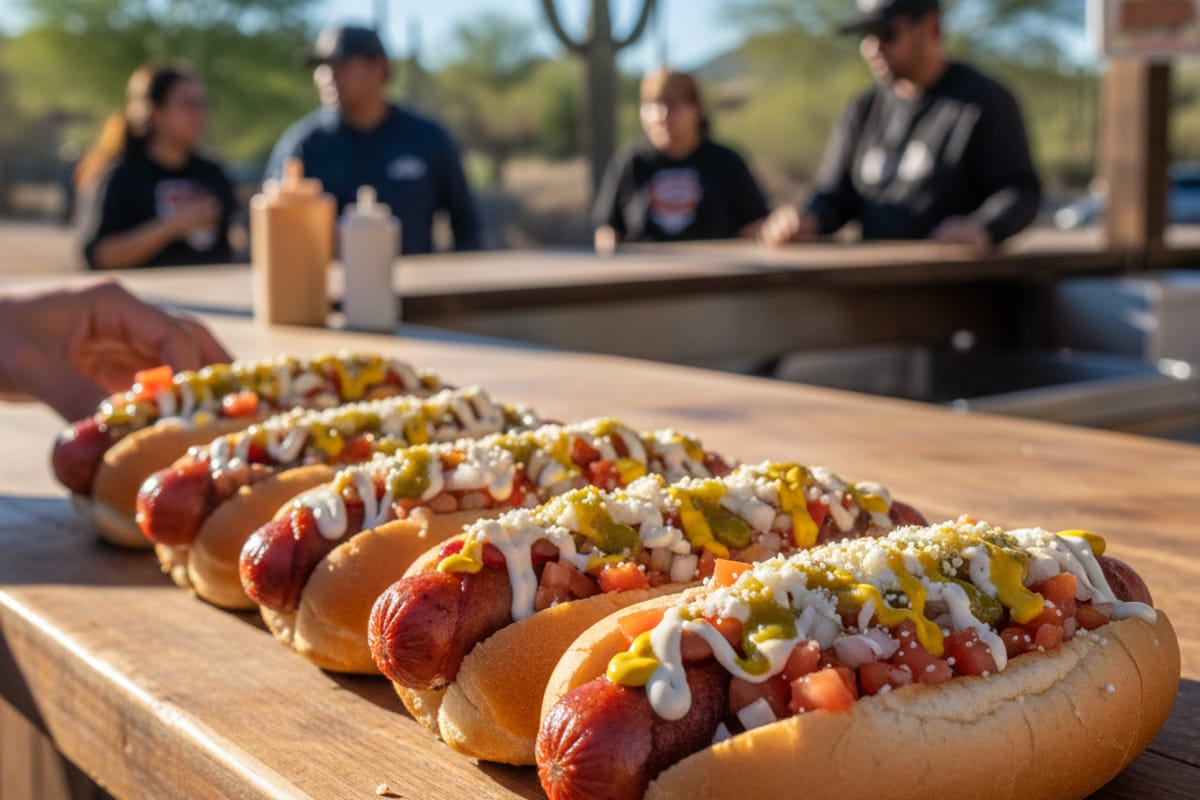 El Guero Canelo's Sonoran hot dog — James Beard-worthy street food.
Mexican Restaurants: Mi Nidito, El Charro & the Classics
Tucson's Mexican food heritage isn't a marketing gimmick — it's the foundation of the city's culinary identity, built on centuries of Sonoran cooking traditions that predate the U.S.-Mexico border itself. The restaurants in this category aren't trendy. They're institutions.
Mi Nidito on South 4th Avenue has been serving Tucson since 1952 and is the Mexican restaurant that every local eventually takes their out-of-town guests to. The restaurant gained national fame when President Clinton ate there in 1999 and ordered the Presidents Plate — a combination of chile relleno, taco, bean tostada, birria, and enchilada that's now permanently on the menu. The chile relleno is the star — a roasted poblano pepper stuffed with cheese, hand-dipped in egg batter, fried to a golden puff, and topped with green chile sauce. The wait can be long on weekends (often 45 minutes to an hour), and they don't take reservations, but the food justifies every minute.
El Charro Cafe downtown claims to be the oldest Mexican restaurant in the United States in continuous operation by the same family — they've been open since 1922. El Charro also claims to have invented the chimichanga (the origin story involves accidentally dropping a burrito into a fryer, though Macayo's in Phoenix contests this claim). Whatever the truth, their carne seca — beef dried on the roof in the Tucson sun, then shredded and rehydrated with green chiles and spices — is unique to El Charro and absolutely worth trying. The original downtown location on North Court Avenue has the most atmosphere.
For something less famous but equally excellent, try La Indita on North 4th Avenue. Owner Maria Garcia serves indigenous Mexican food — not Sonoran, not Tex-Mex, but recipes from the Zapotec and Mixtec traditions of Oaxaca, including tlayudas (large crispy tortillas topped with beans, meat, and Oaxacan cheese), enfrijoladas (tortillas bathed in black bean sauce), and moles made from scratch. The restaurant is tiny, the decor is simple, and the food is unlike anything you'll find at another Mexican restaurant in Arizona.
El Minuto Cafe on South Main Avenue, open since 1936, anchors the edge of Barrio Viejo and serves cheese crisps — essentially a giant flour tortilla baked until crisp and covered in melted cheese and green chile — that are the size of a car tire and cost about eight dollars. They're messy, they're perfect, and they're pure Tucson.
Pro tip: Mi Nidito is closed on Mondays. Arrive before 5 PM on weekdays to avoid the worst of the wait. El Charro's downtown location is within walking distance of Hotel Congress and the Tucson Museum of Art, making it easy to combine with a downtown evening.
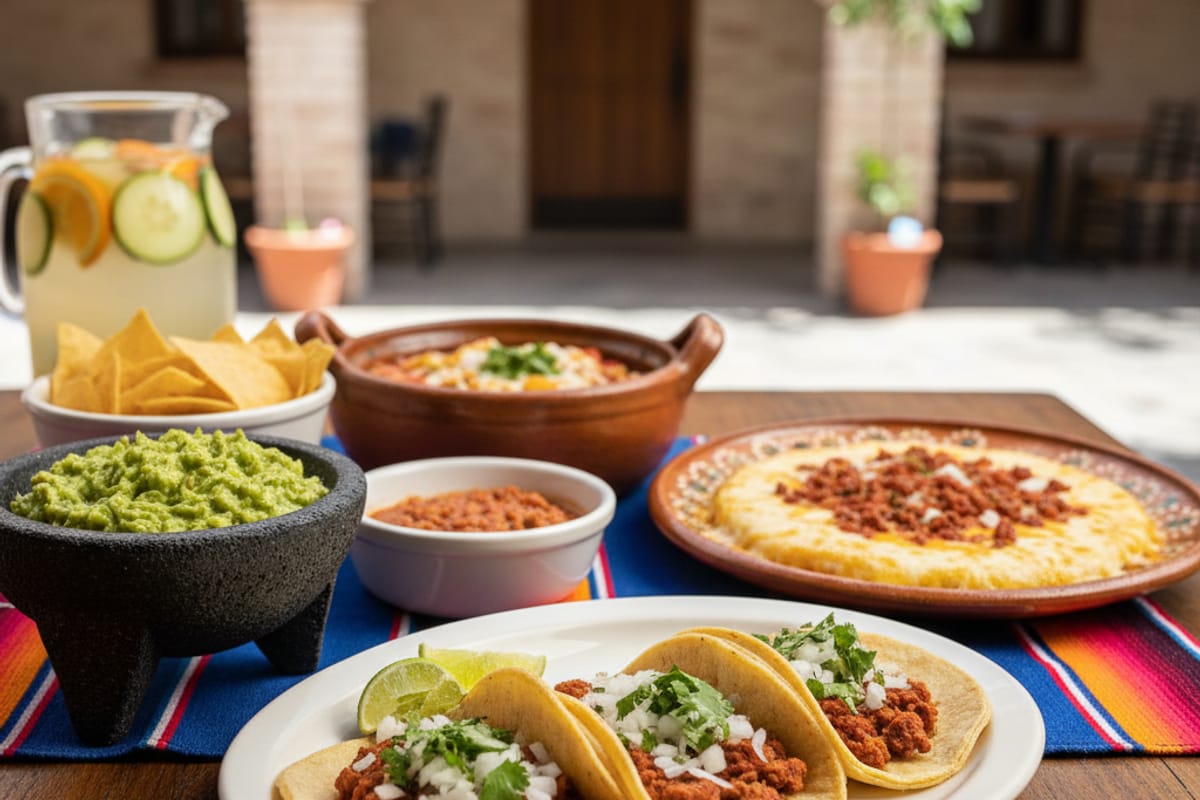 Mi Nidito — the Presidents Plate has been a Tucson landmark since 1999.
Downtown Dining: Where Tucson's New Guard Cooks
Downtown Tucson's restaurant scene has undergone a quiet revolution. While the South Side taquerias and legacy Mexican restaurants carry the city's soul, downtown is where a new generation of chefs is building something modern on that traditional foundation.
The Mercado San Agustin on West Congress Street is a great starting point. This modern marketplace built around a historic railroad depot houses several food vendors under one complex. Seis Kitchen serves creative tacos — think smoked brisket with chipotle crema, or roasted cauliflower with mole — alongside excellent cocktails featuring Sonoran ingredients like prickly pear and mesquite. La Estrella Bakery's outpost here sells fresh pan dulce and tamales. The whole complex has a communal, gathering-place energy that captures the best of modern Tucson.
Tumerico on East 6th Street is one of the most unique restaurants in the city — a plant-based Mexican kitchen run by a Tucson native who uses traditional Sonoran techniques with entirely vegetable-based ingredients. The mole enchiladas are extraordinary, the agua frescas change daily, and a full lunch costs about ten dollars. Even committed carnivores leave impressed. Tumerico won a James Beard nomination and operates on a community-focused model where pricing is accessible by design.
Penca on North 4th Avenue occupies a gorgeous restored 1930s building and serves Sonoran-influenced cocktails and ceviches that are ideal for a warm evening. The mezcal selection is among the best in Arizona, and the bartenders know their agave spirits inside and out. The courtyard seating feels like you're dining in a hacienda.
For breakfast and brunch, Barista Del Barrio on South 6th Avenue serves excellent coffee alongside breakfast burritos and pastries in a converted barrio house. The vibe is neighborhood-casual, the coffee is carefully sourced, and the breakfast burrito with green chile and egg is the kind of simple, perfect food that doesn't need to be complicated to be memorable.
5 Points Market & Restaurant on East 22nd Street, just south of downtown in a converted mid-century building, serves one of the best brunches in the city. The huevos rancheros are textbook-perfect, the patio is shaded and breezy, and the Bloody Mary uses house-made mix with roasted tomatoes and Tucson-grown chiles. It's a local favorite that hasn't been discovered by the tourist crowd yet.
Pro tip: The downtown area between Congress Street and Broadway, from Stone Avenue to 6th Avenue, is entirely walkable and the streetcar connects most of it. Thursday evenings and weekends are the best times for downtown dining — many restaurants have special menus or extended hours.
4th Avenue: The Bohemian Strip's Best Bites
Fourth Avenue — Tucson's indie-spirited, counter-cultural corridor — is better known for its vintage shops and dive bars than its food, but there are some genuinely excellent places to eat along this mile-long stretch. The key is knowing which spots are worth your time and which are coasting on foot traffic.
Brooklyn Pizza Company on North 4th Avenue serves the best New York-style pizza in Tucson. The slices are enormous, properly foldable, with a thin crust that crisps on the bottom and a sauce that actually tastes like tomatoes. A slice and a drink for about six dollars makes it one of the best cheap meals on the avenue. It's open late on weekends, which makes it the default destination after the bars close.
Caruso's on North 4th Avenue has been serving Italian food in Tucson since 1938, making it one of the oldest Italian restaurants in the Southwest. The red-sauce Italian-American classics — spaghetti and meatballs, chicken parmigiana, lasagna — are done with care and consistency. The dining room has barely changed in decades, and the prices are remarkably reasonable for the quality.
Renee's Organic Oven on North 4th Avenue bakes the best bread on the avenue and serves sandwiches, salads, and pizzas made with organic ingredients and real culinary skill. The Tucson heat pizza with green chile and locally made chorizo is a standout. It's a good option if you're looking for something lighter than the meat-heavy Sonoran food that dominates the city.
For drinks, Che's Lounge is a legendary dive bar on North 4th with cheap drinks, a pool table, and the kind of unpretentious atmosphere that chains spend millions trying to replicate and always fail. Delectables on 4th Avenue does an excellent wine and cheese happy hour that's popular with University of Arizona faculty and neighborhood regulars.
The Tasteful Kitchen on North 4th Avenue serves entirely plant-based comfort food — burgers, mac and cheese, nachos — that's popular with the university crowd and genuinely good regardless of your dietary preferences. Their buffalo cauliflower tacos have developed a cult following.
If you're on 4th Avenue on a Saturday morning, the Santa Cruz River Farmers Market at Mercado San Agustin (just west of 4th Avenue's southern end) sells local produce, baked goods, prepared foods, and desert-adapted plants from Tucson-area farmers. The tamales from the vendors here are exceptional, and the atmosphere — families, dogs, local musicians — is pure weekend Tucson.
Fine Dining: Café Poca Cosa, Downtown Kitchen & Beyond
Tucson's fine dining scene doesn't look like most cities' fine dining scenes, and that's entirely to its credit. There are no stuffy white-tablecloth rooms with prix fixe menus and a sommelier who makes you feel stupid. Instead, Tucson's upscale restaurants tend to be chef-driven, ingredient-focused places where the food is exceptional and the atmosphere is warm rather than intimidating.
Café Poca Cosa on East Pennington Street is the restaurant that put Tucson's food scene on the national map. Chef Suzana Davila changes the menu twice daily based on what's available and what inspires her — the selections are written on a chalkboard that the server brings to your table. The food is contemporary Mexican — think mole-sauced chicken in complex, layered sauces that use 20 or more ingredients, or chile-marinated pork with fruit salsas that balance heat and sweetness perfectly. A full dinner runs about $30 to $40 per person, which is astonishingly reasonable for food at this level. Reservations are recommended, especially on weekends.
Downtown Kitchen + Cocktails on North Stone Avenue was opened by James Beard Award-winning chef Janos Wilder and serves a menu that draws on Tucson's multicultural food traditions — Sonoran, Native American, Asian, and Mediterranean influences appear on the same menu and somehow make perfect sense together. The chile-rubbed filet mignon with corn pudding is the signature dish. The cocktail program is serious, with a focus on mezcal, tequila, and Sonoran botanicals. Dinner for two with drinks runs about $80 to $100.
The Parish on East 6th Street offers upscale Southern and Gulf Coast-inspired food — gumbo, po'boys, fried chicken — in a beautiful brick building with a patio. It's an unusual choice for Tucson, but the chef's execution is excellent and the whiskey selection is deep. Weekend brunch here is one of the best in the city.
Flora's Market Run on North Stone Avenue does sophisticated seasonal cooking in a bright, airy space — the kind of restaurant where every ingredient is sourced thoughtfully and the flavors are clean, precise, and satisfying. The menu changes frequently, but the house-made pasta dishes and the wood-grilled meats are consistent highlights. It feels like a restaurant you'd find in Portland or San Francisco, except the ingredients are Sonoran and the prices are about 40 percent lower.
For a special-occasion dinner with desert views, Hacienda Del Sol Guest Ranch Resort in the Catalina foothills has a restaurant called The Grill that serves steaks, seafood, and Southwestern-inspired dishes on a patio overlooking the Santa Catalina Mountains. The sunset views alone are worth the drive, and the food — while traditional — is prepared with genuine care. Expect $50 to $70 per person for dinner.
Wildflower on North Oracle Road in the foothills serves contemporary American cuisine with Southwestern accents in an elegant but relaxed setting. The patio is stunning during Arizona's golden hour, and the wine list is one of the most thoughtful in the city. It's the kind of restaurant where locals celebrate anniversaries and birthdays — refined without being pretentious.
Pro tip: Café Poca Cosa is closed on Sundays and Mondays. The restaurant is small and popular — make reservations for dinner, or try lunch, which is walk-in friendly and equally excellent at slightly lower prices.
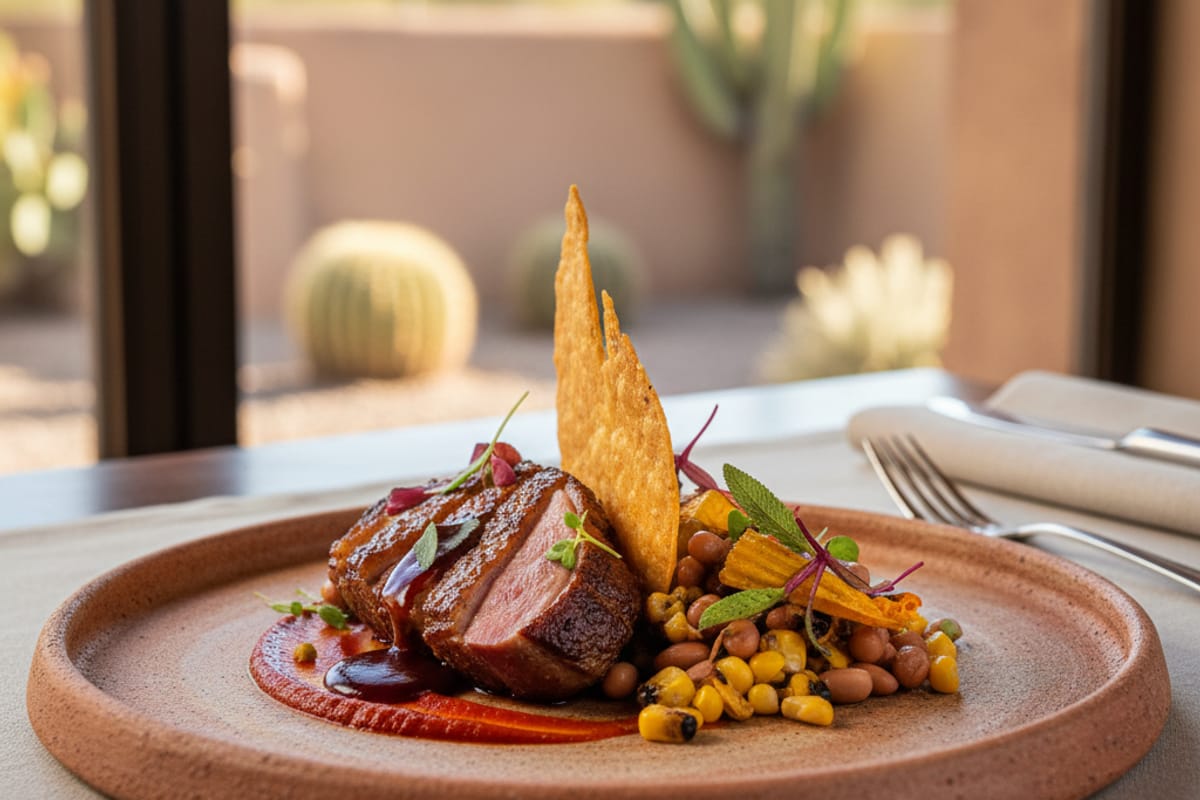 Tucson's fine dining is chef-driven, ingredient-focused, and remarkably affordable.
What to Skip (We'll Save You the Disappointment)
Not every restaurant in Tucson lives up to the UNESCO hype, and some places coast on name recognition, tourist traffic, or outdated reputations. Here's where to redirect your appetite.
Skip the chain Mexican restaurants on the north side and in the foothills. Places like El Torito and Macayo's serve the kind of cheese-smothered, sour-cream-heavy Americanized Mexican food that has nothing to do with what makes Tucson's food scene special. When you're in one of the great Mexican food cities in America, eating at a chain is like going to Naples and ordering Domino's.
Skip the resort restaurants in the Catalina foothills unless someone else is paying. Most of them charge $40 to $60 for entrees that are competently prepared but lack the personality and soul of the city's independent restaurants. The views are often spectacular, but you can get equally stunning mountain views at Hacienda Del Sol for half the price, or for free at any number of trailheads.
Skip the restaurants immediately surrounding the University of Arizona campus that cater to students — they're fine for a cheap burrito after a night out, but the quality doesn't compare to the South Side taquerias or the downtown restaurants. The exception is Frog and Firkin, which isn't great food but is a genuine Tucson institution for pub fare and beer.
Be cautious about restaurants that describe themselves as Southwestern fusion. Some are excellent (Downtown Kitchen, Flora's Market Run), but others use the label to justify charging $18 for a quesadilla with goat cheese and sun-dried tomatoes. If the menu reads like a Pinterest board, keep walking.
Finally, don't waste a meal at the airport. Tucson International is small and the food options are limited and overpriced. Eat one last Sonoran hot dog at El Guero Canelo on your way to the terminal — the South 12th Avenue location is only ten minutes from the airport — and consider it a proper goodbye to one of the best food cities in America.
The real advice for eating in Tucson is simple: follow the locals to the South Side, trust the family-run places that have been open for decades, don't be afraid of roadside stands, and let the food — not the decor or the Instagram potential — guide your choices. Tucson earned its UNESCO designation because the food culture here is genuine, deeply rooted, and astonishingly delicious. You just have to be willing to eat where the food is, not where the tourists are.
Why Trust This Guide
Recommendations from locals across 240+ US cities via Recommended.app community data.
Explore More
This guide is part of our Tucson collection. Explore more guides for Tucson →
Tucson has 168 verified businesses on Recommended.app across 59 categories.
Hidden Gems Weekly
3 hidden gems, 2 local quotes, 1 home hack — every Monday. Free forever.
Unsubscribe anytime. No spam.
More from City Guides
 City Guide
Tucson's Hidden Gems: The Desert City Foodies and Stargazers Love
 Travel Tips
Tucson on a Budget: Desert Adventures That Won't Cost You a Dime
 Travel Guide
A Desert Weekend in Tucson: Cacti, Stars & the Best Mexican Food North of the Border
 City Guide
First Time in Tucson? Locals Wish You Knew These 12 Things
 Home Services
Water Damage Restoration Near Me: What to Do in the First 24 Hours (2026 Guide)
 Food & Dining