
Last updated March 16, 2026 by the Recommended.app research team.
Saguaro National Park: The Icon You Came For
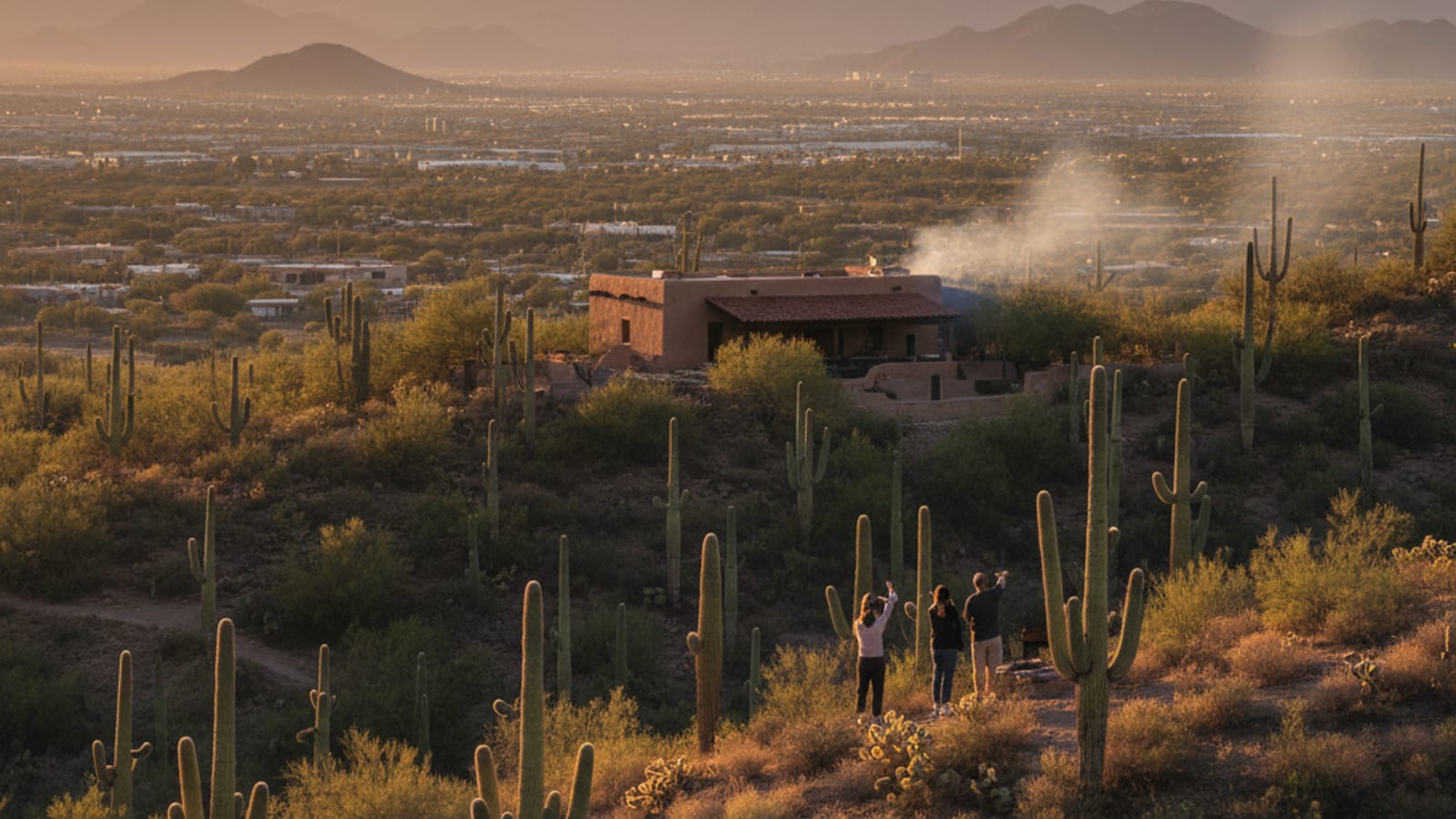
There is no landscape in America quite like Saguaro National Park. The park is split into two districts — east (Rincon Mountain) and west (Tucson Mountain) — and they bookend the city on either side. If you only have time for one, go west. The Bajada Loop Drive is a paved six-mile scenic road through a forest of saguaros so dense it looks like a movie set, except no movie set could ever capture the scale of it. These cacti grow about an inch per year and don't sprout their first arm until they're roughly 75 years old. The ones towering over you with a dozen arms are older than your grandparents.
The Signal Hill Trail on the west side is an easy half-mile walk to ancient Hohokam petroglyphs carved into volcanic rock — circles, spirals, human figures, and animal shapes that have been here for nearly a thousand years. It's free with park admission ($25 per vehicle, good for seven days at both districts). The east district has more challenging hiking — the Tanque Verde Ridge Trail climbs into pine forests above the desert, which sounds impossible until you're standing at 8,000 feet looking down at the saguaros far below.
Sunrise and sunset are the magic hours here. The saguaros silhouette against the sky in ways that will make every photo look like a postcard, even the ones you take on your phone without trying. Go early in the morning during summer (May through September) when temperatures regularly top 105 degrees Fahrenheit. By 10 AM, you'll understand why the Sonoran Desert demands respect. Bring more water than you think you need — at least a liter per person per hour of hiking. There's essentially no shade on most trails, and the dry air dehydrates you faster than you realize.
Pro tip: The west district is closer to town and better for sunsets. The east district has harder hikes and fewer crowds. Rangers at both visitor centers give excellent free talks about desert ecology — check the schedule when you arrive.
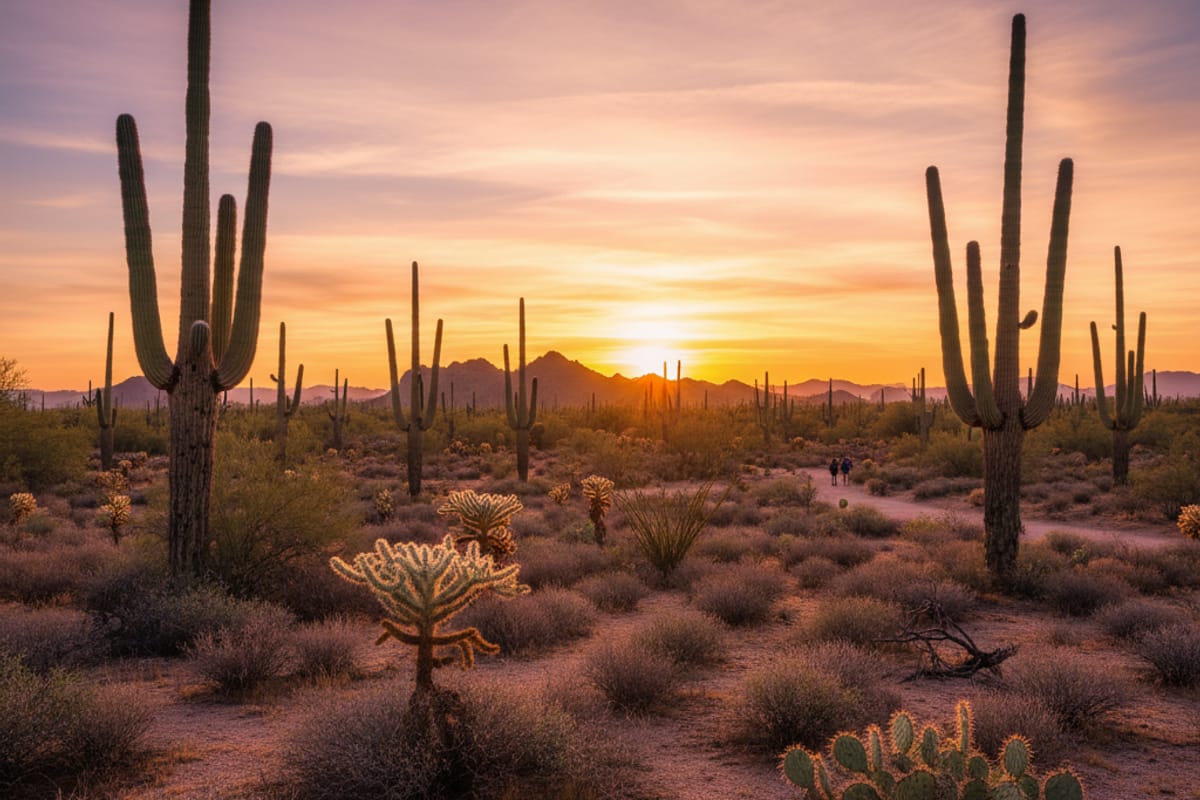 Saguaro National Park West — the densest saguaro forest you'll ever see.
Arizona-Sonora Desert Museum: The Best Museum You'll Ever Visit
Calling the Arizona-Sonora Desert Museum a museum is underselling it by about a mile. It's a zoo, a botanical garden, a natural history museum, and an aquarium all combined into 98 acres of living Sonoran Desert. It consistently ranks among the top museums in the country, and once you visit, you'll understand why people fly to Tucson specifically for this place.
The hummingbird aviary is the highlight for most visitors — you walk into an enclosed garden and hummingbirds zip past your face close enough to feel the breeze from their wings. The raptor free-flight show is exceptional. Trained hawks, owls, and falcons soar over the audience against a backdrop of real desert mountains. It happens twice daily (weather permitting) and it's included with admission. The reptile and invertebrate exhibits are world-class — you'll see Gila monsters, rattlesnakes, tarantulas, and scorpions in naturalistic habitats that don't feel like a typical zoo at all.
The botanical gardens weave through the entire property. Docents stationed throughout the grounds can identify any plant you point at and will happily talk your ear off about how barrel cacti store water or why palo verde trees have green bark (they photosynthesize through their trunks). The desert loop trail on the property's edge gives you a taste of actual desert hiking without committing to a full trail.
Admission is around $25 for adults, and you should budget three to four hours minimum. Many locals buy annual passes and come back repeatedly because there's simply too much to see in one visit. The on-site Ironwood Terraces restaurant serves surprisingly good food with views of the Tucson Mountains — the prickly pear lemonade is practically mandatory. Get there when they open at 7:30 AM in summer or 8:30 AM in cooler months to beat both the heat and the crowds.
Pro tip: The Desert Museum is outdoors — wear sunscreen, a hat, and comfortable shoes. The morning hours are when the animals are most active. If you visit between March and May, the wildflower displays along the trails can be spectacular.
Sonoran Hot Dogs & Mexican Food: Tucson Eats Like Nowhere Else
Tucson became America's first UNESCO City of Gastronomy in 2015, and if that surprises you, you haven't eaten here yet. The food culture in Tucson is rooted in thousands of years of continuous agricultural history — the Tohono O'odham people have been farming this valley for millennia, and the Mexican food tradition runs deep through family recipes that cross the border in both directions.
The Sonoran hot dog is Tucson's signature street food, and nothing will prepare you for how good a hot dog wrapped in bacon, grilled until the bacon crisps, then loaded into a bolillo roll with pinto beans, grilled onions, tomatoes, mustard, mayo, and jalapeño sauce actually tastes. El Guero Canelo is the most famous spot — they won a James Beard Award in 2018, which made them the first hot dog stand to ever win the honor. The original location on South 12th Avenue is a no-frills roadside stand with plastic chairs and fluorescent lights, and the food is transcendent. BK Carne Asada & Hot Dogs on South 6th Avenue is equally excellent and stays open late.
Beyond hot dogs, the Mexican food in Tucson is the best in the United States. This isn't Tex-Mex — this is Sonoran Mexican cuisine, which emphasizes flour tortillas, carne asada, green chile, cheese crisps (basically a Mexican pizza on a flour tortilla), and machaca (dried shredded beef). Mi Nidito on South 4th Avenue has been serving Tucson since 1952 and is famous enough that presidents have eaten there — look for the booth with the plaque. El Charro Cafe downtown claims to have invented the chimichanga (there's a debate about this, but the food is excellent regardless). For something more casual, any taqueria on South 6th Avenue or South 12th Avenue will give you tacos that rival anything you'd find across the border in Nogales.
The Mercado San Agustin on West Congress is a modern marketplace with excellent food vendors — Seis Kitchen does creative tacos and cocktails, and the whole complex has a relaxed, community-gathering feel that captures modern Tucson perfectly.
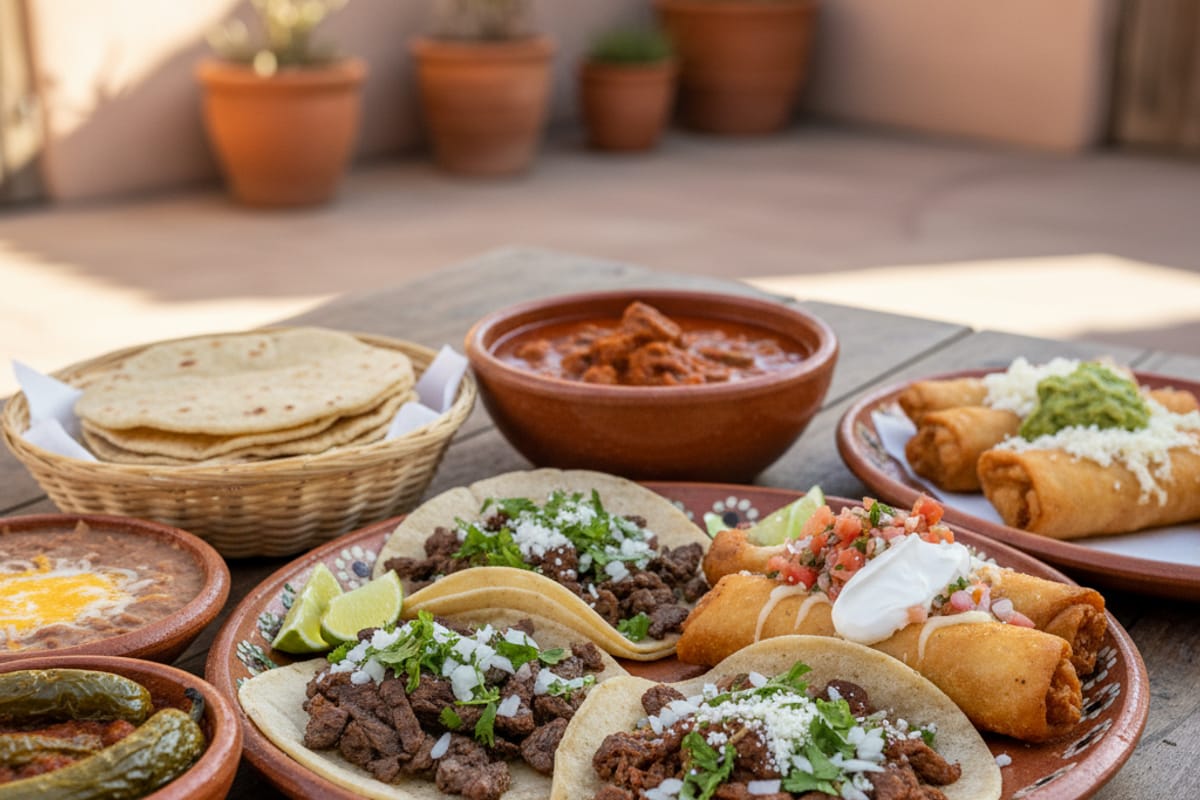 Tucson's food scene earned it the title of America's first UNESCO City of Gastronomy.
4th Avenue & Downtown: The Soul of the City
Fourth Avenue is Tucson's bohemian heart — a mile-long stretch of independent shops, vintage clothing stores, dive bars, coffee shops, and restaurants that has resisted chain-ification for decades. It feels like Austin's South Congress or Portland's Hawthorne, but scrappier and more authentically weird. Antigone Books is one of the best independent bookstores in the Southwest. Pop Cycle sells handmade art and gifts from local artists. The vintage shops are genuinely good — not curated Instagram-bait, but real secondhand stores where you might find a 1970s Western shirt for eight dollars.
The 4th Avenue Street Fair happens twice a year (spring and fall) and draws hundreds of thousands of people for arts, crafts, food vendors, and live music. It's one of the biggest street fairs in the Southwest and worth planning a trip around if your dates align.
Downtown Tucson has undergone a quiet renaissance over the past decade. The area around Congress Street and Broadway is now packed with restaurants, bars, and live music venues. Hotel Congress — built in 1919 and famous as the place where John Dillinger was captured — hosts live music almost every night and has a rooftop bar with views of the city and mountains. Club Congress downstairs books everything from indie rock to cumbia. The Rialto Theatre, a restored 1920 vaudeville house, is one of the best mid-size music venues in Arizona.
The Tucson Museum of Art on the Alameda block downtown sits within a complex of historic adobe buildings, some dating to the 1860s. The permanent collection focuses on art of the American West and Latin America, and the museum's La Casa Cordova is the oldest building in downtown Tucson. Admission is reasonable and the museum is manageable in an hour or two — it's not overwhelming the way big-city museums can be.
Walk south from downtown into the Barrio Viejo neighborhood for some of the most colorful, photogenic streets in Arizona — bright painted adobe houses, Día de los Muertos murals, and garden walls covered in bougainvillea. It's a residential neighborhood, so be respectful, but the streets are public and the visual feast is unforgettable.
Pro tip: Thursday nights downtown are when locals come out. Many restaurants and bars have specials, and the energy is better than weekends because it's less touristy. The streetcar connects 4th Avenue to downtown and the University of Arizona — it's free to ride.
Mount Lemmon: From Cactus to Pine Trees in One Hour
Mount Lemmon is Tucson's secret weapon and the thing that makes this city genuinely unique among desert destinations. The Catalina Highway — also called the Sky Island Scenic Byway — climbs from the desert floor at 2,500 feet to the summit at 9,157 feet in about 27 miles. As you drive, you pass through five distinct biomes: Sonoran Desert, grassland, oak woodland, pine forest, and mixed conifer forest. It's the ecological equivalent of driving from Mexico to Canada in one hour.
The temperature drops roughly 20 to 30 degrees Fahrenheit between the base and the summit, which means that when it's 105 degrees in Tucson proper, it might be 75 degrees at the top — with actual pine trees, mountain streams, and cool breezes. Tucsonans treat Mount Lemmon like their personal air conditioner, escaping to the summit on summer weekends the way other cities escape to the beach.
Summerhaven, the small village near the top, has a handful of restaurants and shops. The Cookie Cabin bakes enormous cookies and pies, and the lines on summer weekends tell you everything you need to know about their quality. The Iron Door Restaurant has been serving steaks and comfort food at 8,000 feet since 1913 — the views from the deck are extraordinary.
For hiking, the Wilderness of Rocks trail near the top takes you through massive granite boulders scattered through a pine forest — it looks nothing like the desert below. The Windy Point Vista about halfway up the mountain has panoramic views of the entire Tucson basin and is one of the best sunset spots in southern Arizona. Rock climbers come from around the world for the granite walls along the highway.
In winter, Mount Lemmon Ski Valley operates at the summit — it's the southernmost ski area in the continental United States. The runs are modest, but the novelty of skiing while looking down at cactus-covered desert is worth the trip. The highway can close during winter storms, so check conditions before you go. There is a $5 daily recreation fee for vehicles stopping along the highway (collected at the base or at trailhead fee stations).
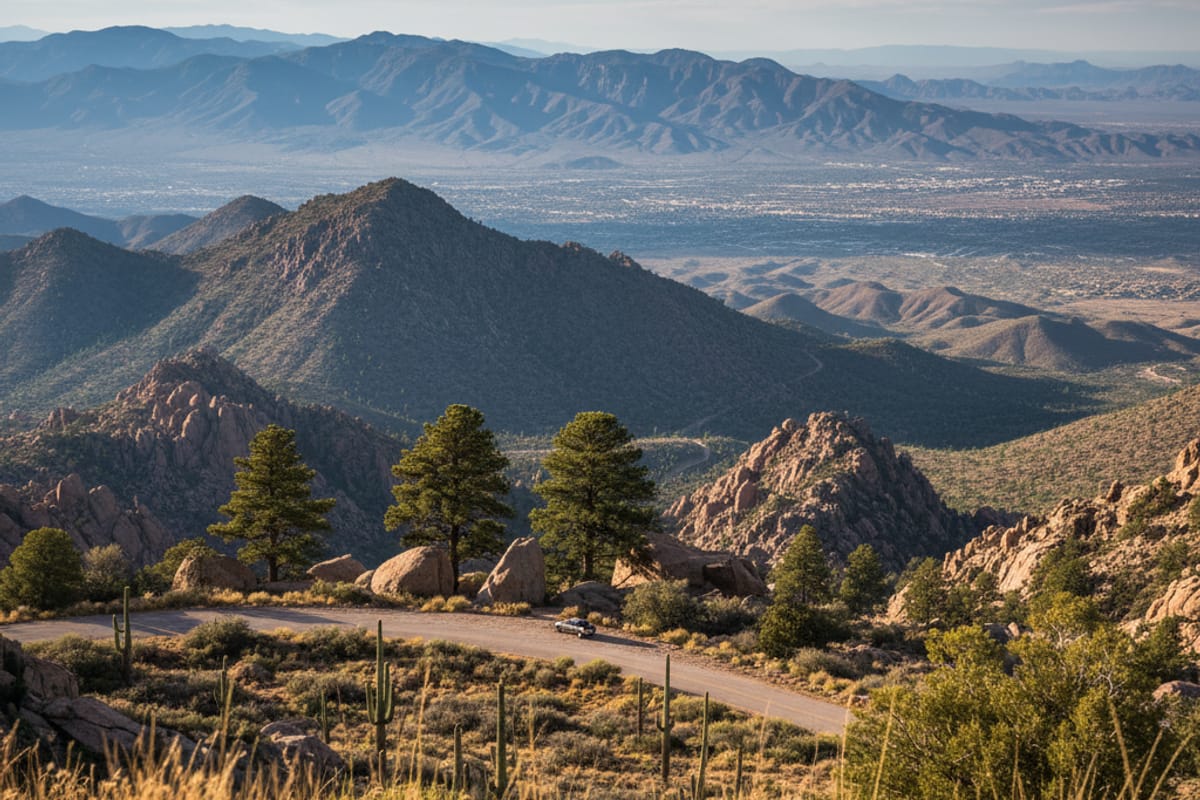 Mount Lemmon — from saguaros to pine trees in under an hour.
Budget Breakdown: What Tucson Actually Costs
Tucson is one of the most affordable destinations in the American West, and it's not even close. Hotels run $70 to $130 per night for solid mid-range options, with boutique hotels downtown in the $120 to $180 range. Summer rates (June through August) drop dramatically — you can find excellent hotels for $50 to $80 per night because most tourists avoid the extreme heat. If you can handle the mornings and evenings outdoors with air-conditioned afternoons, summer is a legitimate budget travel hack.
Food is where Tucson really shines on value. A Sonoran hot dog at El Guero Canelo costs about $3 to $4. Tacos at a South Side taqueria run $2 to $3 each. A full dinner at a sit-down Mexican restaurant like Mi Nidito will be $12 to $18 per person. Even the nicer downtown restaurants are reasonable — you can eat a beautiful dinner at Café Poca Cosa for $25 to $35 per person, which would cost twice that in Phoenix or three times that in Scottsdale.
Activities are remarkably affordable. Saguaro National Park costs $25 per vehicle and is good for seven days. The Desert Museum is about $25 per adult. Mount Lemmon's daily recreation pass is $5. The streetcar is free. 4th Avenue is free to walk. Barrio Viejo is free. Sabino Canyon is $5 per vehicle. Many hiking trails in the Santa Catalina and Tucson Mountain parks are completely free.
Realistic budget for a three-day trip: $400 to $600 per person including hotel, food, and activities. In summer, you could push that down to $300 to $450 per person. Compare that to Scottsdale ($800 to $1,200 for a similar trip) or Sedona ($700 to $1,000) and the value becomes obvious. Tucson gives you a more authentic Arizona experience for a fraction of the price.
Getting around: Tucson is spread out and a car is essential for reaching Saguaro National Park and Mount Lemmon. Rental cars from the airport are typically $35 to $50 per day. Uber and Lyft work fine within the city core but get expensive for park trips. The Sun Link streetcar connects 4th Avenue, downtown, and the University of Arizona campus for free, which covers a surprising amount of the city's best dining and nightlife.
Pro tip: Fly into Tucson International Airport (TUS) rather than Phoenix Sky Harbor — TUS is smaller, closer to the city, and often has comparable fares. The drive from Phoenix to Tucson is about 90 minutes on I-10 if you do fly into Phoenix.
Why Trust This Guide
Recommendations from locals across 240+ US cities via Recommended.app community data.
Explore More
This guide is part of our Tucson collection. Explore more guides for Tucson →
Tucson has 168 verified businesses on Recommended.app across 59 categories.
Hidden Gems Weekly
3 hidden gems, 2 local quotes, 1 home hack — every Monday. Free forever.
Unsubscribe anytime. No spam.
More from City Guides
 City Guide
Tucson's Hidden Gems: The Desert City Foodies and Stargazers Love
 Travel Tips
Tucson on a Budget: Desert Adventures That Won't Cost You a Dime
 Travel Guide
A Desert Weekend in Tucson: Cacti, Stars & the Best Mexican Food North of the Border
 City Guide
We Asked Tucson Locals Where They Actually Eat — Here's What They Said
 Home Services
Water Damage Restoration Near Me: What to Do in the First 24 Hours (2026 Guide)
 Food & Dining