
Last updated March 16, 2026 by the Recommended.app research team.
Barrio Viejo: The Most Photogenic Neighborhood You've Never Heard Of
South of downtown Tucson, tucked between Congress Street and the freeway, lies Barrio Viejo — one of the oldest continuously inhabited neighborhoods in the United States. This is where Tucson's Mexican-American heritage lives and breathes in adobe walls painted every color of the Sonoran sunset. Turquoise, coral, goldenrod, sage green — every house is a statement, and every wall tells a story.
The neighborhood nearly didn't survive. In the 1960s and 70s, urban renewal projects demolished large sections of Tucson's original barrios to build the Tucson Convention Center. What remains of Barrio Viejo is both a testament to community resistance and a living museum of Sonoran architecture. The adobe houses here date back to the 1860s and 1870s, with thick walls that stay cool in summer without air conditioning — a technology that worked perfectly for centuries before we decided to cover the desert in glass and concrete.
Walk along South Meyer Avenue and South Convent Avenue for the best concentration of colorful homes, garden walls draped in bougainvillea, and murals depicting Día de los Muertos skeletons, the Virgin of Guadalupe, and scenes from border life. El Tiradito — the Wishing Shrine — is a small roadside shrine on South Main Avenue where people have been lighting candles and leaving prayers since the 1870s. It's the only shrine in the United States dedicated to a sinner rather than a saint, and the story behind it involves love, jealousy, and murder. The candles burn day and night, and the shrine has a quiet power that stops you in your tracks.
This is a residential neighborhood, so walk quietly, don't peer into windows, and be respectful of the people who live here. But the streets are public, the architecture is extraordinary, and the light in the late afternoon turns these walls into something that belongs in a gallery. Photographers come from around the world for these streets, and once you see them, you'll understand why.
The neighborhood is easily walkable from downtown — just cross Congress Street heading south. Combine it with a meal at El Minuto Cafe on Main Avenue, which has been serving some of Tucson's best Mexican food since 1936. Their cheese crisp — a flour tortilla baked crisp with melted cheese and green chile — is the size of a pizza and costs about seven dollars.
Pro tip: Visit Barrio Viejo during the annual All Souls Procession in early November — thousands of people in face paint and costumes parade through the streets in a celebration of life and death that's unlike anything else in America. It's free and deeply moving.
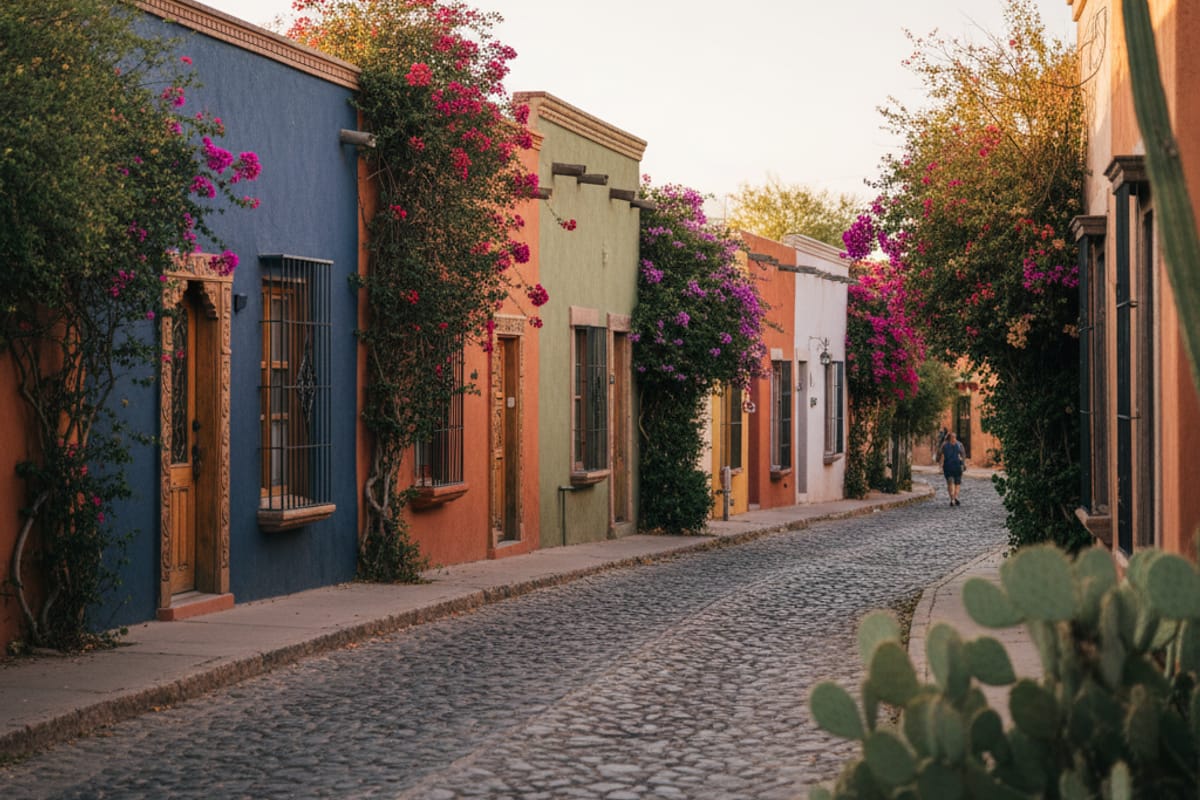 Barrio Viejo — Tucson's most colorful and historic neighborhood.
Sabino Canyon: A Desert Oasis With Running Water
Most visitors to Tucson head straight to Saguaro National Park, and they should — but Sabino Canyon Recreation Area, tucked into the Santa Catalina Mountains on the city's northeast side, offers something the national park can't: water. Actual flowing water, year-round, in the middle of the Sonoran Desert.
Sabino Creek carved this canyon over millions of years, and during the rainy seasons (winter and late summer monsoons), the creek flows with enough force to create swimming holes, small waterfalls, and pools where kids splash and adults float. Even during drier months, the riparian habitat along the creek is lush and green — cottonwood trees, willows, and wildflowers thrive in this narrow corridor of moisture surrounded by miles of cactus-covered desert.
The Sabino Canyon shuttle bus ($12 round trip for adults) runs 3.8 miles up the canyon road, stopping at nine points where you can hop off to hike, explore, or just sit by the creek. The full round trip takes about 45 minutes if you stay on the bus. Most people ride up and walk back down — it's a gentle downhill stroll with mountain views the entire way. For a more challenging hike, the Seven Falls trail branches off from the main canyon and climbs 2.3 miles to a series of cascading pools. When the water is flowing, Seven Falls is one of the most beautiful spots in southern Arizona.
The moonlight shuttle runs on select evenings around the full moon — you ride up the canyon under the stars with a naturalist guide who points out nocturnal wildlife. It's one of the most unique experiences in Tucson and sells out quickly, so book at least a month ahead.
Wildlife sightings are common and varied. Javelinas (wild peccaries) roam the canyon in herds, coatimundis — basically desert raccoons with long tails — forage along the creek, and if you're lucky, you might spot a Gila monster sunning itself on a rock. The canyon is also home to rattlesnakes, so watch where you step and stay on marked trails. Entry to the recreation area is $5 per vehicle, and the shuttle ticket is separate.
Pro tip: The Phoneline Trail, which runs along the canyon rim above the shuttle road, is a moderately strenuous out-and-back hike with spectacular aerial views of the canyon. It's less crowded than the creek-side trails and gives you a completely different perspective.
Mount Lemmon Sky Center: The Best Stargazing in America
Tucson takes its dark skies seriously. The city has had outdoor lighting codes since 1972 — one of the first in the nation — specifically to protect the astronomical observatories in the surrounding mountains. The result is that Tucson has some of the best stargazing in the continental United States, and the Mount Lemmon SkyCenter is the crown jewel.
Run by the University of Arizona's Steward Observatory, the SkyCenter sits at 9,157 feet on the summit of Mount Lemmon and offers public stargazing programs that are genuinely world-class. The SkyNights program ($65 to $75 per person) is a five-hour experience that starts before sunset and runs deep into the night. You'll look through a 24-inch telescope at galaxies, nebulae, star clusters, and planets with clarity that will fundamentally change your relationship with the night sky. The astronomers who lead these sessions aren't tour guides reading from scripts — they're researchers and graduate students who study these objects professionally, and their enthusiasm is infectious.
On a clear night — and Tucson has around 300 clear nights per year — you can see the Andromeda Galaxy as a fuzzy spiral two million light-years away, the rings of Saturn sharp enough to see the Cassini Division, and star clusters so dense they look like diamonds scattered on black velvet. The Milky Way arcs overhead like a river of light, and shooting stars are common enough that the astronomers barely pause when one streaks across the sky.
The program includes dinner, hot beverages, and all the telescope time you want. Reservations are essential — sessions run on select evenings and sell out weeks in advance, especially during summer and around new moons when the sky is darkest. The drive up Mount Lemmon takes about an hour from Tucson proper, and the road is winding, so leave extra time and bring warm layers — temperatures at the summit can be 30 degrees cooler than the desert floor.
If the SkyCenter is booked, Kitt Peak National Observatory southwest of Tucson also offers public programs, and the International Dark Sky Discovery Center is currently under development in Tucson as a permanent stargazing attraction. Even without a formal program, simply driving partway up Mount Lemmon and pulling over at a viewpoint after dark will show you more stars than most Americans see in a lifetime.
Pro tip: New moon weekends offer the darkest skies and the best viewing. Check the lunar calendar when planning your trip. Bring binoculars even if you're attending a telescope program — scanning the Milky Way with binoculars is a revelation.
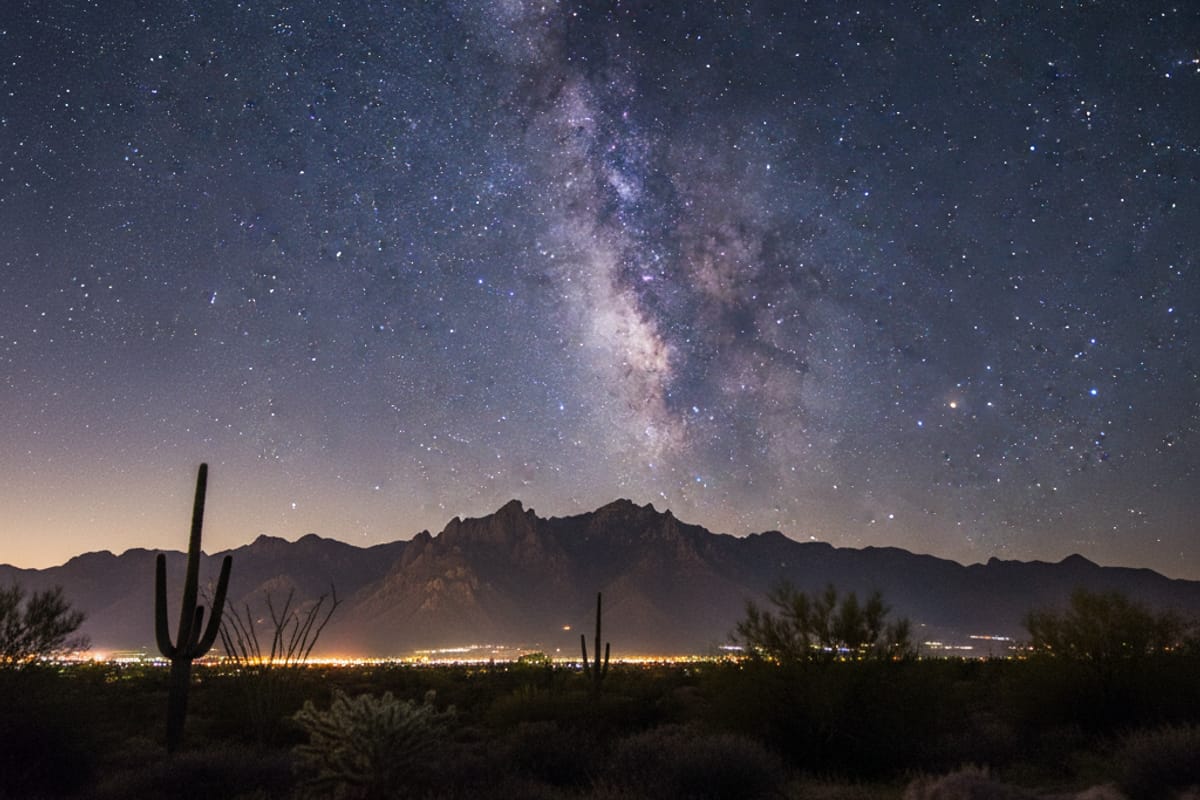 Tucson's dark sky ordinances make it one of the best stargazing destinations in America.
Pima Air & Space Museum: One of the World's Great Aviation Collections
The Pima Air & Space Museum is one of those attractions that sounds niche until you actually visit and realize it's extraordinary regardless of whether you care about aviation. Spread across 80 acres on Tucson's south side, this is one of the largest non-government-funded aviation museums in the world, with over 400 aircraft on display — from a Wright Flyer replica to a Boeing 787 Dreamliner, from World War II bombers to SR-71 Blackbirds.
The outdoor displays are staggering in scale. Row after row of aircraft bake in the Arizona sun — fighters, bombers, cargo planes, helicopters, and experimental craft that look like they were designed by science fiction writers. The B-52 Stratofortress is so massive it barely seems real. A replica of the Fat Man atomic bomb casing sits near the B-29 Superfortress, and the juxtaposition is sobering. The presidential aircraft collection includes a VC-118A that carried John F. Kennedy.
Five indoor hangars house themed exhibitions. The 390th Memorial Museum focuses on the 390th Bombardment Group's World War II missions over Europe, with personal artifacts, letters, and oral histories that are deeply moving. The Space Gallery covers NASA history and includes real spacecraft hardware. The hangar dedicated to the history of flight from the Wright brothers through the jet age is genuinely educational without being dry.
The adjacent AMARG (Aerospace Maintenance and Regeneration Group) — commonly called the Boneyard — is where the U.S. military stores thousands of retired aircraft in the dry desert air. Bus tours of the Boneyard run through the Pima Air Museum and are among the most popular activities in Tucson. You'll see rows of F-16s, C-130s, and B-1 bombers stretching to the horizon, stored in the desert because the low humidity prevents corrosion. These tours require advance booking and a government ID, and they sell out quickly.
Admission to the museum is around $20 for adults, and you should plan at least three to four hours — more if you're doing the Boneyard tour. The museum is surprisingly good for kids, with a hands-on flight simulator area and cockpits you can actually sit in. The gift shop is excellent, and the on-site cafe is decent enough for a lunch break between hangars.
Pro tip: Book the Boneyard bus tour at least two weeks in advance — it's a 90-minute narrated tour that covers ground you can't access any other way. U.S. citizens need a government-issued photo ID; foreign nationals should check current access policies before booking.
The Taqueria Trail: South Side Tucson's Real Food Scene
Every food city has its tourist-friendly restaurants and its real-deal spots. In Tucson, the real deal is on the South Side — a sprawling, working-class, predominantly Mexican-American area south of downtown where the taquerias, carnicerías, bakeries, and food trucks serve some of the best Mexican food in the United States at prices that would make a food critic weep with joy.
Start at Tacos Apson on South 12th Avenue. This tiny taqueria — and by tiny, I mean four tables and a counter — serves carne asada tacos on fresh flour tortillas that are quite possibly the best tacos in Arizona. The meat is grilled over mesquite, chopped to order, and served with nothing but guacamole, salsa, and raw onion. Two tacos cost about five dollars. The line can be long on weekend evenings, but it moves fast and is worth every minute of the wait.
El Güero Canelo on South 12th gets the fame (and the James Beard Award), but BK Carne Asada & Hot Dogs on South 6th is where many locals actually go for their Sonoran hot dog fix. The dogs are slightly different at every stand — BK wraps theirs tighter, uses a slightly different salsa, and the overall effect is a bit more intensely flavored. Try both and pick your side. This is a genuine rivalry in Tucson, and people have strong opinions.
For tacos al pastor — pork carved from a vertical spit, pineapple-topped, served on corn tortillas — Taqueria Pico de Gallo on South 6th is outstanding. The al pastor here is marinated for 24 hours and the pineapple caramelizes on the spit, creating a sweet-savory combination that haunts you for days after you leave Tucson.
Don't skip the panaderías (Mexican bakeries). La Estrella Bakery on South 12th Avenue has been baking conchas, cuernos, orejas, and other pan dulce since 1990. A bag of fresh pastries costs three or four dollars and pairs perfectly with a cup of champurrado (thick Mexican hot chocolate) on a cool desert morning. The bakery also makes tamales that locals line up for during the holidays.
For a sit-down meal on the South Side, Micha's on South 4th Avenue serves traditional Sonoran Mexican food in a cozy dining room with a full bar. Their chile relleno plate — a roasted poblano pepper stuffed with cheese, battered and fried, served with rice, beans, and fresh tortillas — is a masterclass in comfort food. Dinner for two with drinks runs about thirty dollars.
The South Side isn't a tourist area, and that's exactly the point. There are no Instagram-ready facades or craft cocktail bars. What you'll find is real food made by families who have been cooking these recipes for generations, served in unpretentious spaces where the decor is an afterthought and the flavors are everything.
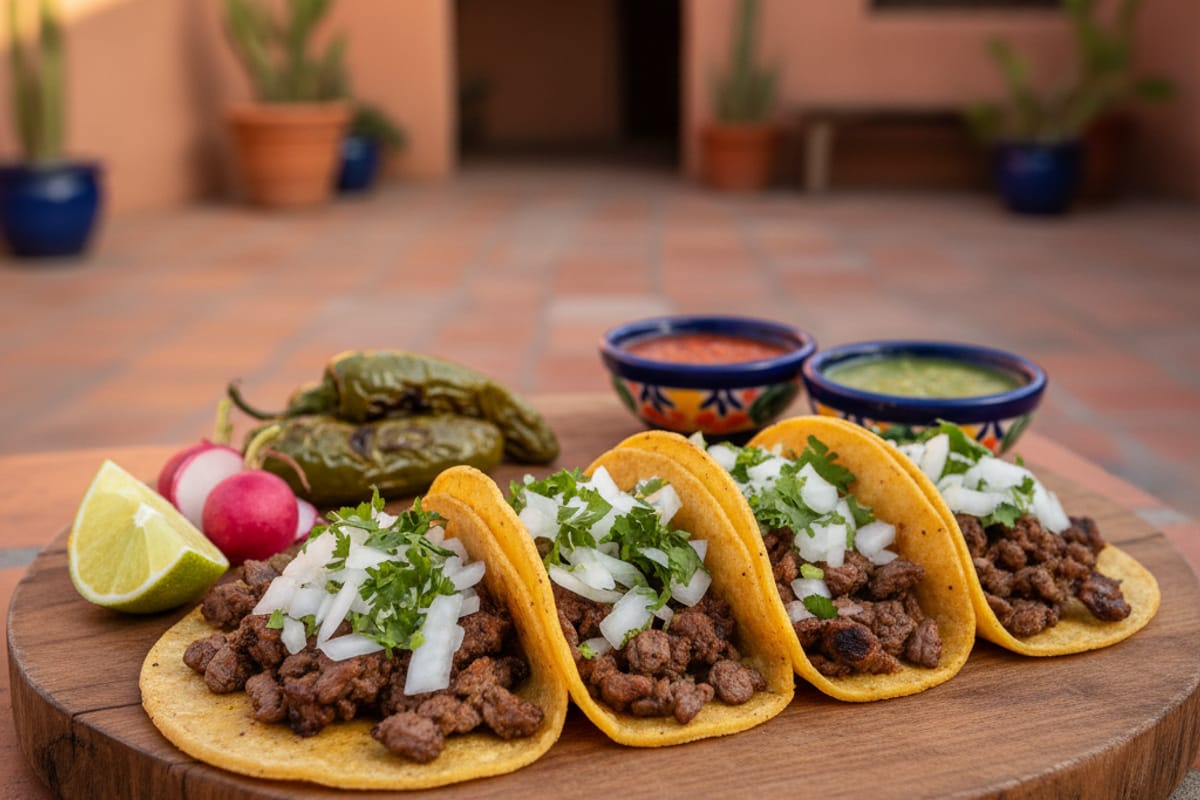 Tucson's South Side taquerias serve some of the best Mexican food in the United States.
Tanque Verde Swap Meet: Tucson's Weekend Treasure Hunt
Every weekend, the Tanque Verde Swap Meet transforms a massive parking lot on Tucson's east side into one of the most entertaining, eclectic, and distinctly Tucsonan shopping experiences in the city. This isn't a curated flea market with overpriced vintage finds — it's a genuine swap meet where hundreds of vendors sell everything from hand-tooled leather boots to used power tools, from cactus cuttings to bootleg DVDs, from fresh tamales to vintage turquoise jewelry.
The swap meet operates year-round on Saturdays and Sundays, typically from around 6 AM to 3 PM. Get there early for the best selection and the best people-watching. The parking lot fills with families, haggling is expected, and the food vendors lining the perimeter are reason enough to visit even if you don't buy a single thing. Look for the stands selling fresh churros, elote (Mexican street corn with mayo, chile, and lime), and agua fresca in flavors like horchata, tamarindo, and jamaica. One vendor sells Sonoran-style coyotas — thin, crispy pastries filled with piloncillo (raw cane sugar) — that are addictive and cost about a dollar each.
The vendors selling Southwestern goods are where visitors tend to find the most interesting souvenirs. Handmade turquoise rings and necklaces, tooled leather belts, cowboy hats, ironwood carvings from the Seri people of Sonora, and Mexican pottery are all available at prices significantly lower than you'd find in a Sedona gift shop or a Scottsdale gallery. Negotiate respectfully — most vendors expect it and price accordingly.
The produce section is worth a detour even if you're staying in a hotel without a kitchen. Vendors sell dried chiles by the pound — ancho, guajillo, pasilla, chile de arbol — along with fresh herbs, nopales (cactus pads), tomatillos, and seasonal fruits like tunas (prickly pear fruit) that you won't find at a regular supermarket. Even if you just browse, the colors and aromas are a sensory experience.
There's also a section of the swap meet devoted to plants and gardening — cactus and succulent vendors sell specimens at a fraction of nursery prices, and several vendors specialize in desert-adapted landscaping plants. If you're driving rather than flying, a saguaro-rib walking stick or a potted barrel cactus makes a memorable, uniquely Tucson souvenir.
The Tanque Verde Swap Meet has been running since the 1980s and is a genuine community institution. It's not gentrified, it's not on any influencer's radar, and it offers a window into everyday Tucson life that you won't get at the Desert Museum or Saguaro National Park. Admission is free, parking is free, and your biggest expense will be self-control.
Pro tip: Bring cash — many vendors don't take cards. Wear sunscreen and a hat, as there's minimal shade. The east end of the swap meet tends to have the most interesting artisan and antique vendors, while the west end leans more toward tools, household goods, and produce.
Why Trust This Guide
Recommendations from locals across 240+ US cities via Recommended.app community data.
Explore More
This guide is part of our Tucson collection. Explore more guides for Tucson →
Tucson has 168 verified businesses on Recommended.app across 59 categories.
Hidden Gems Weekly
3 hidden gems, 2 local quotes, 1 home hack — every Monday. Free forever.
Unsubscribe anytime. No spam.
More from City Guides
 Travel Tips
Tucson on a Budget: Desert Adventures That Won't Cost You a Dime
 Travel Guide
A Desert Weekend in Tucson: Cacti, Stars & the Best Mexican Food North of the Border
 City Guide
We Asked Tucson Locals Where They Actually Eat — Here's What They Said
 City Guide
First Time in Tucson? Locals Wish You Knew These 12 Things
 Home Services
Water Damage Restoration Near Me: What to Do in the First 24 Hours (2026 Guide)
 Food & Dining